
单链表 C++ 实现 - 含虚拟头节点
本文例程下载链接:ListDemo
链表 vs 数组
链表和数组的最大区别在于链表不支持随机访问,不能像数组那样对任意一个(索引)位置的元素进行访问,而需要从头节点开始,一个一个往后访问直到查找到目标位置。
单链表
与顺序表相对,链表是一种链式存储方式。单链表是实现顺序表最简单的一种链表,根据是否包含虚拟头节点,分为含虚拟头节点和不含虚拟头节点两种方式。本文以含虚拟头节点为例,用C++实现单链表数据结构ADT。
节点:链表的组成元素,每个节点包含数据域data和指针域next。例程为了简化设计,data用int类型表示。
虚拟头节点:链表的第一个节点,为了维护链表操作方便,但不存放数据。
虚拟头节点(dummy head) VS 无虚拟头节点
含虚拟头节点的链表优势:所有的数据节点(除去头节点)都是对等的,对链表节点的API操作一般不影响头节点本身指针变化(除去头节点next域)。
缺点:需要额外考虑头节点影响,比如IsEmpty()判断条件, 和Length()是否对等(IsEmpty <=> length==0?),头节点对用户是否可见,能否被用户直接remove等。
单链表结构设计
含虚拟头节点的单链表list如下图所示,包含一个虚拟头节点V0,而V1~Vn通过前驱节点next域进行链接,从而形成一个单向链式结构。
虚拟头节点V0,不包含数据;V1~Vn包含数据,Vn->next = NULL
| 名称 | 描述 | 代表自定义符号 |
| 虚拟头节点 | 不包含数据 | Vh/head |
| 尾节点 | 链表的最后一个节点,特征:next=NULL | Vn-1/tail |
| 普通数据节点 | 包含具有实际意义数据的节点 | V0~Vn-1 |
| 长度 | 包含实际意义数据节点数为n(不包括Vh) | length |
| 空链表 | 虚拟头节点为空,即head=NULL | V0=NULL |
| 位置 |
从V0开始(Vh后继节点)开始计数0,直到Vn-1(尾节点)的节点对应位置。范围[0,n-1] |
position |
| 插入节点 | 在指定位置处插入节点,除插入节点及前驱和后继,不改变链表其他节点关系 | insert |
| 删除节点 | 在指定位置处删除节点, 除插入节点及前驱和后继,不改变链表其他节点关系 | remove |
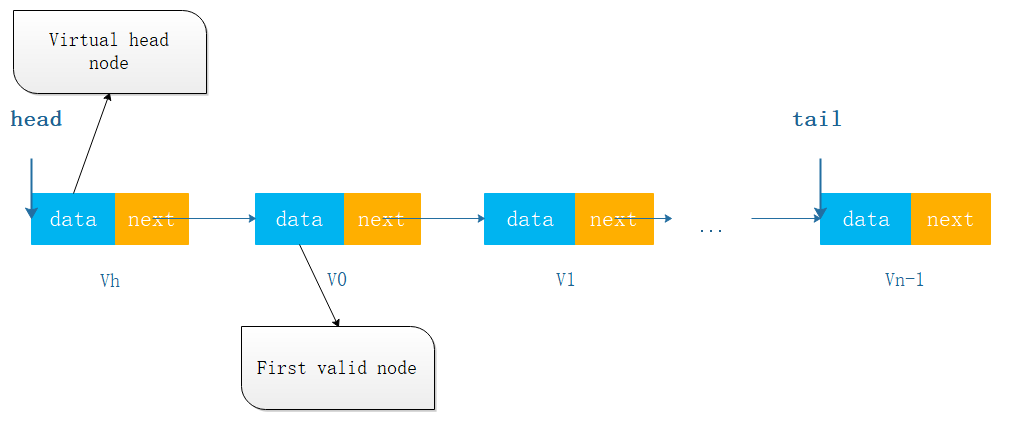
单链表ADT设计
1. 链表节点ADT Node.h
/**

 * 单链表节点类

 */

class Node

{

	int data;

	Node *next;

public:

	Node();

	Node(Node*, int);

};
2. 单链表ADT LinkedList.h
/**

 * 单链表类

 * @description 带虚拟头节点

 */

class LinkedList

{

private:

	Node *head;

	Node *tail;

public:

	LinkedList();

	virtual ~LinkedList();

	Status Init();          // 初始化链表

	Status Destroy();       // 销毁链表

	int Length();           // 求链表长度(有效节点)节点个数

	bool IsEmpty();         // 链表是否为空

	Status Insert(int pos, int value);  // 在指定位置生产节点, 并插入数据

	Status Remove(int pos);  // 删除指定位置节点

	int GetValue(int pos);   // 读取指定位置节点数据

	Node* GetAddress(int pos); // 获取知道位置节点的地址

	int SearchPosition(int value); // 搜索第一个出现的元素值的节点位置

	Status Update(int pos, int value); // 更新指定位置节点数据

	Status ClearList(); // 清除链表数据(不包含头节点)

	Status PrintList(); // 顺序打印链表节点数据

	Status Reverse();   // 反转链表

};
3. Node实现 Node.cpp
#include "Node.h"

#include <cstdlib>

Node::Node() {

	data = 0;

	next = NULL;

}

Node::Node(Node* newNext, int newValue)

{

	data = newValue;

	next = newNext;

}

Node::~Node()

{

	// TODO Auto-generated destructor stub

}
4. 链表实现LinkedList.cpp
#include "LinkedList.h"

#include <cstdlib>

#include <iostream>

using namespace std;

LinkedList::LinkedList() {

	head = NULL;

	tail = NULL;

}

LinkedList::~LinkedList() {

	Destroy();

}

/**

 * 初始化链表

 */

Status LinkedList::Init()

{

	// 创建虚拟头节点

	head = new Node(NULL, 0);

	if(head != NULL)

	{

		return OK;

	}

	return ERROR;

}

/**

 * 销毁链表

 * @description 与初始化操作相对, 删除所有链表节点, 包括头节点

 */

Status LinkedList::Destroy()

{

	if(head)

	{

		Node *curP = head;

		while(head)

		{

			curP = head->next;

			delete head;

			head = curP;

		}

		return OK;

	}

	else

	{

		cout <<"The list is NULL"<<endl;

				return ERROR;

	}

}

/**

 * 求链表长度(有效节点)节点个数

 * @description 从虚拟头节点的下一个节点开始计算有效节点数

 */

int LinkedList::Length()

{

	if(!head)

	{

		cout <<"The list is NULL"<<endl;

		exit(-1);

	}

	Node *curP = head->next;

	int n = 0;

	while(curP != NULL)

	{

		n ++;

		curP = curP->next;

	}

	return n;

}

/**

 * 判断链表是否为空

 * @description 判断依据: 虚拟头节点head == NULL

 * 注: 长度为0 不代表链表为空

 */

bool LinkedList::IsEmpty()

{

	return (head == NULL);

}

/**

 * 在指定位置生产节点, 并插入数据

 * @param pos [in] 待插入位置. 从头节点的后继开始为0计数,所需要经过的节点数。范围:0~n-1

 * @param value [in] 待插入节点数据域

 */

Status LinkedList::Insert(int pos, int value)

{

	if(IsEmpty())

	{

		cout <<"The list is NULL. Pls Create an List and init it first."<<endl;

		exit(-1);

	}

	// create a new Node

	Node *newNode = new Node(NULL, value);

	if(pos == 0)

	{

		newNode->next = head->next;

		head->next = newNode;

	}

	else if(pos >0 && pos <= Length())

	{

		// find the predecessor node to be inserted

		Node *p = GetAddress(pos-1);

		// insert the new Node to List

		if(p != NULL)

		{

			if(p->next != NULL)

			{// not tail

				newNode->next  = p->next;

			}

			p->next = newNode;

		}

	}

	else

	{

		cout<<"Error: Input param Pos is illegal(<0)"<<endl;

		return ERROR;

	}

	return OK;

}

/**

 * 删除指定位置节点

 * @param pos [in] 待插入位置. pos有效范围: [0, n), 0代表虚拟节点后面一个节点, 虚拟节点无法通过此API删除

 *

 */

Status LinkedList::Remove(int pos)

{

	Node *preNode = NULL;

	Node *curNode = NULL;

	Node *nextNode = NULL;

	if(pos < 0 || pos >= Length())

	{

		cout << "Remove node with error position"<<endl;

		exit (-1);

	}

	else if(pos == 0)

	{// find the prior node, namely , head node

		preNode = head;

	}

	else if(pos < this->Length())

	{

		// find the prior node

		preNode = GetAddress(pos - 1);

	}

	if(!preNode)

	{

		return ERROR;

	}

	curNode = preNode->next;

	if(curNode)

	{

		nextNode = curNode->next;

		preNode->next = nextNode;

		delete curNode;

	}

	return OK;

}

/**

 * 读取指定位置节点数据

 */

int LinkedList::GetValue(int pos)

{

	// find the  node

	Node *curP = GetAddress(pos);

	if(curP != NULL)

	{

		return curP->data;

	}

	else

	{

		return 0;

	}

}

/**

 * 获取位置节点的地址

 * @param pos [in] 从头节点的后继开始为0计数,所需要经过的节点数。范围:[0, n-1], n是链表长度(有效数据节点数)

 * @return 节点的地址

 */

Node* LinkedList::GetAddress(int pos)

{

	// valid list is null or not

	if(!head)

	{

		cout <<"The list is NULL"<<endl;

		exit(-1);

	}

	// valid intput param

	if(pos < 0 || pos >= Length())

	{

		cout <<"Insert position is out of the list's bounds"<<endl;

		exit(-1);

	}

	// 顺序查找位置pos的节点

	int i = 0;

	Node *curP = head->next;

	while(curP != NULL)

	{

		if(i == pos)

		{

			return curP;

		}

		i ++;

		curP = curP->next;

	}

	return NULL;

}

/**

 * 搜索第一个出现的元素值的节点位置

 * @param value 待查找值

 * @return 链表第一个节点的数据域=value的位置

 * - ERROR 错误

 * - >=0 位置序号

 */

int LinkedList::SearchPosition(int value)

{

	// valid list is null or not

	if(!head)

	{

		cout <<"The list is NULL"<<endl;

		exit(-1);

	}

	// sequential search

	Node *p = head->next;

	int i = 0;

	while(p != NULL)

	{

		i ++;

		if(p->data == value)

			return i;

		else

			p = p->next;

	}

	cout<< "Can't find the value in list"<<endl;

	return ERROR;

}

/**

 * 更新指定位置节点数据

 * @param pos [in] 待更新节点位置

 * @param value [in] 待更新节点要修改的目标值

 * @return 更新结果

 * - OK 正常更新

 * - ERROR 没有找到待更新节点, 可能由位置错误或者链表为空导致

 */

Status LinkedList::Update(int pos, int value)

{

	// find the node

	Node *curP = GetAddress(pos);

	if(curP != NULL)

	{

		curP->data = value;

		return OK;

	}

	return ERROR;

}

/**

 * 清除链表数据(不包含头节点)

 */

Status LinkedList::ClearList()

{

	// valid list is null or not

	if(!head)

	{

		cout <<"The list is NULL"<<endl;

		exit(-1);

	}

	Node *p = head->next;

	Node *tmp = NULL;

	while(p!=NULL)

	{

		tmp = p;

		p = p->next;

		delete tmp;

	}

	head->next = NULL;

	return OK;

}

/**

 * 顺序打印链表节点数据

 */

Status LinkedList::PrintList()

{

	// valid list is null or not

	if(IsEmpty())

	{

		cout <<"The list is NULL. Pls Create an List and init it first."<<endl;

		return ERROR;

	}

	cout <<"List:[ ";

	if(Length() == 0)

	{

		cout<<"NULL";

	}

	else

	{

		Node *p = head->next;

		while(p != NULL)

		{

			cout<<p->data<<" ";

			p = p->next;

		}

	}

	cout <<"] "<<endl;

	return OK;

}

/**

 * 反转链表, 除虚拟头节点

 */

Status LinkedList::ReverseList()

{

	// valid list is null or not

	if(IsEmpty())

	{

		cout <<"The list is NULL. Pls Create an List and init it first."<<endl;

		exit(-1);

	}

	if(Length() == 0)

	{

		cout <<"The list length = 0. Pls insert new Node."<<endl;

		exit(-1);

	}

	// reverse List

	Node *pre = head->next; // precursor Node

	Node *cur = pre->next;  // current Node

	Node *nxt = NULL;       // successor Node

	while(cur != NULL)

	{

		nxt = cur->next;

		cur->next = pre;

		pre = cur;

		cur = nxt;

	}

	// set the tail Node

	head->next->next = NULL;

	// set the head Node's next field

	head->next = pre;

	return OK;

}
6. 测试结果
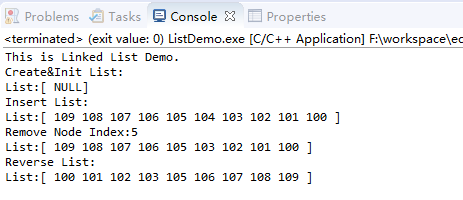
可以看到已经实现了链表基本的插入、打印、反转等功能。
单链表 C++ 实现 - 含虚拟头节点的更多相关文章
- 以K个为一组反转单链表,最后不足K个节点的部分也反转
package StackMin.ReverseList_offer16; public class ReverseKgroup_extend_offer16 { /** * 分组反转单链表,最后不足 ...
- 20140719 找到单链表的倒数第K个节点 判断一个链表是否成为一个环形 反转
1.找到单链表的倒数第K个节点 2.判断一个单链表对否形成环形 3.单链表翻转
- C语言:将带头节点的单向链表结点域中的数据从小到大排序。-求出单向链表结点(不包括头节点)数据域中的最大值。-将M*N的二维数组中的数据,按行依次放入一维数组,
//函数fun功能是将带头节点的单向链表结点域中的数据从小到大排序. //相当于数组的冒泡排序. #include <stdio.h> #include <stdlib.h> ...
- Leetcode24--->Swap Nodes in Pairs(交换单链表中相邻的两个节点)
题目:给定一个单链表,交换两个相邻的节点,且返回交换之后的头节点 举例: Given 1->2->3->4, you should return the list as 2-> ...
- C语言实现单链表(不带头结点)节点的插入
对单链表进行增删改查是最主要的操作.我在上一篇博客<C语言实现链表节点的删除>实现了删除单链表中的某个节点. 这里我们要来实如今某个位置插入节点.演示样例代码上传至https://gith ...
- iOS常用算法之单链表查找倒数第n个节点(图解)
拿到题目, 首先要先了解链表数据结构, 如下图: 常规思路: 利用数组, 遍历整个单链表, 将每个节点装入数组中, 最终拿到数组根据索引(数组长度-1-n)就得到了倒数第n个元素, 这里要注意从数组中 ...
- [LeetCode题解]86. 分隔链表 | 三指针 + 虚拟头节点
解题思路 三指针,一个指向前半部分待插入位置,一个指向后半部分待插入位置,最后一个从前往后遍历 代码 /** * Definition for singly-linked list. * public ...
- 面试题-----求单链表的倒数第k个节点
#include <iostream> using namespace std; struct node{ int value; struct node *next; }; struct ...
- C++获取单链表的倒数第k个节点
/* struct ListNode { int val; struct ListNode *next; ListNode(int x) : val(x), next(NULL) { } };*/ c ...
随机推荐
- 【 SSH 配置参考】
applicationContext.xml <?xml version="1.0" encoding="UTF-8"?> <beans xm ...
- 多租户SaaS的数据库设计模式
前言 在设计多租户SaaS应用程序时,您必须仔细选择最适合您应用程序需求的租户模型.租户模型确定每个租户的数据如何映射到存储.您选择的租户模式会影响应用程序设计和管理.以后切换到另一个模型有时代价昂贵 ...
- js + jquery 实现分页区翻页
简单来说,情况是这样的,假如做好了对动漫每一集进行分页,如下图: 但当分页太多就会变得不能看,而且前后箭头也不能只是摆设. 想要得到类似这样效果: 网上搜了一会翻页相关的库没什么效果,也不太合适自己的 ...
- i.MX RT1010之FlexIO模拟SSI外设
恩智浦的i.MX RT1010是跨界处理器产品,作为i.MX RT跨界MCU系列的一个新的切入点,i.MX RT1010是成本最低的LQFP封装方式与i.MX RT系列产品一贯的高性能和易用性的结合产 ...
- uniGUI之文件下载(29)
1]SendFile 2]SendStream 3]自定义类型文件下载 1]SendFile UniSession.SendFile('新建文本文档.txt' //服务器端 文件名 ,'anew.tx ...
- STM32F103之USART学习记录
1.USART的主要特性 1)名称:串行异步通信接口 2)全双工.异步通信 3)发送和接收速率最高可达4.5MBits/s 4)可编程数据长度8或9bits 5)可配置的停止位:支持1或2位停止位 6 ...
- 安装nodejs时提示Leaving directory
在按照标准的编译命令./configure =>make =>make install 在make的时候发生错误: ../deps/v8/src/base/platform/mutex.h ...
- 树莓派安装raspbian并配置开发环境
1.烧录系统 首先准备好我们要烧录的raspbian系统,可以在树莓派官网中下载https://www.raspberrypi.org/downloads/ 这里我们选择 2018-11-13-ras ...
- Java面向对象编程 -6
数组的基本概念 数组的本质:一组相关变量的集合. 但是需要注意的一点是:在java里面讲数组定义为了引用数据类型,所以数组的使用一定要牵扯到内存分配,那么首先一定要想到使用关键字new来处理 数组的定 ...
- java中LinkedList源码分析
ArrayList是动态数组,其实本质就是对数组的操作.那么LinkedList实现原理和ArrayList是完全不一样的.现在就来分析一下ArrayList和LinkeList的优劣吧LinkedL ...