
使用python爬取整本《盗墓笔记》
一、前言
《盗墓笔记》是一本经典的盗墓题材小说,故事情节引人入胜。本文将使用python2.7通过小说网站http://www.daomubiji.com/来爬取整本盗墓笔记并保存,在这一过程中演示了使用python网络库requests实现简单的python爬虫以及使用html文档分析库BeautifulSoup分析网页。
二、准备
在进行下一步之前先要安装两个库:requests以及BeautifulSoup。
pip install requests

pip install beautifulsoup4

# BeautifulSoup的解析器

pip install lxml

pip install html5lib
我们通常都是使用浏览器来访问网页,浏览器发送请求给服务器,服务器根据请求将请求的数据返回给浏览器,浏览器再将这些数据显示出来。而使用爬虫则不再使用浏览器发送请求,而是使用程序发送,并且使用爬虫程序接受服务器返回的数据,requests就是一个能帮助我们发送请求给服务器并得到返回数据的库。得到返回数据后(如HTML),可以使用另一个库BeautifulSoup来对HTML进行解析,提取出我们想要的标签的内容。
requests文档:http://docs.python-requests.org/zh_CN/latest/user/quickstart.html
BeautifulSoup文档:https://www.crummy.com/software/BeautifulSoup/bs4/doc/index.zh.html
三、网页分析
爬虫的基本思想是从网页中找到我们感兴趣的标签或链接,然后使用相关工具(如request和BeautifulSoup)来得到网页和标签的内容。下面对该网站的网页进行分析。
首先打开网站的主页http://www.daomubiji.com/来分析一下网页。我们知道盗墓笔记有很多部,打开后可以看到主页上列出了每一部的入口。
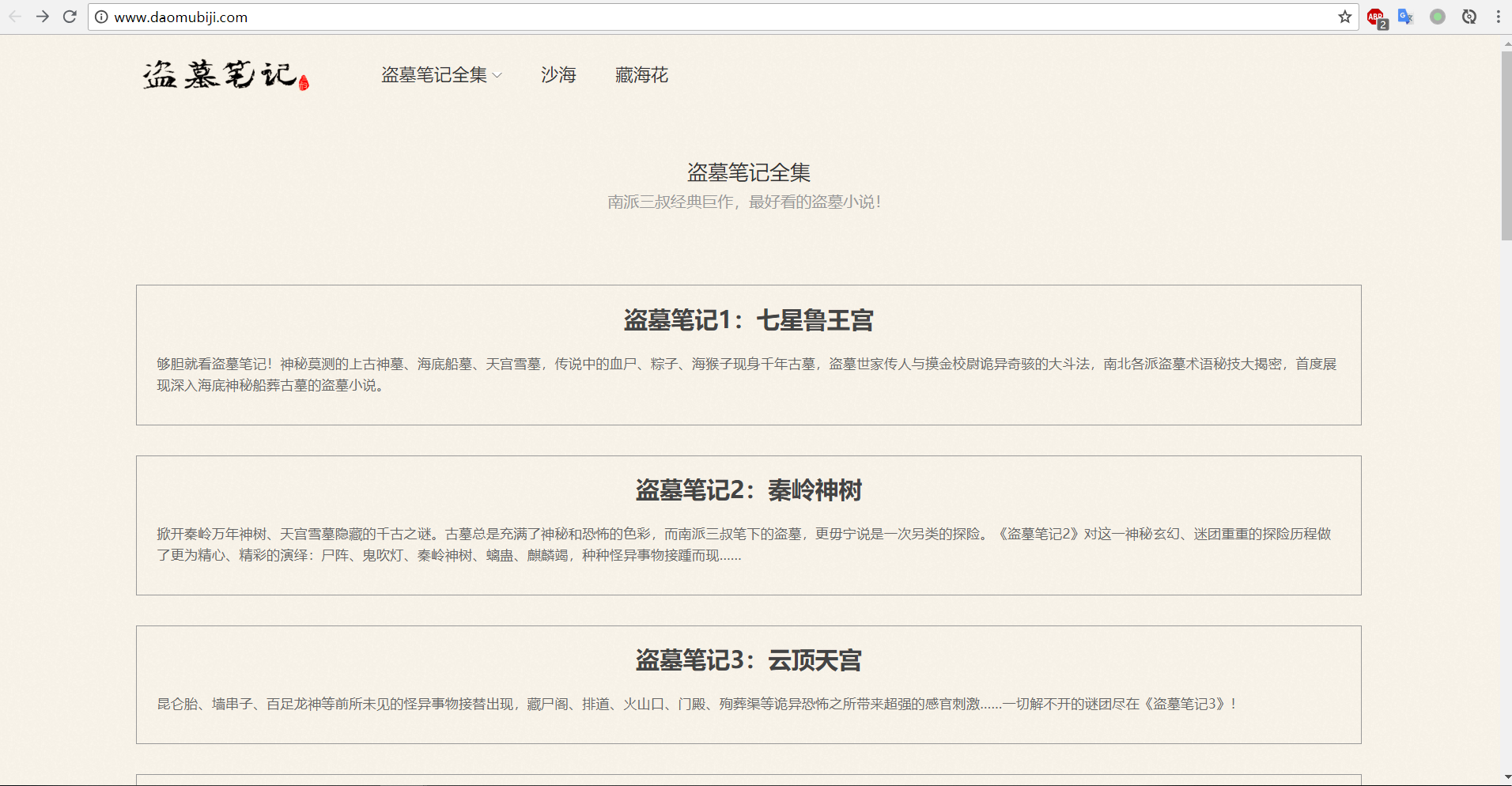
点进去其中的一部:《盗墓笔记1:七星鲁王宫》,我们可以看到该页显示了《盗墓笔记1》的每个章节。
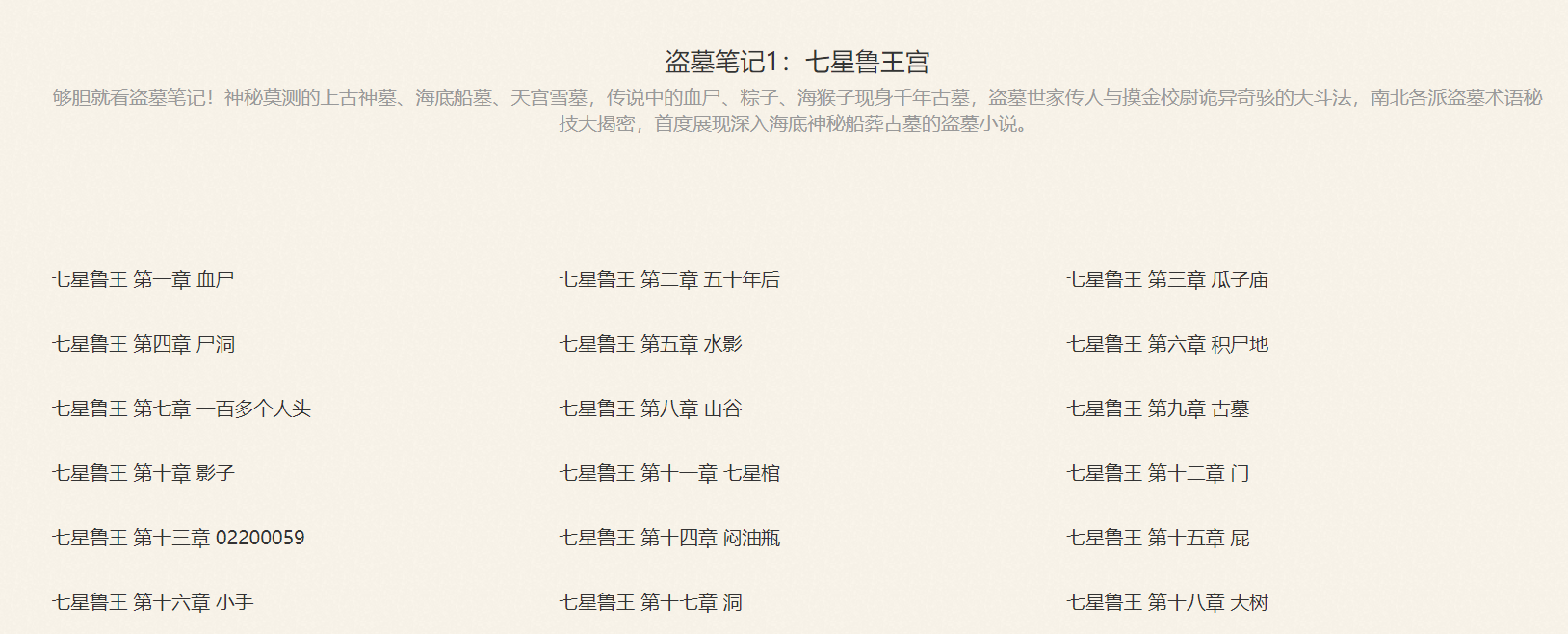
再点进某一章节,就可以看到这一章的内容了。
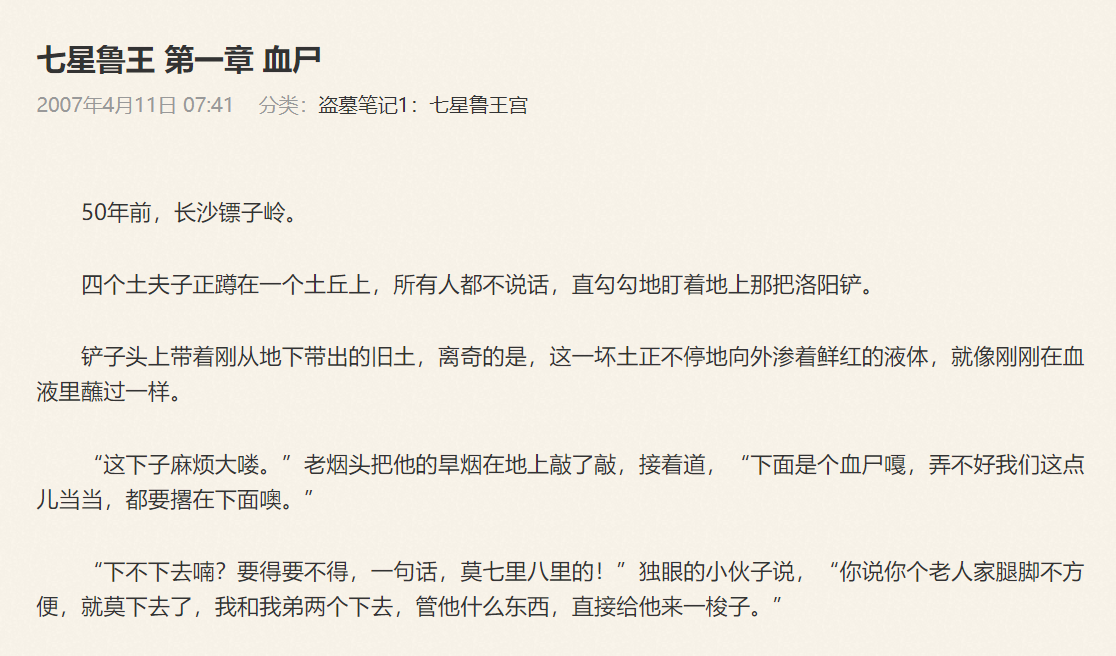
在来分析一下各章的链接,在《盗墓笔记1:七星鲁王宫》中,第一章的链接为http://www.daomubiji.com/qi-xing-lu-wang-01.html,第二章的链接为http://www.daomubiji.com/qi-xing-lu-wang-02.html,以此类推。在浏览器按下F12,选择NetWork后刷新网页,我们可以看到网页请求的文件:
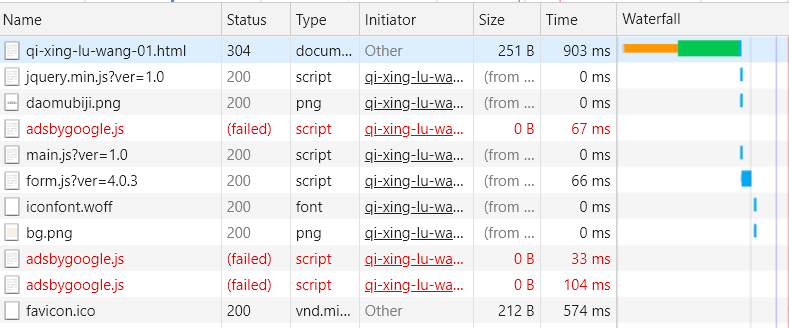
点击第一行,可以看到:
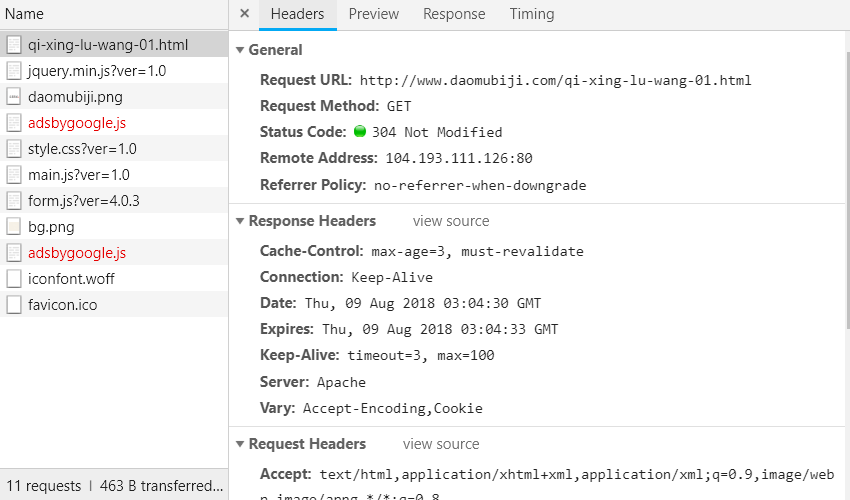
由Headers的内容可以看出该请求为一个简单的GET请求,没有任何参数,翻页是通过链接中的最后一个数字来实现的,比如01代表第一页、02代表第二页,所以只要我们得到所有章节的链接,然后从各章节对应的HTML文档中使用BeautifulSoup提取文章内容即可。总的步骤如下:
- 通过主页获取每本盗墓笔记的链接;
- 通过每本的链接获取每章的链接;
- 通过每章的链接获取每章标题与内容;
- 汇总每章的内容,保存进文件。
以下为各步骤的实现。
四、通过主页获取每本盗墓笔记的链接
打开主页http://www.daomubiji.com/并按下F12,点击左上角的鼠标(或者ctrl+shift+c)来选择元素,然后选择标题《盗墓笔记1:七星鲁王宫》,可以看到下图:
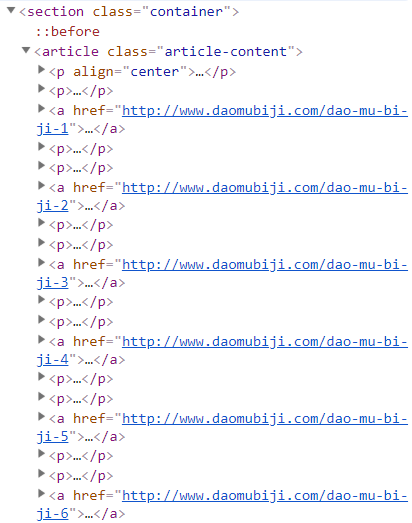
我们发现,每部书的链接都在一个名为article的标签下,由标签a中的href属性指定,所以我们可以使用BeautifulSoup提取出标签a的href属性。我们发现主页还包含两部其他小说:《沙海》和《藏海花》的链接:
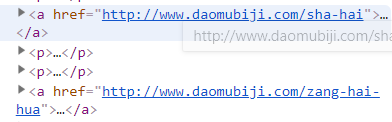
而我们只想获得小说《盗墓笔记》,解决方法是使用BeautifulSoup来将这两个链接排除在外,该小节的代码如下:
from bs4 import BeautifulSoup

import requests

import re

def get_book_urls(url):

    book_urls = []

    #获取主页

    index = requests.get(url)

    soup = BeautifulSoup(index.content.decode("utf8"), 'lxml')

    #从主页中找到所有的article标签

    articles = soup.find_all("article", class_='article-content')

    for article in articles:

        #找到各本盗墓笔记的链接,并排除沙海和藏海花的链接

        links = article.find_all('a', href=re.compile("dao-mu-bi-ji"))

        for link in links:

            book_urls.append(link["href"])

    return book_urls

book_urls = get_book_urls("http://www.daomubiji.com")

print book_urls
输出:

这样我们就得到了每本的链接。
五、通过每本的链接获取每章的链接
点进第一本《七星鲁王宫》http://www.daomubiji.com/dao-mu-bi-ji-1后按F12并选择元素,选择每章的标题:
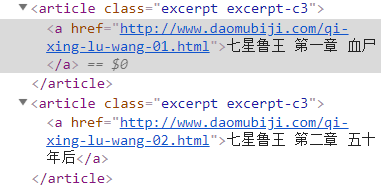
可以看到,每章的链接在article标签(该标签的class为"excerpt excerpt-c3")下,由标签a的href属性指定,使用以下代码获取各章的链接:
def get_chapter_urls(url):

    chapter_urls = []

    #获取每本书对应的页面

    page = requests.get(url)

    soup = BeautifulSoup(page.content.decode("utf8"), "lxml")

    #找到所有类为excerpt excerpt-c3的article标签

    articles = soup.find_all("article", class_="excerpt excerpt-c3")

    #提取article标签下a标签的href属性

    for article in articles:

        chapter_urls.append(article.a["href"])

    return chapter_urls

chapter_urls = get_chapter_urls("http://www.daomubiji.com/dao-mu-bi-ji-1")

print chapter_urls
输出(一部分):

六、通过每章的链接获取每章标题与内容
和前面一样,通过对文章内容进行“选择元素”,可以发现标题的标签如下:

内容的标签如下:
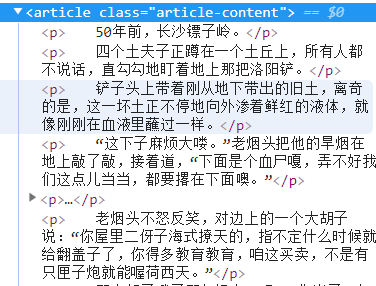
使用BeautifulSoup提取标签内容:
def get_content(url):

    content = ""

    page = requests.get(url)

    soup = BeautifulSoup(page.content.decode("utf8"), "lxml")

    #提取标题

    title = soup.find_all("h1", class_="article-title")[0].string

    content += ("\n"+title+"\n\n")

    #找到包含文章内容的article标签

    articles = soup.find_all("article", class_="article-content")

    for article in articles:

        ps = article.find_all('p')  #找到包含文章每一段的标签p

        for p in ps:

            #print p.string

            for string in p.strings:

                content = content + unicode(string) + "\n"    #获取标签p中的所有内容

    return content

content = get_content("http://www.daomubiji.com/qi-xing-lu-wang-01.html")

print content
输出(一部分):
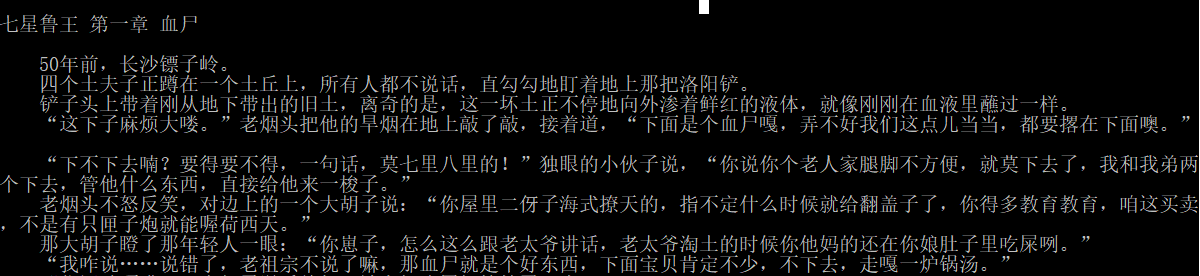
这样我们对每一章的链接都执行以上操作就可以获得每一章的内容,再把每一章的内容汇总保存即可。
七、完整代码
完整代码如下:
from bs4 import BeautifulSoup

import requests

import re

# 获取每本书的链接

def get_book_urls(url):

    book_urls = []

    index = requests.get("http://www.daomubiji.com/")

    soup = BeautifulSoup(index.content.decode("utf8"), 'lxml')

    articles = soup.find_all("article", class_='article-content')

    for article in articles:

        links = article.find_all('a', href=re.compile("dao-mu-bi-ji"))

        for link in links:

            book_urls.append(link["href"])

    return book_urls

# 获取每章的链接

def get_chapter_urls(url):

    chapter_urls = []

    page = requests.get(url)

    soup = BeautifulSoup(page.content.decode("utf8"), "lxml")

    articles = soup.find_all("article", class_="excerpt excerpt-c3")

    for article in articles:

        chapter_urls.append(article.a["href"])

    return chapter_urls

# 获取每章的内容

def get_content(url):

    content = ""

    page = requests.get(url)

    soup = BeautifulSoup(page.content.decode("utf8"), "lxml")

    title = soup.find_all("h1", class_="article-title")[0].string

    content += ("\n"+title+"\n\n")

    articles = soup.find_all("article", class_="article-content")

    for article in articles:

        ps = article.find_all('p')

        for p in ps:

            for string in p.strings:

                content = content + unicode(string) + "\n"

    return content

# 获取全本《盗墓笔记》并保存到文件

def get_article(url):

    book_urls = get_book_urls(url)

    chapter_urls = []

    for url in book_urls:

    #url = "http://www.daomubiji.com/dao-mu-bi-ji-2"

        chapter_urls.extend(get_chapter_urls(url))

    print chapter_urls

    result = ""

    for chapter_url in chapter_urls:

        content = get_content(chapter_url)

        result += content

        print content

    with open("I:\daomubiji\daomubiji.txt", "a") as f:

        f.write(result.encode("utf8"))

get_article("http://www.daomubiji.com/")
结果:
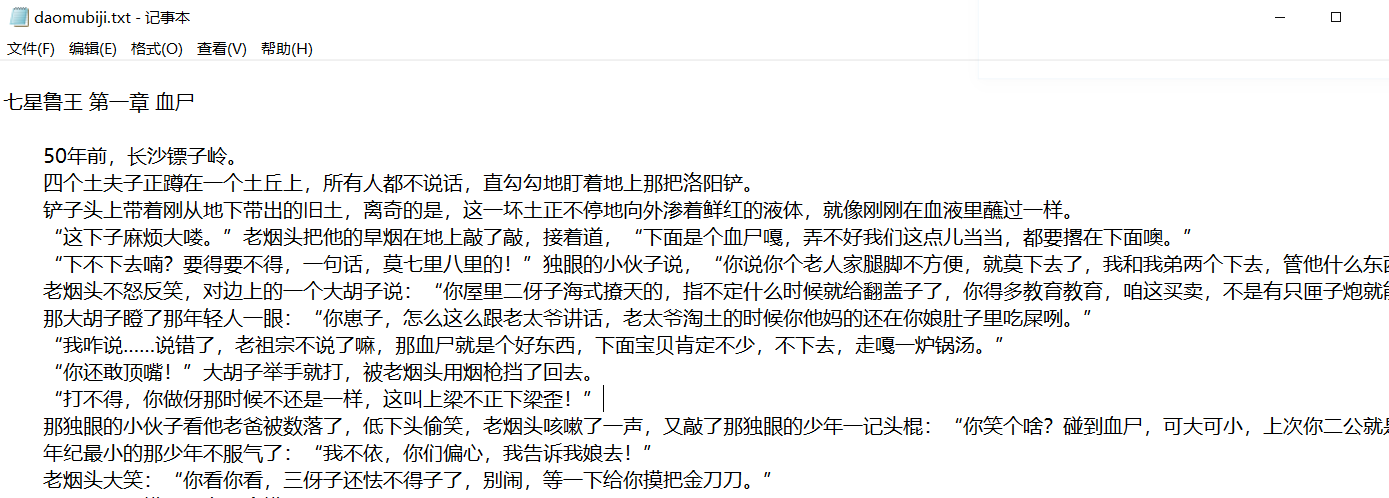
使用python爬取整本《盗墓笔记》的更多相关文章
- python爬取免费优质IP归属地查询接口
python爬取免费优质IP归属地查询接口 具体不表,我今天要做的工作就是: 需要将数据库中大量ip查询出起归属地 刚开始感觉好简单啊,毕竟只需要从百度找个免费接口然后来个python脚本跑一晚上就o ...
- 用Python爬取B站、腾讯视频、爱奇艺和芒果TV视频弹幕!
众所周知,弹幕,即在网络上观看视频时弹出的评论性字幕.不知道大家看视频的时候会不会点开弹幕,于我而言,弹幕是视频内容的良好补充,是一个组织良好的评论序列.通过分析弹幕,我们可以快速洞察广大观众对于视频 ...
- Python 爬取所有51VOA网站的Learn a words文本及mp3音频
Python 爬取所有51VOA网站的Learn a words文本及mp3音频 #!/usr/bin/env python # -*- coding: utf-8 -*- #Python 爬取所有5 ...
- python爬取网站数据
开学前接了一个任务,内容是从网上爬取特定属性的数据.正好之前学了python,练练手. 编码问题 因为涉及到中文,所以必然地涉及到了编码的问题,这一次借这个机会算是彻底搞清楚了. 问题要从文字的编码讲 ...
- python爬取某个网页的图片-如百度贴吧
python爬取某个网页的图片-如百度贴吧 作者:vpoet mail:vpoet_sir@163.com 注:随意copy,不用告诉我 #coding:utf-8 import urllib imp ...
- Python:爬取乌云厂商列表,使用BeautifulSoup解析
在SSS论坛看到有人写的Python爬取乌云厂商,想练一下手,就照着重新写了一遍 原帖:http://bbs.sssie.com/thread-965-1-1.html #coding:utf- im ...
- 使用python爬取MedSci上的期刊信息
使用python爬取medsci上的期刊信息,通过设定条件,然后获取相应的期刊的的影响因子排名,期刊名称,英文全称和影响因子.主要过程如下: 首先,通过分析网站http://www.medsci.cn ...
- Python爬取豆瓣指定书籍的短评
Python爬取豆瓣指定书籍的短评 #!/usr/bin/python # coding=utf-8 import re import sys import time import random im ...
- python爬取网页的通用代码框架
python爬取网页的通用代码框架: def getHTMLText(url):#参数code缺省值为‘utf-8’(编码方式) try: r=requests.get(url,timeout=30) ...
随机推荐
- 【转】crc16几种标准校验算法及c语言代码
一.CRC16校验码的使用 现选择最常用的CRC-16校验,说明它的使用方法. 根据Modbus协议,常规485通讯的信息发送形式如下: 地址 功能码 数据信息 校验码 1byte 1byte nby ...
- 关于程序设计中INF和MOD值的设定
在取模操作中,我们常把MOD设置为1000000007 模一个大数和模一个质数可以减少冲突 而1e9+7又有一个很好的特点,就是相加不会爆int,相乘不会爆long long 在设置无穷大值时中我们常 ...
- Linux上安装node和npm
说明:最近工作中需要用到react前端框架使得可以前后分离,在安装react之前呢我是需要先安装node,和npm的 由于npm是依赖于node 的,所以我这边只要安装了node后,npm也就安装完成 ...
- JSON.parseObject(String str)与JSONObject.parseObject(String str)的区别
一.首先来说说fastjson fastjson 是一个性能很好的 Java 语言实现的 JSON 解析器和生成器,来自阿里巴巴的工程师开发.其主要特点是: ① 快速:fastjson采用独创的算法, ...
- python---django请求-响应的生命周期(FBV和CBV含义)
Django请求的生命周期是指:当用户在访问该url路径是,在服务器Django后台都发生了什么. 客户端发送Http请求给服务端,Http请求是一堆字符串,其内容是: 访问:http://crm.o ...
- HDU 5528 反演
$f(m)=\sum\limits_{i=1}^{m-1}\sum\limits_{j=1}^{m-1}[(ij,m) \ne m]$,$g(n)=\sum\limits_{m|n}f(m)$,$1 ...
- Spring 学习01
一.Spring概念 1 spring是开源的轻量级框架 2 spring核心主要两部分: (1)aop:面向切面编程,扩展功能不是修改源代码实现 (2)ioc:控制反转, - 比如有一个类,在类里面 ...
- Export SQLite data to Excel in iOS programmatically(OC)
//For the app I have that did this, the SQLite data was fairly large. Therefore, I used a background ...
- [BZOJ 1879][SDOI 2009]Bill的挑战 题解(状压DP)
[BZOJ 1879][SDOI 2009]Bill的挑战 Description Solution 1.考虑状压的方式. 方案1:如果我们把每一个字符串压起来,用一个布尔数组表示与每一个字母的匹配关 ...
- CTSC/APIO2018滚粗记
CTSC/APIO2018滚粗记 前言 从\(5.5\)晚上的火车到\(5.14\)早上的高铁 \(10\)天的时间真的过去的很快. 眨眼间,就到了今天晚上的颁奖. 至于结果如何,反而并不是那么重要了 ...