
NIO-Channel接口分析
NIO-Channel接口分析
目录
NIO-概览
NIO-Buffer
NIO-Channel
NIO-Channel接口分析
NIO-SocketChannel源码分析
NIO-FileChannel源码分析
NIO-Selector源码分析
NIO-WindowsSelectorImpl源码分析
NIO-EPollSelectorIpml源码分析
前言
本来是想学习Netty的,但是Netty是一个NIO框架,因此在学习netty之前,还是先梳理一下NIO的知识。通过剖析源码理解NIO的设计原理。
本系列文章针对的是JDK1.8.0.161的源码。
上一篇介绍了Channel的基本使用,下面对Channel的接口进行分析。
接口
SCTP协议
SCTP(Stream Control Transmission Protocol)是一种传输协议,在TCP/IP协议栈中所处的位置和TCP、UDP类似,兼有TCP/UDP两者特征。
对于SCTP协议这里不详细描述,想了解的同学可以看下这篇文章
SCTP协议平时用的不多,这里不做具体讨论。
UDP协议
NIO使用DatagrmChannel实现了UDP协议的网络通讯。
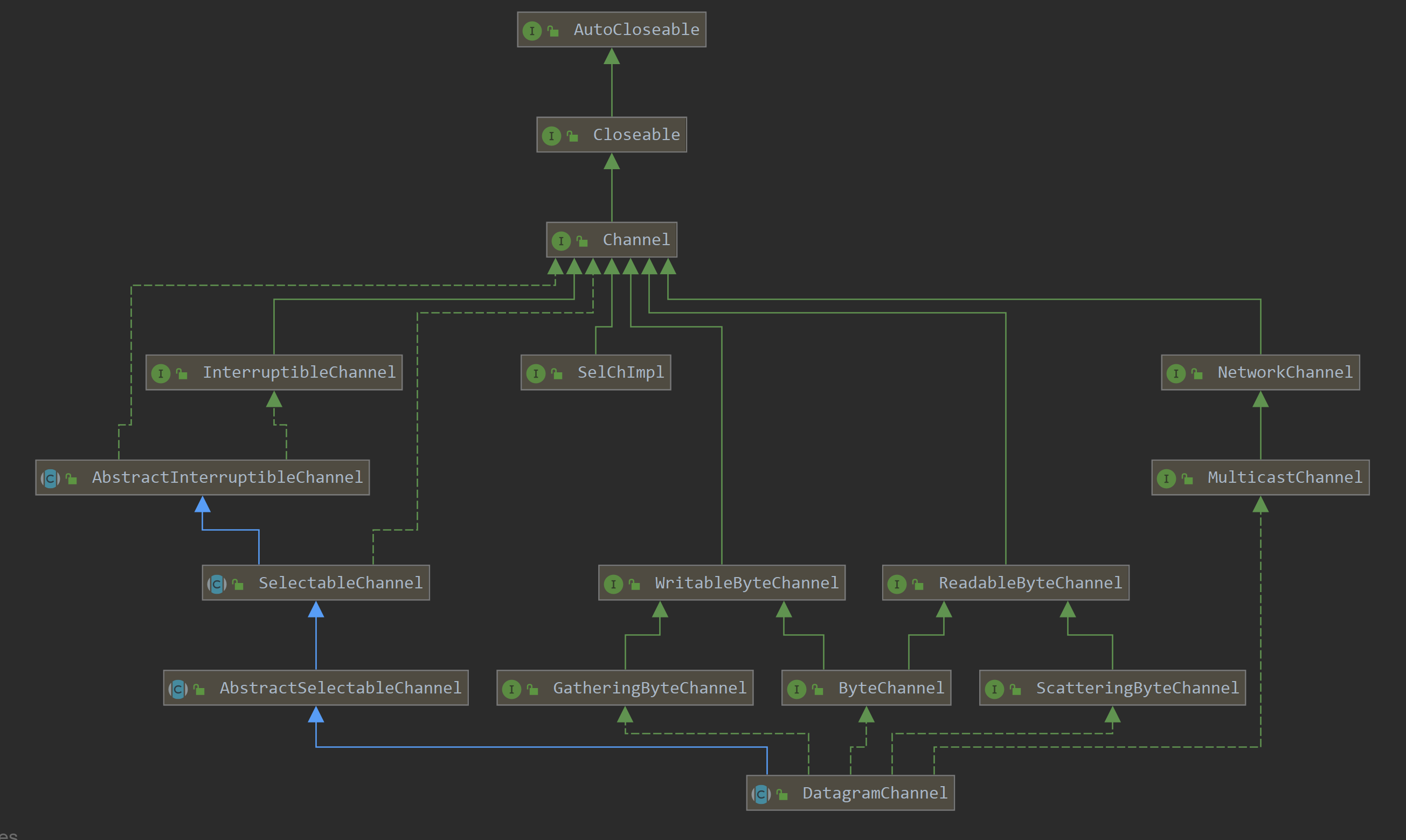
下面我们对各个接口进行分析。
AutoCloseable和Closeable分别是自动关闭和主动关闭接口。当资源(如句柄或文件等)需要释放时,则需要调用close方法释放资源。
public interface AutoCloseable {

    void close() throws Exception;

}

public interface Closeable extends AutoCloseable {

    void close() throws IOException;

}
Channel是通道接口,针对于I/O相关的操作,需要打开和关闭操作。
public interface Channel extends Closeable {

    boolean isOpen();

    void close() throws IOException;

}
InterruptibleChannel是支持异步关闭和中断的通道接口。为了支持Thead的interrupt模型,当线程中断时,可以执行中断处理对象的回调,从而关闭释放Channel。
public interface InterruptibleChannel extends Channel {

    void close() throws IOException;

}
关于InterruptibleChannel可中断I/O详细解析可以看一下《JDK源码阅读-InterruptibleChannel与可中断IO》
Interruptible是线程中断接口,即上面提的Thead的interrupt模型。当线程中断时,则会调用中断操作。
public abstract interface Interruptible {

    public abstract void interrupt(java.lang.Thread t);

}

public class Thread implements Runnable {

    ...

    public void interrupt() {

        if (this != Thread.currentThread())

            checkAccess();

        synchronized (blockerLock) {

            Interruptible b = blocker;

            if (b != null) {

                interrupt0();           // Just to set the interrupt flag

                b.interrupt(this);

                return;

            }

        }

        interrupt0();

    }

    ...

}
AbstractInterruptibleChannel实现了Channel和InterruptibleChannel接口。
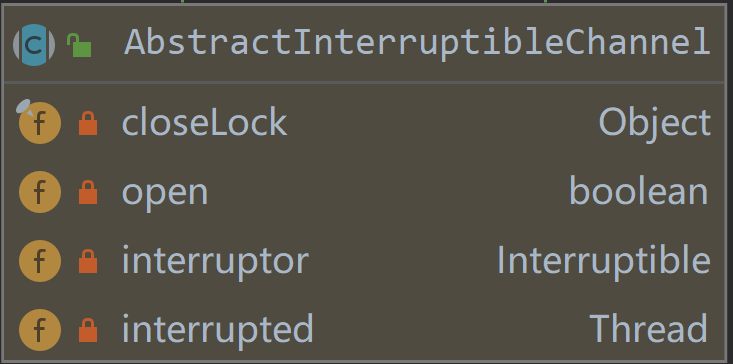
closeLock是关闭时的锁open表示channle是否打开interuptor为Interruptible中断回调interrupted为I/O执行时的线程
public abstract class AbstractInterruptibleChannel implements Channel, InterruptibleChannel {

    ...

    public final void close() throws IOException {

        synchronized(this.closeLock) {

            if (this.open) {

                this.open = false;

                this.implCloseChannel();

            }

        }

    }

    //具体的Channel实现关闭

    protected abstract void implCloseChannel() throws IOException;

    protected final void begin() {

        if (this.interruptor == null) {

            this.interruptor = new Interruptible() {

                //线程中断时,则会调用该接口关闭Channel

                public void interrupt(Thread target) {

                    synchronized(AbstractInterruptibleChannel.this.closeLock) {

                        if (AbstractInterruptibleChannel.this.open) {

                            AbstractInterruptibleChannel.this.open = false;

                            AbstractInterruptibleChannel.this.interrupted = target;

                            try {

                                AbstractInterruptibleChannel.this.implCloseChannel();

                            } catch (IOException x) {

                            }

                        }

                    }

                }

            };

        }

        //将线程的blockOn设置为当前interruptor,从而使得线程关闭时能关闭channel

        blockedOn(this.interruptor);

        Thread me = Thread.currentThread();

        if (me.isInterrupted()) {

            this.interruptor.interrupt(me);

        }

    }

    protected final void end(boolean completed)

        throws AsynchronousCloseException

    {

        //I/O结束,清除线程blocker

        blockedOn(null);

        Thread interrupted = this.interrupted;

        if (interrupted != null && interrupted == Thread.currentThread()) {

            interrupted = null;

            throw new ClosedByInterruptException();

        }

        if (!completed && !open)

            throw new AsynchronousCloseException();

    }

    static void blockedOn(Interruptible intr) {

        SharedSecrets.getJavaLangAccess().blockedOn(Thread.currentThread(), intr);

    }

}
AbstractInterruptibleChannel添加了begin和end方法。 在I/O操作开始时会调用begin,在I/O操作结束时会调用end。在begin方法内将中断操作加入到当前线程中。最终会调用到线程的blockOn方法,它会将该中断接口注入到线程中,使得线程中断时可以调用到Channel并释放相关资源。
public void blockedOn(Thread t, Interruptible b) {

    t.blockedOn(b);

}
SelectableChannel接口声明了Channel是可以被选择的,在Windows平台通过WindowsSelectorImpl实现,Linux通过EPollSelectorImpl实现。此外还有KQueue等实现,关于Selector具体细节在《NIO-Selector》一文中会介绍。
AbstractSelectableChannel实现了SelectableChannel接口。
NetworkChannel适用于网络传输的接口。
public interface NetworkChannel extends Channel {

    //绑定地址

    NetworkChannel bind(SocketAddress var1) throws IOException;

    //获取本地地址

    SocketAddress getLocalAddress() throws IOException;

    //设置socket选项

    <T> NetworkChannel setOption(SocketOption<T> var1, T var2) throws IOException;

    //获取socket选项

    <T> T getOption(SocketOption<T> var1) throws IOException;

    //当前通道支持的socket选项

    Set<SocketOption<?>> supportedOptions();

}
MulticastChannel是支持组播接口。
public interface MulticastChannel extends NetworkChannel {

    void close() throws IOException;

    MembershipKey join(InetAddress group, NetworkInterface interf) throws IOException;

    MembershipKey join(InetAddress group, NetworkInterface interf, InetAddress source) throws IOException;

}
SelChImpl接口用于将底层的I/O就绪状态更新为就绪事件。
public interface SelChImpl extends Channel {

    FileDescriptor getFD();

    int getFDVal();

    //更新就绪事件

    public boolean translateAndUpdateReadyOps(int ops, SelectionKeyImpl sk);

    //设置就绪事件

    public boolean translateAndSetReadyOps(int ops, SelectionKeyImpl sk);

    //将底层的轮询操作转换为事件

    void translateAndSetInterestOps(int ops, SelectionKeyImpl sk);

    //返回channle支持的操作,比如读操作、写操作等

    int validOps();

    void kill() throws IOException;

}
由于UDP支持读写数据,因此还实现了ReadableByteChannel和WritableByteChannel接口
public interface ReadableByteChannel extends Channel {

    int read(ByteBuffer dst) throws IOException;

}

public interface WritableByteChannel extends Channel {

    int write(ByteBuffer src) throws IOException;

}
ByteChannel是支持读写的通道。
public interface ByteChannel extends ReadableByteChannel, WritableByteChannel {

}
ScatteringByteChannel则支持根据传入偏移量读,支持根据传入偏移量写GatheringByteChannel
public interface ScatteringByteChannel extends ReadableByteChannel {

    long read(ByteBuffer[] dsts, int offset, int length) throws IOException;

    long read(ByteBuffer[] dsts) throws IOException;}

public interface GatheringByteChannel extends WritableByteChannel {

    long write(ByteBuffer[] srcs, int offset, int length) throws IOException;

    long write(ByteBuffer[] srcs) throws IOException;

}
TCP协议
客户端
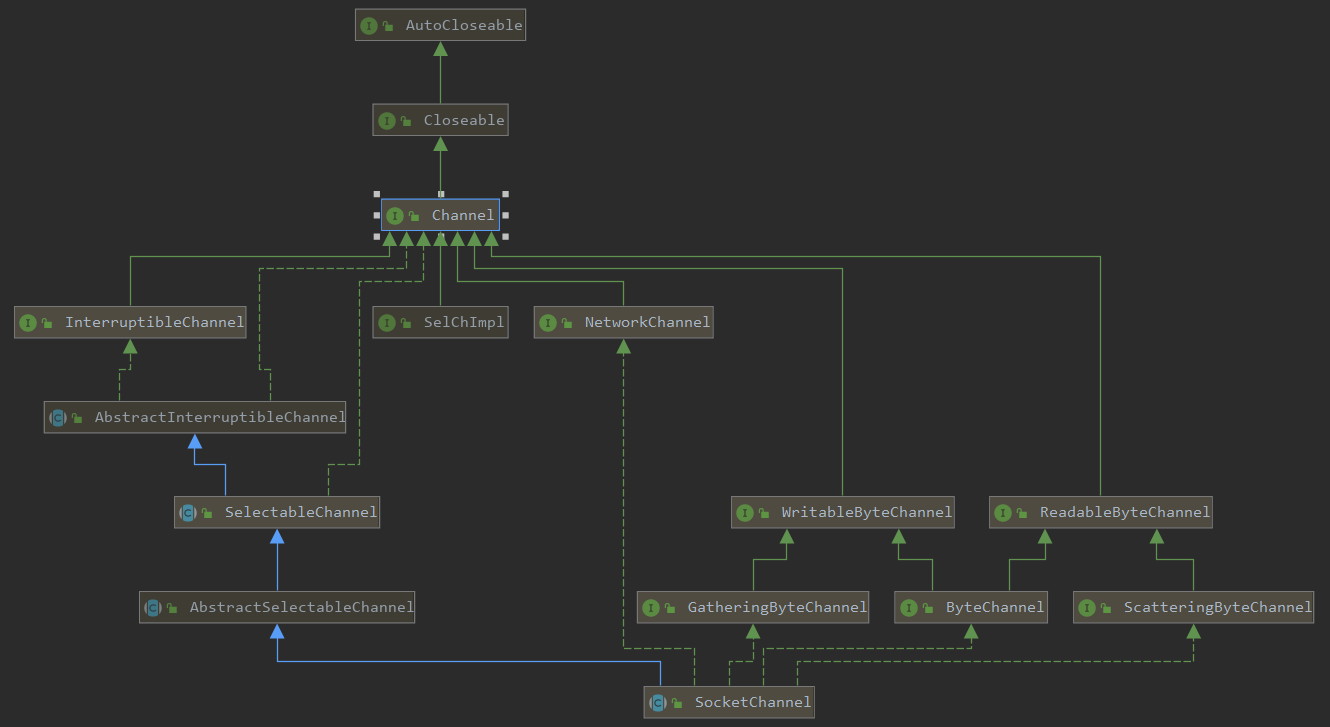
TCP协议除了不支持组播,其他和UDP是一样的,不再重复介绍。
服务端
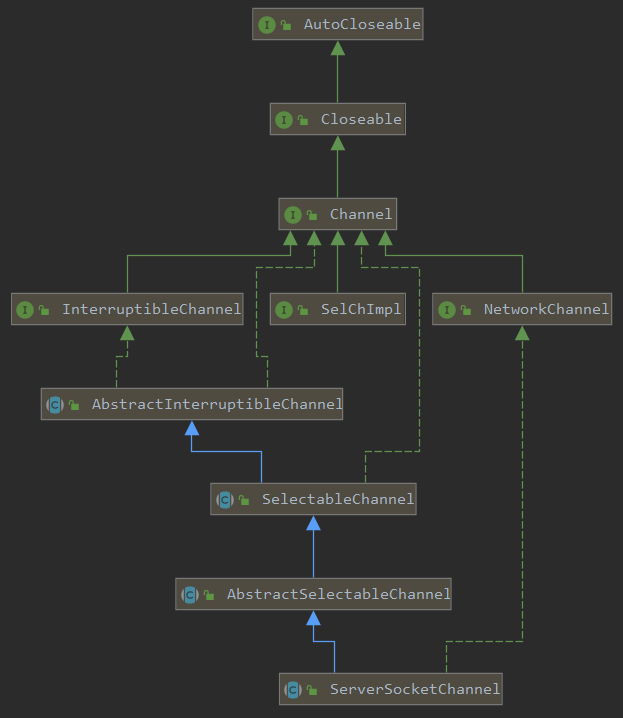
服务端无需数据读写,仅需要接收连接,数据读写是SocketChannel干的事。因此没有ReadableByteChannel、WriteableByteChannel等读写接口
文件
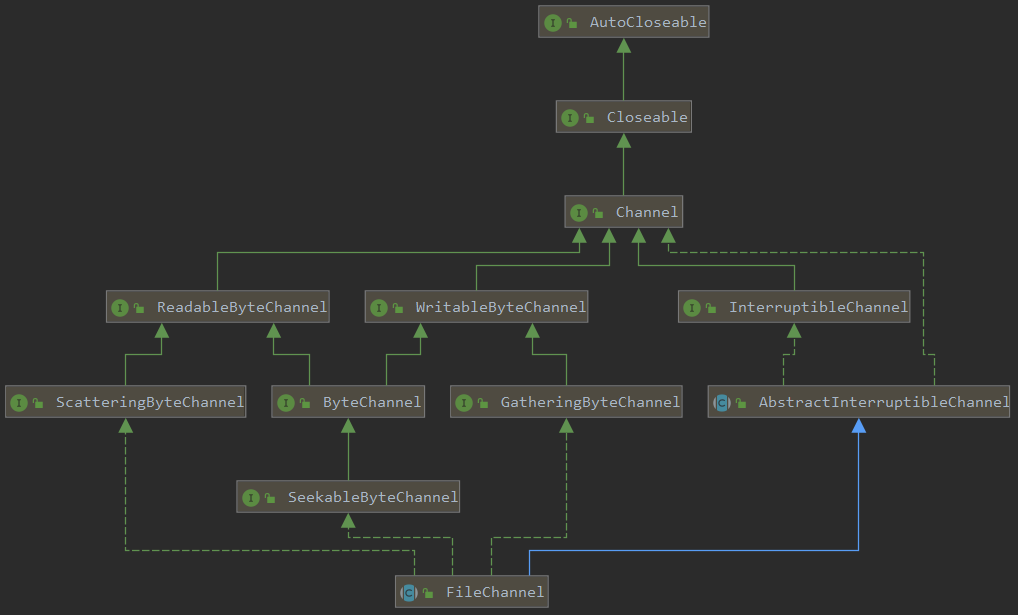
文件比网络协议少了NetworkChannel、SelChImpl和SelectableChannel。SelChImpl和SelectableChannel主要是用于支持选择器的,由于网络传输大多数连接时空闲的,而且数据何时会到来并不知晓,同时需要支持高并发来连接,因此支持多路复用技术可以显著的提高性能,而磁盘读写则没有该需求,因此无需选择器。
SeekableByteChannel可以通过修改position支持从指定位置读写数据。
public interface SeekableByteChannel extends ByteChannel {

    int read(ByteBuffer dst) throws IOException;

    int write(ByteBuffer src) throws IOException;

    long position() throws IOException;

    //设置偏移量

    SeekableByteChannel position(long newPosition) throws IOException;

    long size() throws IOException;

    //截取指定大小

    SeekableByteChannel truncate(long size) throws IOException;

}
总结
由于文章篇幅比较长,因此还是将接口分析和实现分析分开。本篇文章对Channel的接口进行说明,下一篇将对具体的实现进行分析。
相关文献
- SCTP协议详解
- 史上最强Java NIO入门:担心从入门到放弃的,请读这篇!
- Java NIO系列教程
- 为什么SCTP没有被大量使用/知道
- JDK源码阅读-InterruptibleChannel与可中断IO
- 广播和组播
- 关于AccessController.doPrivileged
- ServiceLoader源码分析
- 基于Java的RDMA高性能通信库(六):SDP - Java Socket Direct Protocol
微信扫一扫二维码关注订阅号杰哥技术分享
出处:https://www.cnblogs.com/Jack-Blog/p/12040082.html
作者:杰哥很忙
本文使用「CC BY 4.0」创作共享协议。欢迎转载,请在明显位置给出出处及链接。

NIO-Channel接口分析的更多相关文章
- Java NIO Channel和Buffer
Java NIO Channel和Buffer @author ixenos Channel和Buffer的关系 1.NIO速度的提高来自于所使用的结构更接近于OS执行I/O的方式:通道和缓冲器: 2 ...
- Java NIO Channel之FileChannel [ 转载 ]
Java NIO Channel之FileChannel [ 转载 ] @author zachary.guo 对于文件 I/O,最强大之处在于异步 I/O(asynchronous I/O),它允许 ...
- Java NIO Channel通道
原文链接:http://tutorials.jenkov.com/java-nio/channels.html Java NIO Channel通道和流非常相似,主要有以下几点区别: 通道可以读也可以 ...
- (三:NIO系列) Java NIO Channel
出处: Java NIO Channel 1.1. Java NIO Channel的特点 和老的OIO相比,通道和NIO流(非阻塞IO)主要有以下几点区别: (1)OIO流一般来说是单向的(只能读或 ...
- [翻译] java NIO Channel
原文地址:http://tutorials.jenkov.com/java-nio/channels.html JAVA NIO channels和流的概念很像,下面是他们的一些区别: 你可以对cha ...
- Java NIO Channel to Channel Transfers通道传输接口
原文链接:http://tutorials.jenkov.com/java-nio/channel-to-channel-transfers.html 在Java NIO中如果一个channel是Fi ...
- NIO Channel和Buffer
Java NIO 由以下几个核心部分组成: Buffer Channel Selector 传统的IO操作面向数据流,意味着每次从流中读一个或多个字节,直至完成,数据没有被缓存在任何地方.NIO操作面 ...
- Java NIO Channel to Channel Transfers
In Java NIO you can transfer data directly from one channel to another, if one of the channels is a ...
- NIO Channel的学习笔记总结
摘自:http://blog.csdn.net/tsyj810883979/article/details/6876603 1.1 非阻塞模式 Java NIO非堵塞应用通常适用用在I/O读写等方 ...
- NIO Channel Socket套接字相关Channel
阻塞非阻塞: NIO中的Channel主要分为两大类:一类是FileChannel,另一类是SocketChannel.NIO提供的核心非阻塞特性主要针对SocketChannel类,全部socket ...
随机推荐
- 还看不懂同事的代码?超强的 Stream 流操作姿势还不学习一下
Java 8 新特性系列文章索引. Jdk14都要出了,还不能使用 Optional优雅的处理空指针? Jdk14 都要出了,Jdk8 的时间处理姿势还不了解一下? 还看不懂同事的代码?Lambda ...
- Unity - Cinemachine实现相机抖动
普通相机抖动脚本较易实现,但在使用cinemachine相机下,其Transform组件不可被代码改变,那么Cinemachine的相机抖动如何实现呢?本文结合实际项目,对实现相机抖动的三大步骤进行系 ...
- Docker笔记(十二):Docker Compose入门
1. Compose简介 Docker Compose是Docker官方的用于对Docker容器集群实现编排,快速部署分布式应用的开源项目.Docker Compose通过docker-compose ...
- IE6下CSS常见兼容性问题及解决方案
1. 在IE6元素浮动,如果宽度需要内容撑开,就给里面的块元素加浮动. 2. IE6下最小高度问题:在IE6下元素高度小于19px的时候,会被当作19px处理.解决方案:给元素加 overflow:h ...
- Android性能优化总结
合理的管理内存 节制地使用Service,尽量使用IntentService 避免在Bitmap上浪费内存,压缩图片处理 谨慎使用抽象编程 尽量避免会用依赖注入框架 使用ProGuard简化代码,好处 ...
- pyinstaller打包python文件成exe(原理.安装.问题)
py文件打包成exe文件的方式一共有三种:py2exe.PyInstaller和cx_Freeze 本文分四个步骤来详讲如何用PyInstaller将py文件打包成exe文件 1. PyInstall ...
- PowerMock学习(七)之Mock Constructor的使用
前言 我们在编码的时候,总习惯在构造器中传参数,那么在powermock中是怎么模拟带参数构造的呢,这并不难. 模拟场景 我们先模拟这样一个场景,通过dao中的传入一个是布尔类型(是否加载)和一个枚举 ...
- 2019-9-24:渗透测试,css样式,js基础学习笔记
css分组和嵌套:分组:比如有<h1><h4><p>,3个标签,设置css时候可以 h1,h4,p{样式:属性} 这样的语法嵌套:比如.lei{样式:属性},.le ...
- C#面向对象--命名空间
一.在C#中,使用命名空间(Namespace)可以帮助控制自定义类型的作用范围,同时对大量的类型进行组织:使用namespace关键字声明命名空间,命名空间可以嵌套使用: namespace MyN ...
- day 28 网络基础相关的知识
1.网络基础相关的知识 架构 C/S 架构: client 客户端 server服务器端 优势: 能充分发挥PC机的性能 B/S 架构: browser 浏览器 server服务器 隶 ...