
mysql查询orderby
/*

数据如下:

name val memo

a    2   a2(a的第二个值)

a    1   a1--a的第一个值

a    3   a3:a的第三个值

b    1   b1--b的第一个值

b    3   b3:b的第三个值

b    2   b2b2b2b2

b    4   b4b4

b    5   b5b5b5b5b5

*/
create table tb(name varchar(10),val int,memo varchar(20))

insert into tb values('a',    2,   'a2(a的第二个值)')

insert into tb values('a',    1,   'a1--a的第一个值')

insert into tb values('a',    3,   'a3:a的第三个值')

insert into tb values('b',    1,   'b1--b的第一个值')

insert into tb values('b',    3,   'b3:b的第三个值')

insert into tb values('b',    2,   'b2b2b2b2')

insert into tb values('b',    4,   'b4b4')

insert into tb values('b',    5,   'b5b5b5b5b5')

go
--一、按name分组取val最大的值所在行的数据。
 --方法1:

select a.* from tb a where val = (select max(val) from tb where name = a.name) order by a.name

--方法2:

select a.* from tb a where not exists(select 1 from tb where name = a.name and val > a.val)

--方法3:

select a.* from tb a,(select name,max(val) val from tb group by name) b where a.name = b.name and a.val = b.val order by a.name

--方法4:

select a.* from tb a inner join (select name , max(val) val from tb group by name) b on a.name = b.name and a.val = b.val order by a.name

--方法5

select a.* from tb a where 1 > (select count(*) from tb where name = a.name and val > a.val ) order by a.name

/*

name       val         memo

---------- ----------- --------------------

a          3           a3:a的第三个值

b          5           b5b5b5b5b5

*/
本人推荐使用1,3,4,结果显示1,3,4效率相同,2,5效率差些,不过我3,4效率相同毫无疑问,1就不一样了,想不搞了。
--二、按name分组取val最小的值所在行的数据。
--方法1:

select a.* from tb a where val = (select min(val) from tb where name = a.name) order by a.name

--方法2:

select a.* from tb a where not exists(select 1 from tb where name = a.name and val < a.val)

--方法3:

select a.* from tb a,(select name,min(val) val from tb group by name) b where a.name = b.name and a.val = b.val order by a.name

--方法4:

select a.* from tb a inner join (select name , min(val) val from tb group by name) b on a.name = b.name and a.val = b.val order by a.name

--方法5

select a.* from tb a where 1 > (select count(*) from tb where name = a.name and val < a.val) order by a.name

/*

name       val         memo

---------- ----------- --------------------

a          1           a1--a的第一个值

b          1           b1--b的第一个值

*/
--三、按name分组取第一次出现的行所在的数据。
select a.* from tb a where val = (select top 1 val from tb where name = a.name) order by a.name

/*

name       val         memo

---------- ----------- --------------------

a          2           a2(a的第二个值)

b          1           b1--b的第一个值

*/
select a.* from tb a where val = (select top 1 val from tb where name = a.name order by newid()) order by a.name

/*

name       val         memo

---------- ----------- --------------------

a          1           a1--a的第一个值

b          5           b5b5b5b5b5

*/
--五、按name分组取最小的两个(N个)val
select a.* from tb a where 2 > (select count(*) from tb where name = a.name and val < a.val ) order by a.name,a.val

select a.* from tb a where val in (select top 2 val from tb where name=a.name order by val) order by a.name,a.val

select a.* from tb a where exists (select count(*) from tb where name = a.name and val < a.val having Count(*) < 2) order by a.name

/*

name       val         memo

---------- ----------- --------------------

a          1           a1--a的第一个值

a          2           a2(a的第二个值)

b          1           b1--b的第一个值

b          2           b2b2b2b2

*/
--六、按name分组取最大的两个(N个)val
select a.* from tb a where 2 > (select count(*) from tb where name = a.name and val > a.val ) order by a.name,a.val

select a.* from tb a where val in (select top 2 val from tb where name=a.name order by val desc) order by a.name,a.val

select a.* from tb a where exists (select count(*) from tb where name = a.name and val > a.val having Count(*) < 2) order by a.name

/*

name       val         memo

---------- ----------- --------------------

a          2           a2(a的第二个值)

a          3           a3:a的第三个值

b          4           b4b4

b          5           b5b5b5b5b5

*/
 1  /*

 2 数据如下:

 3 name val memo

 4 a    2   a2(a的第二个值)

 5 a    1   a1--a的第一个值

 6 a    1   a1--a的第一个值

 7 a    3   a3:a的第三个值

 8 a    3   a3:a的第三个值

 9 b    1   b1--b的第一个值

10 b    3   b3:b的第三个值

11 b    2   b2b2b2b2

12 b    4   b4b4

13 b    5   b5b5b5b5b5

14

15 */

16
附:mysql “group by ”与"order by"的研究--分类中最新的内容
这两天让一个数据查询难了。主要是对group by 理解的不够深入。才出现这样的情况
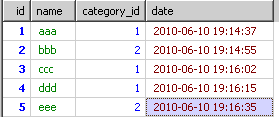
我现在需要取出每个分类中最新的内容
结果如下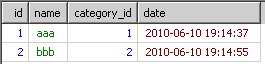
明显。这不是我想要的数据,原因是msyql已经的执行顺序是
执行顺序:from... where...group by... having.... select ... order by...
所以在order by拿到的结果里已经是分组的完的最后结果。
由from到where的结果如下的内容。
到group by时就得到了根据category_id分出来的多个小组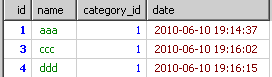
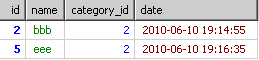
到了select的时候,只从上面的每个组里取第一条信息结果会如下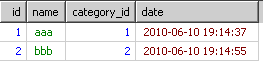
即使order by也只是从上面的结果里进行排序。并不是每个分类的最新信息。
回到我的目的上 --分类中最新的信息
根据上面的分析,group by到select时只取到分组里的第一条信息。有两个解决方法
1,where+group by(对小组进行排序)
2,从form返回的数据下手脚(即用子查询)
由where+group by的解决方法
对group by里的小组进行排序的函数我只查到group_concat()可以进行排序,但group_concat的作用是将小组里的字段里的值进行串联起来。
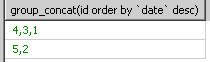
再改进一下
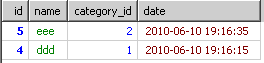
子查询解决方案
mysql查询orderby的更多相关文章
- Swoole 实战:MySQL 查询器的实现(协程连接池版)
目录 需求分析 使用示例 模块设计 UML 类图 入口 事务 连接池 连接 查询器的组装 总结 需求分析 本篇我们将通过 Swoole 实现一个自带连接池的 MySQL 查询器: 支持通过链式调用构造 ...
- mysql查询性能优化
mysql查询过程: 客户端发送查询请求. 服务器检查查询缓存,如果命中缓存,则返回结果,否则,继续执行. 服务器进行sql解析,预处理,再由优化器生成执行计划. Mysql调用存储引擎API执行优化 ...
- Mysql查询——深入学习
1.开篇 之前上一篇的随笔基本上是单表的查询,也是mysql查询的一个基本.接下来我们要看看两个表以上的查询如何得到我们想要的结果. 在学习的过程中我们一起进步,成长.有什么写的不对的还望可以指出. ...
- Mysql 查询练习
Mysql 查询练习 ---创建班级表 create table class( cid int auto_increment primary key, caption ) )engine=innodb ...
- mysql 查询去重 distinct
mysql 查询去重 distinct 待完善内容..
- MySQl查询区分大小写的解决办法
通过查询资料发现需要设置collate(校对) . collate规则: *_bin: 表示的是binary case sensitive collation,也就是说是区分大小写的 *_cs: ca ...
- 【转】mysql查询结果输出到文件
转自:http://www.cnblogs.com/emanlee/p/4233602.html mysql查询结果导出/输出/写入到文件 方法一: 直接执行命令: mysql> select ...
- MySQL查询缓存
MySQL查询缓存 用于保存MySQL查询语句返回的完整结果,被命中时,MySQL会立即返回结果,省去解析.优化和执行等阶段. 如何检查缓存? MySQL保存结果于缓存中: 把SELECT语句本身做h ...
- mysql 查询数据时按照A-Z顺序排序返回结果集
mysql 查询数据时按照A-Z顺序排序返回结果集 $sql = "SELECT * , ELT( INTERVAL( CONV( HEX( left( name, 1 ) ) , 16, ...
随机推荐
- Java_Web之分层架构
当我们把业务处理的代码与JSP代码混在一起,不易于阅读,不易于代码维护,这就需要分层. 分层模式 1.分层模式是最常见的一种架构模式 2.分层模式是很多架构模式的基础 分层 将解决方案的组件分隔到不同 ...
- Python批量添加库搜索路径
被win10 给坑了,换回Win7. 重装系统后,继续使用Python,Eclipse不用重装,pydev不用重装,只需重装Python2.7.6 X64 for win即可.然后,默认已安装的Pyt ...
- 使用脚本卸载.net framework for mac
官方只提供了安装包,没提供卸载
- C语言右移操作在汇编层面的相关解释
在 CSDN 看到帖子回复如下: x=y>>2;004122A8 mov eax,dword ptr [y] 004122AB sar eax,2 '算 ...
- HDU 5729 Rigid Frameworks (联通块计数问题)
题目传送门 通过看题解画图可以发现: 不论怎么转,一列里的横边/一行里的竖边始终平行 当我们加固一个格子时,会让它所在的这一行的竖边和这一列的横边保证垂直 而我们的目标是求所有竖边和横边都保证垂直的方 ...
- Linux思维导图之sed、实战习题
命令解释: ◆sed 2p /etc/passwd第二行打印了两次其余一次 ◆sed-n '2p' /etc/passwd 只打印出第二行 ◆sed-n 1,4p' /etc/passwd 只打印出1 ...
- vue 注册全局组件
注册全局组件有啥好处呢? 提高代码的复用性:哪里需要写哪里,贼方便,就写一个标签:减少代码量:可以再配合slot一起使用,咦~~,舒服 为了让整个项目的可读性,我创建一个文件统一存放全局组件 1.创建 ...
- 【Codeforces 933A】A Twisty Movement
[链接] 我是链接,点我呀:) [题意] [题解] 因为只有1和2. 所以最后肯定是若干个1接着若干个2的情况. 即11...11222...222这样的. 1.首先考虑没有翻转的情况. 那么就直接枚 ...
- hibernate4.3版本构造SessionFactory方法
hibernate3.X构造SessionFactory方法 //读取hibernate.cfg.xml文件 Configuration cfg = new Configuration().confi ...
- POJ 4046 Sightseeing
Sightseeing Time Limit: 5000ms Memory Limit: 65536KB This problem will be judged on PKU. Original ID ...