
PokerNet-poker recognition: 基于人工神经网络的扑克识别 (5)
结果1
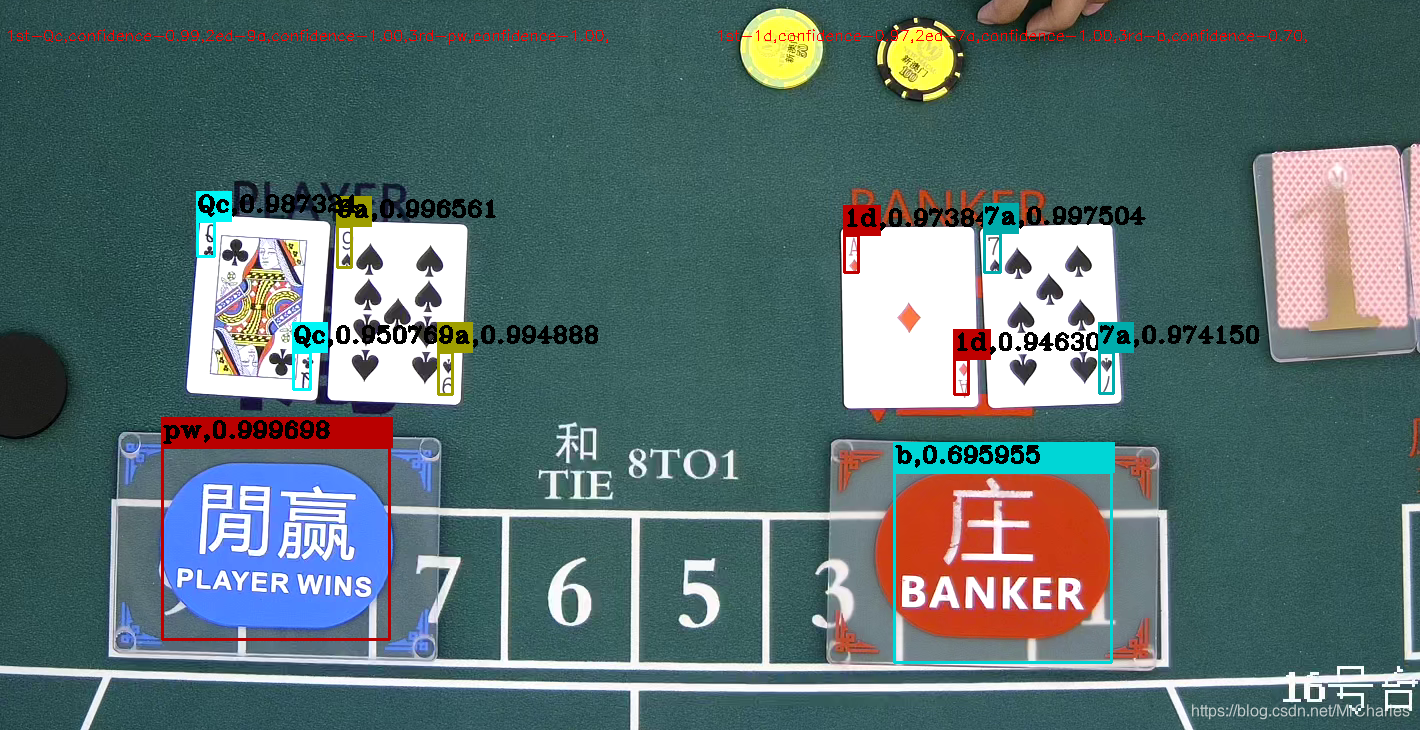
void computeBCValue(cv::Mat mat_img, std::vector<bbox_t> result_vec, std::vector<std::string> obj_names,

	int current_det_fps = -1, int current_cap_fps = -1)

{

	int const colors[6][3] = { { 1,0,1 },{ 0,0,1 },{ 0,1,1 },{ 0,1,0 },{ 1,1,0 },{ 1,0,0 } };

	Cardsets cardsets;

	int tempx = 0;

	vector<bbox_t>  mypoints;    //

	for (auto &i : result_vec) {

		if (i.prob < confidencetheta) { // if I am not confident than 50%, skip this poker

			continue;

		}

		// here we compute the distance w.r.t (0,0)

		if (i.h < i.w) {// 3rd

			if (i.prob > cardsets.confidence[2]) {

				cardsets.confidence[2] = i.prob;

				cardsets.cardvalues[2] = Point3f(i.x, i.y, i.obj_id);

			}

		}

		else {

			mypoints.push_back(i);

		}

	}

	if (cardsets.cardvalues[2].x > 0) {

		//cout << "3rd-" << obj_names[cardsets.cardvalues[2].z] << endl;

	}

	if (mypoints.size() < 2) { return; }

	sort(mypoints.begin(), mypoints.end(), SetSortRule);

	int first = 0;

	int second = 0;

	if (mypoints.size() == 4) {//

		if (mypoints[0].prob > mypoints[1].prob) {

			//cout << "1st-" << obj_names[mypoints[0].obj_id] << endl;

			first = 0;

		}

		else {

			//cout << "1st-" << obj_names[mypoints[1].obj_id] << endl;

			first = 1;

		}

		if (mypoints[2].prob > mypoints[3].prob) {

			//	cout << "2ed-" << obj_names[mypoints[2].obj_id] << endl;

			second = 2;

		}

		else {

			//cout << "2ed-" << obj_names[mypoints[3].obj_id] << endl;

			second = 3;

		}

	}

	else if (mypoints.size() == 3) {// if we only detect 3 points, take first one to match with other two decide which is pair

		/* details of the theroy are on the notebook page   */

		int delta_y = mypoints[1].y - mypoints[0].y;

		if (getCosineDistance(mypoints[0], mypoints[1]) < getCosineDistance(mypoints[0], mypoints[2]) && delta_y > 100) { // we assume they belong to one card

			first = mypoints[0].prob > mypoints[1].prob ? 0 : 1;

			second = 2;

		}

		else {// 0 and 1 not one card

			//	cout << "1st-" << obj_names[mypoints[0].obj_id] << endl;

			second = mypoints[1].prob > mypoints[2].prob ? 1 : 2;

		}

	}

	else  if (mypoints.size() == 2) {

		if (getCosineDistance(mypoints[0], mypoints[1]) < cosinetheta) { // we assume they belong to one card

			first = mypoints[0].prob > mypoints[1].prob ? 0 : 1;

		}

		else {

			second = 1;

		}

	}

	cardsets.confidence[0] = mypoints[first].prob;

	cardsets.cardvalues[0] = Point3f(mypoints[first].x, mypoints[first].y, mypoints[first].obj_id);

	cardsets.confidence[1] = mypoints[second].prob;

	cardsets.cardvalues[1] = Point3f(mypoints[second].x, mypoints[second].y, mypoints[second].obj_id);

	ostringstream info;

	info << "1st-" << obj_names[mypoints[first].obj_id] << ",confidence-" << setprecision(2) << fixed << mypoints[first].prob << ",";

	info << "2ed-" << obj_names[mypoints[second].obj_id] << ",confidence-" << setprecision(2) << fixed << mypoints[second].prob << ",";

	if (cardsets.cardvalues[2].x > 0) { info << "3rd-" << obj_names[cardsets.cardvalues[2].z] << ",confidence-" << setprecision(2) << fixed << cardsets.confidence[2] << ","; }

	cout << info.str() << endl;

	putText(mat_img, info.str(), cv::Point(5, 40), cv::FONT_HERSHEY_SIMPLEX, 0.5, cv::Scalar(0, 0, 255));

}
结果2
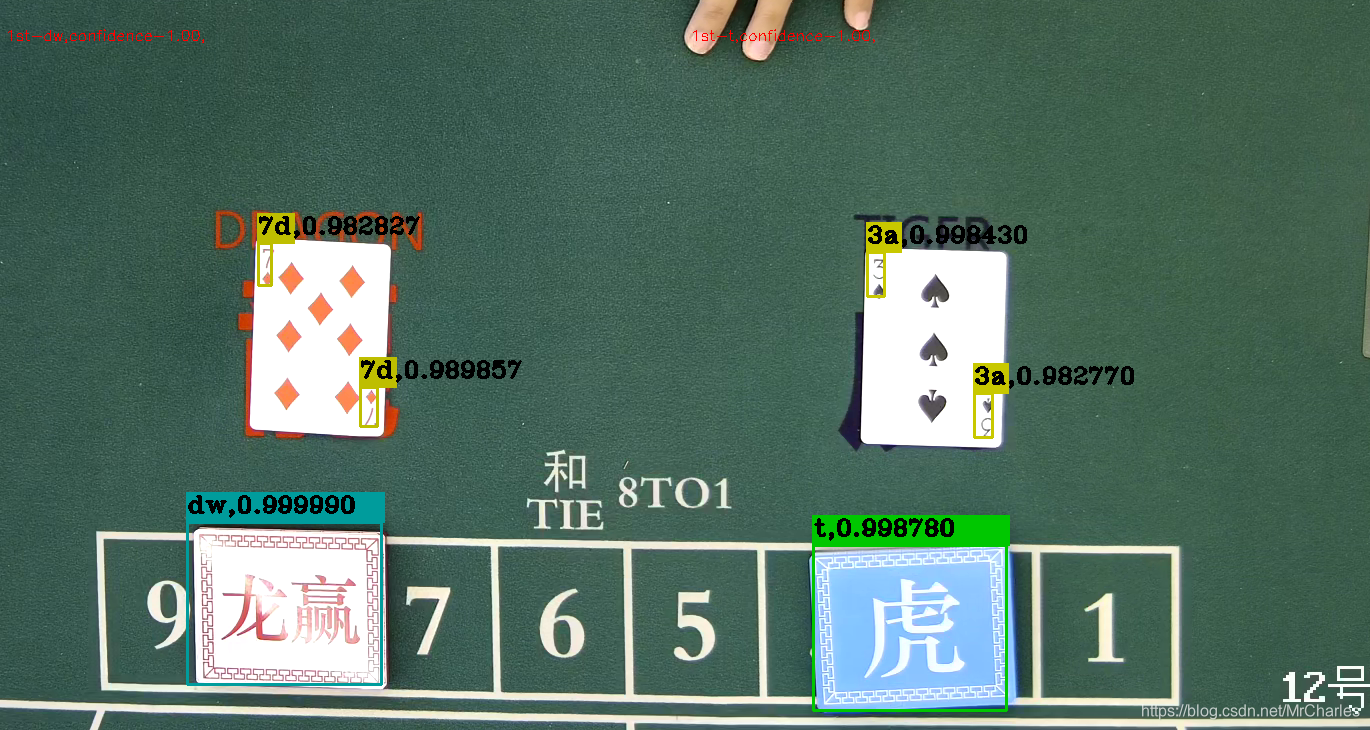
void computeDTValue(cv::Mat mat_img, std::vector<bbox_t> result_vec, std::vector<std::string> obj_names,

	int current_det_fps = -1, int current_cap_fps = -1)

{

	int const colors[6][3] = { { 1,0,1 },{ 0,0,1 },{ 0,1,1 },{ 0,1,0 },{ 1,1,0 },{ 1,0,0 } };

	int tempx = 0;

	vector<bbox_t>  mypoints;    //

	for (auto &i : result_vec) {

		if (i.prob > confidencetheta) { // if I am not confident than 50%, skip this poker

			mypoints.push_back(i);

		}

	}

	sort(mypoints.begin(), mypoints.end(), SetSortRulebyConfidence);

	int cardids = 0;

	float confidence = 0;

	if (mypoints.size() > 0) {

		cardids = mypoints[0].obj_id;

		confidence = mypoints[0].prob;

	}

	else { //error

		cout << "nothing detected" << endl;

	}

	ostringstream info;

	info << "1st-" << obj_names[cardids] << ",confidence-" << setprecision(2) << fixed << confidence << ",";

	cout << info.str() << endl;

	cv::putText(mat_img, info.str(), cv::Point(5, 40), cv::FONT_HERSHEY_SIMPLEX, 0.5, cv::Scalar(0, 0, 255));

}
PokerNet-poker recognition: 基于人工神经网络的扑克识别 (5)的更多相关文章
- 基于卷积神经网络的人脸识别项目_使用Tensorflow-gpu+dilib+sklearn
https://www.cnblogs.com/31415926535x/p/11001669.html 基于卷积神经网络的人脸识别项目_使用Tensorflow-gpu+dilib+sklearn ...
- Pytorch实现基于卷积神经网络的面部表情识别(详细步骤)
文章目录 一.项目背景 二.数据处理 1.标签与特征分离 2.数据可视化 3.训练集和测试集 三.模型搭建 四.模型训练 五.完整代码 一.项目背景数据集cnn_train.csv包含人类面部表情的图 ...
- 基于卷积神经网络的面部表情识别(Pytorch实现)----台大李宏毅机器学习作业3(HW3)
一.项目说明 给定数据集train.csv,要求使用卷积神经网络CNN,根据每个样本的面部图片判断出其表情.在本项目中,表情共分7类,分别为:(0)生气,(1)厌恶,(2)恐惧,(3)高兴,(4)难过 ...
- 深度学习项目——基于卷积神经网络(CNN)的人脸在线识别系统
基于卷积神经网络(CNN)的人脸在线识别系统 本设计研究人脸识别技术,基于卷积神经网络构建了一套人脸在线检测识别系统,系统将由以下几个部分构成: 制作人脸数据集.CNN神经网络模型训练.人脸检测.人脸 ...
- 硕毕论文_基于 3D 卷积神经网络的行为识别算法研究
论文标题:基于 3D 卷积神经网络的行为识别算法研究 来源/作者机构情况: 中 国 地 质 大 学(北京),计算机学院,图像处理方向 解决问题/主要思想贡献: 1. 使用张量CP分解的原理, ...
- C#中调用Matlab人工神经网络算法实现手写数字识别
手写数字识别实现 设计技术参数:通过由数字构成的图像,自动实现几个不同数字的识别,设计识别方法,有较高的识别率 关键字:二值化 投影 矩阵 目标定位 Matlab 手写数字图像识别简介: 手写 ...
- 人工神经网络简介和单层网络实现AND运算--AForge.NET框架的使用(五)
原文:人工神经网络简介和单层网络实现AND运算--AForge.NET框架的使用(五) 前面4篇文章说的是模糊系统,它不同于传统的值逻辑,理论基础是模糊数学,所以有些朋友看着有点迷糊,如果有兴趣建议参 ...
- 基于BP神经网络的字符识别研究
基于BP神经网络的字符识别研究 原文作者:Andrew Kirillov. http://www.codeproject.com/KB/cs/neural_network_ocr.aspx 摘要:本文 ...
- 人工神经网络--ANN
神经网络是一门重要的机器学习技术.它是目前最为火热的研究方向--深度学习的基础.学习神经网络不仅可以让你掌握一门强大的机器学习方法,同时也可以更好地帮助你理解深度学习技术. 本文以一种简单的,循序的方 ...
随机推荐
- CentOS7添加永久静态路由
CentOS7永久静态路由需要写到 /etc/sysconfig/network-scripts/route-****** 文件中,故在/etc/sysconfig/network-scripts/下 ...
- 从零开始 Code Review,两年实战经验分享!
作者:wenhx http://www.cnblogs.com/wenhx/p/5641766.html 前几天看了<Code Review 程序员的寄望与哀伤>,想到我们团队开展 Cod ...
- 如果通过cookies和localStorage取值?
1. getCook : 设定setCookie值 let setCookie = setCookie('wan',data,7); function setCookie(c_name,value,e ...
- Synchronizing Timer----集合点定时器
1.Number of Simulated Users to Group by:意思是比如设置是10,那会等到有10个线程到时候,才放行 2.Timeout in millilseconds:比如设置 ...
- windows IIS FTP 不支持创建多级目录
昨天因为这个事情搞了好久,因为客户那边使用的是IIS 上的FTP ,想着都差不多试着运行,结果竟然报错,说"错误550 文件不可用" 是在GetResponse()出现的异常,我用 ...
- 【HDOJ】P1007 Quoit Design (最近点对)
题目意思很简单,意思就是求一个图上最近点对. 具体思想就是二分法,这里就不做介绍,相信大家都会明白的,在这里我说明一下如何进行拼合. 具体证明一下为什么只需要检查6个点 首先,假设当前左侧和右侧的最小 ...
- rest_framework 认证组件 权限组件
认证组件 权限组件 一.准备内容 # models class User(models.Model): name = models.CharField(max_length=32) pwd = mod ...
- centos7.x部署php7.0、mysql
1.安装httpd yum install httpd systemctl start httpd.service #启动命令 systemctl stop httpd.service #停止命令 s ...
- Algo: Binary search
二分查找的基本写法: #include <vector> #include <iostream> int binarySearch(std::vector<int> ...
- 基于 CI 1.7.x 的 项目使用新版本CI的文件缓存类库
维护的项目使用的是 codeigniter 1.7.x版本,但是我想使用文件缓存,但是旧版本是没有缓存类库的,并且autoload.php没有drivers这个配置项. 我复制的是 Codeignit ...