
使用Dagger2做静态注入, 对比Guice.
Dagger
依赖注入的诉求, 这边就不重复描述了, 在上文Spring以及Guice的IOC文档中都有提及, 既然有了Guice,
Google为啥还要搞个Dagger2出来重复造轮子呢? 因为使用动态注入, 虽然写法简单了, 耦合也降低了,
但是带来了调试不方便, 反射性能差等一些缺点.
而Dagger跟Guice最大的差异在于, 他是编译期注入的, 而不是运行时.
他生成的代码可以直观的调试, 也不是通过反射, 而是通过构建工厂类. 下面我们用代码来简单演示一下.
构建工程
既然Dagger是静态注入的, 那么他自然也跟其他动态注入框架工程有点区别,
编译时需要额外依赖dagger-compiler, dagger-producers等,

不过运行时的jar只需要dagger以及javax.inject包即可.
好在Google为我们提供了pom文件, 我们只需要在idea里新建maven工程, 在pom文件中导入如下内容, 他会自动下载依赖.
 <?xml version="1.0" encoding="UTF-8"?>

 <project xmlns="http://maven.apache.org/POM/4.0.0"

          xmlns:xsi="http://www.w3.org/2001/XMLSchema-instance"

          xsi:schemaLocation="http://maven.apache.org/POM/4.0.0 http://maven.apache.org/xsd/maven-4.0.0.xsd">

     <modelVersion>4.0.0</modelVersion>

     <groupId>com.maven.dagger2</groupId>

     <artifactId>com.maven.dagger2</artifactId>

     <version>1.0-SNAPSHOT</version>

     <dependencies>

         <dependency>

             <groupId>com.google.dagger</groupId>

             <artifactId>dagger</artifactId>

             <version>2.2</version>

         </dependency>

         <dependency>

             <groupId>com.google.dagger</groupId>

             <artifactId>dagger-compiler</artifactId>

             <version>2.2</version>

             <optional>true</optional>

         </dependency>

     </dependencies>

 </project>
第一个注入程序
我们以一个打印系统为例, 打印业务类PrintJob, 里面有一份报表Reportpage待打印.
 public class ReportPage{

     public void print(){

         System.out.println("开始打印报表");

     }

 }
 public class PrintJob {

 2     // 需要打印的报表

     public ReportPage reportPage;

     public void setReportPage(ReportPage reportPage) {

         this.reportPage = reportPage;

     }

     public void print() {

         this.reportPage.print();

     }

     public static void main(String[] args) throws InterruptedException {

         // 初始化报表

         ReportPage page = new ReportPage();

         PrintJob job = new PrintJob();

         job.setReportPage(page);

         //执行打印

         job.print();

     }

 }
在main函数中, 我们初始化了Printjob以及它里面的报表对象, 并执行打印.
下面我们通过Dagger注入的方式来写.
写法很简单, 跟Guice类似, 我们只需要在reportpage成员上加@Inject注解.
同时添加一个Component对象, 用来告诉Dagger, 应该注入到该类, 并扫描其中@Inject的成员
 @Component

 public interface PrintjobComponent {

     void inject(PrintJob job);

 }
添加完Component以及@Inject注解后我们需要编译代码或者rebuild工程, 让Dagger为我们生成工厂类.
生成的代码位于target/generated-sources目录. 里面会有一个叫DaggerPrintjobComponent的类.
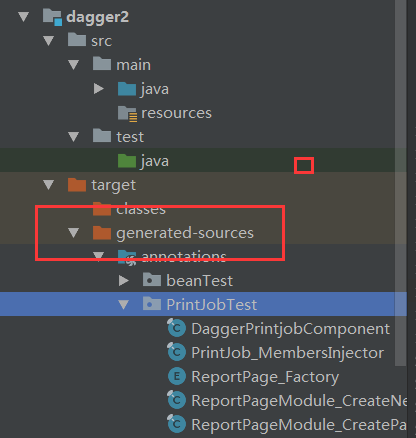
idea会自动将当期路径标记成Classpath, 因此我们也不需要把他手动拷贝出来.
如果没有自动import, 可以右键pom.xml->Maven ->Reimport.
我们在Printjob的构造函数里加上DaggerPrintjobComponent.create().inject(this);来实现注入
 public class PrintJob {

     @Inject

     public ReportPage reportPage;

     public PrintJob() {

         DaggerPrintjobComponent.create().inject(this);

     }

     public void print() {

         this.reportPage.print();

     }

     public static void main(String[] args) throws InterruptedException {

         // 看上去清爽了一点

         PrintJob job = new PrintJob();

         job.print();

     }

 }
 public class ReportPage {

     @Inject

     public ReportPage() {

         System.out.println("初始化成功!!!");

     }

     public void print(){

         System.out.println("开始打印报表");

     }

 }
相比于一开始的非注入写法, 在外部是看不到赋值操作的.
有人会说, 那我直接在printjob的构造函数里new reportpage()不就行了, 为什么要这么费事呢.
原因很简单, 大型系统里, printjob只存在一个接口, 他无法, 也不需要直接new reportpage()对象.
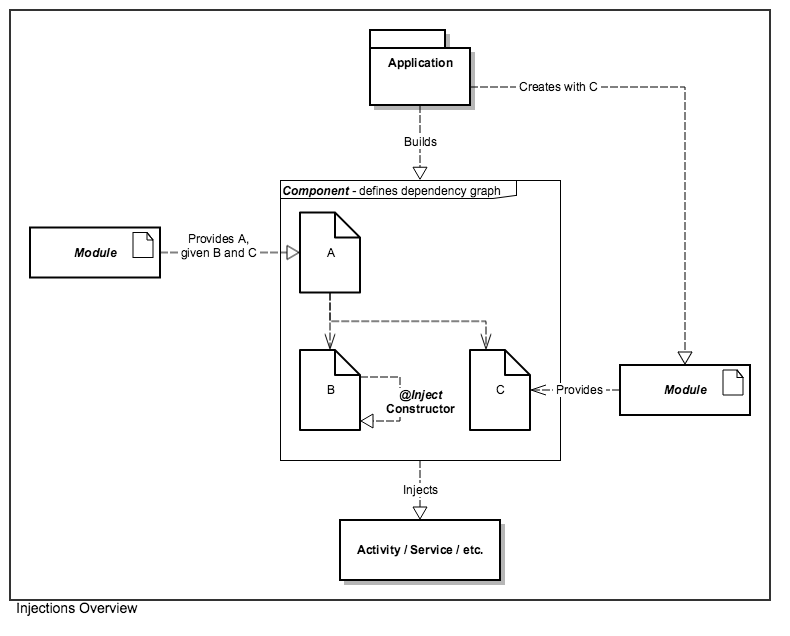
下面演示如何注入接口对象.
注入接口对象
我们给reportpage增加一个接口, 并在printjob中修改为接口声明.
public class ReportPage implements ReportPageProvider{
 public interface ReportPageProvider {

     void print();

 }
 public class PrintJob {

     @Inject

     public ReportPageProvider reportPage;
这个时候会发现, 运行注入报错了, 原因很简单, 我们@inject依然加载reportpage对象上,
此时他是一个接口, 接口是无法直接被实例化的.
因此我们需要引入Module对象来处理接口, 其实就是类似于一个工厂提供类.
 @Module

 public class ReportPageModule {

     @Provides

     public ReportPageProvider createPage() {

         return new ReportPage();

     }

 }
然后在component中引入module, 其他代码不用改, 依然直接new printjob().print()对象.
 @Component(modules = ReportPageModule.class)

 public interface PrintjobComponent {

     void inject(PrintJob job);

 }
接口存在多个实现
我们给ReportpageProvider再增加一个子类NewReportPage, 修改Module, 增加一个方法, 构造NewReportPage.
 @Module

 public class ReportPageModule {

     @Provides

     public ReportPageProvider createPage() {

         return new ReportPage();

     }

     @Provides

     public ReportPageProvider createNewReportPage() {

         return new NewReportPage();

     }

 }
这个时候直接编译是无法通过的, 相同返回类型的provider只能添加一个, 如果添加多个, dagger将报错, 存在多个提供类.

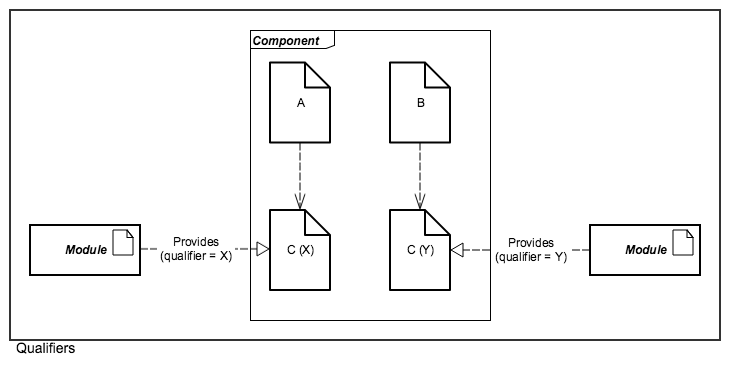
此时我们就要跟Guice里一样, 使用@Named注解来标识了
     @Named("new")

     public ReportPageProvider reportPage;
调用的时候也很简单
     @Inject

     @Named("new")

     public ReportPageProvider reportPage;
同理, 也可以通过@Qualifier来自定义注解标识.
 @Qualifier

 @Retention(RetentionPolicy.RUNTIME)

 public @interface NewReportMark {}
然后在调用的地方加上 @NewReportMark即可.
Scope生命周期
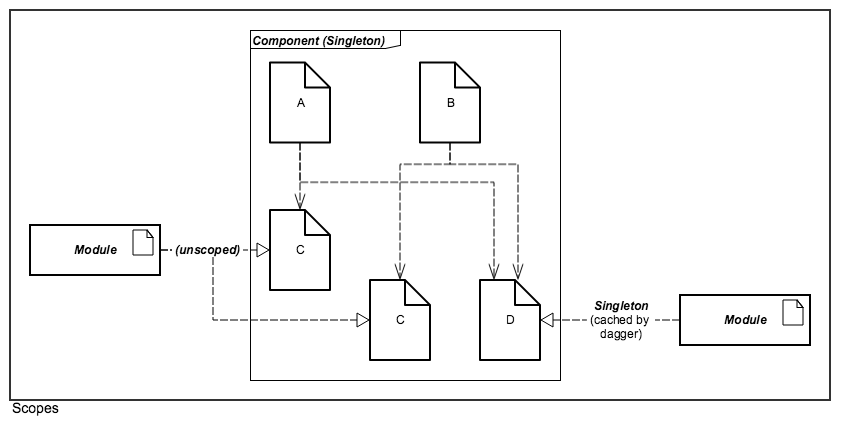
默认对象都是每次都new的, 如果想要单例实现, 则需要添加@Singleton.
在Component以及Module都加上Singleton注解.
 @Singleton

 @Component(modules = ReportPageModule.class)

 public interface PrintjobComponent {

     void inject(PrintJob job);

 }
     @Provides

     @Named("new")

     @Singleton

     public ReportPageProvider createNewReportPage() {

         return new NewReportPage();

     }
我们给Printjob中再增加一个reportpage对象, 并打印他们的hashcode.
     @Inject

     @Named("new")

     public ReportPageProvider reportPage;

     @Inject

     @Named("new")

     public ReportPageProvider reportPage2;

 ......

     PrintJob job = new PrintJob();

     System.out.println(job.reportPage);

     System.out.println(job.reportPage2);
加上Singleton注解后, 打印出来的hashcode是一致的了.
但是, 如果我们再new 一个Printjob, 打印他的reportpage.
         PrintJob job = new PrintJob();

         System.out.println(job.reportPage);

         System.out.println(job.reportPage2);

         PrintJob job2 = new PrintJob();

         System.out.println(job2.reportPage);

         System.out.println(job2.reportPage2);
会发现前两个的hashcode跟后两个的不一样, 这就很蛋疼了. 他只是一个作用于当前component的伪单例.
那么如何实现真单例呢, 其实就是想办法把Component搞成单例的.
这样他里面的对象也都是同一个作用域下的单例了.
我们添加一个SingletonPrintjobComponent, 写法与PrintjobComponent一致.
编译后生成DaggerSingletonPrintjobComponent. 然后修改printjob构造函数中的注入.
DaggerPrintjobComponent.create().inject(this); 改成如下:
 public class PrintJob {

     private static SingletonPrintjobComponent component = DaggerSingletonPrintjobComponent.create();

     @Inject

     @Named("new")

     public ReportPageProvider reportPage;

     @Inject

     @Named("new")

     public ReportPageProvider reportPage2;

     public PrintJob() {

         component.inject(this);

     }

     public void print() {

         this.reportPage.print();

     }

     public static void main(String[] args) throws InterruptedException {

         PrintJob job = new PrintJob();

         System.out.println(job.reportPage);

         System.out.println(job.reportPage2);

         PrintJob job2 = new PrintJob();

         System.out.println(job2.reportPage);

         System.out.println(job2.reportPage2);

     }

 }
这样的话, 多个printjob打印出来的reportpage就是一致的了, 因为都是位于同一个static的component中.
Lazy 延迟初始化
默认对象是inject的时候初始化, 如果使用Lazy封装一下, 则可以在get的时候再初始化.
     @Inject

     @Named("old")

     public Lazy<ReportPageProvider> oldReportPage;
         PrintJob job = new PrintJob();

         Thread.sleep(3000);

         // 对象会在get()方法调用的时候触发初始化

         job.oldReportPage.get().print();
到这边就结束了, 可以看到Dagger使用上跟Guice基本差不多, 各个注解概念也类似,
最大的区别就是非动态注入, 非反射实现, 而是编译期静态注入.
使用Dagger2做静态注入, 对比Guice.的更多相关文章
- Android项目使用Dagger2进行依赖注入
原文链接:http://code.tutsplus.com/tutorials/dependency-injection-with-dagger-2-on-android–cms-23345 依赖注入 ...
- Spring静态注入的三种方式
版权声明:本文为博主原创文章,未经博主允许不得转载. https://blog.csdn.net/chen1403876161/article/details/53644024Spring静态注入的三 ...
- spring 静态注入
1.静态注入 在setter 方法修改为非 static , 然后在上面注入即可 @Component public class WeixinConfig { // token public stat ...
- 日志系统实战(一)—AOP静态注入
背景 近期在写日志系统,需要在运行时在函数内注入日志记录,并附带函数信息,这时就想到用Aop注入的方式. AOP分动态注入和静态注入两种注入的方式. 动态注入方式 利用Remoting的Context ...
- 基于Mono.Cecil的静态注入
Aop注入有2种方式:动态注入和静态注入,其中动态注入有很多实现了 动态注入有几种方式: 利用Remoting的ContextBoundObject或MarshalByRefObject. 动态代理( ...
- Android 使用dagger2进行依赖注入(基础篇)
0. 前言 Dagger2是首个使用生成代码实现完整依赖注入的框架,极大减少了使用者的编码负担,本文主要介绍如何使用dagger2进行依赖注入.如果你不还不了解依赖注入,请看这一篇. 1. 简单的依赖 ...
- 用keras做SQL注入攻击的判断
本文是通过深度学习框架keras来做SQL注入特征识别, 不过虽然用了keras,但是大部分还是普通的神经网络,只是外加了一些规则化.dropout层(随着深度学习出现的层). 基本思路就是喂入一堆数 ...
- spring静态注入
与其说是静态注入(IOC),不如讲是对JavaBean 的静态成员变量进行赋值. 一般我们在使用依赖注入的时候,如果当前对象(javaBean )创建(实例化)一次,那么非静态的成员变量也会实例化一次 ...
- 转: spring静态注入
与其说是静态注入(IOC),不如讲是对JavaBean 的静态成员变量进行赋值. 一般我们在使用依赖注入的时候,如果当前对象(javaBean )创建(实例化)一次,那么非静态的成员变量也会实例化一次 ...
随机推荐
- js 立即调用的函数表达式
当你声明类似function foo(){}或var foo = function(){}函数的时候,通过在后面加个括弧就可以实现自执行,例如foo(),看代码: // 因为想下面第一个声明的func ...
- 数据库集群 MySQL主从复制
MySQL主从复制 本节内容我们联系使用MySQL的主从复制功能配置Master和Slave节点,验证数据MySQL的数据同步功能. 因为要使用多个MySQL数据库,所以不建议在电脑上安装多个MySQ ...
- phpstorm php $post数据为空的原因
今天拿PHPstoem 写了个PHP的表单插入数据,然后直接在里面一运行,就一直提示什么未定义,其实是因为$_PSOT[] 取不到值. 后面发现原来是直接用phpstorm 运行PHP的话,他会自带端 ...
- Python datetime之timedelta
该函数表示两个时间的间隔 参数可选.默认值都为0:datetime.timedelta(days=0, seconds=0, microseconds=0, milliseconds=0, minut ...
- git 在linux下服务端搭建
本文以centos为例,其他linux请自行参照对应方式. 1. 服务端安装git yum install git 2. 服务端添加无shell登录权限的用户,将username替换为要添加的用户 u ...
- 插件lombok的介绍安装
Lombok插件 介绍一个不错的Eclipse插件Lombok 该插件对Log4j简化的代码,因为不大,所以jar包也存在呢! Lombox是Eclipse的一个插件,用来自动生成Java代码,减少手 ...
- python的Windows下的安装
1.先打开网址http://www.python.org/download/: 2.在下载列表中选择Window平台安装包, 找到最后 web-based installer 是需要通过联网完成安装的 ...
- cgg之字面值
字面值时源代码中用来描述固定值的记号,可能是整数.浮点数.字符或者字符串 2.1 整数常量 除了常见的十进制数外,还有八进制(以数字0开头)或者十六进制(0x/0X)表示法. #include < ...
- IIS解决CPU和内存占用率过高的问题
发现进程中的w3wp占用率过高. 经过查询,发现如下: w3wp.exe是在IIS(因特网信息服务器)与应用程序池相关联的一个进程,如果你有多个应用程序池,就会有对应的多个w3wp.exe的进程实例运 ...
- SpringBoot之文件读取
SpringBoot 寻找启动配置文件规则如下: 当前目录下的 config 目录 当前目录 classpath 下的 config 目录 classpath 下的 root 目录(根路径) 上面的优 ...