
golang:协程安全
多路复用
Go语言中提供了一个关键字select,通过select可以监听channel上的数据流动。select的用法与switch语法类似,由select开始一个新的选择块,每个选择条件由case语句来描述。只不过,select的case有比较多的限制,其中最大的一条限制就是每个case语句里必须是一个IO操作。
select 语法如下:
   select {

    case <-chan1:

        // 如果chan1成功读到数据,则进行该case处理语句

    case chan2 <- 1:

        // 如果成功向chan2写入数据,则进行该case处理语句

    default:

        // 如果上面都没有成功,则进入default处理流程

    }
在一个select语句中,会按顺序从头至尾评估每一个发送和接收的语句;如果其中的任意一语句可以继续执行(即没有被阻塞),那么就从那些可以执行的语句中任意选择一条来使用。如果没有任意一条语句可以执行(即所有的通道都被阻塞),那么有两种可能的情况:⑴ 如果给出了default语句,那么就会执行default语句,同时程序的执行会从select语句后的语句中恢复。⑵ 如果没有default语句,那么select语句将被阻塞,直到至少有一个channel可以进行下去。
在一般的业务场景下,select不会用default,当监听的流中再没有数据,IO操作就 会阻塞现象,如果使用了default,此时可以出让CPU时间片。如果使用了default 就形成了非阻塞状态,形成了忙轮训,会占用CPU、系统资源。
阻塞与非阻塞使用场景
- 阻塞: 如:在监听超时退出时,如果100秒内无操作,择退出,此时添加了default会形成忙轮训,超时监听变成了无效。
- 非阻塞: 如,在一个只有一个业务逻辑处理时,主进程控制进程的退出。此时可以使用default。
定时器
Go语言中定时器的使用有三个方法
time.Sleep()time.NewTimer()返回一个时间的管道, time.C 读取管道的内容time.After(5 * time.Second)封装了time.NewTimer(),反回了一个time.C的管道
示例
select {

    case <-time.After(time.Second * 10):

}
锁和条件变量
Go语言中为了解决协程间同步问题,提供了标准库代码,包sync和sync/atomic中。
互斥锁
互斥锁是传统并发编程对共享资源进行访问控制的主要手段,它由标准库sync中的Mutex结构体类型表示。sync.Mutex类型只有两个公开的指针方法,Lock和Unlock。Lock锁定当前的共享资源,Unlock进行解锁。
package main

import (

	"fmt"

	"runtime"

	"sync"

	"time"

)

var mutex sync.Mutex

func print(str string) {

	mutex.Lock()         // 添加互斥锁

	defer mutex.Unlock() // 使用结束时解锁

	for _, data := range str { // 迭代器

		fmt.Printf("%c", data)

		time.Sleep(time.Second) // 放大协程竞争效果

	}

	fmt.Println()

}

func main() {

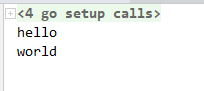
	go print("hello") // main 中传参

	go print("world")

	for {

		runtime.GC()

	}

}
读写锁
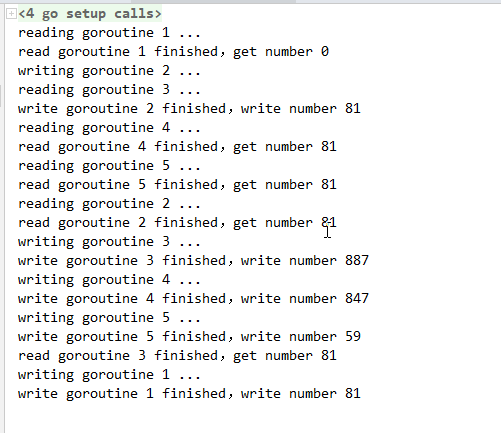
读写锁的使用场景一般为读多写少,可以让多个读操作并发,同时读取,但是对于写操作是完全互斥的。也就是说,当一个goroutine进行写操作的时候,其他goroutine不能进行读写操作;当一个goroutine获取读锁之后,其他的goroutine获取写锁都会等待
package main

import (

	"fmt"

	"math/rand"

	"sync"

	"time"

)

var count int           // 全局变量count

var rwlock sync.RWMutex // 全局读写锁 rwlock

func read(n int) {

	for {

		rwlock.RLock()

		fmt.Printf("reading goroutine %d ...\n", n)

		num := count

		fmt.Printf("read goroutine %d finished,get number %d\n", n, num)

		rwlock.RUnlock()

	}

}

func write(n int) {

	for {

		rwlock.Lock()

		fmt.Printf("writing goroutine %d ...\n", n)

		num := rand.Intn(1000)

		count = num

		fmt.Printf("write goroutine %d finished,write number %d\n", n, num)

		rwlock.Unlock()

	}

}

func main() {

	for i := 0; i < 5; i++ {

		go read(i + 1)

		time.Sleep(time.Microsecond * 100)

	}

	for i := 0; i < 5; i++ {

		go write(i + 1)

		time.Sleep(time.Microsecond * 100)

	}

	for {

	}

}
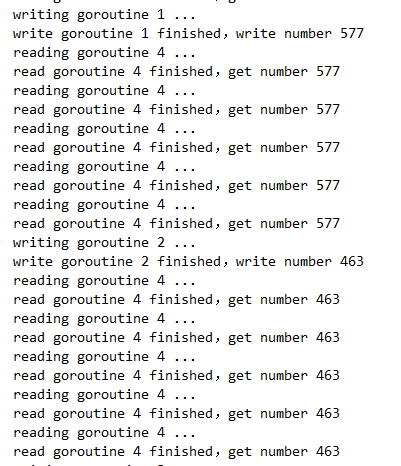
可以看出,读写锁控制下的多个写操作之间都是互斥的,并且写操作与读操作之间也都是互斥的。但是,多个读操作之间不存在互斥关系。
Go语言中的死锁
死锁 deadlock 是指两个或两个以上的进程在执行过程中,由于竞争资源或者由于彼此通信而造成的一种阻塞的现象,若无外力作用,它们都将无法推进下去。此时称系统处于死锁状态或系统产生了死锁。
单gorutine同时读写,写死锁
在一个gorutine中,当channel无缓冲,写阻塞,等待读取导致死锁
解决,应该至少在2个gorutine进行channle通讯,或者使用缓冲区。
package main

func main() {

	channel := make(chan int)

	channel <- 1

	<-channel

}
多gorutine使用一个channel通信,写先于读
代码顺序执行时,写操作阻塞,导致后面协程无法启动进行读操作,导致死锁
package main

func main() {

	channel := make(chan int)

	channel <- 1

	go func() {

		<-channel

	}()

}

多channel交叉死锁
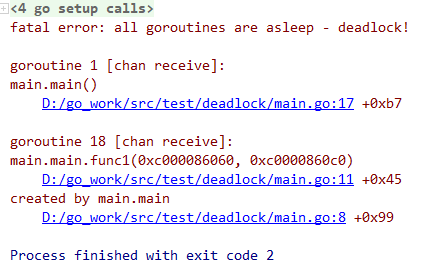
在goroutine中,多个goroutine使用多个channel互相等待对方写入,导致死锁
package main

func main() {

	channel1 := make(chan int)

	channel2 := make(chan int)

	go func() {

		select {

		case <-channel1:

			channel2 <- 1

		}

	}()

	select {

	case <-channel2:

		channel1 <- 1

	}

}
隐性死锁
尽量不要将 互斥锁、读写锁 与 channel 混用情况下,让读先进行读时,因为没写入被阻塞,无法解除。写入时,因为没有读出被阻塞,锁无法解除,导致无数据输出,形成隐形死锁。此时编译器是不报错的。

package main

import (

	"fmt"

	"sync"

)

func main() {

	channel := make(chan int)

	var rwlock sync.RWMutex

	go func() {

		for {

			rwlock.Lock()

			channel <- 1

			fmt.Println("write", 1)

			rwlock.Unlock()

		}

	}()

	go func() {

		for {

			rwlock.RLock()

			n := <-channel

			fmt.Println(n)

			rwlock.Unlock()

		}

	}()

	for {

	}

}
Context 上下文
context定义了上下文类型,该类型在API边界之间以及进程之间传递截止时间,取消信号和其他请求范围的值。当在对请求传入一个上下文,可以选择将其替换为使用WithCancel,WithDeadline,WithTimeout。在取消后,从该context处派生的所有子请求也会被取消。
Context的结构体
- Deadline() 返回context的截止时间。
- Done() 返回一个channle,当timeout或cancelfuc将会close(chan)
- Err() 返回错误,未关闭Done()返回nil,取消,返回
"context canceled", Deadline返回超时 - Value 返回值。
type Context interface {

	// Deadline returns the time when work done on behalf of this context

	// should be canceled. Deadline returns ok==false when no deadline is

	// set. Successive calls to Deadline return the same results.

	Deadline() (deadline time.Time, ok bool)

	// Done returns a channel that's closed when work done on behalf of this

	// context should be canceled. Done may return nil if this context can

	// never be canceled. Successive calls to Done return the same value.

	// The close of the Done channel may happen asynchronously,

	// after the cancel function returns.

	//

	// WithCancel arranges for Done to be closed when cancel is called;

	// WithDeadline arranges for Done to be closed when the deadline

	// expires; WithTimeout arranges for Done to be closed when the timeout

	// elapses.

	//

	// Done is provided for use in select statements:

	//

	//  // Stream generates values with DoSomething and sends them to out

	//  // until DoSomething returns an error or ctx.Done is closed.

	//  func Stream(ctx context.Context, out chan<- Value) error {

	//  	for {

	//  		v, err := DoSomething(ctx)

	//  		if err != nil {

	//  			return err

	//  		}

	//  		select {

	//  		case <-ctx.Done():

	//  			return ctx.Err()

	//  		case out <- v:

	//  		}

	//  	}

	//  }

	//

	// See https://blog.golang.org/pipelines for more examples of how to use

	// a Done channel for cancellation.

	Done() <-chan struct{}

	// If Done is not yet closed, Err returns nil.

	// If Done is closed, Err returns a non-nil error explaining why:

	// Canceled if the context was canceled

	// or DeadlineExceeded if the context's deadline passed.

	// After Err returns a non-nil error, successive calls to Err return the same error.

	Err() error

	// Value returns the value associated with this context for key, or nil

	// if no value is associated with key. Successive calls to Value with

	// the same key returns the same result.

	//

	// Use context values only for request-scoped data that transits

	// processes and API boundaries, not for passing optional parameters to

	// functions.

	//

	// A key identifies a specific value in a Context. Functions that wish

	// to store values in Context typically allocate a key in a global

	// variable then use that key as the argument to context.WithValue and

	// Context.Value. A key can be any type that supports equality;

	// packages should define keys as an unexported type to avoid

	// collisions.

	//

	// Packages that define a Context key should provide type-safe accessors

	// for the values stored using that key:

	//

	// 	// Package user defines a User type that's stored in Contexts.

	// 	package user

	//

	// 	import "context"

	//

	// 	// User is the type of value stored in the Contexts.

	// 	type User struct {...}

	//

	// 	// key is an unexported type for keys defined in this package.

	// 	// This prevents collisions with keys defined in other packages.

	// 	type key int

	//

	// 	// userKey is the key for user.User values in Contexts. It is

	// 	// unexported; clients use user.NewContext and user.FromContext

	// 	// instead of using this key directly.

	// 	var userKey key

	//

	// 	// NewContext returns a new Context that carries value u.

	// 	func NewContext(ctx context.Context, u *User) context.Context {

	// 		return context.WithValue(ctx, userKey, u)

	// 	}

	//

	// 	// FromContext returns the User value stored in ctx, if any.

	// 	func FromContext(ctx context.Context) (*User, bool) {

	// 		u, ok := ctx.Value(userKey).(*User)

	// 		return u, ok

	// 	}

	Value(key interface{}) interface{}

}
演示使用可取消的上下文。可在函数结束时defer cancel() 防止goroutine的泄露。
package main

import (

	"context"

	"fmt"

	"time"

)

func worker(ctx context.Context, name string) {

	n := 0

	for {

		select {

		case <-ctx.Done():

			fmt.Println(name, "去划水了", n)

			return

		default:

			fmt.Println(name, "干活中", n)

			time.Sleep(time.Second)

		}

		n++

	}

}

func main() {

	ctx, cancel := context.WithCancel(context.Background())

	for n := 0; n < 5; n++ {

		go worker(ctx, fmt.Sprintf("worker%d", n))

	}

	<-time.After(time.Second * 5)

	cancel()

	for {

	}

}

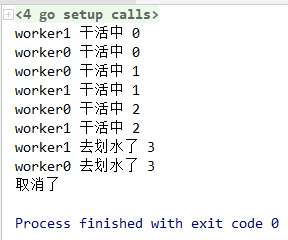
超时处理,WithTimeout 当时间到达设置的时间后退出,也可以使用cancelFunc()退出处理
package main

import (

	"context"

	"fmt"

	"time"

)

func worker(ctx context.Context, name string) {

	n := 0

	for {

		select {

		case <-ctx.Done():

			fmt.Println(name, "去划水了", n)

			return

		default:

			fmt.Println(name, "干活中", n)

			time.Sleep(time.Second)

		}

		n++

	}

}

func main() {

	//ctx, cancel := context.WithCancel(context.Background())

	ctx, cancel := context.WithTimeout(context.Background(), 3*time.Second)

	for n := 0; n < 2; n++ {

		go worker(ctx, fmt.Sprintf("worker%d", n))

	}

	<-time.After(time.Second * 5)

	fmt.Println("取消了")

	cancel()

}
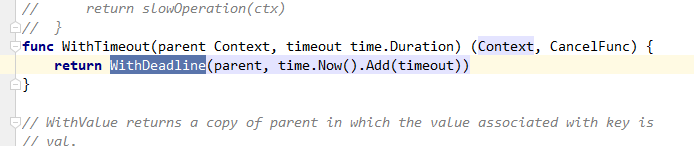
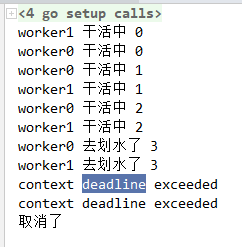
WithDeadline,在标准库中可以看出,实际上WithTimeout是封装了WithDeadline。其功能也是超时退出。
package main

import (

	"context"

	"fmt"

	"time"

)

func worker(ctx context.Context, name string) {

	n := 0

	for {

		select {

		case <-ctx.Done():

			fmt.Println(name, "去划水了", n)

			fmt.Println(ctx.Err())

			return

		default:

			fmt.Println(name, "干活中", n)

			time.Sleep(time.Second)

		}

		n++

	}

}

func main() {

	ctx, cancel := context.WithDeadline(context.Background(), time.Now().Add(time.Second*3))

	for n := 0; n < 2; n++ {

		go worker(ctx, fmt.Sprintf("worker%d", n))

	}

	<-time.After(time.Second * 5)

	fmt.Println("取消了")

	cancel()

}
Context总结
- Context是Go语言在1.7中加入标准库的,是作为
Goroutine线程安全,防止线程泄露的上下文管理的操作。 - context包的核心是
Context结构体。 - Context的常用方法为
WithTimeout()与WithCancel() - Context在使用时,不要放在结构体内使用,要以函数的参数进行传递。
- Context是线程安全的,可以在多个
Goroutine传递,当对其取消操作时,所有Goroutine都执行取消操作。
golang:协程安全的更多相关文章
- golang协程同步的几种方法
目录 golang协程同步的几种方法 协程概念简要理解 为什么要做同步 协程的几种同步方法 Mutex channel WaitGroup golang协程同步的几种方法 本文简要介绍下go中协程的几 ...
- Python与Golang协程异同
背景知识 这里先给出一些常用的知识点简要说明,以便理解后面的文章内容. 进程的定义: 进程,是计算机中已运行程序的实体.程序本身只是指令.数据及其组织形式的描述,进程才是程序的真正运行实例. 线程的定 ...
- 面试必问:Golang高阶-Golang协程实现原理
引言 实现并发编程有进程,线程,IO多路复用的方式.(并发和并行我们这里不区分,如果CPU是多核的,可能在多个核同时进行,我们叫并行,如果是单核,需要排队切换,我们叫并发) 进程和线程的区别 进程是计 ...
- Golang协程实现流量统计系统(3)
进程.线程.协程 - 进程:太重 - 线程:上下文切换开销太大 - 协程:轻量级的线程,简洁的并发模式 Golang协程:goroutine Hello world package main impo ...
- golang协程池设计
Why Pool go自从出生就身带“高并发”的标签,其并发编程就是由groutine实现的,因其消耗资源低,性能高效,开发成本低的特性而被广泛应用到各种场景,例如服务端开发中使用的HTTP服务,在g ...
- Golang 协程调度
一.线程模型 N:1模型,N个用户空间线程在1个内核空间线程上运行.优势是上下文切换非常快但是无法利用多核系统的优点. 1:1模型,1个内核空间线程运行一个用户空间线程.这种充分利用了多核系统的优势但 ...
- golang 协程嵌套,会产生依赖关系(父子关系)么?
编码时冒出一个问题:在一个协程内部,再创建一个或多个协程,是否会产生依赖关系? 做了一个小实验,这里随笔记录一下经过,备注后续深入研究. test代码: package main import ( & ...
- Golang协程与通道整理
协程goroutine 不由OS调度,而是用户层自行释放CPU,从而在执行体之间切换.Go在底层进行协助实现 涉及系统调用的地方由Go标准库协助释放CPU 总之,不通 ...
- 关于协程:nodejs和golang协程的不同
nodejs和golang都是支持协程的,从表现上来看,nodejs对于协程的支持在于async/await,golang对协程的支持在于goroutine.关于协程的话题,简单来说,可以看作是非抢占 ...
- golang协程——通道channel阻塞
新的一年开始了,不管今天以前发生了什么,向前看,就够了. 说到channel,就一定要说一说线程了.任何实际项目,无论大小,并发是必然存在的.并发的存在,就涉及到线程通信.在当下的开发语言中,线程通讯 ...
随机推荐
- Android 系统开发做什么?
题外话 18 年我从 Android 应用开发转 Framework 层开发了,从此开启了 996 幸福生活,博客技术文更新基本停滞了,被工作占据了过多的精力,实在没时间像以前一样拟稿.写作,实践.反 ...
- 写个小程序01 | 注册微信小程序
出于兴趣和学习目的,我想自己做一个基于"子弹笔记(Bullet Journal)"的小程序.由于个人开发经验很有限,只在课程作业中写过 web 前端,所以也不知道多久能写出来(逃) ...
- Http请求状态码302,已得到html页面但未跳转?HttpServletRequest转发/HttpServletResponse重定向后,前端页面未跳转?Ajax怎么处理页面跳转?
论断 出现此类错误,服务器端出现问题的可能性不大,大概率是前端问题. 问题概述 事情是这样的,我在用Java开发后端.前端页面使用jQuery库的 $.getJSON() 方法发送了一个Ajax请求. ...
- nginx 本地配置(解决跨域问题)
前端做跨域本身就是扯淡的事情.后台人员不配合说什么都是白搭.索性整理了一下心得,(可以直接部署自配置)发不多说上代码: 1 #user nobody; 2 worker_processes 1; 3 ...
- [Fundamental of Power Electronics]-PART I-3.稳态等效电路建模,损耗和效率-3.1 直流变压器模型
3.1 直流变压器模型 如图3.1所示,任何开关变换器都包含三个部分:功率输入,功率输出以及控制输入.输入功率按控制输入进行特定的功率变换输出到负载.理想情况下,这些功能将以100%的效率完成,因此 ...
- springcloud面试题【第一期】
全文目录 1:谈一谈你对微服务的理解? 2:微服务之间是如何独立进行通讯的? 3:springcloud和dubbo有哪些区别? 4:springboot和spring cloud得区别? 5:Eur ...
- Mybatis的Dao层实现原理
1.Mybatis的Dao层实现 1.1 传统开发方式 1.1.1编写UserDao接口 public interface UserDao { List<User> findAll() t ...
- Zookeeper基础原理&应用场景详解
简单了解Zookeeper Tips: 如果之前对Zookeeper不了解的话,这里大概留个印象就好了 Zookeeper是一个分布式协调服务,可以用于元数据管理.分布式锁.分布式协调.发布订阅.服务 ...
- Palindromes UVA - 401
A regular palindrome is a string of numbers or letters that is the same forward as backward. For e ...
- linux too many open files 问题总结
问题描述: kubernetes 集群使用promtail收集日志,发现一段时间有些机器日志收集不到查看promtail日志出现以下报错: error="filetarget.fsnotif ...