
Incorporating ASP.NET MVC and SQL Server Reporting Services, Part 2
In the last issue, I introduced you to the basics of incorporating SQL Server Reporting Services into your ASP.NET MVC applications. In this issue, I’ll finish the series by illustrating how we can transfer data between the ASP.NET MVC context and the SSRS report context. In addition, I will also cover deployment issues such as authentication.
To illustrate these additional concepts, I will use our trusty old friend, the Northwind database. In particular, the report will leverage the Alphabetical List of Products view.Figure 1 illustrates the design time view of our report. The report has one parameter - category. Ultimately, this parameter will be supplied by the ASP.NET MVC application.Figure 2 illustrates the report in preview mode, listing products in the condiment category. In part 1 of this article I covered how to build and deploy reports to the report server. If you need to primer on those concepts, please consult that previous article.
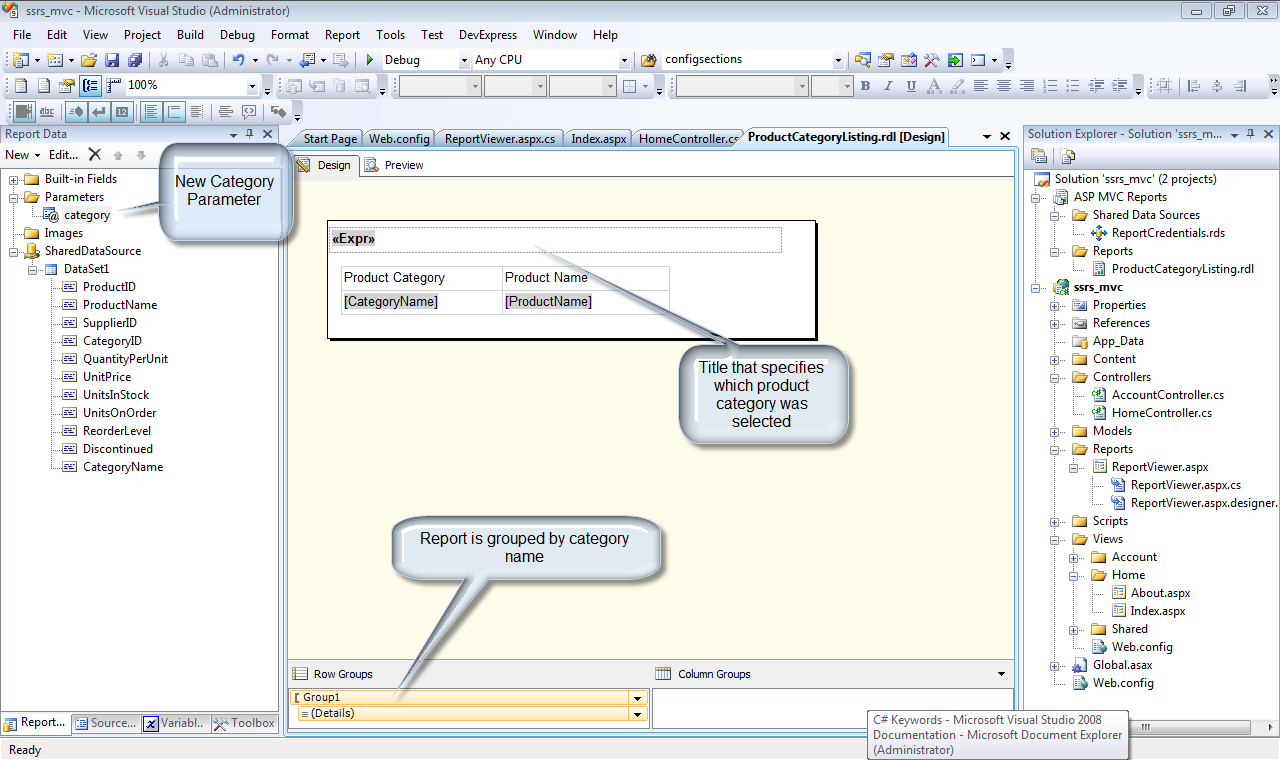 Figure 1: The report in this example is a listing of products, sorted by category.
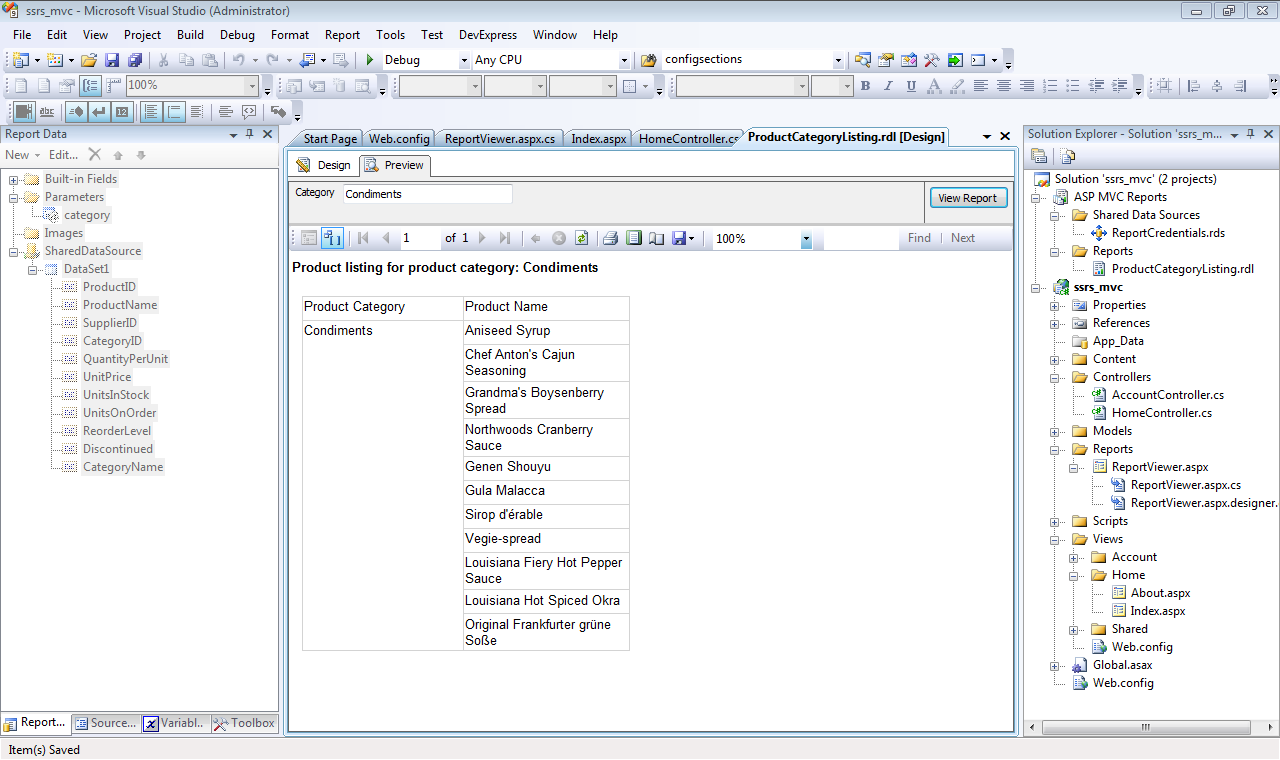 Figure 2: Product listing report in preview mode.
Passing Data Between Contexts
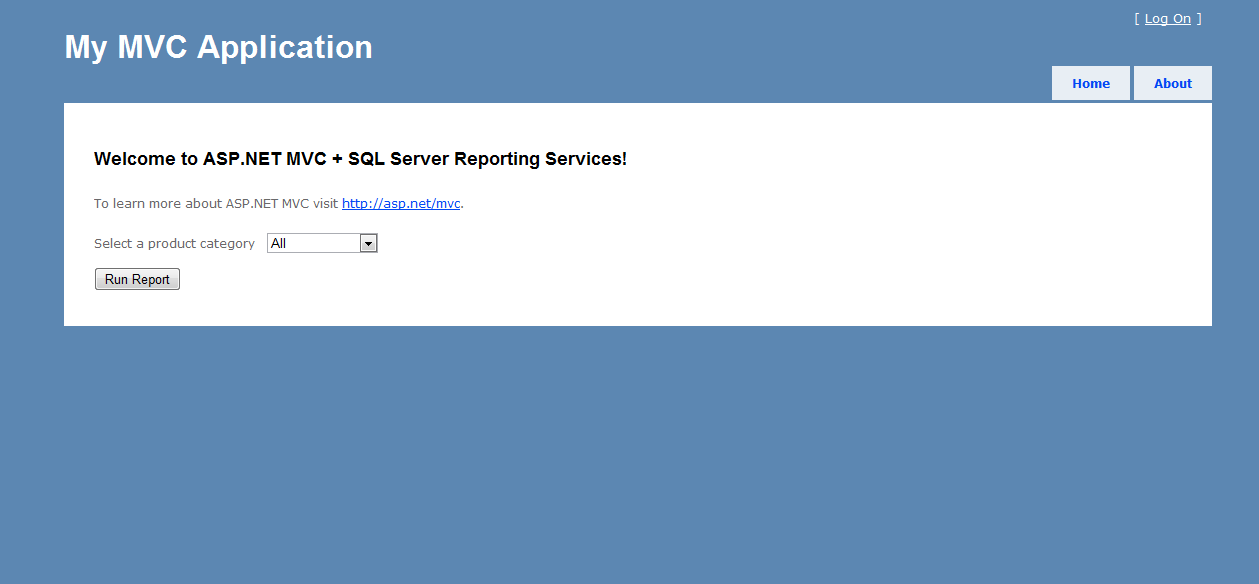
Listing 1 illustrates the controller method that launches the product listing report.Figure 3 illustrates the ASP.NET MVC page that invokes the ProductListingReport action. The key to passing data between contexts lies in the Session variable. The code uses a hash to keep track of report variables and their respective values. That hash is stored in the Session[“reportParameters”] variable. In part 1 of this article, the process was very specific in regards to the generated report. In fact, the Web Form that hosts the report viewer control could run any report. In other words, the report viewer controller only needs to know the report server and the report name. Accordingly, the report server and report name details will be passed to the report viewer control. With these examples we very easily achieve reusability. The last line of code re-directs the application to the report viewer aspx page. Listing 2 illustrates how the report viewer acts on these passed values.
In Listing 2, there are four basic operations:
- Report server specification
- Report name specification
- Security credentials specification
- Report parameter setting
You may be wondering where the report server and security credential information is stored. Because the report server and security credentials are not specific to any one report, that data should not be specified in a controller. Rather, these data points belong as part of the application configuration. In the case of an ASP.NET application, those configuration items are stored in the web.config file. The following configuration items supply the needed data:
<appSettings>

 <add key="ReportServerURL"

    value="http://host/reportserver" />

 <add key ="ReportServerDomain" value="Domain"/>

 <add key ="ReportServerUser" value="User"/>

 <add key="ReportServerPassword"

    value="Password"/>

</appSettings>
The domain, user and password data listed is for illustration purposes only. In a real production scenario, the report server will exist on a separate server that has its own authentication requirements. In order gain access to and to run those reports, authentication credentials must be passed to the report viewer.
Generating the Report
Because the ASP.NET MVC app will supply the necessary parameter values, there is no need to make parameters accessible or visible within the report. Figure 4 illustrates the report as generated by the ASP.NET MVC application. The following snippet shows the SQL code used by the report. The code incorporates the @category parameter. That is how the results are filtered.
SELECT *

   FROM

[Northwind].[dbo].[Alphabetical list of products]

  where CategoryName like @category
Conclusion
The combination of ASP.NET MVC and SQL Server Reporting Services (SSRS) provide a framework for robust applications. In this two-part series, you have seen how easy it is to extend your ASP.NET MVC applications with SSRS. With the approach presented here, you can easily achieve reusability, thereby using a common set of application components that are not specific to any one report and/or report server. I hope you find the information presented over these past two issues to be useful in your application development efforts. Until next time - happy coding!
Listing 1: Controller method to launch report

 [HttpPost]

public ActionResult ProductListingReport(FormCollection form)

{

  var reportParameters =

    new Dictionary<string, string>();

if (form["Category"] == "All")

   form["Category"] = "%";

   reportParameters.Add("category",

      form["Category"]);

Session["reportParameters"] =

   reportParameters;

Session["reportPath"] =

   "/ASPMVCReports/ProductCategoryListing";

return

   Redirect("../Reports/ReportViewer.aspx");

}

Listing 2: Page_Load code for ReportViewer.aspx page

protected void Page_Load(object sender, EventArgs e)

{

  if (!Page.IsPostBack)

  {

    //Specify the report server

    ReportViewer1.

      ServerReport.

      ReportServerUrl =

      new Uri(WebConfigurationManager.

      AppSettings["ReportServerURL"]);

    //Specify the report name

    ReportViewer1.

      ServerReport.

      ReportPath = Session["reportPath"].ToString();

    //Specify the server credentials

    ReportViewer1.

      ServerReport.

      ReportServerCredentials =

      new CustomReportCredentials

       (

         WebConfigurationManager.

          AppSettings["ReportServerUser"],

         WebConfigurationManager.

          AppSettings["ReportServerPassword"],

         WebConfigurationManager.

          AppSettings["ReportServerDomain"]

       );

                /*

                 * With the report specified, hydrate the report

                 * parameters based on the values in the

                 * reportParameters hash.

                 */

    var reportParameters = (Dictionary<string,

      string>)Session["reportParameters"];

    foreach (var item in reportParameters)

       {

         ReportViewer1.

           ServerReport.

           SetParameters(

             new List<ReportParameter>()

              {

                new ReportParameter

                  (item.Key, item.Value)

              });

        }

            }

}
Incorporating ASP.NET MVC and SQL Server Reporting Services, Part 2的更多相关文章
- Incorporating ASP.NET MVC and SQL Server Reporting Services, Part 1
Your ASP.NET MVC application needs reports. What do you do? In this article, I will demonstrate how ...
- ASP.NET MVC与Sql Server交互,把字典数据插入数据库
在"ASP.NET MVC与Sql Server交互, 插入数据"中,在Controller中拼接sql语句.比如: _db.InsertData("insert int ...
- ASP.NET MVC与Sql Server交互, 插入数据
在"ASP.NET MVC与Sql Server建立连接"中,与Sql Server建立了连接.本篇实践向Sql Server中插入数据. 在数据库帮助类中增加插入数据的方法. p ...
- [转]SQL Server Reporting Services - Timeout Settings
本文转自:https://social.technet.microsoft.com/wiki/contents/articles/23508.sql-server-reporting-services ...
- SQL Server Reporting Services本机模式下的权限管理
SQL Server Reporting Services在安装配置后,缺省只给BUILTIN\Administrators用户组(实际上只有本机的Administrator用户)提供管理权限.所以所 ...
- SrsDataConnector The SQL Server Reporting Services account is a local user and is not supported.
这次使用OS+SQL的镜像还原系统后安装了CRM 2015,主要流程是 安装IIS/AD,SSRS ,CRM2015.自带的SQL中SSRS没有安装完全,需配置一下. 这一切都满顺利的,最后在安装 S ...
- 充分利用 SQL Server Reporting Services 图表
最近在查SSRS的一些文章,看到MSDN在有一篇不错的文章,许多图表设置都有说明,共享给大家.. 其中有说明在SSRS中如果去写条件表达写和报表属性中的“自定义代码”,文章相对比较长,需要大家耐心的查 ...
- SQL Server Reporting Services – Insufficient Rights Error
http://www.sql-server-performance.com/2011/security-ssrs-reporting-error/ SQL Server Reporting Servi ...
- SQL Server Reporting Services (SQLEXPRESS) 服务占用80端口
win7, 好多时候,看到system进程占用了80端口,这个是系统进程,不能直接结束.我们不知道这个进程的哪个服务占用了80端口,这里记录其中一个服务"SQL Server Reporti ...
随机推荐
- 小白学数据分析--聚类分析理论之K-means理论篇
小白学数据分析--聚类分析理论之K-means理论篇 聚类分析是一类广泛被应用的分析方法,其算法众多,目前像SAS.Splus.SPSS.SPSS Modeler等分析工具均以支持聚类分析,但是如何使 ...
- 大数据架构师必读的NoSQL建模技术
大数据架构师必读的NoSQL建模技术 从数据建模的角度对NoSQL家族系统做了比较简单的比较,并简要介绍几种常见建模技术. 1.前言 为了适应大数据应用场景的要求,Hadoop以及NoSQL等与传统企 ...
- redis集群主从中断,报io过高 不错
问题原因:1.由于这个集群redis操作非常频繁,1分钟操作数据达到1-2G,所有自动aof非常频繁,主从复制打包rdb也非常频繁,之前配置已经无法满足要求报异常如下6943:M 19 Jul 20: ...
- node+express 发送get请求
var express = require('express') , app = express(); var querystring = require('querystring'); var ut ...
- altium笔记转载
原理图的设计 1.左键单击元器件按住space键可以将其旋转,按X键左右旋转:按Y键上下旋转. 2.智能粘贴:Edit àsmart paste . 3.屏障:compile mask(编译时被屏障的 ...
- unity editor 折叠树
https://blog.csdn.net/e295166319/article/details/52370575 需要两个类:树节点类和界面实现类 1:树节点类(TreeNode) using Un ...
- 阅读笔记12-Java 面试题 —— 老田的蚂蚁金服面试经历
电话一面 1.自我介绍.自己做的项目和技术领域 2.项目中的监控:那个监控指标常见的哪些? 3.微服务涉及到的技术以及需要注意的问题有哪些? 4.注册中心你了解了哪些? 5.consul 的可靠性你了 ...
- 剑指offer--day08
1.1 题目:二叉树镜像:操作给定的二叉树,将其变换为源二叉树的镜像. 1.2 思路:先交换根节点的两个子结点之后,我们注意到值为10.6的结点的子结点仍然保持不变,因此我们还需要交换这两个结点的左右 ...
- 单片机BootLoader
http://bbs.elecfans.com/jishu_467138_1_1.html 作用:app程序,固件程序升级
- 剑指Offer编程题(Java实现)——替换空格
题目描述 请实现一个函数,将一个字符串中的每个空格替换成“%20”.例如,当字符串为We Are Happy.则经过替换之后的字符串为We%20Are%20Happy. 解题思路1 在字符串尾部填充任 ...