
[Erlang 0107] Erlang实现文本截断
> string:substr("abcd我们就是喜欢Erlang,就是喜欢OTP",,).

[,,]

> io:format("~ts",[v()]).

d我们ok
Eshell V5.10.2  (abort with ^G)

> u:sub().

[,,]

> io:format("~ts",[v()]).

dæok

> q().

ok

>
%% coding: utf-
Eshell V5.10.2  (abort with ^G)

> u:sub().

[,,]

> io:format("~ts",[v()]).

d我们ok
-define(DEFAULT_ENCODING, latin1).

-spec default_encoding() -> source_encoding().

default_encoding() ->

    ?DEFAULT_ENCODING.

-spec encoding_to_string(Encoding) -> string() when

      Encoding :: source_encoding().

encoding_to_string(latin1) -> "coding: latin-1";

encoding_to_string(utf8) -> "coding: utf-8".
The Erlang source file encoding is selected by a comment in one of the first two lines of the source file. The first string that matches the regular expression coding\s*[:=]\s*([-a-zA-Z0-9])+ selects the encoding. If the matching string is not a valid encoding it is ignored. The valid encodings are Latin-1 and UTF-8 where the case of the characters can be chosen freely.
As of Erlang/OTP R16 Erlang source files can be written in either UTF-8 or bytewise encoding (a.k.a. latin1 encoding). The details on how to state the encoding of an Erlang source file can be found in epp(3). Strings and comments can be written using Unicode, but functions still have to be named using characters from the ISO-latin-1 character set and atoms are restricted to the same ISO-latin-1 range. These restrictions in the language are of course independent of the encoding of the source file. Erlang/OTP R18 is expected to handle functions named in Unicode as well as Unicode atoms. http://www.erlang.org/doc/apps/stdlib/unicode_usage.html
R16B之前版本
-module(u).

-compile(export_all).

test() ->

  t("abcd我们就是喜欢Erlang,就是喜欢OTP",).

test2() ->

  tw("Youth is not a time of life; it is a state of mind; it is not a matter of

rosy cheeks, red lips and supple knees; it is a matter of the will, a

quality of the imagination, a vigor of the emotions; it is the freshness of

the deep springs of life.",10).

dump(FileName,Data)->

  file:write_file(FileName, io_lib:fwrite("~s.\n", [Data])).

sub()->

  string:substr("abcd我们就是喜欢Erlang,就是喜欢OTP",,).

t(Input,Max) ->

  truncatechars(Input,Max).

tw(Input,Max) ->

  truncatewords(Input,Max).

%% @doc Truncates a string after a certain number of characters.

truncatechars(_Input, Max) when Max =<  ->

    "";

truncatechars(Input, Max) when is_binary(Input) ->

    list_to_binary(truncatechars(binary_to_list(Input), Max));

truncatechars(Input, Max) ->

    truncatechars(Input, Max, []).

%% @doc Truncates a string after a certain number of words.

truncatewords(_Input, Max) when Max =<  ->

    "";

truncatewords(Input, Max) when is_binary(Input) ->

    list_to_binary(truncatewords(binary_to_list(Input), Max));

truncatewords(Input, Max) ->

    truncatewords(Input, Max, []).

truncatechars([], _CharsLeft, Acc) ->

    lists:reverse(Acc);

truncatechars(_Input, , Acc) ->

    lists:reverse("..." ++ Acc);

truncatechars([C|Rest], CharsLeft, Acc) when C >= # ->

    truncatechars(Rest, CharsLeft + , [C|Acc]);

truncatechars([C|Rest], CharsLeft, Acc) when C >= # ->

    truncatechars(Rest, CharsLeft + , [C|Acc]);

truncatechars([C|Rest], CharsLeft, Acc) when C >= # ->

    truncatechars(Rest, CharsLeft + , [C|Acc]);

truncatechars([C|Rest], CharsLeft, Acc) when C >= # ->

    truncatechars(Rest, CharsLeft + , [C|Acc]);

truncatechars([C|Rest], CharsLeft, Acc) when C >= # ->

    truncatechars(Rest, CharsLeft, [C|Acc]);

truncatechars([C|Rest], CharsLeft, Acc) ->

    truncatechars(Rest, CharsLeft - , [C|Acc]).

truncatewords(Value, _WordsLeft, _Acc) when is_atom(Value) ->

    Value;

truncatewords([], _WordsLeft, Acc) ->

    lists:reverse(Acc);

truncatewords(_Input, , Acc) ->

    lists:reverse("..." ++ Acc);

truncatewords([C1, C2|Rest], WordsLeft, Acc) when C1 =/= $\  andalso C2 =:= $\  ->

    truncatewords([C2|Rest], WordsLeft - , [C1|Acc]);

truncatewords([C1|Rest], WordsLeft, Acc) ->

    truncatewords(Rest, WordsLeft, [C1|Acc]).
test() ->

  t("abcd我们就是喜欢Erlang,就是喜欢OTP",).

dump(FileName,Data)->

  file:write_file(FileName, io_lib:fwrite("~s.\n", [Data])).

Eshell V5.10.2  (abort with ^G)

> u:test().

[,,,,,,,,,,,,,,,

,,,,,,,,,]

>

> u:dump("u_result",v()).

ok

>
[root@nimbus demo]# cat u_result

abcd我们就是喜欢....
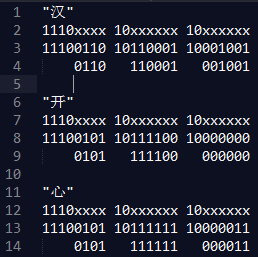
|
Unicode编码(16进制)
|
UTF-8 字节流模板
|
|
000000 - 00007F
|
0xxxxxxx
|
|
000080 - 0007FF
|
110xxxxx 10xxxxxx
|
|
000800 - 00FFFF
|
1110xxxx 10xxxxxx 10xxxxxx
|
|
010000 - 10FFFF
|
11110xxx 10xxxxxx 10xxxxxx 10xxxxxx
|
Eshell V5.10.2  (abort with ^G)

> unicode:characters_to_binary("开心").

<<,,,,,>>

> unicode:characters_to_list("开心").

[,]

> integer_to_list(,).

""

> integer_to_list(,).

""

> integer_to_list(,).

""

[Erlang 0107] Erlang实现文本截断的更多相关文章
- [Erlang 0124] Erlang Unicode 两三事 - 补遗
最近看了Erlang User Conference 2013上patrik分享的BRING UNICODE TO ERLANG!视频,这个分享很好的梳理了Erlang Unicode相关的问题,基本 ...
- [Erlang 0129] Erlang 杂记 VI
把之前阅读资料的时候记下的东西,整理了一下. Adding special-purpose processor support to the Erlang VM P23 简单介绍了Erlang C ...
- [Erlang 0122] Erlang Resources 2014年1月~6月资讯合集
虽然忙,有些事还是要抽时间做; Erlang Resources 小站 2014年1月~6月资讯合集,方便检索. 小站地址: http://site.douban.com/204209/ ...
- [Erlang 0105] Erlang Resources 小站 2013年1月~6月资讯合集
很多事情要做,一件一件来; Erlang Resources 小站 2013年1月~6月资讯合集,方便检索. 小站地址: http://site.douban.com/204209/ ...
- Erlang 103 Erlang分布式编程
Outline 笔记系列 Erlang环境和顺序编程Erlang并发编程Erlang分布式编程YawsErlang/OTP 日期 变更说明 2014-11-23 A Outl ...
- 解决NSTextContainer分页时文本截断问题
解决NSTextContainer分页时文本截断问题 NSTextContainer与NSLayoutManager配合使用可以将大文本文件分页,但是,分页过程中会遇到问题,显示字符被截断的问题:) ...
- [Erlang 0057] Erlang 排错利器: Erlang Crash Dump Viewer
http://www.cnblogs.com/me-sa/archive/2012/04/28/2475556.html Erlang Crash Dump Viewer真的是排错的天兵神器,还记得我 ...
- [Erlang 0119] Erlang OTP 源码阅读指引
上周Erlang讨论群里面提到lists的++实现,争论大多基于猜测,其实打开代码看一下就都明了.贴出代码截图后有同学问这代码是哪里找的? "代码去哪里找?",关于Erla ...
- [Erlang 0123] Erlang EPMD
epmd进程和Erlang节点进程如影随形,在Rabbitmq集群,Ejabberd集群,Couchbase集群产品文档中都会有相当多的内容讲epmd,epmd是什么呢? epmd 是Erlan ...
随机推荐
- EasyUI管理后台模板(附源码)
下载地址:http://files.cnblogs.com/wyguo/easyui_demo.zip
- ssh整合问题总结--使用struts2+Ajax+jquery验证用户名是否已被注册
在用户模块中的用户注册需求上,通常要进行用户名是否已被注册的验证,今天正好写了这个需求,把详细代码和所遇到的问题贴过来.在使用struts2+ajax时候,通常我们会返回json类型的数据,但是像上面 ...
- 【JUC】JDK1.8源码分析之ConcurrentHashMap(一)
一.前言 最近几天忙着做点别的东西,今天终于有时间分析源码了,看源码感觉很爽,并且发现ConcurrentHashMap在JDK1.8版本与之前的版本在并发控制上存在很大的差别,很有必要进行认真的分析 ...
- Yahoo军规
一.尽可能的减少HTTP请求 每一个图片,文字,js文件,css文件都是一个请求. 可以通过合并来请求来减少HTTP请求 比如:图片为一个请求,js文件为一个请求,css为一个请求 二.使用CDN C ...
- 使用脚本操作UpdatePanel中控件的问题
假设有一个脚本(用js或者jQuery等类似手段编写),为UpdatePanel中的一个普通的TextBox赋值.如果你以为这样写: <head runat="server" ...
- Tomcat创建HTTPS访问,java访问https
一 https和ssL HTTPS(全称:Hyper Text Transfer Protocol over Secure Socket Layer),是以安全为目标的HTTP通道,简单讲是HTTP的 ...
- mybatis入门基础(四)----输入映射和输出映射
一:输入映射 通过parameterType指定输入参数的类型,类型可以是简单类型.hashmap.pojo的包装类型. 1.1.传递pojo的包装对象 1.1.1.需求描述 完成用户信息的综合查询, ...
- Vue.js先入个门看看
使用vue.js原文介绍:Vue.js是一个构建数据驱动的web界面库.Vue.js的目标是通过尽可能简单的API实现响应式数据绑定和组合的视图组件.vue.js上手非常简单,先看看几个例子: 例一: ...
- WinForm 窗体属性 窗体美化
WinForm是·Net开发平台中对Windows Form的一种称谓. Windows窗体的一些重要特点如下: 功能强大:Windows窗体可用于设计窗体和可视控件,以创建丰富的基于Windows的 ...
- Oracle数据库优化的经验总结
个人理解,数据库性能最关键的因素在于IO,因为操作内存是快速的,但是读写磁盘是速度很慢的,优化数据库最关键的问题在于减少磁盘的IO,就个 人理解应该分为物理的和逻辑的优化, 物理的是指oracle产品 ...