
mapper.xml是怎样实现Dao层接口
上午写了一个简单的 从xml读取信息实例化一个Bean对象。下午就开始想mybatis是怎么通过xml文件来实现dao层接口的,一开始想直接用Class.forName(String name)然后调用getMethods的办法来得到Dao接口所有的方法Method,结果证明这对接口实没有用的,会报一个错误。于是想百度,但是百度的结果全是怎么配置mapper的。。然后我又四处翻资料,终于找到一些办法。最后我还是用到了我自己封装的DButil 和 DataUtil两个类。
反正我是这么实现的,至于Mybatis是怎么实现的,我还没看源码。
有不了解的可以点下面链接
下面是我的目录结构

因为要解析xml文件,我这里引入了一个dom4j的jar包
从根源开始,下面先贴上User类和IUserdao接口
package com.yck.bean;

public class User
{
    private Integer id;
    private String name;
    private Integer age;

  //getter和setter方法均省略

}

package com.yck.dao;

import com.yck.bean.User;

public interface IUserDao
{
    User selectById(Integer id);

}
然后是我准备好的userdao的xml文件
<?xml version="1.0" encoding="UTF-8"?>
<dao id="com.yck.dao.IUserDao">
    <select id="selectById" resultType ="com.yck.bean.User">
        select * from t_user where id = ?
    </select>
</dao>
为了习惯,我没怎么改动这个配置文件的东西,比较符合mybatis的风格
既然我们的目的是用xml配置文件来实现dao层接口。那我们第一件事就是读取xml文件的信息。
我写了两个类来存取我需要的东西 getter和setter方法我全部省略不贴了,太难看
package com.yck.bean;

import java.util.List;
/**
 * 用来存储一个dao接口的信息
 * @author Administrator
 *
 */
public class MapperBean
{
    private String interfaceName; //接口名
    private List<Function> list; //接口下所有方法
}

package com.yck.bean;

/*
 * 用来存储dao接口一条方法的信息
 */
public class Function
{
    private String sqltype;  //sql的类型 其实用我封装的DataUtil是只有两种类型的,但是我计划在xml读取仍有四种情况
    private String funcName;  // 方法名
    private String sql;       //执行的sql语句
    private String resultType;  // 返回类型
    private String parameterType; //参数类型
}
然后是读取xml文件和通过反射实现dao接口所有函数的代码
public class DaoProxy
{

    /**
     * 通过读取配置文件实现dao接口
     * @param path
     * @return
     */
    public static Object implDao(String path)
    {
        MapperBean mapper = readMapper(path);
        ClassLoader classLoader = DaoProxy.class.getClassLoader();
        Class interfaze = null;
        try
        {
            interfaze = classLoader.loadClass(mapper.getInterfaceName()); //加载一个接口类
        } catch (ClassNotFoundException e)
        {
            // TODO Auto-generated catch block
            e.printStackTrace();
        }

        /**
         * 下面这几句相当重要了,是用xml文件实现dao接口的核心代码,因为数据库相关的大量工作我之前都写过了,所以这个看起来代码量很少
         * 我也不太懂下面这个东西,我查API查了相当久,一开始写总是错,因为我理解错了InvocationHandler接口下那个方法的Object数组参数
         * 它应该理解为一个可变长数组,而不是必须为数组
         */
        Object instanze = Proxy.newProxyInstance(classLoader, new Class[]{interfaze}, new InvocationHandler(){

            @Override
            public Object invoke(Object proxy, Method method, Object[] args) throws Throwable
            {
                List<Function> list = mapper.getList();
                Object obj = null;
                for(Function f:list)
                {
                    if(f.getFuncName().equals(method.getName()))
                    {
                        /**
                         * 判断是不是select语句,是则调用DateUtil的select方法
                         * 否则调用update的方法
                         */
                        if(f.getSqltype().equals("select"))
                        obj = DataUtil.selectForBean(Class.forName(f.getResultType()), f.getSql(), args);
                        else obj = DataUtil.updata(f.getSql(), args);
                    }
                }
                return obj;
            }
        });
        return instanze; //返回这个接口,即mapper.getInterfaceName()这个接口

    }

    /**
     * 读取xml文件的信息
     * @param path
     * @return
     */
    @SuppressWarnings("rawtypes")
    private static MapperBean readMapper(String path)
    {
        File file = new File(path);
        SAXReader reader = new SAXReader();
        MapperBean mapper = new MapperBean();
        try
        {
            Document doc = reader.read(file);
            Element root = doc.getRootElement(); //读取根节点 即dao节点
            mapper.setInterfaceName(root.attributeValue("id").trim()); //把dao节点的id值存为接口名

            List<Function> list = new ArrayList<Function>(); //用来存储方法的List
            for(Iterator rootIter = root.elementIterator();rootIter.hasNext();) //遍历根节点下所有子节点
            {
                Function fun = new Function();    //用来存储一条方法的信息
                Element e = (Element) rootIter.next();
                String sqltype = e.getName().trim();
                String funcName = e.attributeValue("id").trim();
                String sql = e.getText().trim();
                String resultType = e.attributeValue("resultType").trim();
                fun.setSqltype(sqltype);
                fun.setFuncName(funcName);
                fun.setResultType(resultType);
                fun.setSql(sql);
                list.add(fun);
            }
            mapper.setList(list);

        } catch (DocumentException e)
        {
            // TODO Auto-generated catch block
            e.printStackTrace();
        }

        return mapper;
    }
}
下面写一个Test类测试一下
package com.yck.test;

import com.yck.bean.User;
import com.yck.dao.IUserDao;
import com.yck.yebatis.DaoProxy;

public class Test2
{
    public static void main(String[] args)
    {
        IUserDao userdao = (IUserDao) DaoProxy.implDao("src/userdao.xml");
        User user= userdao.selectById(2);
        System.out.println(user);
    }

}
数据库原来有几条数据是这样的

控制台输出结果

package com.yck.dao;

import java.util.List;

import com.yck.bean.User;

public interface IUserDao
{
    User selectById(Integer id);

    int updateName(String name,Integer id);

    int deleteById(Integer id);

    int insert(String name,int age);

    List<User> getAll();

}
<?xml version="1.0" encoding="UTF-8"?>
<dao id="com.yck.dao.IUserDao">
    <select id="selectById" resultType ="com.yck.bean.User">
        select * from t_user where id = ?
    </select>

    <update id="updateName" resultType = "java.lang.Integer">
        update t_user set name=? where id=?
    </update>

    <delete id="deleteById" resultType = "java.lang.Integer">
        delete from t_user where id=?
    </delete>

    <insert id="insert" resultType = "java.lang.Integer">
        insert into t_user values(null,?,?)
    </insert>

    <select id="getAll" resultType = "java.util.List">
        select * from t_user;
    </select>
</dao>
import com.yck.bean.User;
import com.yck.dao.IUserDao;
import com.yck.yebatis.DaoProxy;

public class Test2
{
    public static void main(String[] args)
    {
        IUserDao userdao = (IUserDao) DaoProxy.implDao("src/userdao.xml");//通过xml文件生成一个IUserDao实例

        User user= userdao.selectById(2);
        System.out.println(user);
        userdao.insert("李四", 66);
        userdao.insert("小明", 66);
        userdao.insert("小红", 66);
        userdao.insert("小张", 66);
        //List<User> list = userdao.getAll();

        userdao.updateName("蛋蛋", 1);
        userdao.deleteById(3);

    }

}
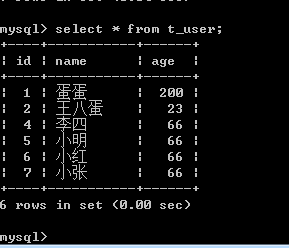
单条的增删改都没问题;问题出在返回没有参数的时候,Object[] 和Object...objects的区别。今天太晚了,先去睡一觉,白天再改善一下吧
<**********************************************************************************************此处是分割线**********************************************************************************************************>
昨晚实在太晚了,为了区别Object[] 和 Object...objects,其实我不明白为什么 Invacation 这个接口里的方法
Object invoke(Object proxy, Method method, Object[] args) throws Throwable 为什么不用可变长数组Object...objects 而且在调用函数的时候它确实有Object...objects的特性
比如我们的dao接口里面有像 selectById(Integer id)这样的 单个参数的方法,也有像updateName(String name,Integer id)这样的双参数方法。但是在调用没有参数的getAll()方法时,它报错了
,报了空指针错误。
这一点我是比较纳闷的,为了解决这个问题我稍微修改了一下用 resultType做判断,如果resultType是java.util.ArrayList类(原谅我实在水平有限,目前只能设计出返回这一种集合。。。),我们再分别判断
它有没有参数,为此我在sql语句的标签上加了一个parameter属性,我一开始意思是默认只能为“yes”和“no”两种属性,但我写到这里的时候觉得特别蠢,所以我刚刚默默地去改成了“true”和“false”;
最后的最后,修改了以上代码的几句就行了

在mapper.xml中增加了一点标签属性
<?xml version="1.0" encoding="UTF-8"?>
<dao id="com.yck.dao.IUserDao">
    <select id="selectById" resultType ="com.yck.bean.User" parameter="true">
        select * from t_user where id = ?
    </select>

    <update id="updateName" resultType = "java.lang.Integer" parameter="true">
        update t_user set name=? where id=?
    </update>

    <delete id="deleteById" resultType = "java.lang.Integer" parameter="true">
        delete from t_user where id=?
    </delete>

    <insert id="insert" resultType = "java.lang.Integer" parameter="true">
        insert into t_user values(null,?,?)
    </insert>

    <select id="getAll" resultType = "java.util.ArrayList" resultOf="com.yck.bean.User" parameter="false">
        select * from t_user;
    </select>
</dao>
在DaoProxy类改了读取mapper.xml的代码,如下
/**
     * 读取xml文件的信息
     * @param path
     * @return
     */
    @SuppressWarnings("rawtypes")
    private static MapperBean readMapper(String path)
    {
        File file = new File(path);
        SAXReader reader = new SAXReader();
        MapperBean mapper = new MapperBean();
        try
        {
            Document doc = reader.read(file);
            Element root = doc.getRootElement(); //读取根节点 即dao节点
            mapper.setInterfaceName(root.attributeValue("id").trim()); //把dao节点的id值存为接口名

            List<Function> list = new ArrayList<Function>(); //用来存储方法的List
            for(Iterator rootIter = root.elementIterator();rootIter.hasNext();) //遍历根节点下所有子节点
            {
                Function fun = new Function();    //用来存储一条方法的信息
                Element e = (Element) rootIter.next();
                String sqltype = e.getName().trim();
                String funcName = e.attributeValue("id").trim();
                String sql = e.getText().trim();
                String resultType = e.attributeValue("resultType").trim();
                String resultOf = "";
                if("java.util.ArrayList".equals(resultType))
                    resultOf = e.attributeValue("resultOf").trim();
                String parameter = e.attributeValue("parameter");
                fun.setSqltype(sqltype);
                fun.setFuncName(funcName);
                fun.setResultType(resultType);
                fun.setSql(sql);
                fun.setResultOf(resultOf);
                fun.setParameter("true".equals(parameter));
                list.add(fun);
            }
            mapper.setList(list);

        } catch (DocumentException e)
        {
            // TODO Auto-generated catch block
            e.printStackTrace();
        }

        return mapper;
    }
修改了实现接口的方法如下
/**
     * 通过读取配置文件实现dao接口
     * @param path
     * @return
     */
    public static Object implDao(String path)
    {
        MapperBean mapper = readMapper(path);
        ClassLoader classLoader = DaoProxy.class.getClassLoader();
        Class interfaze = null;
        try
        {
            interfaze = classLoader.loadClass(mapper.getInterfaceName()); //加载一个接口类
        } catch (ClassNotFoundException e)
        {
            // TODO Auto-generated catch block
            e.printStackTrace();
        }

        /**
         * 下面这几句相当重要了,是用xml文件实现dao接口的核心代码,因为数据库相关的大量工作我之前都写过了,所以这个看起来代码量很少
         * 我也不太懂下面这个东西,我查API查了相当久,一开始写总是错,因为我理解错了InvocationHandler接口下那个方法的Object数组参数
         * 它应该理解为一个可变长数组,而不是必须为数组
         */
        Object instanze = Proxy.newProxyInstance(classLoader, new Class[]{interfaze}, new InvocationHandler(){

            @Override
            public Object invoke(Object proxy, Method method, Object[] args) throws Throwable
            {
                List<Function> list = mapper.getList();
                Object obj = null;
                for(Function f:list)
                {
                    if(f.getFuncName().equals(method.getName()))
                    {
                        /**
                         * 判断是不是select语句,是则调用DateUtil的select方法
                         * 否则调用update的方法
                         */
                        if(f.getSqltype().equals("select"))
                        {
                            if("java.util.ArrayList".equals(f.getResultType()))
                            {
                                if(f.isParameter())
                                    obj = DataUtil.selectForBeanList(Class.forName(f.getResultOf()), f.getSql(), args);
                                else obj = DataUtil.selectForBeanList(Class.forName(f.getResultOf()), f.getSql());
                            }
                            else
                            {
                                if(f.isParameter())
                                    obj = DataUtil.selectForBean(Class.forName(f.getResultType()), f.getSql(), args);
                                else obj = DataUtil.selectForBean(Class.forName(f.getResultType()), f.getSql());
                            }

                        }

                        else
                        {
                            if(f.isParameter())
                                obj = DataUtil.updata(f.getSql(), args);
                            else obj = DataUtil.updata(f.getSql());
                        }
                    }
                }
                return obj;
            }
        });
        return instanze; //返回这个接口,即mapper.getInterfaceName()这个接口

    }
最后我们做一下测试,数据库原有的信息如下
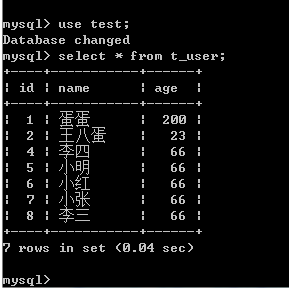
测试方法如下
package com.yck.test;

import java.util.List;

import com.yck.bean.User;
import com.yck.dao.IUserDao;
import com.yck.yebatis.DaoProxy;

public class Test2
{
    public static void main(String[] args)
    {
        IUserDao userdao = (IUserDao) DaoProxy.implDao("src/userdao.xml");//通过xml文件生成一个IUserDao实例

        User user= userdao.selectById(2);
        System.out.println(user);

        userdao.insert("大牛", 88);
        userdao.insert("二牛", 77);
        userdao.insert("三牛", 66);
        userdao.insert("四牛", 55);

        List<User> list = userdao.getAll();

        System.out.println(list);

        userdao.updateName("二蛋", 1);
        userdao.deleteById(3);

    }

}
控制台输出
由于记录数比较多控制台输出太长了,直接贴结果吧
User [id=, name=王八蛋, age=]
[User [id=, name=蛋蛋, age=], User [id=, name=王八蛋, age=], User [id=, name=李四, age=], User [id=, name=小明, age=], User [id=, name=小红, age=], User [id=, name=小张, age=], User [id=, name=李三, age=], User [id=, name=大牛, age=], User [id=, name=二牛, age=], User [id=, name=三牛, age=], User [id=, name=四牛, age=]]
数据库最后结果如下

总的来说,功能我们还是实现了,虽然不够完美,这也让我感觉到框架并不是什么高深的东西,
九层之台,起于累土,千里之行,始于足下。
上面这句我们的老话和大家共勉,不要害怕,再厉害的攻城狮,也是用一行一行代码堆砌实现他们想要的功能,有想法就去尝试
以上内容都是原创,如果转载请标注并标明来源于
大王让我写代码:http://www.cnblogs.com/yeyeck/p/7468644.html
mapper.xml是怎样实现Dao层接口的更多相关文章
- MyBatis框架的XML数据访问Dao层接口的组合使用
MyBatis 的前生为Apache的开源项目iBatis.其优势在于灵活,几乎可以替代JDBC,同时提供了编程接口.目前MyBatis的数据访问Dao层不需要实现类,也不需要像JDBC那样拼接Hql ...
- iBatis——自动生成DAO层接口提供操作函数(详解)
iBatis——自动生成DAO层接口提供操作函数(详解) 在使用iBatis进行持久层管理时,发现在使用DAO层的updateByPrimaryKey.updateByPrimaryKeySelect ...
- Mybatis中DAO层接口没有写实现类,Mapper中的方法和DAO接口方法是怎么绑定到一起的
参考mybatis入门基础(二)----原始dao的开发和mapper代理开发 其实也就是通过接口名与mapper的id绑定在一起,通过SQL去写实现类,返回数据.
- Java SE 之 DAO层接口设计思想
用图说话 好处 1.只需要定义好IBaseDao的接口方法,并只需要实现BaseDaoImpl的方法,而具体的业务类和业务类/接口的方法的基本方法(IBaseDao已定义的)并不需要再考虑实现. 2. ...
- Mybatis中DAO层接口没有写实现类,Mapper中的方法和DAO接口方法是怎么绑定到一起的,其内部是怎么实现的
其实也就是通过接口名与mapper的id绑定在一起(即相同),通过SQL去写实现类,返回数据.
- 瞎j8封装第二版之用xml文件来代理dao接口
也是重新整理了之前的那篇 模仿Mybatis用map per.xml实现Dao层接口的功能 话不多说直接上代码 首先是结构 依赖pom.xml <?xml version="1.0&q ...
- Mybatis Dao层注解及XML组合Dao的开发方式
mybatis可以用xml进行数据操作,也可以在dao层用注解的方式,也可以采取xml和dao层接口组合使用的方法.显然 ,后者更加简单. 实体类Student package com.zhao. ...
- MyBatis开发Dao层的两种方式(Mapper动态代理方式)
MyBatis开发原始Dao层请阅读我的上一篇博客:MyBatis开发Dao层的两种方式(原始Dao层开发) 接上一篇博客继续介绍MyBatis开发Dao层的第二种方式:Mapper动态代理方式 Ma ...
- 一个简单的Java代码生成工具—根据数据源自动生成bean、dao、mapper.xml、service、serviceImpl
目录结构 核心思想 通过properties文件获取数据源—>获取数据表的字段名称.字段类型等—>生成相应的bean实体类(po.model).dao接口(基本的增删改查).mapper. ...
随机推荐
- JMeter 监控和记录&常用功能
使用https连接时,如果对应站点的CA 证书错误,会直接报连接不到服务器的错误,org.apache.commons.httpclient.NoHttpResponseException,把错误证书 ...
- GetConsoleTitle 函数--获取控制台窗口标题
GetConsoleTitle函数 来源:https://msdn.microsoft.com/en-us/library/windows/desktop/ms683174(v=vs.85).aspx ...
- angularjs 动态显示内容适用于$modal
1.创建指令 angular.module('app').directive('dynamicElement', ["$compile", function ($compile) ...
- ubuntu14.04下编译安装ambari-2.4.2.0
ubuntu14.04下编译安装ambari-2.4.2.0 编译前的准备工作 准备工作有: 系统参数 系统依赖(编译环境) 离线安装包 java环境 maven环境 Nodejs环境 git环境 a ...
- Bean 的生命周期 之 后处理Bean
这里先把Bean 的生命周期总结一下,然后引出后处理Bean 首先,Bean 的生命周期总共有11步: 1.instantiate bean对象实例化 2.populate properties 封装 ...
- 表达式求值(二叉树方法/C++语言描述)(二)
表达式二叉树节点的数据可能是运算数或运算符,可以使用一个联合体进行存储:同时还需要一个变量来指示存储的是运算数还是运算符,可以采用和栈方法求值中一样的枚举类型TokenType: typedef en ...
- gitbook初体验
前言 在早些天看sec-wiki的时候,看到有同学做了一个ctf-wiki来介绍CTF,让CTF新手能够快速入门,做成了电子书的样子,放在github上面.页面精美.简洁,让人爱不惜手. 想着自己也能 ...
- java.lang.NoSuchMethodError:android.content.Context.getDrawable
今天在开发的时候,这个代码在源码中是可以看到的,但是在android 4.3手机上面会报错,具体错误信息和代码如下: setBackgroundDrawable(context.getDrawable ...
- Scala关于软件的安装(《Programming in Scala》这本书)
这篇文章主要介绍怎么在终端来写Scala语言.在Scala创始人出的Coursera课程中是让我们在IDE中sbt写Scala语言,而在这本书貌似让我们在终端上直接用Scala写.官网有介绍不过不详细 ...
- BOM部分笔记整理
BOM部分整理 (章节 8.9) 概览: 一.介绍BOM 在web中,JS的核心对象就是BOM. 1.1 在浏览器中,window对象 == global 所以,你在全局环境下定义的变量,函数都会自动 ...