
线程池之ThreadPoolExecutor
所属包:
java.util.concurrent.ThreadPoolExecutor
类关系:
public class ThreadPoolExecutor extends AbstractExecutorService
1. 继承关系
ThreadPoolExecutor 继承了一个抽象类:AbstractExecutorService
public abstract class AbstractExecutorService implements ExecutorService
而这个AbstractExecutorService实现了一个接口:ExecutorService
public interface ExecutorService extends Executor
这个ExecutorService接口又继承了一个类:Executor
public interface Executor
可以看出:
Executor是一个顶层接口,它的子接口ExecutorService继承了它(其实还有一个子接口: ScheduledExecutorService),抽象类AbstractExecutorService实现了这个子接口ExecutorService,最终ThreadPoolExecutor 继承了抽象类AbstractExecutorService并且同时实现了子接口ExecutorService。
2. 构造方法
最简单的一个构造方法:
    /**

     * Creates a new {@code ThreadPoolExecutor} with the given initial

     * parameters and default thread factory and rejected execution handler.

     * It may be more convenient to use one of the {@link Executors} factory

     * methods instead of this general purpose constructor.

     *

     * @param corePoolSize the number of threads to keep in the pool, even

     *        if they are idle, unless {@code allowCoreThreadTimeOut} is set

     * @param maximumPoolSize the maximum number of threads to allow in the

     *        pool

     * @param keepAliveTime when the number of threads is greater than

     *        the core, this is the maximum time that excess idle threads

     *        will wait for new tasks before terminating.

     * @param unit the time unit for the {@code keepAliveTime} argument

     * @param workQueue the queue to use for holding tasks before they are

     *        executed.  This queue will hold only the {@code Runnable}

     *        tasks submitted by the {@code execute} method.

     * @throws IllegalArgumentException if one of the following holds:<br>

     *         {@code corePoolSize < 0}<br>

     *         {@code keepAliveTime < 0}<br>

     *         {@code maximumPoolSize <= 0}<br>

     *         {@code maximumPoolSize < corePoolSize}

     * @throws NullPointerException if {@code workQueue} is null

     */

    public ThreadPoolExecutor(int corePoolSize,

                              int maximumPoolSize,

                              long keepAliveTime,

                              TimeUnit unit,

                              BlockingQueue<Runnable> workQueue) {

        this(corePoolSize, maximumPoolSize, keepAliveTime, unit, workQueue,

             Executors.defaultThreadFactory(), defaultHandler);

    }
有五个参数:
corePoolSize - 即使空闲时仍保留在池中的线程数,除非设置 allowCoreThreadTimeOut

maximumPoolSize - 池中允许的最大线程数

keepAliveTime - 当线程数大于核心时,这是多余的空闲线程在终止之前等待新任务的最大时间。

unit - keepAliveTime参数的时间单位

workQueue - 在执行任务之前用于保存任务的队列。 该队列将仅保存execute方法提交的Runnable任务
实际上它调用了同类的另外一个构造方法,最后两个参数用的默认值
另外一个构造方法:
    /**

     * Creates a new {@code ThreadPoolExecutor} with the given initial

     * parameters.

     *

     * @param corePoolSize the number of threads to keep in the pool, even

     *        if they are idle, unless {@code allowCoreThreadTimeOut} is set

     * @param maximumPoolSize the maximum number of threads to allow in the

     *        pool

     * @param keepAliveTime when the number of threads is greater than

     *        the core, this is the maximum time that excess idle threads

     *        will wait for new tasks before terminating.

     * @param unit the time unit for the {@code keepAliveTime} argument

     * @param workQueue the queue to use for holding tasks before they are

     *        executed.  This queue will hold only the {@code Runnable}

     *        tasks submitted by the {@code execute} method.

     * @param threadFactory the factory to use when the executor

     *        creates a new thread

     * @param handler the handler to use when execution is blocked

     *        because the thread bounds and queue capacities are reached

     * @throws IllegalArgumentException if one of the following holds:<br>

     *         {@code corePoolSize < 0}<br>

     *         {@code keepAliveTime < 0}<br>

     *         {@code maximumPoolSize <= 0}<br>

     *         {@code maximumPoolSize < corePoolSize}

     * @throws NullPointerException if {@code workQueue}

     *         or {@code threadFactory} or {@code handler} is null

     */

    public ThreadPoolExecutor(int corePoolSize,

                              int maximumPoolSize,

                              long keepAliveTime,

                              TimeUnit unit,

                              BlockingQueue<Runnable> workQueue,

                              ThreadFactory threadFactory,

                              RejectedExecutionHandler handler) {

        if (corePoolSize < 0 ||

            maximumPoolSize <= 0 ||

            maximumPoolSize < corePoolSize ||

            keepAliveTime < 0)

            throw new IllegalArgumentException();

        if (workQueue == null || threadFactory == null || handler == null)

            throw new NullPointerException();

        this.corePoolSize = corePoolSize;

        this.maximumPoolSize = maximumPoolSize;

        this.workQueue = workQueue;

        this.keepAliveTime = unit.toNanos(keepAliveTime);

        this.threadFactory = threadFactory;

        this.handler = handler;

    }
参数:
corePoolSize - 即使空闲时仍保留在池中的线程数,除非设置 allowCoreThreadTimeOut

maximumPoolSize - 池中允许的最大线程数

keepAliveTime - 当线程数大于内核时,这是多余的空闲线程在终止前等待新任务的最大时间。

unit - keepAliveTime参数的时间单位

workQueue - 用于在执行任务之前使用的队列。 这个队列将仅保存execute方法提交的Runnable任务。

threadFactory - 执行程序创建新线程时使用的工厂

handler - 执行被阻止时使用的处理程序,因为达到线程限制和队列容量 (拒绝策略)
3. 如何使用
import java.util.concurrent.ArrayBlockingQueue;

import java.util.concurrent.ThreadPoolExecutor;

import java.util.concurrent.TimeUnit;

public class MyThreadPoolExecutor {

    /**

     * 使用有界队列:

     *  1、当线程数小于corePoolSize时,创建线程执行任务。

     *  2、当线程数大于等于corePoolSize并且workQueue没有满时,放入workQueue中

     *  3、线程数大于等于corePoolSize并且当workQueue满时,新任务新建线程运行,线程总数要小于maximumPoolSize

     *  4、当线程总数等于maximumPoolSize并且workQueue满了的时候执行handler的rejectedExecution。也就是拒绝策略。

     *

     * ThreadPoolExecutor默认有四个拒绝策略:

     *  1、ThreadPoolExecutor.AbortPolicy()           直接抛出异常RejectedExecutionException

     *  2、ThreadPoolExecutor.CallerRunsPolicy()        直接调用run方法并且阻塞执行

     *  3、ThreadPoolExecutor.DiscardPolicy()           直接丢弃后来的任务

     *  4、ThreadPoolExecutor.DiscardOldestPolicy()    丢弃在队列中队首的任务

     *

     *

     *

     */

    public static void main(String[] args) {

        ThreadPoolExecutor pool = new ThreadPoolExecutor(

                1,

                2,

                0L,

                TimeUnit.SECONDS,

                new ArrayBlockingQueue<>(3));

        Runnable[] runs = new Runnable[6];

        for (int i = 0; i < runs.length; i++) {

            runs[i] = new MyTask(i);

        }

        pool.execute(runs[0]);    //线程1个,队列0个

        pool.execute(runs[1]);    //线程1个,队列1个

        pool.execute(runs[2]);    //线程1个,队列2个

        pool.execute(runs[3]);    //线程1个,队列3个

        pool.execute(runs[4]);    //线程2个,队列3个

        pool.execute(runs[5]);    //线程2个,队列3个,拒绝第六个

        pool.shutdown();

    }

}
线程:
public class MyTask implements Runnable {

    private int id;

    public MyTask(int id) {

        this.id = id;

    }

    @Override

    public void run() {

        try {

            Thread.sleep(2000);

        } catch (InterruptedException e) {

            e.printStackTrace();

        }

        System.out.println("Task-" + id);

    }

}
这个就是最简单的一个使用方法了。ps:最后那个(线程1个,队列0个....)指的是,你仅仅执行runs[0];runs[0]+runs[1];runs[0]+runs[1]+runs[2];....的时候,任务被放到哪里。
但是推荐使用这种方式创建线程池:
package cn.ying.thread.pool;

import java.util.concurrent.ExecutorService;

import java.util.concurrent.Executors;

public class MyTest {

    public static void main(String[] args) {

        ExecutorService pool = Executors.newFixedThreadPool(5);

        for (int i = 0; i < 10; i++) {

            pool.execute(new MyTask(i));

        }

        pool.shutdown();

    }

    public void note(){

        Executors.newCachedThreadPool();    //无界线程池,可以进行自动线程回收

//        public static ExecutorService newCachedThreadPool() {

//            return new ThreadPoolExecutor(0, Integer.MAX_VALUE,

//                                          60L, TimeUnit.SECONDS,

//                                          new SynchronousQueue<Runnable>());//SynchronousQueue:长度为1的队列

//        }

        Executors.newFixedThreadPool(10);    //创建一个可重用固定线程数的线程池,以共享的无界队列方式来运行这些线程。

//        public static ExecutorService newFixedThreadPool(int nThreads) {

//            return new ThreadPoolExecutor(nThreads, nThreads,

//                                          0L, TimeUnit.MILLISECONDS,

//                                          new LinkedBlockingQueue<Runnable>());

//        }

        Executors.newScheduledThreadPool(10);    //创建一个单线程执行程序,它可安排在给定延迟后运行命令或者定期地执行

//        public static ScheduledExecutorService newScheduledThreadPool(int corePoolSize) {

//            return new ScheduledThreadPoolExecutor(corePoolSize);

//        }

//        public ScheduledThreadPoolExecutor(int corePoolSize) {

//            super(corePoolSize, Integer.MAX_VALUE, 0, NANOSECONDS,

//                  new DelayedWorkQueue());

//        }

        Executors.newSingleThreadExecutor();    //创建一个使用单个 worker 线程的 Executor,以无界队列方式来运行该线程

//        public static ExecutorService newSingleThreadExecutor() {

//            return new FinalizableDelegatedExecutorService

//                (new ThreadPoolExecutor(1, 1,

//                                        0L, TimeUnit.MILLISECONDS,

//                                        new LinkedBlockingQueue<Runnable>()));

//        }

    }

}
==============================更新
4. 拒绝策略
1. AbortPolicy(丢弃任务并抛出RejectedExecutionException异常)默认策略
import java.util.concurrent.ArrayBlockingQueue;

import java.util.concurrent.ThreadPoolExecutor;

import java.util.concurrent.TimeUnit;

public class Test {

    public static void main(String[] args) throws Exception {

        ThreadPoolExecutor pool = new ThreadPoolExecutor(

                1,

                2,

                0L,

                TimeUnit.SECONDS,

                new ArrayBlockingQueue<>(3),

                // 拒绝并抛出异常

                new ThreadPoolExecutor.AbortPolicy());

        for (int i = 0; i < 6; i++){

            pool.execute(new Task("任务" + i));

        }

        pool.shutdown();

    }

    private static class Task implements Runnable{

        private String name;

        Task(String name) {

            this.name = name;

        }

        @Override

        public void run() {

            System.out.println(Thread.currentThread().getName() + "===" + name);

        }

    }

}
运行:
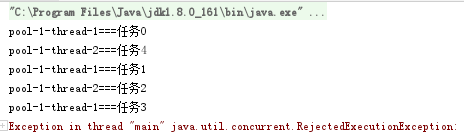
2. DiscardPolicy(丢弃任务,但是不抛出异常)
import java.util.concurrent.ArrayBlockingQueue;

import java.util.concurrent.ThreadPoolExecutor;

import java.util.concurrent.TimeUnit;

public class Test {

    public static void main(String[] args) throws Exception {

        ThreadPoolExecutor pool = new ThreadPoolExecutor(

                1,

                2,

                0L,

                TimeUnit.SECONDS,

                new ArrayBlockingQueue<>(3),

                // 拒绝但不抛出异常

                new ThreadPoolExecutor.DiscardPolicy());

        for (int i = 0; i < 6; i++){

            pool.execute(new Task("任务" + i));

        }

        pool.shutdown();

    }

    private static class Task implements Runnable{

        private String name;

        Task(String name) {

            this.name = name;

        }

        @Override

        public void run() {

            System.out.println(Thread.currentThread().getName() + "===" + name);

        }

    }

}
运行:
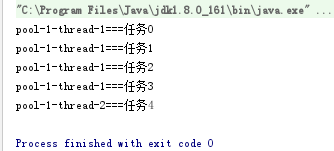
3. DiscardOldestPolicy(丢弃队列最前面的任务,然后重新提交被拒绝的任务)
import java.util.concurrent.ArrayBlockingQueue;

import java.util.concurrent.ThreadPoolExecutor;

import java.util.concurrent.TimeUnit;

public class Test {

    public static void main(String[] args) throws Exception {

        ThreadPoolExecutor pool = new ThreadPoolExecutor(

                1,

                2,

                0L,

                TimeUnit.SECONDS,

                new ArrayBlockingQueue<>(3),

                // 丢弃队列中最前面的任务,然后执行被拒绝的任务

                new ThreadPoolExecutor.DiscardOldestPolicy());

        for (int i = 0; i < 6; i++){

            pool.execute(new Task("任务" + i));

        }

        pool.shutdown();

    }

    private static class Task implements Runnable{

        private String name;

        Task(String name) {

            this.name = name;

        }

        @Override

        public void run() {

            System.out.println(Thread.currentThread().getName() + "===" + name);

        }

    }

}
运行:
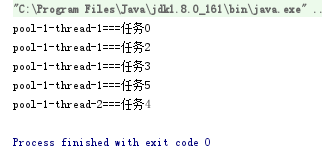
4. CallerRunsPolicy(由提交任务的线程处理)
import java.util.concurrent.ArrayBlockingQueue;

import java.util.concurrent.ThreadPoolExecutor;

import java.util.concurrent.TimeUnit;

public class Test {

    public static void main(String[] args) throws Exception {

        ThreadPoolExecutor pool = new ThreadPoolExecutor(

                1,

                2,

                0L,

                TimeUnit.SECONDS,

                new ArrayBlockingQueue<>(3),

                // 由提交任务的线程直接执行此任务

                new ThreadPoolExecutor.CallerRunsPolicy());

        for (int i = 0; i < 6; i++){

            pool.execute(new Task("任务" + i));

        }

        pool.shutdown();

    }

    private static class Task implements Runnable{

        private String name;

        Task(String name) {

            this.name = name;

        }

        @Override

        public void run() {

            System.out.println(Thread.currentThread().getName() + "===" + name);

        }

    }

}
运行:

5. 自己处理
import java.util.concurrent.ArrayBlockingQueue;

import java.util.concurrent.ThreadPoolExecutor;

import java.util.concurrent.TimeUnit;

public class Test {

    public static void main(String[] args) throws Exception {

        ThreadPoolExecutor pool = new ThreadPoolExecutor(

                1,

                2,

                0L,

                TimeUnit.SECONDS,

                new ArrayBlockingQueue<>(3),

                // 自定义处理

                (Runnable r, ThreadPoolExecutor executor) -> {

                    System.out.println("自定义处理");

                });

        for (int i = 0; i < 6; i++){

            pool.execute(new Task("任务" + i));

        }

        pool.shutdown();

    }

    private static class Task implements Runnable{

        private String name;

        Task(String name) {

            this.name = name;

        }

        @Override

        public void run() {

            System.out.println(Thread.currentThread().getName() + "===" + name);

        }

    }

}
运行:
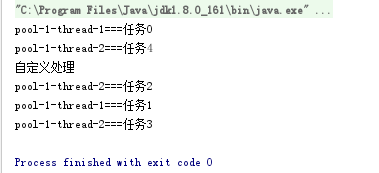
线程池之ThreadPoolExecutor的更多相关文章
- 从源码解读线程(Thread)和线程池(ThreadPoolExecutor)的状态
线程是比进程更加轻量级的调度执行单位,理解线程是理解并发编程的不可或缺的一部分:而生产过程中不可能永远使用裸线程,需要线程池技术,线程池是管理和调度线程的资源池.因为前不久遇到了一个关于线程状态的问题 ...
- Java并发编程:Java线程池核心ThreadPoolExecutor的使用和原理分析
目录 引出线程池 Executor框架 ThreadPoolExecutor详解 构造函数 重要的变量 线程池执行流程 任务队列workQueue 任务拒绝策略 线程池的关闭 ThreadPoolEx ...
- 线程池 一 ThreadPoolExecutor
java.util.concurrent public class ThreadPoolExecutor extends AbstractExecutorService ThreadPoolExecu ...
- 线程池之 ThreadPoolExecutor
线程池之 ThreadPoolExecutor + 面试题 线程池介绍 线程池(Thread Pool):把一个或多个线程通过统一的方式进行调度和重复使用的技术,避免了因为线程过多而带来使用上的开销. ...
- 高并发之——不得不说的线程池与ThreadPoolExecutor类浅析
一.抛砖引玉 既然Java中支持以多线程的方式来执行相应的任务,但为什么在JDK1.5中又提供了线程池技术呢?这个问题大家自行脑补,多动脑,肯定没坏处,哈哈哈... 说起Java中的线程池技术,在很多 ...
- 【高并发】不得不说的线程池与ThreadPoolExecutor类浅析
大家好,我是冰河~~ 今天,我们一起来简单聊聊线程池中的ThreadPoolExecutor类,好了,不多说了,开始进入今天的正题. 一.抛砖引玉 既然Java中支持以多线程的方式来执行相应的任务,但 ...
- 线程池:ThreadPoolExecutor
[ThreadPoolExecutor的使用和思考] public ThreadPoolExecutor(int corePoolSize, ...
- Java线程池之ThreadPoolExecutor
前言 线程池可以提高程序的并发性能(当然是合适的情况下),因为对于没有线程的情况下,我们每一次提交任务都新建一个线程,这种方法存在不少缺陷: 1. 线程的创建和销毁的开销非常高,线程的创建需要时间, ...
- 从源码看JDK提供的线程池(ThreadPoolExecutor)
一丶什么是线程池 (1)博主在听到线程池三个字的时候第一个想法就是数据库连接池,回忆一下,我们在学JavaWeb的时候怎么理解数据库连接池的,数据库创建连接和关闭连接是一个比较耗费资源的事情,对于那些 ...
- java并发线程池---了解ThreadPoolExecutor就够了
总结:线程池的特点是,在线程的数量=corePoolSize后,仅任务队列满了之后,才会从任务队列中取出一个任务,然后构造一个新的线程,循环往复直到线程数量达到maximumPoolSize执行拒绝策 ...
随机推荐
- centos7下部署iptables环境纪录(关闭默认的firewalle)
CentOS7默认的防火墙不是iptables,而是firewall.由于习惯了用iptables作为防火墙,所以在安装好centos7系统后,会将默认的firewall关闭,并另安装iptables ...
- 最近新明白的SQL小知识
1.partition by和order by 先看三个小需求: ①查询出各个类编号的书本的数量. select count (类编号) as 数量, 类编号 from Books group by ...
- week3-构造一个简单的linux系统
潘恒 原创作品转载请注明出处 <Linux内核分析>MOOC课程http://mooc.study.163.com/course/USTC-1000029000 一.gdb跟踪调试内核 ...
- git 使用ssh密钥
一.查看仓库支持的传输协议 1.1查看仓库支持的传输协议 使用命令 git remote -v 查看你当前的 remote url root@zengyue:/home/yuanGit# git re ...
- TimeLine CSS/Javascript 时间线
https://casbootadminserver.herokuapp.com/#/applications/23bd8218/trace
- Docker Clustering Tools Compared: Kubernetes vs Docker Swarm
https://technologyconversations.com/2015/11/04/docker-clustering-tools-compared-kubernetes-vs-docker ...
- php实现常驻进程 多进程监控
php都是通过crontabd定时脚本处理队列的,面试被问到php如何常驻进程进行处理队列,想了半天这样不知道是否是一种方式 <?php function logs(){ file_put_co ...
- ubuntu默认壁纸位置
usr/share/backgrounds和usr/share/wallpapers
- 玩弄 python 正则表达式
这里记录一个我常用的模型,每次久了不使用正则就会忘记. 记得最好玩的一句关于正则表达式的话就是 当你想到一件事情可以用正则表达式解决的时候 现在你就面临了两个问题了. python里面使用了re模块对 ...
- 配合es5.8的使用,升级sb版本到2.X,遇到一个问题
问题:Failed to bind properties under 'spring.redis.jedis.pool.max-wait' to java.time.Duration: Propert ...