
Zabbix系列之五——监控TCP端口
监控端口的几个主要Keys:
|
net.tcp.listen[port] |
Checks if this port is in LISTEN state. 0 - it is not, 1 - it is in LISTEN state. 监控TCP端口是否监听 |
|
net.tcp.port[<ip>,port] |
Check, if it is possible to make TCP connection to the port number. 0 - cannot connect, 1 - can connect. IP address is optional. If ip is missing, 127.0.0.1 is used. Example: net.tcp.port[,80] 检查TCP端口是否可以正常连接。 |
|
net.tcp.service[service,<ip>,<port>] |
Check if service is available. 0 - service is down, 1 - service is running. If ip is missing 127.0.0.1 is used. If port number is missing, default service port is used. Example: net.tcp.service[ftp,,45]. 检查服务是否可用,FTP服务可直接使用FTP模板 |
|
net.tcp.service.perf[service,<ip>,<port>] |
Check performance of service "service". 0 - service is down, sec - number of seconds spent on connection to the service. If ip is missing 127.0.0.1 is used. If port number is missing, default service port is used. 监控服务(端口)连接性能 |
|
net.udp.listen[port] |
Checks if this port is in LISTEN state. 0 - it is not, 1 - it is in LISTEN state. 监控UDP端口是否监听(不支持windows) |
说明:Zabbix自带单独服务检测模板,如Template App FTP Service,就是使用的ket.tcp.service[ftp]这个KEY来监控的。
模板如下,可根据需求修改端口及触发器名称:
<?xml version="1.0" encoding="UTF-8"?>
<zabbix_export>
<version>3.4</version>
<date>2018-06-19T06:10:48Z</date>
<groups>
<group>
<name>Tcp Port</name>
</group>
</groups>
<templates>
<template>
<template>Template Tcp Port 4234</template>
<name>Template Tcp Port 4234</name>
<description/>
<groups>
<group>
<name>Tcp Port</name>
</group>
</groups>
<applications>
<application>
<name>Tcp Port Monitor</name>
</application>
</applications>
<items>
<item>
<name>tcp port 4234 is listen</name>
<type>0</type>
<snmp_community/>
<snmp_oid/>
<key>net.tcp.listen[4234]</key>
<delay>30s</delay>
<history>90d</history>
<trends>365d</trends>
<status>0</status>
<value_type>3</value_type>
<allowed_hosts/>
<units/>
<snmpv3_contextname/>
<snmpv3_securityname/>
<snmpv3_securitylevel>0</snmpv3_securitylevel>
<snmpv3_authprotocol>0</snmpv3_authprotocol>
<snmpv3_authpassphrase/>
<snmpv3_privprotocol>0</snmpv3_privprotocol>
<snmpv3_privpassphrase/>
<params/>
<ipmi_sensor/>
<authtype>0</authtype>
<username/>
<password/>
<publickey/>
<privatekey/>
<port/>
<description/>
<inventory_link>0</inventory_link>
<applications>
<application>
<name>Tcp Port Monitor</name>
</application>
</applications>
<valuemap/>
<logtimefmt/>
<preprocessing/>
<jmx_endpoint/>
<master_item/>
</item>
<item>
<name>tcp port 4234 is connection</name>
<type>0</type>
<snmp_community/>
<snmp_oid/>
<key>net.tcp.port[,4234]</key>
<delay>30s</delay>
<history>90d</history>
<trends>365d</trends>
<status>0</status>
<value_type>3</value_type>
<allowed_hosts/>
<units/>
<snmpv3_contextname/>
<snmpv3_securityname/>
<snmpv3_securitylevel>0</snmpv3_securitylevel>
<snmpv3_authprotocol>0</snmpv3_authprotocol>
<snmpv3_authpassphrase/>
<snmpv3_privprotocol>0</snmpv3_privprotocol>
<snmpv3_privpassphrase/>
<params/>
<ipmi_sensor/>
<authtype>0</authtype>
<username/>
<password/>
<publickey/>
<privatekey/>
<port/>
<description/>
<inventory_link>0</inventory_link>
<applications>
<application>
<name>Tcp Port Monitor</name>
</application>
</applications>
<valuemap/>
<logtimefmt/>
<preprocessing/>
<jmx_endpoint/>
<master_item/>
</item>
<item>
<name>tcp port 4234 performance</name>
<type>0</type>
<snmp_community/>
<snmp_oid/>
<key>net.tcp.service.perf[http,,4234]</key>
<delay>30s</delay>
<history>90d</history>
<trends>365d</trends>
<status>0</status>
<value_type>0</value_type>
<allowed_hosts/>
<units/>
<snmpv3_contextname/>
<snmpv3_securityname/>
<snmpv3_securitylevel>0</snmpv3_securitylevel>
<snmpv3_authprotocol>0</snmpv3_authprotocol>
<snmpv3_authpassphrase/>
<snmpv3_privprotocol>0</snmpv3_privprotocol>
<snmpv3_privpassphrase/>
<params/>
<ipmi_sensor/>
<authtype>0</authtype>
<username/>
<password/>
<publickey/>
<privatekey/>
<port/>
<description/>
<inventory_link>0</inventory_link>
<applications>
<application>
<name>Tcp Port Monitor</name>
</application>
</applications>
<valuemap/>
<logtimefmt/>
<preprocessing/>
<jmx_endpoint/>
<master_item/>
</item>
<item>
<name>tcp port 4234 is running</name>
<type>0</type>
<snmp_community/>
<snmp_oid/>
<key>net.tcp.service[http,,4234]</key>
<delay>30s</delay>
<history>90d</history>
<trends>365d</trends>
<status>0</status>
<value_type>3</value_type>
<allowed_hosts/>
<units/>
<snmpv3_contextname/>
<snmpv3_securityname/>
<snmpv3_securitylevel>0</snmpv3_securitylevel>
<snmpv3_authprotocol>0</snmpv3_authprotocol>
<snmpv3_authpassphrase/>
<snmpv3_privprotocol>0</snmpv3_privprotocol>
<snmpv3_privpassphrase/>
<params/>
<ipmi_sensor/>
<authtype>0</authtype>
<username/>
<password/>
<publickey/>
<privatekey/>
<port/>
<description/>
<inventory_link>0</inventory_link>
<applications>
<application>
<name>Tcp Port Monitor</name>
</application>
</applications>
<valuemap/>
<logtimefmt/>
<preprocessing/>
<jmx_endpoint/>
<master_item/>
</item>
</items>
<discovery_rules/>
<httptests/>
<macros/>
<templates/>
<screens/>
</template>
</templates>
<triggers>
<trigger>
<expression>{Template Tcp Port 4234:net.tcp.listen[4234].last()}=0</expression>
<recovery_mode>0</recovery_mode>
<recovery_expression/>
<name>tcp port 4234(Paypre) is down</name>
<correlation_mode>0</correlation_mode>
<correlation_tag/>
<url/>
<status>0</status>
<priority>5</priority>
<description/>
<type>0</type>
<manual_close>0</manual_close>
<dependencies/>
<tags/>
</trigger>
</triggers>
<graphs>
<graph>
<name>tcp port 4234</name>
<width>900</width>
<height>200</height>
<yaxismin>0.0000</yaxismin>
<yaxismax>100.0000</yaxismax>
<show_work_period>1</show_work_period>
<show_triggers>1</show_triggers>
<type>0</type>
<show_legend>1</show_legend>
<show_3d>0</show_3d>
<percent_left>0.0000</percent_left>
<percent_right>0.0000</percent_right>
<ymin_type_1>0</ymin_type_1>
<ymax_type_1>0</ymax_type_1>
<ymin_item_1>0</ymin_item_1>
<ymax_item_1>0</ymax_item_1>
<graph_items>
<graph_item>
<sortorder>0</sortorder>
<drawtype>0</drawtype>
<color>1A7C11</color>
<yaxisside>0</yaxisside>
<calc_fnc>2</calc_fnc>
<type>0</type>
<item>
<host>Template Tcp Port 4234</host>
<key>net.tcp.port[,4234]</key>
</item>
</graph_item>
<graph_item>
<sortorder>1</sortorder>
<drawtype>0</drawtype>
<color>F63100</color>
<yaxisside>0</yaxisside>
<calc_fnc>2</calc_fnc>
<type>0</type>
<item>
<host>Template Tcp Port 4234</host>
<key>net.tcp.listen[4234]</key>
</item>
</graph_item>
<graph_item>
<sortorder>2</sortorder>
<drawtype>0</drawtype>
<color>2774A4</color>
<yaxisside>0</yaxisside>
<calc_fnc>2</calc_fnc>
<type>0</type>
<item>
<host>Template Tcp Port 4234</host>
<key>net.tcp.service[http,,4234]</key>
</item>
</graph_item>
<graph_item>
<sortorder>3</sortorder>
<drawtype>0</drawtype>
<color>A54F10</color>
<yaxisside>0</yaxisside>
<calc_fnc>2</calc_fnc>
<type>0</type>
<item>
<host>Template Tcp Port 4234</host>
<key>net.tcp.service.perf[http,,4234]</key>
</item>
</graph_item>
</graph_items>
</graph>
</graphs>
</zabbix_export>
导入模板
【配置】——【模板】——【导入】

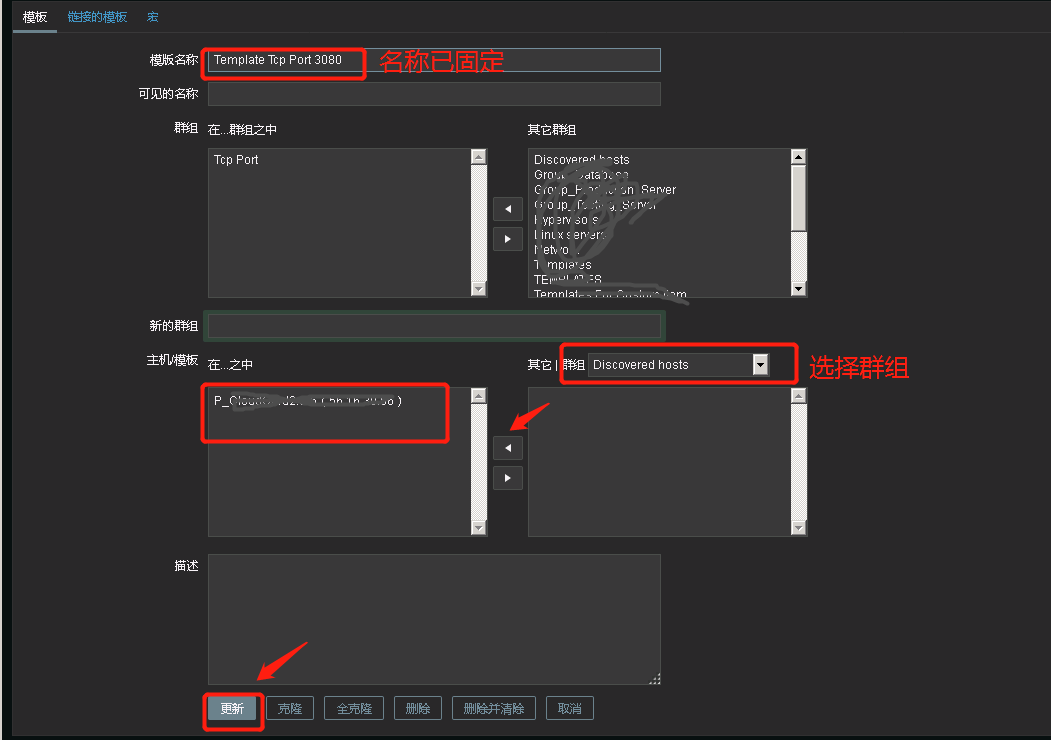
进入模板添加主机

设置被监控主机
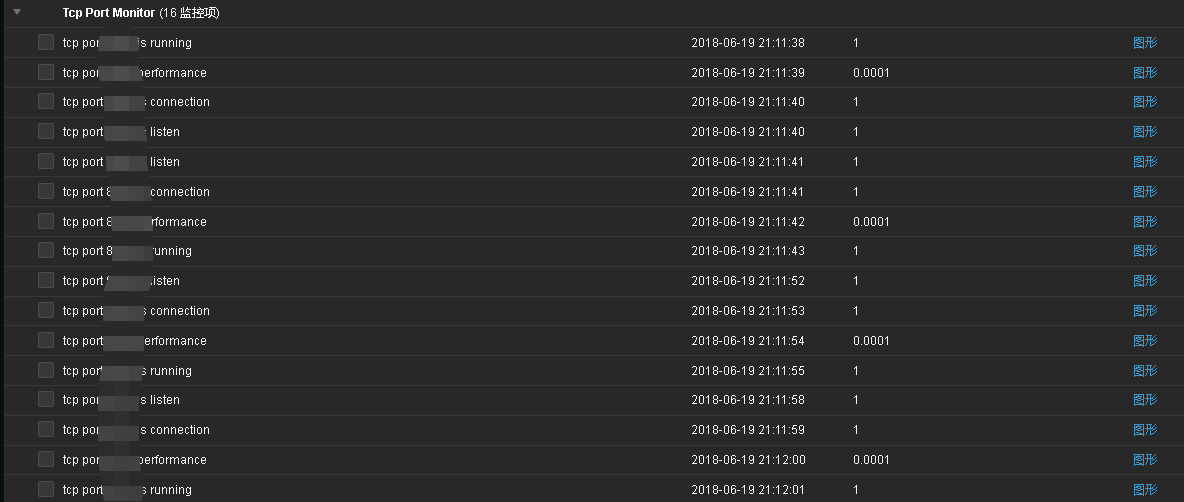
查看效果
Zabbix系列之五——监控TCP端口的更多相关文章
- zabbix自定义模板——监控TCP连接状态
TCP十二种连接状态说明 可以使用man netstat查看 LISTEN - 侦听来自远方TCP端口的连接请求: SYN-SENT -在发送连接请求后等待匹配的连接请求: SYN-RECEIVED ...
- zabbix自动发现监控远程端口
zabbix监控远程服务器端口,simple checks是zabbix用来监控无agent的主机 脚本和模板地址: https://github.com/mikeluwen/tcpmonitor
- zabbix系列 ~ mongo监控相关
,一 简介: 我们来谈谈mongo的监控二 核心命令 rs.status() 关注复制集群是否健康 db.serverStatus() 关注实例整体性能三 目标解读 主要来解读下db. ...
- zabbix系列 ~ 自动监控多实例功能
一 场景 监控mongo的多实例端口二 目标 定制一套模板,根据不同的端口进行批量监控项的生成三 步骤 1 编写py脚本实现端口josin化输出,以便zabbix_server能进行识别 ...
- zabbix系列之监控类型及方式
http://www.ttlsa.com/zabbix/how-to-chose-zabbix-item-type/ zabbix提供十几种监控类型: 监控类型 特性 备注 Zabbix agent ...
- zabbix系列之五——安装后配置一
https://www.zabbix.com/documentation/3.4/manual/appliance Configuration 1Hosts and host groups Overv ...
- zabbix系列 ~ linux监控相关
Linux 监控 一 相关名词解释 cpu context switch (上下文切换) 1 定义 CPU给每个任务一定的服务时间,当时间片轮转的时候,需要把当前状态保存下来,同时加载下一个 ...
- zabbix监控tcp连接并发数
第一步,想在zabbix的web监控tcp连接数,那么要看zabbix-server的版本和zabbix-agent版本是否一致,不然TCP-status图没有数据 也会报错.下图就是版本不符合报错的 ...
- zabbix Server 4.0 监控TCP的12种状态
zabbix Server 4.0 监控TCP的12种状态 作者:尹正杰 版权声明:原创作品,谢绝转载!否则将追究法律责任. 大家对TCP三次握手比较熟悉了,都知道当发生DOSS攻击时,客户端发送 ...
随机推荐
- 【NIFI】 Apache NiFI 集群搭建
NiFI 集群介绍 NiFi集群架构 NiFi采用Zero-Master Clustering范例.集群中的每个节点对数据执行相同的任务,但每个节点都在不同的数据集上运行.其中一个节点自动选择(通过A ...
- nodejs之使用express框架连接mysql数据库,返回jsonapi数据
var express = require('express');var router = express.Router();var url = require('url');var mysql = ...
- Eclipse的设置
1 Eclipse的工作空间和新建工程 1.1: 工作空间 * 其实就是我们写的源代码所在的目录 1.2: 创建工程(项目) * 右键/Package Explore 空白区/new /Java Pr ...
- ajax用户是否存在
$(function(){ $("#username").blur(function(){ var usernameInput=$(this).val(); $.post( &qu ...
- CentOS7配置阿里云源
cd /etc/yum.repos.d/ mkdir backup mv CentOS-* backup/ wget -O /etc/yum.repos.d/CentOS-Base.repo http ...
- Github使用:使用github用作自己的免费域名
1.创建一个新仓库 --- 删除里面的文件 --- Git上传文件到新仓库(必须有index.html) 2. 点击新仓库的setting,下滑找到GitHub Pages ---- 点击第一行的链接 ...
- ps最最基础的文档
因为学习PHP,但是公司没有前端工程师,修图的时候只好找被人帮忙,一个简答的问题,其实几分钟就搞定了,还要麻烦别人,就自己学了一下ps.一共花了3天时间.学习了一些简单的操作. 工具:Adobe Ph ...
- oracle 恢复table删除数据 恢复package(使用闪回)
好久没写东西了,今天写一篇凑个数吧,来公司一年多了,感觉自己到了一个小瓶颈期了. 以前每天很多新东西,都是忙着学,感觉没时间写博客总结一下,大部分都是写笔记,现在又是没东西可以写,每天干着95%都是重 ...
- npm: 权限阻止修复
在使用 npm install 时,总提示: Error: EACCES: permission denied 今天通过这个命令设置了权限解决了问题: sudo chown -R $(whoami) ...
- EasyUI 学习(1)-Tooltip(提示框)
一.创建组件 Tooltip不依赖其他组件 1.使用class加载 <a href="#" class="easyui-tooltip" title=&q ...