
ROS初探--意义、基本模块
顾虑就使我们都变成了懦夫,使得那果断的本色蒙上了一层思虑的惨白的容颜,本来可以做出伟大的事业,由于思虑就化为乌有了,丧失了行动的能力。-----哈姆雷特
ROS: Robot Operating System. 全球网站:http://www.ros.org/
Q&A: https://answers.ros.org/questions/
介绍安装、使用方法的wiki: http://wiki.ros.org/
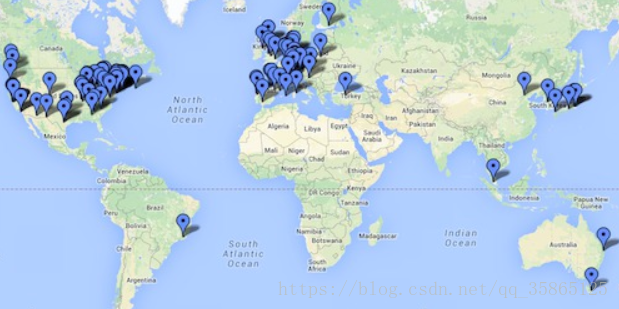
The Robot Operating System (ROS) is a flexible framework for writing robot software. It is a collection of tools, libraries, and conventions that aim to simplify the task of creating complex and robust robot behavior across a wide variety of robotic platforms.
Why? Because creating truly robust, general-purpose robot software is hard. From the robot's perspective, problems that seem trivial to humans often vary wildly between instances of tasks and environments. Dealing with these variations is so hard that no single individual, laboratory, or institution can hope to do it on their own.
As a result, ROS was built from the ground up to encourage collaborative robotics software development. For example, one laboratory might have experts in mapping indoor environments, and could contribute a world-class system for producing maps. Another group might have experts at using maps to navigate, and yet another group might have discovered a computer vision approach that works well for recognizing small objects in clutter. ROS was designed specifically for groups like these to collaborate and build upon each other's work, as is described throughout this site.
ROS的一些功能模块:
http://www.ros.org/core-components/
1)Robot Description Language
Another common robotics problem that ROS solves for you is how to describe your robot in a machine-readable way. ROS provides a set of tools for describing and modeling your robot so that it can be understood by the rest of your ROS system, including tf, robot_state_publisher, and rviz. The format for describing your robot in ROS is URDF (Unified Robot Description Format), which consists of an XML document in which you describe the physical properties of your robot, from the lengths of limbs and sizes of wheels to the locations of sensors and the visual appearance of each part of the robot.
Once defined in this way, your robot can be easily used with the tf library, rendered in three dimensions for nice visualizations, and used with simulators and motion planners
看来可以写URDF格式的文件来描述自己的机器人,然后ROS的其他模块可以解析读取,并做建模,仿真。
2)Standard Robot Messages
Years of community discussion and development have led to a set of standard message formats that cover most of the common use cases in robotics. There are message definitions for geometric concepts like poses, transforms, and vectors; for sensors like cameras, IMUs and lasers; and for navigation data like odometry, paths, and maps; among many others. By using these standard messages in your application, your code will interoperate seamlessly with the rest of the ROS ecosystem, from development tools to libraries of capabilities.
ROS对机器人的各种消息的格式做了统一的规定,如果个人在开发自己的机器人模块时,也使用这种格式,那么自己开发的模块可以与现成的ROS其他功能模块很好地对接。
3)Robot Geometry Library
 A common challenge in many robotics projects is keeping track of where different parts of the robot are with respect to each other. For example, if you want to combine data from a camera with data from a laser, you need to know where each sensor is, in some common frame of reference. This issue is especially important for humanoid (美 [ˈhjuməˌnɔɪd] )robots(人形机) with many moving parts. We address this problem in ROS with the tf (transform) library, which will keep track of where everything is in your robot system.
Designed with efficiency in mind, the tf library has been used to manage coordinate transform data for robots with more than one hundred degrees of freedom and update rates of hundreds of Hertz. The tf library allows you to define both static transforms, such as a camera that is fixed to a mobile base, and dynamic transforms, such as a joint in a robot arm. You can transform sensor data between any pair of coordinate frames in the system. The tf library handles the fact that the producers and consumers of this information may be distributed across the network, and the fact that the information is updated at varying rates.
tf库是个好东西啊,看来可以直接用它来进行机械臂各个关节的相对位置控制。 总之,tf的作用是可以统一协调机器人的各个组成部分,应该是将他们放在各个坐标系中,然后进行坐标转换。 至于,tr对相机玩位置信息的处理,我没有用过,还没有概念。
4)Preemptable(抢占式) Remote Procedure Calls
While topics (anonymous publish/subscribe) and services (remote procedure calls) cover most of the communication use cases in robotics, sometimes you need to initiate a goal-seeking behavior, monitor its progress, be able to preempt it along the way, and receive notification when it is complete.
ROS provides actions for this purpose. Actions are like services except they can report progress before returning the final response, and they can be preempted by the caller. So, for example, you can instruct your robot to navigate to some location, monitor its progress as it attempts to get there, stop or redirect it along the way, and be told when it has succeeded (or failed). An action is a powerful concept that is used throughout the ROS ecosystem.
该部分讲的时机器人控制中的通信策略,提出了一种特殊的功能:当发送一个指令后,可以追踪指令的执行状态,并可以取消指令,牛掰!
补充::点击打开链接
" 观察者(Observer)模式是对象的行为型模式,又叫做发表-订阅(Publish/Subscribe)模式、模型-视图(Model/View)模式、源-收听者(Source/Listener)模式或从属者(Dependents)模式。 当某件事情发生时,有多个应用需要知道该事件发生并作出相应的反映。
Solution: Enable listening applications to subscribe to specific messages. Create a mechanism that sends messages to all interested subscribers. The three variations of the Publish/Subscribe pattern you can use to create a mechanism that sends messages to all interested subscribers are List-Based Publish/Subscribe, Broadcast-Based Publish/Subscribe, and Content-Based Publish/Subscribe.
内核中使用的notification 机制就是基于List-Based Publish/Subscribe(将观察者都放到一个链表中)。“
Remote Procedure Calls(RPC)是指远程过程调用,也就是说两台服务器A,B,一个应用部署在A服务器上,想要调用B服务器上应用提供的函数/方法,由于不在一个内存空间,不能直接调用,需要通过网络来表达调用的语义和传达调用的数据。
5)Diagnostics--- 故障诊断
ROS provides a standard way to produce, collect, and aggregate diagnostics about your robot so that, at a glance, you can quickly see the state of your robot and determine how to address issues as they arise.
6)Pose Estimation, Localization, and Navigation
ROS also provides some "batteries included" capabilities that help you get started on your robotics project. There are ROS packages that solve basic robotics problems like pose estimation, localization in a map, building a map, and even mobile navigation.
Whether you are an engineer looking to do some rapid research and development, a robotics researcher wanting to get your research done in a timely fashion, or a hobbyist looking to learn more about robotics, these out-of-the-box capabilities will help you do more, with less effort.
一句话,提供了 姿态估计,定位,导航,现成的工具包或方案,帮助开发着快速实现想法。
7)Tools,Command-Line Tools
强大的开发,调试工具!也可以用命令行,远程登陆ROS,全部用强大的命令行来完成工作。
8)rviz ------强大的数据可视化工具,包括消息,camera信息可视化。
Perhaps the most well-known tool in ROS, rviz provides general purpose, three-dimensional visualization of many sensor data types and any URDF-described robot.
rviz can visualize many of the common message types provided in ROS, such as laser scans, three-dimensional point clouds, and camera images. It also uses information from the tf library to show all of the sensor data in a common coordinate frame of your choice, together with a three-dimensional rendering of your robot. Visualizing all of your data in the same application not only looks impressive, but also allows you to quickly see what your robot sees, and identify problems such as sensor misalignments or robot model inaccuracies.
9)rqt
ROS provides rqt, a Qt-based framework for developing graphical interfaces for your robot.
ROS初探--意义、基本模块的更多相关文章
- ROS初探:(一)ROS架构
一.ROS架构 ROS架构上分为三个层级: 计算图级(Computation Graph level):体现进程与系统的关系,描述系统怎么运行. 文件系统级(Filesystem level):组织构 ...
- js 模块开发之一(模块开发价值)
首先引用我们的今天的主角 ----<前端模块化开发的价值> 1,前端开发最常见的两个问题 ---命名冲突和文件依赖 2,对于命名冲突的基本解决办法就是学习其他语言的习惯,添加命名空间 va ...
- ROS是Robot Operating System
ROS是Robot Operating System 机器人操作系统ROS | 简介篇 同样,从个人微信公众号Nao(ID:qRobotics)搬运. 前言 先放一个ROS Industrial一 ...
- 机器人操作系统ROS | 简介篇
同样,从个人微信公众号Nao(ID:qRobotics)搬运. 前言 先放一个ROS Industrial一周年剪辑视频. ROS已经发布八周年了,在国外科研机构中非常受欢迎.目前,以美国西南研究院为 ...
- ROS系统MoveIt玩转双臂机器人系列(一)
一.ROS系统的MoveIt模块简介 机器人操作系统ROS目前最受关注的两个模块是导航(Navigation)和机械臂控制(MoveIt!),其中,机械臂控制模块(后面简称MoveIt)可以让用户快速 ...
- 快速了解 Robot Operating System(ROS) 机器人操作系统
http://www.ros.org/ 关于ROS About ROS http://www.ros.org/about-ros/ 机器人操作系统(ROS)是用于编写机器人软件的灵活框架.目的在简化 ...
- 入门ROS教程与视频汇总(kinetic)
参考网址: Richard Wang 3 Shawn Chen 部分视频网址: http://v.youku.com/v_show/id_XMjUxMTc5MzE5Mg http://i.you ...
- python:常用模块 知识整理
time模块 time.time() # 时间戳:1487130156.419527 time.strftime("%Y-%m-%d %X") #格式化的时间字符串:'2017-0 ...
- 嵌入式的我们为什么要学ROS
随机推荐
- Halting Problem
Halting Problem: 传送门:http://acm.zju.edu.cn/onlinejudge/showProblem.do?problemCode=4049 总结一个小规律:题目中给的 ...
- Sklearn多元线性回归
Sklearn多元线性回归 1 正文 2 参考资料 Sklearn多元线性回归
- CF1207题解
D 全排列减去坏序列 坏序列分三种,容斥一下就好了 E 比较有意思 \(A=_{i=1}^{100}\{i\},B=_{i=1}^{100}\{i\cdot 2^7\}\),所以\(A_i~xor~ ...
- 安装 sqoop
简介 Sqoop是一个用来将Hadoop(Hive.HBase)和关系型数据库中的数据相互转移的工具,可以将一个关系型数据库(例如:MySQL ,Oracle ,Postgres等)中的数据导入到Ha ...
- spring boot 之注册
注册数据库 使用spring boot 之登录笔记 的数据库 在server 层 User create(String username, String password, String email ...
- 基于Redis的分布式锁到底安全吗(上)?
基于Redis的分布式锁到底安全吗(上)? 2017-02-11 网上有关Redis分布式锁的文章可谓多如牛毛了,不信的话你可以拿关键词“Redis 分布式锁”随便到哪个搜索引擎上去搜索一下就知道了 ...
- Control.ImeMode属性简释
在WINFORM中,我们经常遇到如下问题.文本输入框中输入法有时候需要被禁用,或者某些时候全半角输入自动转换.查阅相关资料,现小结如下. (一)Control.ImeMode 属性:获取或设置控件的输 ...
- Linux/Centos下安装部署phantomjs
PhantomJS 是一个基于 WebKit 的服务器端 JavaScript API.它全面支持web而不需浏览器支持,其快速,原生支持各种Web标准: DOM 处理, CSS 选择器, JSON, ...
- H5注意点(1)
H1标签在企业开发中,每一个页面至多只能有一个H1标签,被H1标签包裹的是整个页面最重要的信息. img标签,格式:<img src=" ">,当中src就是用来告诉i ...
- Centos7 中查找文件、目录、内容
1.查找文件 find / -name ‘filename’ 2.查找目录 find / -name ‘path’ -type d 3.查找内容 find . | xargs grep -ri ‘co ...