
零配置文件搭建SpringMVC实践纪录
本篇记录使用纯java代码搭建SpringMVC工程的实践,只是一个demo。再开始之前先热身下,给出SpringMVC调用流程图,讲解的是一个http request请求到达SpringMVC框架后的过程,如下:

从servlet 3.0开始,实现javax.servlet.ServletContainerInitializer接口的类将在容器启动的时候执行onStartup方法。SpringMVC的”零配置”就是基于这个特性。所以对于servlet 3.0 以下的容器还是老老实实在web.xml中进行配置。 下面让我们一步步搭建SpringMVC,先上图:
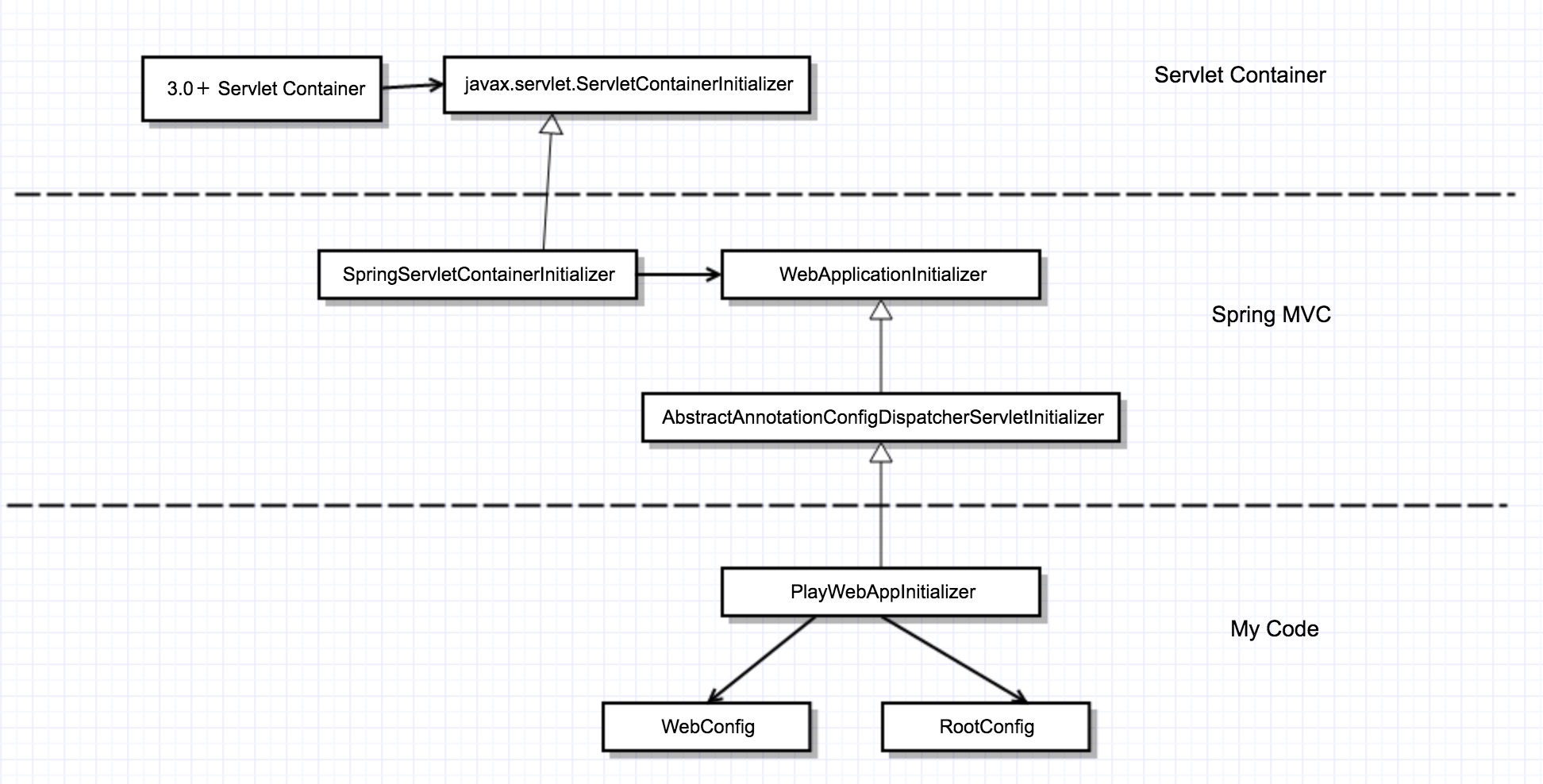
上图中展示了启动关键类的初始化过程,首先容器启动,初始化并执行实现ServletContainerInitalzer接口的Spring类,该类初始化实现WebApplicationInitializer接口的PlayWebAppInitializer类(由于这里继承了AbstractAnnotationConfigDispatcherServletInitializer抽象类)。
在讲解PlayWebAppInitializer初始化了两个bean容器,一种是与DispatcherServlet相关联的MVC框架直接关系的bean,如:Controller,Service,Repository等等。再说另外一种bean容器前先回忆下,还记得ContextLoaderListener吧,做SSH框架整合时在web.xml中要配置这个类,所以说这个容器是配置更通用一些的bean。 那么问题来了:为什么要有两个共存呢?----答:我猜想是方便分离,如果不想使用SpringMVC而实用其他MVC框架的可以把DispatcherServlet相关的那个bean容器拿掉。(纯属意淫,欢迎拍砖)。
这里WebConfig用来负责DispacherServlet相关bean的配置,RootConfig用来负责ContextLoaderListener相关bean的配置。
下面截取一段《Spring in Action 4th》中关于两个ApplicationContext的原话,在135页:
A TALE OF TWO APPLICATION CONTEXTS
When DispatcherServlet starts up, it creates a Spring application context and starts loading it with beans declared in the configuration files or classes that it’s given. With the getServletConfigClasses() method in listing 5.1, you’ve asked that Dispatcher- Servlet load its application context with beans defined in the WebConfig configura- tion class (using Java configuration). But in Spring web applications, there’s often another application context. This other application context is created by ContextLoaderListener. Whereas DispatcherServlet is expected to load beans containing web components such as controllers, view resolvers, and handler mappings, ContextLoaderListener is expected to load the other beans in your application. These beans are typically the middle-tier and data-tier components that drive the back end of the application. 136 CHAPTER 5 Building Spring web applications Under the covers, AbstractAnnotationConfigDispatcherServletInitializer cre- ates both a DispatcherServlet and a ContextLoaderListener. The @Configuration classes returned from getServletConfigClasses() will define beans for Dispatcher- Servlet’s application context. Meanwhile, the @Configuration class’s returned get- RootConfigClasses() will be used to configure the application context created by ContextLoaderListener. In this case, your root configuration is defined in RootConfig, whereas Dispatcher- Servlet’s configuration is declared in WebConfig. You’ll see what those two configura- tion classes look like in a moment.
上实践的代码: com.bob.playspring.PlayWebAppInitializer
package com.bob.playspring;

import org.springframework.web.servlet.support.AbstractAnnotationConfigDispatcherServletInitializer;

/**

 * 初始化DispatherServlet,代替在web.xml中到DispatherServlet配置,

 * @author bob

 *

 */

public class PlayWebAppInitializer extends AbstractAnnotationConfigDispatcherServletInitializer {

    @Override

    protected Class<?>[] getRootConfigClasses() {

        return new Class[] { RootConfig.class };

    }

    @Override

    protected Class<?>[] getServletConfigClasses() {

        return new Class[] { WebConfig.class };

    }

    /**

     * identifies one or more paths that DispatcherServlet will be mapped to.<br>

     *  In this case, it’s mapped to /, indicating that it will be the application’s default servlet.<br>

     *   It will handle all requests coming into the application.

     */

    @Override

    protected String[] getServletMappings() {

        return new String[] { "/" };

    }

}
com.bob.playspring.WebConfig
package com.bob.playspring;

import org.springframework.context.annotation.Bean;

import org.springframework.context.annotation.ComponentScan;

import org.springframework.context.annotation.Configuration;

import org.springframework.web.servlet.ViewResolver;

import org.springframework.web.servlet.config.annotation.DefaultServletHandlerConfigurer;

import org.springframework.web.servlet.config.annotation.EnableWebMvc;

import org.springframework.web.servlet.config.annotation.WebMvcConfigurerAdapter;

import org.springframework.web.servlet.view.InternalResourceViewResolver;

/**

 * 系统配置

 * @author bob

 *

 */

@EnableWebMvc

@Configuration

@ComponentScan("com.bob")

public class WebConfig extends WebMvcConfigurerAdapter {

    @Bean

    public ViewResolver viewResolver() {

        InternalResourceViewResolver resolver = new InternalResourceViewResolver();

        resolver.setPrefix("/WEB-INF/views/");

        resolver.setSuffix(".jsp");

        resolver.setExposeContextBeansAsAttributes(true);

        return resolver;

    }

    @Override

    public void configureDefaultServletHandling(DefaultServletHandlerConfigurer configurer) {

        configurer.enable();

    }

}
com.bob.playspring.RootConfig
package com.bob.playspring;

import org.springframework.context.annotation.ComponentScan;

import org.springframework.context.annotation.ComponentScan.Filter;

import org.springframework.context.annotation.Configuration;

import org.springframework.context.annotation.FilterType;

import org.springframework.web.servlet.config.annotation.EnableWebMvc;

@Configuration

@ComponentScan(basePackages = { "com.bob" }, excludeFilters = {

        @Filter(type = FilterType.ANNOTATION, value = EnableWebMvc.class) })

public class RootConfig {

}
关于Controller,Service,Repository的代码我就不贴了。
零配置文件搭建SpringMVC实践纪录的更多相关文章
- 零配置文件搭建SpringMvc
零配置文件搭建SpringMvc SpringMvc 流程原理 (1)用户发送请求至前端控制器DispatcherServlet:(2) DispatcherServlet收到请求后,调用Handle ...
- 使用IDEA搭建一个 Spring + Spring MVC + Mybatis 的Web项目 ( 零配置文件 )
前言: 除了mybatis 不是零配置,有些还是有xml的配置文件在里面的. 注解是Spring的一个构建的一个重要手段,减少写配置文件,下面解释一下一些要用到的注解: @Configuration ...
- 零配置简单搭建SpringMVC 项目
SpringMVC是比较常用的JavaWeb框架,非常轻便强悍,能简化Web开发,大大提高开发效率,在各种Web程序中广泛应用.本文采用Java Config的方式搭建SpringMVC项目,并对Sp ...
- 脚手架快速搭建springMVC框架项目
apid-framework脚手架快速搭建springMVC框架项目 rapid-framework介绍: 一个类似ruby on rails的java web快速开发脚手架,本着不重复发明轮 ...
- Maven搭建SpringMVC+Hibernate项目详解 【转】
前言 今天复习一下SpringMVC+Hibernate的搭建,本来想着将Spring-Security权限控制框架也映入其中的,但是发现内容太多了,Spring-Security的就留在下一篇吧,这 ...
- 手把手Maven搭建SpringMVC+Spring+MyBatis框架(超级详细版)
手把手Maven搭建SpringMVC+Spring+MyBatis框架(超级详细版) SSM(Spring+SpringMVC+Mybatis),目前较为主流的企业级架构方案.标准的MVC设计模式, ...
- idea使用maven搭建springmvc
最近学着搭建springmvc,写此博客记录一下 idea版本:2016.3.1maven: apache-maven-3.3.9tomcat:apache-tomcat-8.5.8 1.New Pr ...
- 1、搭建springMVC开发环境以及HelloWorld测试
一.下载spring-framework,采用简单的方式: http://repo.springsource.org/libs-release-local/org/springframework/sp ...
- Maven搭建SpringMVC+Hibernate项目详解
前言 今天复习一下SpringMVC+Hibernate的搭建,本来想着将Spring-Security权限控制框架也映入其中的,但是发现内容太多了,Spring-Security的就留在下一篇吧,这 ...
随机推荐
- 完美解决 nginx No input file specified.
一次开发中遇到了这个问题:No input file specified nginx版本1.8 找遍网络都是说 fastcgi_param SCRIPT_FILENAME $document_root ...
- TortoiseGit状态图标不能正常显示的解决办法
1:确认是不是64bit 系统上装了 32bit 的 TortoiseGit,如果是的话,这个只要再安装 64bit 的 TortoiseGit就可以 了,如果不是,请往下看. 2:在开始菜单的搜 ...
- Linux操作系统备份之二:通过tar拷贝分区实现Linux操作数据的在线备份
http://www.tektea.com/archives/2163.html. 在<Linux操作系统备份之一:使用LVM快照实现Linux操作系统数据的在线备份>文章中,我们介绍了使 ...
- 三分之一的程序猿之社交类app踩过的那些坑
三分之一的程序猿之社交类app踩过的那些坑 万众创新,全民创业.哪怕去年陌生人社交不管融资与否都倒闭了不知道多少家,但是依然有很多陌生人社交应用层出不穷的冒出来.各种脑洞大开,让人拍案叫起. 下面我们 ...
- 利用 Serial Over Lan(SOL)搭建 XEN 的调试信息输出环境
如有转载,请注明出处与本文连接,谢谢! 修改XEN的源码实现额外的功能,需要有一个调试环境来得到XEN的调试信息(有关源码编译并安装 XEN 请阅读我以前的博文:在CentOS下源码安装 Xen并搭建 ...
- 浅谈JDBC编程
一.概述 1.为什么要用JDBC 数据库是程序不可或缺的一部分,每一个网站和服务器的建设都需要数据库.对于大多数应用程序员(此处不包含数据库开发人员)来说,我们更多的不是在DBMS中对数据库进行操纵, ...
- Apache部署django项目
在此之前,我们一直使用django的manage.py 的runserver 命令来运行django应用,但这只是我们的开发环境,当项目真正部署上线的时候这做就不可行了,必须将我们的项目部署到特定的w ...
- window10 安装SVN 提示权限问题
http://www.yishimei.cn/network/551.html 经常在网上看到有同学反映,他们在控制面板里卸载软件的时候,总是会出现2502.2503错误代码的问题,并且这个问题大多 ...
- WCF、Net remoting、Web service概念及区别
Windows通信基础(Windows Communication Foundation,WCF)是基于Windows平台下开发和部署服务的软件开发包(Software Development Kit ...
- 关于webrtc视频会议的解决方案
以我的经验来看视频会议分两种模式:网状模型,星型 1.网状模型 所谓的网状模型就是参加会议的人中每两个人建立一个点对点的连接. 比如:一个会议室有三个人A,B,C 基于网络模型就需要这样: 1.A和B ...