
java按值传递理解(转)
java没有引用传递只有按值传递,没有引用传递只有按值传递,值传递。
因为Primitive类型的值不能改变,所以method不能更改调用方传的primitive 值。因为method更改的是Primitive变量的copy,所以method的更改,调用方是不知道的
因为Reference Data Type的内存地址不能被method中操作更改,所以调用方中Reference Data 对象中的状态 也发生变化。因为method操作的对象,与调用方是相同的,即调用方是知道method中的更改的
只不过Primitive类型传的是实际的数据,Reference Data Type 传的是内存地址。
入参为Reference Data Type的方法中,可以更改这个对象状态的原因,就是因为入参对象的内存地址是不能改变,这样在method中更改这个对象的属性值,调用方的该对象的相关属性值也发生变化
Passing Reference Data Type Arguments
Reference data type parameters, such as objects, are also passed into methods by value.
This means that when the method returns, the passed-in reference still references the same object as before.
However, the values of the object's fields can be changed in the method, if they have the proper access level.
import org.junit.Test;

public class CircleTest {

    @Test

    public void moveCircle() throws Exception {

        Circle circle=new Circle(10,10);

        circle.print(circle);

        circle.moveCircle(circle, 20, 20);

        circle.print(circle);

    }

}
输出:
moveCircle:Circle{x=10, y=10},hash code:1252585652

moveCircle:Circle{x=0, y=0},hash code:2036368507

moveCircle:Circle{x=30, y=30},hash code:1252585652
Let the method be invoked with these arguments:
moveCircle(myCircle, 20, 20)
Inside the method, circle initially refers to myCircle. The method changes the x and y coordinates of the object that circle references (i.e., myCircle) by 20 and 20, respectively. These changes will persist when the method returns.
Then circle is assigned a reference to a new Circle object with x = y = 0. This reassignment has no permanence, however, because the reference was passed in by value and cannot change.
Within the method, the object pointed to by circle has changed, but, when the method returns, myCircle still references the same Circle object as before the method was called.
public class Circle {

    private int x;

    private int y;

    public Circle(int x, int y) {

        this.x = x;

        this.y = y;

    }

    public void moveCircle(Circle circle, int deltaX, int deltaY) {

        // code to move origin of circle to x+deltaX, y+deltaY

        circle.setX(circle.getX() + deltaX);

        circle.setY(circle.getY() + deltaY);

        // code to assign a new reference to circle

        circle = new Circle(0, 0); //自这行后,moveCircle方法就丢失入参circle---即不能再操作入参circle。就像连续对一个primitive 变量赋值,后一次操作会覆盖前面的

        print(circle);

    }

    public void print(Circle circle) {

        System.out.println("moveCircle:"+circle+",hash code:"+circle.hashCode());

    }

    public int getX() {

        return x;

    }

    public void setX(int x) {

        this.x = x;

    }

    public int getY() {

        return y;

    }

    public void setY(int y) {

        this.y = y;

    }

    @Override

    public String toString() {

        return "Circle{" +

                "x=" + x +

                ", y=" + y +

                '}';

    }

}
Passing Primitive Data Type Arguments
Primitive arguments, such as an int or a double, are passed into methods by value. This means that any changes to the values of the parameters exist only within the scope of the method. When the method returns, the parameters are gone and any changes to them are lost. Here is an example:
public class PassPrimitiveByValue {

    public static void main(String[] args) {

        int x = 3;

        // invoke passMethod() with

        // x as argument

        passMethod(x);

        // print x to see if its

        // value has changed

        System.out.println("After invoking passMethod, x = " + x);

    }

    // change parameter in passMethod()

    public static void passMethod(int p) {

        p = 10;

    }

}
When you run this program, the output is:
After invoking passMethod, x = 3
http://docs.oracle.com/javase/tutorial/java/javaOO/arguments.html
通过下面代码解释:
 public class Test {

     public static void main(String[] args ){

         int var = 1 ;

         f(var) ;

         System.out.println(var) ;

     }

     public static void f(int newVar ){

         newVar = 2 ;

     }

 }
执行结果:
1
分析:
当执行 int var = 1 时,jvm在栈中开辟一块空间存放值---1,同时var变量指向值1所对应的内存空间,也就是var变量也有自己的内存空间,不过它的空间里存放的是值1所对应的内存地址。
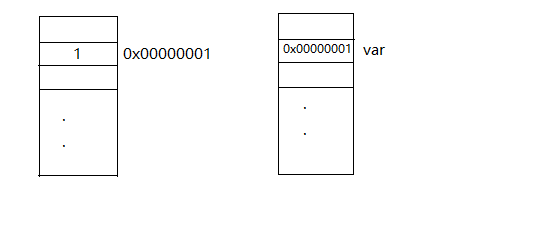
当执行到第七行,要将var的值传递进方法f中时,jvm执行的操作是创建一个新的变量newVar,并将var里存放的值(也就是值1的内存地址)复制一份给newVar。

当执行到第八行时,jvm重新开辟值--2所对应的存储空间来存储值2,并修改了newVar里存放的地址值。

方法返回,执行到第五行,输出var所指向的值,当然是值1,因为var中的地址值根本没有变化。
上面示例用的是int,一个基本数据类型,对于引用数据类型同样适用,因为java中没有引用传递,只有值传递。例如自定义的类UserClass:
 class MyClass {

     int var1 ;

 }

 public class Test {

     public static void main(String[] args ){

         MyClass myClass = new MyClass() ;

         myClass.var1 = 1 ;

         f(myClass) ;

         System.out.println(myClass.var1) ;

     }

     public static void f(MyClass newMyClass ){

         myClass.var1 = 100 ;

     }

 }
执行结果:
100
分析:
第六行:在栈中创建一个变量指向在堆中创建的对象。关于堆中对象属性的存储可以理解为每创建一个对象就会在堆中分配一块内存空间给改对象,这块内存空间中记录了该对象属于哪个类,剩下就是存储该对象的属性值。
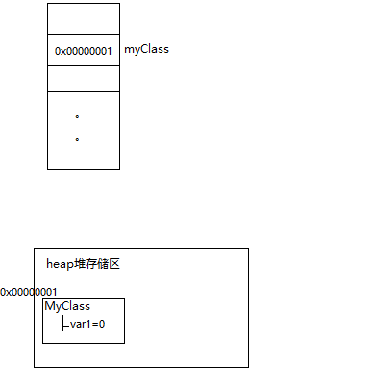
第七行修改对象属性值:

下面就是关键的第八行值的传递了,jvm会在栈中在开辟一块空间newMyClass,然后把myClass里的内容拷贝进newMyClass,这样在方法f中对newMyClass的修改就是对MyClass所对应内容的修改,因为newMyClass也是指向与myClass同样的一块内存空间。

第十二行中对newMyClass属性的修改同样会影响myClass所指的内容,因为他们俩指的是同一块内存空间。

最后方法返回myClass所指内容同样被修改。
下面说一个比较特殊的类----String,这是java中的一个特殊的引用类型,使用String传递时会发现在方法中修改不会影响到方法外的值,例如下面这段代码:
 public class Test {

     public static void main(String[] args ){

         String var = "Hello" ;

         f(var) ;

         System.out.println(var) ;

     }

     public static void f(String newVar ){

         newVar = "World" ;

     }

 }
运行结果:
Hello
在分析这段代码之前需要知道String的底层是怎样实现的,其实String是通过char数组来完成其功能,简单的说String就是对char[]的一个封装。还要明白直接“字符串内容”和使用new String(“字符串内容”)效果是一样的,只不过jvm对这两种创建的字符串存储的地方不同而已。对上面这段代码的分析当然还要使用对引用数据传值方法分析。
第三行jvm在静态存储区存放创建的“Hello”字符串,并在栈中开辟var指向Hello的地址(var中存储的值是Hello字符串的地址)。当将var作为参数传递时,jvm会在栈中新创建一个变量newVar,这时newVar是指向"Hello"内存区的,但是在第八行 newVar = “World”却把newVar中存储的“Hello”地址改为一个新创建的“World”String对象的地址,注意,var内存储的地址仍然是“Hello”,所以在方法返回时输出的仍然是Hello。
终于写完了~~~ 发现自己想和写完全是两码事‘(*>﹏<*)′,其中一定有错误,在内存分配地方没有说清楚,因为我也不太清楚,还有就是关于对象中属性的内存分配,这个我真不知道,哪位知道别忘告诉我~~
http://www.cnblogs.com/caiyao/p/4964176.html
java按值传递理解(转)的更多相关文章
- java按值传递理解
Java没有引用传递只有按值传递,没有引用传递只有按值传递,值传递. 通过下面代码解释: public class Test { public static void main(String[] ar ...
- 转------深入理解--Java按值传递和按引用传递
引言 最近刷牛客网上的题目时碰到不少有关Java按值传递和按引用传递的问题,这种题目就是坑呀,在做错了n次之后,查找了多方资料进行总结既可以让自己在总结中得到提高,又可以让其他人少走弯路.何乐而不为? ...
- JAVA 需要理解的重点 一
需要理解的重点内容有: JVM内存管理机制和垃圾回收机制(基本每次面试都会问,一定要搞得透彻) JVM内存调优(了解是怎么回事,一般做项目过程中使用较多) 设计模式(熟悉常见设计模式的应用场景,会画类 ...
- [java] 深入理解内部类: inner-classes
[java] 深入理解内部类: inner-classes // */ // ]]> [java] 深入理解内部类: inner-classes Table of Contents 1 简介 ...
- Java初始化理解与总结 转载
Java的初始化可以分为两个部分: (a)类的初始化 (b)对象的创建 一.类的初始化 1.1 概念介绍: 一个类(class)要被使用必须经过装载,连接,初始化这样的过程. 在装载阶段,类装载器会把 ...
- 从Java视角理解CPU上下文切换(Context Switch)
从Java视角理解系统结构连载, 关注我的微博(链接)了解最新动态 在高性能编程时,经常接触到多线程. 起初我们的理解是, 多个线程并行地执行总比单个线程要快, 就像多个人一起干活总比一个人干要快 ...
- 从Java视角理解CPU缓存(CPU Cache)
从Java视角理解系统结构连载, 关注我的微博(链接)了解最新动态众所周知, CPU是计算机的大脑, 它负责执行程序的指令; 内存负责存数据, 包括程序自身数据. 同样大家都知道, 内存比CPU慢很多 ...
- Java IO 理解流的概念
Java IO 理解流的概念 @author ixenos 在理解流时首先理解以下概念 1.流的来源和去向一般在构造器指出 2.方法中的形参一般是将流输出到某个位置,读取(INPUT)流从流读出数据( ...
- Effective Java通俗理解(持续更新)
这篇博客是Java经典书籍<Effective Java(第二版)>的读书笔记,此书共有78条关于编写高质量Java代码的建议,我会试着逐一对其进行更为通俗易懂地讲解,故此篇博客的更新大约 ...
随机推荐
- epoll的LT和ET模式
原理參考该博客 从man手冊中,得到ET和LT的详细描写叙述例如以下 EPOLL事件有两种模型: Edge Triggered (ET) Level Triggered (LT) 假如有这样一个样例: ...
- git 使用过程(四、回退版本)
1.查看修改历史 命令:git log 如果嫌内容太多 可以加参数 --pretty=oneline (图一) 2.回退 命令:git reset --hard HEAD^ HEAD:代表本 ...
- C#_会员管理系统:开发五(用户注册)
创建一个新的用户注册窗体(VIPRegistration.cs): 用户注册窗体(VIPRegistration.cs)详细代码如下: using System; using System.Colle ...
- Python之路Day8
摘要: Socket编程 异常处理 线程.进程 1.socket编程 1.1 socket 三次握手,注意阻塞的应用. 1.2 socketserver(2.x写作:SocketServer) 实现多 ...
- Raphael Js矢量库API简介:
Raphael Js矢量库API简介:Raphael Javascript 是一个 Javascript的矢量库. 2010年6月15日,著名的JavaScript库ExtJS与触摸屏代码库项目jQT ...
- cocos2d-x游戏开发系列教程-超级玛丽01-前言
前言 上次用象棋演示了cocos2dx的基本用法,但是对cocos2dx并没有作深入的讨论,这次以超级马里奥的源代码为线索,我们一起来学习超级马里奥的实现,并以一些篇幅来详细讲述遇到的具体问题和具体的 ...
- 获取java byte的无符号数值
byte a = (byte)234; System.out.println(a); 上面的代码,结果是-22,因为java中byte是有符号的,byte范围是-128~127. 如果想输出234,该 ...
- 华为HCNA教程(笔记)
第一章 VRP操作基础 1VRP基础 MiniUsb串口连接交换机的方法 2eNSP入门 3命令行基础(1) eNSP中路由开启后(记住port)---第三方软件连接该路由方法:telnet 127. ...
- IOS的处理touch事件处理(按照手指的移动移动一个圆,开发环境用的ios7,storyboard)
先看下页面的效果图: 首先定义这个ball它有两个属性和两个方法: @property(nonatomic) CGPoint location; @property(nonatomic) CGFloa ...
- Image控件
前台代码: <asp:Image ID="Image1" runat="server" /> 后台代码; protected void Page_L ...