
SpringMVC DispatcherServlet-------视图渲染过程
整个spring mvc的架构如下图所示:
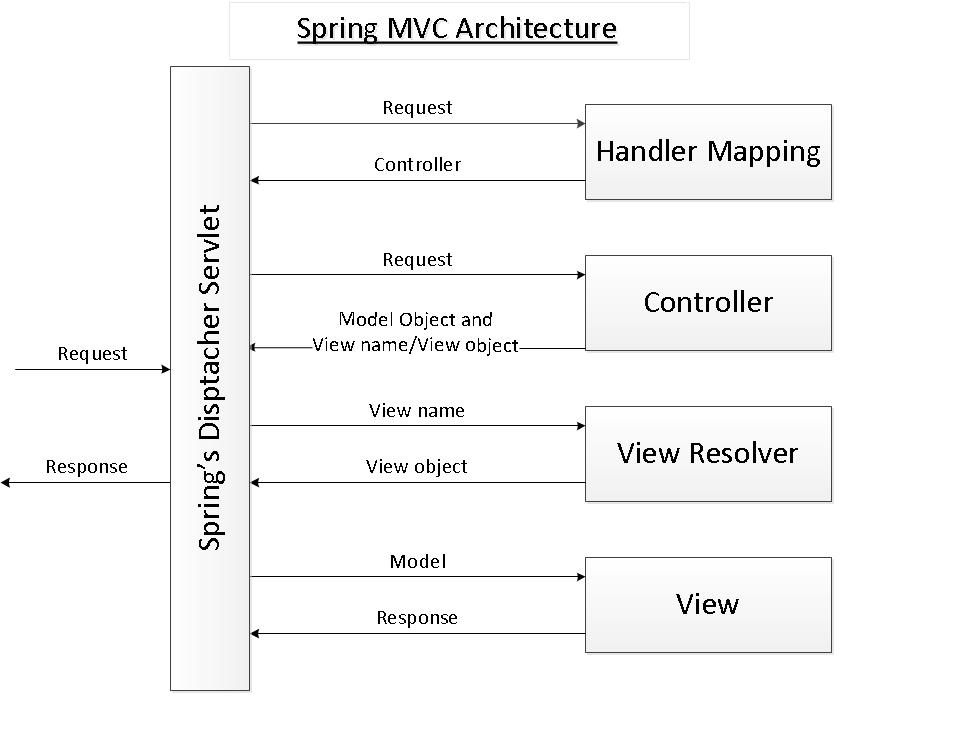
现在来讲解DispatcherServletDispatcherServlet的最后一步:视图渲染。视图渲染的过程是在获取到ModelAndView后的过程。
视图渲染的过程:
DispatcherServlet.java
doService()--->doDispatch()--->processDispatchResult()--->render()
processDispatchResult():主要处理异常、请求状态及触发请求完成事件,图的渲染工作交给了render().
render()渲染过程如下:
1. 判断ModelAndView中view是否为view name,没有获取其实例对象:如果是根据name,如果是则需要调用resolveViewName从视图解析器获取对应的视图(View)对象;否则ModelAndView中使用getview方法获取view对象。
2. 然后调用view的render()方法。
代码如下:
 /**

      * Render the given ModelAndView.

      * <p>This is the last stage in handling a request. It may involve resolving the view by name.

      * @param mv the ModelAndView to render

      * @param request current HTTP servlet request

      * @param response current HTTP servlet response

      * @throws ServletException if view is missing or cannot be resolved

      * @throws Exception if there's a problem rendering the view

      */

     protected void render(ModelAndView mv, HttpServletRequest request, HttpServletResponse response) throws Exception {

         // Determine locale for request and apply it to the response.

         Locale locale = this.localeResolver.resolveLocale(request);

         response.setLocale(locale);

         View view;

         if (mv.isReference()) {

             // We need to resolve the view name.

             view = resolveViewName(mv.getViewName(), mv.getModelInternal(), locale, request);

             if (view == null) {

                 throw new ServletException("Could not resolve view with name '" + mv.getViewName() +

                         "' in servlet with name '" + getServletName() + "'");

             }

         }

         else {

             // No need to lookup: the ModelAndView object contains the actual View object.

             view = mv.getView();

             if (view == null) {

                 throw new ServletException("ModelAndView [" + mv + "] neither contains a view name nor a " +

                         "View object in servlet with name '" + getServletName() + "'");

             }

         }

         // Delegate to the View object for rendering.

         if (logger.isDebugEnabled()) {

             logger.debug("Rendering view [" + view + "] in DispatcherServlet with name '" + getServletName() + "'");

         }

         try {

             view.render(mv.getModelInternal(), request, response);

         }

         catch (Exception ex) {

             if (logger.isDebugEnabled()) {

                 logger.debug("Error rendering view [" + view + "] in DispatcherServlet with name '" +

                         getServletName() + "'", ex);

             }

             throw ex;

         }

     }
那么view 是如何渲染的?我们来看看view的定义:
 org.springframework.web.servlet

 Interface View

 All Known Subinterfaces:

 SmartView

 All Known Implementing Classes:

 AbstractAtomFeedView, AbstractExcelView, AbstractFeedView, AbstractJasperReportsSingleFormatView, AbstractJasperReportsView, AbstractJExcelView, AbstractPdfStamperView, AbstractPdfView, AbstractRssFeedView, AbstractTemplateView, AbstractUrlBasedView, AbstractView, ConfigurableJasperReportsView, FreeMarkerView, InternalResourceView, JasperReportsCsvView, JasperReportsHtmlView, JasperReportsMultiFormatView, JasperReportsPdfView, JasperReportsXlsView, JstlView, MappingJackson2JsonView, MappingJacksonJsonView, MarshallingView, RedirectView, TilesView, TilesView, VelocityLayoutView, VelocityToolboxView, VelocityView, XsltView

 --------------------------------------------------------------------------------

 public interface ViewMVC View for a web interaction. Implementations are responsible for rendering content, and exposing the model. A single view exposes multiple model attributes.

 This class and the MVC approach associated with it is discussed in Chapter 12 of Expert One-On-One J2EE Design and Development by Rod Johnson (Wrox, 2002).

 View implementations may differ widely. An obvious implementation would be JSP-based. Other implementations might be XSLT-based, or use an HTML generation library. This interface is designed to avoid restricting the range of possible implementations.

 Views should be beans. They are likely to be instantiated as beans by a ViewResolver. As this interface is stateless, view implementations should be thread-safe.
spring提供了如此多的视图,那么肯定的是也会有很多视图解析器:
 org.springframework.web.servlet

 Interface ViewResolver

 All Known Implementing Classes:

 AbstractCachingViewResolver, AbstractTemplateViewResolver, BeanNameViewResolver, ContentNegotiatingViewResolver, FreeMarkerViewResolver, InternalResourceViewResolver, JasperReportsViewResolver, ResourceBundleViewResolver, TilesViewResolver, TilesViewResolver, UrlBasedViewResolver, VelocityLayoutViewResolver, VelocityViewResolver, XmlViewResolver, XsltViewResolver

 Functional Interface:

 This is a functional interface and can therefore be used as the assignment target for a lambda expression or method reference.

 --------------------------------------------------------------------------------

 public interface ViewResolverInterface to be implemented by objects that can resolve views by name.

 View state doesn't change during the running of the application, so implementations are free to cache views.

 Implementations are encouraged to support internationalization, i.e. localized view resolution.
其中,针对JSP提供的InternalResourceViewResolver与InternalResourceView。
我们先看一下view的render方法是什么样子的?
根据InternalResourceView的继承关系:
- org.springframework.web.servlet.view.AbstractView
- org.springframework.web.servlet.view.AbstractUrlBasedView
- org.springframework.web.servlet.view.InternalResourceView
- org.springframework.web.servlet.view.AbstractUrlBasedView
最终找到render方法在AbstractView中,如下代码所示:
 /**

      * Prepares the view given the specified model, merging it with static

      * attributes and a RequestContext attribute, if necessary.

      * Delegates to renderMergedOutputModel for the actual rendering.

      * @see #renderMergedOutputModel

      */

     @Override

     public void render(Map<String, ?> model, HttpServletRequest request, HttpServletResponse response) throws Exception {

         if (logger.isTraceEnabled()) {

             logger.trace("Rendering view with name '" + this.beanName + "' with model " + model +

                 " and static attributes " + this.staticAttributes);

         }

         Map<String, Object> mergedModel = createMergedOutputModel(model, request, response);

         prepareResponse(request, response);

         renderMergedOutputModel(mergedModel, request, response);

     }
流程如下:
创建一个动态值和静态属性的map;
设置response 报文头;
把渲染view的工作放到renderMergedOutputModel()实现中,这个留给InternalResourceView来实现。
我们看看这个实现:
 /**

      * Render the internal resource given the specified model.

      * This includes setting the model as request attributes.

      */

     @Override

     protected void renderMergedOutputModel(

             Map<String, Object> model, HttpServletRequest request, HttpServletResponse response) throws Exception {

         // Determine which request handle to expose to the RequestDispatcher.

         HttpServletRequest requestToExpose = getRequestToExpose(request);

         // Expose the model object as request attributes.

         exposeModelAsRequestAttributes(model, requestToExpose);

         // Expose helpers as request attributes, if any.

         exposeHelpers(requestToExpose);

         // Determine the path for the request dispatcher.

         String dispatcherPath = prepareForRendering(requestToExpose, response);

         // Obtain a RequestDispatcher for the target resource (typically a JSP).

         RequestDispatcher rd = getRequestDispatcher(requestToExpose, dispatcherPath);

         if (rd == null) {

             throw new ServletException("Could not get RequestDispatcher for [" + getUrl() +

                     "]: Check that the corresponding file exists within your web application archive!");

         }

         // If already included or response already committed, perform include, else forward.

         if (useInclude(requestToExpose, response)) {

             response.setContentType(getContentType());

             if (logger.isDebugEnabled()) {

                 logger.debug("Including resource [" + getUrl() + "] in InternalResourceView '" + getBeanName() + "'");

             }

             rd.include(requestToExpose, response);

         }

         else {

             // Note: The forwarded resource is supposed to determine the content type itself.

             if (logger.isDebugEnabled()) {

                 logger.debug("Forwarding to resource [" + getUrl() + "] in InternalResourceView '" + getBeanName() + "'");

             }

             rd.forward(requestToExpose, response);

         }

     }
流程可以归纳为以下几步:
1. 包装request,供RequestDispatcher来使用;
2. 将map中的属性和值作为属性放入包装的request;
3. 将不同实现类的helper放入包装的request中;
4. 渲染前的准备,确定request dispatcher要跳向(或者inclue)的路径
5. 获取request dispatcher。
6. 根据request中是否包含include uri属性来确实是forward或者include方法。
forward是跳向服务器的servlet, JSP文件, 或者 HTML文件。
Includes the content of a resource (servlet, JSP page,HTML file) in the response.
注意,在上述流程中出现了RequestDispatcher,那么这类的作用是什么呢?
 getRequestDispatcher

 RequestDispatcher getRequestDispatcher(java.lang.String path)

 Returns a RequestDispatcher object that acts as a wrapper for the resource located at the given path. A RequestDispatcher object can be used to forward a request to the resource or to include the resource in a response. The resource can be dynamic or static.

 The pathname specified may be relative, although it cannot extend outside the current servlet context. If the path begins with a "/" it is interpreted as relative to the current context root. This method returns null if the servlet container cannot return a RequestDispatcher.

 The difference between this method and ServletContext#getRequestDispatcher is that this method can take a relative path.
简洁的来说,
1. RequestDispatcher 是一个包装器,它将制定路径的(静态或者动态)资源包装起来。RequestDispatcher 可以用于将一个请求分发给指定的资源或者包裹响应报文中的资源。
2. RequestDispatcher 的获取,有这种形式,一种使用ServletRequest.getRequestDispatcher(java.lang.String path). 另一种是servletContext.getRequestDispatcher(java.lang.String path);不同之处在于:前面的方法支持相对路径,以'/'作为当前上下文的跟路径;后一种不支持后一种不支持相对路径。
可以看到视图的渲染过程是把model包装成map形式通过request的属性带到服务器端。
SpringMVC DispatcherServlet-------视图渲染过程的更多相关文章
- spring mvc DispatcherServlet详解之四---视图渲染过程
整个spring mvc的架构如下图所示: 现在来讲解DispatcherServletDispatcherServlet的最后一步:视图渲染.视图渲染的过程是在获取到ModelAndView后的过程 ...
- SpringMVC核心——视图渲染(包含视图解析)问题
一.本来想说的是返回值处理问题,但在 SpringMVC 中,返回值处理问题的核心就是视图渲染.所以这里标题叫视图渲染问题. 本来想在上一篇文章中对视图解析进行说明的,但是通过源码发现,它应该算到视图 ...
- 微信小程序教学第四章第二节(含视频):小程序中级实战教程:详情-视图渲染
§ 详情 - 数据渲染 本文配套视频地址: https://v.qq.com/x/page/x055550lrvd.html 开始前请把 ch4-2 分支中的 code/ 目录导入微信开发工具 这一节 ...
- SpringMVC之四:渲染Web视图
理解视图解析 在前面的例子中,我们看到控制器返回的都是一个逻辑视图的名称,然后把这个逻辑视图名称交给view resolver,然后返回渲染后的 html 页面给 client. 将控制器中请求处理的 ...
- Spring框架系列(13) - SpringMVC实现原理之DispatcherServlet的初始化过程
前文我们有了IOC的源码基础以及SpringMVC的基础,我们便可以进一步深入理解SpringMVC主要实现原理,包含DispatcherServlet的初始化过程和DispatcherServlet ...
- Yii2.0源码阅读-视图(View)渲染过程
之前的文章我们根据源码的分析,弄清了Yii如何处理一次请求,以及根据解析的路由如何调用控制器中的action,那接下来好奇的可能就是,我在控制器action中执行了return $this->r ...
- (二)SpringMVC之执行的过程
(DispatcherServlet在Spring当中充当一个前端控制器的角色,它的核心功能是分发请求.请求会被分发给对应处理的Java类,Spring MVC中称为Handle.) ① 用户把请 ...
- 学习SpringMVC——说说视图解析器
各位前排的,后排的,都不要走,咱趁热打铁,就这一股劲我们今天来说说spring mvc的视图解析器(不要抢,都有位子~~~) 相信大家在昨天那篇如何获取请求参数篇中都已经领略到了spring mvc注 ...
- SpringMVC重定向视图RedirectView小分析
目录 前言 RedirectView介绍 实例讲解 总结 前言 SpringMVC是目前主流的Web MVC框架之一. 如果有同学对它不熟悉,那么请参考它的入门blog:http://www.cnbl ...
随机推荐
- CF刷题-Codeforces Round #481-G. Petya's Exams
题目链接:https://codeforces.com/contest/978/problem/G 题目大意:n天m门考试,每门考试给定三个条件,分别为:1.可以开始复习的日期.2.考试日期.3.必须 ...
- Myeclipse提高运行速度的方法
下文是在其他博客拷过来的,借鉴借鉴,留个笔记,哈哈 1.老是弹出Quick update error .关闭myeclipse的Quick Update自动更新功能这个问题的解决办法是关闭自动更新Wi ...
- python魔法方法大全
1.python魔法方法详解: python魔法方法是可以修改重载的,如果你的对象实现(重载)了这些方法中的某一个,那么这个方法就会在特殊的情况下被 Python 所调用,你可以定义自己想要的行为,而 ...
- Halcon中循环的相关算子
条件<condition> ,<condition> 内为计算成an integer or boolean value的表达式. 表达式的值1则条件为真,否则为假. 1.if( ...
- [Processing] 弹球
PVector localPos = new PVector(0,0);//起始位置 PVector velocity;//速度方向 float speed = 20;//速度大小 void setu ...
- 关于java调用Dll文件的异常 %1 不是有效的 Win32 应用程序。
这个问题 将java的和编辑器都换成32位
- 011 --Mysql中特定查询
1.优化COUNT()查询 COUNT()可能是被大家误解最多的函数了,它有两种不同的作用,其一是统计某个列值的数量,其二是统计行数.统计列值时,要求列值是非空的,它不会统计NULL.如果确认括号中的 ...
- linux上的mysql配置过程
自己阿里云上的服务器,记录下mysql的配置过程防止后面忘记 1. 首先用apt-get工具安装mysql sudo apt-get install mysql-server sudo apt-get ...
- dom学习要点
Dom操作 1.文本内容操作 - innerText:操作文本 - innerHtml:操作全内容 //innerText标签: <div id='i2' ><a>土味程序员& ...
- 高可用OpenStack(Queen版)集群-4.keystone集群
参考文档: Install-guide:https://docs.openstack.org/install-guide/ OpenStack High Availability Guide:http ...