
Java I/O流 04
I/O流·其他流
序列流
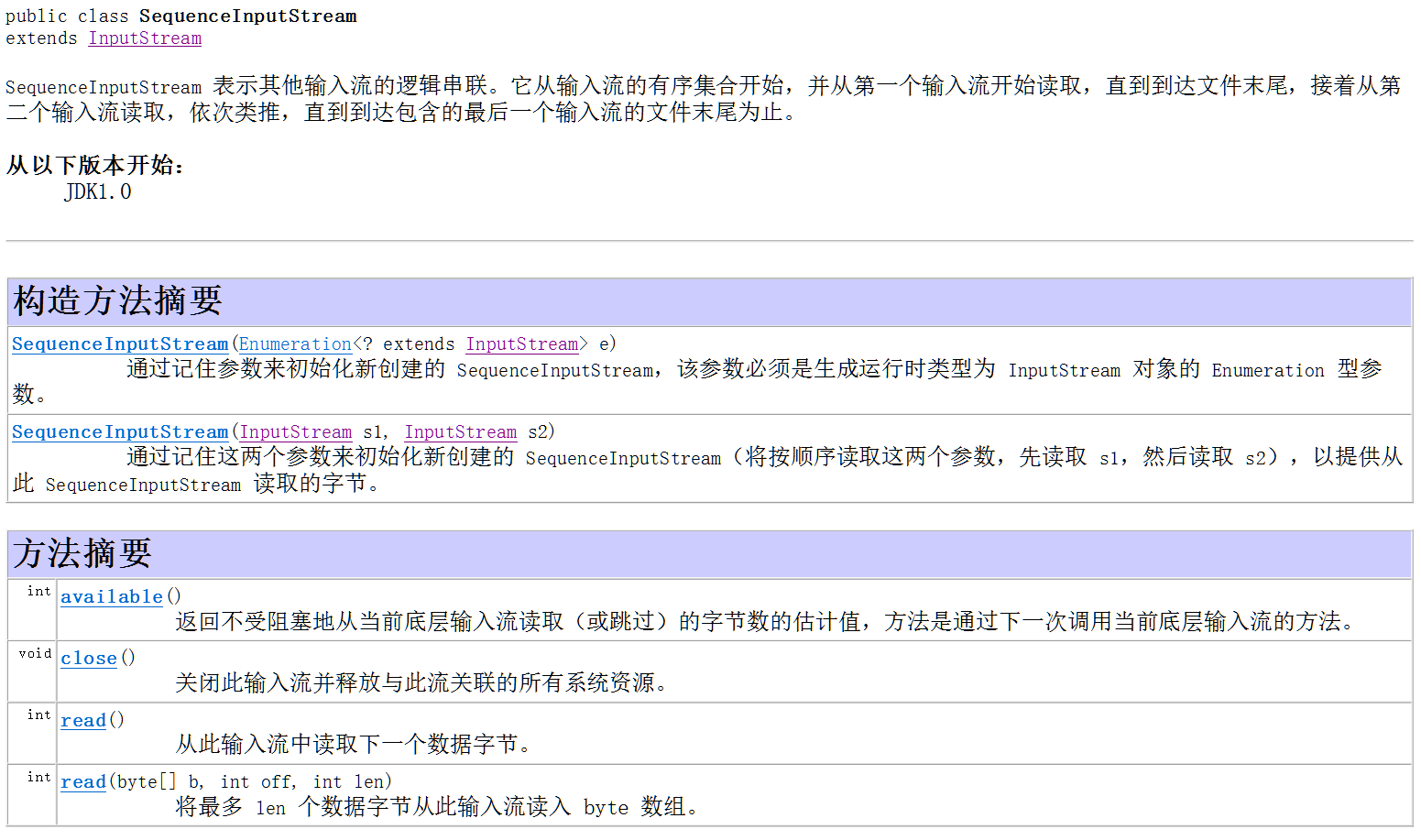
* A:什么是序列流
* 序列流可以把多个字节输入流整合成一个,从序列流中读取数据时,将从被整合的第一个流开始,读完后再读下一个
* B:使用方式
* 整合两个:SequenceInputStream(InputStream, InputStream)
* 整合多个:SequenceInputStream(Enumeration)
package com.heima.otherio;

import java.io.FileInputStream;

import java.io.FileNotFoundException;

import java.io.FileOutputStream;

import java.io.IOException;

import java.io.SequenceInputStream;

import java.util.Enumeration;

import java.util.Vector;

public class Demo1_SequenceInputStream {

    public static void main(String[] args) throws IOException {

        // demo1(); // 不用序列流的方法

        // demo2(); // 整合两个输入流

        // demo3(); // 整合多个输入流

    }

    public static void demo3() throws FileNotFoundException, IOException {

        FileInputStream fis1 = new FileInputStream("a.txt"); // 创建字节输入流

        FileInputStream fis2 = new FileInputStream("b.txt");

        FileInputStream fis3 = new FileInputStream("c.txt");

        Vector<FileInputStream> v = new Vector<FileInputStream>(); // 创建泛型为字节输入流的集合对象

        v.add(fis1); // 将流对象添加到集合内

        v.add(fis2);

        v.add(fis3);

        Enumeration<FileInputStream> e = v.elements(); // 根据Vector集合,创建泛型为字节输入流的枚举对象

        SequenceInputStream sis = new SequenceInputStream(e); // 将枚举中的输入流整合成一个

        FileOutputStream fos = new FileOutputStream("d.txt"); // 创建字节输出流

        int c;

        while ((c = sis.read()) != -1) { // 从序列流中读取数据

            fos.write(c);

        }

        sis.close(); // 关闭序列流

        fos.close();

    }

    public static void demo2() throws FileNotFoundException, IOException {

        FileInputStream fis1 = new FileInputStream("a.txt"); // 创建字节输入流1

        FileInputStream fis2 = new FileInputStream("b.txt"); // 创建字节输入流2

        SequenceInputStream sis = new SequenceInputStream(fis1, fis2); // 基于两个字节输入流,创建序列流

        FileOutputStream fos = new FileOutputStream("c.txt"); // 创建字节输出流

        int b;

        while ((b = sis.read()) != -1) { // 从序列流读取数据

            fos.write(b);

        }

        sis.close(); // sis在关闭的时候会将构造方法中的流对象也都关闭

        fos.close();

    }

    public static void demo1() throws FileNotFoundException, IOException {

        FileInputStream fis1 = new FileInputStream("a.txt"); // 创建字节输入流,关联a.txt

        FileOutputStream fos = new FileOutputStream("c.txt"); // 创建字节输出流,关联b.txt

        int c;

        while ((c = fis1.read()) != -1) { // 不断地在a.txt上读取字节

            fos.write(c); // 将读到的字节写到c.txt上

        }

        fis1.close(); // 关闭字节输入流1

        FileInputStream fis2 = new FileInputStream("b.txt"); // 创建字节输入流,关联c.txt

        while ((c = fis2.read()) != -1) { // 不断地在b.txt上读取字节

            fos.write(c); // 将读到的字节写到c.txt上

        }

        fis2.close(); // 关闭字节输入流2

        fos.close(); // 关闭字节输出流

    }

}
SequenceInputStream
内存输出流
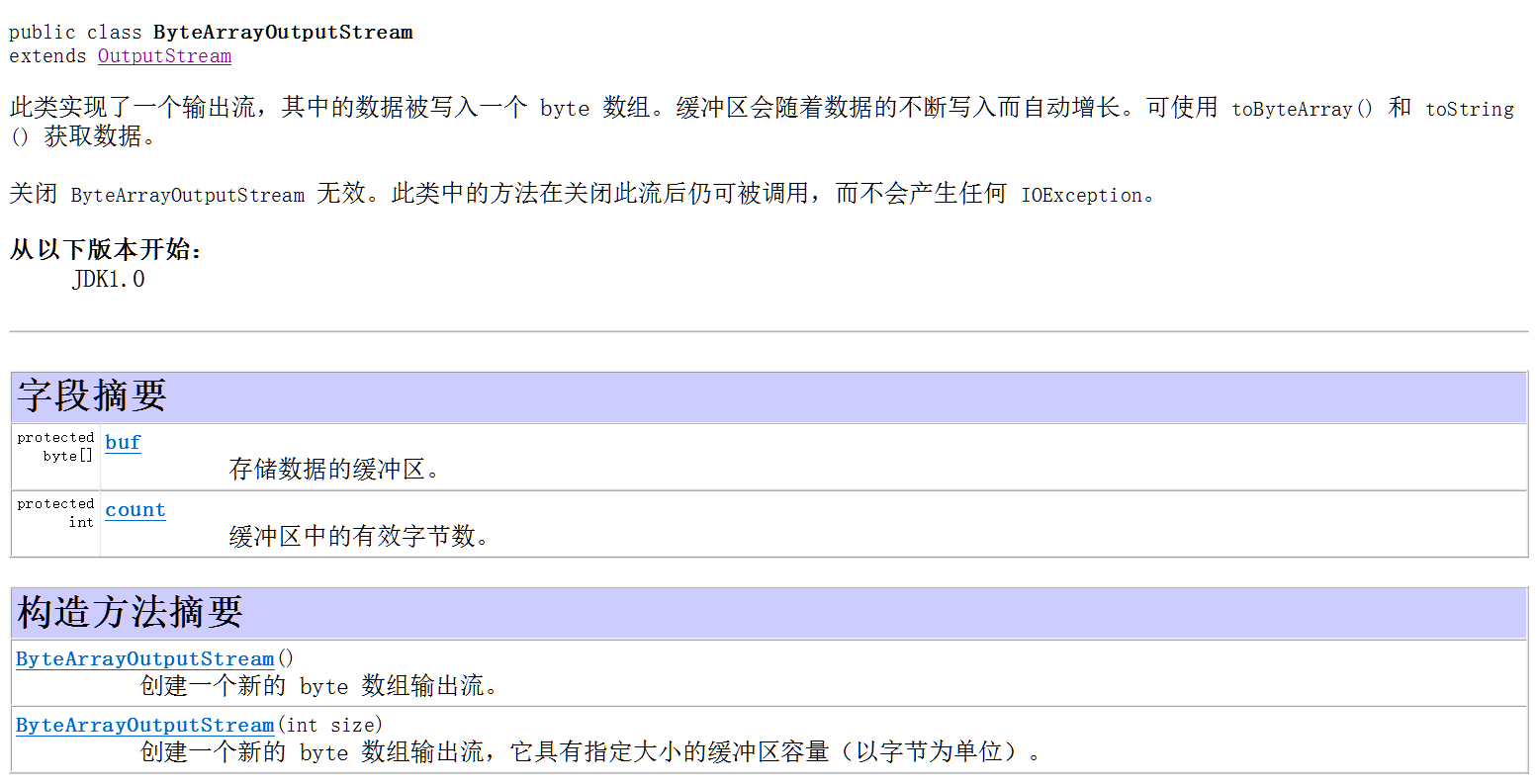
* A:什么是内存输出流
* 该输出流可以向内存中写数据,把内存当作一个缓冲区,写出之后可以一次性获取所有数据
* B:使用方法
* 创建对象:new ByteArrayOutputStream()
* 写出数据:write(int), write(byte[ ] )
* 获取数据:toByteArray()
package com.heima.otherio;

import java.io.ByteArrayOutputStream;

import java.io.FileInputStream;

import java.io.FileNotFoundException;

import java.io.IOException;

public class Demo2_ByteArrayOutputStream {

    public static void main(String[] args) throws IOException {

        // demo1();

        // demo2();

    }

    public static void demo2() throws FileNotFoundException, IOException {

        FileInputStream fis = new FileInputStream("e.txt");

        ByteArrayOutputStream baos = new ByteArrayOutputStream(); // 在内存中创建了可以增长的内存数组

        int b;

        while ((b = fis.read()) != -1) {

            baos.write(b); // 将读取到的数据逐个写到内存中

        }

        byte[] arr = baos.toByteArray(); // 将缓冲区的数据全部或取出来,并赋值给arr数组

        System.out.println(new String(arr));

        System.out.println(baos.toString()); // 将缓冲区中的内容转换为字符串,使用平台默认的码表转换

        fis.close();

        // baos.close(); // 内存流不需要关,没有关的意义

    }

    public static void demo1() throws FileNotFoundException, IOException {

        FileInputStream fis = new FileInputStream("e.txt");

        byte[] arr = new byte[4];

        int len;

        while ((len = fis.read(arr)) != -1) {

            System.out.println(new String(arr, 0, len));

        }

        fis.close();

    }

}
ByteArrayOutputStream
面试题
* 定义一个文件输入流,调用read(byte[ ] b)方法,将 a.txt文件中的内容打印出来(byte数组大小限制为5)
package com.heima.test;

import java.io.ByteArrayOutputStream;

import java.io.FileInputStream;

import java.io.IOException;

public class Test1 {

    /*

     * 分析:

     * 1、read(byte[] b)是字节输入流的方法,因此需要创建FileInputStream,关联a.txt

     * 2、创建字节数组,长度为5

     * 3、创建内存输出流,将读到的数组写到内存输出流中

     * 4、将内存输出流的数据全部转换为字符串打印

     * 5、关闭输入流

     */

    public static void main(String[] args) throws IOException {

        FileInputStream fis = new FileInputStream("a.txt"); // 创建字节输入流,关联a.txt

        ByteArrayOutputStream baos = new ByteArrayOutputStream(); // 创建内存流

        byte[] arr = new byte[5];

        int len;

        while ((len = fis.read(arr)) != -1) { // 通过长度为5的数组读取数据

            baos.write(arr, 0, len); // 将数据写入内存中

        }

        System.out.println(baos); // 将内存中的内容以字符串的形式打印

        fis.close(); // 关闭字节流

    }

}
Test1
对象操作流ObjectOutputStream
* A:什么是对象操作流
* 该流可以将一个对象写出,或者读取一个对象到程序中,也就是执行了序列化和反序列化的操作
* 对象需要实现序列化接口,可以可选择的重写ID号,类似于软件的版本号
* B:使用方法
* 写出:new ObjectOutputStream(OutputStream), writeObject()

package com.heima.bean;

import java.io.Serializable;

public class Person implements Serializable{

    /**

     * 对象必须实现 可序列化接口

     */

    private static final long serialVersionUID = 2L;

    private String name;

    private int age;

    private String gender;

    public Person() {

        super();

    }

    public Person(String name, int age) {

        super();

        this.name = name;

        this.age = age;

    }

    public String getName() {

        return name;

    }

    public void setName(String name) {

        this.name = name;

    }

    public int getAge() {

        return age;

    }

    public void setAge(int age) {

        this.age = age;

    }

    @Override

    public String toString() {

        return "Person [name=" + name + ", age=" + age + "]";

    }

}
Person类
package com.heima.otherio;

import java.io.FileNotFoundException;

import java.io.FileOutputStream;

import java.io.IOException;

import java.io.ObjectOutputStream;

import java.util.ArrayList;

import com.heima.bean.Person;

public class Demo3_ObjectOutputStream {

    public static void main(String[] args) throws IOException, IOException {

        // demo1();

        // demo2();

    }

    public static void demo2() throws IOException, FileNotFoundException {

        Person p1 = new Person("张三", 23);

        Person p2 = new Person("李四", 24);

        Person p3 = new Person("王五", 25);

        Person p4 = new Person("赵六", 26);

        ArrayList<Person> list = new ArrayList<Person>();

        list.add(p1);

        list.add(p2);

        list.add(p3);

        list.add(p4);

        ObjectOutputStream oos = new ObjectOutputStream(new FileOutputStream("e.txt"));

        oos.writeObject(list);    // 把整个集合对象一次写出

        oos.close();

    }

    public static void demo1() throws IOException, FileNotFoundException {

        Person p1 = new Person("张三",23); // 对象必须可序列化

        Person p2 = new Person("李四",24);

        // FileOutputStream fos = new FileOutputStream("f.txt");

        ObjectOutputStream oos = new ObjectOutputStream(new FileOutputStream("f.txt")); // 创建对象输出流

        oos.writeObject(p1);

        oos.writeObject(p2);

        oos.close();

    }

}
ObjectOutputStream
对象操作流ObjectInputStream
* 读取:new ObjectInputStream(InputStream), readObject()
package com.heima.otherio;

import java.io.FileInputStream;

import java.io.FileNotFoundException;

import java.io.FileOutputStream;

import java.io.IOException;

import java.io.ObjectInputStream;

import java.io.ObjectOutputStream;

import java.util.ArrayList;

import com.heima.bean.Person;

public class Demo4_ObjectInputStream {

    public static void main(String[] args) throws IOException, ClassNotFoundException {

        // demo1();

        // demo2();

    }

    public static void demo2() throws IOException, FileNotFoundException, ClassNotFoundException {

        ObjectInputStream ois = new ObjectInputStream(new FileInputStream("e.txt"));

        ArrayList<Person> list = (ArrayList<Person>) ois.readObject();    // 将集合对象一次读取

        for (Person person : list) {

            System.out.println(person);

        }

    }

    public static void demo1() throws IOException, FileNotFoundException, ClassNotFoundException {

        // 对象输入流是反序列化

        ObjectInputStream ois = new ObjectInputStream(new FileInputStream("e.txt")); // 创建对象输入流

        Person p1 = (Person) ois.readObject(); // 从文件中读取对象,需要强转,因为读取时自动类型提升为Object

        Person p2 = (Person) ois.readObject();

        System.out.println(p1);

        System.out.println(p2);

        ois.close();

    }

}
ObjectInputStream
打印流的概述和特点
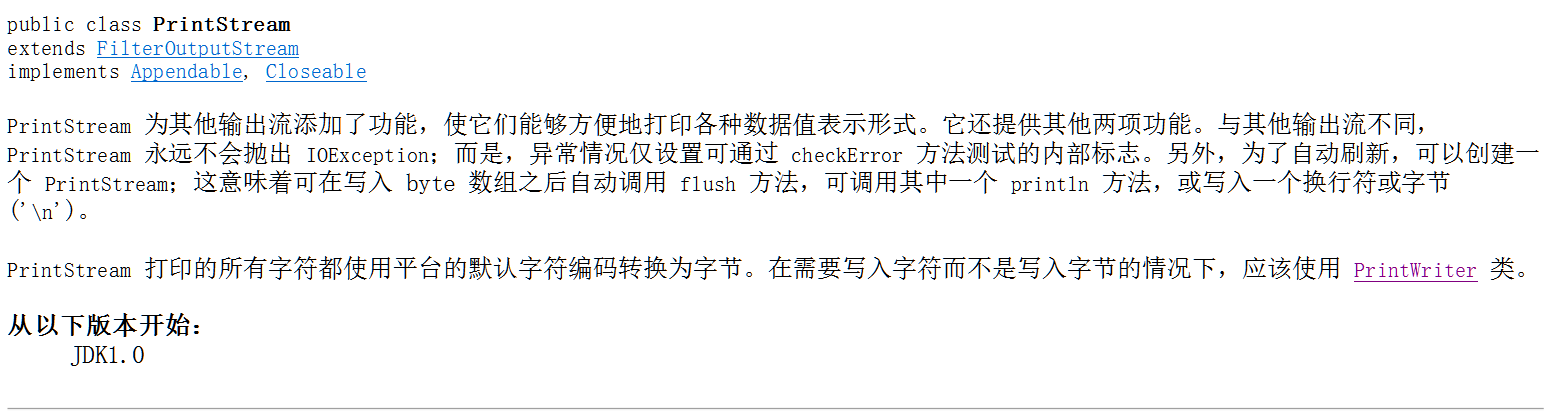
* A:什么时打印流
* 该流可以很方便的将对象的 toString()结果输出,并自动加上换行,而且可以使用自动刷出的模式
* System.out就是一个PrintStream,其默认向控制台输出信息
* B:使用方式
* 打印:print(), println()
* 自动刷出:PrintWriter(OutputStream out, boolean autoFlush, String encoding)
* 打印流以只操作数据为目的
package com.heima.otherio;

import java.io.File;

import java.io.FileNotFoundException;

import java.io.FileOutputStream;

import java.io.IOException;

import java.io.PrintStream;

import java.io.PrintWriter;

import com.heima.bean.Person;

public class Demo5_PrintStream {

    /*

     * PritnStream和 PrintWriter 分别是打印的字节流和字符流

     * 二者是以只操作数据为目的的

     */

    public static void main(String[] args) throws IOException {

        // demo1();

        // demo2();

    }

    public static void demo2() throws FileNotFoundException {

        PrintWriter pw = new PrintWriter(new FileOutputStream("f.txt"), true); // true表示打开了AutoFlush功能

        pw.println(97);    // 自动刷出功能只针对println方法

        pw.write(97);

        pw.print(97);

        pw.close();

    }

    public static void demo1() {

        System.out.println("aaa");

        PrintStream ps = System.out;    // 获取标准输出流

        ps.println(97); // 打印97,底层通过 Integer.toString()将97 转换成字符串打印

        ps.write(97);    // 打印a,查找码表,找到对应的值进行打印

        Person p1 = new Person("张三", 23);

        ps.println(p1); // 默认调用对象的 toString()方法

        Person p2 = null; // 打印引用数据类型,如果是null就打印null

        ps.println(p2);

        ps.close(); // 关闭打印流

    }

}
PrintStream
标准输入流输出流概述和输出语句
* A:什么是标准输入输出流
* System.in 是InputStream,标准输入流,默认可以从键盘输入读取字节数据
* System.out 是PrintStream,标准输出流,默认可以向Console中输出字符和字节数据
* B:修改标准输入输出流
* 修改输入流:System.setIn(InputStream)
* 修改输出流:System.setOut(PrintStream)
package com.heima.otherio;

import java.io.FileInputStream;

import java.io.FileNotFoundException;

import java.io.IOException;

import java.io.InputStream;

import java.io.PrintStream;

public class Demo6_SystermInOut {

    public static void main(String[] args) throws IOException{

        // demo1();

        // demo2();

    }

    public static void demo2() throws FileNotFoundException, IOException {

        System.setIn(new FileInputStream("a.txt"));    // 改变标准输入流

        System.setOut(new PrintStream("b.txt"));    // 改变标准输出流

        InputStream is = System.in;    // 获取标准的键盘输入流,默认指向键盘,改变后指向a.txt

        PrintStream ps = System.out; // 获取标准输出流,默认指向控制台,改变后指向b.txt

        int b;

        while ((b = is.read())!=-1) {

            ps.write(b);

        }

        is.close();

        ps.close();

    }

    public static void demo1() throws IOException {

        InputStream is = System.in;

        int x = is.read();    // 读取一个字节

        System.out.println(x);

        // is.close();    // 标准输入流只有一个,即使创建多个InputStream也都指向同一个

    }

}
System.in
两种方式实现键盘录入
* A:BufferedReader的ReadLine()方法
* BufferedReqader br = new BufferedReqader(new InputStreamReader(System.in));
* B:Scanner
package com.heima.otherio;

import java.io.BufferedReader;

import java.io.IOException;

import java.io.InputStreamReader;

import java.util.Scanner;

public class Demo7_SystemIn {

    public static void main(String[] args) throws IOException {

        // demo1();

        // demo2();

    }

    public static void demo2() {

        Scanner sc = new Scanner(System.in); // 也可以读取文件

        String line = sc.nextLine();

        System.out.println(line);

        sc.close();

    }

    public static void demo1() throws IOException {

        BufferedReader br =

                new BufferedReader(new InputStreamReader(System.in)); // 通过转换流将字节流转换为字符流,因为标准输入流是字节流

        String line = br.readLine(); // 整行读取

        System.out.println(line);

        br.close(); // 关流

    }

}
Scanner
修改标准输入输出流进行文件拷贝
package com.heima.test;

import java.io.FileInputStream;

import java.io.IOException;

import java.io.InputStream;

import java.io.PrintStream;

public class Test2 {

    public static void main(String[] args) throws IOException {

        System.setIn(new FileInputStream("psb.jpg")); // 改变标准输入流,绑定图片

        System.setOut(new PrintStream("copy.jpg")); // 改变标准输出流

        InputStream is = System.in;

        PrintStream ps = System.out;

        byte[] arr = new byte[1024]; // 创建字节数组

        int len;

        while ((len = is.read(arr)) != -1) { // 读取数据

            ps.write(arr, 0, len); // 写入数据

        }

        is.close(); // 关流

        ps.close();

    }

}
Test2
随机访问流概述和读写数据
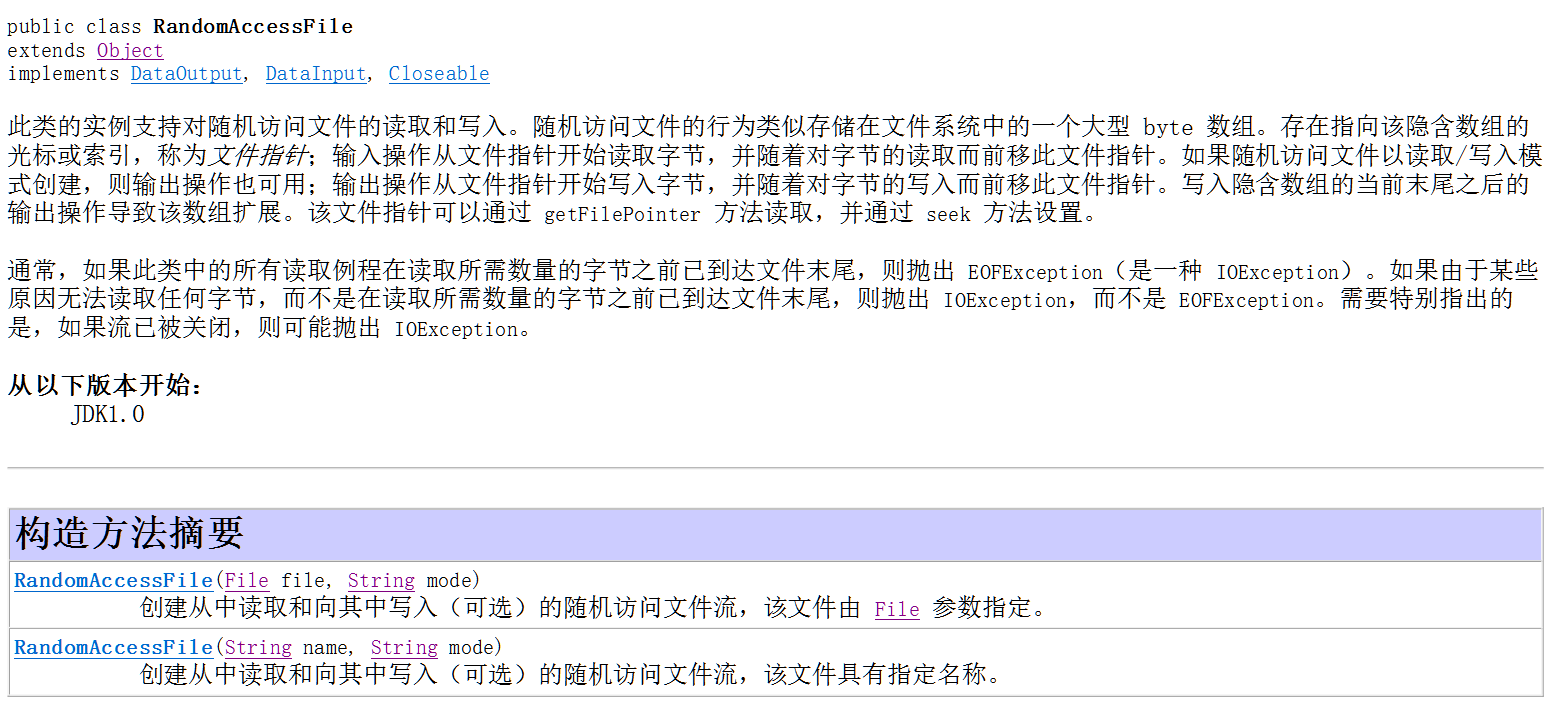
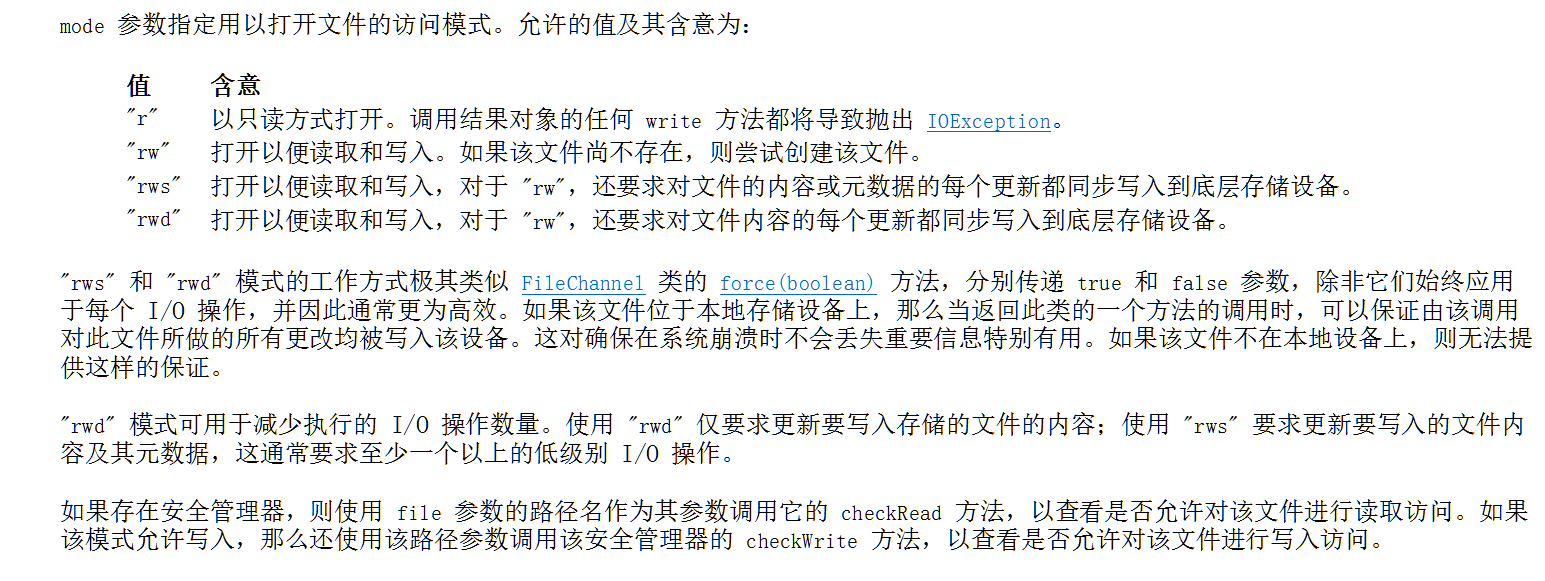
* A:随机访问流概述
* RandomAccessFile概述
* RandomAccessFile类不属于流,是Object类的子类,但是却融合了InputStream和OutputStream的功能
* 支持对随机访问文件的读取和写入
* B:read(), write(), seek()
package com.heima.otherio;

import java.io.IOException;

import java.io.RandomAccessFile;

public class Demo8_RandomAccessFile {

    public static void main(String[] args) throws IOException {

        RandomAccessFile raf = new RandomAccessFile("g.txt", "rw"); // 创建随机访问流,指定读写模式

        raf.write(97);

        int x = raf.read();

        System.out.println(x);

        raf.seek(10); // 在指定位置设置指针,可以用来多线程下载

        raf.write(98); // 在10的位置写下b

        raf.close(); // 关流

    }

}
RandomAccessFile
数据输入输出流
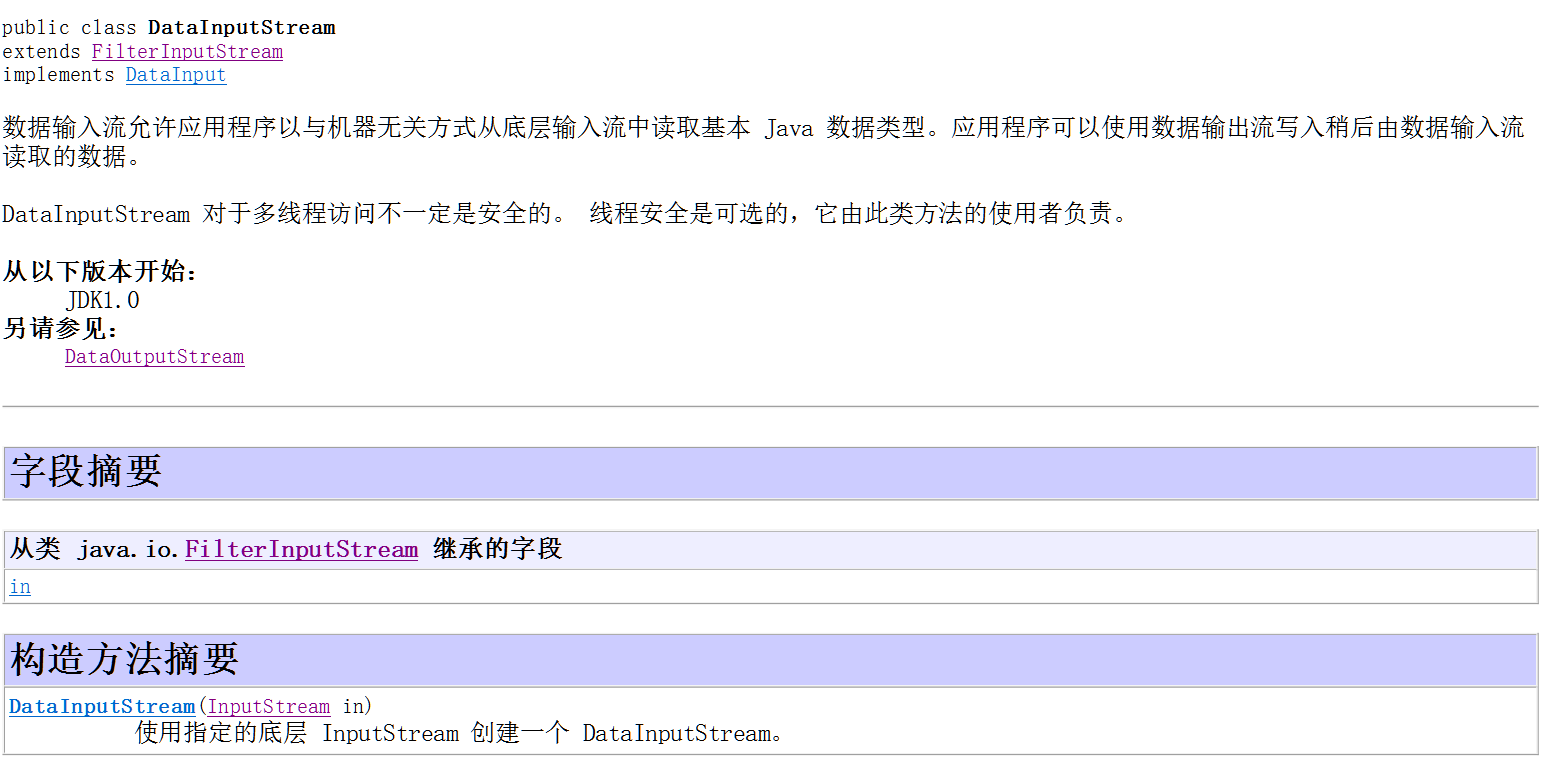
* A:什么是数据输入输出流
* DataInputStream,DataOutputStream可以按照基本数据类型大小读写数据
* 例如按照Long大小写出一个数字,写出时,该数据占8个字节,读取的时候也可以按照Long类型读取,一次读取8个字节
* B:使用方式
* DataOutputStream(OutputStream), writeInt(), writeLong()
* DataInputStream(InputStream), readInt(), readLong()
package com.heima.otherio;

import java.io.DataInputStream;

import java.io.DataOutputStream;

import java.io.FileInputStream;

import java.io.FileNotFoundException;

import java.io.FileOutputStream;

import java.io.IOException;

public class Demo9_Data {

    public static void main(String[] args) throws IOException {

        // demo1();

        // demo2();

        // demo3();

        // demo4();

    }

    public static void demo4() throws FileNotFoundException, IOException {

        DataInputStream dis = new DataInputStream(new FileInputStream("h.txt")); // 创建数据输入流,并关联文件

        int x = dis.readInt(); // 按照int数读取

        int y = dis.readInt();

        int z = dis.readInt();

        System.out.println(x);

        System.out.println(y);

        System.out.println(z);

        dis.close(); // 关流

    }

    public static void demo3() throws FileNotFoundException, IOException {

        DataOutputStream dos = new DataOutputStream(new FileOutputStream("h.txt")); // 创建数据输出流,并关联文件

        dos.writeInt(997); // 写入int数

        dos.writeInt(998);

        dos.writeInt(999);

        dos.close(); // 关流

    }

    public static void demo2() throws FileNotFoundException, IOException {

        FileInputStream fis = new FileInputStream("h.txt");

        int x = fis.read(); // 读取时回按照byte形式读取,然后前面加上24个0

        int y = fis.read();

        int z = fis.read();

        System.out.println(x);

        System.out.println(y);

        System.out.println(z);

    }

    public static void demo1() throws FileNotFoundException, IOException {

        FileOutputStream fos = new FileOutputStream("h.txt");

        fos.write(997);

        fos.write(998);

        fos.write(999);

        fos.close();

    }

}
DataInputStream
Properties的概述和作为Map集合的使用
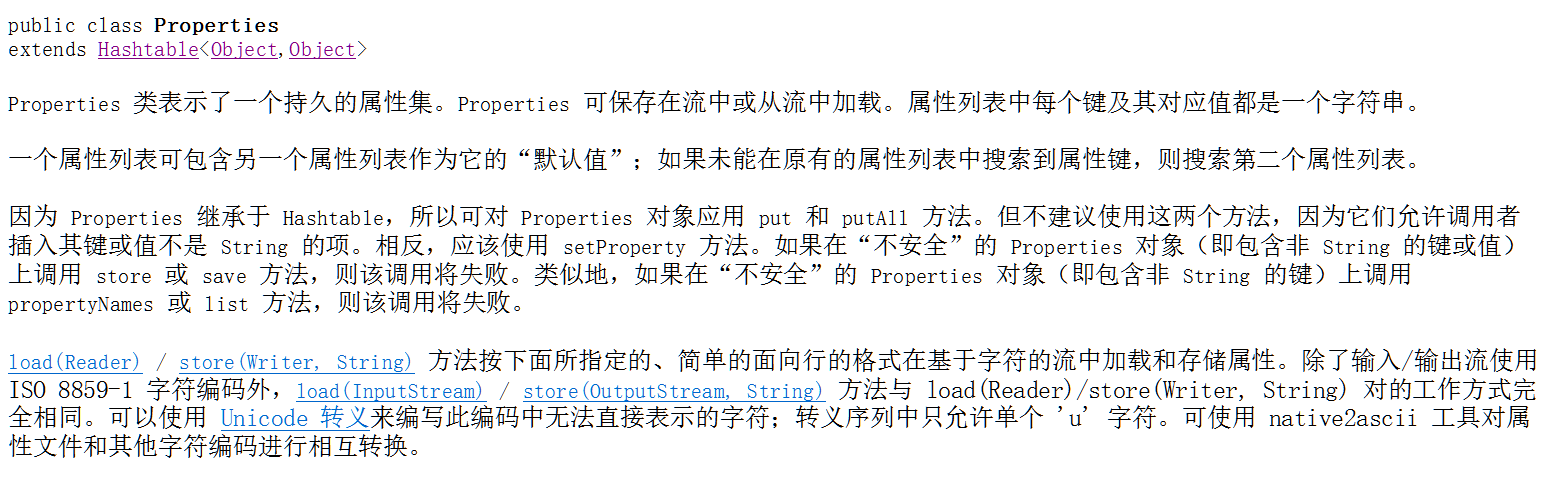
* A:Properties的概述
* Properties类表示了一个持久的属性集
* Properties可保存在流中或从流中加载
* 属性列表中每个键及其对应值都是一个字符串
* B:Properties的特殊功能
* public Object setProperty(String key, String value)
* public String getProperty(String key)
* public Enumeration<String> stringPropertyNames()
* C:Properties的 load() 和 store() 功能
* C:案例演示
* Properties的特殊功能
package com.heima.otherio;

import java.io.FileInputStream;

import java.io.FileNotFoundException;

import java.io.FileOutputStream;

import java.io.IOException;

import java.util.Enumeration;

import java.util.Properties;

public class Demo10_Properties {

    // Properties 是Hashtable的子类

    public static void main(String[] args) throws IOException {

        // demo1();

        // demo2();

        // demo3();

    }

    public static void demo3() throws IOException, FileNotFoundException {

        Properties prop = new Properties();

        prop.load(new FileInputStream("config.properties")); // 将文件上的键值对读取到集合中

        prop.setProperty("tel", "18987654321"); // 此时只修改了内存中的值

        prop.store(new FileOutputStream("config.properties"), "..."); // 将内存中的数据写入文件中,第二个参数是对列表参数的描述,可以给值,也可以给null

        System.out.println(prop);

    }

    public static void demo2() {

        Properties prop = new Properties();

        prop.setProperty("name", "张三");

        prop.setProperty("tel", "18912345678");

        // System.out.println(prop);

        Enumeration<String> en = (Enumeration<String>) prop.propertyNames(); // 因为properties中没有泛型,所以默认是Object,转化为枚举时需要强转

        while (en.hasMoreElements()) {

            String key = (String) en.nextElement(); // 获取properties中的每一个键

            String valueString = prop.getProperty(key); // 根据键获取值

            System.out.println(key + "=" + valueString);

        }

    }

    public static void demo1() {

        Properties prop = new Properties();

        prop.put("abc", 123);

        System.out.println(prop);

    }

}
Properties
Java I/O流 04的更多相关文章
- Java IO: 字符流的Piped和CharArray
作者: Jakob Jenkov 译者: 李璟(jlee381344197@gmail.com) 本章节将简要介绍管道与字符数组相关的reader和writer,主要涉及PipedReader.Pip ...
- day37-IO流04
JavaIO流04 4.常用的类03 4.4节点流和处理流02 4.4.5对象处理流-ObjectInputStream和ObjectOutputStream 1.序列化和反序列化 例子1: 看一个需 ...
- Java学习笔记(04)
Java学习笔记(04) 如有不对或不足的地方,请给出建议,谢谢! 一.对象 面向对象的核心:找合适的对象做合适的事情 面向对象的编程思想:尽可能的用计算机语言来描述现实生活中的事物 面向对象:侧重于 ...
- 【转】输入/输出流 - 深入理解Java中的流 (Stream)
基于流的数据读写,太抽象了,什么叫基于流,什么是流?Hadoop是Java语言写的,所以想理解好Hadoop的Streaming Data Access,还得从Java流机制入手.流机制也是JAVA及 ...
- Java虚拟机JVM学习04 类的初始化
Java虚拟机JVM学习04 类的初始化 类的初始化 在初始化阶段,Java虚拟机执行类的初始化语句,为类的静态变量赋予初始值. 在程序中,静态变量的初始化有两种途径: 1.在静态变量的声明处进行初始 ...
- 理解Java中字符流与字节流的区别
1. 什么是流 Java中的流是对字节序列的抽象,我们可以想象有一个水管,只不过现在流动在水管中的不再是水,而是字节序列.和水流一样,Java中的流也具有一个“流动的方向”,通常可以从中读入一个字节序 ...
- Java Io 字符流
Java Io 字符流包含: 1. InputStreamReader 它是由byte流解析为char流,并且按照给定的编码解析. 2. OutputStreamWrite 它是char流到byt ...
- mybatis oracle java.sql.SQLException: 流已被关闭问题
/** * 按照页码取值(从current_page页开始,每页page_size条) * @param key * @param params * @param current_page * @pa ...
- Java IO包装流如何关闭?
问题: (1)JAVA的IO流使用了装饰模式,关闭最外面的流的时候会自动调用被包装的流的close()方吗? (2)如果按顺序关闭流,是从内层流到外层流关闭还是从外层到内存关闭? 问题(1)解释: ...
随机推荐
- POJ2785 4 Values whose Sum is 0 (二分)
题意:给你四组长度为\(n\)序列,从每个序列中选一个数出来,使得四个数字之和等于\(0\),问由多少种组成情况(仅于元素的所在位置有关). 题解:\(n\)最大可以取4000,直接暴力肯定是不行的, ...
- Codeforces Round #602 Div2 D1. Optimal Subsequences (Easy Version)
题意:给你一个数组a,询问m次,每次返回长度为k的和最大的子序列(要求字典序最小)的pos位置上的数字. 题解:和最大的子序列很简单,排个序就行,但是题目要求字典序最小,那我们在刚开始的时候先记录每个 ...
- 2017, X Samara Regional Intercollegiate Programming Contest E. Bonuses and Teleports (思维,模拟)
题意:在\(x\)轴上有很多传送点和钻石,当位于传送点上时,可以传送到其他任意传送点(不记操作数),位于钻石上时可以吃掉它,每次可以移动一个单位,问最少多少次可以吃掉所有的钻石. 题解:对于某个位置上 ...
- 缓冲区溢出实验 6 exit(0)
实验环境.代码.及准备 https://www.cnblogs.com/lqerio/p/12870834.html vul6 Vul6和vul2类似,可以覆盖foo的ebp的一字节.而这里有一个ex ...
- codeforce 849B
B. Tell Your World time limit per test 1 second memory limit per test 256 megabytes input standard i ...
- vagrant + virtualbox安装centos环境+docker安装
1. 下载vagrant 并安装,安装完成后,输入vagrant回车查看是否安装成功 2. 下载virtualbox.box并安装,安装完成后. 3. 创建虚拟机文件夹,例如.F:/vmimg/fir ...
- hdu5693D++游戏 区间DP-暴力递归
主要的收获是..如何优化你递推式里面不必要的决策 之前的代码 这个代码在HDU超时了,这就对了..这个复杂度爆炸.. 但是这个思路非常地耿直..那就是只需要暴力枚举删两个和删三个的情况,于是就非常耿直 ...
- 虚拟环境之间批量pip安装包"迁移"
在某个虚拟环境中通过 pip freeze > requirements.txt 将该环境下所有的包写入文档, 然后切换至另一虚拟环境, pip install -r requirements. ...
- PWA All In One
PWA All In One chrome://apps/ PWA Progressive Web App 可安装,添加到主屏 离线使用 轻量,快速 基于 Web 技术一套代码多端复用(移动端,桌面端 ...
- free online markdown editor
free online markdown editor markdown https://blog.csdn.net/xgqfrms/article/details/50129317 In-brows ...