
ICP(迭代最近点)算法
图像配准是图像处理研究领域中的一个典型问题和技术难点,其目的在于比较或融合针对同一对象在不同条件下获取的图像,例如图像会来自不同的采集设备,取自不同的时间,不同的拍摄视角等等,有时也需要用到针对不同对象的图像配准问题。具体地说,对于一组图像数据集中的两幅图像,通过寻找一种空间变换把一幅图像映射到另一幅图像,使得两图中对应于空间同一位置的点一一对应起来,从而达到信息融合的目的。 一个经典的应用是场景的重建,比如说一张茶几上摆了很多杯具,用深度摄像机进行场景的扫描,通常不可能通过一次采集就将场景中的物体全部扫描完成,只能是获取场景不同角度的点云,然后将这些点云融合在一起,获得一个完整的场景。
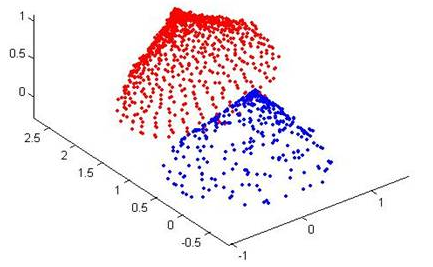
ICP(Iterative Closest Point迭代最近点)算法是一种点集对点集配准方法。如下图所示,PR(红色点云)和RB(蓝色点云)是两个点集,该算法就是计算怎么把PB平移旋转,使PB和PR尽量重叠。
用数学语言描述如下,即ICP算法的实质是基于最小二乘法的最优匹配,它重复进行“确定对应关系的点集→计算最优刚体变换”的过程,直到某个表示正确匹配的收敛准则得到满足。
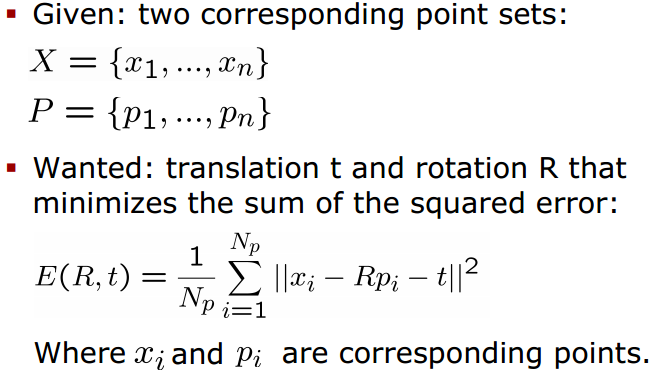
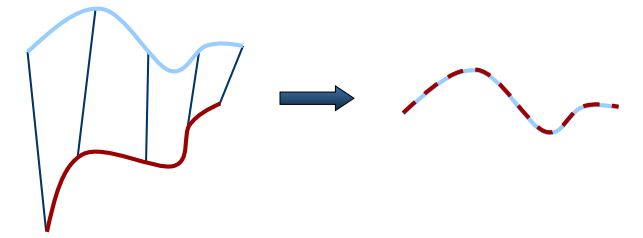
ICP算法基本思想:
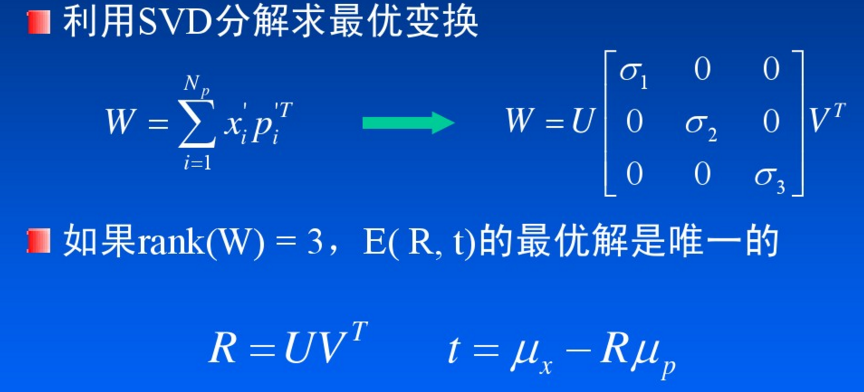
如果知道正确的点对应,那么两个点集之间的相对变换(旋转、平移)就可以求得封闭解。
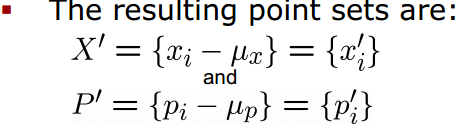
首先计算两个点集X和P的质心,分别为μx和μp

然后在两个点集中分别减去对应的质心(Subtract the corresponding center of mass from every point in the two point sets before calculating the transformation)
目标函数E(R,t)的优化是ICP算法的最后一个阶段。在求得目标函数后,采用什么样的方法来使其收敛到最小,也是一个比较重要的问题。求解方法有基于奇异值分解的方法、四元数方法等。
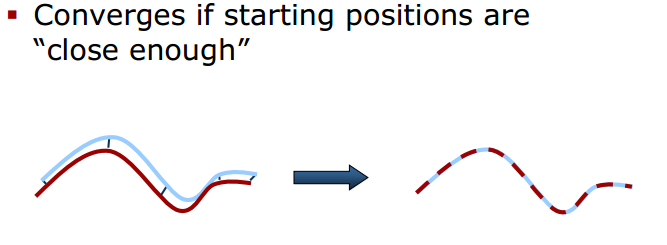
如果初始点“足够近”,可以保证收敛性
ICP算法优点:
- 可以获得非常精确的配准效果
- 不必对处理的点集进行分割和特征提取
- 在较好的初值情况下,可以得到很好的算法收敛性
ICP算法的不足之处:
- 在搜索对应点的过程中,计算量非常大,这是传统ICP算法的瓶颈
- 标准ICP算法中寻找对应点时,认为欧氏距离最近的点就是对应点。这种假设有不合理之处,会产生一定数量的错误对应点
针对标准ICP算法的不足之处,许多研究者提出ICP算法的各种改进版本,主要涉及如下所示的6个方面。

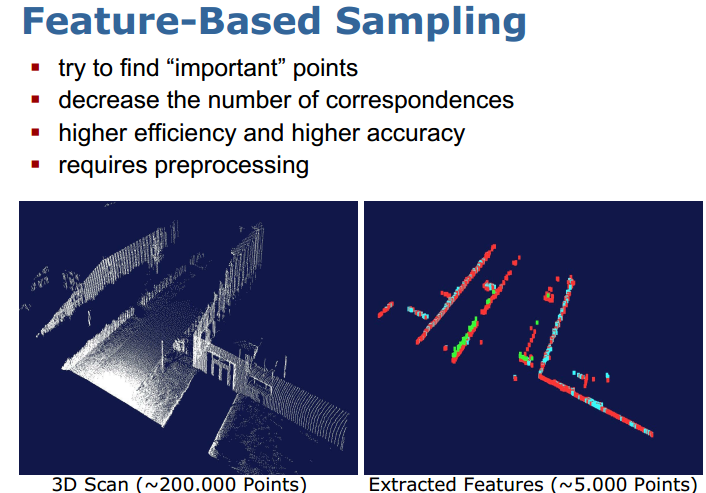
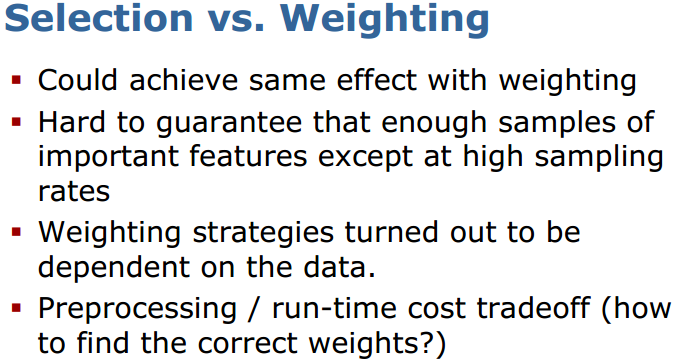
标准ICP算法中,选用点集中所有的点来计算对应点,通常用于配准的点集元素数量都是非常巨大的,通过这些点集来计算,所消耗的时间很长。在后来的研究中,提出了各种方法来选择配准元素,这些方法的主要目的都是为了减小点集元素的数目,即如何选用最少的点来表征原始点集的全部特征信息。在点集选取时可以:1.选取所有点;2.均匀采样(Uniform sub-sampling );3.随机采样(Random sampling);4.按特征采样(Feature based Sampling );5.法向空间均匀采样(Normal-space sampling),如下图所示,法向采样保证了法向上的连续性(Ensure that samples have normals distributed as uniformly as possible)

基于特征的采样使用一些具有明显特征的点集来进行配准,大量减少了对应点的数目。
点集匹配上有:最近邻点(Closet Point)
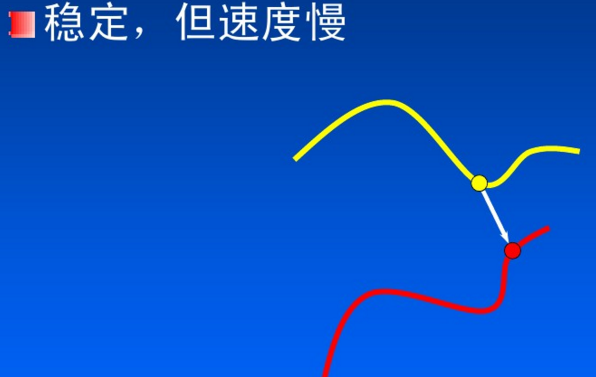 法方向最近邻点(Normal Shooting)
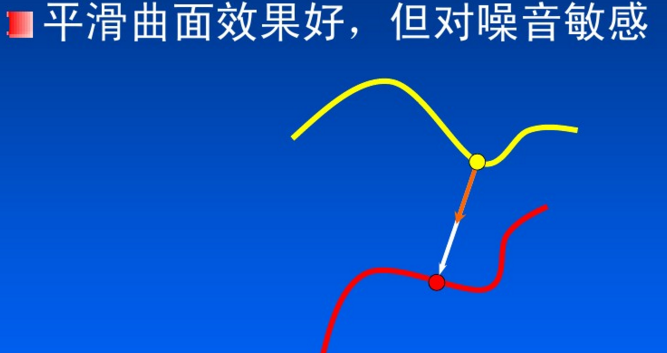
投影法(Projection)
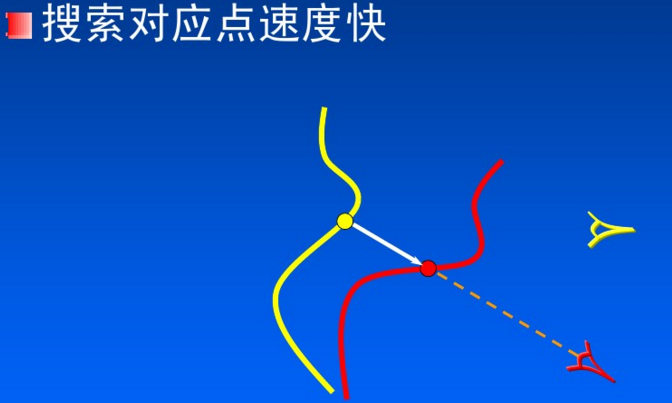
根据之前算法的描述,下面使用Python来实现基本的ICP算法(代码参考了这里):
import numpy as np

def best_fit_transform(A, B):

    '''

    Calculates the least-squares best-fit transform between corresponding 3D points A->B

    Input:

      A: Nx3 numpy array of corresponding 3D points

      B: Nx3 numpy array of corresponding 3D points

    Returns:

      T: 4x4 homogeneous transformation matrix

      R: 3x3 rotation matrix

      t: 3x1 column vector

    '''

    assert len(A) == len(B)

    # translate points to their centroids

    centroid_A = np.mean(A, axis=0)

    centroid_B = np.mean(B, axis=0)

    AA = A - centroid_A

    BB = B - centroid_B

    # rotation matrix

    W = np.dot(BB.T, AA)

    U, s, VT = np.linalg.svd(W)

    R = np.dot(U, VT)

    # special reflection case

    if np.linalg.det(R) < 0:

       VT[2,:] *= -1

       R = np.dot(U, VT)

    # translation

    t = centroid_B.T - np.dot(R,centroid_A.T)

    # homogeneous transformation

    T = np.identity(4)

    T[0:3, 0:3] = R

    T[0:3, 3] = t

    return T, R, t

def nearest_neighbor(src, dst):

    '''

    Find the nearest (Euclidean) neighbor in dst for each point in src

    Input:

        src: Nx3 array of points

        dst: Nx3 array of points

    Output:

        distances: Euclidean distances (errors) of the nearest neighbor

        indecies: dst indecies of the nearest neighbor

    '''

    indecies = np.zeros(src.shape[0], dtype=np.int)

    distances = np.zeros(src.shape[0])

    for i, s in enumerate(src):

        min_dist = np.inf

        for j, d in enumerate(dst):

            dist = np.linalg.norm(s-d)

            if dist < min_dist:

                min_dist = dist

                indecies[i] = j

                distances[i] = dist

    return distances, indecies

def icp(A, B, init_pose=None, max_iterations=50, tolerance=0.001):

    '''

    The Iterative Closest Point method

    Input:

        A: Nx3 numpy array of source 3D points

        B: Nx3 numpy array of destination 3D point

        init_pose: 4x4 homogeneous transformation

        max_iterations: exit algorithm after max_iterations

        tolerance: convergence criteria

    Output:

        T: final homogeneous transformation

        distances: Euclidean distances (errors) of the nearest neighbor

    '''

    # make points homogeneous, copy them so as to maintain the originals

    src = np.ones((4,A.shape[0]))

    dst = np.ones((4,B.shape[0]))

    src[0:3,:] = np.copy(A.T)

    dst[0:3,:] = np.copy(B.T)

    # apply the initial pose estimation

    if init_pose is not None:

        src = np.dot(init_pose, src)

    prev_error = 0

    for i in range(max_iterations):

        # find the nearest neighbours between the current source and destination points

        distances, indices = nearest_neighbor(src[0:3,:].T, dst[0:3,:].T)

        # compute the transformation between the current source and nearest destination points

        T,_,_ = best_fit_transform(src[0:3,:].T, dst[0:3,indices].T)

        # update the current source

    # refer to "Introduction to Robotics" Chapter2 P28. Spatial description and transformations

        src = np.dot(T, src)

        # check error

        mean_error = np.sum(distances) / distances.size

        if abs(prev_error-mean_error) < tolerance:

            break

        prev_error = mean_error

    # calculcate final tranformation

    T,_,_ = best_fit_transform(A, src[0:3,:].T)

    return T, distances

if __name__ == "__main__":

    A = np.random.randint(0,101,(20,3))    # 20 points for test

    rotz = lambda theta: np.array([[np.cos(theta),-np.sin(theta),0],

                                       [np.sin(theta),np.cos(theta),0],

                                       [0,0,1]])

    trans = np.array([2.12,-0.2,1.3])

    B = A.dot(rotz(np.pi/4).T) + trans

    T, distances = icp(A, B)

    np.set_printoptions(precision=3,suppress=True)

    print T
上面代码创建一个源点集A(在0-100的整数范围内随机生成20个3维数据点),然后将A绕Z轴旋转45°并沿XYZ轴分别移动一小段距离,得到点集B。结果如下,可以看出ICP算法正确的计算出了变换矩阵。

需要注意几点:
1.首先需要明确公式里的变换是T(P→X), 即通过旋转和平移把点集P变换到X。我们这里求的变换是T(A→B),要搞清楚对应关系。
2.本例只用了20个点进行测试,ICP算法在求最近邻点的过程中需要计算20×20次距离并比较大小。如果点的数目巨大,那算法的效率将非常低。
3.两个点集的初始相对位置对算法的收敛性有一定影响,最好在“足够近”的条件下进行ICP配准。
参考:
Iterative Closest Point (ICP) and other matching algorithms
http://www.mrpt.org/Iterative_Closest_Point_%28ICP%29_and_other_matching_algorithms
PCL学习笔记二:Registration (ICP算法)
http://www.voidcn.com/blog/u010696366/article/p-3712120.html
https://github.com/ClayFlannigan/icp/blob/master/icp.py
ICP迭代最近点算法综述
ICP(迭代最近点)算法的更多相关文章
- ICP算法(Iterative Closest Point迭代最近点算法)
标签: 图像匹配ICP算法机器视觉 2015-12-01 21:09 2217人阅读 评论(0) 收藏 举报 分类: Computer Vision(27) 版权声明:本文为博主原创文章,未经博主允许 ...
- 【转】ICP算法(Iterative Closest Point迭代最近点算法)
原文网址:https://www.cnblogs.com/sddai/p/6129437.html.转载主要方便随时可以查看,如有版权要求请及时联系. 最近在做点云匹配,需要用c++实现ICP算法,下 ...
- 迭代最近点算法 Iterative Closest Points
研究生课程系列文章参见索引<在信科的那些课> 基本原理 假定已给两个数据集P.Q, ,给出两个点集的空间变换f使他们能进行空间匹配.这里的问题是,f为一未知函数,而且两点集中的点数不一定相 ...
- ICP算法(迭代最近点)
参考博客:http://www.cnblogs.com/21207-iHome/p/6034462.html 最近在做点云匹配,需要用c++实现ICP算法,下面是简单理解,期待高手指正. ICP算法能 ...
- 机器视觉之 ICP算法和RANSAC算法
临时研究了下机器视觉两个基本算法的算法原理 ,可能有理解错误的地方,希望发现了告诉我一下 主要是了解思想,就不写具体的计算公式之类的了 (一) ICP算法(Iterative Closest Poin ...
- 第二周:01 ICP迭代交互
本周主要任务01:利用PCL库函数,ICP融合两个角度的点云 任务时间:2014年9月8日-2014年9月14日 任务完成情况:可以使用键盘交互,显示每次ICP迭代结果 任务涉及基本方法: 1.PCL ...
- Levenberg-Marquardt迭代(LM算法)-改进Guass-Newton法
1.前言 a.对于工程问题,一般描述为:从一些测量值(观测量)x 中估计参数 p?即x = f(p), ...
- 数值分析:幂迭代和PageRank算法
1. 幂迭代算法(简称幂法) (1) 占优特征值和占优特征向量 已知方阵\(\bm{A} \in \R^{n \times n}\), \(\bm{A}\)的占优特征值是量级比\(\bm{A}\)所有 ...
- 数值分析:幂迭代和PageRank算法(Numpy实现)
1. 幂迭代算法(简称幂法) (1) 占优特征值和占优特征向量 已知方阵\(\bm{A} \in \R^{n \times n}\), \(\bm{A}\)的占优特征值是比\(\bm{A}\)的其他特 ...
随机推荐
- ionic入门之AngularJS扩展(一)
ionic ionic是一个强大的混合式/hybridHTML5移动开发框架,特点是使用标准的HTML. CSS和JavaScript,开发跨平台(目前支持:Android.iOS,计划支持:Wind ...
- 图像处理之常用颜色RGB、灰度值
128/0/0 深红 255/0/0 红 255/0/255 粉红 255/153/204 玫瑰红 153 ...
- 161118、linux(centos) 项目部署阶段相关命令汇总
1.ssh免密码登陆 主要命令 cat ~/.ssh/id_rsa.pub >> ~/.ssh/authorized_keys-->添加公钥 service sshd restart ...
- scala泛型
package com.ming.test /** * scala泛型 * 类型参数测试 */ object TypeParamsTest { //泛型函数 def getMiddle[T](a:Ar ...
- STM32的晶振跟HSE外部时钟设置.
void RCC_Configuration(void){ /* RCC system reset(for debug purpose) */ RCC_DeInit(); /* Enable HS ...
- 坑爹的VS2012
2.2.2.如果卸载 Visual Studio 2010 Service Pack 1,则必须先重新安装 Visual Studio 2010,然后才能再次安装 SP1 如果卸载 Visual St ...
- Maven之Nexus构建企业级Maven仓库
什么是Nexus? Nexus是Maven仓库管理器,用来搭建一个本地仓库服务器,这样做的好处是便于管理,节省网络资源,速度快,还有一个非常有用的功能就是可以通过项目的SNAPSHOT版本管理,来进行 ...
- 做一个MVC4的项目时留下的经验--增加IPrange
/* CR#1796870 modify by v-yangwu, add a js file to control the page controls. */ $(document).ready(f ...
- 每日一九度之 题目1031:xxx定律
时间限制:1 秒 内存限制:32 兆 特殊判题:否 提交:6870 解决:4302 题目描述: 对于一个数n,如果是偶数,就把n砍掉一半:如果是奇数,把n变成 3*n+ 1后砍掉一半,直到该数 ...
- YTU 3004: 栈的基本运算(栈和队列)
3004: 栈的基本运算(栈和队列) 时间限制: 1 Sec 内存限制: 128 MB 提交: 32 解决: 10 题目描述 编写一个程序,实现顺序栈的各种基本运算,主函数已给出,请补充每一种方法 ...