
MyBatis 源码篇-DataSource
本章介绍 MyBatis 提供的数据源模块,为后面与 Spring 集成做铺垫,从以下三点出发:
- 描述 MyBatis 数据源模块的类图结构;
- MyBatis 是如何集成第三方数据源组件的;
- PooledConnection 设计初衷猜想;
类图结构
MyBatis 数据源部分的代码在 datasource 目录下。
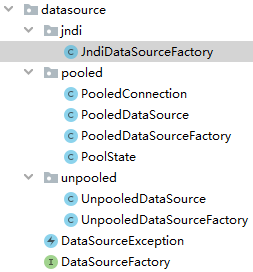
提供了三种类型的数据源实现:unpooled(没有连接池)、pooled(MyBatis 自身实现的连接池)、jndi(依赖 JNDI 服务)
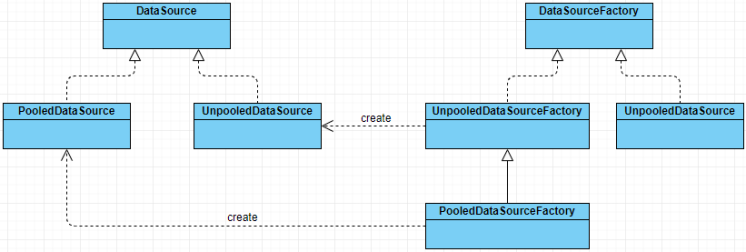
MyBatis 提供了两个 javax.sql.DataSource 接口实现,分别是 PooledDataSource 和 UnpooledDataSource。MyBatis 使用不同的 DataSourceFactory 接口实现创建不同类型的 DataSource。这是工厂方法的典型应用。
MyBatis 数据源的配置方式参考官方文档:https://mybatis.org/mybatis-3/zh/configuration.html#environments
MyBatis 数据源类的具体描述参考《MyBatis 技术内幕》的 2.6 章,这里只简单介绍各个类的主要作用。
- UnpooledDataSourceFactory 类用于创建 UnpooledDataSource 对象,并初始化 UnpooledDataSourceFactory.dataSource 字段,UnpooledDataSourceFactory.setProperties() 方法会完成对 UnpooledDataSource 对象的配置。
- PooledDataSourceFactory 继承了 UnpooledDataSourceFactory,但并没有覆盖 setProperties() 方法和 getDataSource() 方法。两者唯一的区别是 PooledDataSourceFactory 的构造函数会将其 dataSource 字段初始化为 PooledDataSource 对象。
- UnpooledDataSource 实现了 javax.sql.DataSource 接口中定义的 getConnection() 方法及其重载方法,用于获取数据库连接。每次通过 UnpooledDataSource.getConnection() 方法获取数据库连接时都会创建一个新连接。
- PooledDataSource 实现了简易数据库连接池的功能,它创建新数据库连接的功能是依赖其中封装的 UnpooledDataSource 对象实现的。PooledDataSource 并不会直接管理 java.sql.Connection 对象,而是管理 PooledConnection 对象。
- PooledConnection 中封装了真正的数据库连接对象(java.sql.Connection)以及其代理对象,这里的代理对象是通过 JDK 动态代理产生的。
- PoolState 是用于管理 PooledConnection 对象状态的组件,它通过两个 List 集合分别管理空闲状态的连接和活跃状态的连接。
集成第三方框架
MyBatis 数据源模块集成第三方数据源组件比较简单,只需要添加对应的工厂实现类,新的数据源就可以被 MyBatis 使用,不必修改已有的代码。工厂方法模式符合“开-闭”原则。
比如我们要引入 C3P0 数据源,只需要新增工厂实现类:
public class C3P0DataSourceFactory extends UnpooledDataSourceFactory {

  public C3P0DataSourceFactory() {

    this.dataSource = new ComboPooledDataSource();

  }

}
在 MyBatis 配置文件中添加相应的数据源配置:
<dataSource type="org.myproject.C3P0DataSourceFactory">

  <property name="driver" value="org.postgresql.Driver"/>

  <property name="url" value="jdbc:postgresql:mydb"/>

  <property name="username" value="postgres"/>

  <property name="password" value="root"/>

</dataSource>
这样我们就可以在我们的项目中使用新的数据源了。
在 MyBatis 加载配置文件的时候,会解析配置文件,根据 dataSource 节点配置的内容生成相应的工厂类对象。XMLConfigBuilder#dataSourceElement 源码如下所示:
private DataSourceFactory dataSourceElement(XNode context) throws Exception {

  if (context != null) {

    String type = context.getStringAttribute("type");

    Properties props = context.getChildrenAsProperties();

    // 根据type属性中配置的类路径生成对应的数据源工厂类

    DataSourceFactory factory = (DataSourceFactory) resolveClass(type).newInstance();

    // 为数据源设置配置的属性

    factory.setProperties(props);

    return factory;

  }

  throw new BuilderException("Environment declaration requires a DataSourceFactory.");

}
PooledConnection 设计初衷猜想
PooledConnection 的实现如下:
class PooledConnection implements InvocationHandler {

  private static final String CLOSE = "close";

  private static final Class<?>[] IFACES = new Class<?>[] { Connection.class };

  private final int hashCode;

  private final PooledDataSource dataSource;

  private final Connection realConnection;

  private final Connection proxyConnection;

  private long checkoutTimestamp;

  private long createdTimestamp;

  private long lastUsedTimestamp;

  private int connectionTypeCode;

  private boolean valid;

  /*

   * Constructor for SimplePooledConnection that uses the Connection and PooledDataSource passed in

   *

   * @param connection - the connection that is to be presented as a pooled connection

   * @param dataSource - the dataSource that the connection is from

   */

  public PooledConnection(Connection connection, PooledDataSource dataSource) {

    this.hashCode = connection.hashCode();

    this.realConnection = connection;

    this.dataSource = dataSource;

    this.createdTimestamp = System.currentTimeMillis();

    this.lastUsedTimestamp = System.currentTimeMillis();

    this.valid = true;

    // 创建代理对象

    this.proxyConnection = (Connection) Proxy.newProxyInstance(Connection.class.getClassLoader(), IFACES, this);

  }

  /*

   * Getter for the *real* connection that this wraps

   *

   * @return The connection

   */

  public Connection getRealConnection() {

    return realConnection;

  }

  /*

   * Getter for the proxy for the connection

   *

   * @return The proxy

   */

  public Connection getProxyConnection() {

    return proxyConnection;

  }

  /*

   * Required for InvocationHandler implementation.

   *

   * @param proxy  - not used

   * @param method - the method to be executed

   * @param args   - the parameters to be passed to the method

   * @see java.lang.reflect.InvocationHandler#invoke(Object, java.lang.reflect.Method, Object[])

   */

  @Override

  public Object invoke(Object proxy, Method method, Object[] args) throws Throwable {

    String methodName = method.getName();

    if (CLOSE.hashCode() == methodName.hashCode() && CLOSE.equals(methodName)) {

      dataSource.pushConnection(this);

      return null;

    } else {

      try {

        if (!Object.class.equals(method.getDeclaringClass())) {

          // issue #579 toString() should never fail

          // throw an SQLException instead of a Runtime

          checkConnection();

        }

        return method.invoke(realConnection, args);

      } catch (Throwable t) {

        throw ExceptionUtil.unwrapThrowable(t);

      }

    }

  }

  ......

}
PooledConnection 类中封装了真正的数据库连接对象(java.sql.Connection)以及其代理对象。PooledDataSource.getConnection() 方法获取的是 proxyConnection 对象,代码实现如下所示。
@Override

public Connection getConnection() throws SQLException {

  return popConnection(dataSource.getUsername(), dataSource.getPassword()).getProxyConnection();

}

@Override

public Connection getConnection(String username, String password) throws SQLException {

  return popConnection(username, password).getProxyConnection();

}
PooledConnection 类为什么要这么设计?一般要强化 Connection 类,添加一些我们自定义的功能,我们会采用装饰器模式,为什么要使用动态代理呢?
因为直接采用装饰器模式,有点麻烦,我们需要把 Connection 类中所有需要用到的方法都要在 PooledConnection 类中暴露出去,说白了就是要重写一遍,比较麻烦,而采用动态代理模式,所有的方法调用都会转到 invoke() 方法执行,我们只需要对特定的方法做一下处理就行,比如这里只对 Connection 的 close() 方法做了特殊处理,其他方法都直接执行 Connection 类中方法。
MyBatis 源码篇-DataSource的更多相关文章
- MyBatis 源码篇-MyBatis-Spring 剖析
本章通过分析 mybatis-spring-x.x.x.jar Jar 包中的源码,了解 MyBatis 是如何与 Spring 进行集成的. Spring 配置文件 MyBatis 与 Spring ...
- MyBatis 源码篇-Transaction
本章简单介绍一下 MyBatis 的事务模块,这块内容比较简单,主要为后面介绍 mybatis-spring-1.**.jar(MyBatis 与 Spring 集成)中的事务模块做准备. 类图结构 ...
- MyBatis 源码篇-插件模块
本章主要描述 MyBatis 插件模块的原理,从以下两点出发: MyBatis 是如何加载插件配置的? MyBatis 是如何实现用户使用自定义拦截器对 SQL 语句执行过程中的某一点进行拦截的? 示 ...
- MyBatis 源码篇-日志模块2
上一章的案例,配置日志级别为 debug,执行一个简单的查询操作,会将 JDBC 操作打印出来.本章通过 MyBatis 日志部分源码分析它是如何实现日志打印的. 在 MyBatis 的日志模块中有一 ...
- MyBatis 源码篇-日志模块1
在 Java 开发中常用的日志框架有 Log4j.Log4j2.Apache Common Log.java.util.logging.slf4j 等,这些日志框架对外提供的接口各不相同.本章详细描述 ...
- MyBatis 源码篇-资源加载
本章主要描述 MyBatis 资源加载模块中的 ClassLoaderWrapper 类和 Java 加载配置文件的三种方式. ClassLoaderWrapper 上一章的案例,使用 org.apa ...
- MyBatis 源码篇-SQL 执行的流程
本章通过一个简单的例子,来了解 MyBatis 执行一条 SQL 语句的大致过程是怎样的. 案例代码如下所示: public class MybatisTest { @Test public void ...
- MyBatis 源码篇-整体架构
MyBatis 的整体架构分为三层, 分别是基础支持层.核心处理层和接口层,如下图所示. 基础支持层 反射模块 该模块对 Java 原生的反射进行了良好的封装,提供了更加简洁易用的 API ,方便上层 ...
- 深入浅出Mybatis系列(三)---配置详解之properties与environments(mybatis源码篇)
上篇文章<深入浅出Mybatis系列(二)---配置简介(mybatis源码篇)>我们通过对mybatis源码的简单分析,可看出,在mybatis配置文件中,在configuration根 ...
随机推荐
- 关系型数据库的树形结构查询(Oracle、Postgres)
Oracle : start with… connect by 的用法.语法:select * from table [where 条件1] connect by[条件2] start with[条件 ...
- Java core dump
目录 生成Java core dump core dump分析 生成Java core dump 可以按照下面这个文章的指引来通过jni调用触发Java core dump Generating a ...
- linux内核中的wait_event_interruptible_timeout接口解析
1. 原型 #define wait_event_interruptible_timeout(wq_head, condition, timeout) \ ({ \ long __ret = time ...
- kotlin标准委托之可观察属性
所谓可观察属性就是当属性变化时可以拦截其变化,实现观察属性值变化的委托函数是Delegates.observable.该函数接受二个参数,第一个是初始化值,第2个属性值变化事件的响应器.每次我们向属性 ...
- MySQL软件的相关操作
服务的启动与关闭 * 启动 net start mysql * 关闭 net stop mysql * 打开服务窗口 services.msc *查询端口号: netstat -ano mysql密码 ...
- 阶段5 3.微服务项目【学成在线】_day05 消息中间件RabbitMQ_13.RabbitMQ研究-工作模式-header和rpc工作模式
header模式 header模式与routing不同的地方在于,header模式取消routingkey,使用header中的 key/value(键值对)匹配 队列. 案例: 根据用户的通知设置去 ...
- 阶段5 3.微服务项目【学成在线】_day02 CMS前端开发_03-vuejs研究-vuejs基础-入门程序
本次测试我们在门户目录中创建一个html页面进行测试,正式的页面管理前端程序会单独创建工程. 在门户目录中创建vuetest目录,并且在目录下创建vue_01.html文件 <!DOCTYPE ...
- ubuntu 安装的一些软件
https://github.com/wszqkzqk/deepin-wine-ubuntu 14 版本的ubuntu 安装发生问题; 16 18 的都可以安装成功微信;
- Linux学习笔记:vim
目录 模式 命令模式 编辑模式 底行模式 .vimrc .viminfo .swap 本文更新于2019-09-05. 说明:下文中,使用{}引起表示自定义变量,根据实际情况填写.使用[]引起表示内容 ...
- manjaro 给笔记本安装18.1系统时发现中文变成了方块字
解决方案: 1.连接网络,wifi/本地连接 2.打开终端 3.同步数据 如果是第一次,我们需要先同步本地数据包,先输入 sudo pacman -Syy 4.安装字体 sudo pacman -S ...