
通道(Channel)的原理获取
通道表示打开到 IO 设备(例如:文件、套接字)的连接。若需要使用 NIO 系统,需要获取用于连接 IO 设备的通道以及用于容纳数据的缓冲区。然后操作缓冲区,对数据进行处理。Channel 负责传输, Buffer 负责存储。通道是由 java.nio.channels 包定义的。 Channel 表示 IO 源与目标打开的连接。Channel 类似于传统的“流”。只不过 Channel本身不能直接访问数据, Channel 只能与Buffer 进行交互。
java.nio.channels.Channel 接口:
|--FileChannel 本地文件的通道
|--SocketChannel
|--ServerSocketChannel
|--DatagramChannel
网络的关于通道
获取通道
1. Java 针对支持通道的类提供了 getChannel() 方法
本地 IO:
FileInputStream/FileOutputStream
RandomAccessFile
网络IO:
Socket
ServerSocket
DatagramSocket
2. 在 JDK 1.7 中的 NIO.2 针对各个通道提供了静态方法 open()
3. 在 JDK 1.7 中的 NIO.2 的 Files 工具类的 newByteChannel()
package com.toov5.Nio;

import java.io.FileInputStream;

import java.io.FileOutputStream;

import java.io.IOException;

import java.nio.ByteBuffer;

import java.nio.channels.FileChannel;

import org.junit.jupiter.api.Test;

public class BUfferTest02 {

    // 非直接缓冲区 读写操作

    @Test

    public  void BUfferTest() throws IOException {

        // 读入流

        FileInputStream fileInputStream = new FileInputStream("aa.jpg");

        // 写入流

        FileOutputStream fileOutputStream = new FileOutputStream("bb.jpg");

        // 创建通道

        FileChannel iChannel = fileInputStream.getChannel(); // 读入流的通道

        FileChannel oChannel = fileOutputStream.getChannel(); // 写入流的通道

        //分配制定缓冲区大小

      ByteBuffer byteBuffer    = ByteBuffer.allocate(1024);

      while (iChannel.read(byteBuffer) != -1) {

            //开启读取模式

          byteBuffer.flip();

          //将数据写入到通道中

          oChannel.write(byteBuffer);

          byteBuffer.clear();

    }

      //关闭通道、关闭连接

      iChannel.close();

      oChannel.close();

      fileInputStream.close();

      fileOutputStream.close();

    }

}
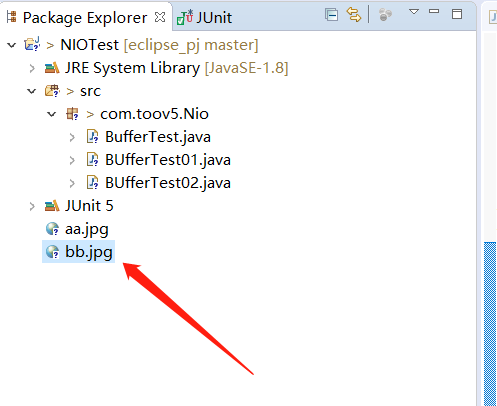
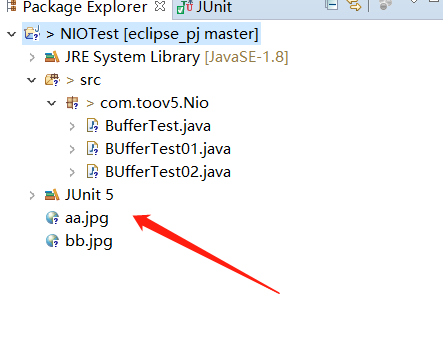
运行结果:
直接缓冲区:
package com.toov5.Nio;

import java.io.FileInputStream;

import java.io.FileOutputStream;

import java.io.IOException;

import java.nio.ByteBuffer;

import java.nio.MappedByteBuffer;

import java.nio.channels.FileChannel;

import java.nio.channels.FileChannel.MapMode;

import java.nio.file.Paths;

import java.nio.file.StandardOpenOption;

import org.junit.jupiter.api.Test;

public class BUfferTest02 {

    @Test

    public void testZhiJie() throws IOException {

        //创建管道

    FileChannel inChannel =FileChannel.open(Paths.get("aa.jpg"), StandardOpenOption.READ);

    FileChannel outChannel =FileChannel.open(Paths.get("bb.jpg"),StandardOpenOption.READ,StandardOpenOption.WRITE,StandardOpenOption.CREATE );

    //定义映射文件

    MappedByteBuffer inMappedByteBuffer =inChannel.map(MapMode.READ_ONLY, 0, inChannel.size());

    MappedByteBuffer outMappedByteBuffer =outChannel.map(MapMode.READ_WRITE, 0, inChannel.size());

    //直接对缓冲区操作

     byte[] bytes = new byte[inMappedByteBuffer.limit()];

     inMappedByteBuffer.get(bytes);

     outMappedByteBuffer.put(bytes);

      inChannel.close();

      outChannel.close();

      System.out.println("操作直接缓冲区完毕");

    }

    // 非直接缓冲区 读写操作

    @Test

    public  void BUfferTest() throws IOException {

        // 读入流

        FileInputStream fileInputStream = new FileInputStream("aa.jpg");

        // 写入流

        FileOutputStream fileOutputStream = new FileOutputStream("bb.jpg");

        // 创建通道

        FileChannel iChannel = fileInputStream.getChannel(); // 读入流的通道

        FileChannel oChannel = fileOutputStream.getChannel(); // 写入流的通道

        //分配制定缓冲区大小

      ByteBuffer byteBuffer    = ByteBuffer.allocate(1024);

      while (iChannel.read(byteBuffer) != -1) {

            //开启读取模式

          byteBuffer.flip();

          //将数据写入到通道中

          oChannel.write(byteBuffer);

          byteBuffer.clear();

    }

      //关闭通道、关闭连接

      iChannel.close();

      oChannel.close();

      fileInputStream.close();

      fileOutputStream.close();

    }

}
通道(Channel)的原理获取的更多相关文章
- NIO之通道(Channel)的原理与获取以及数据传输与内存映射文件
通道(Channel) 由java.nio.channels包定义的,Channel表示IO源与目标打开的连接,Channel类似于传统的“流”,只不过Channel本身不能直接访问数据,Channe ...
- Java-NIO(四):通道(Channel)的原理与获取
通道(Channel): 由java.nio.channels包定义的,Channel表示IO源与目标打开的连接,Channel类似于传统的“流”,只不过Channel本身不能直接访问数据,Chann ...
- 通道(Channel)的原理与获取
通道(Channel):由 java.nio.channels 包定义 的.Channel 表示 IO 源与目标打开的连接. Channel 类似于传统的“流”.只不过 Channel 本身不能直接访 ...
- Java NIO中的通道Channel(一)通道基础
什么是通道Channel 这个说实话挺难定义的,有点抽象,不过我们可以根据它的用途来理解: 通道主要用于传输数据,从缓冲区的一侧传到另一侧的实体(如文件.套接字...),反之亦然: 通道是访问IO服务 ...
- go中的数据结构通道-channel
1. channel的使用 很多文章介绍channel的时候都和并发揉在一起,这里我想把它当做一种数据结构来单独介绍它的实现原理. channel,通道.golang中用于数据传递的一种数据结构.是g ...
- 详解 通道 (Channel 接口)
在本篇博文中,本人主要讲解NIO 的两个核心点 -- 缓冲区(Buffer) 和 通道 (Channel)之一的 缓冲区(Buffer), 有关NIO流的其他知识点请观看本人博文<详解 NIO流 ...
- nio再学习之通道channel
通道(Channel):用于在数据传输过程中,进行输入输出的通道,其与(流)Stream不一样,流是单向的,在BIO中我们分为输入流,输出流,但是在通道中其又具有读的功能也具有写的功能或者两者同时进行 ...
- 理解CNN中的通道 channel
在深度学习的算法学习中,都会提到 channels 这个概念.在一般的深度学习框架的 conv2d 中,如 tensorflow .mxnet ,channels 都是必填的一个参数. channel ...
- 33、[源码]-AOP原理-获取拦截器链-MethodInterceptor
33.[源码]-AOP原理-获取拦截器链-MethodInterceptor
随机推荐
- apache的配置优化
[APACHE的工作方式] prefork模式(默认)这个多路处理模块(MPM)实现了一个非线程型的.预派生的web服务器,它的工作方式类似于Apache 1.3.它适合于没有线程安全库,需要避免线程 ...
- UNP学习笔记(第十一章 名字与地址转换)
域名系统 域名系统(Domain Name System,DNS)主要用于主机名字与IP地址之间的映射. 主机名既可以是一个简单得名字,如solaris,也可以是一个全限定域名,如solaris.un ...
- SQL检索语句及过滤语句
首先推荐一款比较好用的数据库管理软件:navicat premium. 数据库中最重要的检索功能:SELECT语句 1.检索单个列:select 列名 from 表名: 2.检索多个列:select ...
- DevOps必备的20款顶级工具
原文地址:http://os.51cto.com/art/201606/512423.htm 开发运维工具与软件开发领域的最佳实践密切相关,也与必要的规范密切相关.在整个开发生命周期涉及到一大批新旧工 ...
- LOL英雄联盟代打外挂程序-java实现
相信非常多程序员都玩游戏,比方LOL :有时候想打人机对战(玩家对战小心别人举报你! ),纯属为了拿经验和金币,而本身不想玩,但假设玩家不操作.那么非常快就会被系统觉得是挂机,从而得不到经验和金币.所 ...
- URL Handle in Swift (二) — 响应链处理 URL
最后更新: Swift4时候的博客,以前在 CMD markdown 上编辑的,现在搬到这里 在上篇文章-URL Handle in Swift (一) -- URL 分解中,我们已经将URL进行了分 ...
- dede列表页调用文章,其实是所有页面都可以调用,第一次应用sql标签
{dede:sql sql="SELECT aid,typeid,body,userip FROM `#@__addonarticle` where aid='6' or aid='7' o ...
- android 怎样加速./mk snod打包
mm命令高速编译一个模块之后,一般用adb push到手机看效果,假设环境不同意用adb push或模块不常常改.希望直接放到image里,则能够用./mk snod,这个命令只将system文件夹打 ...
- 非标准USBasp下载线烧录Arduino BootLoader的参数设置
本文仅适用于BootLoader损坏且买到国产“免驱USBasp下载线”导致Arduino IDE无法识别从而不能烧写的情况.是一种略显非主流的操作方式. 因为Arduino的IDE并不支持这种免驱的 ...
- 汉字unicode码表范围和常用汉字unicode码
utf-8吗表中所有汉字的区间的正则表达式[\u4e00-\u9fa5] 汉字常用字unicode吗表String base ="\u7684\u4e00\u4e86\u662f\u6211 ...