
Java 树结构的基础部分(一)
代码实现
在最后面
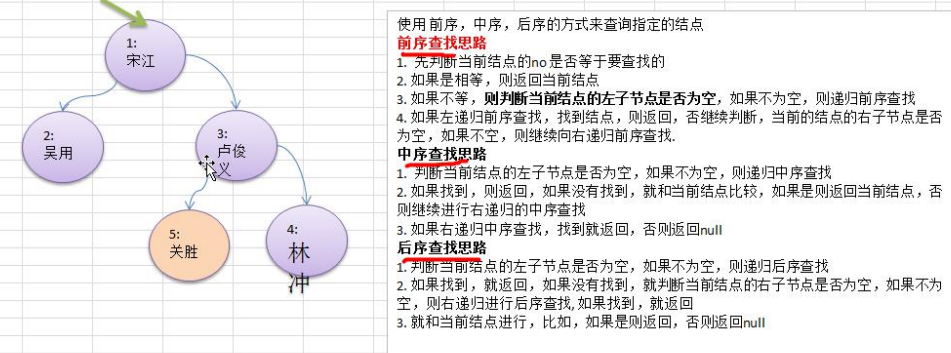

package com.lin.tree_0308;

public class BinaryTreeDemo {

    public static void main(String[] args) {

        BinaryTree binaryTree = new BinaryTree();

        HeroNode heroNode1 = new HeroNode(1, "伍六七");

        HeroNode heroNode2 = new HeroNode(2, "梅花十一");

        HeroNode heroNode3 = new HeroNode(3, "梅花十三");

        HeroNode heroNode4 = new HeroNode(4, "江主任");

        HeroNode heroNode5 = new HeroNode(5, "希义");

        heroNode1.setLeft(heroNode2);

        heroNode1.setRight(heroNode3);

        heroNode3.setRight(heroNode4);

        heroNode3.setLeft(heroNode5);

        binaryTree.setRoot(heroNode1);

//        System.out.println("前序遍历:");

//        binaryTree.preOrder();

//        System.out.println("中序遍历:");

//        binaryTree.infixOrder();

//

//        System.out.println("后序遍历");

//        binaryTree.postOrder();

//        System.out.println("前序查找:");

//        HeroNode preOrderSearch = binaryTree.preOrderSearch(5);

//        if(preOrderSearch != null) {

//            System.out.println(preOrderSearch);

//        } else {

//            System.out.println("没有找到");

//        }

//        System.out.println("中序查找:");

//        HeroNode infixOrderSearch = binaryTree.infixOrderSearch(5);

//        if(infixOrderSearch != null) {

//            System.out.println(infixOrderSearch);

//        } else {

//            System.out.println("没有找到");

//        }

//

//        System.out.println("后序查找:");

//        HeroNode postOrderSearch = binaryTree.postOrderSearch(5);

//        if(postOrderSearch != null) {

//            System.out.println(postOrderSearch);

//        } else {

//            System.out.println("没有找到");

//        }

        System.out.println("删除前");

        binaryTree.preOrder();

        binaryTree.delNode(2);

        System.out.println("删除后");

        binaryTree.preOrder();

    }

}
class BinaryTree{

    private HeroNode root;

    public void setRoot(HeroNode root) {

        this.root = root;

    }

    // 删除节点

    public void delNode(int no) {

        if (root != null) {

            // 如果只有一个root

            if (root.getNo() == no) {

                root = null;

            } else {

                root.delNode(no);

            }

        } else {

            System.out.println("空树!");

        }

    }

    // 前序遍历

    public void preOrder() {

        if(this.root != null) {

            this.root.preOrder();

        } else {

            System.out.println("二叉树为空!");

        }

    }

    // 中序遍历

    public void infixOrder() {

        if(this.root != null) {

            this.root.infixOrder();

        } else {

            System.out.println("二叉树为空!");

        }

    }

    // 后序遍历

    public void postOrder() {

        if(this.root != null) {

            this.root.postOrder();

        } else {

            System.out.println("二叉树为空!");

        }

    }

    // 前序查找

    public HeroNode preOrderSearch(int no) {

        if(root != null) {

            return root.preOrderSearch(no);

        } else {

            return null;

        }

    }

    // 中序查找

    public HeroNode infixOrderSearch(int no) {

        if (root != null) {

            return root.infixOrderSearch(no);

        } else {

            return null;

        }

    }

    // 后序查找

    public HeroNode postOrderSearch(int no) {

        if (root != null) {

            return root.postOrderSearch(no);

        } else {

            return null;

        }

    }

}
class HeroNode{

    private String name;

    private int no;

    private HeroNode left;

    private HeroNode right;

    public HeroNode(int no, String name) {

        this.no = no;

        this.name = name;

    }

    public String getName() {

        return name;

    }

    public void setName(String name) {

        this.name = name;

    }

    public int getNo() {

        return no;

    }

    public void setNo(int no) {

        this.no = no;

    }

    public HeroNode getLeft() {

        return left;

    }

    public void setLeft(HeroNode left) {

        this.left = left;

    }

    public HeroNode getRight() {

        return right;

    }

    public void setRight(HeroNode right) {

        this.right = right;

    }

    @Override

    public String toString() {

        return "HeroNode [name=" + name + ", no=" + no + "]";

    }

    // 前序遍历

    public void preOrder() {

        System.out.println(this); // 输出父节点

        if(this.left != null) {

            this.left.preOrder();

        }

        if(this.right != null) {

            this.right.preOrder();

        }

    }

    // 中序遍历

    public void infixOrder() {

        if (this.left != null) {

            this.left.infixOrder();

        }

        System.out.println(this); // 输出父节点

        if (this.right != null) {

            this.right.infixOrder();

        }

    }

    // 前序遍历

    public void postOrder() {

        if (this.left != null) {

            this.left.postOrder();

        }

        if (this.right != null) {

            this.right.postOrder();

        }

        System.out.println(this); // 输出父节点

    }

    // 前序查找

    public HeroNode preOrderSearch(int no) {

        System.out.println("1");

        // 比较当前节点是不是

        if(this.no == no) {

            return this;

        }

        // 1 判断当前节点的左节点是否为空,如果不为空,则递归前序查找

        // 2 如果左递归前序查找,找到节点,则返回

        HeroNode resNode = null;

        if(this.left != null) {

            resNode = this.left.preOrderSearch(no);

        }

        if(resNode != null) {// 说明左子树找到了

            return resNode;

        }

        // 1 左递归如果没有找到,则继续判断

        // 2 当前节点的右节点是否为空,如果不为空,则继续向右递归前序查找

        if(this.right != null) {

            resNode = this.right.preOrderSearch(no);

        }

        // 这时候不管有没有找到都要返回resNode

        return resNode;

    }

    // 中序查找

    public HeroNode infixOrderSearch(int no) {

        HeroNode resNode = null;

        if(this.left != null) {

            resNode = this.left.infixOrderSearch(no);

        }

        if(resNode != null) {

            return resNode;

        }

        System.out.println("1");

        if(this.no == no) {

            return this;

        }

        if(this.right != null) {

            resNode = this.right.infixOrderSearch(no);

        }

        return resNode;

    }

    // 后序查找

    public HeroNode postOrderSearch(int no) {

        HeroNode resNode = null;

        if(this.left != null) {

            resNode = this.left.postOrderSearch(no);

        }

        if(resNode != null) {

            return resNode;

        }

        if(this.right != null) {

            resNode = this.right.postOrderSearch(no);

        }

        if(resNode != null) {

            return resNode;

        }

        System.out.println("1");

        if(this.no == no) {

            return this;

        }

        // 如果都没有找到

        return resNode;

    }

    /**

     *

     * @Description:1 因为我们的二叉树是单向,所以我们是判断当前节点的子节点是否需要删除节点,而不是直接去判断当前节点是否需要删除节点。<br>

     *                 2 如果当前节点的左子节点不为空,并且左子节点就是要删除节点,就将this.left = null;并且就返回(结束递归删除) <br>

     *                 3 如果当前节点的右子节点不为空,并且右子节点就是要删除节点,就将this.right = null;并且就返回(结束递归删除) <br>

     *                 4 如果第2和第3都没有删除节点,那么我们就需要向左子树进行递归删除<br>

     *                 5 如果第4补也没有删除节点,则向右子树进行递归删除<br>

     * @author LinZM

     * @date 2021-3-8 15:17:32

     * @version V1.8

     */

    public void delNode(int no) {

        if(this.left != null && this.left.no == no) {

            this.left = null;

            return;

        }

        if(this.right != null && this.right.no == no) {

            this.right = null;

            return;

        }

        if(this.left != null) {

            this.left.delNode(no);

        }

        if(this.right != null) {

            this.right.delNode(no);

        }

    }

}
仅供参考,有错误还请指出!
有什么想法,评论区留言,互相指教指教。
觉得不错的可以点一下右边的推荐哟
Java 树结构的基础部分(一)的更多相关文章
- Java 树结构的基础部分(二)
1 顺序存储二叉树 1.1 顺序存储二叉树的概念 基本说明 从数据存储来看,数组存储方式和树的存储方式可以相互转换,即数组可以转换成树,树也可以转换成数组, 看下面的示意图. 要求: 1) 右 ...
- 如何夯实(Java)编程基础,并深入学习和提高
如何夯实(Java)编程基础,并深入学习和提高? 240赞同反对,不会显示你的姓名 匿名用户 240 人赞同 多学习...网上自学的学习网站很多,见以下榜单~一.汇总榜单: 公开课_学习网站导航 收录 ...
- Java开发的基础条件:
------------Java开发的基础条件:Java相关的基础+对编程的自己的理解+调试代码+自己的坚持 一定要谦逊,不人云亦云,不去妄言某一门语言或技术好或坏!不是哪门技术有问题,而是(不会用才 ...
- Java多线程系列--“基础篇”11之 生产消费者问题
概要 本章,会对“生产/消费者问题”进行讨论.涉及到的内容包括:1. 生产/消费者模型2. 生产/消费者实现 转载请注明出处:http://www.cnblogs.com/skywang12345/p ...
- Java多线程系列--“基础篇”04之 synchronized关键字
概要 本章,会对synchronized关键字进行介绍.涉及到的内容包括:1. synchronized原理2. synchronized基本规则3. synchronized方法 和 synchro ...
- Java多线程系列--“基础篇”02之 常用的实现多线程的两种方式
概要 本章,我们学习“常用的实现多线程的2种方式”:Thread 和 Runnable.之所以说是常用的,是因为通过还可以通过java.util.concurrent包中的线程池来实现多线程.关于线程 ...
- Java多线程系列--“基础篇”03之 Thread中start()和run()的区别
概要 Thread类包含start()和run()方法,它们的区别是什么?本章将对此作出解答.本章内容包括:start() 和 run()的区别说明start() 和 run()的区别示例start( ...
- Java多线程系列--“基础篇”05之 线程等待与唤醒
概要 本章,会对线程等待/唤醒方法进行介绍.涉及到的内容包括:1. wait(), notify(), notifyAll()等方法介绍2. wait()和notify()3. wait(long t ...
- Java多线程系列--“基础篇”06之 线程让步
概要 本章,会对Thread中的线程让步方法yield()进行介绍.涉及到的内容包括:1. yield()介绍2. yield()示例3. yield() 与 wait()的比较 转载请注明出处:ht ...
随机推荐
- Educational Codeforces Round 91 (Rated for Div. 2) A. Three Indices (模拟)
题意:有一长度为\(n\)的序列,问是否能找到\(a_{i}<a_{j},a_{j}>a_{k},(i<j<k)\),如果满足,输出其位置. 题解:直接暴力两头找即可,最坏复杂 ...
- CF1474-C. Array Destruction
CF1474-C. Array Destruction 题意: 题目给出一个长度为\(2n\)的正整数序列,现在问你是否存在一个\(x\)使得可以不断的进行如下操作,直到这个序列变为空: 从序列中找到 ...
- Automatic merge failed; fix conflicts and then commit the result.解决方法
产生原因: git pull 的时候会分为两步,第一步先从远程服务器上拉下代码,第二步进行merge.当你merge时候失败了就会产生Automatic merge failed; fix confl ...
- 查找命令中grep,find,which和whereis的使用及区别
在linux系统中,许多时候需要查找某些文件或者字符,如果用ls, cd 等基础命令就显得很无力了,那么Linux提供了grep,find,which 三种查找命令,在这里我记录一下: 一.grep命 ...
- Linux 驱动框架---驱动中的并发
并发指多个执行单元被同时.并行的执行,而并发执行的单元对共享资源的访问就容易导致竟态.并发产生的情况分为抢占和并行(多核)和硬抢占(中断).Linux为解决这一问题增加了一系列的接口来解决并发导致的竟 ...
- iPhone 如何查看 Wi-Fi 密码
iPhone 如何查看 Wi-Fi 密码 shit, 需要安装第三方软件 refs xgqfrms 2012-2020 www.cnblogs.com 发布文章使用:只允许注册用户才可以访问! 原创文 ...
- 英语能力考试 All In One
英语能力考试 All In One 托福,雅思,托业 TOEIC 托业考试 Test of English for International Communication (TOEIC) 国际交流英语 ...
- js array contains All In One
js array contains All In One includes & contains & has Array.prototype.contains "use st ...
- Web 安全 & 反爬虫原理
Web 安全 & 反爬虫原理 数据加密/解密 HTTPS ip 封锁 请求限制 爬虫识别,canvas 指纹 refs https://segmentfault.com/a/119000001 ...
- Headless Chrome
Headless Chrome https://developers.google.com/web/updates/2017/04/headless-chrome Puppeteer & SS ...