
040_Spring注解开发
Spring注解开发
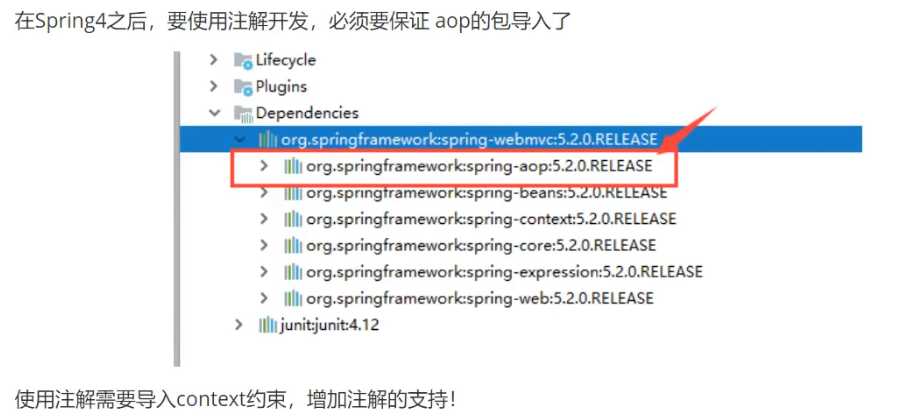
<?xml version="1.0" encoding="UTF-8"?>

<beans xmlns="http://www.springframework.org/schema/beans"

       xmlns:xsi="http://www.w3.org/2001/XMLSchema-instance"

       xmlns:context="http://www.springframework.org/schema/context"

       xsi:schemaLocation="http://www.springframework.org/schema/beans

        https://www.springframework.org/schema/beans/spring-beans.xsd

        http://www.springframework.org/schema/context

        https://www.springframework.org/schema/context/spring-context.xsd">

    <!--注解支持-->

    <context:annotation-config/>

</beans>
bean注册到Spring容器中
applicationContext.xml添加包扫描注解
<?xml version="1.0" encoding="UTF-8"?>

<beans xmlns="http://www.springframework.org/schema/beans"

       xmlns:xsi="http://www.w3.org/2001/XMLSchema-instance"

       xmlns:context="http://www.springframework.org/schema/context"

       xsi:schemaLocation="http://www.springframework.org/schema/beans

        https://www.springframework.org/schema/beans/spring-beans.xsd

        http://www.springframework.org/schema/context

        https://www.springframework.org/schema/context/spring-context.xsd">

    <!--注解支持-->

    <context:annotation-config/>

    <!--指定要扫描的包,包下的注解就会生效-->

    <context:component-scan base-package="com.qing"/>

</beans>
实体类添加注解@Component
package com.qing.dao;

import org.springframework.stereotype.Component;

@Component

public class User {

    private String name;

}
import com.qing.dao.User;

import org.junit.jupiter.api.Test;

import org.springframework.context.ApplicationContext;

import org.springframework.context.support.ClassPathXmlApplicationContext;

public class MyTest {

    @Test

    public void test01(){

        ApplicationContext context = new ClassPathXmlApplicationContext("applicationContext.xml");

        User user = context.getBean("user", User.class);

        System.out.println(user.getName());

    }

}

User实体类被Spring管理,通过@Component注解注册到Spring容器中
属性注入
属性添加注解@Value("张三丰")
package com.qing.pojo;

import org.springframework.beans.factory.annotation.Value;

import org.springframework.stereotype.Component;

@Component

public class User {

    @Value("张三丰")

    private String name;

    public String getName() {

        return name;

    }

    public void setName(String name) {

        this.name = name;

    }

}
import com.qing.pojo.User;

import org.junit.jupiter.api.Test;

import org.springframework.context.ApplicationContext;

import org.springframework.context.support.ClassPathXmlApplicationContext;

public class MyTest {

    @Test

    public void test01(){

        ApplicationContext context = new ClassPathXmlApplicationContext("applicationContext.xml");

        User user = context.getBean("user", User.class);

        System.out.println(user.getName());

    }

}

@Component的衍生注解
在web开发中,会按照MVC三层架构分层,分别使用注解,但他们的作用和@Component注解是一样的,都是将类注册到spring容器中,只是为了标记分层使用不同的注解
dao层 @Repository
package com.qing.dao;

import org.springframework.stereotype.Repository;

@Repository

public class UserDao {

}
service层 @Service
package com.qing.service;

import org.springframework.stereotype.Service;

@Service

public class UserService {

}
controller层 @Controller
package com.qing.controller;

import org.springframework.stereotype.Controller;

@Controller

public class UserController {

}
自动装配

作用域
单例@Scope("singleton") 原型@Scope("prototype")
package com.qing.pojo;

import org.springframework.beans.factory.annotation.Value;

import org.springframework.context.annotation.Scope;

import org.springframework.stereotype.Component;

@Component

@Scope("singleton")

//@Scope("prototype")

public class User {

    @Value("张三丰")

    private String name;

    public String getName() {

        return name;

    }

    public void setName(String name) {

        this.name = name;

    }

}
xml与注解区别
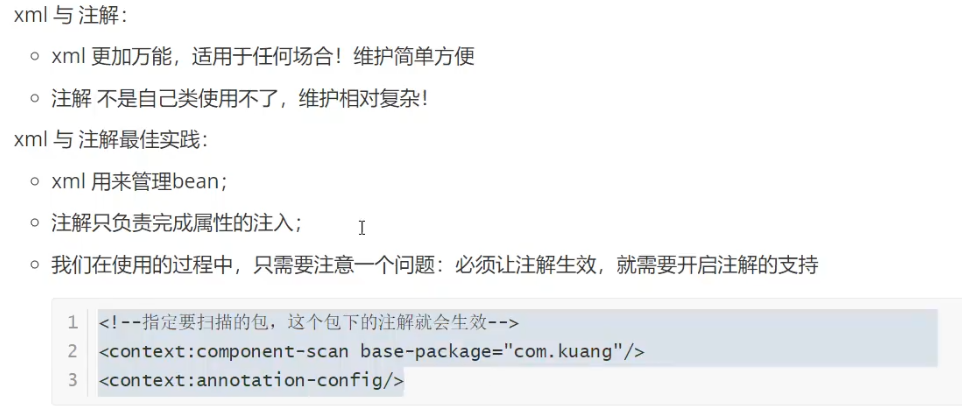
@Configuration 不使用Spring的xml配置,完全Java来做
JavaConfig是Spring的一个子项目,在Spring4之后,它成为了一个核心功能
添加配置类
@Configuration代表这是一个配置类
package com.qing.config;

import org.springframework.context.annotation.ComponentScan;

import org.springframework.context.annotation.Configuration;

import org.springframework.context.annotation.Import;

// @Configuration代表这是一个配置类,相当于applicationContext.xml

@Configuration

// @ComponentScan 扫描包下注解

@ComponentScan("com.qing.pojo")

// @Import 导入其他配置类

@Import(QingConfig2.class)

public class QingConfig {

}
实体类添加注解
package com.qing.pojo;

import org.springframework.beans.factory.annotation.Value;

import org.springframework.stereotype.Component;

@Component

public class User {

    @Value("张三丰")

    private String name;

    public String getName() {

        return name;

    }

    public void setName(String name) {

        this.name = name;

    }

}
测试
import com.qing.config.QingConfig;

import com.qing.pojo.User;

import org.junit.jupiter.api.Test;

import org.springframework.context.ApplicationContext;

import org.springframework.context.annotation.AnnotationConfigApplicationContext;

public class MyTest {

    @Test

    public void test01(){

        // 通过AnnotationConfigApplicationContext获取容器,通过配置类的class加载

        ApplicationContext context = new AnnotationConfigApplicationContext(QingConfig.class);

        User user = context.getBean("user", User.class);

        System.out.println(user.getName());

    }

}

040_Spring注解开发的更多相关文章
- SpringMVC注解开发初步
一.(补充)视图解析器---XmlViewResolver 作用:分离配置信息. 在视图解析器---BeanNameViewResolver的基础之上进行扩充,新建一个myView.xml分离信息 在 ...
- SpringMVC的注解开发入门
1.Spring MVC框架简介 支持REST风格的URL 添加更多注解,可完全注解驱动 引入HTTP输入输出转换器(HttpMessageConverter) 和数据转换.格式化.验证框架无缝集成 ...
- Struts2框架之-注解开发
Struts2主要解决了从JSP到Action上的流程管理,如何进行Uri和action类中每个方法的绑定这是重点,在这里先简单看一下配置文件中的简单配置: <span style=" ...
- Java自定义注解开发
一.背景 最近在自己搞一个项目时,遇到可需要开发自定义注解的需求,对于没有怎么关注这些java新特性的来说,比较尴尬,索性就拿出一些时间,来进行研究下自定义注解开发的步骤以及使用方式.今天在这里记下, ...
- Annotation(四)——Struts2注解开发
Hibernate和Spring框架的开发前边总结了,这次看一下流行的MVC流程框架Struts2的注解开发吧.Struts2主要解决了从JSP到Action上的流程管理,如何进行Uri和action ...
- Annotation(三)——Spring注解开发
Spring框架的核心功能IoC(Inversion of Control),也就是通过Spring容器进行对象的管理,以及对象之间组合关系的映射.通常情况下我们会在xml配置文件中进行action, ...
- Annotation(一)——注解开发介绍
<p>在编程中,一直强调的一点就是注释的编写,注释的规范等等.尤其是越是核心,程序越复杂,逻辑越多的清空下,注释的编写对我们以后的阅读代码,维护软件起着至关重要的作用.一款软件有着好的注释 ...
- spring注解开发中常用注解以及简单配置
一.spring注解开发中常用注解以及简单配置 1.为什么要用注解开发:spring的核心是Ioc容器和Aop,对于传统的Ioc编程来说我们需要在spring的配置文件中邪大量的bean来向sprin ...
- 使用Java注解开发自动生成SQL
使用注解开发的好处就是减少配置文件的使用.在实际过程中,随着项目越来越复杂,功能越来越多,会产生非常多的配置文件.但是,当配置文件过多,实际维护过程中产生的问题就不容易定位,这样就会徒劳的增加工作量. ...
随机推荐
- 8、基本数据类型(dict)
8.1.字典: 1.字典元素用大括号括起来,用逗号分割每个元素,字典元素是"key:value"的形式 dic = { "k1": 'v1', #键值对 &qu ...
- 浅读tomcat架构设计和tomcat启动过程(1)
一图甚千言,这张图真的是耽搁我太多时间了: 下面的tomcat架构设计代码分析,和这张图息息相关. 使用maven搭建本次的环境,贴出pom.xml完整内容: <?xml version=&qu ...
- 集合类线程安全吗?ConcurrentModification异常遇到过吗?如何解决?
集合类不安全的问题 1. ArrayList的线程不安全问题 1.1 首先回顾ArrayList底层 ArrayList的底层数据结构是数组 底层是一个Object[] elementData的数组, ...
- LAMP——实现phpMyadmin、wordpress及Discuz应用部署
一.环境准备 操作系统:Centos8.3.2011 软件:Apache2.4.37.Mysql8.0.21.PHP7.2.24 二.安装过程 1.安装phpmyadmin 1.1.安装软件包并启动服 ...
- AcWing 1273. 天才的记忆
从前有个人名叫 WNB,他有着天才般的记忆力,他珍藏了许多许多的宝藏. 在他离世之后留给后人一个难题(专门考验记忆力的啊!),如果谁能轻松回答出这个问题,便可以继承他的宝藏. 题目是这样的:给你一大串 ...
- CentOS-磁盘扩容挂载目录
挂载 查看存储情况 $ df -kh 查看磁盘情况 $ fdisk -l fdisk创建分区(注:可操作存储上限为2TB)$ fdisk /dev/sdb根据提示,依次输入"n", ...
- 资源:Kafka消息队列下载路径
Kafka下载路径 http://kafka.apache.org/downloads.html
- Mysql 中字符串的截取
一.从左开始截取字符串 用法:left(str, length),即:left(被截取字符串, 截取长度) mysql> SELECT LEFT('hello,world',3); +----- ...
- php 扩展 rabbitmq popt
首先是rabbitmq-c-master.tar.gz包, 可以访问https://github.com/alanxz/rabbitmq-c去下载最新的 wget https://github.com ...
- 可执行jar包在windows server2008下的自启动
最近要部署项目的服务端在windows server2008下面,所以把项目打包成可执行的jar包,然后希望它能开机自启动,毕竟每次都在cmd下输入java -jar xxx.jar才能启动太繁琐了. ...