
05--STL序列容器(List)
补充:
注意:list和forward_list都有自己的sort排序方法,所以排序时最好使用自带的sort方法,节省时间
一:List
(一):List双向链表简介
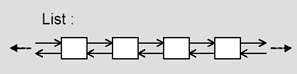
list是一个双向链表容器,可高效地进行插入删除元素。

list不可以随机存取元素,所以不支持at.(pos)函数与[]操作符。It++(ok) it+5(err)
list不支持任意存取迭代

(二):list默认构造函数
list采用采用模板类实现,对象的默认构造形式:list<T> lstT;  如:

list<int> lstInt;            //定义一个存放int的list容器。

list<float> lstFloat;     //定义一个存放float的list容器。

list<string> lstString;     //定义一个存放string的list容器。

//尖括号内还可以设置指针类型或自定义类型。
(三):list的带参构造函数
list(beg,end);    //构造函数将[beg, end)区间中的元素拷贝给本身。注意该区间是左闭右开的区间。

list(n,elem);   //构造函数将n个elem拷贝给本身。

list(const list &lst);  //拷贝构造函数。
(四):list头尾添加删除操作
list.push_back(elem);            //在容器尾部加入一个元素

list.pop_back();              //删除容器中最后一个元素

list.push_front(elem);     //在容器开头插入一个元素

list.pop_front();              //从容器开头移除第一个元素
(五):list头尾数据获取
list.front();   //返回第一个元素。

list.back();  //返回最后一个元素。
(六):list迭代器相关
list.begin();                     //返回容器中第一个元素的迭代器。

list.end();                       //返回容器中最后一个元素之后的迭代器。

list.rbegin();         //返回容器中倒数第一个元素的迭代器。

list.rend();         //返回容器中倒数最后一个元素的后面的迭代器。
(七):list赋值操作
list.assign(beg,end);    //将[beg, end)区间中的数据拷贝赋值给本身。注意该区间是左闭右开的区间。

list.assign(n,elem);  //将n个elem拷贝赋值给本身。

list& operator=(const list &lst);         //重载等号操作符

list.swap(lst);  // 将lst与本身的元素互换。
(八):list大小获取
list.size();      //返回容器中元素的个数

list.empty();           //判断容器是否为空

list.resize(num);   //重新指定容器的长度为num,若容器变长,则以默认值填充新位置。如果容器变短,则末尾超出容器长度的元素被删除。

list.resize(num, elem);  //重新指定容器的长度为num,若容器变长,则以elem值填充新位置。如果容器变短,则末尾超出容器长度的元素被删除。
(九):list插入操作
list.insert(pos,elem);   //在pos位置插入一个elem元素的拷贝,返回新数据的位置。

list.insert(pos,n,elem);   //在pos位置插入n个elem数据,无返回值。

list.insert(pos,beg,end);   //在pos位置插入[beg,end)区间的数据,无返回值。
同链表一样,先是查找位置,耗时。后是插入数据,快速
(十):list删除区间数据
list.clear();          //移除容器的所有数据

list.erase(beg,end);  //删除[beg,end)区间的数据,返回下一个数据的位置。  //使用迭代器删除较快,不需要查找

list.erase(pos);    //删除pos位置的数据,返回下一个数据的位置。

lst.remove(elem);   //删除容器中所有与elem值匹配的元素。
(十一):list数据序列翻转《重点》
lst.reverse(); //反转链表,比如lst包含1,3,5元素,运行此方法后,lst就包含5,3,1元素。
只动指针,不动数据
(十二)性能测试
#define _CRT_SECURE_NO_WARNINGS

#include <iostream>

#include <stdio.h>

#include <cstring>

#if _MSC_VER

#define snprintf _snprintf

#endif

using namespace std;

long get_a_target_long()

{

    /******变量声明********/

    long target = ;

    /**********************/

    cout << "targer (0~" << RAND_MAX << "):";

    cin >> target;

    return target;

}

string get_a_target_string()

{

    /******变量声明********/

    long target = ;

    char buf[];

    /**********************/

    cout << "targer (0~" << RAND_MAX << "):";

    cin >> target;

    snprintf(buf, , "%d", target);

    return string(buf);

}

//与后面的比较函数中回调参数对应

int compareLongs(const void* l1, const void* l2)

{

    return (*(long*)l1 - *(long*)l2);

}

int compareStrings(const void* s1, const void* s2)

{

    if (*(string*)s1 > *(string*)s2)

        return ;

    if (*(string*)s1 < *(string*)s2)

        return -;

    return ;

}
公共函数
#include <list>

namespace jj03

{

    void test_list(long& l_size)

    {

        cout << "\ntest_list()*******" << endl;

        /******变量声明:数组初始********/

        char buf[];

        /******变量声明:list初始********/

        list<string> lt;

        /******变量声明:记录时间********/

        clock_t timeStart = clock();    //开始时间

        for (long i = ; i < l_size; i++)

        {

            try

            {

                snprintf(buf, , "%d", rand());

                lt.push_back(string(buf));

            }

            catch (exception& e)

            {

                cout << e.what() << endl;

                cout << "Max_size:" << i << endl;

                abort();    //终止

            }

        }

        cout << "inti vector use milli-seconds:" << (clock() - timeStart) << endl;    //获取初始化数组耗时

        cout << "list.size:" << lt.size() << endl;    //获取list大小

        cout << "list.max_size:" << lt.max_size() << endl;    //获取list所允许的最大长度

        cout << "list.front:" << lt.front() << endl;    //获取list首元素

        cout << "list.back:" << lt.back() << endl;    //获取list尾元素

        /******变量声明:获取我们要查询的数********/

        string target = get_a_target_string();

        //注意list是链表实现,算法中sort不能使用,sort用在顺序表中

        //qsort和bsearch是C编译器自带的快速排序和二分查找算法

        //但是list不维护data首地址(一直变),所以这个查找方法不能使用

        //使用find方法进行查找:find不需要进行排序,查找时间可能较短<因为是迭代查找>(若是一次查找的话,耗时少,但是多次查找,那么先排序效率更好)

        timeStart = clock();

        auto pItem = find(lt.begin(), lt.end(), target);    //auto变量用得好

        cout << "::find(),milli-seconds:" << clock() - timeStart << endl;

        if (pItem != lt.end())

            cout << "found:" << *pItem << endl;

        else

            cout << "not found!" << endl;

        //使用list自带sort方法进行排序,节省时间 需要排序,所以耗时长于find

        timeStart = clock();

        lt.sort();    //使用list自带sort方法进行排序,节省时间

        cout << "list.sort(),milli-seconds:" << clock() - timeStart << endl;

        timeStart = clock();

        /******变量声明:flag布尔型判断是否找到数据********/

        bool flag =

            binary_search(lt.begin(), lt.end(), target);

        cout << "binary_search(),milli-seconds:" << clock() - timeStart << endl;

        if (flag != false)

            cout << "found:" << target << endl;

        else

            cout << "not found!" << endl;

    }

}

数据量大时destroy销毁内存时,耗时太长
二:Forward_list
(一)forward_list简介
单向列表,但实际上它是一种单向列表,只能从单一方向遍历

(二)单链表的实现
forward_list内部是用单向列表实现的,并且为了保证该库的运行效率(时间上和空间上)。
它是唯一一个C++标准库容器中没有size成员函数的容器, 因为维护这样一个信息会造成效率上的轻微损失。
和list双向链表相比,forward_list类只有一个结点只有一个指针,节省4字节相比于list
若是数据太多,若是可以,尽可能选择forward_list可以节省大量空间
和其他的标准序列容器(array,vector,deque)相比较的话,forward_list在任何位置的插入,删除和移动操作会更快。因此在诸如sorting算法中会更倾向于使用它。
(三)forward_list构造方法
  forward_list<int> first;                      // 默认构造:为空

  forward_list<int> second (,);              // fill填充 3 个 77

  forward_list<int> third (second.begin(), second.end()); // range initialization

  forward_list<int> fourth (third);            // 拷贝构造

  forward_list<int> fifth= {, , , };    // 列表赋值
(四)forward_list赋值操作
assign:
    forward_list<int> first;

    forward_list<int> second;


    first.assign (4,15);                           // 15 15 15 15

    second.assign (first.begin(),first.end());     // 15 15 15 15

    first.assign ( {77, 2, 16} );                  // 77 2 16
swap:
    forward_list<int> first = {, , };

    forward_list<int> second = {, };

    first.swap(second);
operator=:相同
(五) forward_list插入操作push_front《含有头结点》
  forward_list<int> mylist = {, , };

  mylist.push_front ();

  mylist.push_front ();
由于为了效率,forward_list连size函数都不要了,当然不会要尾指针。因为维护尾指针比维护头指针复杂多了
(六)forward_list删除操作pop_front和front
    forward_list<int> mylist = {, , , };

    cout << "Popping out the elements in mylist:";

    while (!mylist.empty())

    {

        cout << ' ' << mylist.front();  //获取开始结点数据

        mylist.pop_front();  //删除开始结点

    }
(七)更多方法参考:http://www.cplusplus.com/reference/forward_list/forward_list/pop_front/
(八)性能测试
#include <forward_list>

namespace jj04

{

    void test_flist(long& l_size)

    {

        cout << "\ntest_list()*******" << endl;

        /******变量声明:数组初始********/

        char buf[];

        /******变量声明:forward_list初始********/

        forward_list<string> fl;

        /******变量声明:记录时间********/

        clock_t timeStart = clock();    //开始时间

        for (long i = ; i < l_size; i++)

        {

            try

            {

                snprintf(buf, , "%d", rand());

                fl.push_front(string(buf));

            }

            catch (exception& e)

            {

                cout << e.what() << endl;

                cout << "Max_size:" << i << endl;

                abort();    //终止

            }

        }

        cout << "inti vector use milli-seconds:" << (clock() - timeStart) << endl;    //获取初始化数组耗时

        cout << "list.max_size:" << fl.max_size() << endl;    //获取forward_list所允许的最大长度

        cout << "list.front:" << fl.front() << endl;    //获取forward_list首元素

        //为了效率,forward_list并不维护size和back

        /******变量声明:获取我们要查询的数********/

        string target = get_a_target_string();

        //注意forward_list是链表实现,算法中sort不能使用,sort用在顺序表中

        //qsort和bsearch是C编译器自带的快速排序和二分查找算法

        //但是forward_list不维护data首地址(一直变),所以这个查找方法不能使用

        //使用find方法进行查找:find不需要进行排序,查找时间可能较短<因为是迭代查找>(若是一次查找的话,耗时少,但是多次查找,那么先排序效率更好)

        timeStart = clock();

        auto pItem = find(fl.begin(), fl.end(), target);    //auto变量用得好

        cout << "::find(),milli-seconds:" << clock() - timeStart << endl;

        if (pItem != fl.end())

            cout << "found:" << *pItem << endl;

        else

            cout << "not found!" << endl;

        //使用forward_list自带sort方法进行排序,节省时间 需要排序,所以耗时长于find

        timeStart = clock();

        fl.sort();    //使用list自带sort方法进行排序,节省时间

        /******变量声明:flag布尔型判断是否找到数据********/

        cout << "list.sort()milli-seconds:" << clock() - timeStart << endl;

        timeStart = clock();

        bool flag =

            binary_search(fl.begin(), fl.end(), target);

        cout << "binary_search(),milli-seconds:" << clock() - timeStart << endl;

        if (flag != false)

            cout << "found:" << target << endl;

        else

            cout << "not found!" << endl;

    }

}
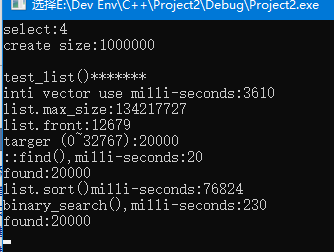
链表销毁耗时都较长
05--STL序列容器(List)的更多相关文章
- STL 序列容器
转自时习之 STL中大家最耳熟能详的可能就是容器,容器大致可以分为两类,序列型容器(SequenceContainer)和关联型容器(AssociativeContainer)这里介绍STL中的各种序 ...
- STL List容器
转载http://www.cnblogs.com/fangyukuan/archive/2010/09/21/1832364.html 各个容器有很多的相似性.先学好一个,其它的就好办了.先从基础开始 ...
- STL序列式容器学习总结
STL序列式容器学习总结 参考资料:<STL源码剖析> 参考网址: Vector: http://www.cnblogs.com/zhonghuasong/p/5975979.html L ...
- STL常用序列容器
这里简要的记述一下STL常用容器的实现原理,要点等内容. vector vector是比较常用的stl容器,用法与数组是非类似,其内部实现是连续空间分配,与数组的不同之处在于可弹性增加空间,而arra ...
- C++ STL基本容器的使用
C++中有两种类型的容器:顺序容器和关联容器.顺序容器主要有vector.list.deque等.其中vector表示一段连续的内存,基于数组实现,list表示非连续的内存,基于链表实现,deque与 ...
- STL基础--容器
容器种类 序列容器(数组,链表) Vector, deque, list, forward list, array 关联容器(二叉树),总是有序的 set, multiset根据值排序,元素值不能修改 ...
- c++复习:STL之容器
1 STL的string 1 String概念 string是STL的字符串类型,通常用来表示字符串.而在使用string之前,字符串通常是用char*表示的.string与char*都可以用来表示字 ...
- string基本字符序列容器(竞赛时常用的使用方法总结)
C语言只提供了一个char类型用来处理字符,而对于字符串,只能通过字符串数组来处理,而C++STL提供了string基本字符序列容器来处理字符串,可以将其理解为字符串类,它提供了添加,删除,替换.查找 ...
- 【C++】STL常用容器总结之五:双端队列deque
6.双端队列deque 所谓的deque是”double ended queue”的缩写,双端队列不论在尾部或头部插入元素,都十分迅速.而在中间插入元素则会比较费时,因为必须移动中间其他的元素.双端队 ...
- [C++ STL] 各容器简单介绍
什么是STL? 1.STL(Standard Template Library),即标准模板库,是一个高效的C++程序库. 2.包含了诸多常用的基本数据结构和基本算法.为广大C++程序员们提供了一个可 ...
随机推荐
- 测者的测试技术手册:自动化的自动化EvoSuite:Maven项目集成EvoSuite实战
EvoSuite是由Sheffield等大学联合开发的一种开源工具,用于自动生成测试用例集,生成的测试用例均符合Junit的标准,可直接在Junit中运行.得到了Google和Yourkit的支持. ...
- 本地服务器硬件信息获取指令wmic
获取BIOS序列号 wmic bios list full | find "SerialNumber" SerialNumber=P50168VB 获取CPUID(WIN32_PR ...
- iBatis第三章:iBatis的基本用法
iBatis 在DAO层的用法很基础,和一般 JDBC 用法没太多的不同之处,主要是实现数据的持久化.它的优势是用法比较灵活,可以根据业务需要,写出适应需要的sql,其使用简单,只要会使用sql,就能 ...
- js 学习之路10:try异常处理和第一个js小程序
try 语句测试代码块的错误. catch 语句处理错误. throw 语句创建自定义错误. 1. try/catch语句 catch语句用来捕获try代码块中的错误,并执行自定义的语句来处理它. 语 ...
- .Net Core 在Linux服务器下部署程序--(3). 部署.net core 后端程序
确认第二步中的软件已安装完成 lrzsz文件上传下载软件 zip与unzip压缩包软件 net core 相关软件 确认上述软件安装完成之后,开始部署程序 创建部署文件夹 我的习惯是在usr文件夹下新 ...
- 【Teradata SQL】日历函数查询
查询2018年agmt_id=1076226890174464676612的,且金额类型代码为0212,每日协议金额. 1.协议金额历史表取某一日数据(20180101) sel t.start_dt ...
- js操作文章、字符串换行
操作前: 操作后: 第一步: 把中英文的逗号和顿号置换为 '\n’ support_unit = support_unit.replace(/,|,|./g, '\n') 第二步: //为了使\n ...
- 《JAVA程序设计》_第六周学习总结
一.本周学习内容 1.内部类--7.1知识 在一个类的内部定义的类成为内部类,包含内部类的类叫做外嵌类 内部类和外嵌类的关系 外嵌类的成员变量在内部类中仍然有效,内部类也可调用外嵌类中的方法 内部类的 ...
- 在Winform开发框架中下拉列表绑定字典以及使用缓存提高界面显示速度
在我们开发Winform界面的时候,往往需要绑定数据字典操作,也就是绑定一些下拉列表或者一些列表显示等,以便我们方便选择数据操作,常见的字典绑定操作就是对下拉列表的处理,本篇随笔是基于DevExpre ...
- EntityFramework 6.x和EntityFramework Core必须需要MultipleActiveResultSets?
前言 本节我们来探讨到底需不需要在连接字符串上加上MultipleActiveResultSets = true ?,若您有更深层次的理解欢迎留下您的脚印. EntityFramework 6.x和E ...