
【sping揭秘】8、容器内部事件发布(一)
容器内部事件发布
Spring的applicationContext容器提供的容器内事件发布功能,是通过java提供的自定义事件实现的
事件类型:eventObject 类继承
事件监听:eventListener 接口实现
定义事件类型
package event;

import java.util.EventObject;

/**

 *

 * Title: MethodExecutionEvent.java

 * Description: 定义一个自定义的事件对象

 * @author xiaof

 * @date 2018年3月28日

 * @version 1.0

 *

 */

public class MethodExecutionEvent extends EventObject {

    /**

     *

     */

    private static final long serialVersionUID = -2324856893034735293L;

    private String methodName;

    /**

     * 构造函数是,继承的类实现的

     * @param source

     */

    public MethodExecutionEvent(Object source) {

        super(source);

    }

    public MethodExecutionEvent(Object source, String methodName) {

        super(source);

        this.methodName = methodName;

    }

    public String getMethodName() {

        return methodName;

    }

    public void setMethodName(String methodName) {

        this.methodName = methodName;

    }

}
创建自定义事件类的监听接口
package event;

import java.util.EventListener;

public interface MethodExecutionEventListener extends EventListener {

    /**

     * 处理方法开始执行的时候发布的methodexecutionevent事件

     * @param evt

     */

    void onMethodBegin(MethodExecutionEvent evt);

    /**

     * 处理方法开结束执行的时候发布的methodexecutionevent事件

     * @param evt

     */

    void onMethodEnd(MethodExecutionEvent evt);

}
发布事件
package event;

import java.util.ArrayList;

import java.util.List;

/**

 *

 * Title: MethodExeuctionEventPublisher.java

 * Description: 事件发布

 * @author xiaof

 * @date 2018年3月28日

 * @version 1.0

 *

 */

public class MethodExeuctionEventPublisher {

    private List<MethodExecutionEventListener> listeners = new ArrayList<MethodExecutionEventListener>();

    public void methodToMonitor() {

        MethodExecutionEvent event2Publish = new MethodExecutionEvent(this, "methodToMonitor");

        this.publishEvent(MethodExecutionStatus.BEGIN, event2Publish);

        //实际其他方法逻辑

        this.publishEvent(MethodExecutionStatus.END, event2Publish);

    }

    protected void publishEvent(MethodExecutionStatus status, MethodExecutionEvent methodExecutionEvent) {

        List<MethodExecutionEventListener> copyListeners = new ArrayList<MethodExecutionEventListener>(listeners);

        //循环发布

        for(MethodExecutionEventListener listener : copyListeners) {

            if(MethodExecutionStatus.BEGIN.equals(status)) {

                listener.onMethodBegin(methodExecutionEvent);

            } else {

                listener.onMethodEnd(methodExecutionEvent);

            }

        }

    }

    public void addMethodExecutionListener(MethodExecutionEventListener listener) {

        this.listeners.add(listener);

    }

    public void removeListener(MethodExecutionEventListener listener) {

        if(this.listeners.contains(listener)) {

            this.listeners.remove(listener);

        }

    }

    public void removeAllListeners() {

        this.listeners.clear();

    }

    public static void main(String[] args) {

        MethodExeuctionEventPublisher eventPublisher = new MethodExeuctionEventPublisher();

        eventPublisher.addMethodExecutionListener(new SimpleMethodExecutionEventListener());

        eventPublisher.methodToMonitor();

    }

}
那么spring的容器内事件的发布类结构是什么样的呢?
Spring的事件类型分一下三种
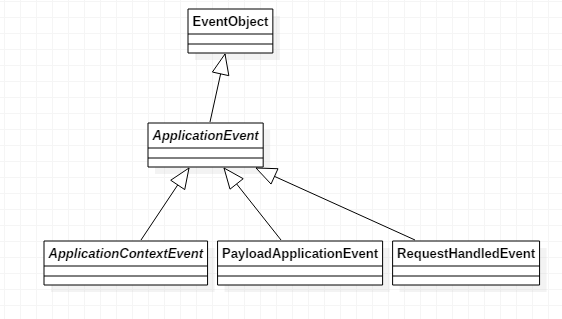
我们主要使用一下几个
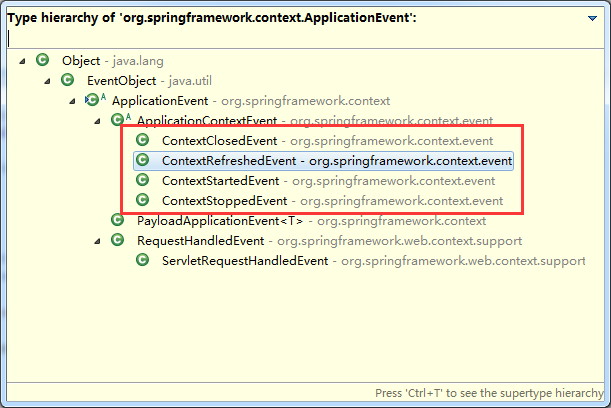
在spring容器中,这四个重上到下,分别是:
容器关闭的时候发布的事件类型
容器在初始化的时候或者刷新的时候发布
当使用 ConfigurableApplicationContext 接口中的 start() 方法启动 ApplicationContext 时,该事件被发布
当使用 ConfigurableApplicationContext 接口中的 stop() 方法停止 ApplicationContext 时,发布这个事件。你可以在接受到这个事件后做必要的清理的工作。
RequestHandledEvent web请求处理后发布的事件
spring监听事件
application在启动的时候,会自动识别并加载eventlistner类型bean定义。
一旦容器内有事件发布,将通知这些注册到容器的eventlistener
ApplicationListener
Spring发布事件
ApplicationEventPublisher 接口 实现对象 ApplicationContext 也是一个事件发布对象
这里做一个小测试:
package cn.cutter.start.event;

import org.springframework.context.ApplicationListener;

import org.springframework.context.event.ContextStartedEvent;

import org.springframework.stereotype.Component;

@Component

public class MyStartEventHandler implements ApplicationListener<ContextStartedEvent> {

    @Override

    public void onApplicationEvent(ContextStartedEvent event) {

        System.out.println("cutter_point 启动application容器");

    }

}
package cn.cutter.start.event;

import org.springframework.context.ApplicationListener;

import org.springframework.context.event.ContextStoppedEvent;

import org.springframework.stereotype.Component;

@Component

public class MyStopEventHandler implements ApplicationListener<ContextStoppedEvent> {

    @Override

    public void onApplicationEvent(ContextStoppedEvent event) {

        System.out.println("cutter_point 停止application容器");

    }

}
package cn.cutter.start.event;

import org.springframework.context.ApplicationListener;

import org.springframework.context.event.ContextStoppedEvent;

import org.springframework.stereotype.Component;

@Component

public class MyStopEventHandler2 implements ApplicationListener<ContextStoppedEvent> {

    @Override

    public void onApplicationEvent(ContextStoppedEvent event) {

        // TODO Auto-generated method stub

        System.out.println("cutter_point 停止application容器 222");

    }

}
package cn.cutter.start.resourceloader;

import org.springframework.context.ResourceLoaderAware;

import org.springframework.core.io.ResourceLoader;

public class FooBar implements ResourceLoaderAware {

    //资源加载器

    private ResourceLoader resourceLoader;

    public void foo(String location) {

        //这里有没有很熟悉

//        ResourceDemo.class.getResource(location).getClass()

        System.out.println(this.getResourceLoader().getResource(location).getClass());

    }

    @Override

    public void setResourceLoader(ResourceLoader resourceLoader) {

        //这里进行resourceloader的注入

        this.resourceLoader = resourceLoader;

    }

    public ResourceLoader getResourceLoader() {

        return resourceLoader;

    }

    public void sayFoo() {

        System.out.println("hi foo!");

    }

}
<?xml version="1.0" encoding="UTF-8"?>

<beans xmlns="http://www.springframework.org/schema/beans"

    xmlns:xsi="http://www.w3.org/2001/XMLSchema-instance" xmlns:context="http://www.springframework.org/schema/context"

    xsi:schemaLocation="http://www.springframework.org/schema/beans

        http://www.springframework.org/schema/beans/spring-beans-4.3.xsd

        http://www.springframework.org/schema/context

        http://www.springframework.org/schema/context/spring-context-4.3.xsd">

    <context:component-scan base-package="cn.cutter"  />

    <!-- 国际化配置 -->

    <bean id="messageSource" class="org.springframework.context.support.ResourceBundleMessageSource">

        <property name="basenames">

            <list>

                <value>i18/users</value>

                <value>i18/errormsg</value>

            </list>

        </property>

    </bean>

    <bean id="ttmRateService" class="cn.cutter.simplefx.service.impl.MockTTMRateServiceImpl"></bean>

    <bean id="fooBar" class="cn.cutter.start.resourceloader.FooBar" />

    <bean id="fooBar2" class="cn.cutter.start.resourceloader.FooBar2" />

    <bean id="resourceDemo" class="cn.cutter.start.resourceloader.ResourceDemo">

        <property name="resource">

            <value>classpath:applicationContext-bean.xml</value>

        </property>

    </bean>

    <!-- <bean id="myObject" class="cn.cutter.start.bean.MyObject"></bean> -->

    <!-- <alias name="FXNewsProvider" alias="provideralias"/> -->

    <!-- <bean id="test4key2" ></bean>

    <bean id="" class="..." lazy-init="true">

        <constructor-arg>

            <ref bean=""  parent=""/>

        </constructor-arg>

        <property name="test1">

            <value>ttttt1</value>

            <idref bean="ttttt1"/>

        </property>

        <property name="test2">

            <list>

                <value>test2value</value>

                <ref bean="test2222"/>

                <idref bean="test22222"/>

                <bean class="..."></bean>

            </list>

        </property>

        <property name="test3">

            <set>

                <value>test2value</value>

                <ref bean="test2222"/>

                <idref bean="test22222"/>

                <bean class="..."></bean>

            </set>

        </property>

        <property name="test4">

            <map>

                <entry key="test4key1">

                    <value>something</value>

                </entry>

                <entry key-ref="test5key2">

                    <list>

                        <value>test2value</value>

                        <ref bean="test2222"/>

                        <idref bean="test22222"/>

                        <bean class="..."></bean>

                    </list>

                </entry>

            </map>

        </property>

    </bean> -->

</beans>
启动测试案例
@Test

    public void testEvent() {

        //这里出发start事件和stop事件,就是使用ConfigurableApplicationContext的start和stop事件

        ConfigurableApplicationContext cac = (ConfigurableApplicationContext) before();

        cac.start();

        FooBar fooBar = (FooBar) cac.getBean("fooBar");

        fooBar.sayFoo();

        cac.stop();

    }
运行截图

【sping揭秘】8、容器内部事件发布(一)的更多相关文章
- 【sping揭秘】9、容器内部事件发布(二)
写在前面---------------------------------- 命运多舛,痴迷淡然 不知下一步该往哪里走,现在应该是我的迷茫期... 加油,快点走出去!!! 聪明的网友们,你们有没有迷茫 ...
- 深入理解Spring的容器内事件发布监听机制
目录 1. 什么是事件监听机制 2. JDK中对事件监听机制的支持 2.1 基于JDK实现对任务执行结果的监听 3.Spring容器对事件监听机制的支持 3.1 基于Spring实现对任务执行结果的监 ...
- 【spring源码学习】spring的事件发布监听机制源码解析
[一]相关源代码类 (1)spring的事件发布监听机制的核心管理类:org.springframework.context.event.SimpleApplicationEventMulticast ...
- 从spring源码汲取营养:模仿spring事件发布机制,解耦业务代码
前言 最近在项目中做了一项优化,对业务代码进行解耦.我们部门做的是警用系统,通俗的说,可理解为110报警.一条警情,会先后经过接警员.处警调度员.一线警员,警情是需要记录每一步的日志,是要可追溯的,比 ...
- Spring事件发布与监听机制
我是陈皮,一个在互联网 Coding 的 ITer,微信搜索「陈皮的JavaLib」第一时间阅读最新文章,回复[资料],即可获得我精心整理的技术资料,电子书籍,一线大厂面试资料和优秀简历模板. 目录 ...
- Nacos源码分析-事件发布机制
温馨提示: 本文内容基于个人学习Nacos 2.0.1版本代码总结而来,因个人理解差异,不保证完全正确.如有理解错误之处欢迎各位拍砖指正,相互学习:转载请注明出处. Nacos的服务注册.服务变更等功 ...
- Spring 源码(8)Spring BeanPostProcessor的注册、国际化及事件发布机制
上一篇文章https://www.cnblogs.com/redwinter/p/16198942.html介绍了Spring的注解的解析过程以及Spring Boot自动装配的原理,大概回顾下:Sp ...
- Spring之事件发布系统
springboot应用,启动spring容器大致有如下几个过程: 容器开始启动 初始化环境变量 初始化上下文 加载上下文 完成 对应的Spring应用的启动器的监听器可以监听以上的过程,接口如下: ...
- spring 自定义事件发布及监听(简单实例)
前言: Spring的AppilcaitionContext能够发布事件和注册相对应的事件监听器,因此,它有一套完整的事件发布和监听机制. 流程分析: 在一个完整的事件体系中,除了事件和监听器以外,还 ...
随机推荐
- 2018.06.26 NOIP模拟 号码(数位dp)
题目背景 SOURCE:NOIP2015-GDZSJNZX(难) 题目描述 Mike 正在在忙碌地发着各种各样的的短信.旁边的同学 Tom 注意到,Mike 发出短信的接收方手机号码似乎都满足着特别的 ...
- 牛客训练四:Applese 的回文串(思维)
题目链接:传送门 思路:插入不同的字符与删除不同的字符相同,所以每次判断到不同位置时将这个字符删除然后判断是否为回文串即可, 如果一开始就是回文串,那么答案也是yes. #include<ios ...
- [置顶] AngularJS实战之路由ui-sref-active使用
当我们使用angularjs的路由时,时常会出现一个需求,当选中菜单时把当前菜单的样式设置为选中状态(多数就是改变颜色) 接下来就看看Angular-UI-Router里的指令ui-sref-acti ...
- ArcGIS API for Silverlight/ 开发入门 环境搭建
Silverlight/ 开发入门 环境搭建1 Silverlight SDK下载ArcGIS API for Microsoft Silverlight/WPF ,需要注册一个ESRI Gloab ...
- Word图片上传控件卸载教程-Xproer.WordPaster
卸载教程: 卸载控件-IE Windows XP Windows 7(x86) Windows 7(x64) 卸载控件-C ...
- 模板引擎(smarty)知识点总结四
/* smarty 引入对象 */ require_once 'libs/Smarty.class.php'; require 'MySmarty.class.php'; $msma = ne ...
- 【转】require.js学习笔记(一)
一.立即执行函数 立即执行函数可以有效避免临时变量污染全局空间.可以在页面初始化时,在立即执行函数内实现一次执行变量的定义及使用. for (var i = 0; i < elems.lengt ...
- redis状态监控可视化工具RedisLive使用
首先,别人写的工具,赞一下 github地址 https://github.com/nkrode/RedisLive 然后,fork一下,自己加点功能 gui介绍(直接copy的github图片) ...
- Hdu1695 GCD 2017-06-27 22:19 30人阅读 评论(0) 收藏
GCD Time Limit: 6000/3000 MS (Java/Others) Memory Limit: 32768/32768 K (Java/Others) Total Submis ...
- 18、标准IO库详解及实例
标准IO库是由Dennis Ritchie于1975年左右编写的,它是Mike Lestbain写的可移植IO库的主要修改版本,2010年以后, 标准IO库几乎没有进行什么修改.标准IO库处理了很多细 ...