
Tomcat 核心组件 Container容器相关
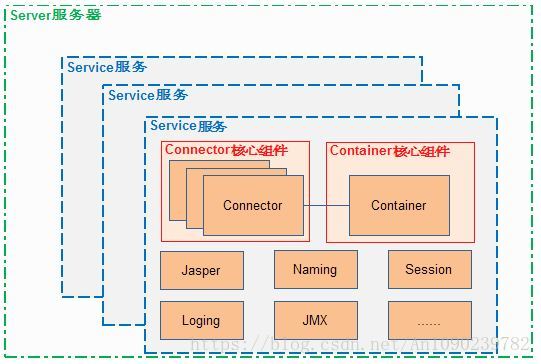
前言
Connector把封装了Request对象以及Response对象的Socket传递给了Container容器,那么在Contianer容器中又是怎么样的处理流程呢?在说Container容器之前,有必要对Container容器有一个简单的了解,Container容器是子容器的父接口,所有的子容器都必须实现这个接口,在Tomcat中Container容器的设计是典型的责任链设计模式,其有四个子容器:Engine、Host、Context和Wrapper。这四个容器之间是父子关系,Engine容器包含Host,Host包含Context,Context包含Wrapper。
我们在web项目中的一个Servlet类对应一个Wrapper,多个Servlet就对应多个Wrapper,当有多个Wrapper的时候就需要一个容器来管理这些Wrapper了,这就是Context容器了,Context容器对应一个工程,所以我们新部署一个工程到Tomcat中就会新创建一个Context容器。Container容器的处理过程也比较复杂,下面是一个大概的流程:
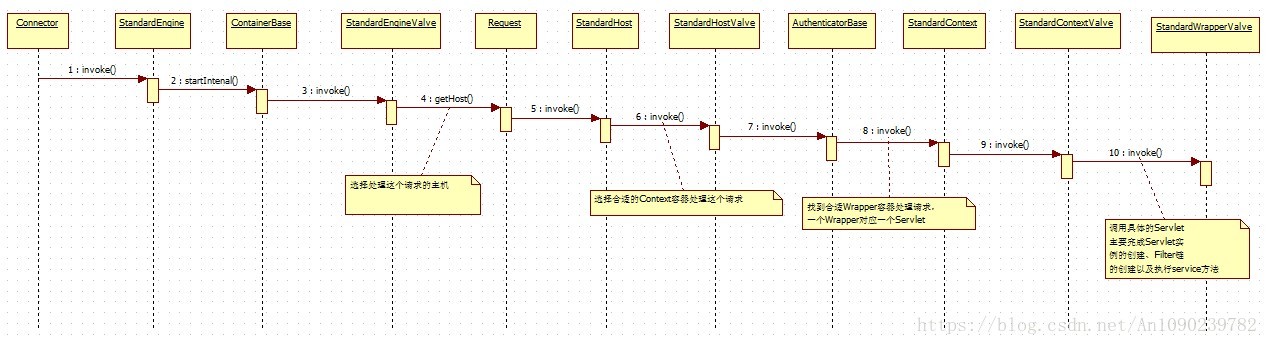
上面出现了Pipeline与Valve,这两个对象可以分别理解为管道与管道中闸门,当收到从Connector的请求后,这个请求要通过一个个管道以及管道中一个个的闸门,只有全部通过才能最终被具体的Servlet处理。要注意的是,每一个容器都有自己的管道和闸门,这些管道与闸门都是由容器自身老控制的,所以我们可以看到注入StandardEngineValve等类了。
下面就从Container容器的四个子容器入手,分析每一个容器是怎么样处理的:
Engine容器
Engine容器包含Host容器,根据文章第一部分的架构图,可以知道其管理的容器是Host,Engine是一个接口,其标准实现类是StandardEngine,下面是其类结构图:
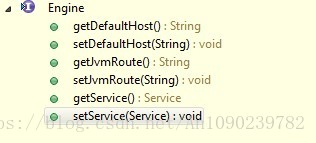
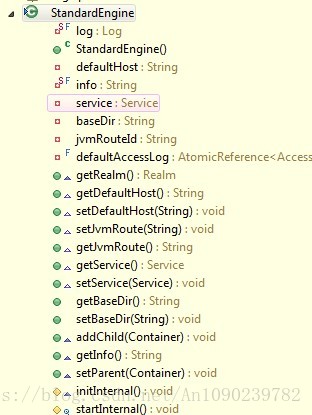
注意其中的addChild方法,其类型是Container,但是其实际管理的就是Host容器。Engine容器处理请求的流程可以简化如下:
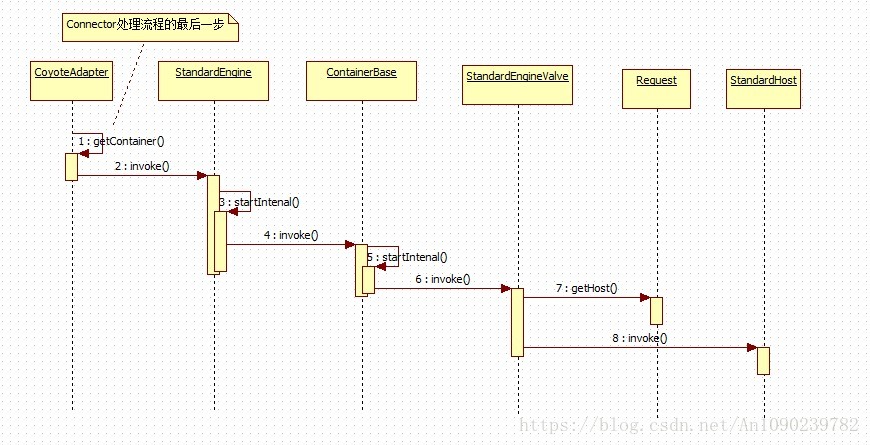
在刚开始的流程图中调用了StandardEngineValve的invoke方法,这个方法的具体实现如何呢?
    /**

     * Select the appropriate child Host to process this request,

     * based on the requested server name.  If no matching Host can

     * be found, return an appropriate HTTP error.

     *

     * @param request Request to be processed

     * @param response Response to be produced

     *

     * @exception IOException if an input/output error occurred

     * @exception ServletException if a servlet error occurred

     */

    @Override

    public final void invoke(Request request, Response response)

        throws IOException, ServletException {

        // Select the Host to be used for this Request

        Host host = request.getHost();

        if (host == null) {

            response.sendError

                (HttpServletResponse.SC_BAD_REQUEST,

                 sm.getString("standardEngine.noHost",

                              request.getServerName()));

            return;

        }

        if (request.isAsyncSupported()) {

            request.setAsyncSupported(host.getPipeline().isAsyncSupported());

        }

        // Ask this Host to process this request

        host.getPipeline().getFirst().invoke(request, response);

    }
可以看到这个方法的任务就是选择可用的Host容器处理当前的请求,选择Host容器后,就调用其invoke方法,所以具体的处理就转移到了Host容器。
Host容器
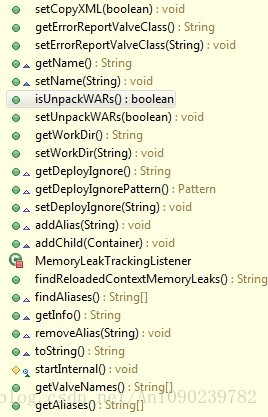
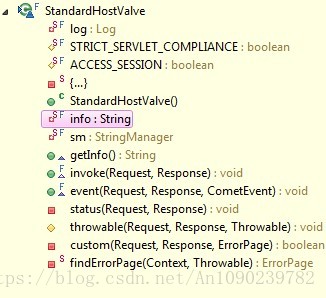
Host容器是Engine容器的子容器,上面也说到Host是受Engine容器管理的,就是指一个虚拟主机,比如我们在访问具体jsp页面URL中localhost就是一个虚拟主机,其作用是运行多个应用,并对这些应用进行管理,其子容器是Context,而且一个主机还保存了主机的相关信息。Host的标准实现类是StandardHost,其闸门实现是StandardHostValve,下面是StandardHost与StandardHostValve的类结构图:
Host容器的处理流程可以简化如下:
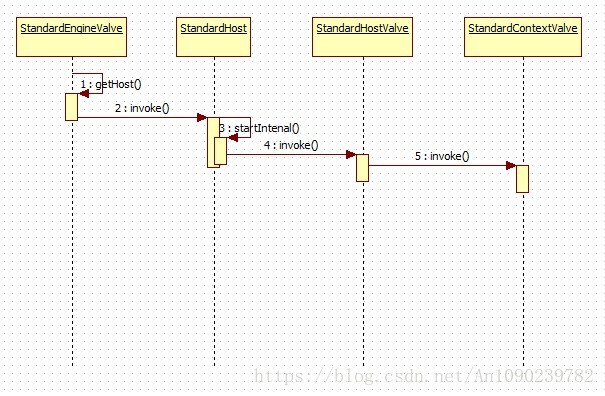
接着我们回到Engine容器的invoke方法,下面是host.getPipeline().getFirst().invoke(request, response)的方法源码:
    @Override

    public final void invoke(Request request, Response response)

        throws IOException, ServletException {

        // Select the Context to be used for this Request

        Context context = request.getContext();

        if (context == null) {

            response.sendError

                (HttpServletResponse.SC_INTERNAL_SERVER_ERROR,

                 sm.getString("standardHost.noContext"));

            return;

        }

        // Bind the context CL to the current thread

        if( context.getLoader() != null ) {

            // Not started - it should check for availability first

            // This should eventually move to Engine, it's generic.

            if (Globals.IS_SECURITY_ENABLED) {

                PrivilegedAction<Void> pa = new PrivilegedSetTccl(

                        context.getLoader().getClassLoader());

                AccessController.doPrivileged(pa);

            } else {

                Thread.currentThread().setContextClassLoader

                        (context.getLoader().getClassLoader());

            }

        }

        if (request.isAsyncSupported()) {

            request.setAsyncSupported(context.getPipeline().isAsyncSupported());

        }

        // Don't fire listeners during async processing

        // If a request init listener throws an exception, the request is

        // aborted

        boolean asyncAtStart = request.isAsync();

        // An async error page may dispatch to another resource. This flag helps

        // ensure an infinite error handling loop is not entered

        boolean errorAtStart = response.isError();

        if (asyncAtStart || context.fireRequestInitEvent(request)) {

            // Ask this Context to process this request

            try {

                context.getPipeline().getFirst().invoke(request, response);

            } catch (Throwable t) {

                ExceptionUtils.handleThrowable(t);

                if (errorAtStart) {

                    container.getLogger().error("Exception Processing " +

                            request.getRequestURI(), t);

                } else {

                    request.setAttribute(RequestDispatcher.ERROR_EXCEPTION, t);

                    throwable(request, response, t);

                }

            }

            // If the request was async at the start and an error occurred then

            // the async error handling will kick-in and that will fire the

            // request destroyed event *after* the error handling has taken

            // place

            if (!(request.isAsync() || (asyncAtStart &&

                    request.getAttribute(

                            RequestDispatcher.ERROR_EXCEPTION) != null))) {

                // Protect against NPEs if context was destroyed during a

                // long running request.

                if (context.getState().isAvailable()) {

                    if (!errorAtStart) {

                        // Error page processing

                        response.setSuspended(false);

                        Throwable t = (Throwable) request.getAttribute(

                                RequestDispatcher.ERROR_EXCEPTION);

                        if (t != null) {

                            throwable(request, response, t);

                        } else {

                            status(request, response);

                        }

                    }

                    context.fireRequestDestroyEvent(request);

                }

            }

        }

        // Access a session (if present) to update last accessed time, based on a

        // strict interpretation of the specification

        if (ACCESS_SESSION) {

            request.getSession(false);

        }

        // Restore the context classloader

        if (Globals.IS_SECURITY_ENABLED) {

            PrivilegedAction<Void> pa = new PrivilegedSetTccl(

                    StandardHostValve.class.getClassLoader());

            AccessController.doPrivileged(pa);

        } else {

            Thread.currentThread().setContextClassLoader

                    (StandardHostValve.class.getClassLoader());

        }

    }
其处理过程可以总结如下:
- 为特定的请求URL选择一个Context容器
- 把Context容器绑定到线程中
- 判断是否是一个异步请求
- 让Context去处理这个请求
- Context执行invoke方法,进入管道中,由StandardContextValve(是ContextValve的标准实现类)处理
原文博主:rhwayfunn
Tomcat 核心组件 Container容器相关的更多相关文章
- Tomcat是什么:Tomcat与Java技、Tomcat与Web应用以及Tomcat基本框架及相关配置
1.Tomcat是什么 Apache Tomcat是由Apache Software Foundation(ASF)开发的一个开源Java WEB应用服务器. 类似功能的还有:Jetty. ...
- tomcat(5)servlet容器
[0]README 0.0)本文部分文字描写叙述转自:"深入剖析tomcat",旨在学习 tomcat(5)servlet容器 的基础知识. 0.1)intro to servle ...
- 带你走进EJB--那些跟EJB容器相关的那些Java概念
最近在对EJB的相关内容进行总结,在总结的过程中发现对容器的概念并不是很理解,因为EJB本身就是一个容器,但是容器到底是用来做什么的?它跟我们之前所了解的组件,框架,包,类等都有什么关系?接下来主要是 ...
- JSP学习 —— 开篇:JSP,servlet容器,Tomcat,servlet容器之间的关系
JSP(JAVA SERVER PAGE)的缩写,其本身就是servlet的简化,是一种动态网页标准,其特点是在HTML代码中嵌入JAVA代码,JSP标签或用户标签来生成网页.至于它为什么会出现,主要 ...
- Docker 0x01:Docker Container容器技术
目录 Docker Container容器技术 一句话回答什么是容器? 为什么要有容器? 容器技术的影响 容器技术浅谈原理,怎么实现的?为什么能够这样轻量级标准化 难点 容器的标准 花边 Docker ...
- Docker容器化【Docker镜像与容器相关命令】
# Docker 学习目标: 掌握Docker基础知识,能够理解Docker镜像与容器的概念 完成Docker安装与启动 掌握Docker镜像与容器相关命令 掌握Tomcat Nginx 等软件的常用 ...
- How tomcat works(深入剖析tomcat)servlet容器
How tomcat works (5)servlet容器阅读笔记 第四章阅读了tomcat默认连接器的实现,当时connector中的使用的容器是自定义的容器,也是非常之简单奥,一个人就干完了所有的 ...
- Tomcat 核心组件 Connector
Connector是Tomcat的连接器,其主要任务是负责处理浏览器发送过来的请求,并创建一个Request和Response的对象用于和浏览器交换数据,然后产生一个线程用于处理请求,Connecto ...
- Tomcat就是个容器,一种软件
1.tomcat就是一个容器而已,一个软件,运行在java虚拟机. 2.tomcat是一种能接收http协议的软件,java程序猿自己也可以写出http解析的服务器啊. 3.tomcat支持servl ...
随机推荐
- 数据仓库组件:Hive环境搭建和基础用法
本文源码:GitHub || GitEE 一.Hive基础简介 1.基础描述 Hive是基于Hadoop的一个数据仓库工具,用来进行数据提取.转化.加载,是一个可以对Hadoop中的大规模存储的数据进 ...
- Azure Databricks 第二篇:pyspark.sql 简介
pyspark中的DataFrame等价于Spark SQL中的一个关系表.在pyspark中,DataFrame由Column和Row构成. pyspark.sql.SparkSession:是Da ...
- 手撕redis分布式锁,隔壁张小帅都看懂了!
前言 上一篇老猫和小伙伴们分享了为什么要使用分布式锁以及分布式锁的实现思路原理,目前我们主要采用第三方的组件作为分布式锁的工具.上一篇运用了Mysql中的select ...for update实现了 ...
- Angular入门到精通系列教程(10)- 指令(Directive)
1. 摘要 2. 组件与指令之间的关系 2.1. 指令的种类 3. Angular 中指令的用途 4. 指令举例 4.1. 指令功能 4.2. Anuglar CLI生成基本文件 4.3. Direc ...
- 隐马尔科夫模型(HMM)原理详解
隐马尔可夫模型(Hidden Markov Model,HMM)是可用于标注问题的统计学习模型,描述由隐藏的马尔可夫链随机生成观测序列的过程,属于生成模型.HMM在语音识别.自然语言处理.生物信息.模 ...
- MySQL常用的数据类型和字段属性
数据类型 数值 tinyint 十分小的数据 1个字节 smallint 较小的数据 2个字节 mediumint 中等大小的数据 3个字节 int 标准的整数 4个字节 常用 bigint 较大的数 ...
- 误删数据库怎么办?mysql 回滚,撤销操作,恢复数据
刚刚不小心把数据库删掉了,于是想着上网上找找有没有可以恢复数据库的方法,没想到还真有,除了备份以外,还有以下方法. 在mysql有时执行了错误的update或者delete时导致大量数据错误恢复的办法 ...
- 使用ogg实现oracle到postgresql表的实时同步
参考:https://docs.oracle.com/goldengate/c1221/gg-winux/index.html https://blog.51cto.com/hbxztc/188071 ...
- SW3516中文资料书
SW3516 是一款高集成度的快充车充芯片, 支持 A+C 口任意口快充输出, 支持双口独立限流.其集成了 5A 高效率同步降压变换器, 支持 PPS/PD/QC/AFC/FCP/SCP/PE/SFC ...
- 2V转3V的电源芯片电路图,2.4V转3V电路
两节镍氢电池1.2V+1.2V是2.4V的标称电压,2.4V可以转3V输出电路应用. 在2.4V转3V和2V转3V的应用中,输出电流可最大600MA. 2V的低压输入,可以采用PW5100低压输入专用 ...