
go源码阅读 - sync/mutex
Mutex是go标准库中的互斥锁,用于处理并发场景下共享资源的访问冲突问题。
1. Mutex定义:
// A Mutex is a mutual exclusion lock.

// The zero value for a Mutex is an unlocked mutex.

//

// A Mutex must not be copied after first use.

type Mutex struct {

	state int32    //表示当前锁的状态

	sema  uint32   //信号量专用,用于阻塞/唤醒goroutine

}

// A Locker represents an object that can be locked and unlocked.

type Locker interface {

	Lock()

	Unlock()

}
state字段在这里有更丰富的含义,他是一个32位的整型。他的多重含义通过不同的位来表示:
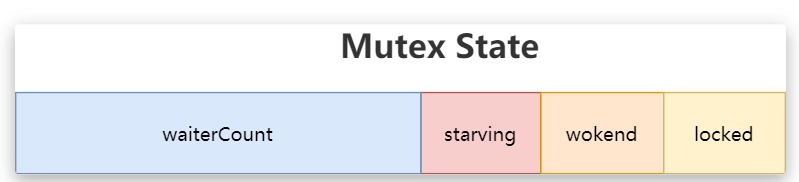
在这里,
locked:表示这个锁是否被持有。
wokend:表示是否有唤醒的goroutine线程。
starving:表示是否处于饥饿状态。
waiterCount:表示等待该锁的goroutine的数量。
2. 加锁操作
// Lock locks m.

// If the lock is already in use, the calling goroutine

// blocks until the mutex is available.

func (m *Mutex) Lock() {

	// Fast path: grab unlocked mutex.
        // 如果当前处于未加锁状态,则直接加锁,并返回
        // CompareAndSwapINt32() 将指定的old值 0 与指定地址 &m.state中的值相比较,如果相等,将new值 mutexLocked赋值给指定地址 &m.state。

	if atomic.CompareAndSwapInt32(&m.state, 0, mutexLocked) {

		if race.Enabled {

			race.Acquire(unsafe.Pointer(m))

		}

		return

	}

	// Slow path (outlined so that the fast path can be inlined)
        // 否则,进入slow path

	m.lockSlow()

}
func (m *Mutex) lockSlow() {
        // 等待时间

	var waitStartTime int64
        // 是否处于饥饿状态

	starving := false
        // 是否有唤醒的goroutine

	awoke := false
        // 自旋迭代次数

	iter := 0

	old := m.state

	for {

		// Don't spin in starvation mode, ownership is handed off to waiters

		// so we won't be able to acquire the mutex anyway.
                // 如果当前锁被占有且处于非饥饿状态,就进入自旋;自旋次数达到上限,再进入下一步。需要注意的是,如果这是一个被唤醒的协程,还需要将唤醒标志位置成唤醒状态1.

		if old&(mutexLocked|mutexStarving) == mutexLocked && runtime_canSpin(iter) {

			// Active spinning makes sense.

			// Try to set mutexWoken flag to inform Unlock

			// to not wake other blocked goroutines.

			if !awoke && old&mutexWoken == 0 && old>>mutexWaiterShift != 0 &&

				atomic.CompareAndSwapInt32(&m.state, old, old|mutexWoken) {

				awoke = true

			}

			runtime_doSpin()

			iter++

			old = m.state   //再次获取锁的状态,之后会检查锁是否被释放了

			continue

		}

		new := old

		// Don't try to acquire starving mutex, new arriving goroutines must queue.
                // 自旋结束后,检查旧状态;如果是非饥饿状态,新的状态持有锁标志位置成 1

		if old&mutexStarving == 0 {

			new |= mutexLocked

		}
                // 检查旧状态,如果锁被占用或处于饥饿状态为1,waiter数量 +1;这个时候,协程只能进入等待队列。如果当前是饥饿状态,新来得协程什么也做不了,会直接沉睡。

		if old&(mutexLocked|mutexStarving) != 0 {

			new += 1 << mutexWaiterShift

		}

		// The current goroutine switches mutex to starvation mode.

		// But if the mutex is currently unlocked, don't do the switch.

		// Unlock expects that starving mutex has waiters, which will not

		// be true in this case.
                // 如果当前协程被唤醒后,认定是饥饿状态,并且目前锁是被占用状态;那么锁的饥饿标志位被设定为1.

		if starving && old&mutexLocked != 0 {

			new |= mutexStarving

		}

		if awoke {

			// The goroutine has been woken from sleep,

			// so we need to reset the flag in either case.
                        // 协程被唤醒,需要将唤醒标志位清0,因为他要么继续沉睡,要么获取锁

			if new&mutexWoken == 0 {

				throw("sync: inconsistent mutex state")

			}

			new &^= mutexWoken

		}

		if atomic.CompareAndSwapInt32(&m.state, old, new) {
                        // 如果当前锁的状态已经被释放,并且不是饥饿状态,那么当前协程直接占用锁,并返回

			if old&(mutexLocked|mutexStarving) == 0 {

				break // locked the mutex with CAS

			}

			// If we were already waiting before, queue at the front of the queue.
                        // 如果没能抢到锁,就进入等待状态;被唤醒的重新沉睡的协程会被放在队列的首位,并且这里会开始计时,用于计算是否达到饥饿状态。新加入的自旋之后的协程会放在队列的尾部。

			queueLifo := waitStartTime != 0

			if waitStartTime == 0 {

				waitStartTime = runtime_nanotime()

			}
                        // 阻塞等待,休眠当前goroutine等待并尝试获取信号量唤醒当前goroutine

			runtime_SemacquireMutex(&m.sema, queueLifo, 1)
                        // 唤醒之后检查锁是否处于饥饿状态

			starving = starving || runtime_nanotime()-waitStartTime > starvationThresholdNs

			old = m.state
                        // 如果锁已经处于饥饿状态,直接抢到锁,返回

			if old&mutexStarving != 0 {

				// If this goroutine was woken and mutex is in starvation mode,

				// ownership was handed off to us but mutex is in somewhat

				// inconsistent state: mutexLocked is not set and we are still

				// accounted as waiter. Fix that.
                                //  如果当前协程被唤醒,欢迎之后检查锁是否处于饥饿状态;如果处于饥饿状态,直接抢到锁,返回

				if old&(mutexLocked|mutexWoken) != 0 || old>>mutexWaiterShift == 0 {

					throw("sync: inconsistent mutex state")

				}
                                // 加锁,并将waiter数减1

				delta := int32(mutexLocked - 1<<mutexWaiterShift)

				if !starving || old>>mutexWaiterShift == 1 {

					// Exit starvation mode.

					// Critical to do it here and consider wait time.

					// Starvation mode is so inefficient, that two goroutines

					// can go lock-step infinitely once they switch mutex

					// to starvation mode.
                                        // 最后一个 waiter或者已经不饥饿了,清楚饥饿标记

					delta -= mutexStarving

				}

				atomic.AddInt32(&m.state, delta)

				break

			}

			awoke = true

			iter = 0

		} else {

			old = m.state

		}

	}

	if race.Enabled {

		race.Acquire(unsafe.Pointer(m))

	}

}
加锁操作如下:
1. 新来的goroutine直接抢占锁,抢占失败进入自旋(循环),自旋一定次数后还是没有抢到锁进入等待队列。这一步给占有CPU时间片的goroutine更多的机会,降低整体的性能消耗。
2. 当前协程被唤醒后,判断是否处于饥饿状态;
如果是非饥饿状态,那么和新来的协程走正常抢占锁的流程;因为被唤醒的协程不占用cpu时间片,经常抢不过新来的协程;如果协程超过1ms还没有获取到锁,就进入饥饿状态。
如果是饥饿状态,将锁的饥饿标志位设置为1;锁的持有者执行完任务后,会将饥饿状态的锁交给队列中的第一个协程;新来的协程不会去抢占锁,也不会spin,而会直接进入阻塞队列。
3. 解锁操作
// Unlock unlocks m.

// It is a run-time error if m is not locked on entry to Unlock.

//

// A locked Mutex is not associated with a particular goroutine.

// It is allowed for one goroutine to lock a Mutex and then

// arrange for another goroutine to unlock it.

func (m *Mutex) Unlock() {

	if race.Enabled {

		_ = m.state

		race.Release(unsafe.Pointer(m))

	}

	// Fast path: drop lock bit.
        // 给 m.state直接减 1, 如果等于0,表示没有其他goroutine在等待,可以直接返回。

	new := atomic.AddInt32(&m.state, -mutexLocked)

	if new != 0 {

		// Outlined slow path to allow inlining the fast path.

		// To hide unlockSlow during tracing we skip one extra frame when tracing GoUnblock.
                // 否则,需要通过信号量机制唤醒沉睡的goroutine

		m.unlockSlow(new)

	}

}

func (m *Mutex) unlockSlow(new int32) {
        // 解锁一个没有锁定的mutex会报错

	if (new+mutexLocked)&mutexLocked == 0 {

		throw("sync: unlock of unlocked mutex")

	}
        // 判断是否处于饥饿状态,如果不处于饥饿状态

	if new&mutexStarving == 0 {

		old := new

		for {

			// If there are no waiters or a goroutine has already

			// been woken or grabbed the lock, no need to wake anyone.

			// In starvation mode ownership is directly handed off from unlocking

			// goroutine to the next waiter. We are not part of this chain,

			// since we did not observe mutexStarving when we unlocked the mutex above.

			// So get off the way.
                        // 如果没有等待的goroutine,或者goroutine已经被唤醒或持有了锁,直接返回

			if old>>mutexWaiterShift == 0 || old&(mutexLocked|mutexWoken|mutexStarving) != 0 {

				return

			}

			// Grab the right to wake someone.
                        // 唤醒等待者,并将唤醒goroutine的唤醒标志位设置为 1

			new = (old - 1<<mutexWaiterShift) | mutexWoken

			if atomic.CompareAndSwapInt32(&m.state, old, new) {

				runtime_Semrelease(&m.sema, false, 1)

				return

			}

			old = m.state

		}

	} else {

		// Starving mode: handoff mutex ownership to the next waiter, and yield

		// our time slice so that the next waiter can start to run immediately.

		// Note: mutexLocked is not set, the waiter will set it after wakeup.

		// But mutex is still considered locked if mutexStarving is set,

		// so new coming goroutines won't acquire it.
                // 如果处于饥饿状态,则直接唤醒第一个goroutine

		runtime_Semrelease(&m.sema, true, 1)

	}

}
go源码阅读 - sync/mutex的更多相关文章
- go源码阅读 - sync/rwmutex
相比于Mutex来说,RWMutex锁的粒度更细,使用RWMutex可以并发读,但是不能并发读写,或者写写. 1. sync.RWMutex的结构 type RWMutex struct { // 互 ...
- 【原】FMDB源码阅读(一)
[原]FMDB源码阅读(一) 本文转载请注明出处 —— polobymulberry-博客园 1. 前言 说实话,之前的SDWebImage和AFNetworking这两个组件我还是使用过的,但是对于 ...
- 10 DelayQueue 延时队列类——Live555源码阅读(一)基本组件类
这是Live555源码阅读的第一部分,包括了时间类,延时队列类,处理程序描述类,哈希表类这四个大类. 本文由乌合之众 lym瞎编,欢迎转载 www.cnblogs.com/oloroso/ 本文由乌合 ...
- 转-OpenJDK源码阅读导航跟编译
OpenJDK源码阅读导航 OpenJDK源码阅读导航 博客分类: Virtual Machine HotSpot VM Java OpenJDK openjdk 这是链接帖.主体内容都在各链接中. ...
- Netty源码阅读(一) ServerBootstrap启动
Netty源码阅读(一) ServerBootstrap启动 转自我的Github Netty是由JBOSS提供的一个java开源框架.Netty提供异步的.事件驱动的网络应用程序框架和工具,用以快速 ...
- JDK1.8源码阅读系列之三:Vector
本篇随笔主要描述的是我阅读 Vector 源码期间的对于 Vector 的一些实现上的个人理解,用于个人备忘,有不对的地方,请指出- 先来看一下 Vector 的继承图: 可以看出,Vector 的直 ...
- boost.asio源码阅读(2) - task_io_service
1.0 task_io_service 在boost.asio源码阅读(1)中,代码已经查看到task_io_service中. 具体的操作调用void task_io_service::init_t ...
- 【 js 基础 】【 源码学习 】backbone 源码阅读(一)
最近看完了 backbone.js 的源码,这里对于源码的细节就不再赘述了,大家可以 star 我的源码阅读项目(https://github.com/JiayiLi/source-code-stud ...
- 【 js 基础 】【 源码学习 】backbone 源码阅读(三)浅谈 REST 和 CRUD
最近看完了 backbone.js 的源码,这里对于源码的细节就不再赘述了,大家可以 star 我的源码阅读项目(https://github.com/JiayiLi/source-code-stud ...
随机推荐
- Mybatis中的基本对象的生命周期和作用域
不同作用域和生命周期类别是至关重要的,因为错误的使用会导致非常严重的并发问题 SqlSessionFactoryBuilder 这个类可以被实例化.使用和丢弃,一旦创建了 SqlSessionFact ...
- OpenMLDB 在线模块架构解析
本文介绍 OpenMLDB 在线模块的架构,欢迎通过以下渠道了解关于 OpenMLDB 的更多信息 GitHub:GitHub - 4paradigm/OpenMLDB: OpenMLDB is an ...
- K8S原来如此简单(五)Metrics Server与HPA
什么是HPA https://kubernetes.io/zh/docs/tasks/run-application/horizontal-pod-autoscale/ 我们前面有通过kubectl ...
- C++图像处理算法入门前言
一 前言 由于面试时,很多面试官一直强调算法才是根本,编代码不是.有以下两个原因: 第一个原因:即要想成为一名合格的应用工程师(不管是软件还是硬件),都得以学习算法,动手实现算法为核心,这才是核心竞 ...
- ES6中对象新增的方法
属性的简洁表示法 ES6 允许在大括号里面直接写入变量和函数,作为对象的属性和方法.这样的书写更加简洁. const foo = 'bar'; const baz = { foo }; console ...
- Java 将CSV转为Excel
CSV(Comma Separated Values)文件是一种纯文本文件,包含用逗号分隔的数据,常用于将数据从一个应用程序导入或导出到另一个应用程序.通过将CSV文件转为EXCEL,可执行更多关于数 ...
- springboot项目配置类
一.在springboot项目中,如果不进行配置,直接访问静态页面是无法访问的,需要进行配置,springboot舍弃了XML文件的配置方式,这里我们采用开发配置类的方式.新建MvcConfig类,加 ...
- idea中将已有项目转变为git项目,并提交到git服务器上
idea中将已有项目转变为git项目,并提交到git服务器上 前言 有时候,本地有个项目不错,想要分享到github或者码云上,我们就会有这样的需求:项目在本地已经存在(可能不是git项目),又想提交 ...
- session监听器和Attribute监听器
session监听器 有一个web项目,每次一个新的浏览器链接,都会走下面SessionListerenr 方法,该技术可用于网站当前用户的统计 package com.cisst.controlle ...
- Springmvc入门基础(五) ---controller层注解及返回类型解说
0.@Controller注解 作用:通过@Controller注解,注明该类为controller类,即控制器类,需要被spring扫描,然后注入到IOC容器中,作为Spring的Bean来管理,这 ...