
[Spring]@Autowired,@Required,@Qualifier注解
@Required注解
@Required注解用于setter方法,表明这个属性是必要的,不可少的,必须注入值
假设有个测试类,里面有name和password两个属性
我给两个属性的setter方法都加了@Required注解
package com.example.demo1.Implements;

import com.example.demo1.Interface.UserService;

import org.springframework.beans.factory.annotation.Required;

public class UserClientImpl implements UserService {

    private String name;

    private String password;

    public UserClientImpl(){}

    public UserClientImpl(String name,String password){

        this.name = name;

        this.password = password;

    }

    public String getName() {

        return name;

    }

    @Required

    public void setName(String name) {

        this.name = name;

    }

    public String getPassword() {

        return password;

    }

    @Required

    public void setPassword(String password) {

        this.password = password;

    }

    @Override

    public void save() {

        System.out.println("客户端保存信息"+name+"--"+password);

    }

}
现在我只给一个属性加注入,另一个不加
可以看到报错

然后我补上注入之后就没问题了

@Autowoired注解
其实看名字就可以看出来,这个是跟自动装填有关
使用它需要加一行代码
<bean class="org.springframework.beans.factory.annotation.AutowiredAnnotationBeanPostProcess></bean>
1,在属性前加此注解
先给定两个类
package com.example.demo1.Other;

public class CustomerTest {

    public CustomerTest(){

        System.out.println("在Customer.构造方法中...");

    }

    public void show(){

        System.out.println("在Customer.show方法中...");

    }

}
package com.example.demo1.Implements;

import com.example.demo1.Interface.Customer;

import com.example.demo1.Other.CustomerTest;

import org.springframework.beans.factory.annotation.Autowired;

public class CustomerImpl implements Customer {

    private String name;

    private String id;

    @Autowired

    private CustomerTest customerTest;

    public CustomerTest getCustomerTest() {

        return customerTest;

    }

    public void setCustomerTest(CustomerTest customerTest) {

        this.customerTest = customerTest;

    }

    public String getName() {

        return name;

    }

    public void setName(String name) {

        this.name = name;

    }

    public String getId() {

        return id;

    }

    public void setId(String id) {

        this.id = id;

    }

    @Override

    public void show() {

        System.out.println(id+"..."+name);

        customerTest.show();

    }

}
第二个类在第三个成员变量前面加个此注解
然后applicationContext这样写
 <bean id="Customer"

          class="com.example.demo1.Implements.CustomerImpl">

    </bean>

    <bean id="CustomerTest" class="com.example.demo1.Other.CustomerTest"></bean>
在打印一下结果
ApplicationContext instance = new ClassPathXmlApplicationContext("applicationContext.xml");

        CustomerImpl customer = (CustomerImpl) instance.getBean("Customer");

        customer.show();

        ((ClassPathXmlApplicationContext) instance).registerShutdownHook();
 可以看到Customer对象是自动装填了的
2,在构造函数之前加此注解
效果和上面是一样的,不演示了
3,@Autowired(required=false)的作用
这里跟之前的@Required的作用类似
默认情况下,@Autowired 注释意味着依赖是必须的,它类似于 @Required 注释,然而,你可以使用 @Autowired 的 (required=false) 选项关闭默认行为。
这里跟@Required的效果类似,不演示了
@Qualifier注解
在之前的学习注解的过程中,显然,用自动装配的时候,如果配置的bean是相同的类的生成的对象,会报错,于是为了解决这个问题,@Qualifier就出来了
@Qualifier和@Autowired一起使用,在@Qualifier后面的括号里欲装配的bean的名称,就可以让Spring自动给我们装配合适的bean
首先applicationContext.xml ,因为要用到context标签,需要用到aop.jar,所以在这之前记得引入Springframework-aop.jar,这个标签就像之前的注解一样,需要注册那几个Processor才能起作用
<?xml version = "1.0" encoding="UTF-8" ?>

<beans xmlns="http://www.springframework.org/schema/beans"

       xmlns:xsi="http://www.w3.org/2001/XMLSchema-instance"

       xmlns:context="http://www.springframework.org/schema/context"

       xsi:schemaLocation="http://www.springframework.org/schema/beans

    http://www.springframework.org/schema/beans/spring-beans-3.0.xsd

    http://www.springframework.org/schema/context

    http://www.springframework.org/schema/context/spring-context-3.0.xsd">

    <context:annotation-config/>

    <bean id="Profile" class="com.example.demo1.Testclass.Profile"></bean>

    <bean id="student1" class="com.example.demo1.Testclass.Student">

        <property name="name" value="student1"></property>

        <property name="age" value="2"></property>

    </bean>

    <bean id="student2" class="com.example.demo1.Testclass.Student">

        <property name="age" value="3"></property>

        <property name="name" value="student2"></property>

    </bean>

</beans>
注解是放在要装配放属性的上方
package com.example.demo1.Testclass;

import org.springframework.beans.factory.annotation.Autowired;

import org.springframework.beans.factory.annotation.Qualifier;

public class Profile {

    @Autowired

    @Qualifier(value = "student1")

    private Student student;

    public Profile(){

        System.out.println("Inside Profile constructor." );

    }

    public void setStudent(Student student) {

        this.student = student;

    }

    public void printAge() {

        System.out.println("Age : " + student.getAge() );

    }

    public void printName() {

        System.out.println("Name : " + student.getName() );

    }

}
package com.example.demo1.Testclass;

public class Student {

    private Integer age;

    private String name;

    public void setAge(Integer age) {

        this.age = age;

    }

    public Integer getAge() {

        return age;

    }

    public void setName(String name) {

        this.name = name;

    }

    public String getName() {

        return name;

    }

}
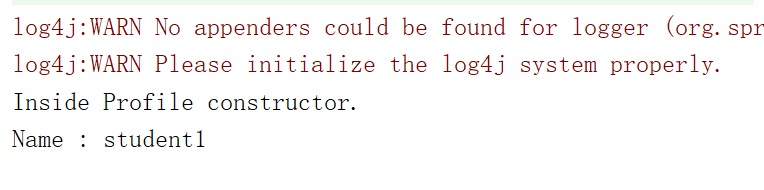
之后Spring就会识别出合适的bean并注入了
测试代码
ApplicationContext instance = new ClassPathXmlApplicationContext("applicationContext.xml");

        Profile profile = (Profile) instance.getBean("Profile");

        profile.printName();

        ((ClassPathXmlApplicationContext) instance).registerShutdownHook();
结果也正是这样
[Spring]@Autowired,@Required,@Qualifier注解的更多相关文章
- Java Spring各种依赖注入注解的区别
Spring对于Bean的依赖注入,支持多种注解方式: @Resource javax.annotation JSR250 (Common Annotations for Java) @Inject ...
- 详解Java Spring各种依赖注入注解的区别
注解注入顾名思义就是通过注解来实现注入,Spring和注入相关的常见注解有Autowired.Resource.Qualifier.Service.Controller.Repository.Comp ...
- Spring 学习——Spring常用注解——@Component、@Scope、@Repository、@Service、@Controller、@Required、@Autowired、@Qualifier、@Configuration、@ImportResource、@Value
Bean管理注解实现 Classpath扫描与组件管理 类的自动检测与注册Bean 类的注解@Component.@Service等作用是将这个实例自动装配到Bean容器中管理 而类似于@Autowi ...
- Spring @Resource、@Autowired、@Qualifier的注解注入及区别
spring2.5提供了基于注解(Annotation-based)的配置,我们可以通过注解的方式来完成注入依赖.在Java代码中可以使用 @Resource或者@Autowired注解方式来经行注入 ...
- 关于Spring注解@Component、@Repository、@Service、@Controller @Resource、@Autowired、@Qualifier 解析
1.Spring 2.5 中除了提供 @Component 注释外,还定义了几个拥有特殊语义的注释,它们分别是:@Repository.@Service和 @Controller 其实这三个跟@Com ...
- Spring注解@Component、@Repository、@Service、@Controller @Resource、@Autowired、@Qualifier、@scope
以下内容摘自部分网友的,并加上了自己的理解 @Service用于标注业务层组件(我们通常定义的service层就用这个) @Controller用于标注控制层组件(如struts中的action.Sp ...
- Spring @Autowired、@Resource、@Required、@Component、@Repository、@Service、@Controller注解的用法和作用
Spring @Autowired,@Resource,@Required注解的用法和作用 Spring中 @Autowired标签与 @Resource标签 的区别 Spring注解@Compone ...
- Spring注解 @Component、@Repository、@Service、@Controller @Resource、@Autowired、@Qualifier 解析
@Repository.@Service.@Controller 这几个是一个类型,其实@Component 跟他们也是一个类型的 Spring 2.5 中除了提供 @Component 注释外,还定 ...
- Spring注解之@Autowired、@Qualifier、@Resource、@Value
前言 @Autowired.@Qualifier.@Resource.@Value四个注解都是用于注入数据的,他们的作用就和在xml配置文件中的bean标签中写一个标签的作用是一样的!本篇中特别要讲解 ...
随机推荐
- 2019.02.09 codeforces gym 100548F. Color(容斥原理)
传送门 题意简述:对n个排成一排的物品涂色,有m种颜色可选. 要求相邻的物品颜色不相同,且总共恰好有K种颜色,问所有可行的方案数.(n,m≤1e9,k≤1e6n,m\le1e9,k\le1e6n,m≤ ...
- 2018.11.03 NOIP模拟 图(bfs/最短路)
传送门 显然如果AAA到BBB或者CCC到DDD走的不是最短路一定是有一段路径重合了,于是可以O(n2)bfsO(n^2)bfsO(n2)bfs出两点之间的最短距离然后枚举两个点作为重合的端点来更新答 ...
- 2018.10.26 NOIP模拟 图(最小生成树+线段树合并)
传送门 首先最开始说的那个一条路径的权值就是想告诉你两个点之间的贡献就是瓶颈边的权值. 那么肯定要用最小生成树算法. 于是我考场上想了30min+30min+30min+的树形dpdpdp 发现转移是 ...
- Linux 下移植QT(1)---tslib 1.4.0移植
步骤1:下载工具包 如下图 链接在此,点我. 步骤2:将tslib文件放入Linux虚拟机中, 步骤3:解压源码 tar -xvf tslib-1.4.tar cd tslib-1.4 步骤4:执行a ...
- css基本图形绘制(基本的矩形、圆形、椭圆、三角形、多边形,也包括稍微复杂一点的爱心、钻石、阴阳八卦等)
正方形: 代码: <style> .square { width: 100px; height: 100px; background-color: cornflowerblue; } &l ...
- 微信接入时tomcat的端口调整
必须以http://或https://开头,分别支持80端口和443端口. www.xx.com 等同于 www.xx.com:80 但tomcat默认端口是8080,需要修改为80 修改方法: TO ...
- XCode中安装cocoapods步骤
Ruby是一种功能强大的面向对象的脚本语言 Gem是一个管理Ruby库和程序的标准包,它通过Ruby Gem(如 http://rubygems.org/ )源来查找.安装.升级和卸载软件包,非常的便 ...
- 构造函数new执行与直接执行的区别
//创建一个Test构造 function Test(){ // new执行与直接执行 this的不同指向 this.init(); }; // this 指向 Test Test.prototype ...
- HDU 2057 十六进制加减法
http://acm.hdu.edu.cn/showproblem.php?pid=2057 水题,%I64X 长整形十六进制输入输出 #include<stdio.h> in ...
- svn本地如何切换账号
SVN如何切换账号 在使用svn更新或提交数据时需要输入用户名和密码,在输入框中可以选择是否记录,以便下次操作无需再次输入用户名和密码: 要切换其他用户名时,需要删除已记录用户的数据,在电脑桌面上 ...