
im开发总结:netty的使用
最近公司在做一个im群聊的开发,技术使用得非常多,各种代码封装得也是十分优美,使用到了netty,zookeeper,redis,线程池·,mongdb,lua,等系列的技术
netty是对nio的一种封装,很好从效率上解决了,nio的epoll模型的bug问题,那么netty到底是个什么玩意呢:

这个是官网上的一个截图:

大概的意思就是:
Netty是一种NIO客户端服务器框架,它支持网络应用程序(如协议服务器和客户端)的快速和轻松开发。它大大简化和简化了网络编程,如TCP和UDP套接字服务器。“快速和简单”并不意味着最终的应用程序会受到可维护性或性能问题的影响。Netty是根据许多协议(如FTP、SMTP、HTTP以及各种二进制和基于文本的遗留协议)的实现所获得的经验精心设计的。因此,Netty成功地找到了一种在不妥协的情况下实现轻松开发、性能、稳定和灵活性的方法。
那么到底怎么用呢:
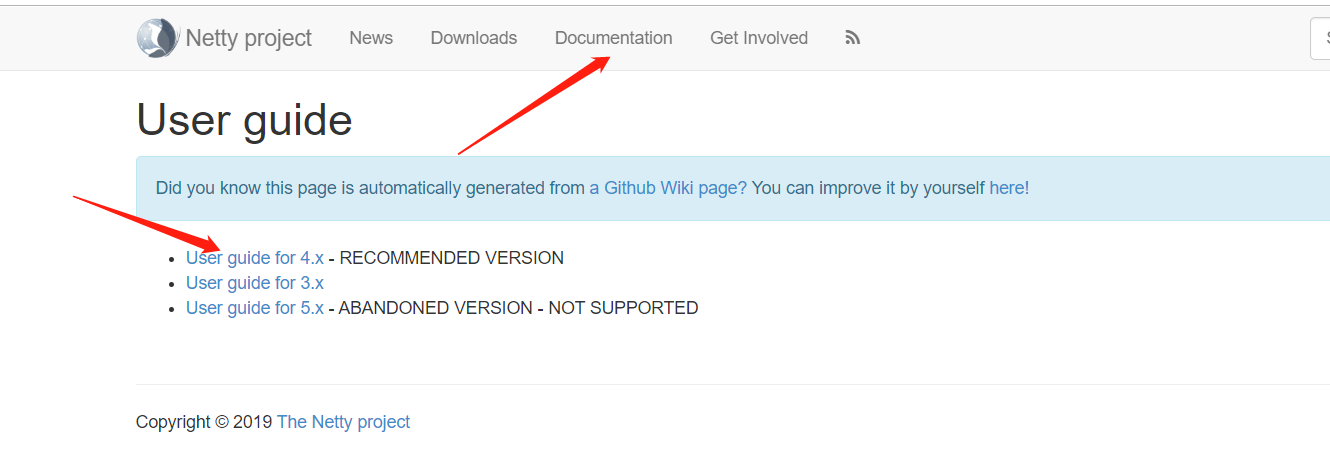
我可以看到,userguid部分:
官方推荐使用netty4,netty5已经废弃了,
所以我们可以netty4,进行开发:
首先服务端:
package com.cxy.sever;

import io.netty.bootstrap.ServerBootstrap;

import io.netty.channel.ChannelFuture;

import io.netty.channel.ChannelInitializer;

import io.netty.channel.ChannelOption;

import io.netty.channel.EventLoopGroup;

import io.netty.channel.nio.NioEventLoopGroup;

import io.netty.channel.socket.SocketChannel;

import io.netty.channel.socket.nio.NioServerSocketChannel;

public class DiscardServer {

    private int port;

    public DiscardServer(int port) {

        this.port = port;

    }

    public void run() throws Exception {

        EventLoopGroup bossGroup = new NioEventLoopGroup(); // (1)

        EventLoopGroup workerGroup = new NioEventLoopGroup();

        try {

            ServerBootstrap b = new ServerBootstrap(); // (2)

            b.group(bossGroup, workerGroup)

                    .channel(NioServerSocketChannel.class) // (3)

                    .childHandler(new ChannelInitializer<SocketChannel>() { // (4)

                        @Override

                        public void initChannel(SocketChannel ch) throws Exception {

                            ch.pipeline().addLast(new DiscardServerHandler());

                        }

                    })

                    .option(ChannelOption.SO_BACKLOG, )          // (5)

                    .childOption(ChannelOption.SO_KEEPALIVE, true); // (6)

            // Bind and start to accept incoming connections.

            ChannelFuture f = b.bind(port).sync(); // (7)

            // Wait until the server socket is closed.

            // In this example, this does not happen, but you can do that to gracefully

            // shut down your server.

            f.channel().closeFuture().sync();

        } finally {

            workerGroup.shutdownGracefully();

            bossGroup.shutdownGracefully();

        }

    }

    public static void main(String[] args) throws Exception {

        int port = ;

        if (args.length > ) {

            port = Integer.parseInt(args[]);

        }

        new DiscardServer(port).run();

    }

}
package com.cxy.sever;

import io.netty.buffer.ByteBuf;

import io.netty.channel.ChannelFuture;

import io.netty.channel.ChannelFutureListener;

import io.netty.channel.ChannelHandlerContext;

import io.netty.channel.ChannelInboundHandlerAdapter;

import io.netty.util.ReferenceCountUtil;

public class DiscardServerHandler extends ChannelInboundHandlerAdapter {

    @Override

    public void channelActive(final ChannelHandlerContext ctx) { // (1)

        final ByteBuf time = ctx.alloc().buffer(); // (2)

        time.writeInt((int) (System.currentTimeMillis() / 1000L + 2208988800L));

        final ChannelFuture f = ctx.writeAndFlush(time); // (3)

        /*f.addListener(new ChannelFutureListener() {

            public void operationComplete(ChannelFuture future) {

                assert f == future;

                ctx.close();

            }

        }); // (4)*/

    }

    @Override

    public void channelRead(ChannelHandlerContext ctx, Object msg) { // (2)

        ByteBuf in = (ByteBuf) msg;

        try {

            while (in.isReadable()) { // (1)

                System.out.print((char) in.readByte());

                System.out.flush();

            }

        } finally {

            ReferenceCountUtil.release(msg); // (2)

        }

    }

    @Override

    public void exceptionCaught(ChannelHandlerContext ctx, Throwable cause) { // (4)

        // Close the connection when an exception is raised.

        cause.printStackTrace();

        ctx.close();

    }

}
客户端
package com.cxy.client;

import io.netty.bootstrap.Bootstrap;

import io.netty.channel.ChannelFuture;

import io.netty.channel.ChannelInitializer;

import io.netty.channel.ChannelOption;

import io.netty.channel.EventLoopGroup;

import io.netty.channel.nio.NioEventLoopGroup;

import io.netty.channel.socket.SocketChannel;

import io.netty.channel.socket.nio.NioSocketChannel;

public class TimeClient {

    public static void main(String[] args) throws Exception {

        String host = "127.0.0.1";

        int port = ;

        EventLoopGroup workerGroup = new NioEventLoopGroup();

        try {

            Bootstrap b = new Bootstrap(); // (1)

            b.group(workerGroup); // (2)

            b.channel(NioSocketChannel.class); // (3)

            b.option(ChannelOption.SO_KEEPALIVE, true); // (4)

            b.handler(new ChannelInitializer<SocketChannel>() {

                @Override

                public void initChannel(SocketChannel ch) throws Exception {

                    ch.pipeline().addLast(new TimeClientHandler());

                }

            });

            // Start the client.

            ChannelFuture f = b.connect(host, port).sync(); // (5)

            // Wait until the connection is closed.

            f.channel().closeFuture().sync();

        } finally {

            workerGroup.shutdownGracefully();

        }

    }

}
package com.cxy.client;

import io.netty.buffer.ByteBuf;

import io.netty.channel.ChannelHandlerContext;

import io.netty.channel.ChannelInboundHandlerAdapter;

import java.util.Date;

public class TimeClientHandler extends ChannelInboundHandlerAdapter {

    @Override

    public void channelRead(ChannelHandlerContext ctx, Object msg) {

        ByteBuf m = (ByteBuf) msg; // (1)

        try {

            long currentTimeMillis = (m.readUnsignedInt() - 2208988800L) * 1000L;

            System.out.println(new Date(currentTimeMillis));

        } finally {

            m.release();

        }

    }

    @Override

    public void exceptionCaught(ChannelHandlerContext ctx, Throwable cause) {

        cause.printStackTrace();

        ctx.close();

    }

}
整个代码都是官网的上的介绍,拿下来的,所以可以看到,整个基础代码就是那么多:
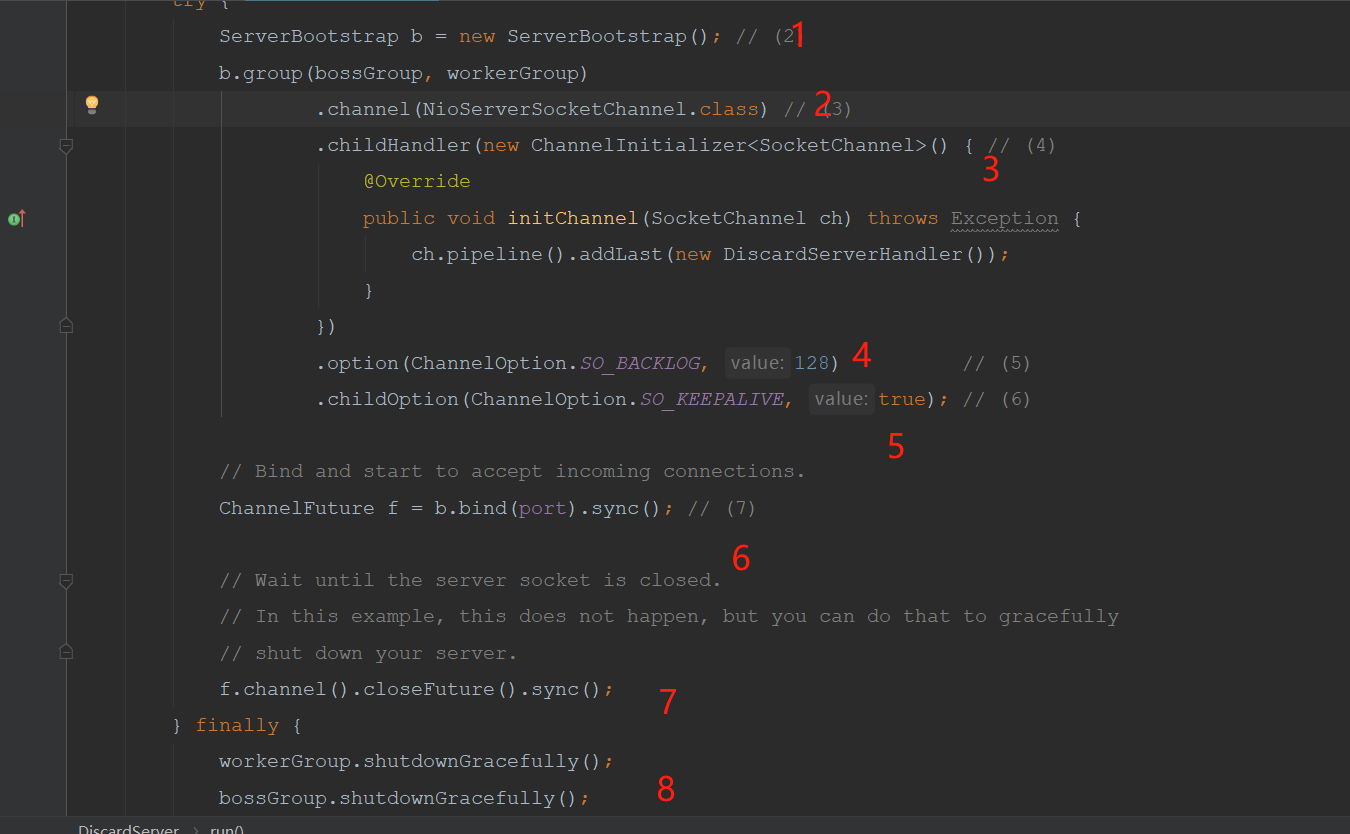
其中1 是构建服务端
2 初始化socket通道
3添加助手类
4 设置option
5 设置长连接
6 绑定端口
7 关闭channel
8 关闭主从线程池模型
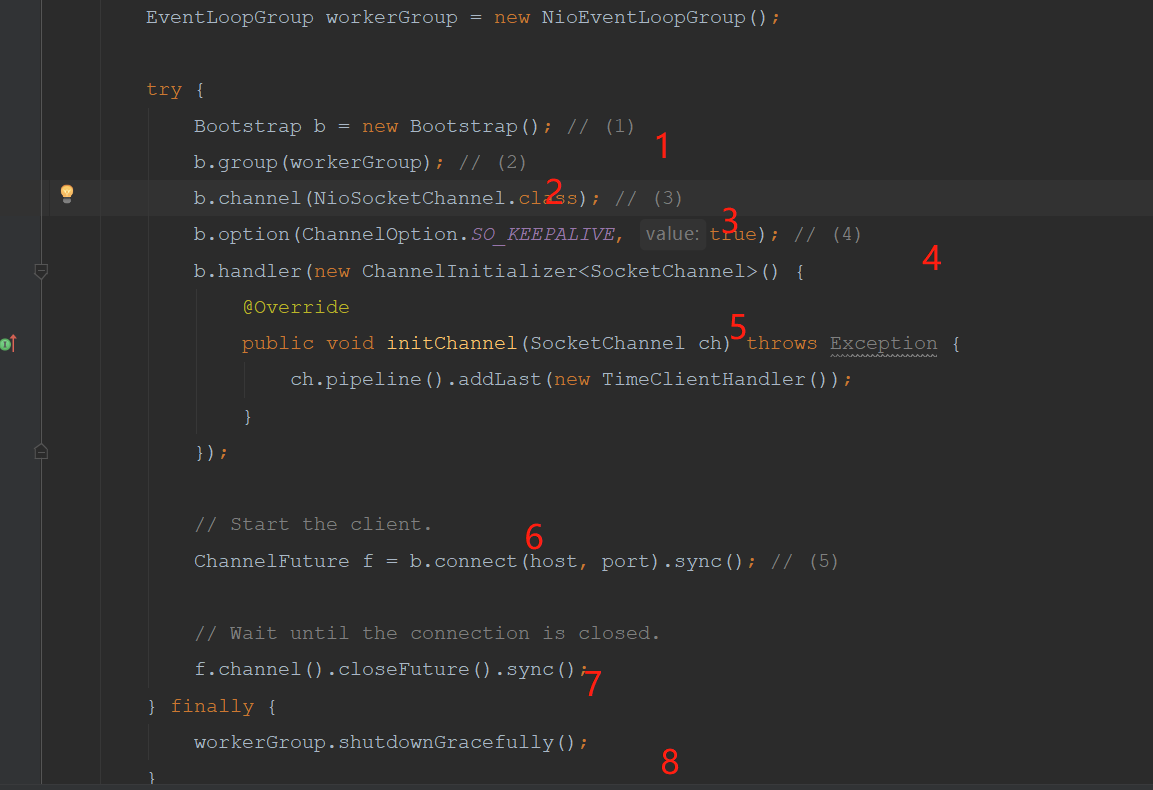
1 创建客户端
2 加入线程池
3 设置长连接
4 绑定相关助手类
5 流水线上添加助手类
6 绑定连接的主机和端口
7 关闭channel
8 关闭工作线程池
可以看出,那么整合netty客户端,服务端的基础代码都是一致的,那么我们使用netty开发需要注意哪些问题呢
我们著需要关闭我们的handler的开发,其他的不用关心。
im开发总结:netty的使用的更多相关文章
- 远程桌面控制项目开发(Spring+Netty+Swing)
[目录] 1.前言 2.初现端倪 3.款款深入 4.责任细分 5.功能层级图 6.项目结构 7.关键类设计 8.一些设计想法 9.待优化 10.一点心得 11.效果演示 12.讨论 13.GitHub ...
- (入门篇 NettyNIO开发指南)第三章-Netty入门应用
作为Netty的第一个应用程序,我们依然以第2章的时间服务器为例进行开发,通过Netty版本的时间服务报的开发,让初学者尽快学到如何搭建Netty开发环境和!运行Netty应用程序. 如果你已经熟悉N ...
- Netty精粹之JAVA NIO开发需要知道的
学习Netty框架以及相关源码也有一小段时间了,恰逢今天除夕,写篇文章总结一下.Netty是个高效的JAVA NIO框架,总体框架基于异步非阻塞的设计,基于网络IO事件驱动,主要贡献在于可以让用户基于 ...
- Netty多协议开发
HTTP协议开发 post与get的区别 1)get用于信息获取,post用于更新资源. 2)get数据放在请求行中,post数据放在请求体内. 3)get对数据长度有限制(2083字节),post没 ...
- Netty 系列之 Netty 高性能之道
1. 背景 1.1. 惊人的性能数据 最近一个圈内朋友通过私信告诉我,通过使用 Netty4 + Thrift 压缩二进制编解码技术,他们实现了 10 W TPS(1 K 的复杂 POJO 对象)的跨 ...
- Java Netty 4.x 用户指南
问题 今天,我们使用通用的应用程序或者类库来实现互相通讯,比如,我们经常使用一个 HTTP 客户端库来从 web 服务器上获取信息,或者通过 web 服务来执行一个远程的调用. 然而,有时候一个通用的 ...
- Netty系列之Netty高性能之道
转载自http://www.infoq.com/cn/articles/netty-high-performance 1. 背景 1.1. 惊人的性能数据 最近一个圈内朋友通过私信告诉我,通过使用Ne ...
- Netty权威指南
Netty权威指南(异步非阻塞通信领域的经典之作,国内首本深入剖析Netty的著作,全面系统讲解原理.实战和源码,带你完美进阶Netty工程师.) 李林锋 著 ISBN 978-7-121-233 ...
- Netty高性能之道
1. 背景 1.1. 惊人的性能数据 最近一个圈内朋友告诉我,通过使用Netty4 + Thrift压缩二进制编解码技术,他们实现了10W TPS(1K的复杂POJO对象)的跨节点远程服务调用.相比于 ...
- 转:Netty系列之Netty高性能之道
1. 背景 1.1. 惊人的性能数据 最近一个圈内朋友通过私信告诉我,通过使用Netty4 + Thrift压缩二进制编解码技术,他们实现了10W TPS(1K的复杂POJO对象)的跨节点远程服务调用 ...
随机推荐
- Ptyhon 合并列表
2019-08-25 list1 = [91, 95, 97, 99] list2 = [92, 93, 96, 98] 合并后得到:[91, 95, 97, 99 , 92, 93, 96, 9 ...
- POJ 2417 Discrete Logging ( Baby step giant step )
Discrete Logging Time Limit: 5000MS Memory Limit: 65536K Total Submissions: 3696 Accepted: 1727 ...
- Introduction to Object-Oriented JavaScript 转载自:https://developer.mozilla.org/en-US/docs/Web/JavaScript/Introduction_to_Object-Oriented_JavaScript
Introduction to Object-Oriented JavaScript IN THIS ARTICLE JavaScript review Object-oriented program ...
- GIT 的常见用法
git init 新建代码库 git clone新建项目 git branch 查看分支 git config 显示配置 git config -e 显示配置文件 git config user.na ...
- LeetCode Array Easy 414. Third Maximum Number
Description Given a non-empty array of integers, return the third maximum number in this array. If i ...
- myBatis配置提示xml和内部DTD
–配置环境:macOS high Sierra 10.13.6/window10–生产环境:eclipse2018.a,myeclipse2018 首先了解xml文件的参数——<!DOCT ...
- 饿汉单例模式 and 懒汉单例模式
饿汉单例模式:主要就是利用static关键字,在类加载的时候生成实例,调用效率高 但是如果一直没有调用getInstance方法的话,就会造成资源浪费 具体实现如下: class Single{ pr ...
- ANSI-2
一.ANSI编码 1. 如前所述,在全世界所有国家和地区的文字符号统一编码的UCS/Unicode编码方案问世之前(UCS.Unicode后文有详细介绍),各个国家.地区为了用计算机记录并显示自己的字 ...
- RIDE使用介绍
[转载] RIDE是一款专门用来编辑Robot Framework用例的软件,用Python编写并且开源.当我们针对一个系统编写好一套用例后,每当我们对系 统做一些更改的时候,便可以把已经写好的用例拿 ...
- PHP7.1以上版本 count()报错
报错信息如下: count(): Parameter must be an array or an object that implements Countable (View: D:\fookusy ...