
Spring循环依赖原理
Spring循环依赖的原理解析
1、什么是循环依赖?
我们使用Spring的时候,在一个对象中注入另一个对象,但是另外的一个对象中也包含该对象。如图:
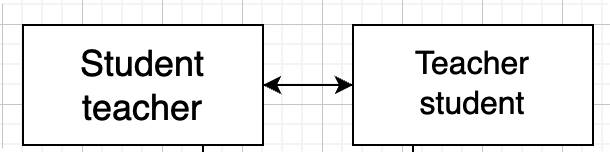
在Student中包含了teacher的一个属性;
在Teacher中包含有student的属性。这样就形成了一个循环依赖。
2、代码描述
xml配置文件
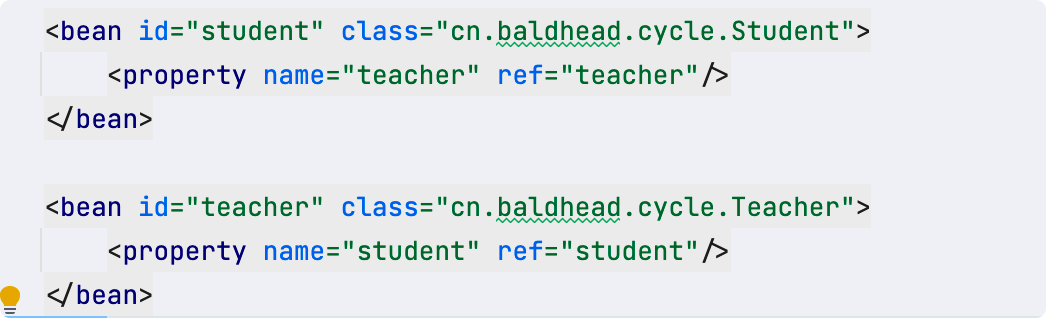
testCycle.java
	private static void testCycle(){

		ClassPathXmlApplicationContext applicationContext = new ClassPathXmlApplicationContext("cycle.xml");

		Teacher teacher = applicationContext.getBean(Teacher.class);

		System.out.println(teacher);

		Student student = applicationContext.getBean(Student.class);

		System.out.println(student);

	}

	public static void main(String[] args) {

		testCycle();

	}
Student.java
public class Student {

   private Teacher teacher;

   public Teacher getTeacher() {

      return teacher;

   }

   public void setTeacher(Teacher teacher) {

      this.teacher = teacher;

   }

}
Teacher.java
public class Teacher {

   private Student student;

   public Student getStudent() {

      return student;

   }

   public void setStudent(Student student) {

      this.student = student;

   }

}
3、 测试结果
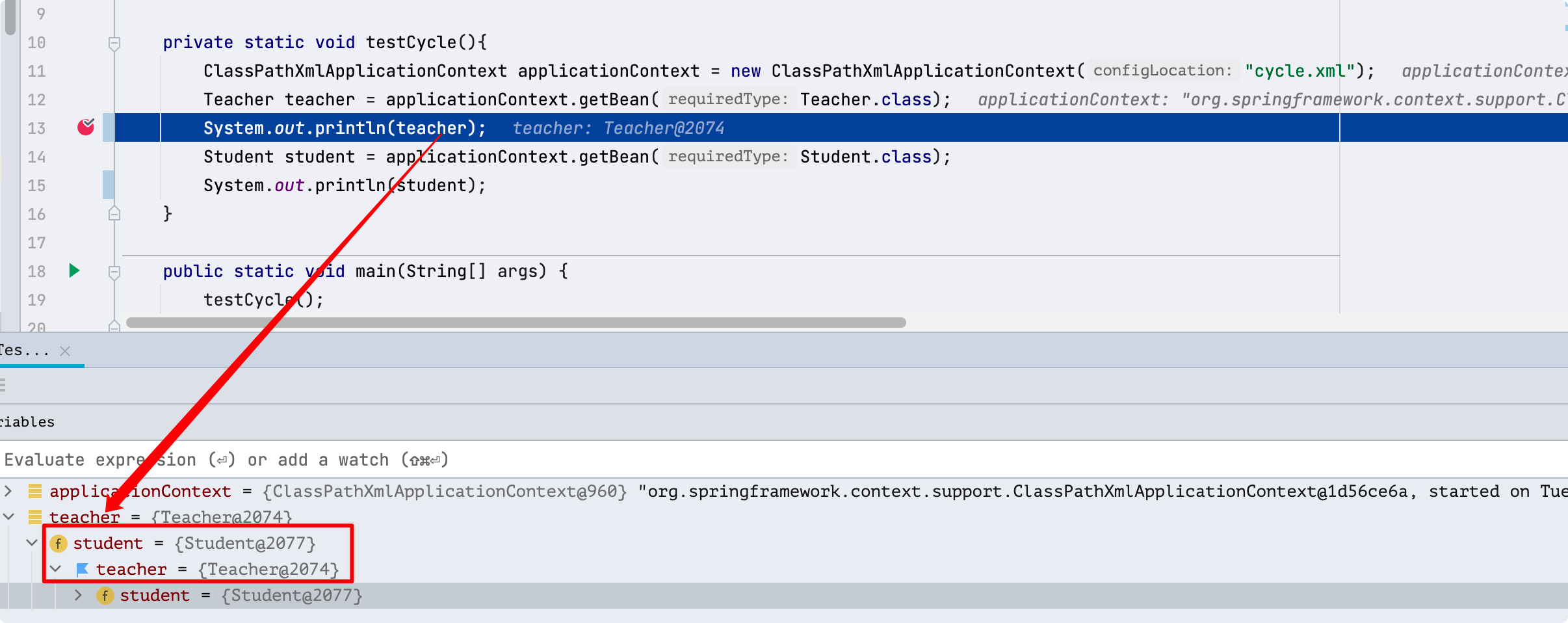
此处输出的teacher中包含有student对象,student对象中也包含有teacher对象,且包含的对象都是不为null的。
4、为什么能够循环依赖解释
先给出一张图
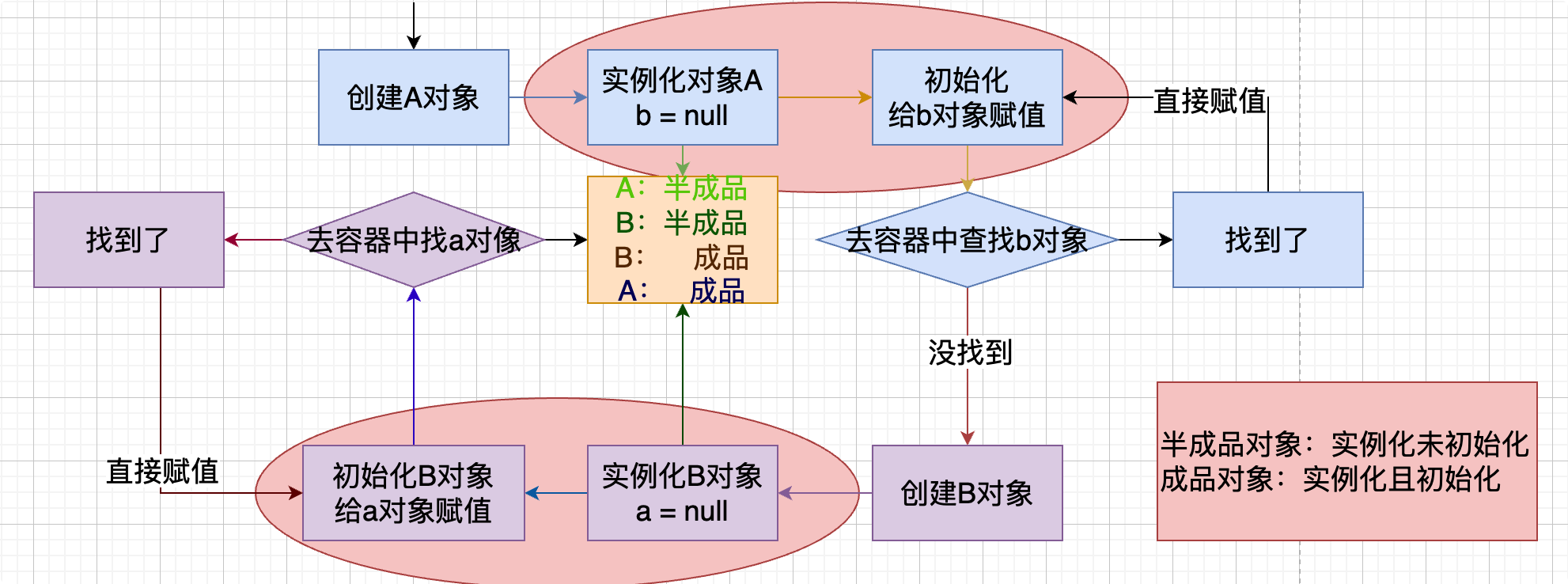
在Spring创建bean的时候肯定也是一个一个去创建的。首先肯定会先去走一个(Teacher/Student)生命周期。这里以Teacher为例,当Spring去getBean(teacher)的时候,首先会去容器中获取,获取不到就会去创建teacher,当teacher创建完成后,会给teacher的属性(student)赋值,实际上容器中没有student对象,这时候也会去创建student对象,当student创建的时候会去给student中的teacher属性赋值,teacher之前已经创建过了,此时去getBean(teacher)是能够拿到的(注意:此时的teacher中student属性并没有赋值),这样student就创建完成了,那么就会回到teacher的student属性赋值的步骤,此时student已经创建是可以用getBean()拿到的,这样teacher对象就创建完毕了。然后回到第一步去创建student对象,这里student对象在创建teacher的时候就已经创建,可以直接使用getBean()获取到。给student中的属性赋值的时候也是一样,能够直接获取到teacher。自此循环依赖就已经结束了。
5、疑问
- 当我在给Teacher属性student的赋值的时候是怎么去getBean()的?
- 当给student中属性teacher赋值的时候getBean()为什么能够取到teacher?
- 为什么获取到的teacher属性是为完成注入的?
6、源码解释
整体的方法线

先看看源码:
getBean()->doGetBean()
getBean()->doGetBean()实际上是doGetBean在去获取bean对象
public <T> T getBean(String name, @Nullable Class<T> requiredType, @Nullable Object... args)

      throws BeansException {

   return doGetBean(name, requiredType, args, false);

}

/**

 * Return an instance, which may be shared or independent, of the specified bean.

 * 返回指定 bean 的一个实例,该实例可以是共享的,也可以是独立的。

 */

@SuppressWarnings("unchecked")

protected <T> T doGetBean(

      String name, @Nullable Class<T> requiredType, @Nullable Object[] args, boolean typeCheckOnly)

      throws BeansException {

   // 转换beanName,FactoryBean的情况下beanName为&beanName,这里就是去掉&符号

   String beanName = transformedBeanName(name);

   Object beanInstance;

   // Eagerly check singleton cache for manually registered singletons.

   // 急切检查单例缓存从手动创建的单例中,获取bean判断是否存在当前beanName的bean

   Object sharedInstance = getSingleton(beanName);

   if (sharedInstance != null && args == null) {

      if (logger.isTraceEnabled()) {

         if (isSingletonCurrentlyInCreation(beanName)) {

      				... 省略代码...

      }

      beanInstance = getObjectForBeanInstance(sharedInstance, name, beanName, null);

   }

   else {

      // Fail if we're already creating this bean instance:

      // We're assumably within a circular reference.

      // 没有获取到,如果已经创建bean的实例,我们在一个循环引用中。当前的bean是否为正在创建中

      if (isPrototypeCurrentlyInCreation(beanName)) {

         throw new BeanCurrentlyInCreationException(beanName);

      }

      // Check if bean definition exists in this factory.

      // 检查该工厂中是否存在bean的定义

      BeanFactory parentBeanFactory = getParentBeanFactory();

     ... 省略代码...

      if (!typeCheckOnly) {

         // 标记bean已经创建,正在创建

         markBeanAsCreated(beanName);

      }

      StartupStep beanCreation = this.applicationStartup.start("spring.beans.instantiate")

            .tag("beanName", name);

      try {

         if (requiredType != null) {

            beanCreation.tag("beanType", requiredType::toString);

         }

         RootBeanDefinition mbd = getMergedLocalBeanDefinition(beanName);

         checkMergedBeanDefinition(mbd, beanName, args);

         // Guarantee initialization of beans that the current bean depends on.

         // 保证当前的bean所依赖的bean已经初始化

         String[] dependsOn = mbd.getDependsOn();

         if (dependsOn != null) {

            for (String dep : dependsOn) {

               if (isDependent(beanName, dep)) {

                  throw new BeanCreationException(mbd.getResourceDescription(), beanName,

                        "Circular depends-on relationship between '" + beanName + "' and '" + dep + "'");

               }

               registerDependentBean(dep, beanName);

               try {

                  getBean(dep);

               }

               catch (NoSuchBeanDefinitionException ex) {

                  throw new BeanCreationException(mbd.getResourceDescription(), beanName,

                        "'" + beanName + "' depends on missing bean '" + dep + "'", ex);

               }

            }

         }

         // Create bean instance.

         // 创建bean的实例

         if (mbd.isSingleton()) {

            sharedInstance = getSingleton(beanName, () -> {

               try {

                  return createBean(beanName, mbd, args);

               }

               catch (BeansException ex) {

                  // Explicitly remove instance from singleton cache: It might have been put there

                  // eagerly by the creation process, to allow for circular reference resolution.

                  // Also remove any beans that received a temporary reference to the bean.

                  // 从单例缓存中删除实例,它可能已经在这里

                  // 通过创建过程-允许循环引用解析

                  // 删除接收到任何对bean引用的临时bean

                  destroySingleton(beanName);

                  throw ex;

               }

            });

            beanInstance = getObjectForBeanInstance(sharedInstance, name, beanName, mbd);

         }

         else if (mbd.isPrototype()) {

            // It's a prototype -> create a new instance.

            Object prototypeInstance = null;

            try {

               beforePrototypeCreation(beanName);

               prototypeInstance = createBean(beanName, mbd, args);

            }

            finally {

               afterPrototypeCreation(beanName);

            }

            beanInstance = getObjectForBeanInstance(prototypeInstance, name, beanName, mbd);

         }

       ... 省略代码...

      finally {

         beanCreation.end();

      }

   }

   return adaptBeanInstance(name, beanInstance, requiredType);

}
此处传入进来的beanName为teacher
doGetBean()->createBean()
分开看
// Create bean instance.

// 创建bean的实例

if (mbd.isSingleton()) {

   sharedInstance = getSingleton(beanName, () -> {

      try {

         return createBean(beanName, mbd, args);

      }

      catch (BeansException ex) {

         // Explicitly remove instance from singleton cache: It might have been put there

         // eagerly by the creation process, to allow for circular reference resolution.

         // Also remove any beans that received a temporary reference to the bean.

         // 从单例缓存中删除实例,它可能已经在这里

         // 通过创建过程-允许循环引用解析

         // 删除接收到任何对bean引用的临时bean

         destroySingleton(beanName);

         throw ex;

      }

   });

   beanInstance = getObjectForBeanInstance(sharedInstance, name, beanName, mbd);

}
重要的点在这里当没有获取到bean的时候就会去调用createBean方法,创建bean,最终其实是走的doCreateBean方法取创建bean
createBean()->doCreateBean()
这里就到了上面方法线的第四部
protected Object doCreateBean(String beanName, RootBeanDefinition mbd, @Nullable Object[] args)

      throws BeanCreationException {

   // Instantiate the bean.

   // BeanWrapper:持有创建出来的Bean

   BeanWrapper instanceWrapper = null;

   if (mbd.isSingleton()) {

      instanceWrapper = this.factoryBeanInstanceCache.remove(beanName);

   }

   if (instanceWrapper == null) {

      /**

       * 创建bean的实例

       * 实例化但是并未初始化,就是没有给bean的属性复制

       */

      instanceWrapper = createBeanInstance(beanName, mbd, args);

   }

   Object bean = instanceWrapper.getWrappedInstance();

   Class<?> beanType = instanceWrapper.getWrappedClass();

   if (beanType != NullBean.class) {

      mbd.resolvedTargetType = beanType;

   }

   // Allow post-processors to modify the merged bean definition.

   // 允许增强器修改合并的bean definition

   synchronized (mbd.postProcessingLock) {

      if (!mbd.postProcessed) {

         try {

            applyMergedBeanDefinitionPostProcessors(mbd, beanType, beanName);

         }

         catch (Throwable ex) {

            throw new BeanCreationException(mbd.getResourceDescription(), beanName,

                  "Post-processing of merged bean definition failed", ex);

         }

         mbd.postProcessed = true;

      }

   }

   // Eagerly cache singletons to be able to resolve circular references

   // even when triggered by lifecycle interfaces like BeanFactoryAware.

   // 缓存单例的bean能够解析循环引用

   // 即使生命周期接口触发像BeanFactoryAware,

   // 判断当前的bean是否需要提前曝光(加入singletonFactories缓存):bean是单例的&允许循环依赖&bean正在创建

   boolean earlySingletonExposure = (mbd.isSingleton() && this.allowCircularReferences &&

         isSingletonCurrentlyInCreation(beanName));

   if (earlySingletonExposure) {

      if (logger.isTraceEnabled()) {

         logger.trace("Eagerly caching bean '" + beanName +

               "' to allow for resolving potential circular references");

      }

      // 将bean添加到singletonFactories  也就是说的三级缓存,但是这个地方的属性是没有赋值的

      addSingletonFactory(beanName, () -> getEarlyBeanReference(beanName, mbd, bean));

   }

       // 到这里,bean就已经实例化完成,并且将bean放入到了singletonFactories缓存中

   // Initialize the bean instance.

   // 初始化bean的实例

      Object exposedObject = bean;

   try {

      /**

       * 填充bean,填充Bean的属性

       */

      populateBean(beanName, mbd, instanceWrapper);

      /**

       * 去执行

       *     BeanPostProcessor的postProcessBeforeInitialization方法

       * */

      exposedObject = initializeBean(beanName, exposedObject, mbd);

   }

   catch (Throwable ex) {

      if (ex instanceof BeanCreationException && beanName.equals(((BeanCreationException) ex).getBeanName())) {

         throw (BeanCreationException) ex;

      }

      else {

         throw new BeanCreationException(

               mbd.getResourceDescription(), beanName, "Initialization of bean failed", ex);

      }

   }

   if (earlySingletonExposure) {

      Object earlySingletonReference = getSingleton(beanName, false);

      if (earlySingletonReference != null) {

         if (exposedObject == bean) {

            exposedObject = earlySingletonReference;

         }

         else if (!this.allowRawInjectionDespiteWrapping && hasDependentBean(beanName)) {

            String[] dependentBeans = getDependentBeans(beanName);

            Set<String> actualDependentBeans = new LinkedHashSet<>(dependentBeans.length);

            for (String dependentBean : dependentBeans) {

               if (!removeSingletonIfCreatedForTypeCheckOnly(dependentBean)) {

                  actualDependentBeans.add(dependentBean);

               }

            }

            if (!actualDependentBeans.isEmpty()) {

               throw new BeanCurrentlyInCreationException(beanName,

                     "Bean with name '" + beanName + "' has been injected into other beans [" +

                     StringUtils.collectionToCommaDelimitedString(actualDependentBeans) +

                     "] in its raw version as part of a circular reference, but has eventually been " +

                     "wrapped. This means that said other beans do not use the final version of the " +

                     "bean. This is often the result of over-eager type matching - consider using " +

                     "'getBeanNamesForType' with the 'allowEagerInit' flag turned off, for example.");

            }

         }

      }

   }

   // Register bean as disposable.

   // 将bean注册为一次性的

   try {

      registerDisposableBeanIfNecessary(beanName, bean, mbd);

   }

   catch (BeanDefinitionValidationException ex) {

      throw new BeanCreationException(

            mbd.getResourceDescription(), beanName, "Invalid destruction signature", ex);

   }

   return exposedObject;

}
分开解释
doCreateBean方法
// Instantiate the bean.

   // BeanWrapper:持有创建出来的Bean

   BeanWrapper instanceWrapper = null;

   if (mbd.isSingleton()) {

      instanceWrapper = this.factoryBeanInstanceCache.remove(beanName);

   }

   if (instanceWrapper == null) {

      /**

       * 创建bean的实例

       * 实例化但是并未初始化,就是没有给bean的属性复制

       */

      instanceWrapper = createBeanInstance(beanName, mbd, args);

   }
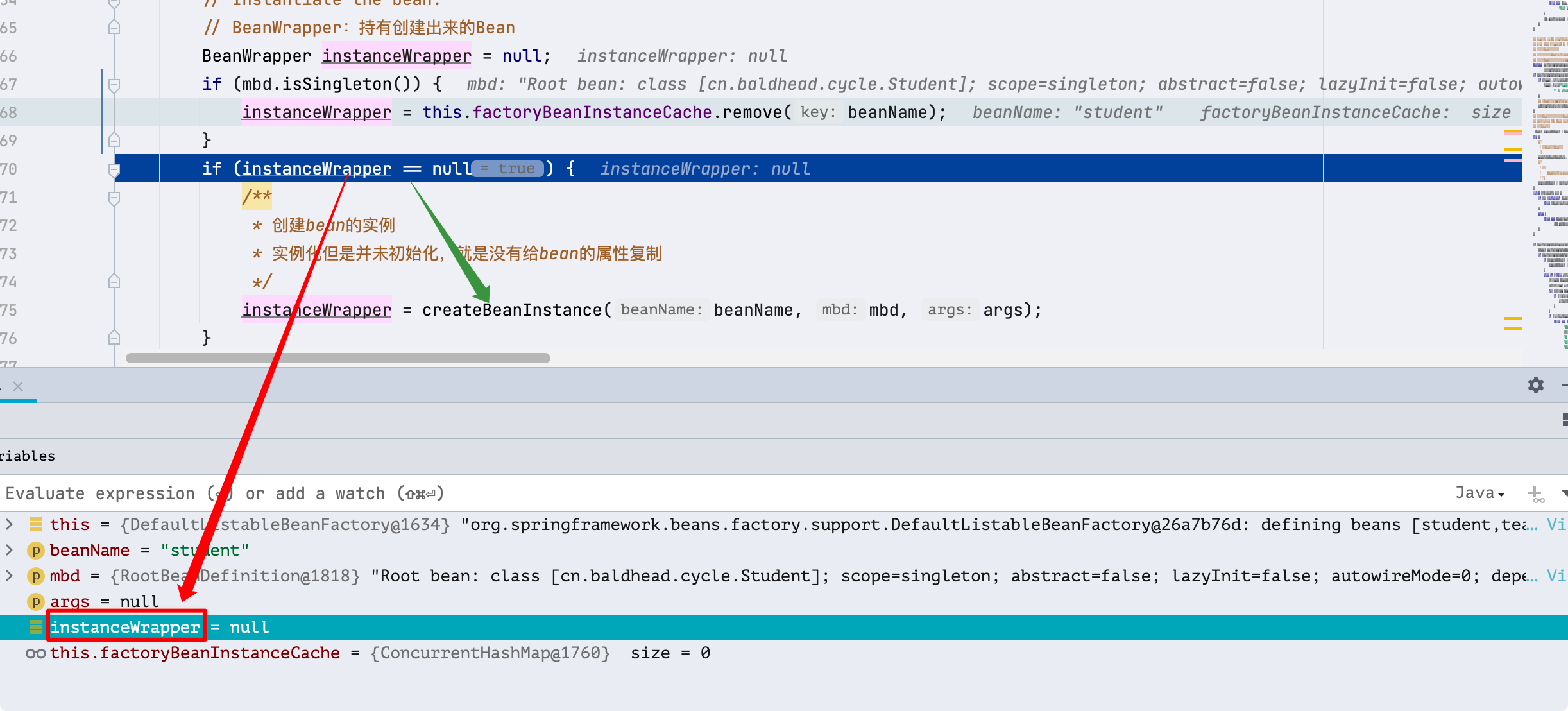
初始化bean,这个地方开始调用createBeanInstance方法创建一个bean的实例
// Eagerly cache singletons to be able to resolve circular references

// even when triggered by lifecycle interfaces like BeanFactoryAware.

// 缓存单例的bean能够解析循环引用

// 即使生命周期接口触发像BeanFactoryAware,

// 判断当前的bean是否需要提前曝光(加入singletonFactories缓存):bean是单例的&允许循环依赖&bean正在创建

boolean earlySingletonExposure = (mbd.isSingleton() && this.allowCircularReferences &&

      isSingletonCurrentlyInCreation(beanName));

if (earlySingletonExposure) {

   if (logger.isTraceEnabled()) {

      logger.trace("Eagerly caching bean '" + beanName +

            "' to allow for resolving potential circular references");

   }

   // 将bean添加到singletonFactories  也就是说的三级缓存,但是这个地方的属性是没有赋值的

   addSingletonFactory(beanName, () -> getEarlyBeanReference(beanName, mbd, bean));

}
记住addSingletonFactory()方法,这是循环依赖的核心
protected void addSingletonFactory(String beanName, ObjectFactory<?> singletonFactory) {

   Assert.notNull(singletonFactory, "Singleton factory must not be null");

   synchronized (this.singletonObjects) {

      if (!this.singletonObjects.containsKey(beanName)) {

         // 将beanName,singletonFactory放入到单例工厂的缓存【beanName-singletonFactory】

         this.singletonFactories.put(beanName, singletonFactory);

         // 从早起的单例对象缓存中移除【beanName-bean实例】

         this.earlySingletonObjects.remove(beanName);

         // 将beanName添加到已经注册的实例中

         this.registeredSingletons.add(beanName);

      }

   }

}
此处存入的singletonFactory是一个lambda表达式,ObjectFactory是一个函数接口,当执行getObject方法的时候会去调用存入的getEarlyBeanReference(beanName, mbd, bean)
doCreateBean() -> createBeanInstance()
这里也没什么好说的就是通过反射去创建Teacher对象
createBeanInstance() -> populateBean()
这里就是开始给创建的Teacher属性student赋值了
/**

	 * Populate the bean instance in the given BeanWrapper with the property values

	 * from the bean definition.

	 * @param beanName the name of the bean

	 * @param mbd the bean definition for the bean

	 * @param bw the BeanWrapper with bean instance

	 * 允许属性值填充给BeanWrapper中的Bean实例

	 */

	@SuppressWarnings("deprecation")  // for postProcessPropertyValues  后处理属性值

	protected void populateBean(String beanName, RootBeanDefinition mbd, @Nullable BeanWrapper bw) {

		... 省略代码 ...

     // Give any InstantiationAwareBeanPostProcessors the opportunity to modify the 给所有InstantiationAwareBeanPostProcessors有修改的机会

		// state of the bean before properties are set. This can be used, for example,

		// to support styles of field injection.

		// 设置属性之前bean的状态,例如

		// 支持字段注入

		if (!mbd.isSynthetic() && hasInstantiationAwareBeanPostProcessors()) {

			for (InstantiationAwareBeanPostProcessor bp : getBeanPostProcessorCache().instantiationAware) {

				if (!bp.postProcessAfterInstantiation(bw.getWrappedInstance(), beanName)) {

					return;

				}

			}

		}

		PropertyValues pvs = (mbd.hasPropertyValues() ? mbd.getPropertyValues() : null);

		int resolvedAutowireMode = mbd.getResolvedAutowireMode();

		if (resolvedAutowireMode == AUTOWIRE_BY_NAME || resolvedAutowireMode == AUTOWIRE_BY_TYPE) {

			MutablePropertyValues newPvs = new MutablePropertyValues(pvs);

			// Add property values based on autowire by name if applicable. 通过名称自动注入参数的值

			if (resolvedAutowireMode == AUTOWIRE_BY_NAME) {

				autowireByName(beanName, mbd, bw, newPvs);

			}

			// Add property values based on autowire by type if applicable. 通过类型注入参数的值

			if (resolvedAutowireMode == AUTOWIRE_BY_TYPE) {

				autowireByType(beanName, mbd, bw, newPvs);

			}

			pvs = newPvs;

		}

		/**

		 * 有没有实例化的AwareBeanPostProcessor

		 */

		boolean hasInstAwareBpps = hasInstantiationAwareBeanPostProcessors();

		/**

		 * 是否需要深度检查

		 */

		boolean needsDepCheck = (mbd.getDependencyCheck() != AbstractBeanDefinition.DEPENDENCY_CHECK_NONE);

		if (hasInstAwareBpps) {

			if (pvs == null) {

				pvs = mbd.getPropertyValues();

			}

			for (InstantiationAwareBeanPostProcessor bp : getBeanPostProcessorCache().instantiationAware) {

				PropertyValues pvsToUse = bp.postProcessProperties(pvs, bw.getWrappedInstance(), beanName);

				if (pvsToUse == null) {

					return;

				}

				pvs = pvsToUse;

			}

		}

		if (needsDepCheck) {

			PropertyDescriptor[] filteredPds = filterPropertyDescriptorsForDependencyCheck(bw, mbd.allowCaching);

			checkDependencies(beanName, mbd, filteredPds, pvs);

		}

		if (pvs != null) {

			// 应用给定的属性值,解决任何在这个bean工厂运行时它bean的引用。必须使用深copy。所以不会永久的修改此属性

			applyPropertyValues(beanName, mbd, bw, pvs);

		}

	}
分开解析
if (!mbd.isSynthetic() && hasInstantiationAwareBeanPostProcessors()) {

			for (InstantiationAwareBeanPostProcessor bp : getBeanPostProcessorCache().instantiationAware) {

				if (!bp.postProcessAfterInstantiation(bw.getWrappedInstance(), beanName)) {

					return;

				}

			}

		}
InstantiationAwareBeanPostProcessor的方法postProcessAfterInstantiation,该方法的返回值是boolean,如果返回true,则什么都不干,如果返回false,那么此类则不会进行自动装配(属性填充),这里就是可以让我们通过postprocessor的方式控制某些bean不用属性填充。这里很明显如果我们没做特殊处理,这里最里面的if的return是不会被执行到的。
	if (pvs != null) {

			// 应用给定的属性值,解决任何在这个bean工厂运行时它bean的引用。必须使用深copy。所以不会永久的修改此属性

			applyPropertyValues(beanName, mbd, bw, pvs);

		}
这里就是给Teacher的student属性赋值的
/**

 * Apply the given property values, resolving any runtime references

 * to other beans in this bean factory. Must use deep copy, so we

 * don't permanently modify this property.

 * @param beanName the bean name passed for better exception information

 * @param mbd the merged bean definition

 * @param bw the BeanWrapper wrapping the target object

 * @param pvs the new property values

 *  应用给定的属性值,解析对此 bean 工厂中其他 bean 的任何运行时引用。必须使用深拷贝,所以我们不会永久修改这个属性

 */

protected void applyPropertyValues(String beanName, BeanDefinition mbd, BeanWrapper bw, PropertyValues pvs) {

   if (pvs.isEmpty()) {

      // 如果pvs没有propertyValues,直接结束

      return;

   }

   MutablePropertyValues mpvs = null;

   List<PropertyValue> original;

   if (pvs instanceof MutablePropertyValues) {

      mpvs = (MutablePropertyValues) pvs;

      if (mpvs.isConverted()) {

         // Shortcut: use the pre-converted values as-is.

         try {

            bw.setPropertyValues(mpvs);

            return;

         }

         catch (BeansException ex) {

            throw new BeanCreationException(

                  mbd.getResourceDescription(), beanName, "Error setting property values", ex);

         }

      }

      original = mpvs.getPropertyValueList();

   }

   else {

      original = Arrays.asList(pvs.getPropertyValues());

   }

   TypeConverter converter = getCustomTypeConverter();

   if (converter == null) {

      converter = bw;

   }

   BeanDefinitionValueResolver valueResolver = new BeanDefinitionValueResolver(this, beanName, mbd, converter);

   // Create a deep copy, resolving any references for values. 创建一个深copy,解析任何引用值

   List<PropertyValue> deepCopy = new ArrayList<>(original.size());

   boolean resolveNecessary = false;

   for (PropertyValue pv : original) {

      if (pv.isConverted()) {

         deepCopy.add(pv);

      }

      else {

         // 获取属性的名称

         String propertyName = pv.getName();

         // 获取属性的值

         Object originalValue = pv.getValue();

         if (originalValue == AutowiredPropertyMarker.INSTANCE) {

            Method writeMethod = bw.getPropertyDescriptor(propertyName).getWriteMethod();

            if (writeMethod == null) {

               throw new IllegalArgumentException("Autowire marker for property without write method: " + pv);

            }

            originalValue = new DependencyDescriptor(new MethodParameter(writeMethod, 0), true);

         }

         // 解析属性值

         Object resolvedValue = valueResolver.resolveValueIfNecessary(pv, originalValue);

         Object convertedValue = resolvedValue;

         boolean convertible = bw.isWritableProperty(propertyName) &&

               !PropertyAccessorUtils.isNestedOrIndexedProperty(propertyName);

         if (convertible) {

            convertedValue = convertForProperty(resolvedValue, propertyName, bw, converter);

         }

         // Possibly store converted value in merged bean definition,

         // in order to avoid re-conversion for every created bean instance.

         if (resolvedValue == originalValue) {

            if (convertible) {

               pv.setConvertedValue(convertedValue);

            }

            deepCopy.add(pv);

         }

         else if (convertible && originalValue instanceof TypedStringValue &&

               !((TypedStringValue) originalValue).isDynamic() &&

               !(convertedValue instanceof Collection || ObjectUtils.isArray(convertedValue))) {

            pv.setConvertedValue(convertedValue);

            deepCopy.add(pv);

         }

         else {

            resolveNecessary = true;

            deepCopy.add(new PropertyValue(pv, convertedValue));

         }

      }

   }

   if (mpvs != null && !resolveNecessary) {

      mpvs.setConverted();

   }

   // Set our (possibly massaged) deep copy.

   try {

      bw.setPropertyValues(new MutablePropertyValues(deepCopy));

   }

   catch (BeansException ex) {

      throw new BeanCreationException(

            mbd.getResourceDescription(), beanName, "Error setting property values", ex);

   }

}
解析属性值
Object resolvedValue = valueResolver.resolveValueIfNecessary(pv, originalValue);
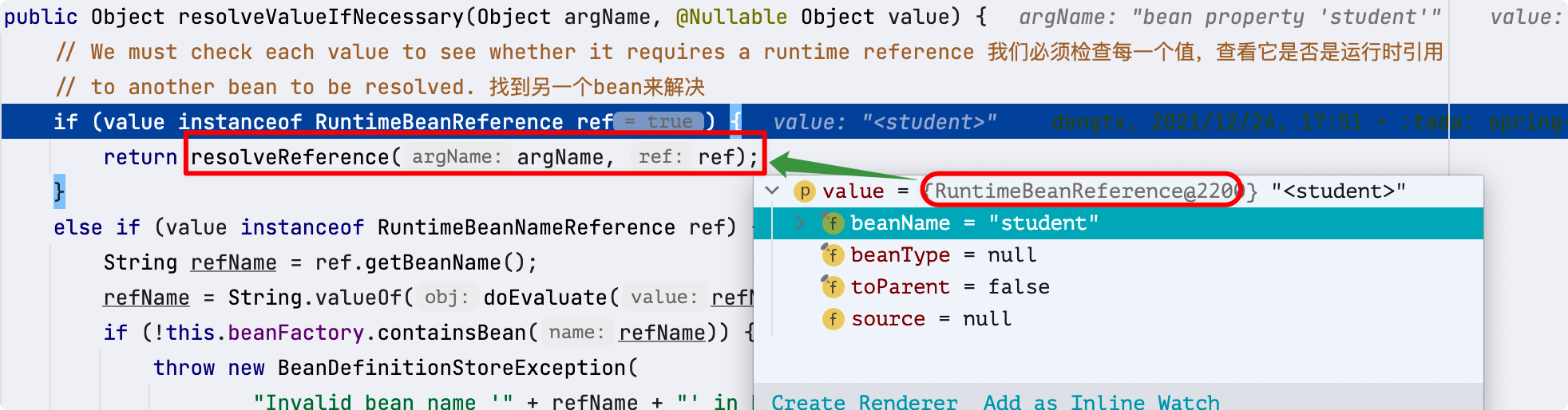
此处会直接走到resolveReference方法中去
/**

 * Resolve a reference to another bean in the factory.解析对另一个bean的引用

 */

@Nullable

private Object resolveReference(Object argName, RuntimeBeanReference ref) {

   try {

     	// 用来存放实例化出来的bean

			Object bean;

			// 获取bean的类型

      Class<?> beanType = ref.getBeanType();

      if (ref.isToParent()) {

         BeanFactory parent = this.beanFactory.getParentBeanFactory();

         if (parent == null) {

           ... 省略代码 ...

      }

      else {

         String resolvedName;

         if (beanType != null) {

            ... 省略代码...

         }

         else {

            resolvedName = String.valueOf(doEvaluate(ref.getBeanName()));

            // 获取resolvedName的bean对象

            bean = this.beanFactory.getBean(resolvedName);

         }// 注册依赖的bean

         this.beanFactory.registerDependentBean(resolvedName, this.beanName);

      }

      if (bean instanceof NullBean) {

         bean = null;

      }

      return bean;

   }

   catch (BeansException ex) {

      throw new BeanCreationException(

            this.beanDefinition.getResourceDescription(), this.beanName,

            "Cannot resolve reference to bean '" + ref.getBeanName() + "' while setting " + argName, ex);

   }

}
方法会走到这里去getBean() 之前的getBean还没走完是不是有走到getBean(),从这里开始就是套娃。
resolvedName = String.valueOf(doEvaluate(ref.getBeanName()));

            // 获取resolvedName的bean对象

            bean = this.beanFactory.getBean(resolvedName);

         }// 注册依赖的bean
到此处就会去寻找Student的实例,就会走一遍之前的方法,但是走到pupolate()方法的时候给student的teacher属性赋值,会去容器中获取一个teacher,还记得之前存在singletonFactories中的teacher吗?这里获取的时候就会直接拿到之前的存储的teacher。下面看一看
省略之前创建个逻辑,直接到赋值的操作

到这里就开始去获取teacher对象了,看一下getSingleton()方法是怎么拿的;
protected Object getSingleton(String beanName, boolean allowEarlyReference) {

   // Quick check for existing instance without full singleton lock

   // 从单例对象缓存(singletonObjects--一级缓存)中获取bean对象

   Object singletonObject = this.singletonObjects.get(beanName);

   // 如果单例对象中没有找到,并且改bean正在创建中

   if (singletonObject == null && isSingletonCurrentlyInCreation(beanName)) {

      // 从早期单例对象缓存中获取单例对象(之所以成为早期单例对象,是因为earlySingletonObjects里面

      // 的对象都是通过提前曝光的ObjectFactory创建出来的。还没有进行属性填充等操作)

      singletonObject = this.earlySingletonObjects.get(beanName);

      // 早期单例对象缓存(二级缓存)中也没有并且允许创建早期单例对象

      if (singletonObject == null && allowEarlyReference) {

         // 如果为空,则锁定全局变量进行处理

         synchronized (this.singletonObjects) {

            // Consistent creation of early reference within full singleton lock

            //在完整的单例锁中一致地创建早期引用

            singletonObject = this.singletonObjects.get(beanName);

            if (singletonObject == null) {

               singletonObject = this.earlySingletonObjects.get(beanName);

               if (singletonObject == null) {

                  // 当某些方法需要提前初始化的时候则会调用addSingletonFactory方法将对应的objectFactory初始化策略储存在singletonFactories中

                  ObjectFactory<?> singletonFactory = this.singletonFactories.get(beanName);

                  if (singletonFactory != null) {

                     // 如果存在单例对象工厂,则使用该工厂创建一个单例对象

                     singletonObject = singletonFactory.getObject();

                     // 创建的单例对象放如早期单例对象缓存中

                     this.earlySingletonObjects.put(beanName, singletonObject);

                     // 移除对应的单例对象工厂

                     this.singletonFactories.remove(beanName);

                  }

               }

            }

         }

      }

   }

   return singletonObject;

}
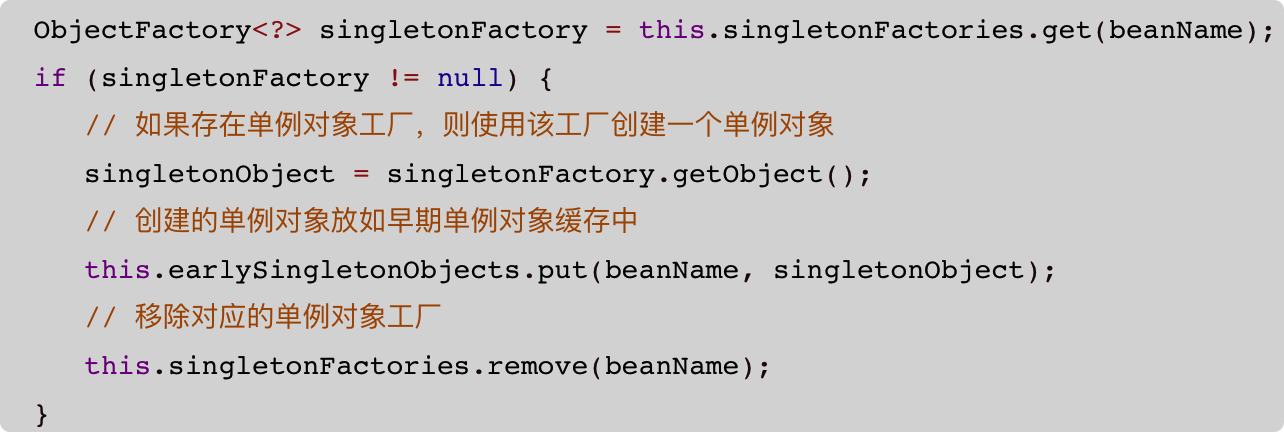
这里拿到了之前存入singletonFactoriesMap中的lambda表达式,调用getObject()方法去执行getEarlyBeanReference方法
/**

 * Obtain a reference for early access to the specified bean,

 * typically for the purpose of resolving a circular reference.

 * @param beanName the name of the bean (for error handling purposes)

 * @param mbd the merged bean definition for the bean

 * @param bean the raw bean instance

 * @return the object to expose as bean reference

 *

 * 获得对指定bean的早期访问的引用 通常用于解析循环依赖

 */

protected Object getEarlyBeanReference(String beanName, RootBeanDefinition mbd, Object bean) {

   // 默认最终公开的对象是bean,通过createBeanInstance创建出来的普通对象

   Object exposedObject = bean;

   // mbd的synthetic属性:设置bean定义是否是synthetic的,一般是指只有AOP相关的pointCut配置或者advice配置才会将synthetic设置为true

   // 如果mbd不是synthetic且此工厂拥有InstantiationAwareBeanPostProcessor

   if (!mbd.isSynthetic() && hasInstantiationAwareBeanPostProcessors()) {

      // 遍历工厂的所有后置处理器,并获取smartInstantiationAware-ArrayList

      for (SmartInstantiationAwareBeanPostProcessor bp : getBeanPostProcessorCache().smartInstantiationAware) {

         // 让exposedObject对象经过每一个smartInstantiationAwareBeanPostProcessor报装

         exposedObject = bp.getEarlyBeanReference(exposedObject, beanName);

      }

   }

   // 返回最终经过层次报装后的对象

   return exposedObject;

}
这个方法没有什么好解释的,注释很明确的表明了方法的作用
拿到teacher之后就给Student中的teacher属性赋值
resolveNecessary = true;

deepCopy.add(new PropertyValue(pv, convertedValue));
就此Student对像创建完毕,会将创建完成的Student对象放入
try {

   // 去容器中获取bean对象

   singletonObject = singletonFactory.getObject();

   newSingleton = true;

}

catch (IllegalStateException ex) {

   // Has the singleton object implicitly appeared in the meantime ->

   // if yes, proceed with it since the exception indicates that state.

   singletonObject = this.singletonObjects.get(beanName);

   if (singletonObject == null) {

      throw ex;

   }

}

catch (BeanCreationException ex) {

   if (recordSuppressedExceptions) {

      for (Exception suppressedException : this.suppressedExceptions) {

         ex.addRelatedCause(suppressedException);

      }

   }

   throw ex;

}

finally {

   if (recordSuppressedExceptions) {

      this.suppressedExceptions = null;

   }

   afterSingletonCreation(beanName);

}

if (newSingleton) {

   // 将beanName和singletonObject的映射关系添加到该工厂的单例缓存中

   addSingleton(beanName, singletonObject);

}
addSingleton(beanName, singletonObject);放入缓存中
至此会返回去给Teacher中的student属性赋值。至此一次的循环依赖就完成了。Spring还回去创建Student对象,但是这次容器中存在直接取出来就可以了。
疑问解答
为什么最后还要去创建一次Student对象,因为开始创建Student对象是因为创建Teacher对象的时候需要使用Student得实例,所以去创建了一次,但是最后一次去创建Student对象的时候不会真的创建,直接从缓存singletonObjects中就能去获取到。
如文章中有错误欢迎指出,刚开始阅读代码,参考了一些资料。
Spring循环依赖原理的更多相关文章
- Spring 循环依赖
循环依赖就是循环引用,就是两个或多个Bean相互之间的持有对方,比如CircleA引用CircleB,CircleB引用CircleC,CircleC引用CircleA,则它们最终反映为一个环.此处不 ...
- Spring 循环依赖的三种方式(三级缓存解决Set循环依赖问题)
本篇文章解决以下问题: [1] . Spring循环依赖指的是什么? [2] . Spring能解决哪种情况的循环依赖?不能解决哪种情况? [3] . Spring能解决的循环依赖原理(三级缓存) 一 ...
- Spring循环依赖的解决
## Spring循环依赖的解决 ### 什么是循环依赖 循环依赖,是依赖关系形成了一个圆环.比如:A对象有一个属性B,那么这时候我们称之为A依赖B,如果这时候B对象里面有一个属性A.那么这时候A和B ...
- spring 循环依赖的一次 理解
前言: 在看spring 循环依赖的问题中,知道原理,网上一堆的资料有讲原理. 但今天在看代码过程中,又产生了疑问. 疑问点如下: // 疑问点: 先进行 dependon 判断String[] de ...
- spring循环依赖问题分析
新搞了一个单点登录的项目,用的cas,要把源码的cas-webapp改造成适合我们业务场景的项目,于是新加了一些spring的配置文件. 但是在项目启动时报错了,错误日志如下: 一月 , :: 下午 ...
- Springboot源码分析之Spring循环依赖揭秘
摘要: 若你是一个有经验的程序员,那你在开发中必然碰到过这种现象:事务不生效.或许刚说到这,有的小伙伴就会大惊失色了.Spring不是解决了循环依赖问题吗,它是怎么又会发生循环依赖的呢?,接下来就让我 ...
- 这个 Spring 循环依赖的坑,90% 以上的人都不知道
1. 前言 这两天工作遇到了一个挺有意思的Spring循环依赖的问题,但是这个和以往遇到的循环依赖问题都不太一样,隐藏的相当隐蔽,网络上也很少看到有其他人遇到类似的问题.这里权且称他非典型Spring ...
- Spring — 循环依赖
读完这篇文章你将会收获到 Spring 循环依赖可以分为哪两种 Spring 如何解决 setter 循环依赖 Spring 为何是三级缓存 , 二级不行 ? Spring 为啥不能解决构造器循环依赖 ...
- 帮助你更好的理解Spring循环依赖
网上关于Spring循环依赖的博客太多了,有很多都分析的很深入,写的很用心,甚至还画了时序图.流程图帮助读者理解,我看了后,感觉自己是懂了,但是闭上眼睛,总觉得还没有完全理解,总觉得还有一两个坎过不去 ...
随机推荐
- Windows 10 彻底关闭 Antimalware Service Executable 降低内存占用
概述 最近给内网的一台电脑安装 Windows 10 专业版系统,由于此电脑不会涉及到不安全因素,所以杀毒软件非必须. 以最大限度节省系统资源考虑,默认安装的 Micoroft Defender 占用 ...
- C#面对抽象编程第一讲
闲话不多说,面向对象编程是高级语言的一个特点,但是把它概括成面向抽象更容易直击灵魂,经过了菜鸟大家都要面对的是不要写这么菜的代码了. 上例子,这应该是大家都很熟悉耳熟能详的代码, so easy. 1 ...
- Linux 三剑客之grep
目录 Linux 三剑客之grep 搭配命令-find 三剑客之grep: 正则表达式: Linux 三剑客之grep 搭配命令-find find命令是根据文件的名称或者属性查找文件,并不会显示文件 ...
- LuoguB2101 计算矩阵边缘元素之和 题解
Content 给定一个 \(m\times n\) 的矩阵,求矩阵边缘元素之和. 数据范围:\(1\leqslant m,n\leqslant 100\). Solution 对于新手来说,看到这题 ...
- 用相对路径有时居然是这样,,加上<%=basePath%>
用相对路径有时居然是这样,所以还是用绝对路径好点,加上<%=basePath%> 比如create页面的action为ssh/pages/User/create,那么create页面的上的 ...
- 音视频中的PTS和DTS及同步
视频的播放过程可以简单理解为一帧一帧的画面按照时间顺序呈现出来的过程,就像在一个本子的每一页画上画,然后快速翻动的感觉. 但是在实际应用中,并不是每一帧都是完整的画面,因为如果每一帧画面都 ...
- chrome/microsoft/brave等浏览器离线下载crx并安装(解决download interrupted)
重要网站 离线下载crx 问题描述 使用chrome/microsoft edge/ brave 下载chrome webstroe插件时,提示: download interrupted. 解决方案 ...
- 【LeetCode】147. Insertion Sort List 解题报告(Python)
[LeetCode]147. Insertion Sort List 解题报告(Python) 标签(空格分隔): LeetCode 作者: 负雪明烛 id: fuxuemingzhu 个人博客: h ...
- python-mysql-replication原理分析
源码地址:https://github.com/noplay/python-mysql-replication 文件解析: ├── binlogstream.py ├── bitmap.py ├── ...
- 1.node接口搭建--express搭建服务器
1.新建文件夹node 2.初始化 npm init 3.安装express npm install express 4.在入口文件(index.js)我的设置入口文件为(server.js)中写 / ...