
C++与C的区别二
1. new,delete的局部重载:
#include <iostream>

using namespace std;

int objs = ;

class myclass

{

public:

    myclass()

    {

        //objs++;

        cout << "create" << endl;

    }

    ~myclass()

    {

        //objs--;

        cout << "delete" << endl;

    }

    //operator重载,针对new重新作出一种解释,只针对当前类

    static void * operator new(size_t size)

    {

        objs++;

        cout << "new-call" << endl;

        myclass *p = ::new myclass;    //全局new

        return p;

    }

    static void operator delete(void *p)

    {

        objs--;

        cout << "delete-call" << endl;

        ::delete p;

    }

};

//功能1:无法在堆上被创建的类

void main()

{

    myclass *p1 = new myclass;

    myclass *p2 = new myclass;

    myclass *p3 = new myclass;

    delete p1;

    int *p = new int();    //此时new重载对于这一句无效

    cout << objs << endl;

    cin.get();

}
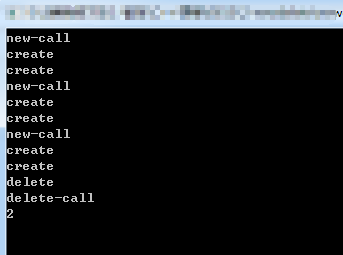
#include <iostream>

using namespace std;

int objs = ;

void *g_p = nullptr;

class myclass

{

public:

    myclass()

    {

        //objs++;

        cout << "create" << endl;

    }

    ~myclass()

    {

        //objs--;

        cout << "delete" << endl;

    }

    //operator重载,针对new重新作出一种解释,只针对当前类

    static void * operator new(size_t size)

    {

        if (g_p==nullptr)

        {

            objs++;

            cout << "new-call" << endl;

            myclass *p = ::new myclass;    //全局new

            g_p = p;    //单例,堆上创建对象只有一个

            return p;

        }

        else

        {

            return g_p;

        }

    }

    static void operator delete(void *p)

    {

        if (g_p!=nullptr)

        {

            objs--;

            cout << "delete-call" << endl;

            ::delete p;

            g_p = nullptr;

        }

    }

};

//功能1:无法在堆上被创建的类

//功能2:实现统计分配内存,释放内存的次数

//实现单例设计模式,实现避免反复delete出错

//new delete在内部,只针对当前类,int double 无影响

void main()

{

    myclass *p1 = new myclass;

    myclass *p2 = new myclass;

    delete p1;

    delete p1;    //规避了两次delete的错误

    cin.get();

}
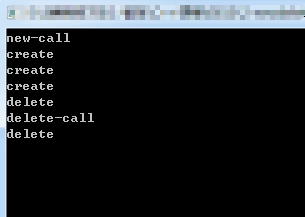
2. 全局new,delete重载:
#include <iostream>

using namespace std;

//全局内存管理,统计释放内存,分配内存

//new        new []        delete        delete []

//分配内存优先于构造

//析构优先于释放内存

void * operator new(size_t size)

{

    cout << "g_new call" << endl;

    void *p = malloc(size);    //全局的new,只能使用malloc

    return p;

}

void * operator new [](size_t size)

{

    cout << "g_new [] call" << endl;

    cout << size << endl;

    return operator new(size);    //每个元素调用一次new

}

void operator delete(void *p)

{

    cout << "g_delete call" << endl;

    free(p);

}

void operator delete [](void *p)

{

    cout << "g_delete [] call" << endl;

    free(p);

}

class myclass

{

public:

    myclass()

    {

        cout << "create call" << endl;

    }

    ~myclass()

    {

        cout << "delete call" << endl;

    }

};

void main()

{

    int *p1 = new int();

    delete p1;

    myclass *p2 = new myclass;

    delete p2;

    myclass *px = new myclass[];

    delete[]px;

    cin.get();

}
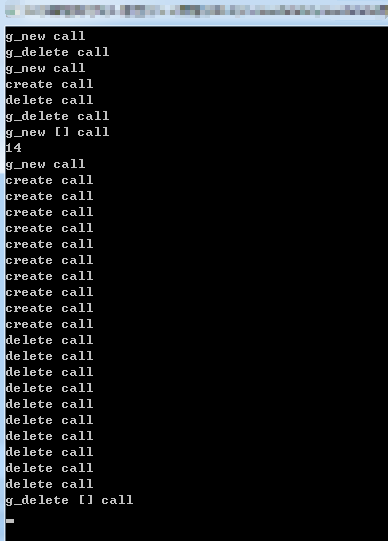
3. 绑定类成员函数:
#include <iostream>

#include <functional>

using namespace std;

using namespace std::placeholders;//站位

struct MyStruct

{

    void add1(int a)

    {

        cout << a << endl;

    }

    void add2(int a, int b)

    {

        cout << a << b << endl;

    }

    void add3(int a, int b, int c)

    {

        cout << a << b << c << endl;

    }

};

void main()

{

    MyStruct my1;

    //my1.add(10);

    //绑定包装器,包装类成员函数,用于使用

    auto fun1 = bind(&MyStruct::add1, &my1, _1);//有1个参数  函数名、对象地址、参数

    fun1();

    auto fun2 = bind(&MyStruct::add2, &my1, _1,_2);//有2个参数

    fun2(,);

    auto fun3 = bind(&MyStruct::add3, &my1, _1,_2,_3);//有3个参数

    fun3(,,);

    cin.get();

}
4. 绑定lambda表达式以及仿函数:
#include <iostream>

#include <functional>

using namespace std;

using namespace std::placeholders;

int add(int a, int b,int c)

{

    return a + b+c;

}

struct MyStruct

{

    int operator()(int a,int b)    //仿函数

    {

        return a + b;

    }

};

void main()

{

    auto fun1 = bind(add, ,, _1);//适配器模式

    cout << fun1() << endl;        //

    auto fun2 = bind([](int a, int b)->int {return a + b; }, , _1);

    cout << fun2() << endl;        //

    MyStruct my1;

    cout << my1(, ) << endl;        //

    auto fun3 = bind(my1, , _1);    //绑定

    cout << fun3() << endl;        //

    cin.get();

}
5. 静态断言:
#include <iostream>

#include <cassert>

using namespace std;

int divv(int a, int b)

{

    assert(b != );    //断言

    return a / b;

}

void main()

{

    cout << divv(, ) << endl;

    cin.get();

}
#include <iostream>

#include <cassert>

using namespace std;

static_assert(sizeof(void *) >= , "environment is not 64!");

void main()

{

    cin.get();

}

6. 内联函数:
#include <iostream>

#include <cstdlib>

using namespace std;

#define f(x) x*x*x        //C语言内联,C++要求类型严格匹配

inline int get(int x)    //C++的内联函数

{

    return x*x*x;

}

//提高程序运行速度

//inline 只是对于编译器的建议

//一般情况下,我们对内联函数做如下的限制:

//(1)不能有递归;

//(2)不能包含静态数据;

//(3)不能包含循环;

//(4)不能包含switch和goto语句;

//(5)不能包含数组。

//若一个内联函数定义不满足以上限制,则编译系统把它当做普通函数对待

template<class T>

inline T go(T t)

{

    return t*t;

}

void main()

{

    get();

    go();    //优化为内联函数

    auto fun = []() {};    //lambda表达式实际上也是内联函数

    cin.get();

}
7. CPP处理转义字符:
#include <iostream>

#include <string>

#include <cstdlib>

using namespace std;

void main()

{

    //string str("\"C:\\Program Files (x86)\\Google\\Chrome\\Application\\chrome.exe\"");

    string str(R"("C:\Program Files (x86)\Google\Chrome\Application\chrome.exe")");            //  R"(......)"

    system(str.c_str());

    cin.get();

}
C++与C的区别二的更多相关文章
- C#中抽象类和接口的区别(二)
一.抽象类: 抽象类是特殊的类,只是不能被实例化:除此以外,具有类的其他特性:重要的是抽象类可以包括抽象方法,这是普通类所不能的.抽象方法只能声明于抽象类中,且不包含任何实现,派生类必须覆盖它们.另外 ...
- Python协程与Go协程的区别二
写在前面 世界是复杂的,每一种思想都是为了解决某些现实问题而简化成的模型,想解决就得先面对,面对就需要选择角度,角度决定了模型的质量, 喜欢此UP主汤质看本质的哲学科普,其中简洁又不失细节的介绍了人类 ...
- vue1.0和vue2.0的区别(二)
这篇我们继续之前的vue1.0和vue2.0的区别(一)继续说 四.循环 学过vue的同学应该知道vue1.0是不能添加重复数据的,否则它会报错,想让它重复添加也不是不可以,不过需要定义别的东西 而v ...
- Linux内存管理--虚拟地址、逻辑地址、线性地址和物理地址的区别(二)【转】
本文转载自:http://blog.csdn.net/yusiguyuan/article/details/9668363 这篇文章中介绍了四个名词的概念,下面针对四个地址的转换进行分析 CPU将一个 ...
- java集合对象区别二
集合包是Java中最常用的包,它最常用的有Collection和Map两个接口的实现类,Collection用于存放多个单对象,Map用于存放Key-Value形式的键值对. Collection中常 ...
- OC与Swift的区别二(常量、变量、运算符)
4.常量与变量声明 oc的变量声明使用 类型 变量名 = 变量值的方式,其中类型为系统内置数据类型或自定义类型,变量名需由英文字母开头且不能包含特殊字符 swift变量声明使用 var 变量名 = ...
- 传统IO与NIO区别二
nio是new io的简称,从jdk1.4就被引入了.现在的jdk已经到了1.6了,可以说不是什么新东西了.但其中的一些思想值得我来研究.这两天,我研究了下其中的套接字部分,有一些心得,在此分享. ...
- Cocos2d中update与fixedUpdate的区别(二)
关于update:方法的目的 update:方法的目的在于给你一个更新你的游戏(你游戏中的所有对象,标签等待)的机会,在它们被渲染到屏幕之前. 换句话说,如果你想要一些游戏对象显示在屏幕的特定位置,你 ...
- java static成员变量方法和非static成员变量方法的区别 ( 二 )
原创文章,未经作者允许,禁止转载!!! 静态成员变量不用new对象,在类加载的过程中就已经初始化存放在数据区域,静态成员变量是类和所有对象共有的,类和对象都可以改变它的值,每一次改变值之后,静态成员变 ...
随机推荐
- 使用net Manager工具配置远程连接oracle
一,在服务端配置oracle端口在命令行中输入netca命令,打开相关配置默认端口号为1521 二,配置端口后使用Telnet工具调试端口是否联通 在命令行输入telnet 服务器ip 端口号 三,找 ...
- Golang之反射(重点!!)
1.反射:可以在运行时动态获取变量的相关信息 Import(“reflect”) 两个函数: reflect.TypeOf()//获取变量的类型,返回reflect.Type类型reflect.Val ...
- Hbase 系列(一)基本概念
Hbase 系列(一)基本概念 HBase 是 Apache 旗下一个高可靠性.高性能.面向列.可伸缩的分布式存储系统.利用 HBase 技术可在廉价 PC 服务器上搭建起大规模的存储化集群.使用 H ...
- Android使用ListView使用方法
Android使用ListView应该注意的地方 在ListView中设置Selector为null会报空指针? mListView.setSelector(null);//空指针 试试下面这种: ...
- 2014 ACM/ICPC 鞍山赛区网络赛(清华命题)
为迎接10月17号清华命题的鞍山现场赛 杭电上的题目 Biconnected(hdu4997) 状态压缩DP Rotate(hdu4998) 相对任一点的旋转 Overt(hdu4999 ...
- git 回退到某个特定提交
1.先用git log commit aba290c570d3894f4f39a1fdf52aa512c0231525 Author: huzhengbo <@qq.com> Date: ...
- context:propertyPlaceholder
Activates replacement of ${...} placeholders by registering a PropertySourcesPlaceholderConfigurer w ...
- Ubuntu下的apache2的配置过程
参考apache2的中文文档:http://httpd.apache.org/docs/2.4/ 安装apache2: apt-get install apache2 安装apache2doc文档:a ...
- 编译语言 vs 解释语言
编译语言 vs 解释语言 阅读: 评论: 作者:Rybby 日期: 来源:rybby.com 一直以为,编译语言的性能绝对比解释语言快,因为就理论而言,解释语言要一边解释(将脚本语言翻译成计算 ...
- daylyknowledge1
1.数据库截取字符串:toFixed():四舍五入substring(cp_introduce,0,11) cp_introduce前台截取: field: 'an_content', title: ...