
读写ini文件
C# 使用文件流来读写ini文件
背景
之前采用ini文件作为程序的配置文件,觉得这种结构简单明了,配置起来也挺方便。然后操作方式是通过WindowsAPI,然后再网上找到一个基于WindowsAPI封装的help类,用起来倒也顺手。用的多了,觉得还可以使用文件流来操作,后来就发现了EasyConfig。
EasyConfig是一个纯C#的开源ini文件操作库,但是在使用上有诸多不便,只是个人感觉,于是个人将其改造了一下,是自己喜欢用的风格。
资源下载
如果不清楚ini文件结构,请百度一下,这里贴一个示例文件。
 Ini文件示例

[Video]

#是否全屏

Fullscreen = true

#宽度

Width = 1280

#电视高度

#高度

Height = 720

[Level1]

NumberOfEnemies=2000#数值

Lives =              10

Timer                =                 999

EnemyNames = "Steve",          "Sam",                "Bill"

EnemyGuns = 13, 28, 43, 499

CanShoot = true, yes, on, no, false, off

Ini文件示例
代码示例
首先来看看改写后,怎么去使用她来读写Ini文件。

        static void Main(string[] args)

        {

            ConfigFile configFile = new ConfigFile("Test.ini");

            //遍历Config文件

            foreach (var group in configFile.SettingGroups)

            {

                Console.WriteLine("****************************");

                Console.WriteLine(group.Key + ":");

                Console.WriteLine();

                foreach (var value in group.Value.Settings)

                    Console.WriteLine("{0} = {1} (Is Array? {2}),{3}", value.Key, value.Value.RawValue, value.Value.IsArray, value.Value.Desp);

                Console.WriteLine();

            }

            //读取值主要是在具体的配置项上进行读取,是首先定位到[Group],其次就是具体的项

            //使用泛型读取值,并指定读取失败时的默认值

            var fullScreen = configFile["Video"]["Fullscreen"].As<int>(-1);//失败

            var bFullScreen = configFile["Video"]["Fullscreen"].AsBool();//成功

            var arrCanShoot = configFile["Level1"]["CanShoot"].AsArray<bool>();

            //读取时 该项不存在,不存在的组或者项会自动添加

            var noexists = configFile["Video"]["xxxxxxxxxxx"].AsString();

            var noexists2 = configFile["Video111111111"]["xxxxxxxxxxx"].AsString();

            //写入值有2种方法,可以直接向某组下写入一项,也可以定位到某组某项,写入值

            //写入值 该项不存在,组或者项会自动创建

            configFile["Video"].WriteSetting("NewName", "EasyConfig");

            configFile["Video"].WriteSetting("NewName", "EasyConfig2.0");

            configFile["Video22222222"].WriteSetting("c1", "1");

            //索引器不过是返回Setting

            configFile["Video3333"]["UserName"].SetValue("admin");

            configFile["Viedo4444"]["Sex"].SetValue("男", "女", "保密");

            //写入值,该项不存在

            configFile["Video222"].WriteSetting("NewName", "EasyConfig3.0");

            Console.ReadKey(true);

            configFile.Save("TestConfig2.txt");

        }
基本上自己想要的效果,则是基于 ConfigFile["GroupName"]["Key"] 这样的方式来进行读写。
另外附上一个基于WindowsAPI操作的封装类。
/// <summary>
/// Provides methods for reading and writing to an INI file.
/// </summary>
public class IniFileHelp
{
/// <summary>
/// The maximum size of a section in an ini file.
/// </summary>
/// <remarks>
/// This property defines the maximum size of the buffers
/// used to retreive data from an ini file. This value is
/// the maximum allowed by the win32 functions
/// GetPrivateProfileSectionNames() or
/// GetPrivateProfileString().
/// </remarks>
public const int MaxSectionSize = 32767; // 32 KB
//The path of the file we are operating on.
private string m_path;
#region P/Invoke declares
/// <summary>
/// A static class that provides the win32 P/Invoke signatures
/// used by this class.
/// </summary>
/// <remarks>
/// Note: In each of the declarations below, we explicitly set CharSet to
/// Auto. By default in C#, CharSet is set to Ansi, which reduces
/// performance on windows 2000 and above due to needing to convert strings
/// from Unicode (the native format for all .Net strings) to Ansi before
/// marshalling. Using Auto lets the marshaller select the Unicode version of
/// these functions when available.
/// </remarks>
[System.Security.SuppressUnmanagedCodeSecurity]
private static class NativeMethods
{
[DllImport("kernel32.dll", CharSet = CharSet.Auto)]
public static extern int GetPrivateProfileSectionNames(IntPtr lpszReturnBuffer,
uint nSize,
string lpFileName);
[DllImport("kernel32.dll", CharSet = CharSet.Auto)]
public static extern uint GetPrivateProfileString(string lpAppName,
string lpKeyName,
string lpDefault,
StringBuilder lpReturnedString,
int nSize,
string lpFileName);
[DllImport("kernel32.dll", CharSet = CharSet.Auto)]
public static extern uint GetPrivateProfileString(string lpAppName,
string lpKeyName,
string lpDefault,
[In, Out] char[] lpReturnedString,
int nSize,
string lpFileName);
[DllImport("kernel32.dll", CharSet = CharSet.Auto)]
public static extern int GetPrivateProfileString(string lpAppName,
string lpKeyName,
string lpDefault,
IntPtr lpReturnedString,
uint nSize,
string lpFileName);
[DllImport("kernel32.dll", CharSet = CharSet.Auto)]
public static extern int GetPrivateProfileInt(string lpAppName,
string lpKeyName,
int lpDefault,
string lpFileName);
[DllImport("kernel32.dll", CharSet = CharSet.Auto)]
public static extern int GetPrivateProfileSection(string lpAppName,
IntPtr lpReturnedString,
uint nSize,
string lpFileName);
//We explicitly enable the SetLastError attribute here because
// WritePrivateProfileString returns errors via SetLastError.
// Failure to set this can result in errors being lost during
// the marshal back to managed code.
[DllImport("kernel32.dll", CharSet = CharSet.Auto, SetLastError = true)]
public static extern bool WritePrivateProfileString(string lpAppName,
string lpKeyName,
string lpString,
string lpFileName);
}
#endregion
/// <summary>
/// Initializes a new instance of the <see cref="IniFileHelp"/> class.
/// </summary>
/// <param name="path">The ini file to read and write from.</param>
public IniFileHelp(string path)
{
//Convert to the full path. Because of backward compatibility,
// the win32 functions tend to assume the path should be the
// root Windows directory if it is not specified. By calling
// GetFullPath, we make sure we are always passing the full path
// the win32 functions.
m_path = System.IO.Path.GetFullPath(path);
}
/// <summary>
/// Gets the full path of ini file this object instance is operating on.
/// </summary>
/// <value>A file path.</value>
public string Path
{
get
{
return m_path;
}
}
#region Get Value Methods
/// <summary>
/// Gets the value of a setting in an ini file as a <see cref="T:System.String"/>.
/// </summary>
/// <param name="sectionName">The name of the section to read from.</param>
/// <param name="keyName">The name of the key in section to read.</param>
/// <param name="defaultValue">The default value to return if the key
/// cannot be found.</param>
/// <returns>The value of the key, if found. Otherwise, returns
/// <paramref name="defaultValue"/></returns>
/// <remarks>
/// The retreived value must be less than 32KB in length.
/// </remarks>
/// <exception cref="ArgumentNullException">
/// <paramref name="sectionName"/> or <paramref name="keyName"/> are
/// a null reference (Nothing in VB)
/// </exception>
public string GetString(string sectionName,
string keyName,
string defaultValue)
{
if (sectionName == null)
throw new ArgumentNullException("sectionName");
if (keyName == null)
throw new ArgumentNullException("keyName");
StringBuilder retval = new StringBuilder(IniFileHelp.MaxSectionSize);
NativeMethods.GetPrivateProfileString(sectionName,
keyName,
defaultValue,
retval,
IniFileHelp.MaxSectionSize,
m_path);
return retval.ToString();
}
/// <summary>
/// Gets the value of a setting in an ini file as a <see cref="T:System.Int16"/>.
/// </summary>
/// <param name="sectionName">The name of the section to read from.</param>
/// <param name="keyName">The name of the key in section to read.</param>
/// <param name="defaultValue">The default value to return if the key
/// cannot be found.</param>
/// <returns>The value of the key, if found. Otherwise, returns
/// <paramref name="defaultValue"/>.</returns>
/// <exception cref="ArgumentNullException">
/// <paramref name="sectionName"/> or <paramref name="keyName"/> are
/// a null reference (Nothing in VB)
/// </exception>
public int GetInt16(string sectionName,
string keyName,
short defaultValue)
{
int retval = GetInt32(sectionName, keyName, defaultValue);
return Convert.ToInt16(retval);
}
/// <summary>
/// Gets the value of a setting in an ini file as a <see cref="T:System.Int32"/>.
/// </summary>
/// <param name="sectionName">The name of the section to read from.</param>
/// <param name="keyName">The name of the key in section to read.</param>
/// <param name="defaultValue">The default value to return if the key
/// cannot be found.</param>
/// <returns>The value of the key, if found. Otherwise, returns
/// <paramref name="defaultValue"/></returns>
/// <exception cref="ArgumentNullException">
/// <paramref name="sectionName"/> or <paramref name="keyName"/> are
/// a null reference (Nothing in VB)
/// </exception>
public int GetInt32(string sectionName,
string keyName,
int defaultValue)
{
if (sectionName == null)
throw new ArgumentNullException("sectionName");
if (keyName == null)
throw new ArgumentNullException("keyName");
return NativeMethods.GetPrivateProfileInt(sectionName, keyName, defaultValue, m_path);
}
/// <summary>
/// Gets the value of a setting in an ini file as a <see cref="T:System.Double"/>.
/// </summary>
/// <param name="sectionName">The name of the section to read from.</param>
/// <param name="keyName">The name of the key in section to read.</param>
/// <param name="defaultValue">The default value to return if the key
/// cannot be found.</param>
/// <returns>The value of the key, if found. Otherwise, returns
/// <paramref name="defaultValue"/></returns>
/// <exception cref="ArgumentNullException">
/// <paramref name="sectionName"/> or <paramref name="keyName"/> are
/// a null reference (Nothing in VB)
/// </exception>
public double GetDouble(string sectionName,
string keyName,
double defaultValue)
{
string retval = GetString(sectionName, keyName, "");
if (retval == null || retval.Length == 0)
{
return defaultValue;
}
return Convert.ToDouble(retval, CultureInfo.InvariantCulture);
}
#endregion
#region GetSectionValues Methods
/// <summary>
/// Gets all of the values in a section as a list.
/// </summary>
/// <param name="sectionName">
/// Name of the section to retrieve values from.
/// </param>
/// <returns>
/// A <see cref="List{T}"/> containing <see cref="KeyValuePair{T1, T2}"/> objects
/// that describe this section. Use this verison if a section may contain
/// multiple items with the same key value. If you know that a section
/// cannot contain multiple values with the same key name or you don't
/// care about the duplicates, use the more convenient
/// <see cref="GetSectionValues"/> function.
/// </returns>
/// <exception cref="ArgumentNullException">
/// <paramref name="sectionName"/> is a null reference (Nothing in VB)
/// </exception>
public List<KeyValuePair<string, string>> GetSectionValuesAsList(string sectionName)
{
List<KeyValuePair<string, string>> retval;
string[] keyValuePairs;
string key, value;
int equalSignPos;
if (sectionName == null)
throw new ArgumentNullException("sectionName");
//Allocate a buffer for the returned section names.
IntPtr ptr = Marshal.AllocCoTaskMem(IniFileHelp.MaxSectionSize);
try
{
//Get the section key/value pairs into the buffer.
int len = NativeMethods.GetPrivateProfileSection(sectionName,
ptr,
IniFileHelp.MaxSectionSize,
m_path);
keyValuePairs = ConvertNullSeperatedStringToStringArray(ptr, len);
}
finally
{
//Free the buffer
Marshal.FreeCoTaskMem(ptr);
}
//Parse keyValue pairs and add them to the list.
retval = new List<KeyValuePair<string, string>>(keyValuePairs.Length);
for (int i = 0; i < keyValuePairs.Length; ++i)
{
//Parse the "key=value" string into its constituent parts
//Cancel a string start with '#'
var item = keyValuePairs[i].Trim();
if (item.Length > 0 && !item.StartsWith("#"))
{
equalSignPos = keyValuePairs[i].IndexOf('=');
key = keyValuePairs[i].Substring(0, equalSignPos);
value = keyValuePairs[i].Substring(equalSignPos + 1,
keyValuePairs[i].Length - equalSignPos - 1);
retval.Add(new KeyValuePair<string, string>(key, value));
}
}
return retval;
}
/// <summary>
/// Gets all of the values in a section as a dictionary.
/// </summary>
/// <param name="sectionName">
/// Name of the section to retrieve values from.
/// </param>
/// <returns>
/// A <see cref="Dictionary{T, T}"/> containing the key/value
/// pairs found in this section.
/// </returns>
/// <remarks>
/// If a section contains more than one key with the same name,
/// this function only returns the first instance. If you need to
/// get all key/value pairs within a section even when keys have the
/// same name, use <see cref="GetSectionValuesAsList"/>.
/// </remarks>
/// <exception cref="ArgumentNullException">
/// <paramref name="sectionName"/> is a null reference (Nothing in VB)
/// </exception>
public Dictionary<string, string> GetSectionValues(string sectionName)
{
List<KeyValuePair<string, string>> keyValuePairs;
Dictionary<string, string> retval;
keyValuePairs = GetSectionValuesAsList(sectionName);
//Convert list into a dictionary.
retval = new Dictionary<string, string>(keyValuePairs.Count);
foreach (KeyValuePair<string, string> keyValuePair in keyValuePairs)
{
//Skip any key we have already seen.
if (!retval.ContainsKey(keyValuePair.Key))
{
retval.Add(keyValuePair.Key, keyValuePair.Value);
}
}
return retval;
}
#endregion
#region Get Key/Section Names
/// <summary>
/// Gets the names of all keys under a specific section in the ini file.
/// </summary>
/// <param name="sectionName">
/// The name of the section to read key names from.
/// </param>
/// <returns>An array of key names.</returns>
/// <remarks>
/// The total length of all key names in the section must be
/// less than 32KB in length.
/// </remarks>
/// <exception cref="ArgumentNullException">
/// <paramref name="sectionName"/> is a null reference (Nothing in VB)
/// </exception>
public string[] GetKeyNames(string sectionName)
{
int len;
string[] retval;
if (sectionName == null)
throw new ArgumentNullException("sectionName");
//Allocate a buffer for the returned section names.
IntPtr ptr = Marshal.AllocCoTaskMem(IniFileHelp.MaxSectionSize);
try
{
//Get the section names into the buffer.
len = NativeMethods.GetPrivateProfileString(sectionName,
null,
null,
ptr,
IniFileHelp.MaxSectionSize,
m_path);
retval = ConvertNullSeperatedStringToStringArray(ptr, len);
}
finally
{
//Free the buffer
Marshal.FreeCoTaskMem(ptr);
}
return retval;
}
/// <summary>
/// Gets the names of all sections in the ini file.
/// </summary>
/// <returns>An array of section names.</returns>
/// <remarks>
/// The total length of all section names in the section must be
/// less than 32KB in length.
/// </remarks>
public string[] GetSectionNames()
{
string[] retval;
int len;
//Allocate a buffer for the returned section names.
IntPtr ptr = Marshal.AllocCoTaskMem(IniFileHelp.MaxSectionSize);
try
{
//Get the section names into the buffer.
len = NativeMethods.GetPrivateProfileSectionNames(ptr,
IniFileHelp.MaxSectionSize, m_path);
retval = ConvertNullSeperatedStringToStringArray(ptr, len);
}
finally
{
//Free the buffer
Marshal.FreeCoTaskMem(ptr);
}
return retval;
}
/// <summary>
/// Converts the null seperated pointer to a string into a string array.
/// </summary>
/// <param name="ptr">A pointer to string data.</param>
/// <param name="valLength">
/// Length of the data pointed to by <paramref name="ptr"/>.
/// </param>
/// <returns>
/// An array of strings; one for each null found in the array of characters pointed
/// at by <paramref name="ptr"/>.
/// </returns>
private static string[] ConvertNullSeperatedStringToStringArray(IntPtr ptr, int valLength)
{
string[] retval;
if (valLength == 0)
{
//Return an empty array.
retval = new string[0];
}
else
{
//Convert the buffer into a string. Decrease the length
//by 1 so that we remove the second null off the end.
string buff = Marshal.PtrToStringAuto(ptr, valLength - 1);
//Parse the buffer into an array of strings by searching for nulls.
retval = buff.Split('\0');
}
return retval;
}
#endregion
#region Write Methods
/// <summary>
/// Writes a <see cref="T:System.String"/> value to the ini file.
/// </summary>
/// <param name="sectionName">The name of the section to write to .</param>
/// <param name="keyName">The name of the key to write to.</param>
/// <param name="value">The string value to write</param>
/// <exception cref="T:System.ComponentModel.Win32Exception">
/// The write failed.
/// </exception>
private void WriteValueInternal(string sectionName, string keyName, string value)
{
if (!NativeMethods.WritePrivateProfileString(sectionName, keyName, value, m_path))
{
throw new System.ComponentModel.Win32Exception();
}
}
/// <summary>
/// Writes a <see cref="T:System.String"/> value to the ini file.
/// </summary>
/// <param name="sectionName">The name of the section to write to .</param>
/// <param name="keyName">The name of the key to write to.</param>
/// <param name="value">The string value to write</param>
/// <exception cref="T:System.ComponentModel.Win32Exception">
/// The write failed.
/// </exception>
/// <exception cref="ArgumentNullException">
/// <paramref name="sectionName"/> or <paramref name="keyName"/> or
/// <paramref name="value"/> are a null reference (Nothing in VB)
/// </exception>
public void WriteValue(string sectionName, string keyName, string value)
{
if (sectionName == null)
throw new ArgumentNullException("sectionName");
if (keyName == null)
throw new ArgumentNullException("keyName");
if (value == null)
throw new ArgumentNullException("value");
WriteValueInternal(sectionName, keyName, value);
}
/// <summary>
/// Writes an <see cref="T:System.Int16"/> value to the ini file.
/// </summary>
/// <param name="sectionName">The name of the section to write to .</param>
/// <param name="keyName">The name of the key to write to.</param>
/// <param name="value">The value to write</param>
/// <exception cref="T:System.ComponentModel.Win32Exception">
/// The write failed.
/// </exception>
public void WriteValue(string sectionName, string keyName, short value)
{
WriteValue(sectionName, keyName, (int)value);
}
/// <summary>
/// Writes an <see cref="T:System.Int32"/> value to the ini file.
/// </summary>
/// <param name="sectionName">The name of the section to write to .</param>
/// <param name="keyName">The name of the key to write to.</param>
/// <param name="value">The value to write</param>
/// <exception cref="T:System.ComponentModel.Win32Exception">
/// The write failed.
/// </exception>
/// <exception cref="ArgumentNullException">
/// <paramref name="sectionName"/> or <paramref name="keyName"/> are
/// a null reference (Nothing in VB)
/// </exception>
public void WriteValue(string sectionName, string keyName, int value)
{
WriteValue(sectionName, keyName, value.ToString(CultureInfo.InvariantCulture));
}
/// <summary>
/// Writes an <see cref="T:System.Single"/> value to the ini file.
/// </summary>
/// <param name="sectionName">The name of the section to write to .</param>
/// <param name="keyName">The name of the key to write to.</param>
/// <param name="value">The value to write</param>
/// <exception cref="T:System.ComponentModel.Win32Exception">
/// The write failed.
/// </exception>
/// <exception cref="ArgumentNullException">
/// <paramref name="sectionName"/> or <paramref name="keyName"/> are
/// a null reference (Nothing in VB)
/// </exception>
public void WriteValue(string sectionName, string keyName, float value)
{
WriteValue(sectionName, keyName, value.ToString(CultureInfo.InvariantCulture));
}
/// <summary>
/// Writes an <see cref="T:System.Double"/> value to the ini file.
/// </summary>
/// <param name="sectionName">The name of the section to write to .</param>
/// <param name="keyName">The name of the key to write to.</param>
/// <param name="value">The value to write</param>
/// <exception cref="T:System.ComponentModel.Win32Exception">
/// The write failed.
/// </exception>
/// <exception cref="ArgumentNullException">
/// <paramref name="sectionName"/> or <paramref name="keyName"/> are
/// a null reference (Nothing in VB)
/// </exception>
public void WriteValue(string sectionName, string keyName, double value)
{
WriteValue(sectionName, keyName, value.ToString(CultureInfo.InvariantCulture));
}
#endregion
#region Delete Methods
/// <summary>
/// Deletes the specified key from the specified section.
/// </summary>
/// <param name="sectionName">
/// Name of the section to remove the key from.
/// </param>
/// <param name="keyName">
/// Name of the key to remove.
/// </param>
/// <exception cref="ArgumentNullException">
/// <paramref name="sectionName"/> or <paramref name="keyName"/> are
/// a null reference (Nothing in VB)
/// </exception>
public void DeleteKey(string sectionName, string keyName)
{
if (sectionName == null)
throw new ArgumentNullException("sectionName");
if (keyName == null)
throw new ArgumentNullException("keyName");
WriteValueInternal(sectionName, keyName, null);
}
/// <summary>
/// Deletes a section from the ini file.
/// </summary>
/// <param name="sectionName">
/// Name of the section to delete.
/// </param>
/// <exception cref="ArgumentNullException">
/// <paramref name="sectionName"/> is a null reference (Nothing in VB)
/// </exception>
public void DeleteSection(string sectionName)
{
if (sectionName == null)
throw new ArgumentNullException("sectionName");
WriteValueInternal(sectionName, null, null);
}
#endregion
}
IniFileHelp
MSD_radix_sort
一、这次是在上一次尝试基础上进行的,预期是达到上次性能的9倍。
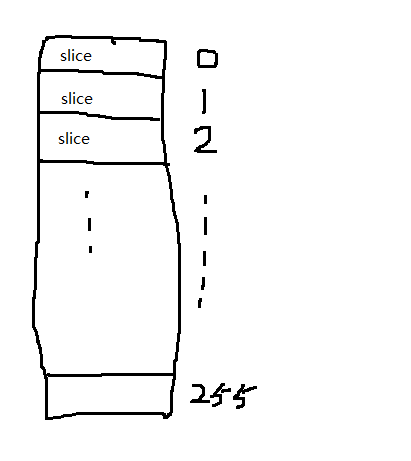
MSD的基本手法就是不断切片。
每一步都是把整体数据切割成256片,如上图所示,实际情况切片未必均匀,有的slice内可能一个元素也没有。
接下来对于每个切片怎么办呢?
答案是继续切,对于特殊数据来讲,切片过程可以很快结束,这样就可以实现比LSD更快的速度。
这里面最困难的地方就是如何存储每个slice的头和尾。
如果采用下述方式,应该是行不通的。
这个方式需要做数组元素插入,还要跟踪中间数据,因此没具体考虑。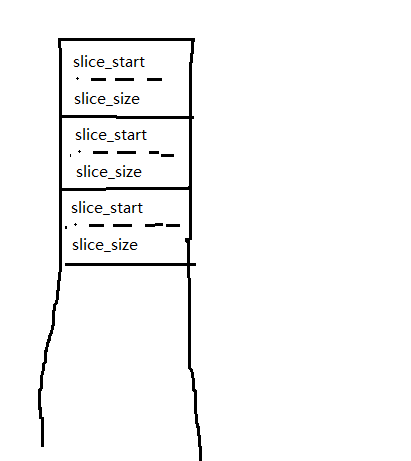
我真正采用的是下表:
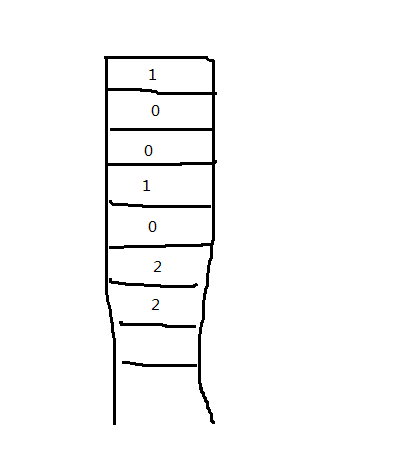
表中第一项表示第一个元素开启一个类别,紧跟的0表示此元素和上面的1是同一类。
至于2表明在切片过程中是一个孤立的元素,后续就没必要再切片了。
这个方式可以大大简化编码。
二、伪代码。
for each slice

    if slice-tag == 2 continue;

    if slice-tag == 1

        slice it;

        update bookkeeping
int main(){

    HANDLE heap = NULL;

    Bucket bucket[BUCKETSLOTCOUNT];

    PageList * pageListPool;

    int plpAvailable = 0;

    int * pages = NULL;

    int * pagesAvailable = NULL;

    int * objIdx;

    unsigned short * s;

    __int8 * classifier = NULL;

    time_t timeBegin;

    time_t timeEnd;

    heap = HeapCreate(HEAP_NO_SERIALIZE|HEAP_GENERATE_EXCEPTIONS, 1024*1024, 0);

    if (heap != NULL){

        pages = (int * )HeapAlloc(heap, 0, (TFSI/PAGEGRANULAR + BUCKETSLOTCOUNT + 8) * PAGEAMOUNT);

        pageListPool = (PageList *)HeapAlloc(heap, 0, (TFSI/PAGEGRANULAR + 8) * sizeof(PageList));

        s = (unsigned short *)HeapAlloc(heap, 0, TFSI*sizeof(unsigned short));

        objIdx = (int *)HeapAlloc(heap, 0, TFSI * sizeof(int));

        classifier = (__int8 *)HeapAlloc(heap, 0, (TFSI+8)*sizeof(__int8));

    }

    MakeSure(pages != NULL && pageListPool != NULL && objIdx != NULL && classifier != NULL);

    for(int i=0; i<TFSI; i++) objIdx[i]=i;

    timeBegin = clock();

    for (int i=0; i<TFSI; i++) s[i] = rand();

    timeEnd = clock();

    printf("\n%f(s) consumed in generating numbers", (double)(timeEnd-timeBegin)/CLOCKS_PER_SEC);

    SecureZeroMemory(classifier, TFSI*sizeof(__int8));

    classifier[0] = 1;

    classifier[TFSI] = 1;

    timeBegin = clock();

    bool no_need_further_processing = false;

    for (int t=sizeof(short)-1; t>=0; t--){

        int bucketIdx;

        int slice_pointer = 0;

        int slice_base = 0;

        int flagCounter = 0;

        if (no_need_further_processing) break;

        //classifier: 1 new catagory

        //classifier: 2 completed catagory process

        while (slice_pointer < TFSI){

            if (classifier[slice_pointer] == 2){

                slice_base = slice_pointer;

                classifier[slice_base] = 0;

                while (classifier[slice_pointer] == 0){

                    slice_pointer++;

                    flagCounter++;

                }

                classifier[slice_base] = 2;

                if (flagCounter == TFSI) no_need_further_processing = true;

                continue;

            }

            if (classifier[slice_pointer] == 1){

                FillMemory(pages, (TFSI/PAGEGRANULAR + BUCKETSLOTCOUNT + 8) * PAGEAMOUNT, 0xff);

                SecureZeroMemory(pageListPool, (TFSI/PAGEGRANULAR + 8) * sizeof(PageList));

                pagesAvailable = pages;

                plpAvailable = 0;

                for(int i=0; i<256; i++){

                    bucket[i].currentPagePtr = pagesAvailable;

                    bucket[i].offset = 0;

                    bucket[i].pl.PagePtr = pagesAvailable;

                    bucket[i].pl.next = NULL;

                    pagesAvailable += PAGEGRANULAR;

                    bucket[i].currentPageListItem = &(bucket[i].pl);

                }

                slice_base = slice_pointer;

                classifier[slice_base] = 0;

                while (classifier[slice_pointer] == 0){

                    //for each slice element, push_back to pages;

                    unsigned char * cell = (unsigned char *)&s[objIdx[slice_pointer]];

                    bucketIdx =  cell[t];

                    //save(bucketIdx, objIdx[i]);

                    bucket[bucketIdx].currentPagePtr[ bucket[bucketIdx].offset ] = objIdx[slice_pointer];

                    bucket[bucketIdx].offset++;

                    if (bucket[bucketIdx].offset == PAGEGRANULAR){

                        bucket[bucketIdx].currentPageListItem->next = &pageListPool[plpAvailable];

                        plpAvailable++;

                        bucket[bucketIdx].currentPageListItem->next->PagePtr = pagesAvailable;

                        bucket[bucketIdx].currentPageListItem->next->next = NULL;

                        bucket[bucketIdx].currentPagePtr = pagesAvailable;

                        bucket[bucketIdx].offset = 0;

                        pagesAvailable += PAGEGRANULAR;

                        bucket[bucketIdx].currentPageListItem = bucket[bucketIdx].currentPageListItem->next;

                    }

                    slice_pointer++;

                }

                classifier[slice_base] = 1;

                //update classifier;

                //update objIdx index

                int start = slice_base;

                for (int i=0; i<256; i++){

                    PageList * p;

                    p = &(bucket[i].pl);

                    //classifier: 1 new catagory

                    //classifier: 2 complete catagory process

                    classifier[start] = 1;

                    int counters = 0;

                    while (p){

                        for (int t=0; t<PAGEGRANULAR; t++){

                            int idx = p->PagePtr[t];

                            if (idx != TERMINATOR){

                                objIdx[start] = idx;

                                start++;

                                counters++;

                            }

                            if (idx == TERMINATOR) break;

                        }

                        p = p->next;

                    }

                    if (counters == 1) classifier[start-1] = 2;

                }

                //update objIdx index

            }   //if (classifier[slice_pointer] == 1)

        }        //while (slice_pointer < TFSI)

    }            //for (int t=sizeof(short)-1; t>=0; t--)

    timeEnd = clock();

    printf("\n%f(s) consumed in generating results", (double)(timeEnd-timeBegin)/CLOCKS_PER_SEC);

    //for(int i=0; i<TFSI; i++) printf("%d\n", s[objIdx[i]]);

    HeapFree(heap, 0, pages);

    HeapFree(heap, 0, pageListPool);

    HeapFree(heap, 0, s);

    HeapFree(heap, 0, objIdx);

    HeapFree(heap, 0, classifier);

    HeapDestroy(heap);

    return 0;

}
三、测试
1024*1024*100 个短整型。
时间 5.438s
看到这里就知道杯具了,比LSD还慢。
如果应用到二维表,会更惨不忍睹。试了下果然如此。
四、讨论
如果哪位有更好的方法,欢迎讨论。
或者,基数排序只是一个花瓶?
读写ini文件的更多相关文章
- c# 利用动态库DllImport("kernel32")读写ini文件(提供Dmo下载)
c# 利用动态库DllImport("kernel32")读写ini文件 自从读了设计模式,真的会改变一个程序员的习惯.我觉得嘛,经验也可以从一个人的习惯看得出来,看他的代码编写习 ...
- VB读写INI文件的四个函数以及相关API详细说明
WritePrivateProfileString函数说明 来源:http://blog.csdn.net/wjb9921/article/details/2005000 在我们写的程序当中,总有一 ...
- C# 读写INI 文件
INI 格式: [Section1] KeyWord1 = Value1 KeyWord2 = Value2 ... [Section2] KeyWord3 = Value3 KeyWord4 = V ...
- WIN32读写INI文件方法
在程序中经常要用到设置或者其他少量数据的存盘,以便程序在下一次执行的时候可以使用,比如说保存本次程序执行时窗口的位置.大小.一些用户设置的 数据等等,在 Dos 下编程的时候,我们一般自己产生一个 ...
- 在 WinCe 平台读写 ini 文件
在上篇文章开发 windows mobile 上的今日插件时,我发现 wince 平台上不支持例如 GetPrivateProfileString 等相关 API 函数.在网络上我并没有找到令我满意的 ...
- Windows中读写ini文件
.ini 文件是Initialization File的缩写,即初始化文件,是windows的系统配置文件所采用的存储格式,来配置应用软件以实现不同用户的要求.配置文件有很多种如ini配置文件,XML ...
- C#中读写INI文件
C#中读写INI文件 c#的类没有直接提供对ini文件的操作支持,可以自己包装win api的WritePrivateProfileString和GetPrivateProfileString函数实现 ...
- Qt读写ini文件
一 背景 1 ini文件介绍 .ini 文件是Initialization File的缩写,即初始化文件. 除了windows现在很多其他操作系统下面的应用软件也有.ini文件,用来配置应用软件以实现 ...
- 【python-ini】python读写ini文件
[python-ini]python读写ini文件 本文实例讲述了Python读写ini文件的方法.分享给大家供大家参考.具体如下: 比如有一个文件update.ini,里面有这些内容: 1 2 ...
随机推荐
- SEO要领:8文章主持技巧(两)
续篇:搜索引擎优化要领:8条辅助技巧(一) 四.检查你的robots.txt文件 与谷歌的蜘蛛通信的经常用法是使用robots.txt文件. 这是一个文本文件.同意你告诉搜索引擎,你的站点的网页上抓取 ...
- 兼容Firefox和IE的onpropertychange事件oninput
原文 兼容Firefox和IE的onpropertychange事件oninput onpropertychange能够捕获每次输入值的变化.例如:对象的value值被改变时,onpropertych ...
- 判断sqlserver对象是否存在
--查看对象是否已经存在 --数据库是否存在 --if exists (select * from sys.databases where name = ’数据库名’) -- dro ...
- Advance Installer安装问题
一,在Advance Installer中注冊dll 1,首先将文件加入到Files And Folders中.此处以InstallValidate.dll为例. 2,在Custom Action处进 ...
- CSharp设计模式读书笔记(6):建造者模式(学习难度:★★★★☆,使用频率:★★☆☆☆)
建造者模式(Builder Pattern):将一个复杂对象的构建与它的表示分离,使得同样的构建过程可以创建不同的表示. 模式角色与模式: 建造者模式可以将一个产品的内部表象与产品的生产过程分割开来, ...
- Swift语言指南(四)--类型安全和类型推断
原文:Swift语言指南(四)--类型安全和类型推断 Swift是一门类型安全语言,类型安全语言需要代码里值的类型非常明确.如果你的代码中有部分值需要String类型,你就不能错误地传递Int. 鉴于 ...
- hust1384---The value of F[n]
Description For any integer i>=3 we have F[i]=(F[i-1]+2*F[i-2]+3*F[i-3])%9901; Now give you F[0], ...
- MonkeyRunner于Windows在下面Eclipse开发环境的搭建步骤(并解决在线Jython配置错误的问题)
网上有一shangdong_chu网友写了一篇文章介绍了如何Eclipse构造MonkeyRunner,他做了叙述一个很好的说明.但我对我的环境试验后会见Jython解析错误的问题,和制品缺少Pyde ...
- Impala源代码分析---1
2.Impala源代码分析 參考链接:http://www.sizeofvoid.net/wp-content/uploads/ImpalaIntroduction2.pdf 本章開始进入源代码分析阶 ...
- 在线Youtube视频下载,修改文本,剪切制作动画的最新方法
刚刚(减去编写本文章的时间,大概20分钟前吧)在看国外最新技术资讯的时候发现有个方法可以让我们快速去下载Youtube上面的视频,不敢独享,我自己都没有怎么玩就所以立刻post上来广而告之,希望对大家 ...