
JAVA中的NIO (New IO)
JAVA中的NIO
标准的IO是基于字节流和字符流进行操作的,而JAVA中的NIO是基于Channel和Buffer进行操作的。
传统IO
字节流 --> InputStream;
字节流 --> OutputStream;
字符流 --> Reader;
字符流 --> Writer;
NIO
A[Channel] --> B[Buffer..];
C[Channel] --> D[Buffer..];
E[Channel] --> F[Buffer..];
核心模块
NIO主要有三个核心部分:Selector、Channel、Buffer
数据总是从Channel读取到Buffer或者从Buffer写入到Channel中。
Selector可以监听多个Channel的多个事件。
Selector --> A[Channel];
Selector --> B[Channel];
Selector --> C[Channel];
A --> E1[Event...];
B --> E2[Event...];
C --> E3[Event...];
传统的IO与Channel的区别
1.传统的IO是BIO的,而Channel是NIO的。
*当流调用了read()、write()方法后会一直阻塞线程直到数据被读取或写入完毕。
2.传统IO流是单向的,而Channel是双向的。
Channel
FileChannel:从文件中进行读取

DatagramChannel:可以通过UDP协议在网络中进行数据的传输

SocketChannel:可以通过TCP协议在网络中进行数据的传输

ServerSocketChannel:可以作为一个服务器监听连接
Channel通用API:
read(buffer):将数据从Channel读取到Buffer中,读取完毕返回-1。

read(buffer []):将数据从Channel读取到多个Buffer中,仅当第一个Buffer被写满后往第二个Buffer中进行写入。

write(buffer):将Buffer中的数据写入到Channel中。

write(buffer[]):将多个Buffer中的数据写入到Channel中,仅当第一个Buffer中的数据被读取完毕后再从第二个Buffer中进行读取。

register(selector,interest):将Channel注册到Selector中,同时需要向Selector传递要监听此Channel的事件类型(注册到Selector中的Channel一定要非阻塞的)

configureBlocking(boolean):设置Channel是否为阻塞。

transferFrom(position,count,channel):将其他Channel中的数据传输到当前Channel中。

transferTo(position,count,channel):将当前Channel中的数据传输到其他Channel中。
SocketChannel API
open()静态方法:创建SocketChannel。

connect(new InetSocketAddress(port))方法:连接服务器。

finishConnect()方法:判断是否已经与服务器建立连接。
ServerSocketChannel API
open()静态方法:创建ServerSocketChannel。

accept()方法:该方法会一直阻塞线程直到有新连接到达。
阻塞式与非阻塞式Channel
正常情况下Channel都是阻塞的,只有当调用了configureBlocking(false)方法时Channel才为非阻塞。
阻塞式Channel的connect()、accept()、read()、write()方法都会阻塞线程,直到处理完毕。
非阻塞式Channel的connect()、accept()、read()、write()方法都是异步的。
*当调用了非阻塞式Channel的connect()方法后,需要使用finishConnect()方法判断是否已经与服务器建立连接。
*当调用了非阻塞式Channel的accept()方法后,需要根据方法的返回值是否为NULL判断是否接收到新的连接。
*当调用了非阻塞式Channel的read()方法后,需要根据方法的返回值是否大于0判断是否有读取到数据。
*在使用非阻塞式Channel的write()方法时,需要借助while循环与hasRemaining()方法保证buffer中的内容被全部写入。
*FileChannel一定是阻塞的。
示例
public void testFileChannel() throws IOException {

    RandomAccessFile randomAccessFile = new RandomAccessFile(new File("F:\\笔记\\nginx.txt"), "rw");

    FileChannel fileChannel = randomAccessFile.getChannel();

    ByteBuffer byteBuffer = ByteBuffer.allocate(64);

    int count = fileChannel.read(byteBuffer);

    while (count != -1) {

        byteBuffer.flip();

        System.out.println(new String(Arrays.copyOfRange(byteBuffer.array(),0,byteBuffer.limit()),Charset.forName("UTF-8")));

        byteBuffer.clear();

        count = fileChannel.read(byteBuffer);

    }

}
Buffer
Buffer是一块可以进行读写操作的内存(顺序存储结构)
ByteBuffer:基于Byte类型进行存储

CharBuffer:基于Char类型进行存储

DoubleBuffer:基于Double类型进行存储

FloatBuffer:基于Float类型进行存储

IntBuffer:基于Int类型进行存储

LongBuffer:基于Long类型进行存储

ShortBuffer:基于Short类型进行存储
Buffer的内部结构
1.capacity:表示buffer的容量
2.position:表示当前的位置(从0开始,最大值为capacity-1)
3.limit:在写模式中表示可以写入的个数(与capacity一样),在读模式中表示可以读取的个数。
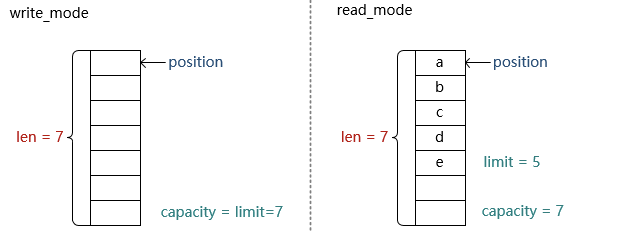
从写模式转换成读模式
limit设置为position+1,position设置为0。
从读模式转换成写模式
limit设置为capacity,position设置为0。
往Buffer中写数据
1.将数据从Channel读取到Buffer中。
2.使用Buffer的put()方法。
从Buffer中读数据
1.将Buffer中的数据写入到Channel中。
2.使用Buffer的get()方法
Buffer通用API:
allocate(size)静态静态:初始化一个Buffer。

flip():将buffer从写模式转换成读模式。

array():将Buffer中的内容转换成数组(不受limit控制)

get():获取Buffer中的内容。

hasRemaining():判断Buffer中是否还有未读的元素(limit - (postion+1) )

rewind():将positon设置为0。

clear():将limit设置为capacity,position设置为0。

compact():将所有未读的元素移动到Buffer的起始处,position指向最后一个未读的元素的下一位,limit设置为capacity。

*clear()和compact()方法都可以理解成将Buffer从读模式转换成写模式,区别在于compact()方法会保留未读取的元素。

mark():在当前position处打一个标记。

reset():将position恢复到标记处。
Selector
Selector用于监听多个Channel的多个事件(单线程)
Selector --> A[Channel];
Selector --> B[Channel];
Selector --> C[Channel];
A --> E1[connect];
B --> E2[accept];
C --> E3[connect];
C --> E4[read];
Channel的事件类型
1.连接就绪:当SocketChannel、DatagramChannel成功与服务器建立连接时将会触发连接就绪事件。
2.接收就绪:当有连接到达服务器时将会触发接收就绪事件。
3.读就绪:当SocketChannel、DatagramChannel有数据可读时将会触发读就绪事件。
4.写就绪:当SocketChannel、DatagramChannel可以进行数据写入时将会触发写就绪事件。
SelectionKey
SelectionKey用于存储Selector与Channel之间的相关信息。
SelectionKey中提供了四个常量分别代表Channel的事件类型。
SelectionKey.OP_CONNECT

SelectionKey.OP_ACCEPT

SelectionKey.OP_READ

SelectionKey.OP_WRITE
SelectableChannel提供的register(selector,interest)方法用于将Channel注册到Selector中,同时需要向Selector传递要监听此Channel的事件类型,当要监听的事件类型不止一个时可以使用或运算,当将Channel注册到Selector后会返回SelectionKey实例,用于存储Selector与此Channel之间的相关信息。
SelectionKey API:
interestOps()方法:返回Selector监听此Channel的事件类型。

readyOps()方法:返回此Channel目前就绪的事件。

isAcceptable():判断Channel是否接收就绪。

isConnectable():判断Channel是否连接就绪。

isReadable():判断Channel是否读就绪。

isWriteable():判断Channel是否写就绪。

channel():返回具体的Channel实例。

selector():返回Selector实例。

attach():往SelectionKey中添加一个附加对象。

attachment():返回保存在SelectionKey中的附加对象。
Selector API:
open()静态方法:创建一个Selector。

select()方法:该方法会一直阻塞线程直到所监听的Channel有事件就绪,返回就绪的Channel个数(只会返回新就绪的Channel个数)

selectedKeys()方法:返回就绪的Channel对应的SelectionKey。

*当Channel就绪的事件处理完毕后,需要手动删除SelectionKey集合中该Channel对应的SelectionKey,当该Channel再次有事件就绪时会自动加入到Selectionkey集合中。
非阻塞式Channel与Selector
非阻塞式Channel一般与Selector配合使用
当Selector监听到ServerSocketChannel接收就绪时,那么此时可以立即调用ServerSocketChannel的accept()方法获取新连接。
当Selector监听到SocketChannel读就绪时,那么此时可以立即调用SocketChannel的read()方法进行数据的读取。
非阻塞式服务器
/**

 * @Author: Zhuang HaoTang

 * @Date: 2019/10/26 16:35

 * @Description:

 */

public class Server {

    public void start() throws IOException {

        Selector selector = Selector.open();

        ServerSocketChannel serverSocketChannel = createNIOServerSocketChannel();

        System.out.println("start nio server and bind port 8888");

        serverSocketChannel.register(selector, SelectionKey.OP_ACCEPT);

        int ready = selector.select();

        while (ready > 0) {

            System.out.println("ready channel count " + ready);

            Set<SelectionKey> selectionKeySet = selector.selectedKeys();

            for (Iterator<SelectionKey> iterator = selectionKeySet.iterator(); iterator.hasNext(); ) {

                SelectionKey selectionKey = iterator.next();

                if (selectionKey.isAcceptable()) {

                    System.out.println("acceptable");

                    acceptHandler(selectionKey);

                } else if (selectionKey.isReadable()) {

                    System.out.println("readable");

                    readHandler(selectionKey);

                }

                iterator.remove();

            }

            ready = selector.select();

        }

    }

    private ServerSocketChannel createNIOServerSocketChannel() throws IOException {

        ServerSocketChannel serverSocketChannel = ServerSocketChannel.open();

        serverSocketChannel.bind(new InetSocketAddress(InetAddress.getLocalHost(), 8888));

        serverSocketChannel.configureBlocking(false);

        return serverSocketChannel;

    }

    private void acceptHandler(SelectionKey selectionKey) throws IOException {

        Selector selector = selectionKey.selector();

        ServerSocketChannel serverSocketChannel = (ServerSocketChannel) selectionKey.channel();

        SocketChannel socketChannel = serverSocketChannel.accept();

        socketChannel.configureBlocking(false);

        socketChannel.register(selector, SelectionKey.OP_READ);

        System.out.println("accept client connection " + socketChannel.getLocalAddress());

    }

    private void readHandler(SelectionKey selectionKey) throws IOException {

        SocketChannel socketChannel = (SocketChannel) selectionKey.channel();

        ByteBuffer byteBuffer = ByteBuffer.allocate(100);

        int num = socketChannel.read(byteBuffer);

        if(num == -1){ // 连接已断开

            System.out.println("client "+socketChannel.getLocalAddress() + " disconnection");

            socketChannel.close();

            return;

        }

        byteBuffer.flip();

        while (byteBuffer.hasRemaining()) {

            byte b = byteBuffer.get();

            System.out.println((char) b);

        }

    }

    public static void main(String[] args) throws IOException {

        Server server = new Server();

        server.start();

    }

}
*一个Channel不会同时有多个事件就绪,以事件为单位。
*当客户端断开连接,那么将会触发读就绪,并且channel的read()方法返回-1,表示连接已断开,服务器应该要做出处理,关闭这个连接。
客户端
/**

 * @Auther: Zhuang HaoTang

 * @Date: 2019/10/26 16:36

 * @Description:

 */

public class Client {

    public static void main(String[] args) throws IOException, InterruptedException {

        SocketChannel socketChannel = SocketChannel.open();

        socketChannel.connect(new InetSocketAddress(InetAddress.getLocalHost(),8888));

        String message = "today is sunday";

        ByteBuffer byteBuffer = ByteBuffer.allocate(message.getBytes().length);

        byteBuffer.put(message.getBytes());

        byteBuffer.flip();

        socketChannel.write(byteBuffer);

        Thread.sleep(5000);

    }

}
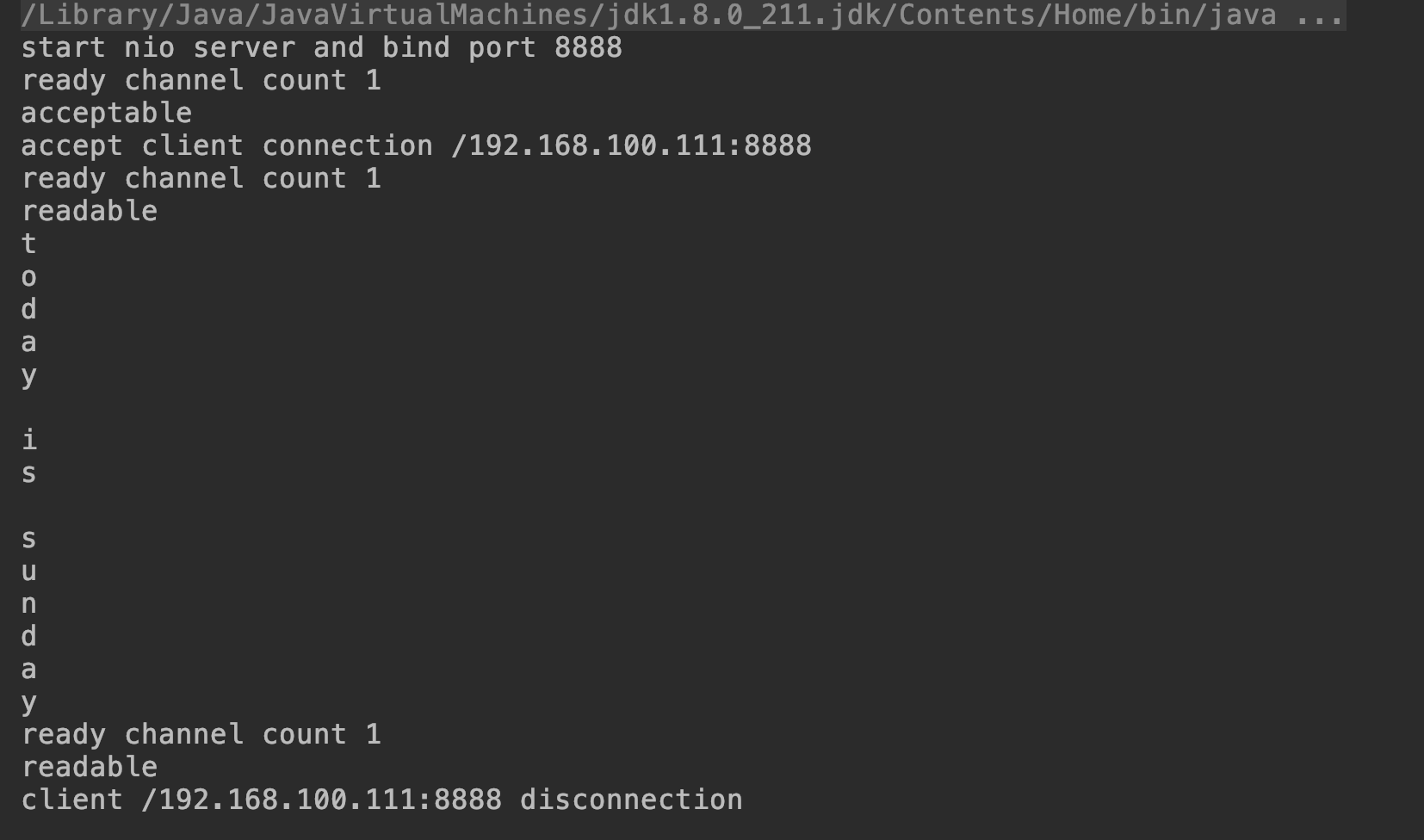
运行结果
Reactor模式
Reactor有三种模式
1.Reactor单线程模式

2.Reactor多线程模式

3.主从Reactor多线程模式
*Reactor模式是在NIO下实现的。
Reactor单线程模式
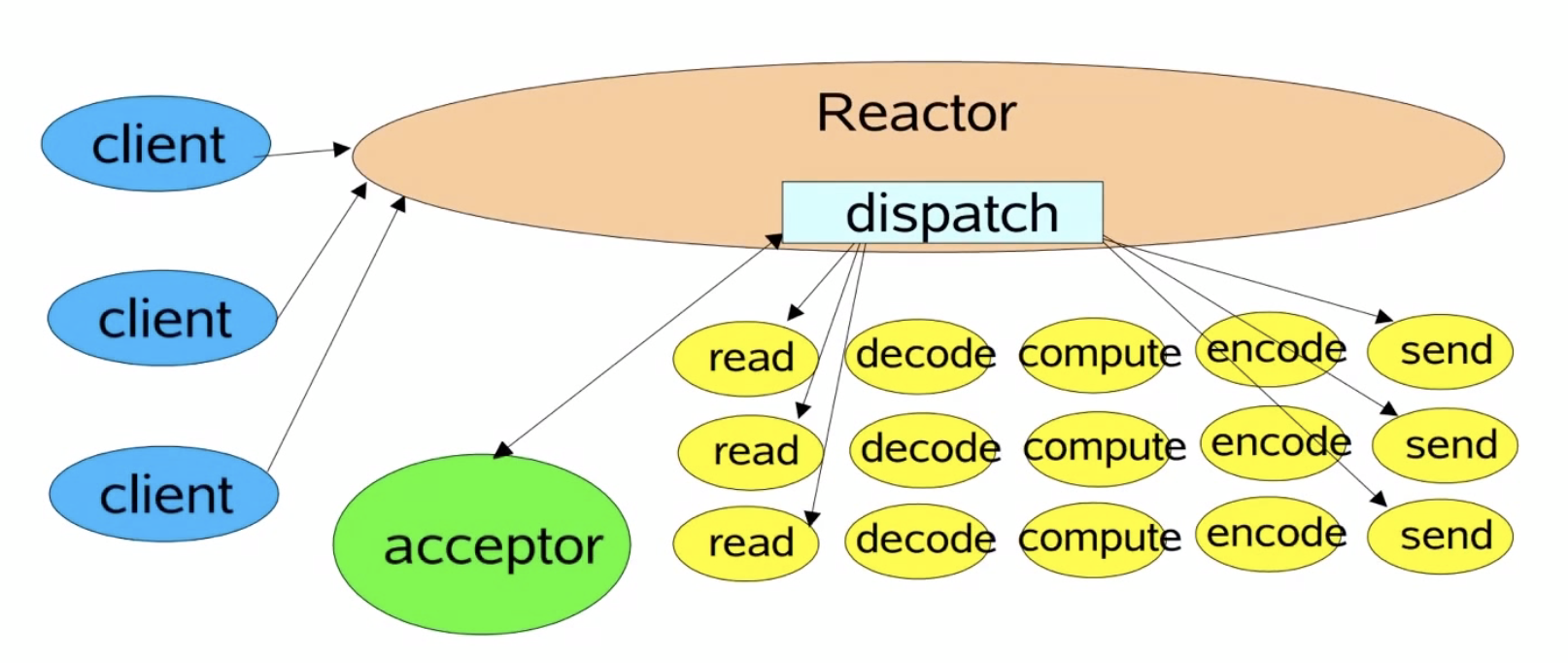
1.单线程的事件分化器,同时这个线程需要处理接收、读、写就绪事件。
/**

 * @Author: Zhuang HaoTang

 * @Date: 2019/10/26 16:35

 * @Description:

 */

public class ReactorSingleThreadServer {

    private void start() throws IOException {

        Selector selector = Selector.open();

        ServerSocketChannel serverSocketChannel = createNIOServerSocketChannel();

        System.out.println("start nio server and bind port 8888");

        serverSocketChannel.register(selector, SelectionKey.OP_ACCEPT);

        int ready = selector.select();

        while (ready > 0) {

            System.out.println("ready channel count " + ready);

            Set<SelectionKey> selectionKeySet = selector.selectedKeys();

            for (Iterator<SelectionKey> iterator = selectionKeySet.iterator(); iterator.hasNext(); ) {

                SelectionKey selectionKey = iterator.next();

                if (selectionKey.isAcceptable()) {

                    System.out.println("acceptable");

                    acceptHandler(selectionKey);

                } else if (selectionKey.isReadable()) {

                    System.out.println("readable");

                    readHandler(selectionKey);

                }

                iterator.remove();

            }

            ready = selector.select();

        }

    }

    private ServerSocketChannel createNIOServerSocketChannel() throws IOException {

        ServerSocketChannel serverSocketChannel = ServerSocketChannel.open();

        serverSocketChannel.bind(new InetSocketAddress(InetAddress.getLocalHost(), 8888));

        serverSocketChannel.configureBlocking(false);

        return serverSocketChannel;

    }

    private void acceptHandler(SelectionKey selectionKey) throws IOException {

        Selector selector = selectionKey.selector();

        ServerSocketChannel serverSocketChannel = (ServerSocketChannel) selectionKey.channel();

        SocketChannel socketChannel = serverSocketChannel.accept();

        socketChannel.configureBlocking(false);

        socketChannel.register(selector, SelectionKey.OP_READ);

        System.out.println("accept client connection " + socketChannel.getLocalAddress());

    }

    private void readHandler(SelectionKey selectionKey) throws IOException {

        SocketChannel socketChannel = (SocketChannel) selectionKey.channel();

        ByteBuffer byteBuffer = ByteBuffer.allocate(100);

        int num = socketChannel.read(byteBuffer);

        if (num == -1) {

            System.out.println("client " + socketChannel.getLocalAddress() + " disconnection");

            socketChannel.close();

            return;

        }

        byteBuffer.flip();

        while (byteBuffer.hasRemaining()) {

            byte b = byteBuffer.get();

            System.out.println((char) b);

        }

    }

    public static void main(String[] args) throws IOException {

        ReactorSingleThreadServer server = new ReactorSingleThreadServer();

        server.start();

    }

}
Reactor多线程模式
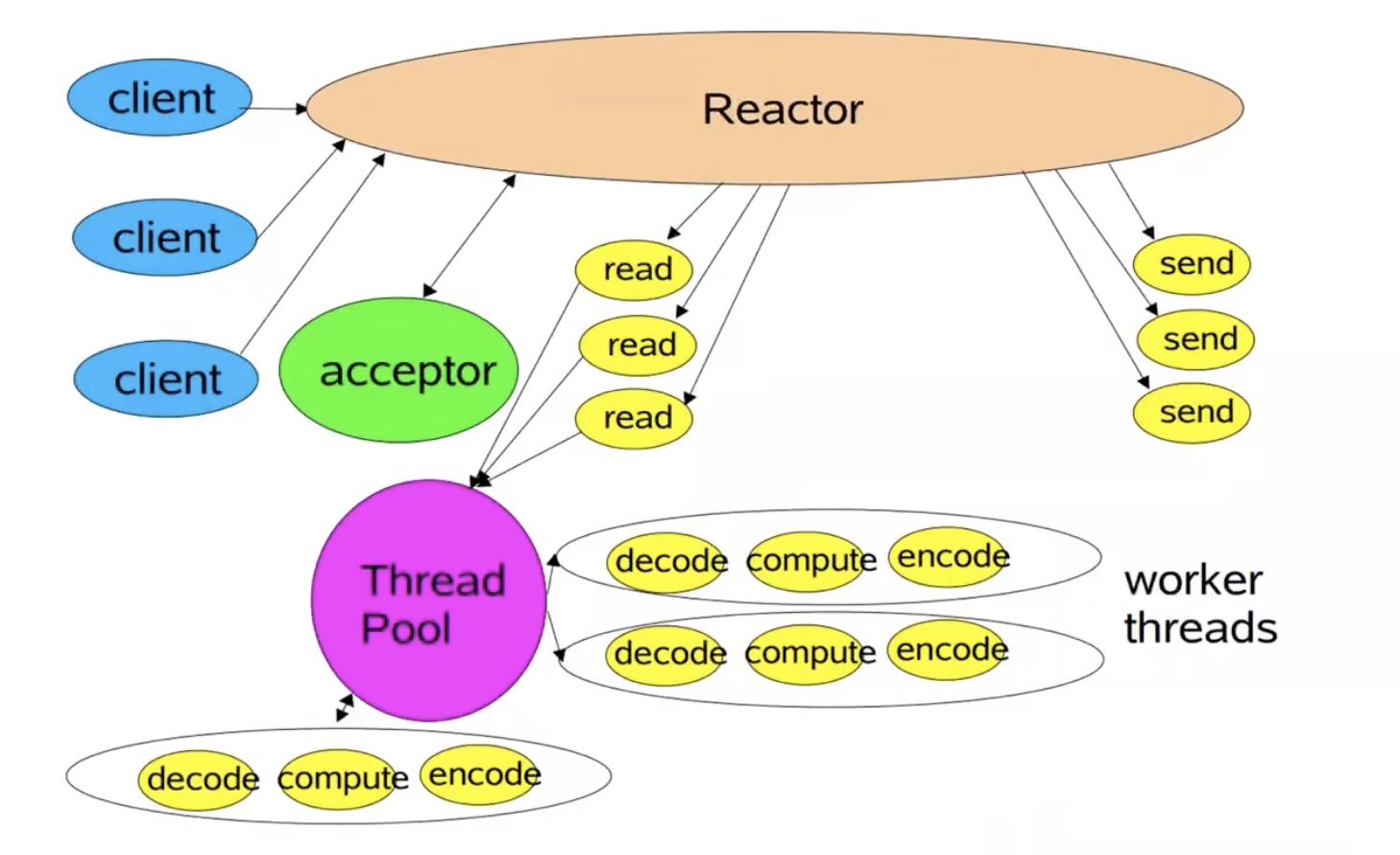
1.单线程的事件分发器。
2.具体事件类型的Handler线程池(针对读写就绪事件)
3.业务线程池。
/**

 * @Author: Zhuang HaoTang

 * @Date: 2019-10-28 17:00

 * @Description:

 */

public class ReactorMultiThreadServer {

    private ThreadPoolExecutor eventHandlerPool = new ThreadPoolExecutor(10, 50, 2, TimeUnit.MINUTES, new ArrayBlockingQueue<Runnable>(200), new ThreadPoolExecutor.CallerRunsPolicy());

    private void start() throws IOException {

        Selector selector = Selector.open();

        ServerSocketChannel serverSocketChannel = createNIOServerSocketChannel();

        System.out.println("start nio server and bind port 8888");

        serverSocketChannel.register(selector, SelectionKey.OP_ACCEPT);

        selector.select();

        for (;;) {

            Set<SelectionKey> selectionKeySet = selector.selectedKeys();

            for (Iterator<SelectionKey> iterator = selectionKeySet.iterator(); iterator.hasNext(); ) {

                final SelectionKey selectionKey = iterator.next();

                if (selectionKey.isAcceptable()) {

                    System.out.println("acceptable");

                    acceptHandler(selectionKey); // 单线程同步处理接收就绪

                } else if (selectionKey.isReadable()) {

                    System.out.println("readable");

                    eventHandlerPool.submit(new Runnable() {

                        @Override

                        public void run() {

                            readHandler(selectionKey);

                        }

                    });

                }

                iterator.remove();

            }

            selector.select();

        }

    }

    private ServerSocketChannel createNIOServerSocketChannel() throws IOException {

        ServerSocketChannel serverSocketChannel = ServerSocketChannel.open();

        serverSocketChannel.bind(new InetSocketAddress(InetAddress.getLocalHost(), 8888));

        serverSocketChannel.configureBlocking(false);

        return serverSocketChannel;

    }

    private void acceptHandler(SelectionKey selectionKey) throws IOException {

        Selector selector = selectionKey.selector();

        ServerSocketChannel serverSocketChannel = (ServerSocketChannel) selectionKey.channel();

        SocketChannel socketChannel = serverSocketChannel.accept();

        if (socketChannel != null) {

            socketChannel.configureBlocking(false);

            socketChannel.register(selector, SelectionKey.OP_READ);

            System.out.println("accept client connection " + socketChannel.getLocalAddress());

        }

    }

    private void readHandler(SelectionKey selectionKey) {

        SocketChannel socketChannel = (SocketChannel) selectionKey.channel();

        ByteBuffer byteBuffer = ByteBuffer.allocate(100);

        try {

            int num = socketChannel.read(byteBuffer);

            if (num == -1) {

                System.out.println("client " + socketChannel.getLocalAddress() + " disconnection");

                socketChannel.close(); // 底层有些逻辑

                return;

            }

            byteBuffer.flip();

            while (byteBuffer.hasRemaining()) {

                byte b = byteBuffer.get();

                System.out.println((char) b);

            }

        } catch (Exception e) {

            System.out.println("由于连接关闭导致并发线程读取异常");

        }

    }

    public static void main(String[] args) throws IOException {

        ReactorMultiThreadServer reactorServer = new ReactorMultiThreadServer();

        reactorServer.start();

    }

}
主从Reactor多线程模式
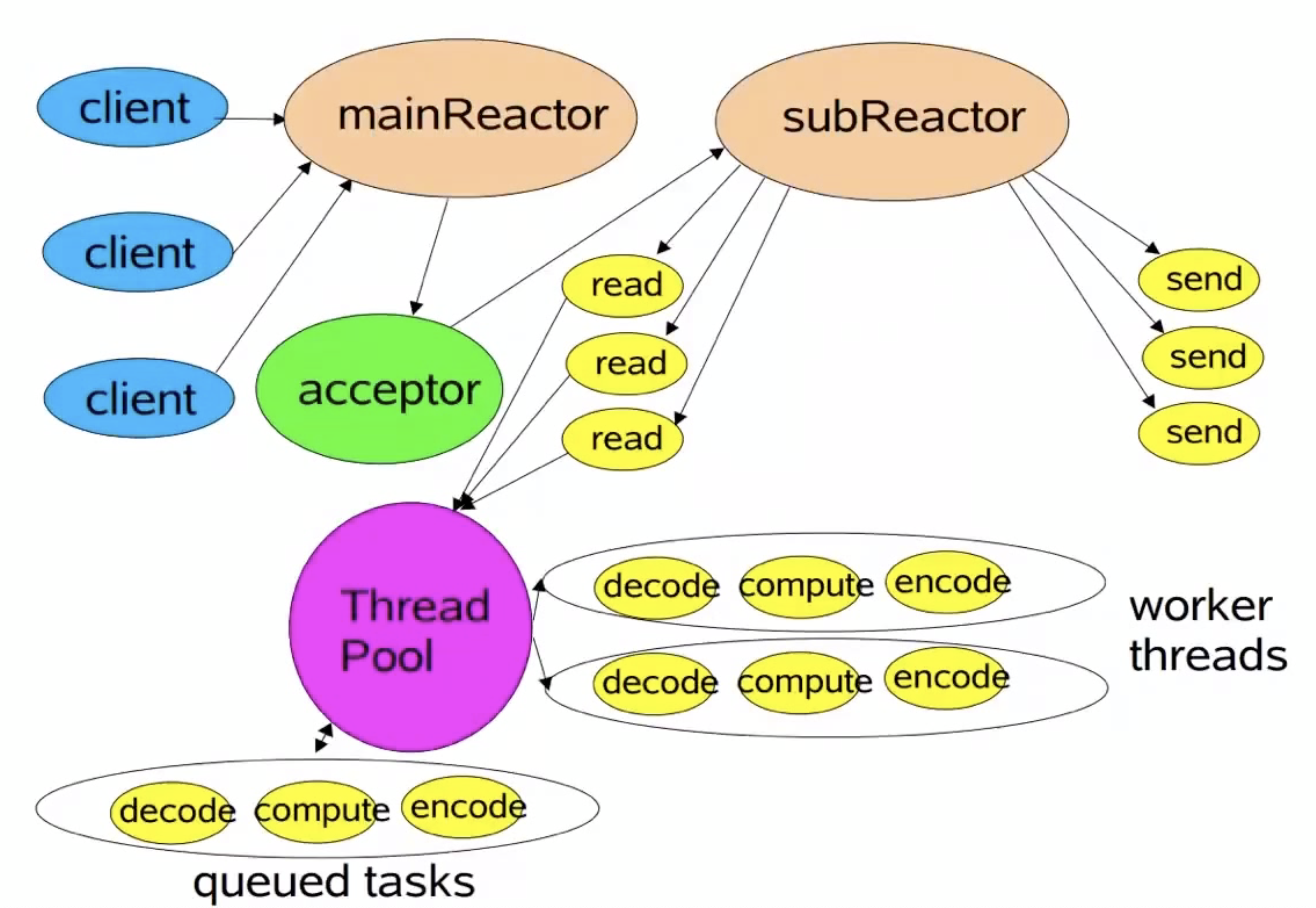
1.使用两个单线程的事件分发器。
第一个事件分发器只负责监听ServerSocketChannel的接收就绪事件,同时ServerSocketChannel接收到的连接要注册到第二个事件分发器中。

第二个事件分发器只负责监听SocketChannel的读、写就绪事件。
2.具体事件类型的Handler线程池(针对读写就绪事件)
3.业务线程池。
/**

 * @Author: Zhuang HaoTang

 * @Date: 2019-10-28 17:00

 * @Description:

 */

public class MainSubReactorMultiThreadServer {

    private ThreadPoolExecutor eventHandlerPool = new ThreadPoolExecutor(10, 50, 2, TimeUnit.MINUTES, new ArrayBlockingQueue<Runnable>(200), new ThreadPoolExecutor.CallerRunsPolicy());

    private void start() throws IOException {

        final Selector mainSelector = Selector.open();

        final Selector subSelector = Selector.open();

        new Thread(new Runnable() {

            @Override

            public void run() {

                try {

                    startMainSelector(mainSelector, subSelector);

                } catch (IOException e) {

                    e.printStackTrace();

                }

            }

        }).start();

        new Thread(new Runnable() {

            @Override

            public void run() {

                try {

                    startSubSelector(subSelector);

                } catch (IOException e) {

                    e.printStackTrace();

                }

            }

        }).start();

    }

    /**

     * 第一个事件分发器,用于监听ServerSocketChannel的接收就绪事件

     */

    private void startMainSelector(Selector mainSelector, final Selector subSelector) throws IOException {

        ServerSocketChannel serverSocketChannel = createNIOServerSocketChannel();

        System.out.println("start nio server and bind port 8888");

        serverSocketChannel.register(mainSelector, SelectionKey.OP_ACCEPT);

        mainSelector.select();

        for (; ; ) {

            Set<SelectionKey> selectionKeySet = mainSelector.selectedKeys();

            SelectionKey selectionKey = Iterables.getOnlyElement(selectionKeySet);

            if (selectionKey.isAcceptable()) {

                System.out.println("acceptable");

                acceptHandler(selectionKey, subSelector); // 单线程同步处理接收就绪

                selectionKeySet.clear();

            }

            mainSelector.select();

        }

    }

    /**

     * 第二个事件分发器,用于监听SockChannel的读写就绪事件

     */

    private void startSubSelector(Selector subSelector) throws IOException {

        subSelector.select();

        for (; ; ) {

            Set<SelectionKey> selectionKeySet = subSelector.selectedKeys();

            for (Iterator<SelectionKey> iterator = selectionKeySet.iterator(); iterator.hasNext(); ) {

                final SelectionKey selectionKey = iterator.next();

                if (selectionKey.isReadable()) {

                    System.out.println("readable");

                    eventHandlerPool.submit(new Runnable() {

                        @Override

                        public void run() {

                            readHandler(selectionKey);

                        }

                    });

                    iterator.remove();

                }

            }

            subSelector.select();

        }

    }

    private ServerSocketChannel createNIOServerSocketChannel() throws IOException {

        ServerSocketChannel serverSocketChannel = ServerSocketChannel.open();

        serverSocketChannel.bind(new InetSocketAddress(InetAddress.getLocalHost(), 8888));

        serverSocketChannel.configureBlocking(false);

        return serverSocketChannel;

    }

    private void acceptHandler(SelectionKey selectionKey, Selector subSelector) throws IOException {

        ServerSocketChannel serverSocketChannel = (ServerSocketChannel) selectionKey.channel();

        SocketChannel socketChannel = serverSocketChannel.accept();

        if (socketChannel != null) {

            socketChannel.configureBlocking(false);

            subSelector.wakeup(); // 往Selector注册Channel时,Selector要处于非阻塞状态

            socketChannel.register(subSelector, SelectionKey.OP_READ);

            System.out.println("accept client connection " + socketChannel.getLocalAddress() + " and register to subSelector");

        }

    }

    private void readHandler(SelectionKey selectionKey) {

        SocketChannel socketChannel = (SocketChannel) selectionKey.channel();

        ByteBuffer byteBuffer = ByteBuffer.allocate(100);

        try {

            int num = socketChannel.read(byteBuffer);

            if (num == -1) {

                System.out.println("client " + socketChannel.getLocalAddress() + " disconnection");

                socketChannel.close(); // 底层有些逻辑

                return;

            }

            byteBuffer.flip();

            while (byteBuffer.hasRemaining()) {

                byte b = byteBuffer.get();

                System.out.println((char) b);

            }

        } catch (Exception e) {

            System.out.println("由于连接关闭导致并发线程读取异常");

        }

    }

    public static void main(String[] args) throws IOException {

        MainSubReactorMultiThreadServer reactorServer = new MainSubReactorMultiThreadServer();

        reactorServer.start();

    }

}
通用客户端
/**

 * @Author: Zhuang HaoTang

 * @Date: 2019/10/26 16:36

 * @Description:

 */

public class Client {

    public static void main(String[] args) throws IOException, InterruptedException {

        SocketChannel socketChannel = SocketChannel.open();

        socketChannel.connect(new InetSocketAddress(InetAddress.getLocalHost(), 8888));

        String message = "today is sunday";

        ByteBuffer byteBuffer = ByteBuffer.allocate(message.getBytes().length);

        byteBuffer.put(message.getBytes());

        byteBuffer.flip();

        socketChannel.write(byteBuffer);

        Thread.sleep(5000);

        ByteBuffer byteBuffer1 = ByteBuffer.allocate("wo".getBytes().length).put("wo".getBytes());

        byteBuffer1.flip();

        socketChannel.write(byteBuffer1);

        ByteBuffer receiveBuffer = ByteBuffer.allocate(1024);

        while (true) {

            socketChannel.read(receiveBuffer);

            receiveBuffer.flip();

            while (receiveBuffer.hasRemaining()) {

                System.out.println((char)receiveBuffer.get());

            }

            receiveBuffer.clear();

        }

    }

}
*主线程不需要等待具体事件类型的Handler处理完毕,直接异步返回,那么将会导致事件重复就绪,程序做出相应的控制即可。
*当channel有数据可读时,将会触发读就绪,那么主线程将会不停的向线程池提交任务,直到某个线程读取完毕,此时将会停止读就绪,其他线程读取到的个数为0。
*当客户端断开连接时,将会触发读就绪,那么主线程将会不停的向线程池提交任务,直到某个线程关闭连接,此时将会停止读就绪
一般不会直接去使用JAVA NIO,只是通过JAVA NIO学习他的设计思想,如果要想搭建NIO服务器那么应该使用Netty等NIO框架。
关于BIO和NIO的选择
BIO即同步并阻塞,线程会进入阻塞状态,如果并发连接数只有几百,那么创建几百个线程去处理是没有任何问题的,这种方式更加简单高效。
但是如果并发连接数达到几万,那么显然创建几万个线程去处理是不可行的,系统承受不了这个负荷,此时应该使用NIO,即同步非阻塞,利用更少的线程去做更多的事情。
JAVA NIO就是使用NIO(同步非阻塞),使用IO多路复用的Select模型。
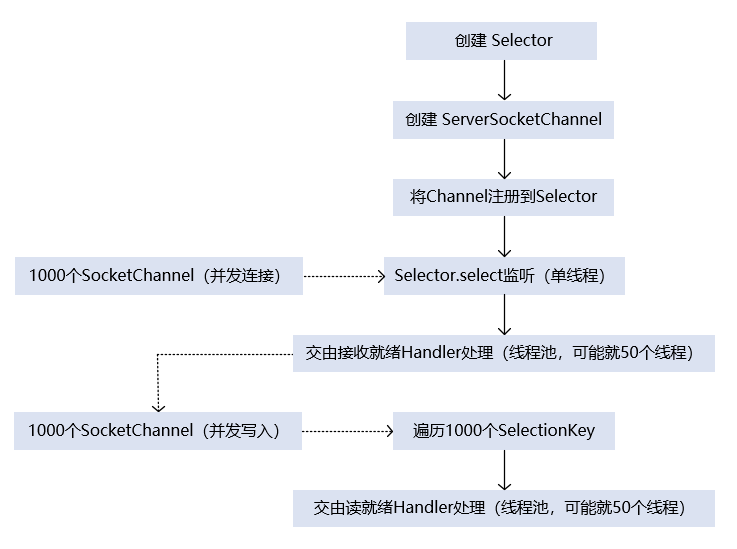
*不管客户端有多少个并发连接和请求,服务端总是可以利用更少的线程去处理(单线程事件分发器 和 具体事件类型的Handler线程池)
JAVA中的NIO (New IO)的更多相关文章
- java中的NIO和IO到底是什么区别?20个问题告诉你答案
摘要:NIO即New IO,这个库是在JDK1.4中才引入的.NIO和IO有相同的作用和目的,但实现方式不同,NIO主要用到的是块,所以NIO的效率要比IO高很多. 本文分享自华为云社区<jav ...
- Java中的NIO和IO的对比分析
总的来说,java中的IO和NIO主要有三点区别: IO NIO 面向流 面向缓冲 阻塞IO 非阻塞IO 无 选择器(Selectors) 1.面向流与面向缓冲 Java NIO和IO之间第一个最大的 ...
- Java中的NIO及IO
1.概述 Java NIO(New IO) 是从Java 1.4版本开始引入的一个新的IO API,可以替代标准的Java IO API.NIO与原来的IO有同样的作用和目的,但是使用的方式完全不同, ...
- Java中的NIO基础知识
上一篇介绍了五种NIO模型,本篇将介绍Java中的NIO类库,为学习netty做好铺垫 Java NIO 由3个核心组成,分别是Channels,Buffers,Selectors.本文主要介绍着三个 ...
- 关于Java中面向对象章节、IO 流中的重点基础知识。
一.面向对象的三大特征,以及作用. 答:面向对象的三大特征即,封装性.继承性.多态性. 其分别的作用为 : 封装作用:将数据封装起来,提高数据的安全性, 继承作用:提高代码的复用性,减少冗余代码. 多 ...
- 再谈一次关于Java中的 AIO(异步IO) 与 NIO(非阻塞IO)
今天用ab进行压力测试时,无意发现的: Requests per second: xxx [#/sec] (mean) ab -n 5000 -c 1000 http://www:8080/up ...
- JAVA中的NIO(二)
一.内存文件映射 内存文件映射允许我们创建和修改那些因为太大而不能放入内存中的文件.有了内存文件映射,我们就可以假定整个文件都在内存中,而且可以完全把文件当作数组来访问. package com.dy ...
- JAVA中的NIO(一)
1.IO与NIO IO就是普通的IO,或者说原生的IO.特点:阻塞式.内部无缓冲,面向流. NIO就是NEW IO,比原生的IO要高效.特点:非阻塞.内部有缓存,面向缓冲. 要实现高效的IO操作,尤其 ...
- JAVA 中BIO,NIO,AIO的理解
[转自]http://qindongliang.iteye.com/blog/2018539 ?????????????????????在高性能的IO体系设计中,有几个名词概念常常会使我们感到迷惑不解 ...
随机推荐
- 体验StartOS
旧电脑,原来使用的是win xp.随着win及其支持打软件打“成长”,电脑运行越来越慢了.一个操作需要很长的时间等待,终于,失去了耐心,换了新的电脑. 旧电脑弃置多年,留之无用,弃之可惜.偶发奇想,换 ...
- Java 学习笔记之 实例变量非线程安全
实例变量非线程安全: 如果多个线程共同访问1个对象中的实例变量,则可能出现“非线程安全”问题. public class UnSafeHasSelfPrivateNum { private int n ...
- 链表二:链表中倒数第k个结点
题目:链表中倒数第k个结点描述:输入一个链表,输出该链表中倒数第k个结点.解决方案:思路: 根据规律得出倒数第k个节点是 n-k+1个节点 方法一:先计算出链表的长度,在循环走到n-k+1步.(相当于 ...
- TinyXML2的快速实践
最近遇到个需要在C++中处理XML文件的需求,虽然对此方面并不是很熟,但好在有GitHub上的awesome-cpp项目的帮助,还是收获了足够的相关知识. 类库 常用的或被推荐的XML类库有以下数个选 ...
- 记录 java 安卓 各类引用包报错处理方法 例如 android.support.v4.app.+ ,io.reactivex.+
可能导致的原因: 1. 引用包不存在(存在也报错就是 版本不对) 2.有资源文件 重名,报错之类的问题 3. 别人提交了资源文件或者配置文件(这是最常见的,特别是新手,我也是),后续遇到再加 解决方法 ...
- Mac 10.14 安装抓包工具Fiddler
环境安装 第一步: 首先,Mac下需要使用.Net编译后的程序,需要用到跨平台的方案Mono(现阶段微软已推出跨平台的方案.Net Core,不过暂时只支持控制台程序).安装程序可以从http://w ...
- SLAM中的卡方分布
视觉slam中相邻帧特征点匹配时,动辄上千个特征点,匹配错误的是难免的,而误匹配势必会对位姿精度以及建图精度造成影响,那么如何分辨哪些是误匹配的点对儿呢?如果已知两帧的的单应矩阵,假设单应矩阵是没有误 ...
- 大型php网站性能和并发访问优化方案
网站性能优化对于大型网站来说非常重要,一个网站的访问打开速度影响着用户体验度,网站访问速度慢会造成高跳出率,小网站很好解决,那对于大型网站由于栏目多,图片和图像都比较庞大,那该怎么进行整体性能优化呢? ...
- Unreal Engine 4 系列教程 Part 4:UI教程
.katex { display: block; text-align: center; white-space: nowrap; } .katex-display > .katex > ...
- AppBoxFuture: 服务模型的在线调试
框架内的服务模型(ServiceModel)用于处理各类业务逻辑(如最简单的CRUD操作),在设计时以类似于伪代码的形式存在,发布时后端会通过Roslyn转换并编译为运行时代码.为了方便开发者更简 ...