
Chapter 6(树)
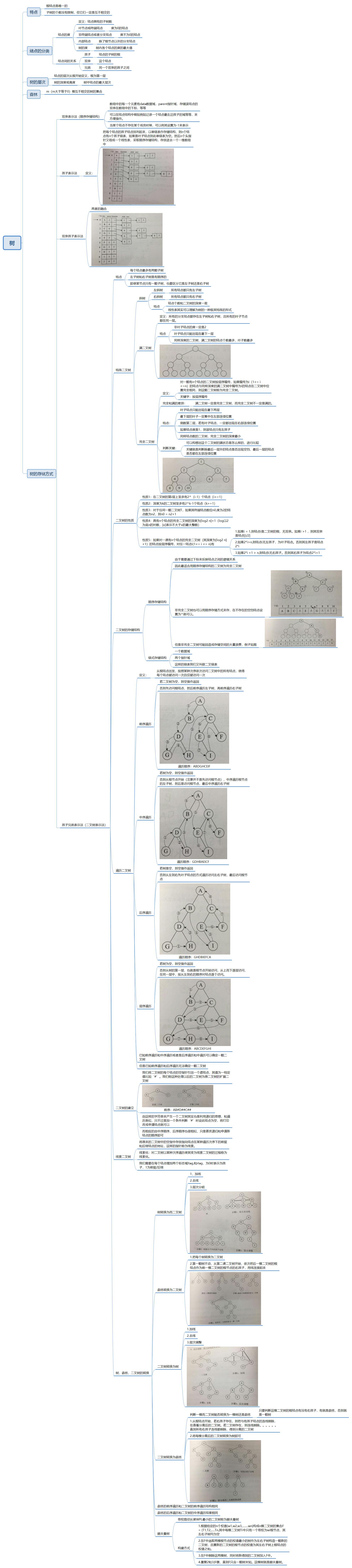
//****************双亲表示法************************

#define Max_TREE_SIZE 100

typedef int TElemType;

typedef struct PTNode //结点结构

{

	TElemType data;

	int parent;

}PTNode;

typedef struct

{

	PTNode nodes[Max_TREE_SIZE];//结点数组

	int r,n;

}Ptree;

//****************孩子表示法************************

typedef struct CTNode //孩子结点

{

	int child;

	struct CTNode *next;

}*ChildPtr;

typedef struct //表头结构

{

	TElemType data;

	ChildPtr firstChild;

}CTBox;

typedef struct

{

	CTBox nodes[Max_TREE_SIZE]; //结点数组

	int r,n;

}CTree;

//****************双亲孩子表示法************************

typedef struct CTNode

{

	int child;

	struct CTNode *next;

}*ChildPtr;

typedef struct

{

	TElemType data;

	int parent;

	ChildPtr firstChild;

}CTBox;

typedef struct

{

	CTBox nodes[Max_TREE_SIZE];

	int r,n;

}CTree;
//****************双亲表示法************************
#define Max_TREE_SIZE 100
typedef int TElemType;
typedef struct PTNode //结点结构
{
TElemType data;
int parent;
}PTNode;
typedef struct
{
PTNode nodes[Max_TREE_SIZE];//结点数组
int r,n;
}Ptree;
//****************孩子表示法************************
typedef struct CTNode //孩子结点
{
int child;
struct CTNode *next;
}*ChildPtr;
typedef struct //表头结构
{
TElemType data;
ChildPtr firstChild;
}CTBox;
typedef struct
{
CTBox nodes[Max_TREE_SIZE]; //结点数组
int r,n;
}CTree;
//****************双亲孩子表示法************************
typedef struct CTNode
{
int child;
struct CTNode *next;
}*ChildPtr;
typedef struct
{
TElemType data;
int parent;
ChildPtr firstChild;
}CTBox;
typedef struct
{
CTBox nodes[Max_TREE_SIZE];
int r,n;
}CTree;
//**************************BiTree.h*******************************

#ifndef BITREE_H

#define BITREE_H

#include <stdio.h>

#include <stdlib.h>

typedef int datatype;

typedef struct Tree

{

	datatype data;

	struct Tree *left;

	struct Tree *right;

}Node,*BiTree;

//以输入扩展前序递归的方式创建二叉树

void CreateBiTree(BiTree *T);

//后序遍历

void NextOrderTravel(BiTree T);

#endif //BITREE_H

//**************************BiTree.c*******************************

#include "BiTree.h"

//以输入扩展前序递归的方式创建二叉树

void CreateBiTree(BiTree *T)

{

	char ch;

	scanf("%c",&ch);

	if('#' == ch)

	{

		*T = NULL;

	}

	else

	{

		*T = (BiTree)malloc(sizeof(Node));

		(*T)->data = ch;

		CreateBiTree(&(*T)->left);

		CreateBiTree(&(*T)->right);

	}

}

void NextOrderTravel(BiTree T)

{

	if(NULL == T)return;

	NextOrderTravel(T->left);

	NextOrderTravel(T->right);

	printf("%c ",T->data);

}

//**************************BiTreeTest.c*******************************

#include <stdio.h>

#include "BiTree.h"

char *str;

void CreateBiTreeStr(BiTree *T)

{

	char ch = *str++;

	if('#' == ch)

	{

		*T = NULL;

	}

	else

	{

		*T = (BiTree)malloc(sizeof(Node));

		(*T)->data = ch;

		CreateBiTreeStr(&(*T)->left);

		CreateBiTreeStr(&(*T)->right);

	}

}

//将这个序列以字符串的形式输入函数生成二叉树

void Create(BiTree *T,char *str1)

{

	str = str1;

	CreateBiTreeStr(T);

}

int main()

{

	BiTree T = NULL;

	CreateBiTree(&T);

	NextOrderTravel(T);

	printf("\n-------\n");

	char *str1 = "AB#D##C##";

	Create(&T,str1);

	NextOrderTravel(T);

}//**************************BiTree.h*******************************
#ifndef BITREE_H
#define BITREE_H
#include <stdio.h>
#include <stdlib.h>
typedef int datatype;
typedef struct Tree
{
datatype data;
struct Tree *left;
struct Tree *right;
}Node,*BiTree;
//以输入扩展前序递归的方式创建二叉树
void CreateBiTree(BiTree *T);
//后序遍历
void NextOrderTravel(BiTree T);
#endif //BITREE_H
//**************************BiTree.c*******************************
#include "BiTree.h"
//以输入扩展前序递归的方式创建二叉树
void CreateBiTree(BiTree *T)
{
char ch;
scanf("%c",&ch);
if('#' == ch)
{
*T = NULL;
}
else
{
*T = (BiTree)malloc(sizeof(Node));
(*T)->data = ch;
CreateBiTree(&(*T)->left);
CreateBiTree(&(*T)->right);
}
}
void NextOrderTravel(BiTree T)
{
if(NULL == T)return;
NextOrderTravel(T->left);
NextOrderTravel(T->right);
printf("%c ",T->data);
}
//**************************BiTreeTest.c*******************************
#include <stdio.h>
#include "BiTree.h"
char *str;
void CreateBiTreeStr(BiTree *T)
{
char ch = *str++;
if('#' == ch)
{
*T = NULL;
}
else
{
*T = (BiTree)malloc(sizeof(Node));
(*T)->data = ch;
CreateBiTreeStr(&(*T)->left);
CreateBiTreeStr(&(*T)->right);
}
}
//将这个序列以字符串的形式输入函数生成二叉树
void Create(BiTree *T,char *str1)
{
str = str1;
CreateBiTreeStr(T);
}
int main()
{
BiTree T = NULL;
CreateBiTree(&T);
NextOrderTravel(T);
printf("\n-------\n");
char *str1 = "AB#D##C##";
Create(&T,str1);
NextOrderTravel(T);
}
#include <stdio.h>

#include <stdlib.h>

typedef char ElemType;

// 线索存储标志位

// Link(0):表示指向左右孩子的指针

// Thread(1):表示指向前驱后继的线索

typedef enum {Link, Thread} PointerTag;

typedef struct BiThrNode

{

    char data;

    struct BiThrNode *lchild, *rchild;

    PointerTag ltag;

    PointerTag rtag;

} BiThrNode, *BiThrTree;

// 全局变量,始终指向刚刚访问过的结点

BiThrTree pre;

// 创建一棵二叉树,约定用户遵照前序遍历的方式输入数据

void CreateBiThrTree( BiThrTree *T )

{

    char c;

    scanf("%c", &c);

    if( '#' == c )

    {

        *T = NULL;

    }

    else

    {

        *T = (BiThrNode *)malloc(sizeof(BiThrNode));

        (*T)->data = c;

        (*T)->ltag = Link;

        (*T)->rtag = Link;

        CreateBiThrTree(&(*T)->lchild);

        CreateBiThrTree(&(*T)->rchild);

    }

}

// 中序遍历线索化

void InThreading(BiThrTree T)

{

    if( T )

    {

        InThreading( T->lchild );        // 递归左孩子线索化

        if( !T->lchild ) // 如果该结点没有左孩子,设置ltag为Thread,并把lchild指向刚刚访问的结点。

        {

            T->ltag = Thread;

            T->lchild = pre;

        }

        if( !pre->rchild )

        {

            pre->rtag = Thread;

            pre->rchild = T;

        }

        pre = T;

        InThreading( T->rchild );        // 递归右孩子线索化

    }

}

void InOrderThreading( BiThrTree *p, BiThrTree T )

{

    *p = (BiThrTree)malloc(sizeof(BiThrNode));

    (*p)->ltag = Link;

    (*p)->rtag = Thread;

    (*p)->rchild = *p;

    if( !T )

    {

        (*p)->lchild = *p;

    }

    else

    {

        (*p)->lchild = T;

        pre = *p;

        InThreading(T);

        pre->rchild = *p;

        pre->rtag = Thread;

        (*p)->rchild = pre;

    }

}

void visit( char c )

{

    printf("%c", c);

}

// 中序遍历二叉树,非递归

void InOrderTraverse( BiThrTree T )

{

    BiThrTree p;

    p = T->lchild;

    while( p != T )

    {

        while( p->ltag == Link )

        {

            p = p->lchild;

        }

        visit(p->data);

        while( p->rtag == Thread && p->rchild != T )

        {

            p = p->rchild;

            visit(p->data);

        }

        p = p->rchild;

    }

}

int main()

{

    BiThrTree P, T = NULL;

    CreateBiThrTree( &T );

    InOrderThreading( &P, T );

    printf("中序遍历输出结果为: ");

    InOrderTraverse( P );

    printf("\n");

    return 0;

} #include <stdio.h>
#include <stdlib.h>
typedef char ElemType;
// 线索存储标志位
// Link(0):表示指向左右孩子的指针
// Thread(1):表示指向前驱后继的线索
typedef enum {Link, Thread} PointerTag;
typedef struct BiThrNode
{
char data;
struct BiThrNode *lchild, *rchild;
PointerTag ltag;
PointerTag rtag;
} BiThrNode, *BiThrTree;
// 全局变量,始终指向刚刚访问过的结点
BiThrTree pre;
// 创建一棵二叉树,约定用户遵照前序遍历的方式输入数据
void CreateBiThrTree( BiThrTree *T )
{
char c;
scanf("%c", &c);
if( '#' == c )
{
*T = NULL;
}
else
{
*T = (BiThrNode *)malloc(sizeof(BiThrNode));
(*T)->data = c;
(*T)->ltag = Link;
(*T)->rtag = Link;
CreateBiThrTree(&(*T)->lchild);
CreateBiThrTree(&(*T)->rchild);
}
}
// 中序遍历线索化
void InThreading(BiThrTree T)
{
if( T )
{
InThreading( T->lchild ); // 递归左孩子线索化
if( !T->lchild ) // 如果该结点没有左孩子,设置ltag为Thread,并把lchild指向刚刚访问的结点。
{
T->ltag = Thread;
T->lchild = pre;
}
if( !pre->rchild )
{
pre->rtag = Thread;
pre->rchild = T;
}
pre = T;
InThreading( T->rchild ); // 递归右孩子线索化
}
}
void InOrderThreading( BiThrTree *p, BiThrTree T )
{
*p = (BiThrTree)malloc(sizeof(BiThrNode));
(*p)->ltag = Link;
(*p)->rtag = Thread;
(*p)->rchild = *p;
if( !T )
{
(*p)->lchild = *p;
}
else
{
(*p)->lchild = T;
pre = *p;
InThreading(T);
pre->rchild = *p;
pre->rtag = Thread;
(*p)->rchild = pre;
}
}
void visit( char c )
{
printf("%c", c);
}
// 中序遍历二叉树,非递归
void InOrderTraverse( BiThrTree T )
{
BiThrTree p;
p = T->lchild;
while( p != T )
{
while( p->ltag == Link )
{
p = p->lchild;
}
visit(p->data);
while( p->rtag == Thread && p->rchild != T )
{
p = p->rchild;
visit(p->data);
}
p = p->rchild;
}
}
int main()
{
BiThrTree P, T = NULL;
CreateBiThrTree( &T );
InOrderThreading( &P, T );
printf("中序遍历输出结果为: ");
InOrderTraverse( P );
printf("\n");
return 0;
}
#include<stdio.h>

#include<stdlib.h>

typedef int ElemType;

struct BTreeNode

{

    ElemType data;

    struct BTreeNode* left;

    struct BTreeNode* right;

};

//1、输出二叉树,可在前序遍历的基础上修改。采用广义表格式,元素类型为int

void PrintBTree_int(struct BTreeNode* BT)

{

    if (BT != NULL)

    {

        printf("%d", BT->data); //输出根结点的值

        if (BT->left != NULL || BT->right != NULL)

        {

            printf("(");

            PrintBTree_int(BT->left); //输出左子树

            if (BT->right != NULL)

                printf(",");

            PrintBTree_int(BT->right); //输出右子树

            printf(")");

        }

    }

}

//2、根据数组 a 中 n 个权值建立一棵哈夫曼树,返回树根指针

struct BTreeNode* CreateHuffman(ElemType a[], int n)

{

    int i, j;

    struct BTreeNode **b, *q;

    b = malloc(n*sizeof(struct BTreeNode));

    for (i = 0; i < n; i++) //初始化b指针数组,使每个指针元素指向a数组中对应的元素结点

    {

        b[i] = malloc(sizeof(struct BTreeNode));

        b[i]->data = a[i];

        b[i]->left = b[i]->right = NULL;

    }

    for (i = 1; i < n; i++)//进行 n-1 次循环建立哈夫曼树

    {

        //k1表示森林中具有最小权值的树根结点的下标,k2为次最小的下标

        int k1 = -1, k2;

        for (j = 0; j < n; j++)//让k1初始指向森林中第一棵树,k2指向第二棵

        {

            if (b[j] != NULL && k1 == -1)

            {

                k1 = j;

                continue;

            }

            if (b[j] != NULL)

            {

                k2 = j;

                break;

            }

        }

        for (j = k2; j < n; j++)//从当前森林中求出最小权值树和次最小

        {

            if (b[j] != NULL)

            {

                if (b[j]->data < b[k1]->data)

                {

                    k2 = k1;

                    k1 = j;

                }

                else if (b[j]->data < b[k2]->data)

                    k2 = j;

            }

        }

        //由最小权值树和次最小权值树建立一棵新树,q指向树根结点

        q = malloc(sizeof(struct BTreeNode));

        q->data = b[k1]->data + b[k2]->data;

        q->left = b[k1];

        q->right = b[k2];

        b[k1] = q;//将指向新树的指针赋给b指针数组中k1位置

        b[k2] = NULL;//k2位置为空

    }

    free(b); //删除动态建立的数组b

    return q; //返回整个哈夫曼树的树根指针

}

//3、求哈夫曼树的带权路径长度

ElemType WeightPathLength(struct BTreeNode* FBT, int len)//len初始为0

{

    if (FBT == NULL) //空树返回0

        return 0;

    else

    {

        if (FBT->left == NULL && FBT->right == NULL)//访问到叶子结点

            return FBT->data * len;

        else //访问到非叶子结点,进行递归调用,返回左右子树的带权路径长度之和,len递增

            return WeightPathLength(FBT->left,len+1)+WeightPathLength(FBT->right,len+1);

    }

}

//4、哈夫曼编码(可以根据哈夫曼树带权路径长度的算法基础上进行修改)

void HuffManCoding(struct BTreeNode* FBT, int len)//len初始值为0

{

    static int a[10];//定义静态数组a,保存每个叶子的编码,数组长度至少是树深度减一

    if (FBT != NULL)//访问到叶子结点时输出其保存在数组a中的0和1序列编码

    {

        if (FBT->left == NULL && FBT->right == NULL)

        {

            int i;

            printf("结点权值为%d的编码:", FBT->data);

            for (i = 0; i < len; i++)

                printf("%d", a[i]);

            printf("\n");

        }

        else//访问到非叶子结点时分别向左右子树递归调用,并把分支上的0、1编码保存到数组a

        {   //的对应元素中,向下深入一层时len值增1

            a[len] = 0;

            HuffManCoding(FBT->left, len + 1);

            a[len] = 1;

            HuffManCoding(FBT->right, len + 1);

        }

    }

}

//主函数

void main()

{

    int n, i;

    ElemType* a;

    struct BTreeNode* fbt;

    printf("从键盘输入待构造的哈夫曼树中带权叶子结点数n:");

    while(1)

    {

        scanf("%d", &n);

        if (n > 1)

            break;

        else

            printf("重输n值:");

    }

    a = malloc(n*sizeof(ElemType));

    printf("从键盘输入%d个整数作为权值:", n);

    for (i = 0; i < n; i++)

        scanf(" %d", &a[i]);

    fbt = CreateHuffman(a, n);

    printf("广义表形式的哈夫曼树:");

    PrintBTree_int(fbt);

    printf("\n");

    printf("哈夫曼树的带权路径长度:");

    printf("%d\n", WeightPathLength(fbt, 0));

    printf("树中每个叶子结点的哈夫曼编码:\n");

    HuffManCoding(fbt, 0);

} #include<stdio.h>
#include<stdlib.h>
typedef int ElemType;
struct BTreeNode
{
ElemType data;
struct BTreeNode* left;
struct BTreeNode* right;
};
//1、输出二叉树,可在前序遍历的基础上修改。采用广义表格式,元素类型为int
void PrintBTree_int(struct BTreeNode* BT)
{
if (BT != NULL)
{
printf("%d", BT->data); //输出根结点的值
if (BT->left != NULL || BT->right != NULL)
{
printf("(");
PrintBTree_int(BT->left); //输出左子树
if (BT->right != NULL)
printf(",");
PrintBTree_int(BT->right); //输出右子树
printf(")");
}
}
}
//2、根据数组 a 中 n 个权值建立一棵哈夫曼树,返回树根指针
struct BTreeNode* CreateHuffman(ElemType a[], int n)
{
int i, j;
struct BTreeNode **b, *q;
b = malloc(n*sizeof(struct BTreeNode));
for (i = 0; i < n; i++) //初始化b指针数组,使每个指针元素指向a数组中对应的元素结点
{
b[i] = malloc(sizeof(struct BTreeNode));
b[i]->data = a[i];
b[i]->left = b[i]->right = NULL;
}
for (i = 1; i < n; i++)//进行 n-1 次循环建立哈夫曼树
{
//k1表示森林中具有最小权值的树根结点的下标,k2为次最小的下标
int k1 = -1, k2;
for (j = 0; j < n; j++)//让k1初始指向森林中第一棵树,k2指向第二棵
{
if (b[j] != NULL && k1 == -1)
{
k1 = j;
continue;
}
if (b[j] != NULL)
{
k2 = j;
break;
}
}
for (j = k2; j < n; j++)//从当前森林中求出最小权值树和次最小
{
if (b[j] != NULL)
{
if (b[j]->data < b[k1]->data)
{
k2 = k1;
k1 = j;
}
else if (b[j]->data < b[k2]->data)
k2 = j;
}
}
//由最小权值树和次最小权值树建立一棵新树,q指向树根结点
q = malloc(sizeof(struct BTreeNode));
q->data = b[k1]->data + b[k2]->data;
q->left = b[k1];
q->right = b[k2];
b[k1] = q;//将指向新树的指针赋给b指针数组中k1位置
b[k2] = NULL;//k2位置为空
}
free(b); //删除动态建立的数组b
return q; //返回整个哈夫曼树的树根指针
}
//3、求哈夫曼树的带权路径长度
ElemType WeightPathLength(struct BTreeNode* FBT, int len)//len初始为0
{
if (FBT == NULL) //空树返回0
return 0;
else
{
if (FBT->left == NULL && FBT->right == NULL)//访问到叶子结点
return FBT->data * len;
else //访问到非叶子结点,进行递归调用,返回左右子树的带权路径长度之和,len递增
return WeightPathLength(FBT->left,len+1)+WeightPathLength(FBT->right,len+1);
}
}
//4、哈夫曼编码(可以根据哈夫曼树带权路径长度的算法基础上进行修改)
void HuffManCoding(struct BTreeNode* FBT, int len)//len初始值为0
{
static int a[10];//定义静态数组a,保存每个叶子的编码,数组长度至少是树深度减一
if (FBT != NULL)//访问到叶子结点时输出其保存在数组a中的0和1序列编码
{
if (FBT->left == NULL && FBT->right == NULL)
{
int i;
printf("结点权值为%d的编码:", FBT->data);
for (i = 0; i < len; i++)
printf("%d", a[i]);
printf("\n");
}
else//访问到非叶子结点时分别向左右子树递归调用,并把分支上的0、1编码保存到数组a
{ //的对应元素中,向下深入一层时len值增1
a[len] = 0;
HuffManCoding(FBT->left, len + 1);
a[len] = 1;
HuffManCoding(FBT->right, len + 1);
}
}
}
//主函数
void main()
{
int n, i;
ElemType* a;
struct BTreeNode* fbt;
printf("从键盘输入待构造的哈夫曼树中带权叶子结点数n:");
while(1)
{
scanf("%d", &n);
if (n > 1)
break;
else
printf("重输n值:");
}
a = malloc(n*sizeof(ElemType));
printf("从键盘输入%d个整数作为权值:", n);
for (i = 0; i < n; i++)
scanf(" %d", &a[i]);
fbt = CreateHuffman(a, n);
printf("广义表形式的哈夫曼树:");
PrintBTree_int(fbt);
printf("\n");
printf("哈夫曼树的带权路径长度:");
printf("%d\n", WeightPathLength(fbt, 0));
printf("树中每个叶子结点的哈夫曼编码:\n");
HuffManCoding(fbt, 0);
}
附件列表
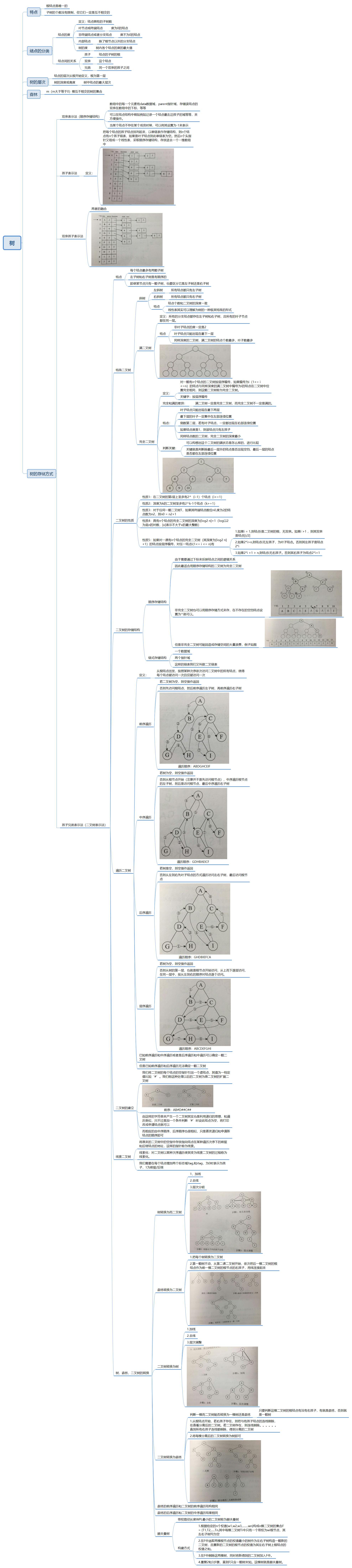
Chapter 6(树)的更多相关文章
- Chapter 3 树与二叉树
Chapter 3 树与二叉树 1- 二叉树 主要性质: 1 叶子结点数 = 度为2的结点数 + 1 2 二叉树第i层上最多有 (i≥1)个结点 3 深度为k的二叉树最多有 个结点 ...
- Render树、RenderObject与RenderLayer
Chapter: 呈现树的构建 1. 呈现树与CSS盒子模型千丝万缕的关系 2. 呈现树与DOM树的关系 3. 浏览器构建呈现树的流程 4. Firefox的规则树和样式上下文树 5. 规则树是如何解 ...
- 《Linux内核设计与实现》Chapter 3 读书笔记
<Linux内核设计与实现>Chapter 3 读书笔记 进程管理是所有操作系统的心脏所在. 一.进程 1.进程就是处于执行期的程序以及它所包含的资源的总称. 2.线程是在进程中活动的对象 ...
- Chapter 13. Miscellaneous PerlTk Methods PerlTk 方法杂项:
Chapter 13. Miscellaneous PerlTk Methods PerlTk 方法杂项: 到目前为止,这本书的大部分章节 集中在特定的几个部件, 这个章节覆盖了方法和子程序 可以被任 ...
- 《算法导论》 — Chapter 7 高速排序
序 高速排序(QuickSort)也是一种排序算法,对包括n个数组的输入数组.最坏情况执行时间为O(n^2). 尽管这个最坏情况执行时间比較差.可是高速排序一般是用于排序的最佳有用选择.这是由于其平均 ...
- Java编程思想总结笔记The first chapter
总觉得书中太啰嗦,看完总结后方便日后回忆,本想偷懒网上找别人的总结,无奈找不到好的,只好自食其力,尽量总结得最好. 第一章 对象导论 看到对象导论觉得这本书 目录: 1.1 抽象过程1.2 每个对象 ...
- 机器学习(Machine Learning)&深度学习(Deep Learning)资料(Chapter 2)
##机器学习(Machine Learning)&深度学习(Deep Learning)资料(Chapter 2)---#####注:机器学习资料[篇目一](https://github.co ...
- Formal Grammars of English -10 chapter(Speech and Language Processing)
determiner 限定词 DET propernoun 专有名词 NP (or noun phrase) mass noun 不可数名词 Det Nouns 限定词名词 relative pro ...
- 梦殇 chapter three
chapter three 悲伤有N个层面.对于生命是孤独的底色,对于时间是流动的伤感,对于浪漫是起伏的变奏,对于善和怜悯是终生的慨叹…… 出去和舍友买完东西,刚回到宿舍,舍友就说,刚才有人给你打电话 ...
随机推荐
- 亚马逊如何变成 SOA(面向服务的架构)
. 亚马逊公司不仅是世界最大的网络书店,还是世界最大的云服务商.它是怎么实现从电商到云商的转变呢? 一切都是CEO杰夫·贝索斯促成的,他对市场有着超乎常人的理解和预见. 2. 2000年前后,贝索斯有 ...
- mpstat命令详解
基础命令学习目录首页 原文链接:https://www.cnblogs.com/ggjucheng/archive/2013/01/13/2858775.html 简介 mpstat是Multipro ...
- Laravel路由除了根目录全报404错误
Route::get('hello',function(){ return 'Hello World!'; }); 在laravel/app/Http/routes.php下添加上面的语句,然后再浏览 ...
- Alpha版本BUG BASH
在本次软件开发的第一轮迭代中,我们团队遇到了很多问题.首先是和学长联系不上导致拿到项目前一版本的代码的时间延后了一个星期. 拿到代码后发现由于安装环境的问题代码无法移植.在这一阶段我们就耗费了大量的时 ...
- linshi18
#include<iostream> using namespace std; int n,m,k; #define max 100 char mmap[max][max]; int mm ...
- 【转】python 三种遍历list的方法
[转]python 三种遍历list的方法 #!/usr/bin/env python # -*- coding: utf-8 -*- if __name__ == '__main__': list ...
- oh my god 四则运算
Week1地址:https://git.coding.net/leiqh549/four.git 需求分析: 1.一个生成n道四则运算的程序,要求数字在0-100间,运算符在3-5个之间且运算符至少包 ...
- Spring 中使用Properties文件
Spring提供了加载Properties文件的工具类:org.springframework.beans.factory.config.PropertyPlaceholderConfigurer. ...
- 使用keep-alive 实现 页面回退不刷新内容
遇到问题,是从详情页面会到列表页,列表页会刷新.每个不同栏目的列表页面切换也会刷新 用keep-alive 可以缓存页面 <keep-alive><router-view>&l ...
- systemct管理服务命令
systemctl管理服务的启动,重启,停止,重载,查看状态的命令 Systcinit命令(红帽RHEL6系统) Systemctl命令(红帽RHEL7系统) 作用 service foo star ...