
spring AOP简单入门
AOP(aspect oriented programming)面向切面编程。
大致意思是在方法的执行过程中织入其他要执行的方法。
项目结构图
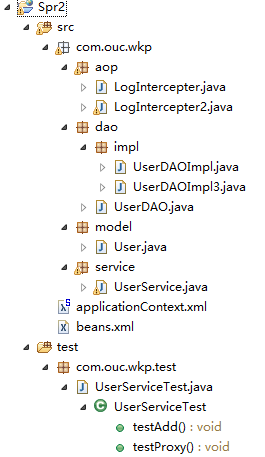
先介绍一下通过代理的方式实现aop,几个文件和上一篇一样,再贴一遍方便观看
package com.ouc.wkp.model;

public class User {

    private String username;

    private String password;

    public String getUsername() {

        return username;

    }

    public void setUsername(String username) {

        this.username = username;

    }

    public String getPassword() {

        return password;

    }

    public void setPassword(String password) {

        this.password = password;

    }

}
User.java
package com.ouc.wkp.dao;

import com.ouc.wkp.model.User;

public interface UserDAO {

    public void save(User user);

    public void delete();

}
UserDAO.java
package com.ouc.wkp.dao.impl;

import org.springframework.stereotype.Component;

import com.ouc.wkp.dao.UserDAO;

import com.ouc.wkp.model.User;

@Component("u")

public class UserDAOImpl implements UserDAO {

    @Override

    public void save(User user) {

        // Hibernate

        // JDBC

        // XML

        // NetWork

        System.out.println("user saved!");

//        throw new RuntimeException();

    }

    @Override

    public void delete() {

        // TODO Auto-generated method stub

    }

}
UserDAOImpl.java
package com.ouc.wkp.service;

import javax.annotation.PostConstruct;

import javax.annotation.PreDestroy;

import javax.annotation.Resource;

import org.springframework.beans.factory.annotation.Autowired;

import org.springframework.beans.factory.annotation.Qualifier;

import org.springframework.stereotype.Component;

import com.ouc.wkp.dao.UserDAO;

import com.ouc.wkp.model.User;

@Component("userService")

public class UserService {

    private UserDAO userDAO;

    @PostConstruct

    public void init() {

        System.out.println("init");

    }

    public void add(User user) {

        userDAO.save(user);

    }

    public UserDAO getUserDAO() {

        return userDAO;

    }

    // @Autowired @Qualifier("u")

    @Resource(name = "u")

    public void setUserDAO(UserDAO userDAO) {

        this.userDAO = userDAO;

    }

    @PreDestroy

    public void destroy() {

        System.out.println("destroy");

    }

}
UserService.java
然后是一个代理类,继承自InvocationHandler
package com.ouc.wkp.aop;

import java.lang.reflect.InvocationHandler;

import java.lang.reflect.Method;

public class LogIntercepter implements InvocationHandler{

    private Object target;

    public Object getTarget() {

        return target;

    }

    public void setTarget(Object target) {

        this.target = target;

    }

    public void beforeMethod(Method m){

        System.out.println(m.getName()+" start");

    }

    public void afterMethod(Method m){

        System.out.println(m.getName()+" end");

    }

    public Object invoke(Object proxy,Method m,Object[] args) throws Throwable{

        beforeMethod(m);

        m.invoke(target, args);

        afterMethod(m);

        return null;

    }

}
LogIntercepter.java
然后再测试类中进行如下调用
@Test

    public void testProxy() {

        UserDAO userDAO = new UserDAOImpl();

        LogIntercepter li = new LogIntercepter();

        li.setTarget(userDAO);

        UserDAO userDAOProxy = (UserDAO) Proxy.newProxyInstance(userDAO

                .getClass().getClassLoader(), userDAO.getClass()

                .getInterfaces(), li);

        System.out.println(userDAOProxy.getClass());

        userDAOProxy.delete();

        userDAOProxy.save(new User());

    }
UserServiceTest.java
运行结果

然后介绍通过xml配置文件实现aop
使用aop需要一下
xmlns:aop="http://www.springframework.org/schema/aop"
http://www.springframework.org/schema/aop -->
http://www.springframework.org/schema/aop/spring-aop-2.5.xsd">
<aop:aspectj-autoproxy />
还需要这个开启对com.ouc.wkp包下面的扫描
<context:component-scan base-package="com.ouc.wkp"></context:component-scan>
<?xml version="1.0" encoding="UTF-8"?>

<beans xmlns="http://www.springframework.org/schema/beans"

    xmlns:xsi="http://www.w3.org/2001/XMLSchema-instance" xmlns:context="http://www.springframework.org/schema/context"

    xmlns:aop="http://www.springframework.org/schema/aop"

    xsi:schemaLocation="http://www.springframework.org/schema/beans

            http://www.springframework.org/schema/beans/spring-beans-3.1.xsd

            http://www.springframework.org/schema/context

            http://www.springframework.org/schema/context/spring-context-3.1.xsd

            http://www.springframework.org/schema/aop

            http://www.springframework.org/schema/aop/spring-aop-3.1.xsd">

    <context:annotation-config />

    <!-- 使用注解需要下面四条 -->

    <!-- xmlns:context="http://www.springframework.org/schema/context" -->

    <!-- http://www.springframework.org/schema/context -->

    <!-- http://www.springframework.org/schema/context/spring-context-3.1.xsd"> -->

    <!-- <context:annotation-config /> -->

    <!-- 使用aop需要一下 -->

    <!-- xmlns:aop="http://www.springframework.org/schema/aop" -->

    <!-- http://www.springframework.org/schema/aop -->

    <!-- http://www.springframework.org/schema/aop/spring-aop-2.5.xsd"> -->

    <!-- <aop:aspectj-autoproxy /> -->

    <!-- 扫描 -->

    <context:component-scan base-package="com.ouc.wkp"></context:component-scan>

    <aop:aspectj-autoproxy />

    <bean id="logIntercepter2" class="com.ouc.wkp.aop.LogIntercepter2"></bean>

    <aop:config>

        <!-- <aop:pointcut expression="execution(public * com.ouc.wkp.service..*.add(..))"

            id="servicePointcut"/> -->

        <!-- <aop:aspect id="logAspect" ref="logIntercepter"> -->

        <!-- <aop:before method="before" pointcut="servicePointcut"/> -->

        <!-- </aop:aspect> -->

        <aop:aspect id="logAspect" ref="logIntercepter2">

            <aop:before method="before"

                pointcut="execution(public * com.ouc.wkp.service..*.add(..))" />

        </aop:aspect>

    </aop:config>

</beans>
beans.xml
<bean id="logIntercepter2" class="com.ouc.wkp.aop.LogIntercepter2"></bean>
<aop:config>
<!-- <aop:pointcut expression="execution(public * com.ouc.wkp.service..*.add(..))"
id="servicePointcut"/> -->
<!-- <aop:aspect id="logAspect" ref="logIntercepter"> -->
<!-- <aop:before method="before" pointcut="servicePointcut"/> -->
<!-- </aop:aspect> -->
<aop:aspect id="logAspect" ref="logIntercepter2">
<aop:before method="before"
pointcut="execution(public * com.ouc.wkp.service..*.add(..))" />
</aop:aspect>
</aop:config>
看下面这段 第一行声明了一个代理切入类(表达不准确)
<aop:pointcut expression="execution(public * com.ouc.wkp.service..*.add(..))"
id="servicePointcut"/>标识定义一个切入点pointcut。
<aop:before method="before" pointcut="servicePointcut"/>表示before织入这个切入点。
execution(public * com.ouc.wkp.service..*.add(..))代表com.ouc.wkp.service包下的任意包的任意类的add方法。
然后我们看代理切入类
package com.ouc.wkp.aop;

import org.aspectj.lang.ProceedingJoinPoint;

import org.aspectj.lang.annotation.AfterReturning;

import org.aspectj.lang.annotation.AfterThrowing;

import org.aspectj.lang.annotation.Around;

import org.aspectj.lang.annotation.Aspect;

import org.aspectj.lang.annotation.Before;

import org.aspectj.lang.annotation.Pointcut;

import org.springframework.stereotype.Component;

@Aspect

@Component

public class LogIntercepter2 {

//    @Pointcut("execution(public * com.ouc.wkp.service..*.add(..))")

    public void myMethod(){};

//    @Before("myMethod()")

    public void before() {

        System.out.println("method before");

    }

//    @AfterReturning("execution(public * com.ouc.wkp.dao..*.*(..))")

    public void afterReturning(){

        System.out.println("method after returning");

    }

//    @AfterThrowing("myMethod()")

    public void afterThrowing(){

        System.out.println("method after throwing");

    }

//    @Around("myMethod()")

    public void aroundMethod(ProceedingJoinPoint pjp) throws Throwable{

        System.out.println("method around start");

        pjp.proceed();

        System.out.println("method around end");

    }

}
LogIntercepter2.java
类的开头需要加上
@Aspect
@Component
测试方法
@Test

    public void testAdd() throws Exception {

        ClassPathXmlApplicationContext ctx = new ClassPathXmlApplicationContext(

                "beans.xml");

        UserService service = (UserService) ctx.getBean("userService");

        User user = new User();

        user.setUsername("qqq");

        user.setPassword("123ppp");

        //是一个代理

        System.out.println(service.getClass());

        service.add(user);

        ctx.destroy();

    }
UserServiceTest.java
运行结果

我们看到我们获得的userservice实质上是一个代理类
最后介绍通过注解实现aop,LogIntercepter2的代码再贴一遍.
beans.xml里面的<aop:config>可以注释掉
package com.ouc.wkp.aop;

import org.aspectj.lang.ProceedingJoinPoint;

import org.aspectj.lang.annotation.AfterReturning;

import org.aspectj.lang.annotation.AfterThrowing;

import org.aspectj.lang.annotation.Around;

import org.aspectj.lang.annotation.Aspect;

import org.aspectj.lang.annotation.Before;

import org.aspectj.lang.annotation.Pointcut;

import org.springframework.stereotype.Component;

@Aspect

@Component

public class LogIntercepter2 {

    @Pointcut("execution(public * com.ouc.wkp.service..*.add(..))")

    public void myMethod(){};

    @Before("myMethod()")

    public void before() {

        System.out.println("method before");

    }

    @AfterReturning("execution(public * com.ouc.wkp.dao..*.*(..))")

    public void afterReturning(){

        System.out.println("method after returning");

    }

    @AfterThrowing("myMethod()")

    public void afterThrowing(){

        System.out.println("method after throwing");

    }

    @Around("myMethod()")

    public void aroundMethod(ProceedingJoinPoint pjp) throws Throwable{

        System.out.println("method around start");

        pjp.proceed();

        System.out.println("method around end");

    }

}
LogIntercepter2.java
@Pointcut("execution(public * com.ouc.wkp.service..*.add(..))")
public void myMethod(){};表示定义一个切入点
@Before("myMethod()")表示在方法执行前执行注解下面的方法 myMethod()为上面定义的切入点
后面的注解见名知意
运行结果
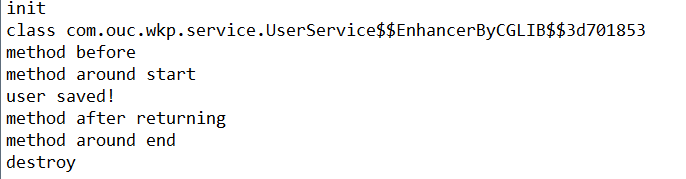
感觉还是很神奇的 以前一直不理解什么是面向切面。现在简单了解了一下觉得很有趣,但是还是无法用语言准确表达出来= =
下一篇介绍spring整合hibernate
spring AOP简单入门的更多相关文章
- Spring AOP 简单入门笔记 (转)
分享一个自己写的最为简单的Spring AOP的应用,其实,本人也是学习Spring不久,只是把一些个人的理解分享下,供参考.可能很多人刚开始不太理解到底啥是AOP,其实它也是相对 OOP来说的,类似 ...
- Spring AOP初级——入门及简单应用
在上一篇<关于日志打印的几点建议以及非最佳实践>的末尾提到了日志打印更为高级的一种方式——利用Spring AOP.在打印日志时,通常都会在业务逻辑代码中插入日志打印的语句,这实际上是 ...
- [Spring框架]Spring AOP基础入门总结一.
前言:前面已经有两篇文章讲了Spring IOC/DI 以及 使用xml和注解两种方法开发的案例, 下面就来梳理一下Spring的另一核心AOP. 一, 什么是AOP 在软件业,AOP为Aspect ...
- [Spring框架]Spring AOP基础入门总结二:Spring基于AspectJ的AOP的开发.
前言: 在上一篇中: [Spring框架]Spring AOP基础入门总结一. 中 我们已经知道了一个Spring AOP程序是如何开发的, 在这里呢我们将基于AspectJ来进行AOP 的总结和学习 ...
- spring security 简单入门
spring security 简单入门示例 一.概述 Spring Security是一个能够为基于Spring的企业应用系统提供声明式的安全访问控制解决方案的安全框架 . 其中最主要的安全操作有两 ...
- Spring Aop(二)——基于Aspectj注解的Spring Aop简单实现
转发地址:https://www.iteye.com/blog/elim-2394762 2 基于Aspectj注解的Spring Aop简单实现 Spring Aop是基于Aop框架Aspectj实 ...
- Spring.Net 简单入门学习
Spring.NET IoC容器的用法. 通过简单的例子学习Spring.Net 1.先创建一个控制台程序项目. 2.添加IUserInfoDal 接口. namespace Spring.Net { ...
- Spring aop 简单示例
简单的记录一下spring aop的一个示例 基于两种配置方式: 基于xml配置 基于注解配置 这个例子是模拟对数据库的更改操作添加事物 其实并没有添加,只是简单的输出了一下记录 首先看下整个例子的目 ...
- Spring AOP 知识点入门
一.基本知识点 1.AOP概念 AOP(Aspect-Oriented Programming), 即 面向切面编程, 它与 OOP( Object-Oriented Programming, 面向对 ...
随机推荐
- RobotFramework环境搭建
环境搭建 1. 准备条件 python-2.7.7 https://www.python.org/download/releases/2.7.7/ wxPython2.8-win32-unicode- ...
- Form Presonalization 表单个性化定义控制应用
1.1.1 表单个性化定义 Oracle EBS 11.5.10所增加的Form Presonalization功能,是在对Form不进行开发的前提下,用一些系统内置的触发器,按照所设定的控制规则 ...
- shell脚本中常见的一些特殊符号和作用详解
这篇文章主要介绍了shell脚本中常见的一些特殊符号和它的作用详解,总结的很简洁,容易看懂,需要的朋友可以参考下 在编写Shell脚本时,我们需要会用到各种各样的特殊符号,通过这些特殊符号可以使我 ...
- The "Run One Program Only" Phenomenon
As previously discussed,embedded devices normally embody the functionality they implement.In other w ...
- at org.apache.jsp.index_jsp._jspInit(index_jsp.java:23)异常解决
部署项目,启动tomcat一切正常.输入项目地址后 tomcat报例如以下错误: java.lang.NullPointerException at org.apache.jsp.index_jsp. ...
- Oracle中的Truncate和Delete语句
Oracle中的Truncate和Delete语句 首先讲一下,truncate命令: 语法:TRUNCATE TABLE table; 表格里的数据被清空,存储空间被释放. 运行后会自动 ...
- hbase 单机安装问题
报zookeeper exception not found I fixed this by editing the file "/usr/local/hbase-0.94.1/conf/h ...
- Csharp多态的实现概述
(1)什么是多态, 多态就是一个类表现出多种不同的形态, 他的核心是子类对象作为父类对象使用 (2)怎么实现多态, 在Csharp中,可以用接口, 虚方法, 抽象类实现多态,当然,不管是这三种的那一个 ...
- Linux学习之输入输出重定向
转自:http://www.cnblogs.com/chengmo/archive/2010/10/20/1855805.html 多谢分享 在了解重定向之前,我们先来看看linux 的文件描述符. ...
- HBase API详解
一.Java API和HBase数据模型的关系 在Java中,与HBase数据库存储管理相关的类包括HBaseAdmin.HBaseConfiguration.HTable.HTableDescrip ...