
android闹钟实现原理
闹钟的原理可用下面我自己画的一幅图来概括:(不对的地方,尽管吐槽 )
)
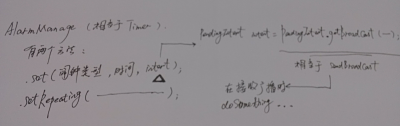
我们来看看新建闹钟到闹钟响铃的步骤:
1、新建一个闹钟:
|
1
2
3
4
5
6
7
8
9
10
11
12
13
14
15
16
17
18
19
20
21
22
23
24
|
// 获得AlarmManager实例
final AlarmManager am = (AlarmManager) getSystemService(ALARM_SERVICE);
// 实例化Intent
Intent intent = new Intent();
// 设置Intent action属性
intent.setAction("com.test.BC_ACTION");
intent.putExtra("msg", "该去开会啦!");
// 实例化PendingIntent
final PendingIntent pi = PendingIntent.getBroadcast(MainActivity.this, 0,
intent, 0);
// 获得系统时间
final long time = System.currentTimeMillis();
am.set(AlarmManager.RTC_WAKEUP, time+5000, sender);//5秒后闹铃
// 设置按钮单击事件
setBtn.setOnClickListener(new OnClickListener() {
@Override
public void onClick(View v) {
// 重复提示,从当前时间开始,间隔5秒
am.setRepeating(AlarmManager.RTC_WAKEUP, time,
5 * 1000, pi);
}
});
|
在AndroidMainfest.xml里注册广播接收器
|
1
2
3
4
5
|
<receiverandroid:name="MyReceiver">
<intent-filter>
<actionandroid:name="com.test.BC_ACTION"/>
</intent-filter>
</receiver>
|
2、定义一个AlarmReceiver extends BroadcastReceiver接收广播,并弹出闹钟提醒视图。
上面用到一个AlarmManage,我们分别来看看它的处理闹钟流程和作用及例子。
处理闹钟流程:对应AlarmManage有一个AlarmManagerServie服务程序,该服务程序才是正真提供闹铃服务的,它主要遍历闹铃列表并设置即将触发的闹铃给闹铃设备,并且一直监听闹铃设备,一旦有闹铃触发或者是闹铃事件发生,AlarmManagerServie服务程序就会遍历闹铃列表找到相应的注册闹铃并发出广播。
作用及例子:AlarmManage中文名闹钟,或者叫做“全局定时器”更合适,它的作用和Timer类似,有两种使用方法:1、在特定时长后(特定时间)执行某任务;2、周期性的执行某任务,AlarmManager对象配合Intent使用,可以定时的开启一个Activity,发送一个BroadCast,或者开启一个Service.
(1)在指定时长后(特定时间)执行某项操作
|
1
2
3
4
5
6
7
8
9
10
11
12
13
14
15
16
17
|
//操作:发送一个广播,广播接收后Toast提示定时操作完成
Intent intent =newIntent(Main.this, alarmreceiver.class);
intent.setAction("short");
PendingIntent sender=
PendingIntent.getBroadcast(Main.this,0, intent,0);
//设定一个五秒后的时间
Calendar calendar=Calendar.getInstance();
calendar.setTimeInMillis(System.currentTimeMillis());
calendar.add(Calendar.SECOND,5);
AlarmManager alarm=(AlarmManager)getSystemService(ALARM_SERVICE);
alarm.set(AlarmManager.RTC_WAKEUP, calendar.getTimeInMillis(), sender);
//或者以下面方式简化
//alarm.set(AlarmManager.RTC_WAKEUP, System.currentTimeMillis()+5*1000, sender);
Toast.makeText(Main.this,"五秒后alarm开启", Toast.LENGTH_LONG).show();
|
(2)周期性的执行某项操作
|
1
2
3
4
5
6
7
8
9
10
11
12
|
Intent intent =new Intent(Main.this, alarmreceiver.class);
intent.setAction("repeating");
PendingIntent sender=PendingIntent
.getBroadcast(Main.this, 0, intent, 0);
//开始时间
long firstime=SystemClock.elapsedRealtime();
AlarmManager am=(AlarmManager)getSystemService(ALARM_SERVICE);
//5秒一个周期,不停的发送广播
am.setRepeating(AlarmManager.ELAPSED_REALTIME_WAKEUP
, firstime, 5*1000, sender);
|
AlarmManager的取消:(其中需要注意的是取消的Intent必须与启动Intent保持绝对一致才能支持取消AlarmManager)
|
1
2
3
4
5
6
|
Intent intent =newIntent(Main.this, alarmreceiver.class);
intent.setAction("repeating");
PendingIntent sender=PendingIntent
.getBroadcast(Main.this,0, intent,0);
AlarmManager alarm=(AlarmManager)getSystemService(ALARM_SERVICE);
alarm.cancel(sender);
|
AlarmManager还将闹钟分为五种类型:
|
1
|
public staticfinalintELAPSED_REALTIME
|
//当系统进入睡眠状态时,这种类型的闹铃不会唤醒系统。直到系统下次被唤醒才传递它,该闹铃所用的时间是相对时间,是从系统启动后开始计时的,包括睡眠
时间,可以通过调用SystemClock.elapsedRealtime()获得。系统值是3 (0x00000003)。
|
1
|
publicstaticfinalintELAPSED_REALTIME_WAKEUP
|
//能唤醒系统,用法同ELAPSED_REALTIME,系统值是2 (0x00000002) 。
|
1
|
public static final int RTC
|
//当系统进入睡眠状态时,这种类型的闹铃不会唤醒系统。直到系统下次被唤醒才传递它,该闹铃所用的时间是绝对时间,所用时间是UTC时间,可以通过调用
System.currentTimeMillis()获得。系统值是1 (0x00000001) 。
|
1
|
publicstaticfinalintRTC_WAKEUP
|
//能唤醒系统,用法同RTC类型,系统值为 0 (0x00000000) 。
|
1
|
PublicstaticfinalintPOWER_OFF_WAKEUP
|
//能唤醒系统,它是一种关机闹铃,就是说设备在关机状态下也可以唤醒系统,所以我们把它称之为关机闹铃。使用方法同RTC类型,系统值为4 (0x00000004)。
综上所述,感觉AlarmManage和NotificationManager差不多,NotificationManager例子请见文章http://my.oschina.net/helu/blog/141728
android闹钟实现原理的更多相关文章
- Android闹钟 AlarmManager的使用
Android闹钟 AlarmManager的使用 AlarmManager介绍 AlarmManager这个类提供对系统闹钟服务的访问接口. 你可以为你的应用设定一个在未来某个时间唤醒的功能. 当闹 ...
- Android闹钟设置的解决方案
Android设置闹钟并不像IOS那样这么简单,做过Android设置闹钟的开发者都知道里面的坑有多深.下面记录一下,我解决Android闹钟设置的解决方案. 主要问题 API19开始AlarmMan ...
- Android Touch事件原理加实例分析
Android中有各种各样的事件,以响应用户的操作.这些事件可以分为按键事件和触屏事件.而Touch事件是触屏事件的基础事件,在进行Android开发时经常会用到,所以非常有必要深入理解它的原理机制. ...
- android handler工作原理
android handler工作原理 作用 便于在子线程中更新主UI线程中的控件 这里涉及到了UI主线程和子线程 UI主线程 它很特别.通常我们会认为UI主线程将页面绘制完成,就结束了.但是它没有. ...
- android MultiDex multidex原理原理下遇见的N个深坑(二)
android MultiDex 原理下遇见的N个深坑(二) 这是在一个论坛看到的问题,其实你不知道MultiDex到底有多坑. 不了解的可以先看上篇文章:android MultiDex multi ...
- android MultiDex multiDex原理(一)
android MultiDex 原理(一) Android分包MultiDex原理详解 转载请注明:http://blog.csdn.net/djy1992/article/details/5116 ...
- 解析 Android Things 技术原理
2012 年 6 月,由 IoT-GSI(Global Standards Initiative on Internet of Things)发布的白皮书“ITU-T Y.4000/Y.2060”[1 ...
- android 闹钟提醒并且在锁屏下弹出Dialog对话框并播放铃声和震动
android 闹钟提醒并且在锁屏下弹出Dialog对话框并播放铃声和震动 1.先简单设置一个闹钟提醒事件: //设置闹钟 mSetting.setOnClickListener ...
- Android闹钟开发与展示Demo
前言: 看过了不少安卓闹钟开发的例子,都是点到为止,都不完整,这次整一个看看. 一.闹钟的设置不需要数据库,但是展示闹钟列表的时候需要,所以需要数据库: public class MySQLiteOp ...
随机推荐
- mybatis在XML中大于号转义字符
mybatis在编写sql时不能在XML里直接使用‘<’ 或者是 ‘>’ 在这里需要使用转义字符替换 下面列举常用的xml转义对应: * < < ...
- 什么是事件委托?jquery和js怎么去实现?
事件委托又叫事件代理,事件委托就是利用事件冒泡,只指定一个事件处理程序,就可以管理某一类型的所有事件. js: window.onload = function(){ var oul = docume ...
- arping---发送arp请求到一个相邻主机
arping命令是用于发送arp请求到一个相邻主机的工具,arping使用arp数据包,通过ping命令检查设备上的硬件地址.能够测试一个ip地址是否是在网络上已经被使用,并能够获取更多设备信息.功能 ...
- 【Henu ACM Round #12 B】 Alice, Bob, Two Teams
[链接] 我是链接,点我呀:) [题意] 在这里输入题意 [题解] 写个前缀和 和 一个后缀和. (即前i个字符A所代表的数字的和以及前i个字符B所代表的数字的和.. 然后枚举前i个字符翻转. 求B对 ...
- HDU——T 1711 Number Sequence
http://acm.hdu.edu.cn/showproblem.php?pid=1711 Time Limit: 10000/5000 MS (Java/Others) Memory Lim ...
- 《Java设计模式》之桥接模式
Bridge模式的概念 Bridge 模式是构造型的设计模式之中的一个.Bridge模式基于类的最小设计原则,通过使用封装,聚合以及继承等行为来让不同的类承担不同的责任.它的主要特点是把抽象(abst ...
- Java学习笔记四
1.简介.进程和线程:简单的说就是进程负责为程序开辟内存空间,线程负责具体的执行单元(执行路径). 一个进程中可以有多个执行路径,称为多线程.CPU一次只能执行一个进程,但是一个进程内部可以有多个线程 ...
- C#string转换为Datetime
DateTime.ParseExact("0710090000", "MMddHHmmss", CultureInfo.CurrentCulture, Date ...
- 25.Spring @Transactional工作原理
转自:http://www.importnew.com/12300.html 本文将深入研究Spring的事务管理.主要介绍@Transactional在底层是如何工作的.之后的文章将介绍: prop ...
- 编译安装PHP-7.2.8
一 下载并软件包 wget http://124.205.69.169/files/A218000006E9730A/cn2.php.net/distributions/php-7.2.8.tar.g ...