
jdk1.8-stack 栈源码分析
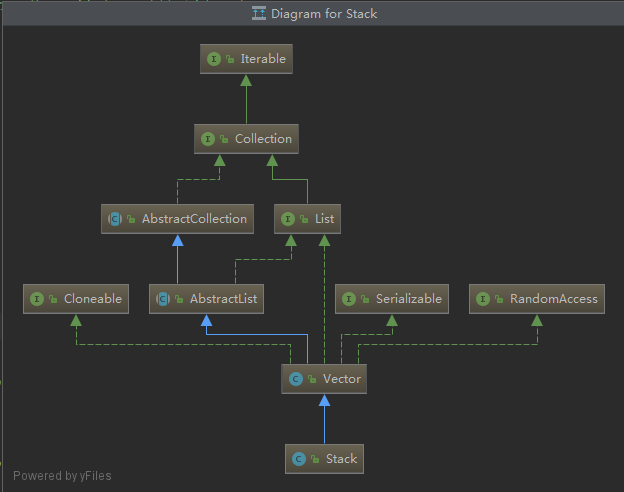
public
class Stack<E> extends Vector<E>
分析:栈的继承关系很简单,就是继承了Vector,那么我们可以猜测栈操作大部分应该是线程安全的。
/**
 * Creates an empty Stack.
 */
public Stack() {
}
/**
 * Pushes an item onto the top of this stack. This has exactly
 * the same effect as:
 * <blockquote><pre>
 * addElement(item)</pre></blockquote>
 *
 * @param   item   the item to be pushed onto this stack.
 * @return  the <code>item</code> argument.
 * @see     java.util.Vector#addElement
 */
public E push(E item) {
    //调用父类vector的addElement()方法
    addElement(item);

    return item;
}
分析:往栈里压入一个元素用push方法,每次往栈的顶部压入元素。addElement()是抽象父类vector方法,我们在vector里已经分析过。从这里我们可以知道,栈的底层数组结构也是数组。
/**
 * Removes the object at the top of this stack and returns that
 * object as the value of this function.
 *
 * @return  The object at the top of this stack (the last item
 *          of the <tt>Vector</tt> object).
 * @throws  EmptyStackException  if this stack is empty.
 */
public synchronized E pop() {
    E       obj;
    //栈的长度
    int     len = size();

    //栈顶部的元素值(也就是数组最后一个元素值)
    obj = peek();
    //栈元素减1
    removeElementAt(len - 1);

    //返回顶部元素
    return obj;
}
分析:删除栈顶部的对象,并将该对象作为函数值返回
/**
 * Deletes the component at the specified index. Each component in
 * this vector with an index greater or equal to the specified
 * {@code index} is shifted downward to have an index one
 * smaller than the value it had previously. The size of this vector
 * is decreased by {@code 1}.
 *
 * <p>The index must be a value greater than or equal to {@code 0}
 * and less than the current size of the vector.
 *
 * <p>This method is identical in functionality to the {@link #remove(int)}
 * method (which is part of the {@link List} interface).  Note that the
 * {@code remove} method returns the old value that was stored at the
 * specified position.
 *
 * @param      index   the index of the object to remove
 * @throws ArrayIndexOutOfBoundsException if the index is out of range
 *         ({@code index < 0 || index >= size()})
 */
public synchronized void removeElementAt(int index) {
    //修改次数加1
    modCount++;

    //校验是否越界
    if (index >= elementCount) {
        throw new ArrayIndexOutOfBoundsException(index + " >= " +
                                                 elementCount);
    }
    else if (index < 0) {
        throw new ArrayIndexOutOfBoundsException(index);
    }

    //数组需要移动的个数
    int j = elementCount - index - 1;
    if (j > 0) {
        //从index + 1位置开始,向左移动一个位置,移动的个数为j
        System.arraycopy(elementData, index + 1, elementData, index, j);
    }
    //数组实际元素减1
    elementCount--;
    //数组最后一个元素置为null,等待gc回收
    elementData[elementCount] = null; /* to let gc do its work */
}
分析:传进来len -1,栈顶部元素下标,即数组最后一个元素位置。
/**
 * Looks at the object at the top of this stack without removing it
 * from the stack.
 *
 * @return  the object at the top of this stack (the last item
 *          of the <tt>Vector</tt> object).
 * @throws  EmptyStackException  if this stack is empty.
 */
public synchronized E peek() {
    int     len = size();

    if (len == 0)
        throw new EmptyStackException();
    //根据索引从数组里取值,elementAt是调用父类Vector的方法
    return elementAt(len - 1);
}
分析:栈的peek()方法,其实就是返回栈顶部的元素值,即数组末尾元素值。
/**
 * Returns the component at the specified index.
 *
 * <p>This method is identical in functionality to the {@link #get(int)}
 * method (which is part of the {@link List} interface).
 *
 * @param      index   an index into this vector
 * @return     the component at the specified index
 * @throws ArrayIndexOutOfBoundsException if the index is out of range
 *         ({@code index < 0 || index >= size()})
 */
public synchronized E elementAt(int index) {
    if (index >= elementCount) {
        throw new ArrayIndexOutOfBoundsException(index + " >= " + elementCount);
    }

    return elementData(index);
}
分析:这个方法就是根据下标,返回数组的值而已,没啥好分析的。

jdk1.8-stack 栈源码分析的更多相关文章
- Stack的源码分析和应用实例
1.Stack介绍 Stack是栈.它的特性是:先进后出(FILO:First In Last Out). java工具包中的Stack是继承于Vector(矢量队列)的,由于Vector是通过数组实 ...
- Java集合基于JDK1.8的LinkedList源码分析
上篇我们分析了ArrayList的底层实现,知道了ArrayList底层是基于数组实现的,因此具有查找修改快而插入删除慢的特点.本篇介绍的LinkedList是List接口的另一种实现,它的底层是基于 ...
- Java -- 基于JDK1.8的LinkedList源码分析
1,上周末我们一起分析了ArrayList的源码并进行了一些总结,因为最近在看Collection这一块的东西,下面的图也是大致的总结了Collection里面重要的接口和类,如果没有意外的话后面基本 ...
- JDK1.7之 HashMap 源码分析
转载请注明出处:http://blog.csdn.net/crazy1235/article/details/75451812 类继承关系 构造函数 Entry put put putForNullK ...
- Java -- 基于JDK1.8的ThreadLocal源码分析
1,最近在做一个需求的时候需要对外部暴露一个值得应用 ,一般来说直接写个单例,将这个成员变量的值暴露出去就ok了,但是当时突然灵机一动(现在回想是个多余的想法),想到handle源码里面有使用过Th ...
- Java集合基于JDK1.8的ArrayList源码分析
本篇分析ArrayList的源码,在分析之前先跟大家谈一谈数组.数组可能是我们最早接触到的数据结构之一,它是在内存中划分出一块连续的地址空间用来进行元素的存储,由于它直接操作内存,所以数组的性能要比集 ...
- 基于jdk1.8的ArrayList源码分析
前言ArrayList作为一个常用的集合类,这次我们简单的根据源码来看看AarryList是如何使用的. ArrayList拥有的成员变量 public class ArrayList<E> ...
- Java -- 基于JDK1.8的ArrayList源码分析
1,前言 很久没有写博客了,很想念大家,18年都快过完了,才开始写第一篇,争取后面每周写点,权当是记录,因为最近在看JDK的Collection,而且ArrayList源码这一块也经常被面试官问道,所 ...
- Stack&Vector源码分析 jdk1.6
参照:http://www.cnblogs.com/tstd/p/5104099.html Stack(Fitst In Last Out) 1.定义 public class Stack<E& ...
随机推荐
- 多线程(四)wait()、notify()以及notifyAll()
六.线程的等待和唤醒 1.wait()和notify()的简单示范 public class Wait extends Thread{ public synchronized void run() { ...
- python中sys.argv[]用法
sys.argv[]的作用: 在运行python文件的时候往文件里面传递参数. 从函数外部获取到变量值 import sys arg = sys.argv[0] args = sys.argv[:] ...
- 【Andriod-AlertDialog控件】 弹出对话框AlertDialog用法
Result: Code: import android.app.Activity; import android.app.AlertDialog; import android.content.Di ...
- Vue: 购物车数量加减按钮
效果图: HTML: <div class="label"> <p class="buy_num">购买数量</p> < ...
- npoi 导出
npoi 导出 public void Output(DataTable table, string SheetName, string reportName) { string result = s ...
- 什么是URL百分号编码?
㈠什么是URL 统一资源定位系统(uniform resource locator;URL)是因特网的万维网服务程序上用于指定信息位置的表示方法. ㈡URL编码 url编码是一种浏览器用来打包表单输入 ...
- Python和Sublime的整合
按照下面的方式也可以运行py代码,但是交互方式不是很好,主要简单介绍了一下Python和Sublime的整合 一 Ctrl + B 二 SublimeREPL 安装SublimeREPL 1.打开P ...
- 十七、mysql数据库备份
使用java代码在window环境下实现定时执行Mysql备份与还原 //备份 public void doBackup() { Date currentTime = new Date(); Syst ...
- python-matplotlib-1
Python图表绘制:matplotlib绘图库入门 matplotlib 简介 matplotlib 是python最著名的绘图库,它提供了一整套和matlab相似的命令API,十分适合交互式地行制 ...
- EFI/UEFI BIOS 入门
我们已经使用BIOS超过了二十年.可是直到今天还有许多朋友不知道BIOS到底是什么,以及它主要做些什么事情,它在整个个人计算机之中所处的地位如何.事实上,BIOS是整个计算机系统中最重要的底层系统软件 ...