
seaborn模块的基本使用
Seaborn是基于matplotlib的Python可视化库。 它提供了一个高级界面来绘制有吸引力的统计图形。Seaborn其实是在matplotlib的基础上进行了更高级的API封装,从而使得作图更加容易,不需要经过大量的调整就能使你的图变得精致。但应强调的是,应该把Seaborn视为matplotlib的补充,而不是替代物。
一、整体布局风格设置
import seaborn as sns

import numpy as np

import matplotlib.pyplot as plt

import matplotlib as mpl

%matplotlib inline #这句话的意思就是可以直接显示图

def sinplot(flip = 1):

    x = np.linspace(0, 14, 100)

    for i in range(1, 7):

        plt.plot(x, np.sin(x + i*0.5) * (7 - i) * flip)

sinplot()#采用的是matplot默认的一些参数画图
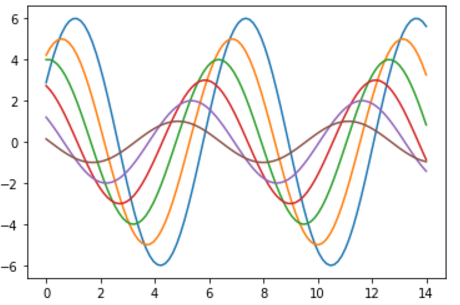
#接下来采用的是seaborn的画图的风格,首先看看默认的变化

sns.set()

sinplot()
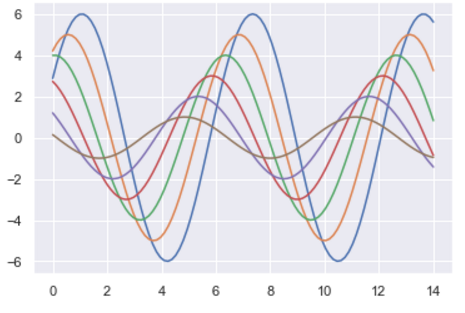
#seaborn主要分为五种主题风格:darkgrid whitegrid dark white ticks

sns.set_style("whitegrid")

data = np.random.normal(size=(20, 6)) + np.arange(6) / 2

sns.boxplot(data=data)
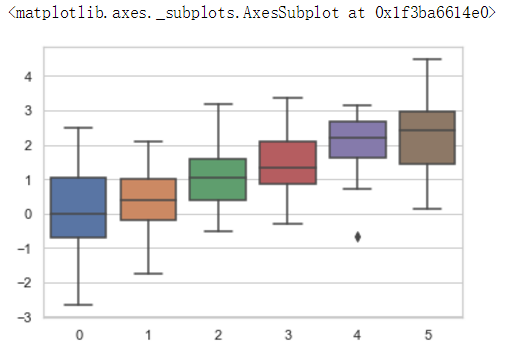
高斯分布的概率密度函数
numpy中
numpy.random.normal(loc=0.0, scale=1.0, size=None)
参数的意义为:
loc:float
概率分布的均值,对应着整个分布的中心center
scale:float
概率分布的标准差,对应于分布的宽度,scale越大越矮胖,scale越小,越瘦高
size:int or tuple of ints
输出的shape,默认为None,只输出一个值
我们更经常会用到np.random.randn(size)所谓标准正太分布(μ=0, σ=1),对应于np.random.normal(loc=0, scale=1, size)
所以上面从正态分布随机产生20*6的二维数组,加上后面的6*1的一维数组。
boxplot 箱线图
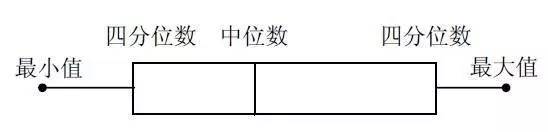
"盒式图" 或叫 "盒须图" "箱形图",,其绘制须使用常用的统计量,能提供有关数据位置和分散情况的关键信息,尤其在比较不同的母体数据时更可表现其差异。
如上图所示,标示了图中每条线表示的含义,其中应用到了分位值(数)的概念。
主要包含五个数据节点,将一组数据从大到小排列,分别计算出他的上边缘,上四分位数,中位数,下四分位数,下边缘。
具体用法如下:seaborn.boxplot(x=None, y=None, hue=None, data=None, order=None, hue_order=None, orient=None, color=None, palette=None, saturation=0.75, width=0.8, fliersize=5, linewidth=None, whis=1.5, notch=False, ax=None, **kwargs)
Parameters:
x, y, hue: names of variables in data or vector data, optional #设置 x,y 以及颜色控制的变量
Inputs for plotting long-form data. See examples for interpretation.
data : DataFrame, array, or list of arrays, optional #设置输入的数据集
Dataset for plotting. If x and y are absent, this is interpreted as wide-form. Otherwise it is expected to be long-form.
order, hue_order : lists of strings, optional #控制变量绘图的顺序
Order to plot the categorical levels in, otherwise the levels are inferred from the data objects.
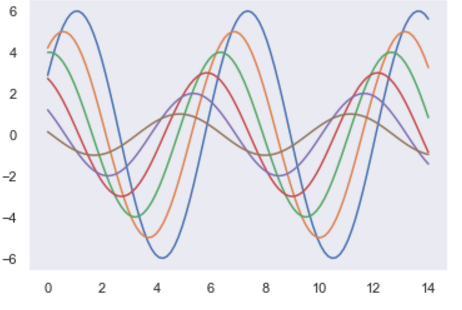
sns.set_style("dark")

sinplot()
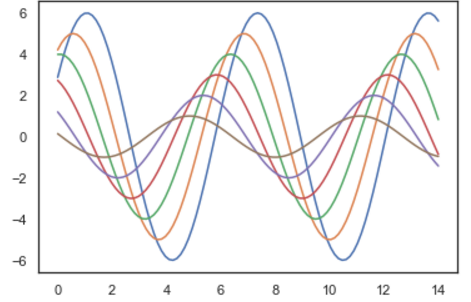
sns.set_style("white")

sinplot()
sns.set_style("ticks")

sinplot()
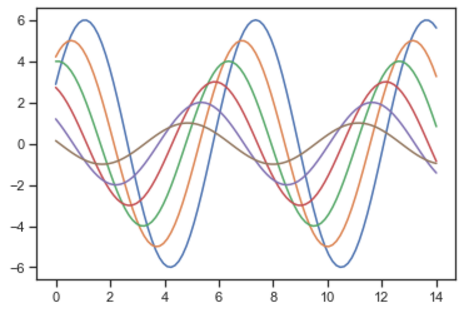
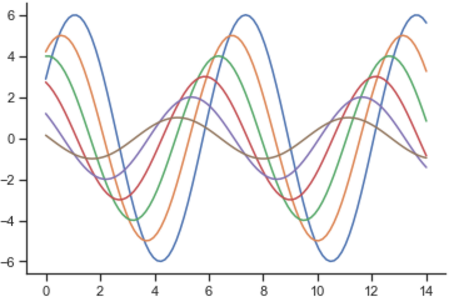
sinplot()

sns.despine() #在ticks基础上去掉上面的和右边的端线
二、风格细节的设置
import seaborn as sns

import numpy as np

import matplotlib.pyplot as plt

import matplotlib as mpl

%matplotlib inline #这句话的意思就是可以直接显示图
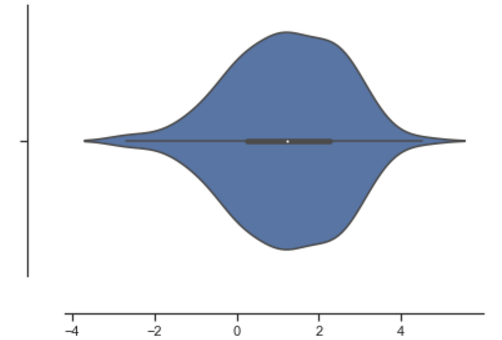
sns.violinplot(data)

sns.despine(offset=30) #显示的是图形的最低点距横轴的距离
sns.set_style("whitegrid")

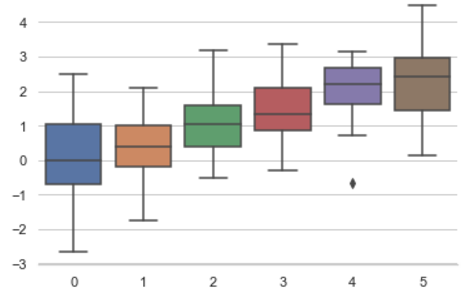
sns.boxplot(data=data, palette="deep")

sns.despine(left = True) #把左边的轴去掉了。
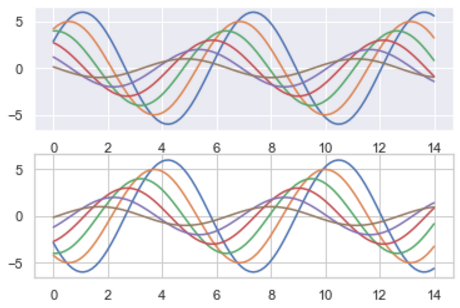
with sns.axes_style("darkgrid"): #通过with可以显示一种一个子图的风格。

    plt.subplot(211)

    sinplot()

plt.subplot(212)

sinplot(-1)
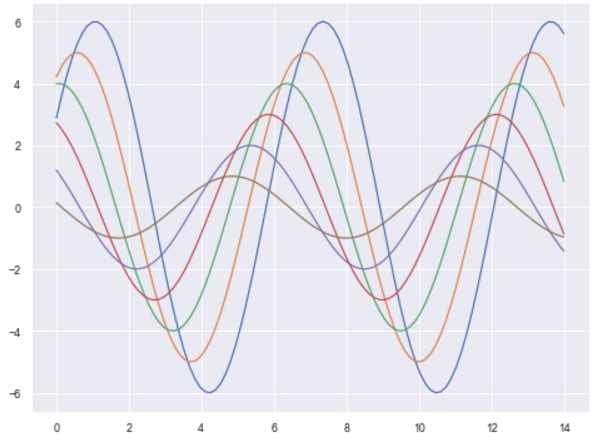
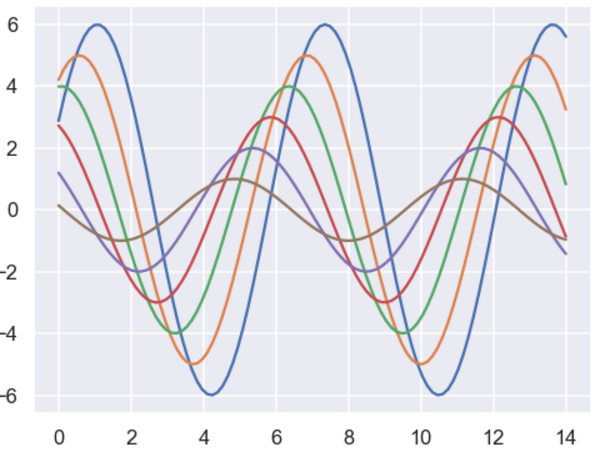
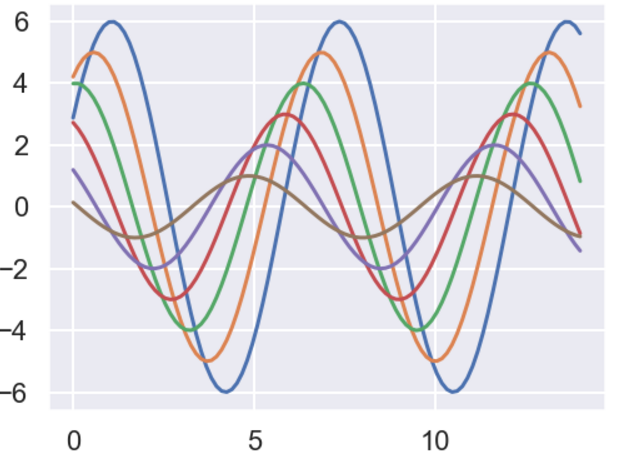
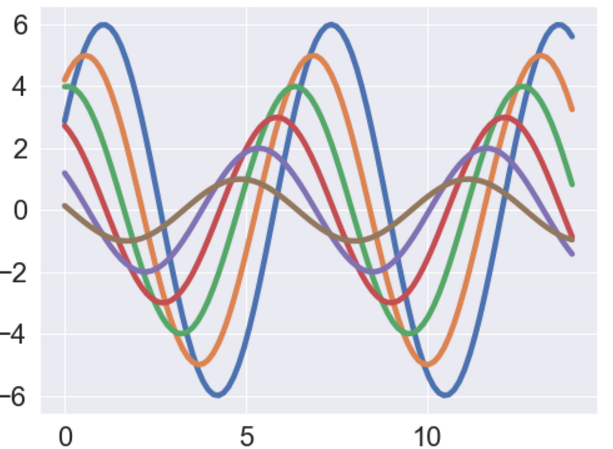
#另一种调节图中线的粗细程度的风格:paper talk poster notebook,前三种风格的线越来越粗,最后一个notebook是可以通过参数的修改的

sns.set()

sns.set_context("paper")

plt.figure(figsize=(8, 6))

sinplot()
sns.set_context("talk")

plt.figure(figsize=(8, 6))

sinplot()
sns.set_context("poster")

plt.figure(figsize=(8, 6))

sinplot()
sns.set_context("notebook", font_scale = 2, rc={"lines.linewidth" : 4.5}) #这个是可以的设置的参数的,font_scale是改变坐标轴上的大小,rc中的line.linewidth是改变线的粗细

plt.figure(figsize=(8, 6))

sinplot()
三、调色板
color_palette()能传入任何Matplotlib所支持的颜色
set_palette()设置所有图的颜色
#显示默认的颜色 deep, muted, pastel, bright, dark, colorblind......

current_palette = sns.color_palette()

sns.palplot(current_palette)

圆形画板
当需要更多分类要区分时,最简单的方法就是在一个圆形的颜色空间中画出均匀间隔的颜色(这样的色调会保持亮度和饱和度不变)。这是大多数的需要使用的比默认颜色循环中的设置的颜色更多的默认方案。
最常用的方法是使用hls的颜色空间,这是RGB值的一个简单转换。
#比如我想画个12个不同的颜色

sns.palplot(sns.color_palette("hls", 12))

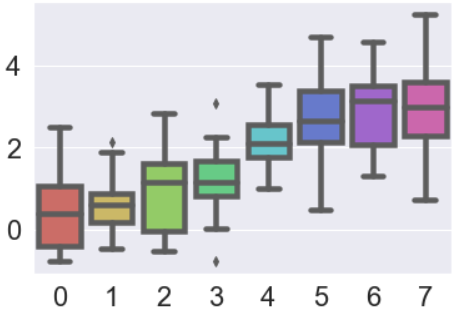
data = np.random.normal(size = (20, 8)) + np.arange(8) / 2

sns.boxplot(data = data, palette = sns.color_palette("hls", 8))
hls_palette()函数来控制颜色的亮度和饱和度
l------亮度 lightness
s------饱和 saturation
sns.palplot(sns.hls_palette(8, l = 0.3, s = 0.8))

sns.palplot(sns.color_palette("Paired", 8)) #Paired意思是比如8就是4对颜色,每一对颜色都是一浅一深。

使用xkcd颜色来命名颜色
xkcd包含了一套众包努力的针对随机RGB色的命名。产生了954个可以随机通过xkcd_rgb字典中调用的命名颜色。
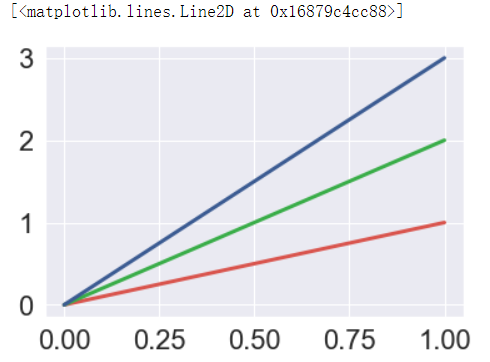
plt.plot([0, 1], [0, 1], sns.xkcd_rgb["pale red"], lw=3)

plt.plot([0, 1], [0, 2], sns.xkcd_rgb["medium green"], lw=3)

plt.plot([0, 1], [0, 3], sns.xkcd_rgb["denim blue"], lw=3)
#其他xkcd的一些颜色

colors = ["windows blue", "amber", "greyish", "faded green", "dusty purple"]

sns.palplot(sns.xkcd_palette(colors))

连续色板
色彩随数据变换,比如数据越来越重要则颜色越来越深
sns.palplot(sns.color_palette("Blues"))

如果想要翻转渐变,可以在面板名称中添加一个_r后缀
sns.palplot(sns.color_palette("BuGn_r"))

cubehelix_palette()调色板
色调线性变换
sns.palplot(sns.color_palette("cubehelix", 8))

sns.palplot(sns.cubehelix_palette(8, start = 0.5, rot = -0.75))

sns.palplot(sns.cubehelix_palette(8, start = 0.75, rot = -0.150))

light_palette()和dark_palette()调用定制连续调色板
sns.palplot(sns.light_palette("green"))

sns.palplot(sns.dark_palette("purple"))

sns.palplot(sns.light_palette("navy", reverse=True))

四、单变量分析绘图
import seaborn as sns

import numpy as np

import matplotlib.pyplot as plt

import matplotlib as mpl

from scipy import stats, integrate

%matplotlib inline

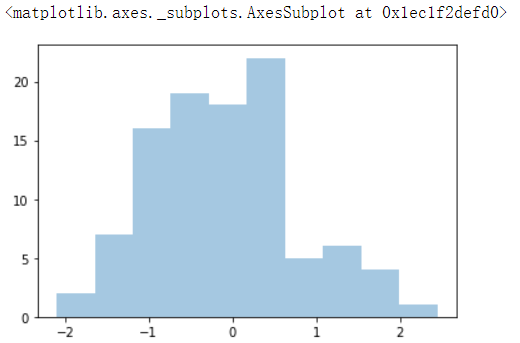
x = np.random.normal(size = 100) #正态分布

sns.distplot(x, kde=False) #绘制直方图
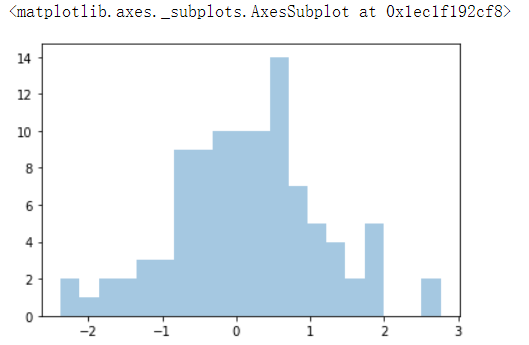
sns.distplot(x, bins = 20, kde = False) #通过bins可以改变条的数目
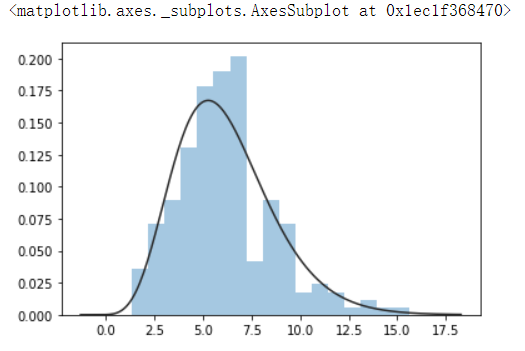
x = np.random.gamma(6, size = 200)

sns.distplot(x, kde = False, fit = stats.gamma) #通过fit进行拟合
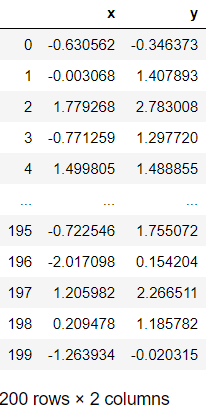
根据均值和协方差生成数据
#生成两个变量是DateFrame格式的

mean, cov = [0, 1], [(1, 0.5), (0.5, 1)]

data = np.random.multivariate_normal(mean, cov, 200)

df = pd.DataFrame(data, columns=["x", "y"])

df
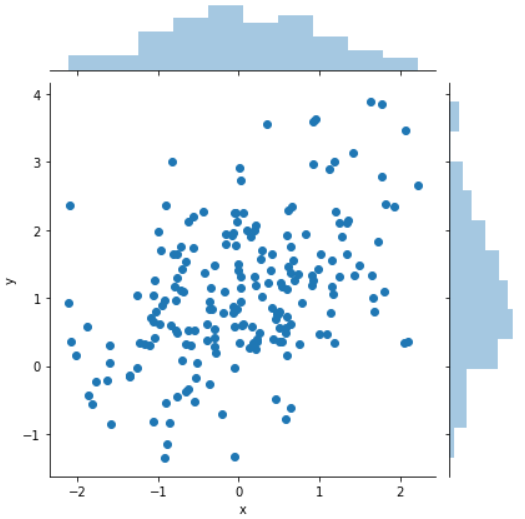
观测两个变量之间的分布关系最好用散点图
sns.jointplot(x="x", y ="y", data=df);
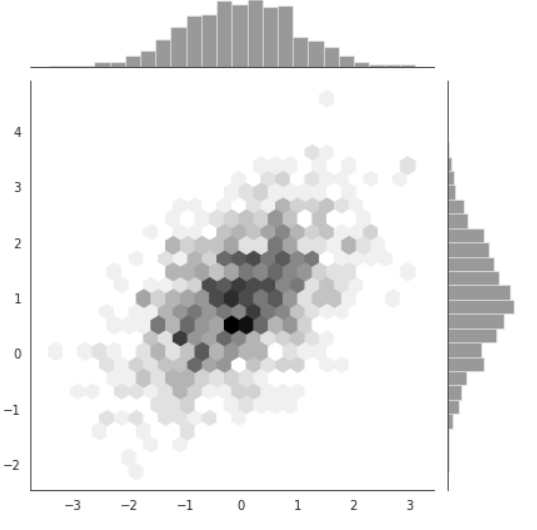
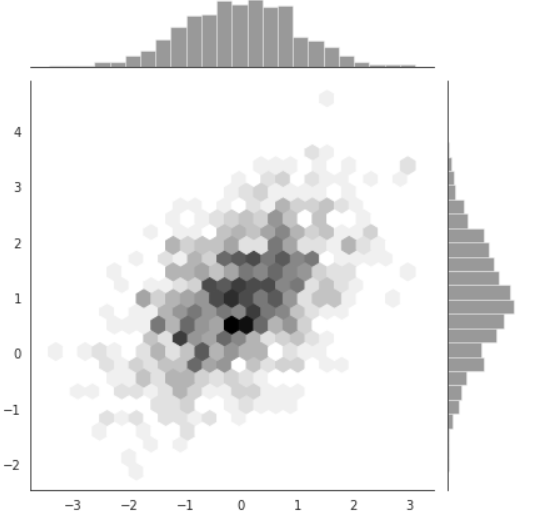
x, y = np.random.multivariate_normal(mean, cov, 1000).T

with sns.axes_style("white"):

    sns.jointplot(x=x, y=y, kind="hex", color='k')
seaborn模块的基本使用的更多相关文章
- 数据分析 - seaborn 模块
seaborn 模块 简述 对 matplotlib 模块进行了二次封装, 底层依旧使用还是 matplotlib 的, 但是在此基础上增加了很多的易用性模板, 更加方便使用 引用使用 import ...
- Pandas模块
前言: 最近公司有数据分析的任务,如果使用Python做数据分析,那么对Pandas模块的学习是必不可少的: 本篇文章基于Pandas 0.20.0版本 话不多说社会你根哥!开干! pip insta ...
- seaborn教程1——风格选择
原文链接:https://segmentfault.com/a/1190000014915873 Seaborn学习大纲 seaborn的学习内容主要包含以下几个部分: 风格管理 绘图风格设置 颜色风 ...
- Python绘图与可视化
Python有很多可视化工具,本篇只介绍Matplotlib. Matplotlib是一种2D的绘图库,它可以支持硬拷贝和跨系统的交互,它可以在Python脚本.IPython的交互环境下.Web应用 ...
- Python的pandas
pandas 是python中很重要的组件,网上关于pandas 的文章也很多,比如Python科学计算之Pandas 和 Python数据分析入门 Pandas基于两种数据类型:series与dat ...
- Python数据分析入门
Python数据分析入门 最近,Analysis with Programming加入了Planet Python.作为该网站的首批特约博客,我这里来分享一下如何通过Python来开始数据分析.具体内 ...
- 吴裕雄 数据挖掘与分析案例实战(5)——python数据可视化
# 饼图的绘制# 导入第三方模块import matplotlibimport matplotlib.pyplot as plt plt.rcParams['font.sans-serif']=['S ...
- python绘图 转
Python有很多可视化工具,本篇只介绍Matplotlib. Matplotlib是一种2D的绘图库,它可以支持硬拷贝和跨系统的交互,它可以在Python脚本.IPython的交互环境下.Web应用 ...
- Python运用于数据分析的简单教程
Python运用于数据分析的简单教程 这篇文章主要介绍了Python运用于数据分析的简单教程,主要介绍了如何运用Python来进行数据导入.变化.统计和假设检验等基本的数据分析,需要的朋友可以参考下 ...
随机推荐
- 问题(一)升级Appium最新遇到滑动的坑
Appium的JAVA客户端更新到java-client 6.0.0-BETA3后,发现其中有关于界面滑动(swipe TouchAction)方面的升级(也有可能在之前的版本已经更新过类似的内容,没 ...
- Eclipse 常用配置和基本调试
常用配置 1.显示行号:window->Preferences->General->Editors->Text Editors , 勾选show line numbers 2. ...
- python实践项目二:列表转字符串
将列表各元素转换为字符串并以规定形式返回. 假定有下面这样的列表:spam = ['apples', 'bananas', 'tofu', 'cats'],将其转换成字符串:'apples, bana ...
- [WebAPI] - 使用 Ajax 提交 HTML Form Data 到 WebAPI 的方法
背景 根据HTTP标准,HTTP请求可以使用多种请求方法. HTTP 1.0 定义了三种请求方法:GET.POST 和 HEAD 方法.HTTP 1.1 新增了五种请求方法:OPTIONS.PUT.D ...
- ServiceStack.Redis 连接有密码的Redis问题解决
在ip:port前面加上@用来表示密码,比如password@ip:port <add key="RedisServer" value="123456@127.0. ...
- 使用RestTemplate进行服务调用的几种方式
首先我们在名为MSG的服务中定义一个简单的方法 @RestController public class ServerController { @GetMapping("/msg" ...
- 通用32位CPU 常用寄存器及其作用
目录 32位CPU所含有的寄存器 数据寄存器 变址寄存器 指针寄存器 段寄存器 指令指针寄存器 标志寄存器 32位CPU所含有的寄存器 4个数据寄存器(EAX.EBX.ECX和EDX) 2个变址和指针 ...
- S04_CH03_QSPI烧写LINUX系统
S04_CH03_QSPI烧写LINUX系统 3.1概述 3.2搭建硬件系统 本章硬件工程还是使用<S04_CH01_搭建工程移植LINUX/测试EMMC/VGA>所搭建的VIVADO工程 ...
- MySQL 5.7使用xtabackup报错解决
报错信息: InnoDB: An optimized (without redo logging) DDLoperation has been performed. All modified page ...
- 天梯赛 L2-023. 图着色问题
题解:用dfs遍历图的每条边就好,这里注意要求颜色的个数为k #include <cstdio> #include <iostream> #include <cstrin ...