
JavaDailyReports10_07
动手动脑①
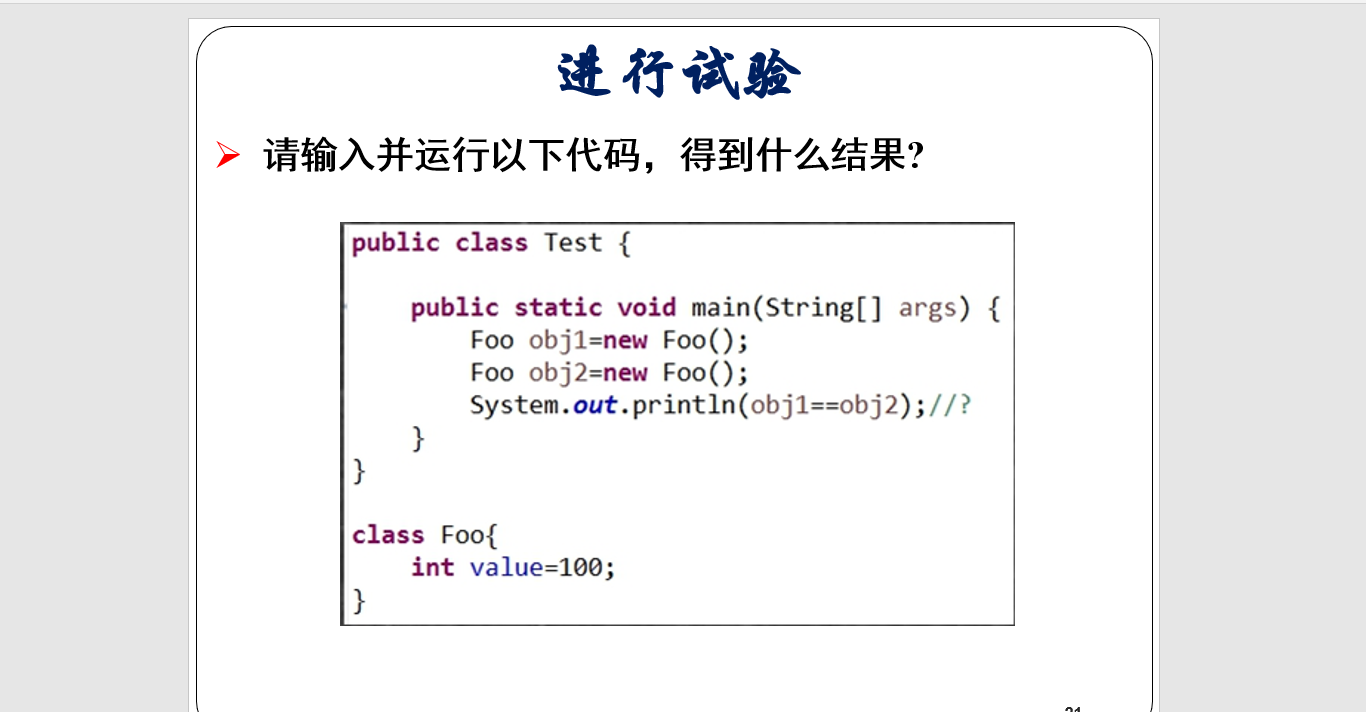
 1 package test_1;

 2

 3 public class Test {

 4

 5     public static void main(String[] args) {

 6         // TODO 自动生成的方法存根

 7         Foo obj1=new Foo();

 8         Foo obj2=new Foo();

 9         System.out.println(obj1==obj2);

10     }

11 }

12 class Foo{

13     int value=100;

14 }
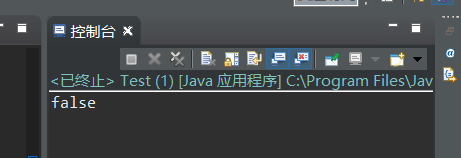
动手动脑②:类字段的初始化顺序:
 1 package test_1;

 2

 3 public class Test {

 4

 5     public static void main(String[] args) {

 6         // TODO 自动生成的方法存根

 7         InitializeBlockClass obj=new InitializeBlockClass();

 8         System.out.println(obj.getField());

 9

10         obj=new InitializeBlockClass(300);

11         System.out.println(obj.getField());

12     }

13 }

14     class InitializeBlockClass{

15

16         {

17             setField(200);        //代码块定义值是200

18         }

19         private int field=100;    //定义初始值是 100

20         InitializeBlockClass(int value) {   //传入参数是300

21             this.setField(value);

22         }

23          InitializeBlockClass() {

24         }

25         public int getField() {

26             return field;

27         }

28         public void setField(int field) {

29             this.field = field;

30         }

31     }
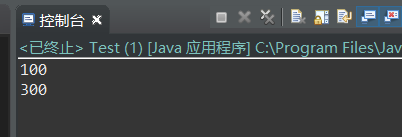
 1 package test_1;

 2

 3 public class Test {

 4

 5     public static void main(String[] args) {

 6         // TODO 自动生成的方法存根

 7         InitializeBlockClass obj=new InitializeBlockClass();

 8         System.out.println(obj.getField());

 9

10         obj=new InitializeBlockClass(300);

11         System.out.println(obj.getField());

12     }

13 }

14     class InitializeBlockClass{


15         private int field=100;    //定义初始值是 100

16         {

17             setField(200);        //代码块定义值是200

18         }

19

20         InitializeBlockClass(int value) {   //传入参数是300

21             this.setField(value);

22         }

23          InitializeBlockClass() {

24         }

25         public int getField() {

26             return field;

27         }

28         public void setField(int field) {

29             this.field = field;

30         }

31     }
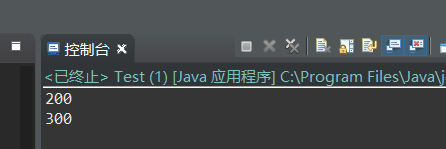
 1 package test_1;

 2

 3 class Root

 4 {

 5     static

 6     {

 7         System.out.println("Root的静态初始化块");

 8     }

 9

10     {

11         System.out.println("Root的普通初始化块");

12     }

13

14     public Root()

15     {

16         System.out.println("Root的无参数的构造器");

17     }

18 }

19 class Mid extends Root

20 {

21     static

22     {

23         System.out.println("Mid的静态初始化块");

24     }

25     {

26         System.out.println("Mid的普通初始化块");

27     }

28     public Mid()

29     {

30         System.out.println("Mid的无参数的构造器");

31     }

32     public Mid(String msg)

33     {

34         //通过this调用同一类中重载的构造器

35         this();

36         System.out.println("Mid的带参数构造器,其参数值:" + msg);

37     }

38 }

39 class Leaf extends Mid

40 {

41     static

42     {

43         System.out.println("Leaf的静态初始化块");

44     }

45     {

46         System.out.println("Leaf的普通初始化块");

47     }

48     public Leaf()

49     {

50         //通过super调用父类中有一个字符串参数的构造器

51         super("Java初始化顺序演示");

52         System.out.println("执行Leaf的构造器");

53     }

54

55 }

56

57 public class TestStaticInitializeBlock

58 {

59     public static void main(String[] args)

60     {

61         new Leaf();

62

63

64     }

65 }
规律总结:
一个父类后继承两个子类,调用顺序为:总顺序先static代码块后普通代码块 最后构造代码块,先父类后子类,先无参构造,后带参构造!
*****************************************************
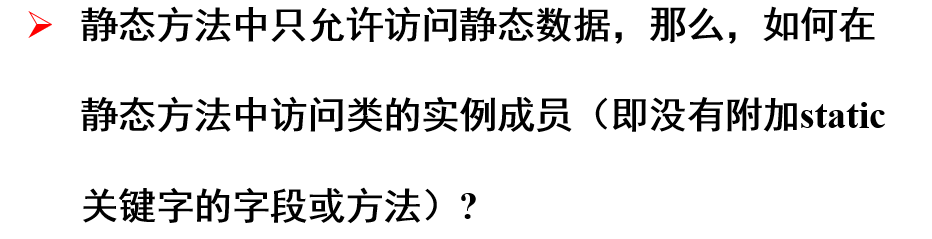
动手动脑④:
 1 package test_1;

 2

 3 public class StaticStudy {

 4     static int staticnum=1;

 5     private int num;

 6     public static void display() {

 7         StaticStudy test=new StaticStudy();

 8         System.out.println("在静态方法中输出静态变量:"+test.staticnum);

 9         System.out.println("在静态方法中输出非静态变量:"+test.num);

10     }

11     public int getNum() {

12         return num;

13     }

14     public void setNum(int num) {

15         this.num = num;

16     }

17     public StaticStudy(int num) {

18         this.num = num;

19     }

20     public StaticStudy() {

21

22     }

23     public static void main(String[] args) {

24         // TODO 自动生成的方法存根

25         StaticStudy test0=new StaticStudy(100);

26         test0.display();

27     }

28

29 }
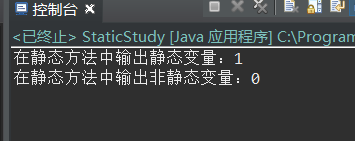
//只需要在静态变量里实例化一个本类的对象,通过这个对象取用本对象的数据成员!
动手动脑⑤:
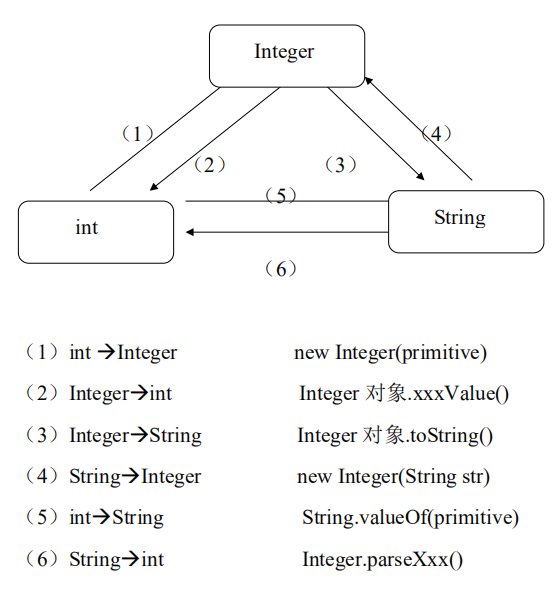
Java中的包装类
 1 package test_1;

 2

 3 public class StrangeIntegerBehavior

 4 {

 5     public static void main(String[] args)

 6     {

 7         Integer i1=100;

 8

 9         Integer j1=100;

10

11         System.out.println(i1==j1);

12

13         Integer i2=129;

14

15         Integer j2=129;

16

17         System.out.println(i2==j2);

18

19     }

20 }
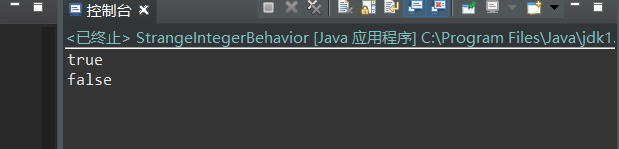
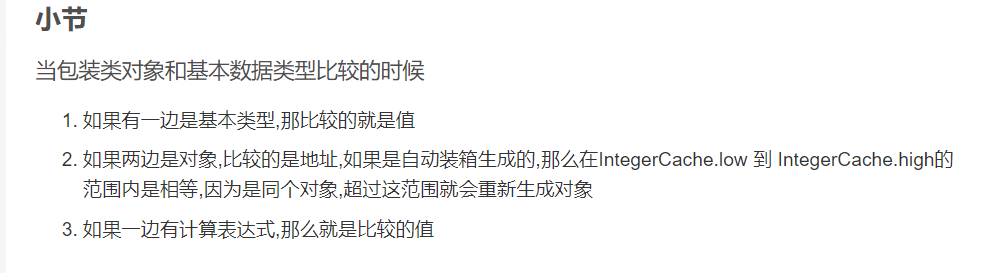
-128 --- 127 范围内是相等的,超出范围一定会重新生成对象!所以地址值就会不同!
JavaDailyReports10_07的更多相关文章
随机推荐
- Spring Boot + Elasticsearch 使用示例
本文分别使用 Elasticsearch Repository 和 ElasticsearchTemplate 实现 Elasticsearch 的简单的增删改查 一.Elastic Stack El ...
- 第3.3节 强大的Python列表
一. 列表切片操作补充 列表切片支持所有序列切片的方法,以倒序切片和步长大于1的情况再举例验证一下: l=[1,2,3,4,5] l[::2] #结果[1, 3, 5] l[-1::2] #结果[5] ...
- Python中__new__方法为什么有人说是构造方法?有什么作用?
__new__方法是Python新式类引入的,通常用于控制生成一个新实例的过程.它是类级别的静态方法,是在创建实例对象前执行,如果自定义类中没有重写该方法,则Python自动调用父类的方法,当所有父类 ...
- 深入理解C#中的异步(一)——APM模式EAP模式
深入理解C#中的异步(一)--APM模式EAP模式 目录 深入理解C#中的异步(一)--APM模式EAP模式 1 使用异步编程的原因 2 异步编程模式 2.1 APM模式 2.1.1 APM模式示例代 ...
- Java 中的语法糖,真甜。
我把自己以往的文章汇总成为了 Github ,欢迎各位大佬 star https://github.com/crisxuan/bestJavaer 我们在日常开发中经常会使用到诸如泛型.自动拆箱和装箱 ...
- VMware虚拟机下Centos8 设置静态IP地址
缘起 我们在平时学习Redis.Nginx等分布式微服务的组件的时候,无法避免的需要用到Linux操作系统,而Linux操作系统的主机来源差不多就三种情况: 真实物理机 阿里云等云服务器 利用虚拟机 ...
- Mysql为什么使用b+树,而不是b树、AVL树或红黑树?
首先,我们应该考虑一个问题,数据库在磁盘中是怎样存储的?(答案写在下一篇文章中) b树.b+树.AVL树.红黑树的区别很大.虽然都可以提高搜索性能,但是作用方式不同. 通常文件和数据库都存储在磁盘,如 ...
- JavaScript:防抖与节流
①防抖: <!DOCTYPE html> <html> <head> <meta charset="utf-8"> <titl ...
- 数组问题:a[i][j] 和 a[j][i] 有什么区别?
本文以一个简单的程序开头--数组赋值: int LEN = 10000; int[][] arr = new int[LEN][LEN]; for (int i = 0; i < LEN; i+ ...
- DG修改SYS用户密码(ORA-16810,ORA-01017)
修改主库PROD1密码后,查看configuration状态看到以下报错: [oracle@edgzrip1-PROD1 ~]$ dgmgrl sys/oracleDGMGRL for Linux: ...