
MyBatis进阶--接口代理方式实现Dao 和动态SQL
MyBatis接口代理方式实现Dao层
接口代理方式-实现规则
传统方式实现Dao层,我们既要写接口。还要写实现类。而MyBatis框架可以帮助我们省略写Dao层接口实现类的步骤。程序员只需要编写接口,由MyBatis框架根据接口的定义来创
1该接口的动态代理对象。
实现规则:
1.映射配置文件中的名称空间必须和Dao层接口的全类名相同
2.映射配置文件中的增删改查标签的id属性必须和Dao层接口的方法名相同
3.映射配置文件中的增删改查标签的paramrterType属性必须和Dao层接口方法的参数相同
4.映射配置文件中的增删改查标签的resultType属性必须和Dao层接口方法的返回值相同
接口代理方式-代码实现
1.删除mapper层接口的实现类
2.修改映射配置文件
3.修改service层接口的实现类,采用接口代理方式实现功能
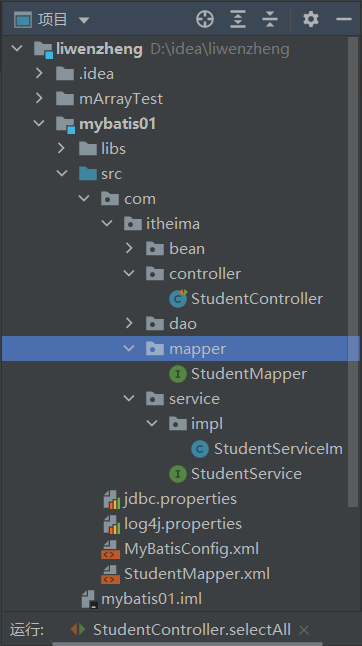
删除mapper层接口的实现类
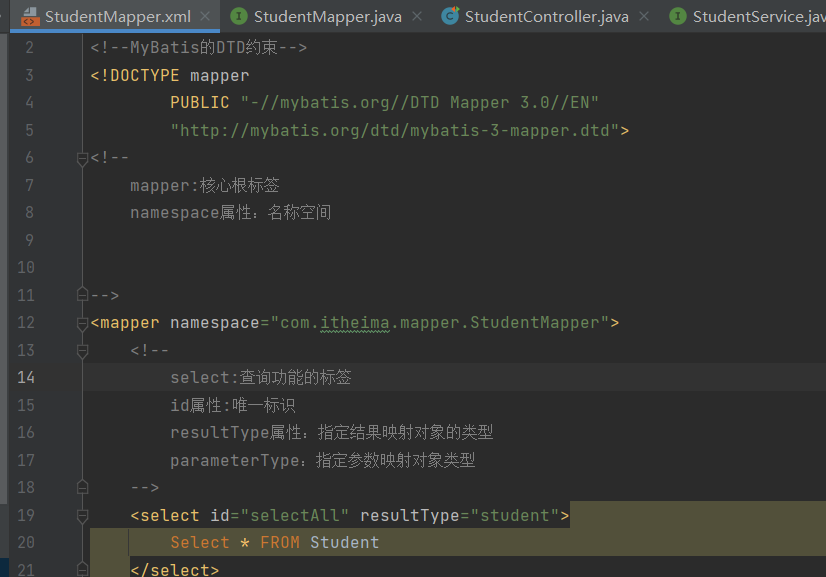
修改映射配置文件
package com.itheima.service.impl;

import com.itheima.bean.Student;

import com.itheima.mapper.StudentMapper;

import com.itheima.service.StudentService;

import org.apache.ibatis.io.Resources;

import org.apache.ibatis.session.SqlSession;

import org.apache.ibatis.session.SqlSessionFactory;

import org.apache.ibatis.session.SqlSessionFactoryBuilder;

import java.io.IOException;

import java.io.InputStream;

import java.util.List;

/*

    业务层实现类

 */

public class StudentServiceImpl implements StudentService {

    @Override

    public List<Student> selectAll() {

        List<Student> list = null;

        SqlSession sqlSession = null;

        InputStream is = null;

        try{

            //1.加载核心配置文件

            is = Resources.getResourceAsStream("MyBatisConfig.xml");

            //2.获取SqlSession工厂对象

            SqlSessionFactory sqlSessionFactory = new SqlSessionFactoryBuilder().build(is);

            //3.通过工厂对象获取SqlSession对象

            sqlSession = sqlSessionFactory.openSession(true);

            //4.获取StudentMapper接口的实现类对象

            StudentMapper mapper = sqlSession.getMapper(StudentMapper.class); // StudentMapper mapper = new StudentMapperImpl();

            //5.通过实现类对象调用方法,接收结果

            list = mapper.selectAll();

        } catch (Exception e) {

        } finally {

            //6.释放资源

            if(sqlSession != null) {

                sqlSession.close();

            }

            if(is != null) {

                try {

                    is.close();

                } catch (IOException e) {

                    e.printStackTrace();

                }

            }

        }

        //7.返回结果

        return list;

    }

    @Override

    public Student selectById(Integer id) {

        Student stu = null;

        SqlSession sqlSession = null;

        InputStream is = null;

        try{

            //1.加载核心配置文件

            is = Resources.getResourceAsStream("MyBatisConfig.xml");

            //2.获取SqlSession工厂对象

            SqlSessionFactory sqlSessionFactory = new SqlSessionFactoryBuilder().build(is);

            //3.通过工厂对象获取SqlSession对象

            sqlSession = sqlSessionFactory.openSession(true);

            //4.获取StudentMapper接口的实现类对象

            StudentMapper mapper = sqlSession.getMapper(StudentMapper.class); // StudentMapper mapper = new StudentMapperImpl();

            //5.通过实现类对象调用方法,接收结果

            stu = mapper.selectById(id);

        } catch (Exception e) {

        } finally {

            //6.释放资源

            if(sqlSession != null) {

                sqlSession.close();

            }

            if(is != null) {

                try {

                    is.close();

                } catch (IOException e) {

                    e.printStackTrace();

                }

            }

        }

        //7.返回结果

        return stu;

    }

    @Override

    public Integer insert(Student stu) {

        Integer result = null;

        SqlSession sqlSession = null;

        InputStream is = null;

        try{

            //1.加载核心配置文件

            is = Resources.getResourceAsStream("MyBatisConfig.xml");

            //2.获取SqlSession工厂对象

            SqlSessionFactory sqlSessionFactory = new SqlSessionFactoryBuilder().build(is);

            //3.通过工厂对象获取SqlSession对象

            sqlSession = sqlSessionFactory.openSession(true);

            //4.获取StudentMapper接口的实现类对象

            StudentMapper mapper = sqlSession.getMapper(StudentMapper.class); // StudentMapper mapper = new StudentMapperImpl();

            //5.通过实现类对象调用方法,接收结果

            result = mapper.insert(stu);

        } catch (Exception e) {

        } finally {

            //6.释放资源

            if(sqlSession != null) {

                sqlSession.close();

            }

            if(is != null) {

                try {

                    is.close();

                } catch (IOException e) {

                    e.printStackTrace();

                }

            }

        }

        //7.返回结果

        return result;

    }

    @Override

    public Integer update(Student stu) {

        Integer result = null;

        SqlSession sqlSession = null;

        InputStream is = null;

        try{

            //1.加载核心配置文件

            is = Resources.getResourceAsStream("MyBatisConfig.xml");

            //2.获取SqlSession工厂对象

            SqlSessionFactory sqlSessionFactory = new SqlSessionFactoryBuilder().build(is);

            //3.通过工厂对象获取SqlSession对象

            sqlSession = sqlSessionFactory.openSession(true);

            //4.获取StudentMapper接口的实现类对象

            StudentMapper mapper = sqlSession.getMapper(StudentMapper.class); // StudentMapper mapper = new StudentMapperImpl();

            //5.通过实现类对象调用方法,接收结果

            result = mapper.update(stu);

        } catch (Exception e) {

        } finally {

            //6.释放资源

            if(sqlSession != null) {

                sqlSession.close();

            }

            if(is != null) {

                try {

                    is.close();

                } catch (IOException e) {

                    e.printStackTrace();

                }

            }

        }

        //7.返回结果

        return result;

    }

    @Override

    public Integer delete(Integer id) {

        Integer result = null;

        SqlSession sqlSession = null;

        InputStream is = null;

        try{

            //1.加载核心配置文件

            is = Resources.getResourceAsStream("MyBatisConfig.xml");

            //2.获取SqlSession工厂对象

            SqlSessionFactory sqlSessionFactory = new SqlSessionFactoryBuilder().build(is);

            //3.通过工厂对象获取SqlSession对象

            sqlSession = sqlSessionFactory.openSession(true);

            //4.获取StudentMapper接口的实现类对象

            StudentMapper mapper = sqlSession.getMapper(StudentMapper.class); // StudentMapper mapper = new StudentMapperImpl();

            //5.通过实现类对象调用方法,接收结果

            result = mapper.delete(id);

        } catch (Exception e) {

        } finally {

            //6.释放资源

            if(sqlSession != null) {

                sqlSession.close();

            }

            if(is != null) {

                try {

                    is.close();

                } catch (IOException e) {

                    e.printStackTrace();

                }

            }

        }

        //7.返回结果

        return result;

    }

}
修改service层接口的实现类,采用接口代理方式实现功能
接口代理方式-源码分析
分析动态代理对象如何生成的?
通过动态代理开发的模式,我们只需要编写一个接口,不写实现类,我们通过getMapper()方法最终获取到
org.apache.ibatis.binding.MapperProxy代理对象,然后执行功能,而这个代理对象正是MyBatis使用了JDK的动态代理技术,帮助我们生成了代理实现类对象。从而可以进行相关持久化操作。
分析方法是如何执行的?
动态代理的实现类对象再执行方法的时候最终调用了maperMethod.execute()方法,这个方法中通过switch语句根据操作类型来判断是新增,修改,删除,查询操作,最后一步回到了MMyBatis最原生的SqlSession方式来执行增删改查。
接口代理方式小结
接口代理方式可以让我们只编写接口即可,而实现类对象由MyBatis生成。
实现规则:
1.映射配置文件中的名称空间必须和Dao层接口的全类名相同
2.映射配置文件中的增删改查标签的id属性必须和Dao层接口的方法名相同
3.映射配置文件中的增删改查标签的paramrterType属性必须和Dao层接口方法的参数相同
4.映射配置文件中的增删改查标签的resultType属性必须和Dao层接口方法的返回值相同
获取动态代理对象
SqlSession功能类中的getMapper()方法
删除mapper中的实现类 ,保留接口
在StudentMapper.xml中修改 <mapper namespace="com.itheima.mapper.StudentMapper">
更改service包下 StudentServiceImpl文件
package com.itheima.service.impl;

import com.itheima.bean.Student;

import com.itheima.mapper.StudentMapper;

import com.itheima.service.StudentService;

import org.apache.ibatis.io.Resources;

import org.apache.ibatis.session.SqlSession;

import org.apache.ibatis.session.SqlSessionFactory;

import org.apache.ibatis.session.SqlSessionFactoryBuilder;

import java.io.IOException;

import java.io.InputStream;

import java.util.List;

/*

    业务层实现类

 */

public class StudentServiceImpl implements StudentService {

    @Override

    public List<Student> selectAll() {

        List<Student> list = null;

        SqlSession sqlSession = null;

        InputStream is = null;

        try{

            //1.加载核心配置文件

            is = Resources.getResourceAsStream("MyBatisConfig.xml");

            //2.获取SqlSession工厂对象

            SqlSessionFactory sqlSessionFactory = new SqlSessionFactoryBuilder().build(is);

            //3.通过工厂对象获取SqlSession对象

            sqlSession = sqlSessionFactory.openSession(true);

            //4.获取StudentMapper接口的实现类对象

            StudentMapper mapper = sqlSession.getMapper(StudentMapper.class); // StudentMapper mapper = new StudentMapperImpl();

            //5.通过实现类对象调用方法,接收结果

            list = mapper.selectAll();

        } catch (Exception e) {

        } finally {

            //6.释放资源

            if(sqlSession != null) {

                sqlSession.close();

            }

            if(is != null) {

                try {

                    is.close();

                } catch (IOException e) {

                    e.printStackTrace();

                }

            }

        }

        //7.返回结果

        return list;

    }

    @Override

    public Student selectById(Integer id) {

        Student stu = null;

        SqlSession sqlSession = null;

        InputStream is = null;

        try{

            //1.加载核心配置文件

            is = Resources.getResourceAsStream("MyBatisConfig.xml");

            //2.获取SqlSession工厂对象

            SqlSessionFactory sqlSessionFactory = new SqlSessionFactoryBuilder().build(is);

            //3.通过工厂对象获取SqlSession对象

            sqlSession = sqlSessionFactory.openSession(true);

            //4.获取StudentMapper接口的实现类对象

            StudentMapper mapper = sqlSession.getMapper(StudentMapper.class); // StudentMapper mapper = new StudentMapperImpl();

            //5.通过实现类对象调用方法,接收结果

            stu = mapper.selectById(id);

        } catch (Exception e) {

        } finally {

            //6.释放资源

            if(sqlSession != null) {

                sqlSession.close();

            }

            if(is != null) {

                try {

                    is.close();

                } catch (IOException e) {

                    e.printStackTrace();

                }

            }

        }

        //7.返回结果

        return stu;

    }

    @Override

    public Integer insert(Student stu) {

        Integer result = null;

        SqlSession sqlSession = null;

        InputStream is = null;

        try{

            //1.加载核心配置文件

            is = Resources.getResourceAsStream("MyBatisConfig.xml");

            //2.获取SqlSession工厂对象

            SqlSessionFactory sqlSessionFactory = new SqlSessionFactoryBuilder().build(is);

            //3.通过工厂对象获取SqlSession对象

            sqlSession = sqlSessionFactory.openSession(true);

            //4.获取StudentMapper接口的实现类对象

            StudentMapper mapper = sqlSession.getMapper(StudentMapper.class); // StudentMapper mapper = new StudentMapperImpl();

            //5.通过实现类对象调用方法,接收结果

            result = mapper.insert(stu);

        } catch (Exception e) {

        } finally {

            //6.释放资源

            if(sqlSession != null) {

                sqlSession.close();

            }

            if(is != null) {

                try {

                    is.close();

                } catch (IOException e) {

                    e.printStackTrace();

                }

            }

        }

        //7.返回结果

        return result;

    }

    @Override

    public Integer update(Student stu) {

        Integer result = null;

        SqlSession sqlSession = null;

        InputStream is = null;

        try{

            //1.加载核心配置文件

            is = Resources.getResourceAsStream("MyBatisConfig.xml");

            //2.获取SqlSession工厂对象

            SqlSessionFactory sqlSessionFactory = new SqlSessionFactoryBuilder().build(is);

            //3.通过工厂对象获取SqlSession对象

            sqlSession = sqlSessionFactory.openSession(true);

            //4.获取StudentMapper接口的实现类对象

            StudentMapper mapper = sqlSession.getMapper(StudentMapper.class); // StudentMapper mapper = new StudentMapperImpl();

            //5.通过实现类对象调用方法,接收结果

            result = mapper.update(stu);

        } catch (Exception e) {

        } finally {

            //6.释放资源

            if(sqlSession != null) {

                sqlSession.close();

            }

            if(is != null) {

                try {

                    is.close();

                } catch (IOException e) {

                    e.printStackTrace();

                }

            }

        }

        //7.返回结果

        return result;

    }

    @Override

    public Integer delete(Integer id) {

        Integer result = null;

        SqlSession sqlSession = null;

        InputStream is = null;

        try{

            //1.加载核心配置文件

            is = Resources.getResourceAsStream("MyBatisConfig.xml");

            //2.获取SqlSession工厂对象

            SqlSessionFactory sqlSessionFactory = new SqlSessionFactoryBuilder().build(is);

            //3.通过工厂对象获取SqlSession对象

            sqlSession = sqlSessionFactory.openSession(true);

            //4.获取StudentMapper接口的实现类对象

            StudentMapper mapper = sqlSession.getMapper(StudentMapper.class); // StudentMapper mapper = new StudentMapperImpl();

            //5.通过实现类对象调用方法,接收结果

            result = mapper.delete(id);

        } catch (Exception e) {

        } finally {

            //6.释放资源

            if(sqlSession != null) {

                sqlSession.close();

            }

            if(is != null) {

                try {

                    is.close();

                } catch (IOException e) {

                    e.printStackTrace();

                }

            }

        }

        //7.返回结果

        return result;

    }

}
创建dynamic下测试类Test01
package com.itheima.dynamic;

import com.itheima.bean.Student;

import com.itheima.mapper.StudentMapper;

import org.apache.ibatis.io.Resources;

import org.apache.ibatis.session.SqlSession;

import org.apache.ibatis.session.SqlSessionFactory;

import org.apache.ibatis.session.SqlSessionFactoryBuilder;

import org.junit.Test;

import java.io.IOException;

import java.io.InputStream;

import java.util.ArrayList;

import java.util.List;

public class Test01 {

    @Test

    public void selectCondition() throws Exception {

        InputStream is = Resources.getResourceAsStream("MyBatisConfig.xml");

        SqlSessionFactory sqlSessionFactory = new SqlSessionFactoryBuilder().build(is);

        SqlSession sqlSession = sqlSessionFactory.openSession(true);

        StudentMapper mapper = sqlSession.getMapper(StudentMapper.class);

        Student stu=new Student();

        stu.setId(2);

        stu.setName("李四");

        //stu.setAge(23);

        List<Student> list = mapper.selectCondition(stu);

        for (Student student:list){

            System.out.println(student);

        }

        sqlSession.close();

        is.close();

    }

    @Test

    public void selectByIds() throws Exception {

        InputStream is = Resources.getResourceAsStream("MyBatisConfig.xml");

        SqlSessionFactory sqlSessionFactory = new SqlSessionFactoryBuilder().build(is);

        SqlSession sqlSession = sqlSessionFactory.openSession(true);

        StudentMapper mapper = sqlSession.getMapper(StudentMapper.class);

       List<Integer> ids=new ArrayList<>();

       ids.add(1);

       ids.add(2);

        List<Student> list = mapper.selectByIds(ids);

        for (Student student:list){

            System.out.println(student);

        }

        sqlSession.close();

        is.close();

    }

}
MyBatis映射配置文件-----动态sql
动态SQL介绍
MyBatis映射配置文件中,前面我们的SQL都是比较简单的,有些时候业务逻辑复杂时,我们的SQL就时动态变化的,此时在前面学习的SQL就不能满足要求了。
多条件查询
id:3 name:王五 age:25
select * from Student where id=#{id} and name=#{name} and age=#{age}
id:3 name:王五
select * from Student where id=#{id} and name=#{name}
动态sql标签
<where>:条件标签。如果有动态条件,则使用该标签代替where关键字。
<if>:条件判断标签
<if test="条件判断">

    查询条件拼接

</if>
<foreach>:循环遍历标签。适用于多个参数或者的关系。
<foreach collection="" open="" close="" item="" separator="">

    获取参数

</foreach>
属性:
collection:参数容器类型,(list-集合,array-数组)。
open:开始的sql语句
close:结束额sql语句
item:参数变量名
separator:分隔符
Sql片段抽取
我们可以将一些重复的SQL语句进行抽取,以达到复用的效果
<sql>: 抽取SQL语句标签
<sql id ="片段唯一标识" >抽取的SQL语句</sql>
<include>:引入SQL片段标签
<include refid="片段唯一标识" />
StudentMapper.xml
<?xml version="1.0" encoding="UTF-8" ?>

<!--MyBatis的DTD约束-->

<!DOCTYPE mapper

        PUBLIC "-//mybatis.org//DTD Mapper 3.0//EN"

        "http://mybatis.org/dtd/mybatis-3-mapper.dtd">

<!--

    mapper:核心根标签

    namespace属性:名称空间

-->

<mapper namespace="com.itheima.mapper.StudentMapper">

    <sql id="select">Select * FROM Student</sql>

    <!--

        select:查询功能的标签

        id属性:唯一标识

        resultType属性:指定结果映射对象的类型

        parameterType:指定参数映射对象类型

    -->

    <select id="selectAll" resultType="student">

        <include refid="select"/>

    </select>

    <select id="selectById" resultType="student" parameterType="int">

        <include refid="select"/> where id = #{id}

    </select>

    <insert id="insert" parameterType="student">

        Insert into Student values(#{id},#{name},#{age})

    </insert>

    <update id="update" parameterType="student">

        update Student set name =#{name},age=#{age} where id=#{id}

    </update>

    <delete id="delete" parameterType="int">

        delete from Student where id=#{id}

    </delete>

    <select id="selectCondition" resultType="student" parameterType="student">

        <include refid="select"/>

        <where>

            <if test="id!=null">

                id=#{id}

            </if>

            <if test="name!=null">

                and name=#{name}

            </if>

            <if test="age!=null">

                and age=#{age}

            </if>

        </where>

    </select>

    <select id="selectByIds" resultType="student" parameterType="list">

        <include refid="select"/>

        <where>

            <foreach collection="list" open="id in (" close=")" item="id" separator=",">

                #{id}

            </foreach>

        </where>

    </select>

</mapper>
动态SQL小结
动态SQL指的就是SQL语句可以根据条件或者参数的不同进行动态的变化
<where>:条件标签
<if>:里面有个test标签可以帮我们进行判断
<foreach>:循环遍历的标签 collection="list" open="id in (" close=")" item="id" separator=","
<sql>:抽取SQL片段的标签
<include>:引入SQL片段的标签
MyBatis进阶--接口代理方式实现Dao 和动态SQL的更多相关文章
- Mybatis进阶学习笔记——动态代理方式开发Dao接口、Dao层(推荐第二种)
1.原始方法开发Dao Dao接口 package cn.sm1234.dao; import java.util.List; import cn.sm1234.domain.Customer; pu ...
- Mybatis的dao层实现 接口代理方式实现规范+plugins-PageHelper
Mybatis的dao层实现 接口代理方式实现规范 Mapper接口实现时的相关规范: Mapper接口开发只需要程序员编写Mapper接口而不用具体实现其代码(相当于我们写的Imp实现类) Mapp ...
- 分享公司DAO层动态SQL的一些封装
主题 公司在DAO层使用的框架是Spring Data JPA,这个框架很好用,基本不需要自己写SQL或者HQL就能完成大部分事情,但是偶尔有一些复杂的查询还是需要自己手写原生的Native SQL或 ...
- mybatis入门--mapper代理方式开发
不使用代理开发 之前,我们说了如何搭建mybatis框架以及我们使用mybatis进行简单的增删改查.现在,我们一起来构建一个dao层的完整代码.并用@test来模拟service层对dao层进行一下 ...
- spring整合mybatis(非代理方式)【我】
首先创建要给 maven 的war项目 不用代理的方式: 如果不适用Mapper代理的方式,配置就非常简单: 首先是pom文件(以下配置文件包含其他多余内容,仅供参考): <project xm ...
- MyBatis基础_连接池与事务、动态SQL、注解开发
一.MyBatis连接池及事务控制 1.连接池 在实际开发中,都会使用连接池,因为它可以减少获取连接缩消耗的时间.所谓连接池,就是存储数据库连接的容器.连接池中存储一定数量的数据库连接,当线程需要使用 ...
- Mybatis学习第三天——输入输出映射以及动态SQL
注意:以下传入数据与输出数据类型部分使用别名的方式,别名在SqlMapConfig.xml核心文件中配置 1.输入映射 1.1 传递简单数据类型 1.2 传递pojo中的类类型 1.3 传递Query ...
- mybatis源码学习(四):动态SQL的解析
之前的一片文章中我们已经了解了MappedStatement中有一个SqlSource字段,而SqlSource又有一个getBoundSql方法来获得BoundSql对象.而BoundSql中的sq ...
- mybatis --- 以接口的方式进行编程
); 我们来学习下接口方式的编程. 接口类IBookDao.java package com.mybatis.dao; import com.mybatis.model.Book; public i ...
随机推荐
- Android学习之探究Fragment
•碎片是什么 Fragment是一种可以嵌入在活动中的UI片段,能够让程序更加合理和充分地利用大屏幕的空间: 出现的初衷是为了适应大屏幕的平板电脑,可以将其看成一个小型Activity,又称作Acti ...
- 服务器安装部署-01-MySQL
1 MySQL 1.1 安装 在root用户权限下 # 创建mysql用户和用户组,同时禁止登陆 shell> groupadd mysql shell> useradd -r -g my ...
- 从网络请求过程看OkHttp拦截器
前言 之前我们结合设计模式简单说了下OkHttp的大体流程,今天就继续说说它的核心部分--拦截器. 因为拦截器组成的链其实是完成了网络通信的整个流程,所以我们今天就从这个角度说说各拦截器的功能. 首先 ...
- Re:从零开始的Git保姆级使用教程
观前提示: 本文主要介绍了用命令的方式对Git进行操作(全程用的win10系统),而对于TortoiseGit和github desktop等图形化操作知识,只进行简单介绍或提及,详细使用会在提到的地 ...
- [shell脚本]在Linux终端可视化输出表格数据
最终效果 1. 自定义表格样式 2. 自定义主题颜色 支持三系普通颜色 支持16色彩虹色 支持单颜色 回顾一下shell语法 1. shell传递参数 我们可以在执行shell脚本时实时传递参数从而指 ...
- day17.网络编程2+进程
1 加入链接循环的套接字服务端 1.1 服务端 ''' 2.1 基于文件类型的套接字家族 套接字家族的名字:AF_UNIX unix一切皆文件,基于文件的套接字调用的就是底层的文件系统来取数据,两个套 ...
- 从UWP项目移植到WinUI桌面版你需要做哪些事情
就像文章标题说的我是打算写一篇从UWP移植到WinUI的帖子,本来打算是想写一篇WinUI的学习帖子,可是觉得市面上UWP的教程WPF的教程都是很多了,所以干脆就直接硬怼项目吧,先声明我不是来挖UWP ...
- *arg和**kwarg的区别
一.*args的使用方法 *args 用来将参数打包成tuple给函数体调用 例子一: def function(*args): print(args, type(args)) function(1) ...
- 【vue环境】vue : 无法加载文件 C:\Users\1111111\AppData\Roaming\npm\vue.ps1,因为在此系统禁止运行脚本
在用脚手架搭建vue项目时,提示:无法加载文件 C:\Users\1111111\AppData\Roaming\npm\vue.ps1,因为在此系统禁止运行脚本 这是你笔记本禁止运行脚本,解决办法 ...
- DexHunter的原理分析和使用说明(一)
本文博客地址:http://blog.csdn.net/qq1084283172/article/details/53710357 Android通用脱壳工具DexHunter是2015年下半年,大牛 ...