
Spring入门详细教程(一)
一、spring概述
Spring是一个开放源代码的设计层面框架,他解决的是业务逻辑层和其他各层的松耦合问题,因此它将面向接口的编程思想贯穿整个系统应用。Spring是于2003 年兴起的一个轻量级的Java 开发框架,由Rod Johnson创建。简单来说,Spring是一个分层的JavaSE/EE full-stack(一站式) 轻量级开源框架。
二、Spring特点
1、方便解耦,简化开发。
2、AOP编程的支持。
3、声明式事务的支持。
4、方便程序的测试
5、方便集成各种优秀框架
三、spring下载
下载地址:https://repo.spring.io/libs-release-local/org/springframework/spring/
进入后可选择下载版本,选择版本后,进入目录结构。其中dist是最终发布版本,包含开发所需lib和源码。docs是开发文档。schema是一些约束文件。
四、spring搭建入门案例
1、在eclipse中创建一个动态的web工程。
2、导入spring的基础lib包到lib文件夹下。
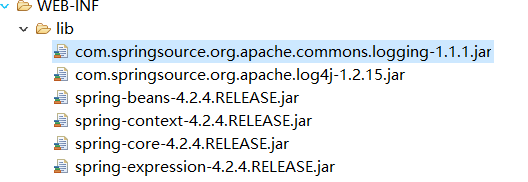
3、编写一个实体User类
package com.jichi.entity;

public class User {

    private String name;

    private Integer age ;

    public String getName() {

        return name;

    }

    public void setName(String name) {

        this.name = name;

    }

    public Integer getAge() {

        return age;

    }

    public void setAge(Integer age) {

        this.age = age;

    }

}
4、创建applicationContext.xml文件
在src文件下,新建applicationContext.xml文件,同时引入约束。
<?xml version="1.0" encoding="UTF-8"?>

<beans xmlns="http://www.springframework.org/schema/beans"

    xmlns:xsi="http://www.w3.org/2001/XMLSchema-instance"

    xmlns:util="http://www.springframework.org/schema/util"

    xmlns:jee="http://www.springframework.org/schema/jee"

    xmlns:lang="http://www.springframework.org/schema/lang"

    xmlns:jms="http://www.springframework.org/schema/jms"

    xmlns:aop="http://www.springframework.org/schema/aop"

    xmlns:tx="http://www.springframework.org/schema/tx"

    xmlns:context="http://www.springframework.org/schema/context"

    xmlns:jdbc="http://www.springframework.org/schema/jdbc"

    xmlns:cache="http://www.springframework.org/schema/cache"

    xmlns:mvc="http://www.springframework.org/schema/mvc"

    xmlns:oxm="http://www.springframework.org/schema/oxm"

    xmlns:task="http://www.springframework.org/schema/task"

    xmlns:tool="http://www.springframework.org/schema/tool"

    xmlns:websocket="http://www.springframework.org/schema/websocket"

    xsi:schemaLocation="

        http://www.springframework.org/schema/beans http://www.springframework.org/schema/beans/spring-beans.xsd

        http://www.springframework.org/schema/util http://www.springframework.org/schema/util/spring-util.xsd

        http://www.springframework.org/schema/jee http://www.springframework.org/schema/jee/spring-jee.xsd

        http://www.springframework.org/schema/lang http://www.springframework.org/schema/lang/spring-lang.xsd

        http://www.springframework.org/schema/jms http://www.springframework.org/schema/jms/spring-jms.xsd

        http://www.springframework.org/schema/aop http://www.springframework.org/schema/aop/spring-aop.xsd

        http://www.springframework.org/schema/tx http://www.springframework.org/schema/tx/spring-tx.xsd

        http://www.springframework.org/schema/context http://www.springframework.org/schema/context/spring-context.xsd

        http://www.springframework.org/schema/jdbc http://www.springframework.org/schema/jdbc/spring-jdbc.xsd

        http://www.springframework.org/schema/cache http://www.springframework.org/schema/cache/spring-cache.xsd

        http://www.springframework.org/schema/mvc http://www.springframework.org/schema/mvc/spring-mvc.xsd

        http://www.springframework.org/schema/oxm http://www.springframework.org/schema/oxm/spring-oxm.xsd

        http://www.springframework.org/schema/task http://www.springframework.org/schema/task/spring-task.xsd

        http://www.springframework.org/schema/tool http://www.springframework.org/schema/tool/spring-tool.xsd

        http://www.springframework.org/schema/websocket http://www.springframework.org/schema/websocket/spring-websocket.xsd">

</beans>
5、在beans内将user实体配置进去
<bean name="user" class="com.jichi.entity.User"></bean>
6、书写测试代码
public class TestDemo {

    @Test

    public void test1(){

        ApplicationContext ac = new ClassPathXmlApplicationContext("applicationContext.xml");

        User user = (User) ac.getBean("user");

        System.out.println(user);

    }

}
7、结果显示,将user对象交给spring容器管理成功
com.jichi.entity.User@db5e9c
五、spring中的工厂BeanFactory与ApplicationContext的区别
1、BeanFactory
spring原始接口,功能较为单一,在从容器中获得对象的时候才会创建对象。
2、ApplicationContext
每次启动容器的时候,初始化容器中的所有对象并提供更多功能。
其中的实现类ClassPathXmlApplicationContext是加载类路径下的spring配置文件,FileSystemXmlApplicationContext是加载本地磁盘下spring的配置文件。
3、实现图
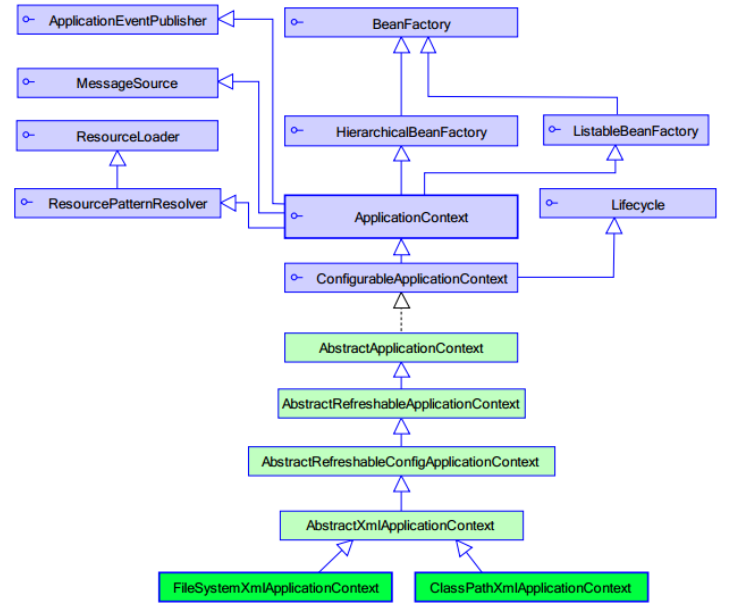
4、结论
web开发中,使用applicationContext。
在资源匮乏的环境可以使用BeanFactory。
六、spring的bean元素属性详解
1、class:被容器管理对象的完整类名。
2、name:被容器管理对象的名称,根据此名称从容器中获得该对象,可以重复,可以使用特殊字符。
3、id:被容器管理对象的唯一标识,id不可重复,不可使用特殊字符,作用与name相同,建议使用name。
4、scope:
(1)singleton(默认):单例对象,该对象在spring容器中只会存在一个。
(2)prototype:多例模式,配置为多例的对象不会在spring容器中创建,只有在从容器中要获取该对象的时候,容器对该对象进行创建,每次创建都是一个新的对象。注意在与struts2配合使用的时候,struts2中的action对象必须要配置成prototype这种多例模式。
(3)request:web项目中,创建一个对象,将其存放在request域中。
(4)session:web项目中,创建一个对象,将其存放在session域中。
5、init-method与destory-method
init-method是对象创建的时候所执行的方法,destory-method是对象销毁时所执行的方法。对象必须是单例的,同时容器关闭的时候,对象的销毁方法才会执行。
<bean name="user" class="com.jichi.entity.User" init-method="init" destroy-method="destory"></bean>
public class User {

    private String name;

    private Integer age ;

    public String getName() {

        return name;

    }

    public void setName(String name) {

        this.name = name;

    }

    public Integer getAge() {

        return age;

    }

    public void setAge(Integer age) {

        this.age = age;

    }

    public void init(){

        System.out.println("初始");

    }

    public void destory(){

        System.out.println("销毁");

    }

}
七、spring创建对象的方式
1、空参构造方法
<bean name="user" class="com.jichi.entity.User" ></bean>
2、静态工厂实例化
(1)创建一个工厂类
public class UserFactory {

    public static User createUser(){

        return new User();

    }

}
(2)配置
<bean name="user" class="com.jichi.factory.UserFactory" factory-method="createUser"></bean>
3、实例工厂实例化
(1)创建一个工厂类
public class UserFactory {

    public static User createUser(){

        return new User();

    }

}
(2)配置
<bean name="user" factory-bean="userFactory" factory-method="createUser"></bean>
Spring入门详细教程(一)的更多相关文章
- spring入门详细教程(五)
前言 本篇紧接着spring入门详细教程(三),建议阅读本篇前,先阅读第一篇,第二篇以及第三篇.链接如下: Spring入门详细教程(一) https://www.cnblogs.com/jichi/ ...
- Spring入门详细教程(四)
前言 本篇紧接着spring入门详细教程(三),建议阅读本篇前,先阅读第一篇,第二篇以及第三篇.链接如下: Spring入门详细教程(一) https://www.cnblogs.com/jichi/ ...
- Spring入门详细教程(三)
前言 本篇紧接着spring入门详细教程(二),建议阅读本篇前,先阅读第一篇和第二篇.链接如下: Spring入门详细教程(一) https://www.cnblogs.com/jichi/p/101 ...
- Spring入门详细教程(二)
前言 本篇紧接着spring入门详细教程(一),建议阅读本篇前,先阅读第一篇.链接如下: Spring入门详细教程(一) https://www.cnblogs.com/jichi/p/1016553 ...
- ThinkJS框架入门详细教程(二)新手入门项目
一.准备工作 参考前一篇:ThinkJS框架入门详细教程(一)开发环境 安装thinkJS命令 npm install -g think-cli 监测是否安装成功 thinkjs -v 二.创建项目 ...
- 经典Spring入门基础教程详解
经典Spring入门基础教程详解 https://pan.baidu.com/s/1c016cI#list/path=%2Fsharelink2319398594-201713320584085%2F ...
- Xcode和github入门详细教程
Xcode和github详细教程! 主要是参考了现在网上的一些资料给没整过的人一个详细的指南. (1)先在github上注册账号,自行解决! (2)在导航栏右上角new一个repository(仓库) ...
- SpringBoot入门详细教程
一.SpringBoot入门 1.SpringBoot简介 SpringBoot是整个Spring技术栈的整合,来简化Spring应用开发,约定大于配置,去繁从简,just run 就能创建一 个独立 ...
- windows下Gulp入门详细教程 &&gulp安装失败的原因(红色)
以下教程亲自实践可行: 另外添加一个Gulp自动编译.压缩.更新.测试的教程链接:https://markpop.github.io/2014/09/17/Gulp%E5%85%A5%E9%97%A8 ...
随机推荐
- 在关闭页面时自动清除Session cookie,页面缓存
在默认情况下,session对象在关闭浏览器后并不是立刻被销毁,因此,为了考虑系统的安全性,在用户退出时,需要即刻清除session对象,防止他人盗用session对象中的信息. 清除session对 ...
- leetcode — n-queens
import java.util.ArrayList; import java.util.Arrays; import java.util.List; /** * Source : https://o ...
- MySql数据库安装
MySql数据库安装 一丶数据库 什么是数据库 数据库简单连接就是存储数据的容器. 而库则是一组容器合成的东西. 也就是存储数据的.我们编程中常常会用到数据库. 什么是数据管理系统 数据库管理系统就是 ...
- ES6躬行记(2)——扩展运算符和剩余参数
扩展运算符(Spread Operator)和剩余参数(Rest Parameter)的写法相同,都是在变量或字面量之前加三个点(...),并且只能用于包含Symbol.iterator属性的可迭代对 ...
- Session提要
Session即会话,批一种持续性的.双向的链接.Sesstion和Cookie本质上没有什么区别,都是针对HTTP协议的局限性而提出的一种保持客户端和服务器间保持会话连接状态的机制. S ...
- Mybatis学习(三)————— 映射文件详解
前面说了全局配置文件中内容的详解,大家应该清楚了,现在来说说这映射文件,这章就对输入映射.输出映射.动态sql这几个知识点进行说明,其中高级映射(一对一,一对多,多对多映射)在下一章进行说明. 一.输 ...
- JavaScript中常见的十五种设计模式
在程序设计中有很多实用的设计模式,而其中大部分语言的实现都是基于“类”. 在JavaScript中并没有类这种概念,JS中的函数属于一等对象,在JS中定义一个对象非常简单(var obj = {}), ...
- pytorch模型部署在MacOS或者IOS
pytorch训练出.pth模型如何在MacOS上或者IOS部署,这是个问题. 然而我们有了onnx,同样我们也有了coreML. ONNX: onnx是一种针对机器学习设计的开放式文件格式,用来存储 ...
- 我的python渗透测试工具之主机嗅探
嗅探工具的主要目标是基于UDP发现目标网络中的存活主机,选择UDP的原因是UDP访问过程开销小. 由于很多的操作系统在处理UDP端口的闭合时都会存在一个共性,我们也正是利用这个共性来开展确定此IP上是 ...
- FMDB源码解析
上一篇博客讲述SQLite的使用,本篇将讲述FMDB源码,后面也会讲解SQLite在使用与FMDB的区别.本篇读下来大约20-30分钟,建议大家先收藏一下. FMDB是以OC方式封装SQLite中C语 ...