
如何解析SIP报文
SIP协议是一个文本协议,比如下面是话机注册的首次REGISTER请求:
REGISTER sip:10.32.26.25:5070;transport=tcp SIP/2.0

Via: SIP/2.0/TCP 10.32.26.25:51696;rport;branch=z9hG4bKPj8d4db68b24754f539dbf3b563a44fe55;alias

Max-Forwards: 70

From: jimmy<sip:1000@10.32.26.25>;tag=89aefb1f3fc0413283a453eda5407f60

To: <sip:1000@10.32.26.25>

Call-ID: 1e7af0e67a5044658fc7f6716d329642

CSeq: 36850 REGISTER

User-Agent: MicroSIP/3.20.3

Supported: outbound, path

Contact: <sip:1000@10.32.26.25:51696;transport=TCP;ob>;reg-id=1;+sip.instance="<urn:uuid:00000000-0000-0000-0000-000011058e7e>"

Expires: 300

Allow: PRACK, INVITE, ACK, BYE, CANCEL, UPDATE, INFO, SUBSCRIBE, NOTIFY, REFER, MESSAGE, OPTIONS

Content-Length:  0
技术上讲,完全可以逐行按String解析,白手起家,拆解出其中的内容,但是这样做一来有些原始,二来也未必高效,幸好社区里已经类似的开源项目:pkts ,借助这个开源项目,可以很方便的把上述内容快速解析出来,示例代码如下:
先添加pom依赖(目前最新是3.0.11-SNAPSHOT)
<dependency>

    <groupId>io.pkts</groupId>

    <artifactId>pkts-sip</artifactId>

    <version>3.0.11-SNAPSHOT</version>

</dependency>
然后就可以解析了:
@Test

    public void testParseRegister() throws IOException {

        StringBuilder register = new StringBuilder("REGISTER sip:10.32.26.25:5070;transport=tcp SIP/2.0\r\n" +

                "Via: SIP/2.0/TCP 10.32.26.25:51696;rport;branch=z9hG4bKPj8d4db68b24754f539dbf3b563a44fe55;alias\r\n" +

                "Max-Forwards: 70\r\n" +

                "From: <sip:1000@10.32.26.25>;tag=89aefb1f3fc0413283a453eda5407f60\r\n" +

                "To: jimmy<sip:1000@10.32.26.25>\r\n" +

                "Call-ID: 1e7af0e67a5044658fc7f6716d329642\r\n" +

                "CSeq: 36850 REGISTER\r\n" +

                "User-Agent: MicroSIP/3.20.3\r\n" +

                "Supported: outbound, path\r\n" +

                "Contact: <sip:1000@10.32.26.25:51696;transport=TCP;ob>;reg-id=1;+sip.instance=\"<urn:uuid:00000000-0000-0000-0000-000011058e7e>\"\r\n" +

                "Expires: 300\r\n" +

                "Allow: PRACK, INVITE, ACK, BYE, CANCEL, UPDATE, INFO, SUBSCRIBE, NOTIFY, REFER, MESSAGE, OPTIONS\r\n" +

                "Content-Length:  0\r\n");

        SipMessage msgMessage = SipParser.frame(Buffers.wrap(register.toString()));

        if (msgMessage.isRegisterRequest()) {

            System.out.println("This is a REGISTER request");

        }

        Buffer method = msgMessage.getMethod();

        System.out.println("方法:" + method + "\n");

        Buffer initialLine = msgMessage.getInitialLine();

        System.out.println("第一行:" + initialLine + "\n");

        List<ViaHeader> viaHeaders = msgMessage.getViaHeaders();

        System.out.println("via:");

        for (ViaHeader viaHeader : viaHeaders) {

            System.out.println("host:" + viaHeader.getHost() + ",branch:" + viaHeader.getBranch() + ",alias:" + viaHeader.getParameter("alias"));

        }

        MaxForwardsHeader maxForwards = msgMessage.getMaxForwards();

        System.out.println("\nmaxForwards:" + maxForwards.getMaxForwards());

        FromHeader fromHeader = msgMessage.getFromHeader();

        System.out.println("\nfrom-tag:" + fromHeader.getTag());

        ToHeader toHeader = msgMessage.getToHeader();

        System.out.println("\nto:" + toHeader.getAddress().getDisplayName());

        CallIdHeader callIDHeader = msgMessage.getCallIDHeader();

        System.out.println("\ncallId:" + callIDHeader.getCallId());

        CSeqHeader cSeqHeader = msgMessage.getCSeqHeader();

        System.out.println("\ncSeq:" + cSeqHeader.getSeqNumber());

        Optional<SipHeader> userAgentHeader = msgMessage.getHeader("User-Agent");

        System.out.println("\nuserAgent value:" + userAgentHeader.get().getValue());

        Optional<SipHeader> supported = msgMessage.getHeader("Supported");

        System.out.println("\nsupported name:" + supported.get().getName());

        ContactHeader contactHeader = msgMessage.getContactHeader();

        System.out.println("\ncontact reg-id:" + contactHeader.getParameter("reg-id"));

        ExpiresHeader expiresHeader = msgMessage.getExpiresHeader();

        System.out.println("\nexpires:" + expiresHeader.getExpires());

        Optional<SipHeader> allowHeader = msgMessage.getHeader("Allow");

        System.out.println("\nallow:" + allowHeader.get().getValue());

        int contentLength = msgMessage.getContentLength();

        System.out.println("\ncontentLength:" + contentLength);

    }
输出如下:
This is a REGISTER request

方法:REGISTER

第一行:REGISTER sip:10.32.26.25:5070;transport=tcp SIP/2.0

via:

host:10.32.26.25,branch:z9hG4bKPj8d4db68b24754f539dbf3b563a44fe55,alias:null

maxForwards:70

from-tag:89aefb1f3fc0413283a453eda5407f60

to:jimmy

callId:1e7af0e67a5044658fc7f6716d329642

cSeq:36850

userAgent value:MicroSIP/3.20.3

supported name:Supported

contact reg-id:1

expires:300

allow:PRACK, INVITE, ACK, BYE, CANCEL, UPDATE, INFO, SUBSCRIBE, NOTIFY, REFER, MESSAGE, OPTIONS

contentLength:0
pkts-sip的解析非常高效,其主要设计思路借鉴了netty的buffer,自定义类似的buffer结构,内部有 readerIndex、writerIndex、markedReaderIndex、lowerBoundary、upperBoundary几个标识,可以快速读取或写入。
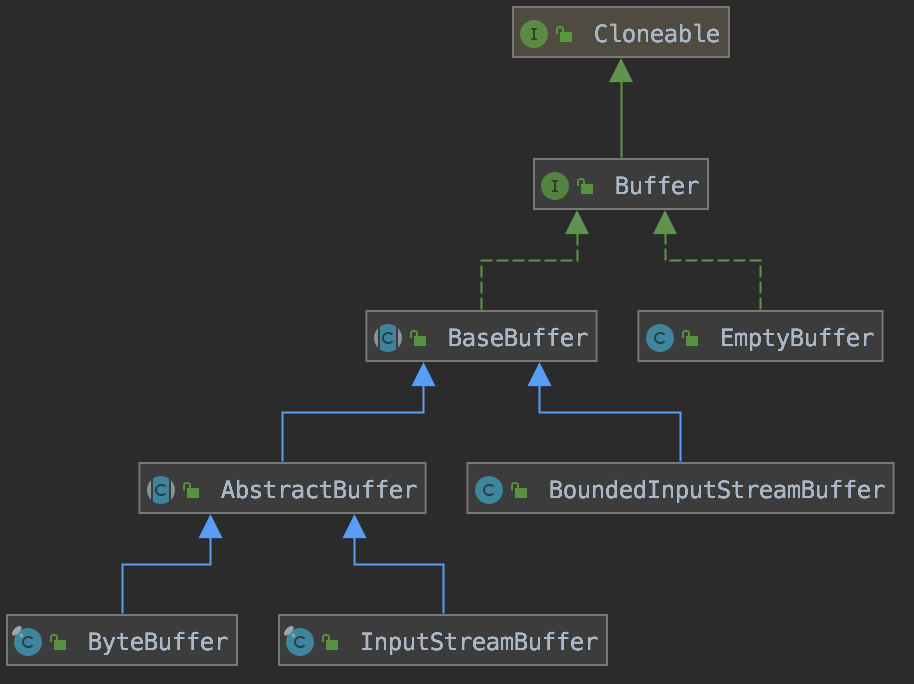
最常用的ByteBuffer内部数据存储于byte[]数组,值类型的变量直接在堆外内存区分配,无需JVM来GC。
SIP中常见的各种Header解析,pkts-sip已经做了实现,类图如下:
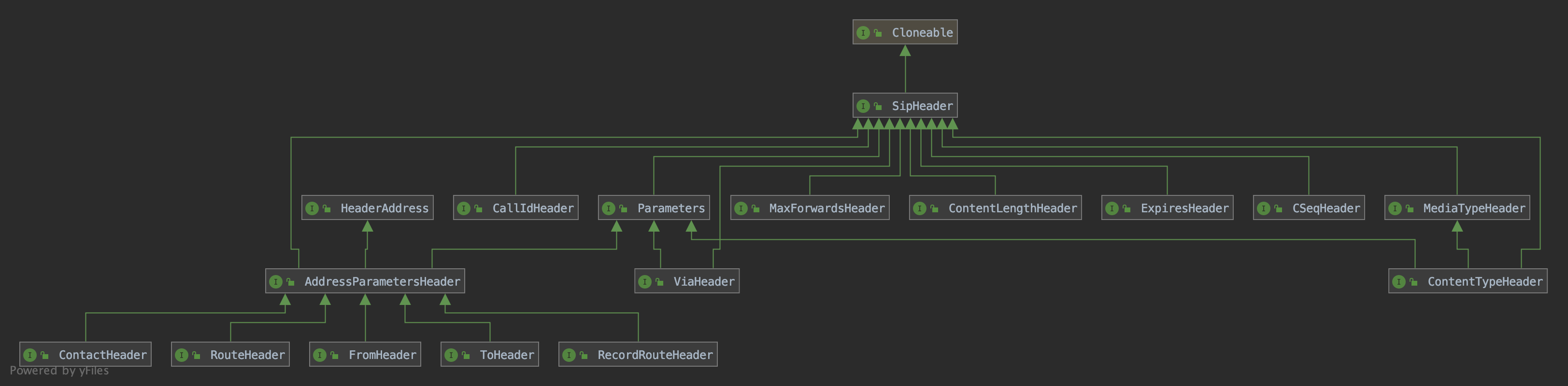
一个完整的SIP报文,正如最开始的解析示例代码,最终会被解析成SipMessage,根据该报文是Request还是Response,又派生出2个子类:

SipMessage中的核心部分,就是各种SIpHeader实例。
除了解析,pkts-sip还可以组装各种SIP报文,仍然以开头这段REGISTER为例,如果服务端收到这个注册请求,可以方便的组装Response进行回应:
    @Test

    public void testBuildRegisterResponse() throws IOException {

        StringBuilder register = new StringBuilder("REGISTER sip:10.32.26.25:5070;transport=tcp SIP/2.0\r\n" +

                "Via: SIP/2.0/TCP 10.32.26.25:51696;rport;branch=z9hG4bKPj8d4db68b24754f539dbf3b563a44fe55;alias\r\n" +

                "Max-Forwards: 70\r\n" +

                "From: <sip:1000@10.32.26.25>;tag=89aefb1f3fc0413283a453eda5407f60\r\n" +

                "To: jimmy<sip:1000@10.32.26.25>\r\n" +

                "Call-ID: 1e7af0e67a5044658fc7f6716d329642\r\n" +

                "CSeq: 36850 REGISTER\r\n" +

                "User-Agent: MicroSIP/3.20.3\r\n" +

                "Supported: outbound, path\r\n" +

                "Contact: <sip:1000@10.32.26.25:51696;transport=TCP;ob>;reg-id=1;+sip.instance=\"<urn:uuid:00000000-0000-0000-0000-000011058e7e>\"\r\n" +

                "Expires: 300\r\n" +

                "Allow: PRACK, INVITE, ACK, BYE, CANCEL, UPDATE, INFO, SUBSCRIBE, NOTIFY, REFER, MESSAGE, OPTIONS\r\n" +

                "Content-Length:  0\r\n");

        SipMessage msgMessage = SipParser.frame(Buffers.wrap(register.toString()));

        SipResponse sipResponse = msgMessage.createResponse(401)

                .withHeader(SipHeader.create("User-Agent", "FreeSWITCH-mod_sofia/1.6.18+git~20170612T211449Z~6e79667c0a~64bit"))

                .withHeader(SipHeader.create("Allow", "INVITE, ACK, BYE, CANCEL, OPTIONS, MESSAGE, INFO, UPDATE, REGISTER, REFER, NOTIFY, PUBLISH, SUBSCRIBE"))

                .withHeader(SipHeader.create("Supported", "timer, path, replaces"))

                .withHeader(SipHeader.create("WWW-Authenticate", "Digest realm=\"10.32.26.25\", nonce=\"bee3366b-cf59-476e-bc5e-334e0d65b386\", algorithm=MD5, qop=\"auth\""))

                .withHeader(new ContentLengthHeader.Builder(0).build())

                .build();

        System.out.println(sipResponse);

    }
输出如下:
SIP/2.0 401 Unauthorized

Call-ID: 1e7af0e67a5044658fc7f6716d329642

CSeq: 36850 REGISTER

WWW-Authenticate: Digest realm="10.32.26.25", nonce="bee3366b-cf59-476e-bc5e-334e0d65b386", algorithm=MD5, qop="auth"

User-Agent: FreeSWITCH-mod_sofia/1.6.18+git~20170612T211449Z~6e79667c0a~64bit

To: jimmy<sip:1000@10.32.26.25>

From: <sip:1000@10.32.26.25>;tag=89aefb1f3fc0413283a453eda5407f60

Content-Length: 0

Supported: timer, path, replaces

Via: SIP/2.0/TCP 10.32.26.25:51696;rport;branch=z9hG4bKPj8d4db68b24754f539dbf3b563a44fe55;alias

Allow: INVITE, ACK, BYE, CANCEL, OPTIONS, MESSAGE, INFO, UPDATE, REGISTER, REFER, NOTIFY, PUBLISH, SUBSCRIBE
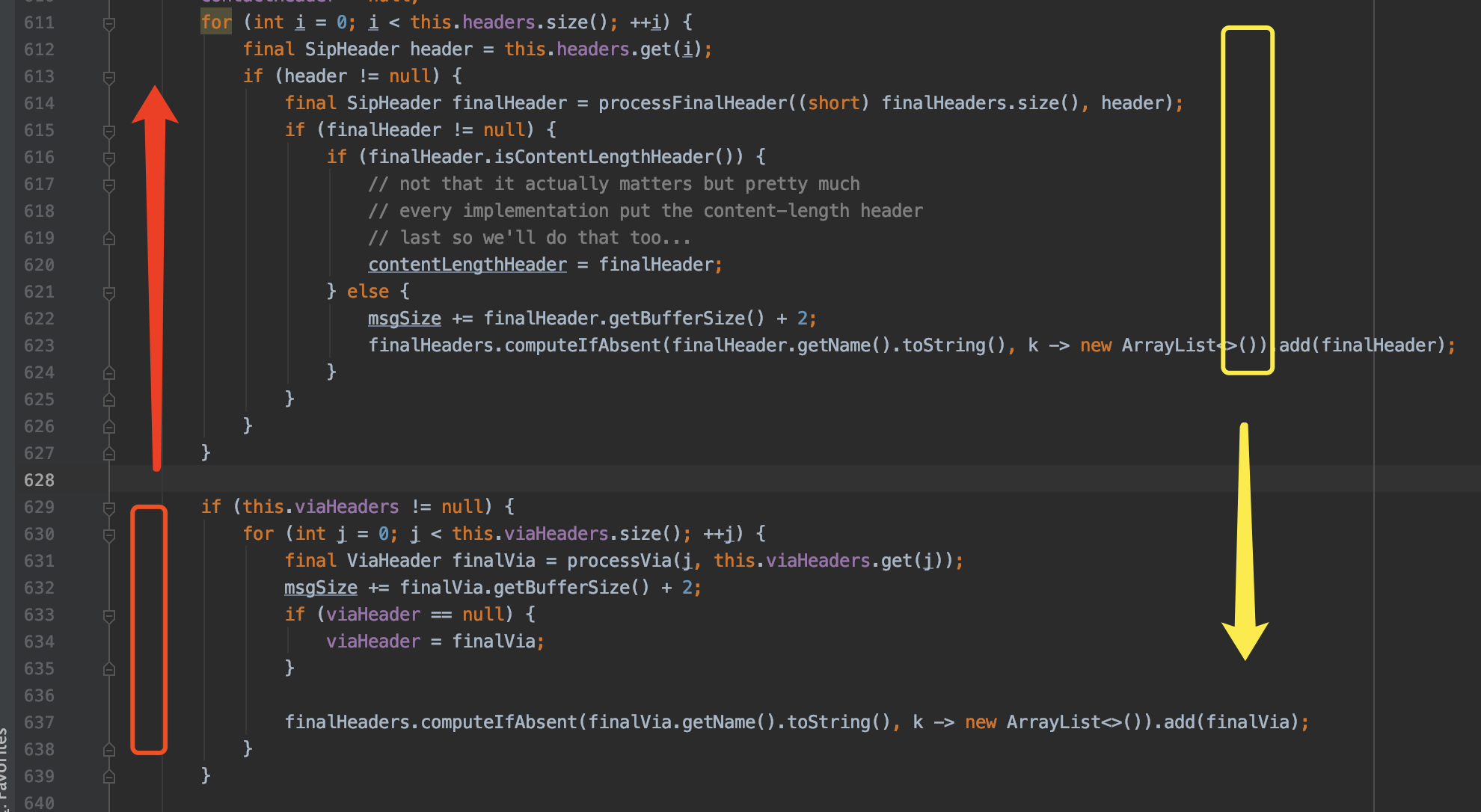
可能有细心的同学发现了,最终输出的报文,每行的出现顺序好象有点怪,比如Content-Length:0,是在最后添加进去的,但却是在中间出现。可以看下io.pkts.packet.sip.impl.SipMessageBuilder#build的源码:

597行这里,finalHeaders是一个HashMap,众所周知HashMap是不能保证顺序的,对顺序十分在意的同学,可以换成LinkedHashMap,另外从代码可以看出,viaHeaders是放在常规Headers之后组装的,一般我们习惯于把Via放在最开始,大家可以把这2段代码的位置互换一下。
改完之后,再跑一下代码:
SIP/2.0 401 Unauthorized

Via: SIP/2.0/TCP 10.32.26.25:51696;rport;branch=z9hG4bKPj8d4db68b24754f539dbf3b563a44fe55;alias

From: <sip:1000@10.32.26.25>;tag=89aefb1f3fc0413283a453eda5407f60

To: jimmy<sip:1000@10.32.26.25>

CSeq: 36850 REGISTER

Call-ID: 1e7af0e67a5044658fc7f6716d329642

User-Agent: FreeSWITCH-mod_sofia/1.6.18+git~20170612T211449Z~6e79667c0a~64bit

Allow: INVITE, ACK, BYE, CANCEL, OPTIONS, MESSAGE, INFO, UPDATE, REGISTER, REFER, NOTIFY, PUBLISH, SUBSCRIBE

Supported: timer, path, replaces

WWW-Authenticate: Digest realm="10.32.26.25", nonce="bee3366b-cf59-476e-bc5e-334e0d65b386", algorithm=MD5, qop="auth"

Content-Length: 0
看上去顺眼多了,此外从源代码可以看到,ptks-sip在构造各种Header时,大量使用了Builder设计模式(比如下图中的FromHeader.Builder),可以方便的用withXXX(...),得到一个XXXBuilder实例,最后调用build()方法生成想要的XXXHeader实例。

最后来谈下如何扩展ptks未支持的Header,一般情况下,如果ptks不支持的Header,比如:
WWW-Authenticate: Digest realm="10.32.26.25", nonce="bee3366b-cf59-476e-bc5e-334e0d65b386", algorithm=MD5, qop="auth"
解析后,会生成默认的SipHeaderImpl实例列表,参考下图:

这样在使用时,并不方便,最好是希望能看FromHeader类似,只生成1个特定的WWWAuthenticateHeader实例,并且能类似getRealm()、getNonce()...得到相关的属性值。ptks-sip的readme里,告诉了大家扩展的步骤,我把主要部分列了下:
1、先定义一个XXXHeader的接口,比如:WWWAuthenticateHeader
2、XXXHeader接口里,实现static frame()方法(注:jdk 1.8开始,接口可以添加方法实现)
3、XXXHeader接口里,定义copy()方法
4、SipHeader接口中添加isXXX()以及toXXX()方法
5、XXXHeader接口里,定义ensure()方法,并返回this
6、实现XXXHeader,定义一个XXXHeaderImpl类,核心的解析工作,就放在这个类的frame方法中完成
7、SipParser类中,添加XXXHeader的注册信息
8、单元测试
按这个步骤,先来定义一个WWWAuthenticateHeader
package io.pkts.packet.sip.header;

import io.pkts.buffer.Buffer;

import io.pkts.buffer.Buffers;

import io.pkts.packet.sip.SipParseException;

import io.pkts.packet.sip.header.impl.WWWAuthenticateHeaderImpl;

public interface WWWAuthenticateHeader extends SipHeader {

    Buffer NAME = Buffers.wrap("WWW-Authenticate");

    Buffer getRealm();

    Buffer getNonce();

    Buffer getAlgorithm();

    Buffer getQop();

    static WWWAuthenticateHeader frame(final Buffer buffer) throws SipParseException {

        try {

            return new WWWAuthenticateHeader.Builder(buffer).build();

        } catch (final Exception e) {

            throw new SipParseException(0, "Unable to frame the WWWAuthenticate header due to IOException", e);

        }

    }

    @Override

    default WWWAuthenticateHeader toWWWAuthenticateHeader() {

        return this;

    }

    class Builder implements SipHeader.Builder<WWWAuthenticateHeader> {

        private Buffer value;

        private Buffer realm;

        private Buffer nonce;

        private Buffer algorithm;

        private Buffer qop;

        public Builder() {

        }

        public Builder(Buffer value) {

            this.value = value;

        }

        @Override

        public WWWAuthenticateHeader.Builder withValue(Buffer value) {

            this.value = value;

            return this;

        }

        public WWWAuthenticateHeader.Builder withRealm(Buffer realm) {

            this.realm = realm;

            return this;

        }

        public WWWAuthenticateHeader.Builder withNonce(Buffer nonce) {

            this.nonce = nonce;

            return this;

        }

        public WWWAuthenticateHeader.Builder withAlgorithm(Buffer algorithm) {

            this.algorithm = algorithm;

            return this;

        }

        public WWWAuthenticateHeader.Builder withQop(Buffer qop) {

            this.qop = qop;

            return this;

        }

        @Override

        public WWWAuthenticateHeader build() throws SipParseException {

            if (value == null &&

                    (this.realm == null && this.nonce == null)) {

                throw new SipParseException("You must specify the [value] or [realm/nonce] of the WWWAuthenticate-Header");

            }

            if (this.value != null) {

                return new WWWAuthenticateHeaderImpl(value);

            } else {

                return new WWWAuthenticateHeaderImpl(realm, nonce, algorithm, qop);

            }

        }

    }

}
SipHeader里添加
    default boolean isWWWAuthenticateHeader() {

        //WWW-Authenticate

        final Buffer m = getName();

        try {

            if (m.getReadableBytes() == 16) {

                return (m.getByte(0) == 'W' || m.getByte(0) == 'w') &&

                        (m.getByte(1) == 'W' || m.getByte(1) == 'w') &&

                        (m.getByte(2) == 'W' || m.getByte(2) == 'w') &&

                        m.getByte(3) == '-' &&

                        (m.getByte(4) == 'A' || m.getByte(4) == 'a') &&

                        (m.getByte(5) == 'U' || m.getByte(5) == 'u') &&

                        (m.getByte(6) == 'T' || m.getByte(6) == 't') &&

                        (m.getByte(7) == 'H' || m.getByte(7) == 'h') &&

                        (m.getByte(8) == 'E' || m.getByte(8) == 'e') &&

                        (m.getByte(9) == 'N' || m.getByte(9) == 'n') &&

                        (m.getByte(10) == 'T' || m.getByte(10) == 't') &&

                        (m.getByte(11) == 'I' || m.getByte(11) == 'i') &&

                        (m.getByte(12) == 'C' || m.getByte(12) == 'c') &&

                        (m.getByte(13) == 'A' || m.getByte(13) == 'a') &&

                        (m.getByte(14) == 'T' || m.getByte(14) == 't') &&

                        (m.getByte(15) == 'E' || m.getByte(15) == 'e');

            }

        } catch (final IOException e) {

            throw new SipParseException(0, UNABLE_TO_PARSE_OUT_THE_HEADER_NAME_DUE_TO_UNDERLYING_IO_EXCEPTION, e);

        }

        return false;

    }

    default WWWAuthenticateHeader toWWWAuthenticateHeader() {

        throw new ClassCastException(CANNOT_CAST_HEADER_OF_TYPE + getClass().getName()

                + " to type " + WWWAuthenticateHeader.class.getName());

    }
然后再来WWWAuthenticateHeaderImpl
package io.pkts.packet.sip.header.impl;

import io.pkts.buffer.Buffer;

import io.pkts.buffer.Buffers;

import io.pkts.packet.sip.SipParseException;

import io.pkts.packet.sip.header.WWWAuthenticateHeader;

import io.pkts.packet.sip.impl.SipParser;

import java.util.LinkedHashMap;

import java.util.Map;

public class WWWAuthenticateHeaderImpl extends SipHeaderImpl implements WWWAuthenticateHeader {

    private Map<Buffer, Buffer> paramMap = new LinkedHashMap<>();

    private Buffer realm;

    private Buffer nonce;

    private Buffer algorithm;

    private Buffer qop;

    /**

     * @param value

     */

    public WWWAuthenticateHeaderImpl(Buffer value) {

        super(WWWAuthenticateHeader.NAME, value);

        Buffer original = value.clone();

        Buffer params = null;

        if (original.hasReadableBytes()) {

            params = original.slice("Digest ".length(), original.getUpperBoundary());

        }

        final byte[] VALUE_END_1 = Buffers.wrap("\", ").getArray();

        final byte[] VALUE_END_2 = Buffers.wrap(", ").getArray();

        //WWW-Authenticate: Digest realm="10.32.26.25",

        // nonce="bee3366b-cf59-476e-bc5e-334e0d65b386",

        // algorithm=MD5,

        // qop="auth"

        try {

            // 思路:

            // 1 遇到[=]号是key结束,遇到[,]或[", ]或[\r\n]是value结束

            // 2 每次遇"="或”,”标识lastMarkIndex

            int lastMarkIndex = params.getReaderIndex();

            boolean inKey = true;

            Buffer latestKey = Buffers.EMPTY_BUFFER, latestValue;

            while (params.hasReadableBytes() && params.getReaderIndex() <= params.getUpperBoundary()) {

                if (inKey && SipParser.isNext(params, SipParser.EQ)) {

                    //遇到[=]认为key结束

                    latestKey = params.slice(lastMarkIndex, params.getReaderIndex());

                    params.setReaderIndex(params.getReaderIndex() + 1);

                    if (SipParser.isNext(params, SipParser.DQUOT)) {

                        //跳过[="]等号后的第1个双引号

                        params.setReaderIndex(params.getReaderIndex() + 1);

                        inKey = false;

                    }

                    lastMarkIndex = params.getReaderIndex();

                } else if (params.getReadableBytes() == 1 ||

                        SipParser.isNext(params, VALUE_END_1) ||

                        SipParser.isNext(params, VALUE_END_2)) {

                    //遇到[", ]或[, ]视为value结束

                    if (params.getReadableBytes() == 1 && params.peekByte() != SipParser.DQUOT) {

                        latestValue = params.slice(lastMarkIndex, params.getReaderIndex() + 1);

                    } else {

                        latestValue = params.slice(lastMarkIndex, params.getReaderIndex());

                    }

                    paramMap.put(latestKey, latestValue);

                    if (params.getReadableBytes() == 1) {

                        params.setReaderIndex(params.getReaderIndex() + 1);

                    } else if (SipParser.isNext(params, VALUE_END_1)) {

                        params.setReaderIndex(params.getReaderIndex() + VALUE_END_1.length);

                    } else if (SipParser.isNext(params, VALUE_END_2)) {

                        params.setReaderIndex(params.getReaderIndex() + VALUE_END_2.length);

                    }

                    lastMarkIndex = params.getReaderIndex();

                    inKey = true;

                } else {

                    params.setReaderIndex(params.getReaderIndex() + 1);

                }

            }

        } catch (Exception e) {

            throw new SipParseException(NAME + " parse error, " + e.getCause());

        }

    }

    public WWWAuthenticateHeaderImpl(Buffer realm, Buffer nonce, Buffer algorithm, Buffer qop) {

        super(WWWAuthenticateHeader.NAME, Buffers.EMPTY_BUFFER);

        this.realm = realm;

        this.nonce = nonce;

        this.algorithm = algorithm;

        this.qop = qop;

    }

    @Override

    public Buffer getValue() {

        Buffer value = super.getValue();

        if (value != null && value != Buffers.EMPTY_BUFFER) {

            return value;

        }

        StringBuilder sb = new StringBuilder("Digest realm=\"" + this.getRealm() + "\", nonce=\"" + this.getNonce() + "\"");

        if (this.getAlgorithm() != null) {

            sb.append(", algorithm=" + this.getAlgorithm());

        }

        if (this.getQop() != null) {

            sb.append(", qop=\"" + this.getQop() + "\"");

        }

        value = Buffers.wrap(sb.toString());

        return value;

    }

    @Override

    public String toString() {

        StringBuilder sb = new StringBuilder(NAME.toString());

        sb.append(": Digest realm=\"" + this.getRealm() + "\", nonce=\"" + this.getNonce() + "\"");

        if (this.getAlgorithm() != null) {

            sb.append(", algorithm=" + this.getAlgorithm());

        }

        if (this.getQop() != null) {

            sb.append(", qop=\"" + this.getQop() + "\"");

        }

        return sb.toString();

    }

    @Override

    public WWWAuthenticateHeader.Builder copy() {

        return new WWWAuthenticateHeader.Builder(getValue());

    }

    @Override

    public WWWAuthenticateHeader ensure() {

        return this;

    }

    @Override

    public WWWAuthenticateHeader clone() {

        final Buffer value = getValue();

        return new WWWAuthenticateHeaderImpl(value.clone());

    }

    @Override

    public Buffer getRealm() {

        if (realm != null) {

            return realm;

        }

        realm = paramMap.get(Buffers.wrap("realm"));

        return realm;

    }

    @Override

    public Buffer getNonce() {

        if (nonce != null) {

            return nonce;

        }

        nonce = paramMap.get(Buffers.wrap("nonce"));

        return nonce;

    }

    @Override

    public Buffer getAlgorithm() {

        if (algorithm != null) {

            return algorithm;

        }

        algorithm = paramMap.get(Buffers.wrap("algorithm"));

        return algorithm;

    }

    @Override

    public Buffer getQop() {

        if (qop != null) {

            return qop;

        }

        qop = paramMap.get(Buffers.wrap("qop"));

        return qop;

    }

}
SipParser里新增注册
    static {

        framers.put(CallIdHeader.NAME, header -> CallIdHeader.frame(header.getValue()));

        framers.put(CallIdHeader.COMPACT_NAME, header -> CallIdHeader.frameCompact(header.getValue()));

        ...

        framers.put(ViaHeader.NAME, header -> ViaHeader.frame(header.getValue()));

        framers.put(ViaHeader.COMPACT_NAME, header -> ViaHeader.frame(header.getValue()));

        //新增WWWAuthenticateHeader注册

        framers.put(WWWAuthenticateHeader.NAME, header -> WWWAuthenticateHeader.frame(header.getValue()));

    }
frame方法里,也要新增判断:
    public static SipMessage frame(final Buffer buffer) throws IOException {

        ...

        // Move along as long as we actually can consume an header and

        ...

        SipHeader contactHeader = null;

        SipHeader wwwAuthenticateHeader = null;

        ...

        while (consumeCRLF(buffer) != 2 && (headerName = SipParser.nextHeaderName(buffer)) != null) {

            final List<Buffer> values = readHeaderValues(headerName, buffer).values;

            for (final Buffer value : values) {

                header = new SipHeaderImpl(headerName, value);

                // The headers that are most commonly used will be fully

                // parsed just because no stack can really function without

                // looking into these headers.

                if (header.isContentLengthHeader()) {

                    final ContentLengthHeader l = header.ensure().toContentLengthHeader();

                    contentLength = l.getContentLength();

                    header = l;

                }

                ...

                } else if (recordRouteHeader == null && header.isRecordRouteHeader()) {

                    header = header.ensure();

                    recordRouteHeader = header;

                } else if (wwwAuthenticateHeader == null && header.isWWWAuthenticateHeader()) {

                    header = header.ensure();

                    wwwAuthenticateHeader = header;

                }

                ...

    }
另外有1个小坑,readme里没提到,类似
WWW-Authenticate: Digest realm="10.32.26.25", nonce="bee3366b-cf59-476e-bc5e-334e0d65b386", algorithm=MD5, qop="auth"
这种header解析时,还要修改SipParser里的isHeaderAllowingMultipleValues方法
    private static boolean isHeaderAllowingMultipleValues(final Buffer headerName) {

        final int size = headerName.getReadableBytes();

        if (size == 7) {

            return !isSubjectHeader(headerName);

        } else if (size == 5) {

            return !isAllowHeader(headerName);

        } else if (size == 4) {

            return !isDateHeader(headerName);

        } else if (size == 1) {

            return !isAllowEventsHeaderShort(headerName);

        } else if (size == 12) {

            return !isAllowEventsHeader(headerName);

        } else if (size == 16) {

          # 新增判断,防止被解析成多行

            return !isWWWAuthenticateHeader(headerName);

        }

        return true;

    }
为了方便判断Buffer接下来几个位置是否为指定字符,SipParser里的isNext也做了扩展
    public static boolean isNext(final Buffer buffer, final byte[] bytes) throws IOException {

        boolean hasReadableBytes = buffer.hasReadableBytes();

        if (!hasReadableBytes) {

            return false;

        }

        int readableBytes = buffer.getReadableBytes();

        int length = bytes.length;

        if (readableBytes < length) {

            return false;

        }

        boolean match = true;

        for (int i = 0; i < length; i++) {

            int readIndex = buffer.getReaderIndex() + i;

            byte aByte = buffer.getByte(readIndex);

            if (aByte != bytes[i]) {

                match = false;

                break;

            }

        }

        return match;

    }
还可以在ImmutableSipMessage类中添加以下方法,这样用起来更顺手
    @Override

    public WWWAuthenticateHeader getWWWAuthenticateHeader() throws SipParseException{

        final SipHeader header = findHeader(WWWAuthenticateHeader.NAME.toString());

        return header != null ? header.ensure().toWWWAuthenticateHeader() : null;

    }
这些做完后,再来跑先前的测试
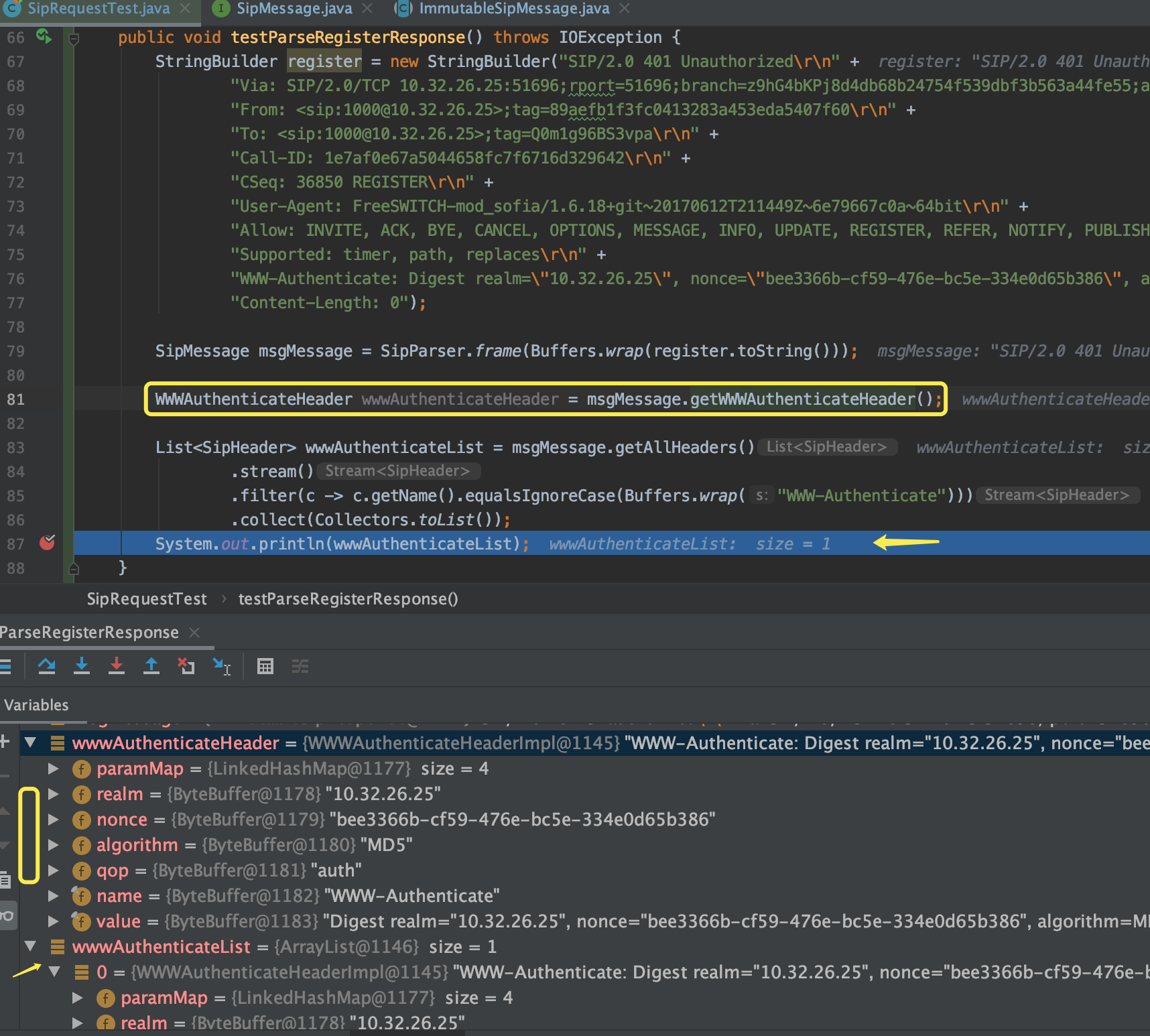
从上图可以看到,realm\nonce\algorithm\qop这些属性已经正确提取出来了,最后可以再测试下Builder
package io.pkts.packet.sip.header.impl;

import io.pkts.buffer.Buffer;

import io.pkts.buffer.Buffers;

import io.pkts.packet.sip.SipParseException;

import io.pkts.packet.sip.header.ViaHeader;

import io.pkts.packet.sip.header.WWWAuthenticateHeader;

import org.junit.Test;

import static org.hamcrest.CoreMatchers.is;

import static org.hamcrest.CoreMatchers.nullValue;

import static org.junit.Assert.*;

public class WWWAuthenticateHeaderImplTest {

    @Test

    public void testBuild1() throws Exception {

        final WWWAuthenticateHeader wwwAuthenticateHeader = new WWWAuthenticateHeader.Builder()

                .withAlgorithm(Buffers.wrap("MD5"))

                .withNonce(Buffers.wrap("bee3366b-cf59-476e-bc5e-334e0d65b386"))

                .withQop(Buffers.wrap("auth"))

                .withRealm(Buffers.wrap("10.32.26.25"))

                .build();

        assertEquals(wwwAuthenticateHeader.getAlgorithm(), Buffers.wrap("MD5"));

        assertEquals(wwwAuthenticateHeader.getNonce(), Buffers.wrap("bee3366b-cf59-476e-bc5e-334e0d65b386"));

        assertEquals(wwwAuthenticateHeader.getQop(), Buffers.wrap("auth"));

        assertEquals(wwwAuthenticateHeader.getRealm(), Buffers.wrap("10.32.26.25"));

        Buffer value = Buffers.wrap("Digest realm=\"10.32.26.25\", nonce=\"bee3366b-cf59-476e-bc5e-334e0d65b386\", algorithm=MD5, qop=\"auth\"");

        assertTrue(wwwAuthenticateHeader.getValue().equalsIgnoreCase(value));

    }

    @Test

    public void testBuild2() throws Exception {

        final WWWAuthenticateHeader wwwAuthenticateHeader = new WWWAuthenticateHeader.Builder()

                .withNonce(Buffers.wrap("bee3366b-cf59-476e-bc5e-334e0d65b386"))

                .withRealm(Buffers.wrap("10.32.26.25"))

                .build();

        assertEquals(wwwAuthenticateHeader.getAlgorithm(), null);

        assertEquals(wwwAuthenticateHeader.getNonce(), Buffers.wrap("bee3366b-cf59-476e-bc5e-334e0d65b386"));

        assertEquals(wwwAuthenticateHeader.getQop(), null);

        assertEquals(wwwAuthenticateHeader.getRealm(), Buffers.wrap("10.32.26.25"));

        Buffer value = Buffers.wrap("Digest realm=\"10.32.26.25\", nonce=\"bee3366b-cf59-476e-bc5e-334e0d65b386\"");

        assertTrue(wwwAuthenticateHeader.getValue().equalsIgnoreCase(value));

    }

    @Test

    public void testFrame1() throws Exception {

        Buffer value = Buffers.wrap("Digest realm=\"10.32.26.25\", nonce=\"bee3366b-cf59-476e-bc5e-334e0d65b386\", algorithm=MD5, qop=\"auth\"");

        final WWWAuthenticateHeader wwwAuthenticateHeader = new WWWAuthenticateHeaderImpl(value);

        assertEquals(wwwAuthenticateHeader.getAlgorithm(), Buffers.wrap("MD5"));

        assertEquals(wwwAuthenticateHeader.getNonce(), Buffers.wrap("bee3366b-cf59-476e-bc5e-334e0d65b386"));

        assertEquals(wwwAuthenticateHeader.getQop(), Buffers.wrap("auth"));

        assertEquals(wwwAuthenticateHeader.getRealm(), Buffers.wrap("10.32.26.25"));

    }

    @Test

    public void testFrame2() throws Exception {

        Buffer realm = Buffers.wrap("10.32.26.25");

        Buffer nonce = Buffers.wrap("bee3366b-cf59-476e-bc5e-334e0d65b386");

        final WWWAuthenticateHeader wwwAuthenticateHeader = new WWWAuthenticateHeaderImpl(realm, nonce, null, null);

        assertEquals(wwwAuthenticateHeader.getAlgorithm(), null);

        assertEquals(wwwAuthenticateHeader.getNonce(), Buffers.wrap("bee3366b-cf59-476e-bc5e-334e0d65b386"));

        assertEquals(wwwAuthenticateHeader.getQop(), null);

        assertEquals(wwwAuthenticateHeader.getRealm(), Buffers.wrap("10.32.26.25"));

        Buffer value = Buffers.wrap("Digest realm=\"10.32.26.25\", nonce=\"bee3366b-cf59-476e-bc5e-334e0d65b386\"");

        assertTrue(wwwAuthenticateHeader.getValue().equalsIgnoreCase(value));

    }

}
以上代码,均已提交到 https://github.com/yjmyzz/pkts/tree/master/pkts-sip,供大家参考
如何解析SIP报文的更多相关文章
- Java 发送SOAP请求调用WebService,解析SOAP报文
https://blog.csdn.net/Peng_Hong_fu/article/details/80113196 记录测试代码 SoapUI调用路径 http://localhost:8082/ ...
- 详解http报文(2)-web容器是如何解析http报文的
摘要 在详解http报文一文中,详细介绍了http报文的文本结构.那么作为服务端,web容器是如何解析http报文的呢?本文以jetty和undertow容器为例,来解析web容器是如何处理http报 ...
- 第14.12节 Python中使用BeautifulSoup解析http报文:使用select方法快速定位内容
一. 引言 在<第14.10节 Python中使用BeautifulSoup解析http报文:html标签相关属性的访问>和<第14.11节 Python中使用BeautifulSo ...
- 第14.11节 Python中使用BeautifulSoup解析http报文:使用查找方法快速定位内容
一. 引言 在<第14.10节 Python中使用BeautifulSoup解析http报文:html标签相关属性的访问>介绍了BeautifulSoup对象的主要属性,通过这些属性可以访 ...
- java 写webservice接口解析xml报文
1 <!--解析xml报文--> 2 <dependency> 3 <groupId>dom4j</groupId> 4 <artifactId& ...
- 音频和视频流最佳选择?SRT 协议解析及报文识别
我们所知道 SRT 是由 Haivision 和 Wowza 开发的开源视频流协议.很多人会认为在不久的将来,它被是 RTMP 的替代品.因为 RTMP 协议安全性稍低,延迟相对较高 ,而相对于 SR ...
- 解析HTTP报文——C#
目前没有找到.Net框架内置的解析方法,理论上HttpClient等类在内部应该已经实现了解析,但不知为何没有公开这些处理方法.(亦或是我没找到)那么只能自己来解析这些数据了. public enum ...
- 解析IPV4报文 和IPV6 报文的 checksum
解析IPV4报文和IPV6报文的checksum的算法: 校验和(checksum)算法,简单的说就是16位累加的反码运算: 计算函数如下: 我们在计算时是主机字节序,计算的结果封装成IP包时是网络字 ...
- httpClient调用接口的时候,解析返回报文内容
比如我httpclient调用的接口返回的格式是这样的: 一:data里是个对象 { "code": 200, "message": "执行成功&qu ...
- 第14.10节 Python中使用BeautifulSoup解析http报文:html标签相关属性的访问
一. 引言 在<第14.8节 Python中使用BeautifulSoup加载HTML报文>中介绍使用BeautifulSoup的安装.导入和创建对象的过程,本节介绍导入后利用Beauti ...
随机推荐
- heapdump敏感信息提取工具-heapdump_tool(二),附下载链接。
heapdump敏感信息查询工具,例如查找 spring heapdump中的密码明文,AK,SK等 下载链接: heapdump_tool下载链接:heapdump_tool下载 声明: 此工具 ...
- 【BUG】Hexo|GET _MG_0001.JPG 404 (Not Found),hexo博客搭建过程图片路径正确却找不到图片
我的问题 我查了好多资料,结果原因是图片名称开头是_则该文件会被忽略...我注意到网上并没有提到这个问题,遂补了一下这篇博客并且汇总了我找到的所有解决办法. 具体检查方式: hexo生成一下静态资源: ...
- 作业时间之"最早时间和最晚时间"
一.从左往右(小到大)算最早时间 0+2=2 0+3=3 因为3比2大所以选择3(早大晚小),需活动无时间所以不用加 3+4=7 7+3=10 因为13号点有两个 2+5=7 和 11号点的10(虚活 ...
- 解决uniapp实现ios系统中低功耗蓝牙通讯失败问题
UniApp 实现 App 连接低功耗蓝牙(BLE)通讯 手头上有一个 uniapp 实现低功耗蓝牙通讯设备的项目,本来 Android 版本没问题已经上线,到了发布测试 iOS 出问题了,连接上了设 ...
- 【Java持久层技术演进全解析】从JDBC到MyBatis再到MyBatis-Plus
从JDBC到MyBatis再到MyBatis-Plus:Java持久层技术演进全解析 引言 在Java企业级应用开发中,数据持久化是核心需求之一.本文将系统性地介绍Java持久层技术的演进过程,从最基 ...
- 解决git clone 速度慢问题比较赞的方法
使用国内镜像,目前已知的GitHub国内镜像网站有github.com.cnpmjs.org和git.sdut.me. 在clone 某项目时候可将github.com替换为github.com.cn ...
- DataFrame.iterrows的一种用法
import pandas as pd import numpy as np help(pd.DataFrame.iterrows) Help on function iterrows in modu ...
- codeup之复制字符串中的元音字母
Description 写一个函数,将一个字符串中的元音字母复制到另一个字符串中.在主函数中输入一个字符串,通过调用该函数,得到一个有该字符串中的元音字母组成的一个字符串,并输出. Input 一个字 ...
- dify+MCP多应用,构建灵活的AI应用生态系统
一.概述 前面几篇文章写很多MCP应用,基本上一个dify工作流使用一个MCP应用. 那么一个dify工作流,同时使用多个MCP应用,是否可以呢?答案是可以的. 先来看一下效果图 说明: 这里使用了问 ...
- 「Note」CF 套题
最后一次添加的题目:CF1572C CF *2000-*2100 \(\color{blueviolet}{CF771C}\) 非常好题目啊. 首先考虑题目让你求的到底是个什么东西,不难看出 \(f( ...