
Spring 源码(12)Spring Bean 的创建过程(3)
继续上一篇Spring Bean的创建过程的解读,上一篇介绍了Spring在创建过程中doGetBean方法,在执行过程中会调用getSingleton方法并且设置一个lambda表达式,这个lambda表达式是ObjectFactory的实现,当调用这个接口的getObject方法时就会执行到createBean方法,在createBean方法中会进行bean类型的解析,并且会进行方法覆盖的设置,当我们配置了如:lookup-method或者replace-method方法的时候就会在创建Bean的过程中设置一个CGLIB的工厂类为Bean的对象,当调用的时候就会触发CGLIB的拦截器方法执行具体的Bean的获取,如果是单例对象引用了多例对象,那么就会每次创建一个新的对象给调用的方法执行。
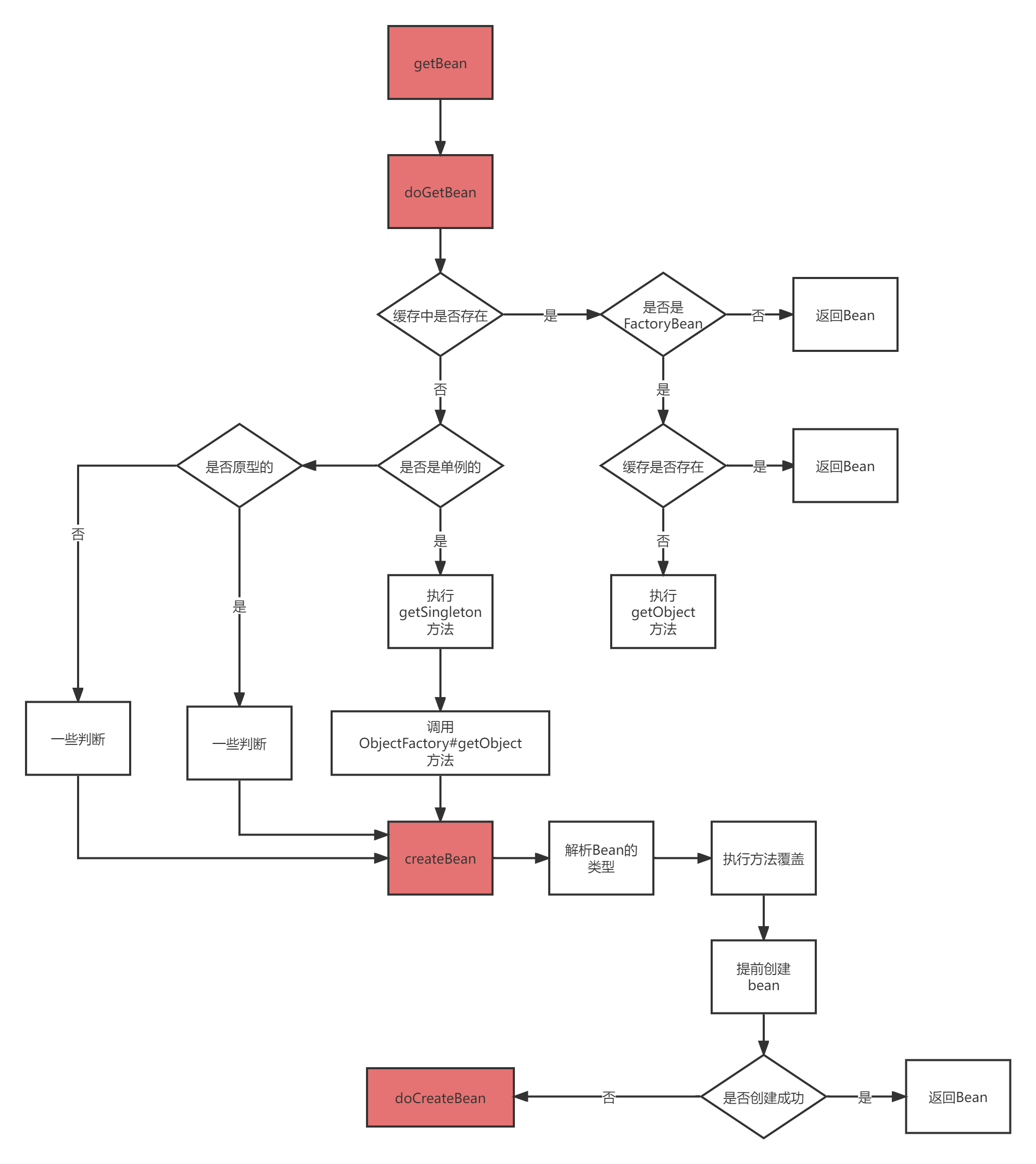
接下来继续解读Spring 创建Bean的过程。
早期Bean的创建
在createBean方法中有一段代码:
try {

  // Give BeanPostProcessors a chance to return a proxy instead of the target bean instance.

  // 解析提前实例化,使用InstantiationAwareBeanPostProcessor实现

  Object bean = resolveBeforeInstantiation(beanName, mbdToUse);

  if (bean != null) {

    return bean;

  }

}
点进去:
protected Object resolveBeforeInstantiation(String beanName, RootBeanDefinition mbd) {

  Object bean = null;

  if (!Boolean.FALSE.equals(mbd.beforeInstantiationResolved)) {

    // Make sure bean class is actually resolved at this point.

    // 判断是否有InstantiationAwareBeanPostProcessor在容器中

    if (!mbd.isSynthetic() && hasInstantiationAwareBeanPostProcessors()) {

      Class<?> targetType = determineTargetType(beanName, mbd);

      if (targetType != null) {

        // 执行前实例化

        bean = applyBeanPostProcessorsBeforeInstantiation(targetType, beanName);

        if (bean != null) {

          // 执行后置初始化

          bean = applyBeanPostProcessorsAfterInitialization(bean, beanName);

        }

      }

    }

    mbd.beforeInstantiationResolved = (bean != null);

  }

  return bean;

}
这里判断了容器中如果有实现InstantiationAwareBeanPostProcessor接口,那么就执行前置实例化,InstantiationAwareBeanPostProcessor接口继承了BeanPostProcessor,并且这个接口的方法跟BeanPostProcessor非常相似,InstantiationAwareBeanPostProcessor的接口一个是前置的实例化postProcessBeforeInstantiation,一个是后置的实例化postProcessAfterInstantiation,而BeanPostProcessor的接口一个是前置初始化postProcessBeforeInitialization,一个是后置初始化postProcessAfterInitialization。
在Spring中Bean的创建分为实例化+初始化,当然还有属性填充,这里进行提前实例化其实就是给了一个扩展点,让对象可以提前创建,而不用再继续走doCreateBean方法里面的复杂逻辑,这样的话就提供给用户能够自己控制对象的创建过程以及执行增强等操作。
那这个实例化增强类是何时放进Spring容器的呢?
答案很简单,InstantiationAwareBeanPostProcessor是一个BeanPostProcessor,那么自然也就是在注册BeanPostProcessor时放进去的。
看源码:
public void addBeanPostProcessor(BeanPostProcessor beanPostProcessor) {

  Assert.notNull(beanPostProcessor, "BeanPostProcessor must not be null");

  // Remove from old position, if any

  // 先删除掉旧的

  this.beanPostProcessors.remove(beanPostProcessor);

  // Track whether it is instantiation/destruction aware

  // 如果是InstantiationAwareBeanPostProcessor 设置属性

  if (beanPostProcessor instanceof InstantiationAwareBeanPostProcessor) {

    this.hasInstantiationAwareBeanPostProcessors = true;

  }

  // 设置销毁的标识位

  if (beanPostProcessor instanceof DestructionAwareBeanPostProcessor) {

    this.hasDestructionAwareBeanPostProcessors = true;

  }

  // Add to end of list

  // 添加到链表尾

  this.beanPostProcessors.add(beanPostProcessor);

}
接下来试试提前实例化的案例:
InstantiationAwareBeanPostProcessor 实验
创建一个需要提前实例化的对象:
/**

 * @author <a href="https://www.cnblogs.com/redwinter/">redwinter</a>

 * @since 1.0

 **/

public class MyBeforeInstantiation {

	public void beforeInvoke(){

		System.out.println("提前实例化,开始执行业务....");

	}

}
创建一个InstantiationAwareBeanPostProcessor的实现类:
/**

 * @author <a href="https://www.cnblogs.com/redwinter/">redwinter</a>

 * @since 1.0

 **/

public class MyInstantiationAwareBeanPostProcessor implements InstantiationAwareBeanPostProcessor {

	@Override

	public Object postProcessBeforeInstantiation(Class<?> beanClass, String beanName) throws BeansException {

		System.out.println("beanName: " + beanName + "执行了 postProcessBeforeInstantiation 方法");

		// 提前进行实例化

		if (beanClass == MyBeforeInstantiation.class) {

			Enhancer enhancer = new Enhancer();

			enhancer.setSuperclass(beanClass);

			enhancer.setCallback(new MyMethodInterceptor());

			Object obj = enhancer.create();

			System.out.println("创建对象:" + obj);

			return obj;

		}

		return null;

	}

	@Override

	public boolean postProcessAfterInstantiation(Object bean, String beanName) throws BeansException {

		System.out.println("beanName: " + beanName + "执行了 postProcessAfterInstantiation 方法");

		return false;

	}

	@Override

	public PropertyValues postProcessProperties(PropertyValues pvs, Object bean, String beanName) throws BeansException {

		System.out.println("beanName: " + beanName + "执行了 postProcessProperties 方法");

		return pvs;

	}

	@Override

	public Object postProcessBeforeInitialization(Object bean, String beanName) throws BeansException {

		System.out.println("beanName: " + beanName + "执行了 postProcessBeforeInitialization 方法");

		return bean;

	}

	@Override

	public Object postProcessAfterInitialization(Object bean, String beanName) throws BeansException {

		System.out.println("beanName: " + beanName + "执行了 postProcessAfterInitialization 方法");

		return bean;

	}

}
这里使用了CGLIB 动态代理去增强创建代理对象,编写一个回调拦截器:
/**

 * @author <a href="https://www.cnblogs.com/redwinter/">redwinter</a>

 * @since 1.0

 **/

public class MyMethodInterceptor implements MethodInterceptor {

   @Override

   public Object intercept(Object o, Method method, Object[] objects, MethodProxy methodProxy) throws Throwable {

      System.out.println("方法执行前:"+method);

      Object o1 = methodProxy.invokeSuper(o, objects);

      System.out.println("方法执行后:"+method);

      return o1;

   }

}
xml配置:
<?xml version="1.0" encoding="UTF-8"?>

<beans xmlns="http://www.springframework.org/schema/beans"

       xmlns:xsi="http://www.w3.org/2001/XMLSchema-instance"

       xsi:schemaLocation="http://www.springframework.org/schema/beans http://www.springframework.org/schema/beans/spring-beans.xsd">

	<bean id="myBeforeInstantiation" class="com.redwinter.test.beforeInstantiation.MyBeforeInstantiation"/>

	<bean id="myInstantiationAwareBeanPostProcessor" class="com.redwinter.test.beforeInstantiation.MyInstantiationAwareBeanPostProcessor"/>

</beans>
测试类:
/**

 * @author <a href="https://www.cnblogs.com/redwinter/">redwinter</a>

 * @since 1.0

 **/

public class BeforeInstantiationTest {

  @Test

  public void test(){

    ApplicationContext ac = new ClassPathXmlApplicationContext("before-instantiation.xml");

    MyBeforeInstantiation bean = ac.getBean(MyBeforeInstantiation.class);

    bean.beforeInvoke();

  }

}
输出:
beanName: myBeforeInstantiation执行了 postProcessBeforeInstantiation 方法

方法执行前:public java.lang.String java.lang.Object.toString()

方法执行前:public native int java.lang.Object.hashCode()

方法执行后:public native int java.lang.Object.hashCode()

方法执行后:public java.lang.String java.lang.Object.toString()

创建对象:com.redwinter.test.beforeInstantiation.MyBeforeInstantiation$$EnhancerByCGLIB$$f92db8b4@1fd3711

beanName: myBeforeInstantiation执行了 postProcessAfterInitialization 方法

方法执行前:public void com.redwinter.test.beforeInstantiation.MyBeforeInstantiation.beforeInvoke()

提前实例化,开始执行业务....

方法执行后:public void com.redwinter.test.beforeInstantiation.MyBeforeInstantiation.beforeInvoke()
可以看到,这里只执行了两个方法,一个是postProcessBeforeInstantiation,是InstantiationAwareBeanPostProcessor的前置实例化接口,一个是postProcessAfterInitialization,是BeanPostProcessor的后置实例化接口。
相当于说Bean对象提前被创建了,而没有执行下面的doCreateBean方法的逻辑。 Spring设计了很多的扩展点,帮助用户实现很多自定义的处理,Spring强大之处就在这里。
这篇就介绍到这里,下一篇介绍Spring其他方式的进行提前创建Bean对象。
Spring 源码(12)Spring Bean 的创建过程(3)的更多相关文章
- Spring源码分析之Bean的创建过程详解
前文传送门: Spring源码分析之预启动流程 Spring源码分析之BeanFactory体系结构 Spring源码分析之BeanFactoryPostProcessor调用过程详解 本文内容: 在 ...
- Spring 源码分析之 bean 依赖注入原理(注入属性)
最近在研究Spring bean 生命周期相关知识点以及源码,所以打算写一篇 Spring bean生命周期相关的文章,但是整理过程中发现涉及的点太多而且又很复杂,很难在一篇文章中把Spri ...
- Spring源码-IOC部分-Bean实例化过程【5】
实验环境:spring-framework-5.0.2.jdk8.gradle4.3.1 Spring源码-IOC部分-容器简介[1] Spring源码-IOC部分-容器初始化过程[2] Spring ...
- dubbo源码分析3-service bean的创建与发布
dubbo源码分析1-reference bean创建 dubbo源码分析2-reference bean发起服务方法调用 dubbo源码分析3-service bean的创建与发布 dubbo源码分 ...
- Spring源码分析专题 —— IOC容器启动过程(上篇)
声明 1.建议先阅读<Spring源码分析专题 -- 阅读指引> 2.强烈建议阅读过程中要参照调用过程图,每篇都有其对应的调用过程图 3.写文不易,转载请标明出处 前言 关于 IOC 容器 ...
- 【Spring源码分析】Bean加载流程概览
代码入口 之前写文章都会啰啰嗦嗦一大堆再开始,进入[Spring源码分析]这个板块就直接切入正题了. 很多朋友可能想看Spring源码,但是不知道应当如何入手去看,这个可以理解:Java开发者通常从事 ...
- 【Spring源码分析】Bean加载流程概览(转)
转载自:https://www.cnblogs.com/xrq730/p/6285358.html 代码入口 之前写文章都会啰啰嗦嗦一大堆再开始,进入[Spring源码分析]这个板块就直接切入正题了. ...
- Spring源码分析:Bean加载流程概览及配置文件读取
很多朋友可能想看Spring源码,但是不知道应当如何入手去看,这个可以理解:Java开发者通常从事的都是Java Web的工作,对于程序员来说,一个Web项目用到Spring,只是配置一下配置文件而已 ...
- Spring 源码分析之 bean 实例化原理
本次主要想写spring bean的实例化相关的内容.创建spring bean 实例是spring bean 生命周期的第一阶段.bean 的生命周期主要有如下几个步骤: 创建bean的实例 给实例 ...
- 初探Spring源码之Spring Bean的生命周期
写在前面的话: 学无止境,写博客纯粹是一种乐趣而已,把自己理解的东西分享出去,不意味全是对的,欢迎指正! Spring 容器初始化过程做了什么? AnnotationConfigApplication ...
随机推荐
- vsftd及虚拟用户
临时需要搭建一个ftp,突然忘记怎么搞了,重新整一下,以后备用 vsftd及虚拟用户 1.安装vsftpd yum install vsftpd 2.添加用户(用于虚拟用户映射) adduser se ...
- BMZCTF WEB_ezeval
WEB_ezeval 进入环境,源码给出 <?php highlight_file(__FILE__); $cmd=$_POST['cmd']; $cmd=htmlspecialchars($c ...
- 攻防世界upload1
upload1 进入环境就一个上传,我们先上传一个普通的木马文件看看 木马内容 <?php @eval($_POST["cmd"]); ?> 估计是前端校验我们查看源码 ...
- css3中什么时候用transition什么时候用animation实现动画
在css3中transition和animation都可以实现动画效果,但是我们什么时候用transition,什么时候用animation. 当有事件触发动画的时候我们就用transition.比如 ...
- 那是我在夕阳下的code
布局何如让一个标签上下左右都居中?这有什么难的,给定子标签的宽,再让它的边距上下为0,左右为auto;如下: .child{width:10px;margin:0 auto;}//子标签 它就可以左右 ...
- Emscripten教程之代码可移植性与限制(一)
Emscripten教程之代码可移植性与限制(一) 翻译:云荒杯倾本文是Emscripten-WebAssembly专栏系列文章之一,更多文章请查看专栏.也可以去作者的博客阅读文章.欢迎加入Wasm和 ...
- es6-Set与Map
se5中的set与map 在est5中开发者使用对象属性来模拟.set多用于检查键的存在,map多用于提取数据. { let set = Object.create(null) set.foo = t ...
- EMS查看邮箱容量限制的方法
以Exchange管理员身份打开EMS控制台.在PowerShell命令行提示符下,输入以下命令. Get-MailboxDatabase | FL name,IssueWarningQuota,Pr ...
- [前端学习]vue的指令学习记录 vu-if | text | for | on | model | bind | pre
vue的指令学习记录 vue-if | text | for | on | model - 目录 vue的指令学习记录 vue-if | text | for | on | model ... 预备 ...
- JAVASE If 单选择、双选择及镶嵌笔记
//单选package com.huang.boke.flowPath;import java.util.Scanner;public class test02 { public static voi ...