
Scalable IO in Java
Scalable IO in Java
http://gee.cs.oswego.edu/dl/cpjslides/nio.pdf
大部分IO都是下面这个步骤,
Most have same basic structure:
Read request
Decode request
Process service
Encode reply
Send reply
关键是如何处理并发, 最原始就是单纯的用多线程

class Server implements Runnable {

    public void run() {

        try {

            ServerSocket ss = new ServerSocket(PORT);

            while (!Thread.interrupted())

            new Thread(new Handler(ss.accept())).start(); //创建新线程来handle

            // or, single-threaded, or a thread pool

        } catch (IOException ex) { /* ... */ }

    }

    static class Handler implements Runnable {

        final Socket socket;

        Handler(Socket s) { socket = s; }

        public void run() {

            try {

                byte[] input = new byte[MAX_INPUT];

                socket.getInputStream().read(input);

                byte[] output = process(input);

                socket.getOutputStream().write(output);

            } catch (IOException ex) { /* ... */ }

        }

        private byte[] process(byte[] cmd) { /* ... */ }

    }

}
显然简单的多线程会带来扩展性问题, 当client数量变的很多的时候, 还其他的可用性, 性能的问题
解决方法就是Divide-and-conquer, 分开后, 就需要Event-driven Designs来串联起来...
单线程版本的Reactor, 所有事情read, process, write都由单个线程完成, 完成一步重新设置下一步的event, 然后干其他的事
问题当然就是, 其中任何步骤不能消耗太多时间, 因为只有一个线程, 你占住了就会block其他任务
ps, 不明白为什么要画那么大个acceptor, 只是作为第一步的callback对象...
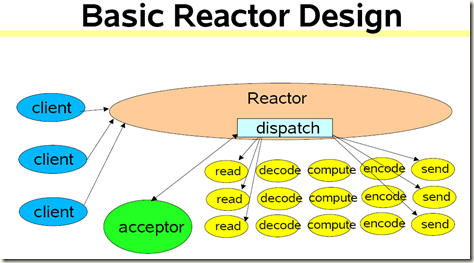
看代码会更清楚,
class Reactor implements Runnable {

    final Selector selector;

    final ServerSocketChannel serverSocket;

    Reactor(int port) throws IOException { //Reactor初始化

        selector = Selector.open();

        serverSocket = ServerSocketChannel.open();

        serverSocket.socket().bind(new InetSocketAddress(port));

        serverSocket.configureBlocking(false); //非阻塞

        SelectionKey sk = serverSocket.register(selector, SelectionKey.OP_ACCEPT); //分步处理,第一步,接收accept事件

        sk.attach(new Acceptor()); //attach callback object, Acceptor

    }

    public void run() {

        try {

            while (!Thread.interrupted()) {

                selector.select();

                Set selected = selector.selectedKeys();

                Iterator it = selected.iterator();

                while (it.hasNext())

                    dispatch((SelectionKey)(it.next()); //Reactor负责dispatch收到的事件

                selected.clear();

            }

        } catch (IOException ex) { /* ... */ }

    }

    void dispatch(SelectionKey k) {

    	Runnable r = (Runnable)(k.attachment()); //调用之前注册的callback对象

    	if (r != null)

    	    r.run();

    }

    class Acceptor implements Runnable { // inner

        public void run() {

            try {

                SocketChannel c = serverSocket.accept();

                if (c != null)

                new Handler(selector, c);

            }

            catch(IOException ex) { /* ... */ }

        }

    }

}

final class Handler implements Runnable {

    final SocketChannel socket;

    final SelectionKey sk;

    ByteBuffer input = ByteBuffer.allocate(MAXIN);

    ByteBuffer output = ByteBuffer.allocate(MAXOUT);

    static final int READING = 0, SENDING = 1;

    int state = READING;

    Handler(Selector sel, SocketChannel c) throws IOException {

        socket = c; c.configureBlocking(false);

        // Optionally try first read now

        sk = socket.register(sel, 0);

        sk.attach(this); //将Handler作为callback对象

        sk.interestOps(SelectionKey.OP_READ); //第二步,接收Read事件

        sel.wakeup();

    }

    boolean inputIsComplete() { /* ... */ }

    boolean outputIsComplete() { /* ... */ }

    void process() { /* ... */ }

    public void run() {

        try {

            if (state == READING) read();

            else if (state == SENDING) send();

        } catch (IOException ex) { /* ... */ }

    }

    void read() throws IOException {

        socket.read(input);

        if (inputIsComplete()) {

            process();

            state = SENDING;

            // Normally also do first write now

            sk.interestOps(SelectionKey.OP_WRITE); //第三步,接收write事件

        }

    }

    void send() throws IOException {

        socket.write(output);

        if (outputIsComplete()) sk.cancel(); //write完就结束了, 关闭select key

    }

}

//上面 的实现用Handler来同时处理Read和Write事件, 所以里面出现状态判断

//我们可以用State-Object pattern来更优雅的实现

class Handler { // ...

    public void run() { // initial state is reader

        socket.read(input);

        if (inputIsComplete()) {

            process();

            sk.attach(new Sender());  //状态迁移, Read后变成write, 用Sender作为新的callback对象

              sk.interest(SelectionKey.OP_WRITE);

            sk.selector().wakeup();

        }

    }

    class Sender implements Runnable {

        public void run(){ // ...

            socket.write(output);

            if (outputIsComplete()) sk.cancel();

        }

    }

}
单线程模式的局限还是比较明显的
所以改进是, 将比较耗时的部分, 从reactor线程中分离出去, 让reactor专门负责IO
而另外创建Thread Pool和queue来缓存和处理任务
所以其实已经进化成Proactor模式, 异步模式

class Handler implements Runnable {

    // uses util.concurrent thread pool

    static PooledExecutor pool = new PooledExecutor(...);

    static final int PROCESSING = 3;

    // ...

    synchronized void read() { // ...

        socket.read(input);

        if (inputIsComplete()) {

            state = PROCESSING;

            pool.execute(new Processer()); //使用线程pool异步执行

        }

    }

    synchronized void processAndHandOff() {

        process();

        state = SENDING; // or rebind attachment

        sk.interest(SelectionKey.OP_WRITE); //process完,开始等待write事件

    }

    class Processer implements Runnable {

        public void run() { processAndHandOff(); }

    }

}
使用多个reactor进程, 主reactor只负责accept, 然后将接收到的socketchannel交给subReactor去listen和处理
当然也可以在subReactor下加上线程池进行异步处理
坦白的说, 没看出用多个reactor有啥大的提升, 降低mainReactor listen的负担?

Selector[] selectors; //subReactors集合, 一个selector代表一个subReactor

int next = 0;

class Acceptor { // ...

    public synchronized void run() { ...

        Socket connection = serverSocket.accept(); //主selector负责accept

        if (connection != null)

            new Handler(selectors[next], connection); //选个subReactor去负责接收到的connection

        if (++next == selectors.length) next = 0;

    }

}
Scalable IO in Java的更多相关文章
- 《Scalable IO in Java》笔记
Scalable IO in Java http://gee.cs.oswego.edu/dl/cpjslides/nio.pdf 基本上所有的网络处理程序都有以下基本的处理过程:Read reque ...
- 【精尽Netty源码解析】1.Scalable IO in Java——多Reactor的代码实现
Java高伸缩性IO处理 在Doug Lea大神的经典NIO框架文章<Scalable IO in Java>中,具体阐述了如何把Reactor模式和Java NIO整合起来,一步步理论结 ...
- Netty Reator(二)Scalable IO in Java
Netty Reator(二)Scalable IO in Java Netty 系列目录 (https://www.cnblogs.com/binarylei/p/10117436.html) Do ...
- 《Scalable IO in Java》译文
<Scalable IO in Java> 是java.util.concurrent包的作者,大师Doug Lea关于分析与构建可伸缩的高性能IO服务的一篇经典文章,在文章中Doug L ...
- 学习 Doug Lea 大神写的——Scalable IO in Java
学习 Doug Lea 大神写的--Scalable IO in Java 网络服务 Web services.分布式对象等等都具有相同的处理结构 Read request Decode reques ...
- 一文弄懂-《Scalable IO In Java》
目录 一. <Scalable IO In Java> 是什么? 二. IO架构的演变历程 1. Classic Service Designs 经典服务模型 2. Event-drive ...
- Scalable IO in Java【java高效IO】
第一次翻译,如有错误,请指正 1.Outline 大纲Scalable network services 高效网络服务 Event-driven processing 事件驱动处理 Reactor ...
- 【转载】高性能IO设计 & Java NIO & 同步/异步 阻塞/非阻塞 Reactor/Proactor
开始准备看Java NIO的,这篇文章:http://xly1981.iteye.com/blog/1735862 里面提到了这篇文章 http://xmuzyq.iteye.com/blog/783 ...
- hive运行query语句时提示错误:org.apache.hadoop.ipc.RemoteException: java.io.IOException: java.io.IOException:
hive> select product_id, track_time from trackinfo limit 5; Total MapReduce jobs = 1 Launching Jo ...
随机推荐
- Android在非UI线程中更新UI的方法
1.使用Thread+Handler实现非UI线程更新UI界面 在UI Thread中创建Handler.用sendMessage(message)或者obtainMessage(result, ob ...
- Request介绍及演示样例 PART1
Request在ServletAPI的规范连接地址http://blog.csdn.net/zghwaicsdn/article/details/51035146 HTTP简介 URL是浏览器寻找信息 ...
- 单元测试时使用Ninject的小问题
主要是Kernel没有被释放,Ninject的Kernel必须调用IDispose释放.也有可能是静态类型在VS单元测试时无法被释放. 先记录下这个问题
- Windows7光盘制作: 向脱机映像添加补丁
所谓脱机(offline)映像就是WIM文件,install.wim就是脱机映像,有的install.wim里面有几个子映像,有的里面就只有一个.install.wim中有多个映像的光盘叫做多合一光盘 ...
- VS2015许可证过期
VS2015过期激活方法
- linux学习笔记32---命令ping和telnet
Linux系统的ping命令是常用的网络命令,它通常用来测试与目标主机的连通性,我们经常会说“ping一下某机器,看是不是开着”.不能打开网页时会说“你先ping网关地址192.168.1.1试试”. ...
- js将秒数换算成时分秒
转载自:http://jingyan.baidu.com/article/375c8e19a0413925f2a229d2.html <script language="javascr ...
- libubox
lbubox是openwrt的一个核心库,封装了一系列基础实用功能,主要提供事件循环,二进制格式处理,linux链表实现和一些JSON辅助处理. 它的目的是以动态链接库方式来提供可重用的通用功能,给其 ...
- checkbox 更新回显
if($row['name']==$_SESSION['name']){$checked="checked disabled";}else{$checked=" &quo ...
- JavaScript能否操作cookie和session?
JavaScript能否操作cookie和session? 解答:JavaScript可以操作cookie,但是不能操作session