
JDK源码(1.7) -- java.util.AbstractCollection<E>
java.util.AbstractCollection<E> 源码分析(JDK1.7)
---------------------------------------------------------------------------------
java.util.AbstractCollection<E>是一个抽象类,它的定义如下:
 public abstract class AbstractCollection<E> implements Collection<E> {

    //construct

    //Query Operations

    // Modification Operations

    // Bulk Operations

    //  String conversion

 }
(1)java.util.AbstractCollection<E>提供了对java.util.Collection<E>接口的骨干实现,以最大限度地减少了实现Collection接口所需要的工作。
(2)按照Collection接口规范中的建议,通常应提供一个void(无参数)和Collection构造方法。
---------------------------------------------------------------------------------
下面来看看java.util.AbstractCollection<E>中具体有哪些方法:
从下面的表格中可以看出java.util.AbstractCollection<E>接口中一共有14个方法,其中查询操作6个;修改操作2个;批量操作5个;字符串描述1个。
| 查询操作 | public abstract Iterator<E> iterator() | 返回在此collection中的元素上进行迭代的迭代器 |
| public abstract int size() | 返回此collection中的元素数,如果此collection包含的元素大于Integer.MAX_VALUE,则返回Integer.MAX_VALUE | |
| public boolean isEmpty() | 如果此collection不包含元素,则返回true | |
| public boolean contains(Object o) | 如果此collection包含指定的元素,则返回true | |
| public Object[] toArray() | 返回包含此collection中所有元素的数组 | |
| public <T> T[] toArray(T[] a) | 返回包含此collection中所有元素的数组 | |
| 修改操作 | public boolean add(E e) | 确保此collection包含指定的元素 |
| public boolean remove(Object o) | 从此collection中移除指定元素的单个实例 | |
| 批量操作 | public boolean containsAll(Collection<?> c) | 如果此collection包含指定collection中的所有元素,则返回true |
| public boolean addAll(Collection<? extends E> c) | 将指定collection中的所有元素都添加到此collection中 | |
| public boolean removeAll(Collection<?> c) | 移除此collection中那些也包含在指定collection中的所有元素 | |
| public boolean retainAll(Collection<?> c) | 仅保留此collection中那些也包含在指定collection的元素 | |
| public void clear() | 移除此collection中的所有元素 | |
| 字符串描述 | public String toString() | 返回此collection的字符串表示形式 |
java.util.AbstractCollection<E>从java.util.Collection<E>继承的方法如下:
- boolean equals(Object o);
- int hashCode();
再看下面的图示:
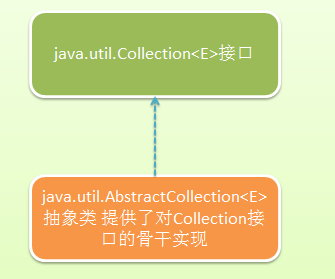
java.util.Collection<E>接口中一共定义了15个方法,java.util.AbstractCollection<E>对其中的11个方法提供了实现,其中iterator()、size()、equals()、hashCode()4个方法没有提供实现,需要由java.util.AbstractCollection<E>的扩展类来提供具体的实现。
---------------------------------------------------------------------------------
下面来看看java.util.AbstractCollection<E>中源码部分:
一、构造函数
     protected AbstractCollection() {

     }
二、具体方法
查询操作
(1) public abstract Iterator<E> iterator()
源代码如下:(抽象方法,由具体的子类提供实现)
public abstract Iterator<E> iterator();
(2) public abstract int size()
源代码如下:(抽象方法,由具体的子类提供实现)
public abstract int size();
(3) public boolean isEmpty()
源代码如下:
     public boolean isEmpty() {

         return size() == 0;

     }
(4) public boolean contains(Object o)
源代码如下:
     public boolean contains(Object o) {

         //返回此集合的Iterator对象

         Iterator<E> it = iterator();

         if (o==null) {

             //比较对象o为null,则循环Iterator查找是否有对象为null

             while (it.hasNext())

                 if (it.next()==null)

                     return true;

         } else {

             //比较对象o不为null,则循环Iterator查找是否有对象与o相等

             while (it.hasNext())

                 if (o.equals(it.next()))

                     return true;

         }

         return false;

     }
(5) public Object[] toArray()
源代码如下:
     public Object[] toArray() {

         //创建一个Object类型的数组,数组大小为Collection中元素的个数

         Object[] r = new Object[size()];

         //返回此collection的Iterator对象

         Iterator<E> it = iterator();

         //利用循环将Iterator中的对象赋值给Object数组

         for (int i = 0; i < r.length; i++) {

             if (! it.hasNext()) // fewer elements than expected

                 return Arrays.copyOf(r, i);

             r[i] = it.next();

         }

         return it.hasNext() ? finishToArray(r, it) : r;

     }
(6) public <T> T[] toArray(T[] a)
源代码如下:
     public <T> T[] toArray(T[] a) {

         // Estimate size of array; be prepared to see more or fewer elements

         int size = size();

         T[] r = a.length >= size ? a :

                   (T[])java.lang.reflect.Array

                   .newInstance(a.getClass().getComponentType(), size);

         Iterator<E> it = iterator();

         for (int i = 0; i < r.length; i++) {

             if (! it.hasNext()) { // fewer elements than expected

                 if (a != r)

                     return Arrays.copyOf(r, i);

                 r[i] = null; // null-terminate

                 return r;

             }

             r[i] = (T)it.next();

         }

         return it.hasNext() ? finishToArray(r, it) : r;

     }
修改操作
(1) public boolean add(E e)
源代码如下:(没有提供具体的实现,调用此方法会抛出异常)
     public boolean add(E e) {

         throw new UnsupportedOperationException();

     }
(2) public boolean remove(Object o)
源代码如下:
     public boolean remove(Object o) {

         //返回Collection的Iterator对象

         Iterator<E> it = iterator();

         if (o==null) {

             //要删除的对象为null,则循环Iterator查找对象为null,并且删除掉

             while (it.hasNext()) {

                 if (it.next()==null) {

                     it.remove();

                     return true;

                 }

             }

         } else {

            //要删除的对象不为null,则循环Iterator查找对象,并且删除掉

             while (it.hasNext()) {

                 if (o.equals(it.next())) {

                     it.remove();

                     return true;

                 }

             }

         }

         return false;

     }
批量操作
(1) public boolean containsAll(Collection<?> c)
源代码如下:
     public boolean containsAll(Collection<?> c) {

         //循环取出collection中的每个对象,然后去调用contains()方法

         for (Object e : c)

             if (!contains(e))

                 return false;

         return true;

     }
(2) public boolean addAll(Collection<? extends E> c)
源代码如下:
     public boolean addAll(Collection<? extends E> c) {

         boolean modified = false;

         //循环取出要添加的子collection中的元素,然后去调用add()方法

         for (E e : c)

             if (add(e))

                 modified = true;

         return modified;

     }
(3) public boolean removeAll(Collection<?> c)
源代码如下:
     public boolean removeAll(Collection<?> c) {

         boolean modified = false;

         //返回collection的Iterator对象

         Iterator<?> it = iterator();

         //依次循环取出Iterator中的对象,然后调用contains()方法查看该对象是否在collectoin中,如果存在的话,则调用remove()方法删除掉

         while (it.hasNext()) {

             if (c.contains(it.next())) {

                 it.remove();

                 modified = true;

             }

         }

         return modified;

     }
(4) public boolean retainAll(Collection<?> c)
源代码如下:
     public boolean retainAll(Collection<?> c) {

         boolean modified = false;

         //返回Collection的Iterator对象

         Iterator<E> it = iterator();

        //依次循环取出Iterator中的对象,然后调用cotains()方法查看该对象是否在collection中,如果不存在的话则调用,则调用remove()方法删除掉

         while (it.hasNext()) {

             if (!c.contains(it.next())) {

                 it.remove();

                 modified = true;

             }

         }

         return modified;

     }
(5) public void clear()
源代码如下:
     public void clear() {

         //返回collection集合的Iterator对象

         Iterator<E> it = iterator();

         //依次循环Iterator取出每一个对象,然后调用remove()方法删除掉

         while (it.hasNext()) {

             it.next();

             it.remove();

         }

     }
字符串描述
(1) public String toString()
     public String toString() {

         Iterator<E> it = iterator();

         if (! it.hasNext())

             return "[]";

         StringBuilder sb = new StringBuilder();

         sb.append('[');

         for (;;) {

             E e = it.next();

             sb.append(e == this ? "(this Collection)" : e);

             if (! it.hasNext())

                 return sb.append(']').toString();

             sb.append(',').append(' ');

         }

     }
---------------------------------------------------------------------------------
---------------------------------------------------------------------------------
JDK源码(1.7) -- java.util.AbstractCollection<E>的更多相关文章
- JDK源码(1.7) -- java.util.AbstractList<E>
java.util.AbstractList<E> 源码分析(JDK1.7) ------------------------------------------------------- ...
- JDK源码(1.7) -- java.util.Collection<E>
java.util.Collection<E> 源码分析(JDK1.7) -------------------------------------------------------- ...
- JDK源码学习之 java.util.concurrent.automic包
一.概述 Java从JDK1.5开始提供了java.util.concurrent.atomic包,方便程序员在多线程环境下无锁的进行原子操作.原子变量的底层使用了处理器提供的原子指令,但是不同的CP ...
- JDK源码(1.7) -- java.util.Deque<E>
java.util.Deque<E> 源码分析(JDK1.7) -------------------------------------------------------------- ...
- JDK源码(1.7) -- java.util.Queue<E>
java.util.Queue<E> 源码分析(JDK1.7) -------------------------------------------------------------- ...
- JDK源码(1.7) -- java.util.Arrays
java.util.Arrays 源码分析 ------------------------------------------------------------------------------ ...
- JDK源码(1.7) -- java.util.ListIterator<E>
java.util.ListIterator<E> 源码分析(JDK1.7) ------------------------------------------------------- ...
- JDK源码(1.7) -- java.util.Iterator<E>
java.util.Iterator<E> 源码分析(JDK1.7) ----------------------------------------------------------- ...
- JDK源码(1.7) -- java.util.List<E>
java.util.List<E> 源码分析(JDK1.7) --------------------------------------------------------------- ...
随机推荐
- Tinyos 第三版Make系统
1.make系统安装 cd tools ./Bootstrap ./configure make sudo make install 2.make系统结构 3.第三版Makerules文件部分解析 # ...
- RF, GBDT, XGB区别
GBDT与XGB区别 1. 传统GBDT以CART作为基分类器,xgboost还支持线性分类器(gblinear),这个时候xgboost相当于带L1和L2正则化项的逻辑斯蒂回归(分类问题)或者线性回 ...
- 使用showplan.sql分析sql Performance
在HelloDBA网站找到一个分析sql性能的工具-showplan,记录一下 showplan.sql下载路径:http://www.HelloDBA.com/Download/showplan.z ...
- PHP对象5: define / const /static
define定义全局常量: define('PATH', '/data/home/www'); const也是定义常量, 一般用于类中, 饰成员属性,不可以修饰方法,如下: class Test{ c ...
- Linux下帮助命令
帮助命令(各种命令区别) 最常用的帮助命令 help --help help cd 查看内置命令的使用 info man help cd 查看内置命令的使用 获得帮助的途径: ma ...
- Java线上应用故障之CPU占用高排查与定位
最近线上频繁报警CPU空闲不足,故紧急排查后分享给大家 1.使用top命令,获取占用CPU最高的进程号 2.查看线程号对应的进程信息 命令:ps -ef|grep 22630 3.查看进程对应的线程信 ...
- URL中斜杠/和反斜杠\的区别小结
Unix使用斜杆/ 作为路径分隔符,而web应用最新使用在Unix系统上面,所以目前所有的网络地址都采用 斜杆/ 作为分隔符. Windows由于使用 斜杆/ 作为DOS命令提示符的参数标志了,为了不 ...
- initialization 与 finalization 执行顺序 研究
看GIF: 第二个GIF: DEMO下载:http://files.cnblogs.com/files/del88/InitOrderDemo.zip
- hdu 5875(单调栈)
Function Time Limit: 7000/3500 MS (Java/Others) Memory Limit: 262144/262144 K (Java/Others)Total ...
- 读书笔记|Windows 调试原理学习|持续更新
关于调试方面的学习笔记,主要来源于<软件调试>的读书笔记和梦织未来论坛的视频教程 1.调试器使用一个死循环监听调试信息. DebugActiveProcess(PID);while(TRU ...