
文件IO示例程序
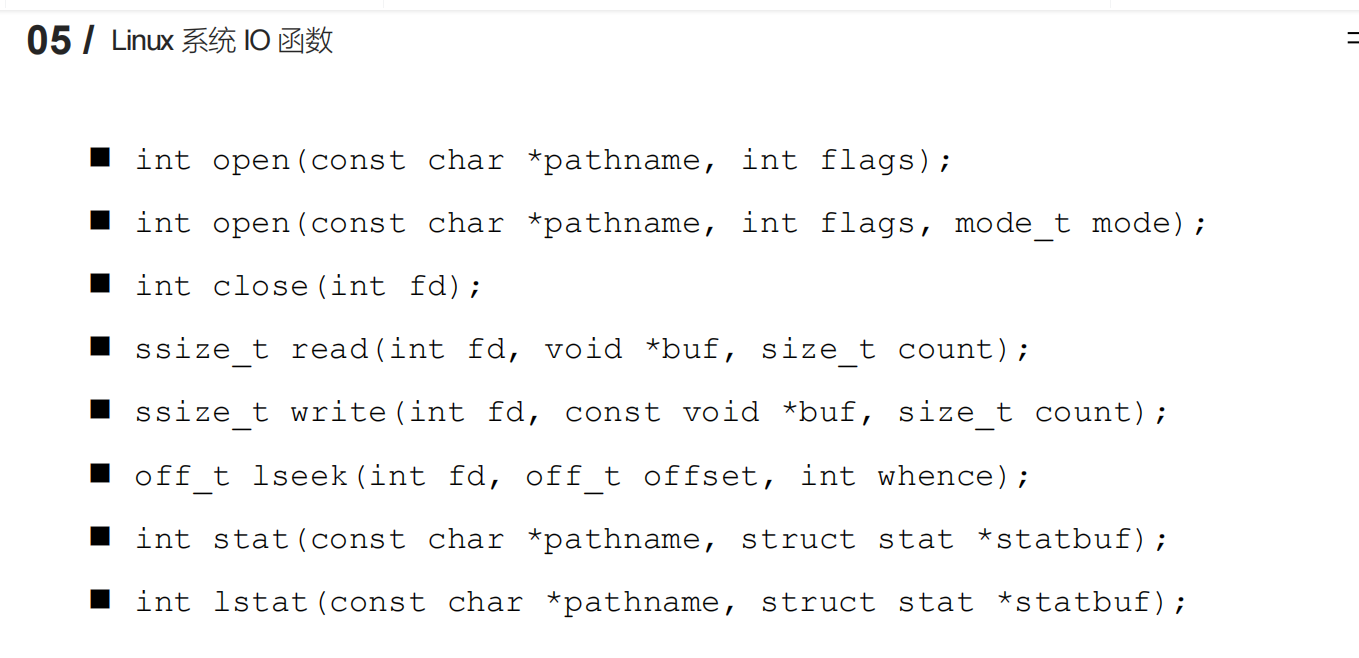
系统调用实现 open close write等等
/*

    #include <unistd.h>

    ssize_t read(int fd, void *buf, size_t count);

        参数:

            - fd:文件描述符,open得到的,通过这个文件描述符操作某个文件

            - buf:需要读取数据存放的地方,数组的地址(传出参数)

            - count:指定的数组的大小

        返回值:

            - 成功:

                >0: 返回实际的读取到的字节数

                =0:文件已经读取完了

            - 失败:-1 ,并且设置errno

    #include <unistd.h>

    ssize_t write(int fd, const void *buf, size_t count);

        参数:

            - fd:文件描述符,open得到的,通过这个文件描述符操作某个文件

            - buf:要往磁盘写入的数据,数据

            - count:要写的数据的实际的大小

        返回值:

            成功:实际写入的字节数

            失败:返回-1,并设置errno

*/

#include <unistd.h>

#include <stdio.h>

#include <sys/types.h>

#include <sys/stat.h>

#include <fcntl.h>

int main() {

    // 1.通过open打开english.txt文件

    int srcfd = open("english.txt", O_RDONLY);

    if(srcfd == -1) {

        perror("open");

        return -1;

    }

    // 2.创建一个新的文件(拷贝文件)

    int destfd = open("cpy.txt", O_WRONLY | O_CREAT, 0664);

    if(destfd == -1) {

        perror("open");

        return -1;

    }

    // 3.频繁的读写操作

    char buf[1024] = {0};

    int len = 0;

    len = read(srcfd, buf, sizeof(buf));

    write(destfd, buf, len);

    // while((len = read(srcfd, buf, sizeof(buf))) > 0) {

    //     write(destfd, buf, len);

    // }

    // 4.关闭文件

    close(destfd);

    close(srcfd);

    return 0;

}
lseek 实现文件当前光标的移动
/*

    标准C库的函数

    #include <stdio.h>

    int fseek(FILE *stream, long offset, int whence);

    Linux系统函数

    #include <sys/types.h>

    #include <unistd.h>

    off_t lseek(int fd, off_t offset, int whence);

        参数:

            - fd:文件描述符,通过open得到的,通过这个fd操作某个文件

            - offset:偏移量

            - whence:

                SEEK_SET

                    设置文件指针的偏移量

                SEEK_CUR

                    设置偏移量:当前位置 + 第二个参数offset的值

                SEEK_END

                    设置偏移量:文件大小 + 第二个参数offset的值

        返回值:返回文件指针的位置

    作用:

        1.移动文件指针到文件头

        lseek(fd, 0, SEEK_SET);

        2.获取当前文件指针的位置

        lseek(fd, 0, SEEK_CUR);

        3.获取文件长度

        lseek(fd, 0, SEEK_END);

        4.拓展文件的长度,当前文件10b, 110b, 增加了100个字节

        lseek(fd, 100, SEEK_END)

        注意:需要写一次数据

*/

#include <sys/types.h>

#include <sys/stat.h>

#include <fcntl.h>

#include <unistd.h>

#include <stdio.h>

int main() {

    int fd = open("hello.txt", O_RDWR);

    if(fd == -1) {

        perror("open");

        return -1;

    }

    // 扩展文件的长度

    int ret = lseek(fd, 100, SEEK_END);

    if(ret == -1) {

        perror("lseek");

        return -1;

    }

    // 写入一个空数据

    write(fd, " ", 1);

    // 关闭文件

    close(fd);

    return 0;

}
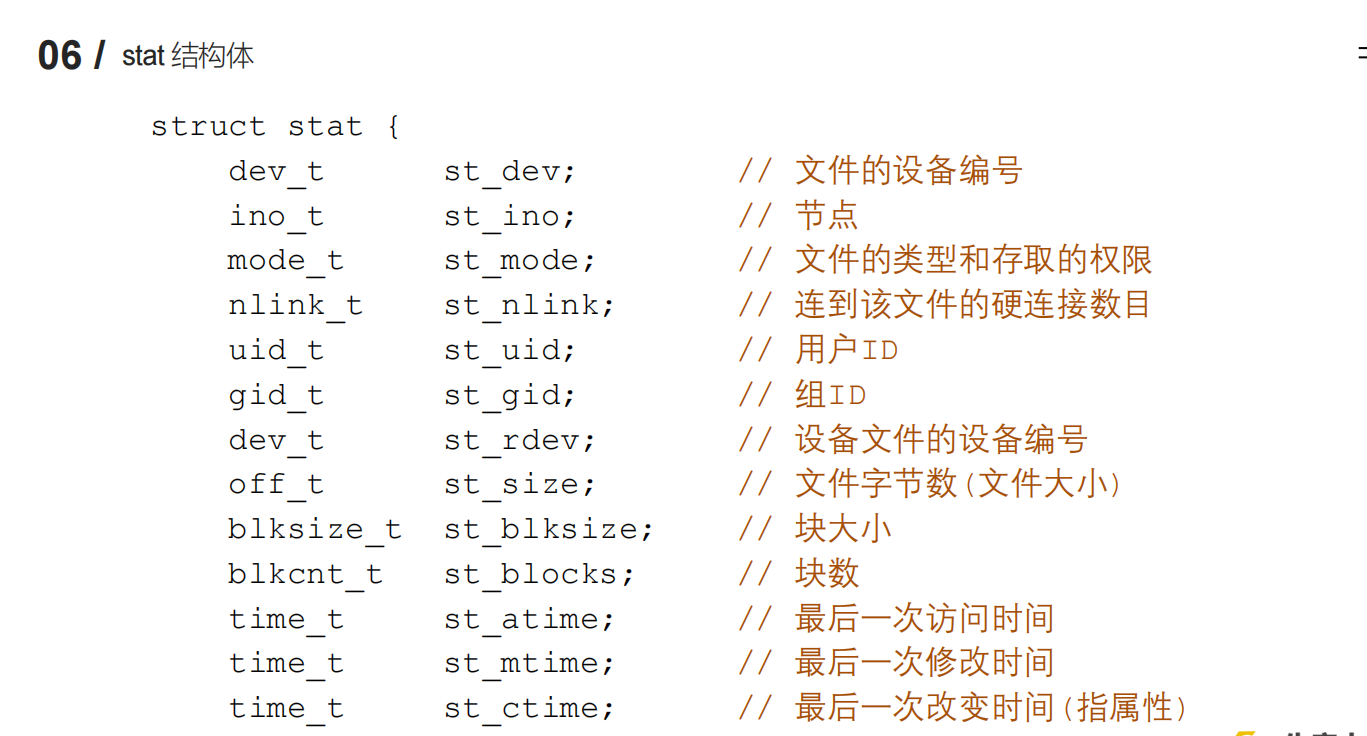
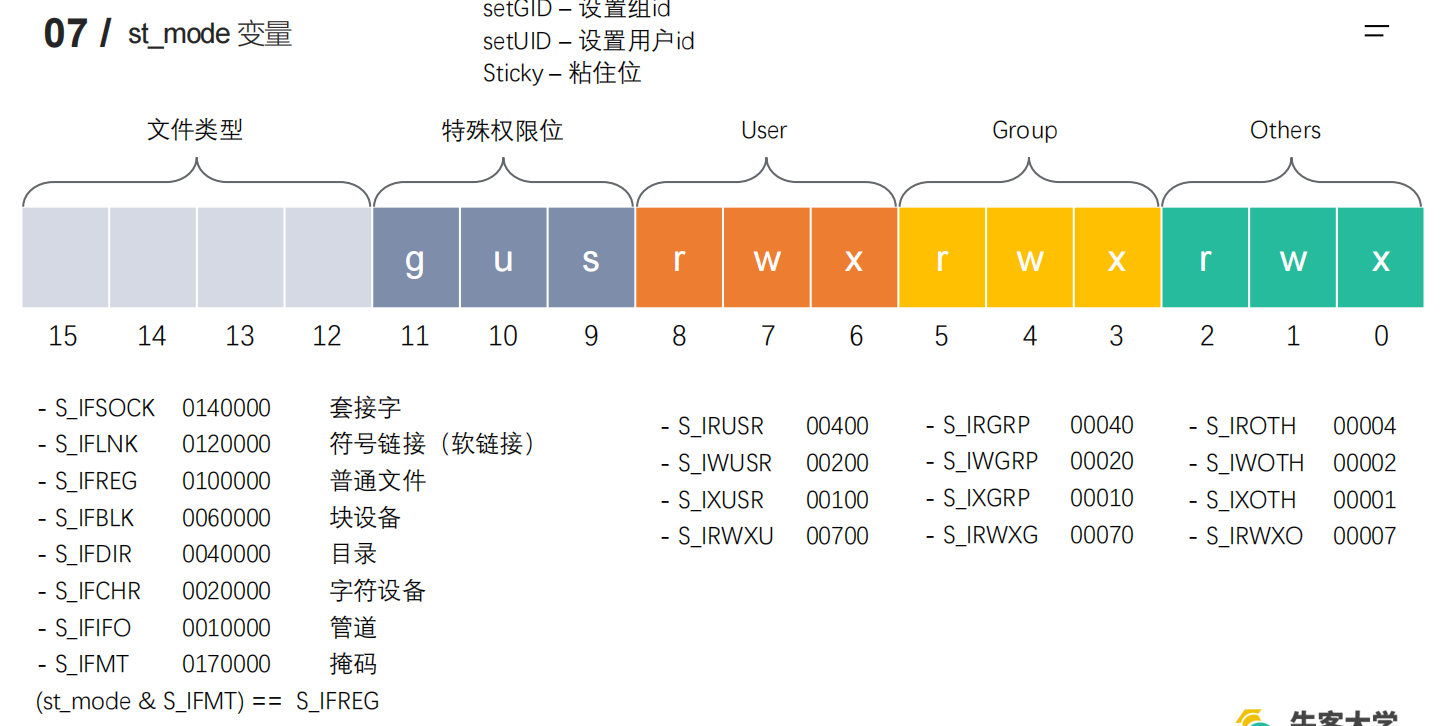
stat实现对文件权限和类型的描述
/*

    #include <sys/types.h>

    #include <sys/stat.h>

    #include <unistd.h>

    int stat(const char *pathname, struct stat *statbuf);

        作用:获取一个文件相关的一些信息

        参数:

            - pathname:操作的文件的路径

            - statbuf:结构体变量,传出参数,用于保存获取到的文件的信息

        返回值:

            成功:返回0

            失败:返回-1 设置errno

    int lstat(const char *pathname, struct stat *statbuf);

        参数:

            - pathname:操作的文件的路径

            - statbuf:结构体变量,传出参数,用于保存获取到的文件的信息

        返回值:

            成功:返回0

            失败:返回-1 设置errno

*/

#include <sys/types.h>

#include <sys/stat.h>

#include <unistd.h>

#include <stdio.h>

int main() {

    struct stat statbuf;

    int ret = stat("a.txt", &statbuf);

    if(ret == -1) {

        perror("stat");

        return -1;

    }

    printf("size: %ld\n", statbuf.st_size);

    return 0;

}
使用stat实现ls-l
#include <stdio.h>

#include <sys/types.h>

#include <sys/stat.h>

#include <unistd.h>

#include <pwd.h>

#include <grp.h>

#include <time.h>

#include <string.h>

// 模拟实现 ls -l 指令

// -rw-rw-r-- 1 nowcoder nowcoder 12 12月  3 15:48 a.txt

int main(int argc, char * argv[]) {

    // 判断输入的参数是否正确

    if(argc < 2) {

        printf("%s filename\n", argv[0]);

        return -1;

    }

    // 通过stat函数获取用户传入的文件的信息

    struct stat st;

    int ret = stat(argv[1], &st);

    if(ret == -1) {

        perror("stat");

        return -1;

    }

    // 获取文件类型和文件权限

    char perms[11] = {0};   // 用于保存文件类型和文件权限的字符串

    switch(st.st_mode & S_IFMT) {

        case S_IFLNK:

            perms[0] = 'l';

            break;

        case S_IFDIR:

            perms[0] = 'd';

            break;

        case S_IFREG:

            perms[0] = '-';

            break;

        case S_IFBLK:

            perms[0] = 'b';

            break;

        case S_IFCHR:

            perms[0] = 'c';

            break;

        case S_IFSOCK:

            perms[0] = 's';

            break;

        case S_IFIFO:

            perms[0] = 'p';

            break;

        default:

            perms[0] = '?';

            break;

    }

    // 判断文件的访问权限

    // 文件所有者

    perms[1] = (st.st_mode & S_IRUSR) ? 'r' : '-';

    perms[2] = (st.st_mode & S_IWUSR) ? 'w' : '-';

    perms[3] = (st.st_mode & S_IXUSR) ? 'x' : '-';

    // 文件所在组

    perms[4] = (st.st_mode & S_IRGRP) ? 'r' : '-';

    perms[5] = (st.st_mode & S_IWGRP) ? 'w' : '-';

    perms[6] = (st.st_mode & S_IXGRP) ? 'x' : '-';

    // 其他人

    perms[7] = (st.st_mode & S_IROTH) ? 'r' : '-';

    perms[8] = (st.st_mode & S_IWOTH) ? 'w' : '-';

    perms[9] = (st.st_mode & S_IXOTH) ? 'x' : '-';

    // 硬连接数

    int linkNum = st.st_nlink;

    // 文件所有者

    char * fileUser = getpwuid(st.st_uid)->pw_name;

    // 文件所在组

    char * fileGrp = getgrgid(st.st_gid)->gr_name;

    // 文件大小

    long int fileSize = st.st_size;

    // 获取修改的时间

    char * time = ctime(&st.st_mtime);

    char mtime[512] = {0};

    strncpy(mtime, time, strlen(time) - 1);

    char buf[1024];

    sprintf(buf, "%s %d %s %s %ld %s %s", perms, linkNum, fileUser, fileGrp, fileSize, mtime, argv[1]);

    printf("%s\n", buf);

    return 0;

}
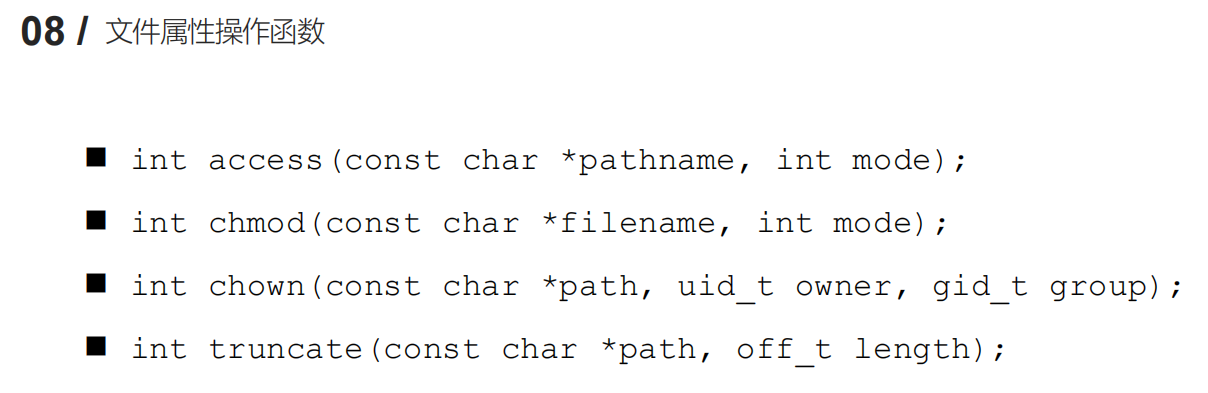
文件属性操作
access实现获取文件属性
#include <unistd.h>

#include <stdio.h>

int main() {

    int ret = access("a.txt", F_OK);

    if(ret == -1) {

        perror("access");

    }

    printf("文件存在!!!\n");

    return 0;

}
chmod改变文件权限
/*

    #include <sys/stat.h>

    int chmod(const char *pathname, mode_t mode);

        修改文件的权限

        参数:

            - pathname: 需要修改的文件的路径

            - mode:需要修改的权限值,八进制的数

        返回值:成功返回0,失败返回-1

*/

#include <sys/stat.h>

#include <stdio.h>

int main() {

    int ret = chmod("a.txt", 0777);

    if(ret == -1) {

        perror("chmod");

        return -1;

    }

    return 0;

}
truncate改变文件字节数
/*

    #include <unistd.h>

    #include <sys/types.h>

    int truncate(const char *path, off_t length);

        作用:缩减或者扩展文件的尺寸至指定的大小

        参数:

            - path: 需要修改的文件的路径

            - length: 需要最终文件变成的大小

        返回值:

            成功返回0, 失败返回-1

*/

#include <unistd.h>

#include <sys/types.h>

#include <stdio.h>

int main() {

    int ret = truncate("b.txt", 5);

    if(ret == -1) {

        perror("truncate");

        return -1;

    }

    return 0;

}
目录操作
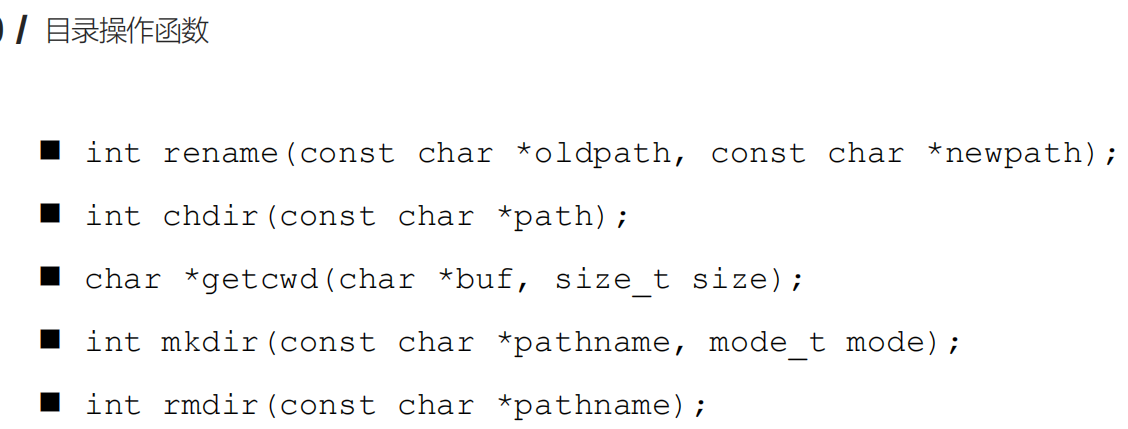
mkdir
/*

    #include <sys/stat.h>

    #include <sys/types.h>

    int mkdir(const char *pathname, mode_t mode);

        作用:创建一个目录

        参数:

            pathname: 创建的目录的路径

            mode: 权限,八进制的数

        返回值:

            成功返回0, 失败返回-1

*/

#include <sys/stat.h>

#include <sys/types.h>

#include <stdio.h>

int main() {

    int ret = mkdir("aaa", 0777);

    if(ret == -1) {

        perror("mkdir");

        return -1;

    }

    return 0;

}
rename
/*

    #include <stdio.h>

    int rename(const char *oldpath, const char *newpath);

*/

#include <stdio.h>

int main() {

    int ret = rename("aaa", "bbb");

    if(ret == -1) {

        perror("rename");

        return -1;

    }

    return 0;

}
chdir修改进程的工作目录
/*

    #include <unistd.h>

    int chdir(const char *path);

        作用:修改进程的工作目录

            比如在/home/nowcoder 启动了一个可执行程序a.out, 进程的工作目录 /home/nowcoder

        参数:

            path : 需要修改的工作目录

    #include <unistd.h>

    char *getcwd(char *buf, size_t size);

        作用:获取当前工作目录

        参数:

            - buf : 存储的路径,指向的是一个数组(传出参数)

            - size: 数组的大小

        返回值:

            返回的指向的一块内存,这个数据就是第一个参数

*/

#include <unistd.h>

#include <stdio.h>

#include <sys/stat.h>

#include <sys/types.h>

#include <fcntl.h>

int main() {

    // 获取当前的工作目录

    char buf[128];

    getcwd(buf, sizeof(buf));

    printf("当前的工作目录是:%s\n", buf);

    // 修改工作目录

    int ret = chdir("/home/nowcoder/Linux/lesson13");

    if(ret == -1) {

        perror("chdir");

        return -1;

    }

    // 创建一个新的文件

    int fd = open("chdir.txt", O_CREAT | O_RDWR, 0664);

    if(fd == -1) {

        perror("open");

        return -1;

    }

    close(fd);

    // 获取当前的工作目录

    char buf1[128];

    getcwd(buf1, sizeof(buf1));

    printf("当前的工作目录是:%s\n", buf1);

    return 0;

}
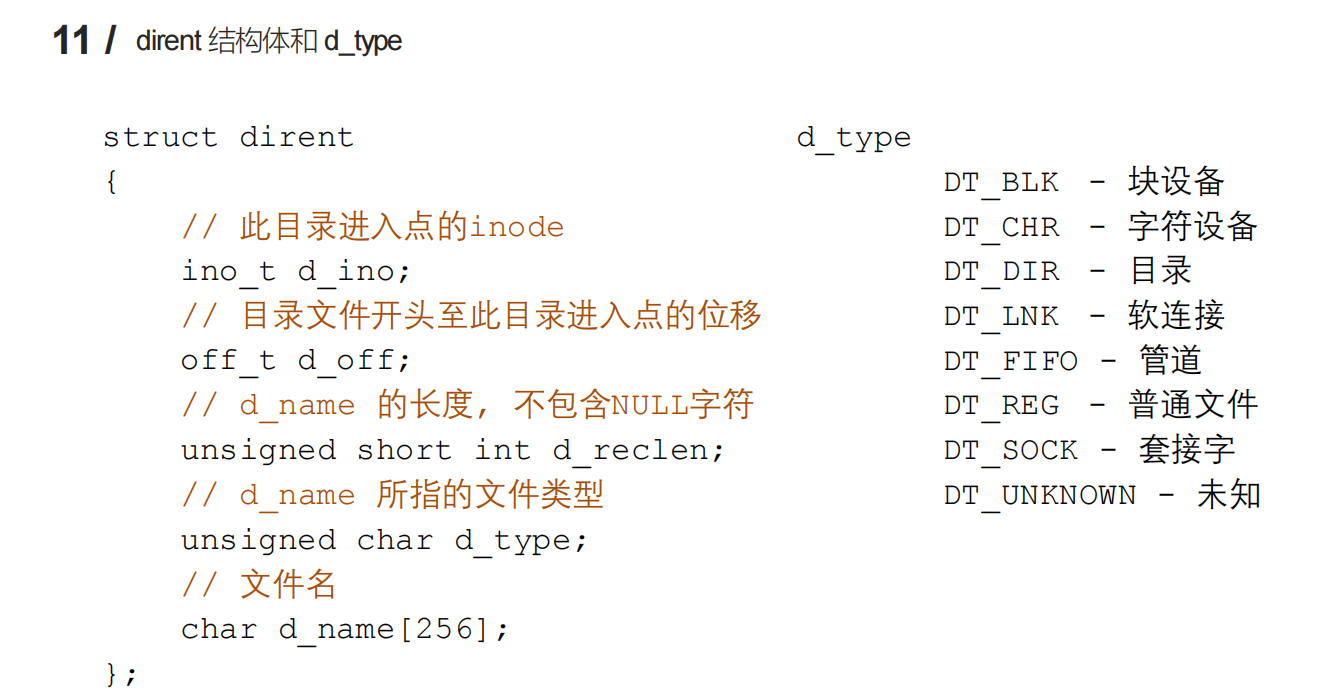
目录遍历:
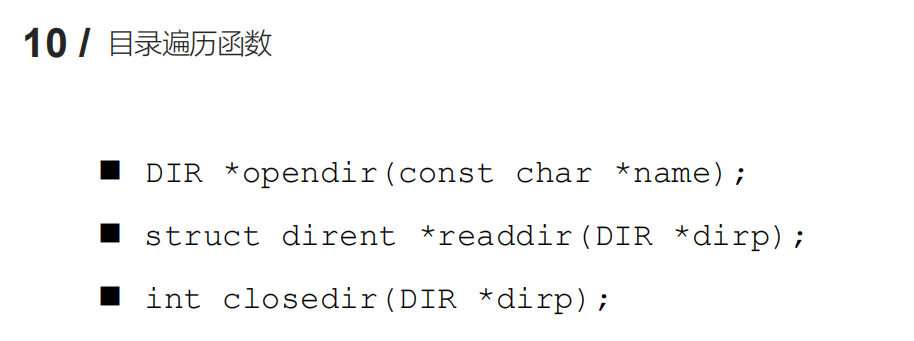
目录遍历
/*

    // 打开一个目录

    #include <sys/types.h>

    #include <dirent.h>

    DIR *opendir(const char *name);

        参数:

            - name: 需要打开的目录的名称

        返回值:

            DIR * 类型,理解为目录流

            错误返回NULL

    // 读取目录中的数据

    #include <dirent.h>

    struct dirent *readdir(DIR *dirp);

        - 参数:dirp是opendir返回的结果

        - 返回值:

            struct dirent,代表读取到的文件的信息

            读取到了末尾或者失败了,返回NULL

    // 关闭目录

    #include <sys/types.h>

    #include <dirent.h>

    int closedir(DIR *dirp);

*/

#include <sys/types.h>

#include <dirent.h>

#include <stdio.h>

#include <string.h>

#include <stdlib.h>

int getFileNum(const char * path);

// 读取某个目录下所有的普通文件的个数

int main(int argc, char * argv[]) {

    if(argc < 2) {

        printf("%s path\n", argv[0]);

        return -1;

    }

    int num = getFileNum(argv[1]);

    printf("普通文件的个数为:%d\n", num);

    return 0;

}

// 用于获取目录下所有普通文件的个数

int getFileNum(const char * path) {

    // 1.打开目录

    DIR * dir = opendir(path);

    if(dir == NULL) {

        perror("opendir");

        exit(0);

    }

    struct dirent *ptr;

    // 记录普通文件的个数

    int total = 0;

    while((ptr = readdir(dir)) != NULL) {

        // 获取名称

        char * dname = ptr->d_name;

        // 忽略掉. 和..

        if(strcmp(dname, ".") == 0 || strcmp(dname, "..") == 0) {

            continue;

        }

        // 判断是否是普通文件还是目录

        if(ptr->d_type == DT_DIR) {

            // 目录,需要继续读取这个目录

            char newpath[256];

            sprintf(newpath, "%s/%s", path, dname);

            total += getFileNum(newpath);

        }

        if(ptr->d_type == DT_REG) {

            // 普通文件

            total++;

        }

    }

    // 关闭目录

    closedir(dir);

    return total;

}
dup 和dup2 文件描述符操作
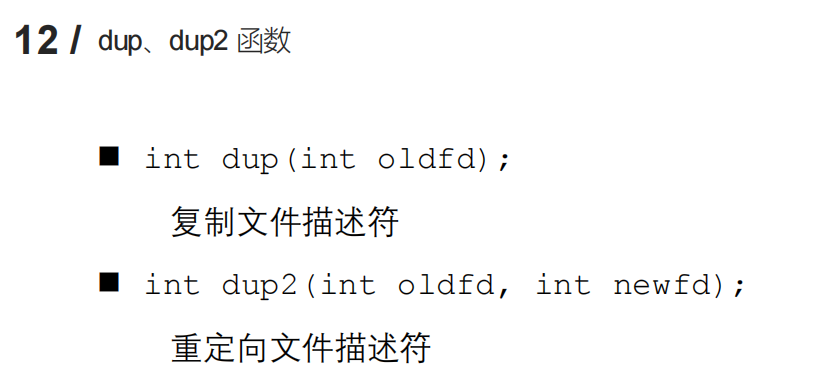
dup2相当于吧new与以前做close,然后把new指向lod指向的文件
dup复制文件描述符
/*

    #include <unistd.h>

    int dup(int oldfd);

        作用:复制一个新的文件描述符

        fd=3, int fd1 = dup(fd),

        fd指向的是a.txt, fd1也是指向a.txt

        从空闲的文件描述符表中找一个最小的,作为新的拷贝的文件描述符

*/

#include <unistd.h>

#include <stdio.h>

#include <fcntl.h>

#include <sys/types.h>

#include <sys/stat.h>

#include <string.h>

int main() {

    int fd = open("a.txt", O_RDWR | O_CREAT, 0664);

    int fd1 = dup(fd);

    if(fd1 == -1) {

        perror("dup");

        return -1;

    }

    printf("fd : %d , fd1 : %d\n", fd, fd1);

    close(fd);

    char * str = "hello,world";

    int ret = write(fd1, str, strlen(str));

    if(ret == -1) {

        perror("write");

        return -1;

    }

    close(fd1);

    return 0;

}
dup2 关闭new与之前的文件,并重新指向lod的文件描述符
/*

    #include <unistd.h>

    int dup2(int oldfd, int newfd);

        作用:重定向文件描述符

        oldfd 指向 a.txt, newfd 指向 b.txt

        调用函数成功后:newfd 和 b.txt 做close, newfd 指向了 a.txt

        oldfd 必须是一个有效的文件描述符

        oldfd和newfd值相同,相当于什么都没有做

*/

#include <unistd.h>

#include <stdio.h>

#include <string.h>

#include <sys/stat.h>

#include <sys/types.h>

#include <fcntl.h>

int main() {

    int fd = open("1.txt", O_RDWR | O_CREAT, 0664);

    if(fd == -1) {

        perror("open");

        return -1;

    }

    int fd1 = open("2.txt", O_RDWR | O_CREAT, 0664);

    if(fd1 == -1) {

        perror("open");

        return -1;

    }

    printf("fd : %d, fd1 : %d\n", fd, fd1);

    int fd2 = dup2(fd, fd1);

    if(fd2 == -1) {

        perror("dup2");

        return -1;

    }

    // 通过fd1去写数据,实际操作的是1.txt,而不是2.txt

    char * str = "hello, dup2";

    int len = write(fd1, str, strlen(str));

    if(len == -1) {

        perror("write");

        return -1;

    }

    printf("fd : %d, fd1 : %d, fd2 : %d\n", fd, fd1, fd2);

    close(fd);

    close(fd1);

    return 0;

}
fcntl控制文件描述符
fcntl 中途改变文件描述符的内容,权限等等
/*

    #include <unistd.h>

    #include <fcntl.h>

    int fcntl(int fd, int cmd, ...);

    参数:

        fd : 表示需要操作的文件描述符

        cmd: 表示对文件描述符进行如何操作

            - F_DUPFD : 复制文件描述符,复制的是第一个参数fd,得到一个新的文件描述符(返回值)

                int ret = fcntl(fd, F_DUPFD);

            - F_GETFL : 获取指定的文件描述符文件状态flag

              获取的flag和我们通过open函数传递的flag是一个东西。

            - F_SETFL : 设置文件描述符文件状态flag

              必选项:O_RDONLY, O_WRONLY, O_RDWR 不可以被修改

              可选性:O_APPEND, O)NONBLOCK

                O_APPEND 表示追加数据

                NONBLOK 设置成非阻塞

        阻塞和非阻塞:描述的是函数调用的行为。

*/

#include <unistd.h>

#include <fcntl.h>

#include <stdio.h>

#include <string.h>

int main() {

    // 1.复制文件描述符

    // int fd = open("1.txt", O_RDONLY);

    // int ret = fcntl(fd, F_DUPFD);

    // 2.修改或者获取文件状态flag

    int fd = open("1.txt", O_RDWR);

    if(fd == -1) {

        perror("open");

        return -1;

    }

    // 获取文件描述符状态flag

    int flag = fcntl(fd, F_GETFL);

    if(flag == -1) {

        perror("fcntl");

        return -1;

    }

    flag |= O_APPEND;   // flag = flag | O_APPEND

    // 修改文件描述符状态的flag,给flag加入O_APPEND这个标记

    int ret = fcntl(fd, F_SETFL, flag);

    if(ret == -1) {

        perror("fcntl");

        return -1;

    }

    char * str = "nihao";

    write(fd, str, strlen(str));

    close(fd);

    return 0;

}
文件IO示例程序的更多相关文章
- ACEXML解析XML文件——简单示例程序
掌握了ACMXML库解析XML文件的方法后,下面来实现一个比较完整的程序. 定义基本结构 xml文件格式如下 <?xml version="1.0"?> <roo ...
- 第七篇:两个经典的文件IO程序示例
前言 本文分析两个经典的C++文件IO程序,提炼出其中文件IO的基本套路,留待日后查阅. 程序功能 程序一打印用户指定的所有文本文件,程序二向用户指定的所有文本文件中写入数据. 程序一代码及其注释 # ...
- 两个经典的文件IO程序示例
前言 本文分析两个经典的C++文件IO程序,提炼出其中文件IO的基本套路,留待日后查阅. 程序功能 程序一打印用户指定的所有文本文件,程序二向用户指定的所有文本文件中写入数据. 程序一代码及其注释 # ...
- 《嵌入式linux应用程序开发标准教程》笔记——6.文件IO编程
前段时间看APUE,确实比较详细,不过过于详细了,当成工具书倒是比较合适,还是读一读这种培训机构的书籍,进度会比较快,遇到问题时再回去翻翻APUE,这样的效率可能更高一些. <嵌入式linux应 ...
- JAVA 基础编程练习题50 【程序 50 文件 IO】
50 [程序 50 文件 IO] 题目:有五个学生,每个学生有 3 门课的成绩,从键盘输入以上数据(包括学生号,姓名,三门课成绩), 计算出平均成绩,将原有的数据和计算出的平均分数存放在磁盘文件&qu ...
- RocketMQ消费者示例程序
转载请注明出处:http://www.cnblogs.com/xiaodf/ 本博客实现了一个简单的RocketMQ消费者的示例,MQ里存储的是经过Avro序列化的消息数据,程序读取数据并反序列化后, ...
- RocketMQ生产者示例程序
转载请注明出处:http://www.cnblogs.com/xiaodf/ 本示例展示了一个RocketMQ producer的简单实现,通过解析文本文件获取输入数据,将数据经过Avro序列化后发送 ...
- epub、ocf等常用电子书格式浅析----附JAVA示例程序
一. 电子书介绍 转载请注明http://www.cnblogs.com/xckk/p/6020324.html Epub(Electronic Publication)是一个完全开放和免费的电子书标 ...
- 将ZIP文件添加到程序集资源文件然后在运行时解压文件
今天做安装打包程序研究,之前同事将很多零散的文件发布成一个安装文件夹给用户,这样体验不好,我希望将所有文件打包成一个.net程序,运行此程序的时候自解压然后执行后续的安装步骤. 解决过程: 1,将所有 ...
随机推荐
- http协议和https协议的区别
超文本传输协议HTTP协议被用于在Web浏览器和网站服务器之间传递信息,HTTP协议以明文方式发送内容,不提供任何方式的数据加密,如果攻击者截取了Web浏览器和网站服务器之间的传输报文,就可以直接读懂 ...
- mongodb在插入数据环节避免数据重复的方法(爬虫中的使用update)
mongo 去重 import pymongo client = pymongo.MongoClient() collection=client.t.test # collection.insert( ...
- LeetCode.241
241. 为运算表达式设计优先级 题目大意 给定一个含有数字和运算符的字符串,为表达式添加括号,改变其运算优先级以求出不同的结果.你需要给出所有可能的组合的结果.有效的运算符号包含 + - * 思路: ...
- 使用OpenFileDialog打开文件和使用FolderBrowserDialog选定文件夹
选定文件夹 string foldPath = ""; FolderBrowserDialog dialog = new FolderBrowserDialog(); dialog ...
- ApacheCN Linux 译文集(二) 20211206 更新
CentOS7 Linux 服务器秘籍 零.前言 一.安装 CentOS 二.配置系统 三.管理系统 四.用 YUM 管理包 五.管理文件系统 六.提供安全性 七.构建网络 八.使用文件传输协议 九. ...
- js-reduce方法源码
// 数组中的reduce方法源码复写 //先说明一下reduce原理:总的一句,reduce方法主要是把数组遍历, //然后把数组的每个元素传入回调函数中,回调函数怎么处理,就会的到什么样的效果 A ...
- react之withRouter的作用
withRouter的作用:把不是通过路由切换过来的组件,将react-router的history.location和match三个对象传入到props对象上: 默认情况下必须是经过路由匹配渲染的组 ...
- AT5801 [AGC043D] Merge Triplets
这种排列生成排列的题目我们一般可以考虑生成排列合法的充要条件. 首先可以发现的一点就是该生成排列的任意一个数 \(p_i\) 一定不存在连续的三个数 \(p_{i + 1}, p_{i + 2}, p ...
- nested exception is java.lang.NoClassDefFoundError: org/fusesource/hawtbuf/UTF8Buffer
前言:IDE管理maven项目,总是遇到各种莫名奇妙的问题,有的是导入了依赖,IDE确报包未找到,有的是IDE显示找到,但是控制台确报未找到,有以下几种方法可以解决 第一:确认自己导入的依赖是否有问题 ...
- Android WebView组件 访问部分网页崩溃问题【已解决】
最近刚接触Android,在测试WebView组件时发现总是出现崩溃现像: 提示:ERR_CLEARTEXT_NOT_PERMITTED 当时以为是权限问题,查找自己的AndroidManifest文 ...