
SpringMVC的流程分析(二)—— HandlerMapping组件
1.HandlerMapping的类结构
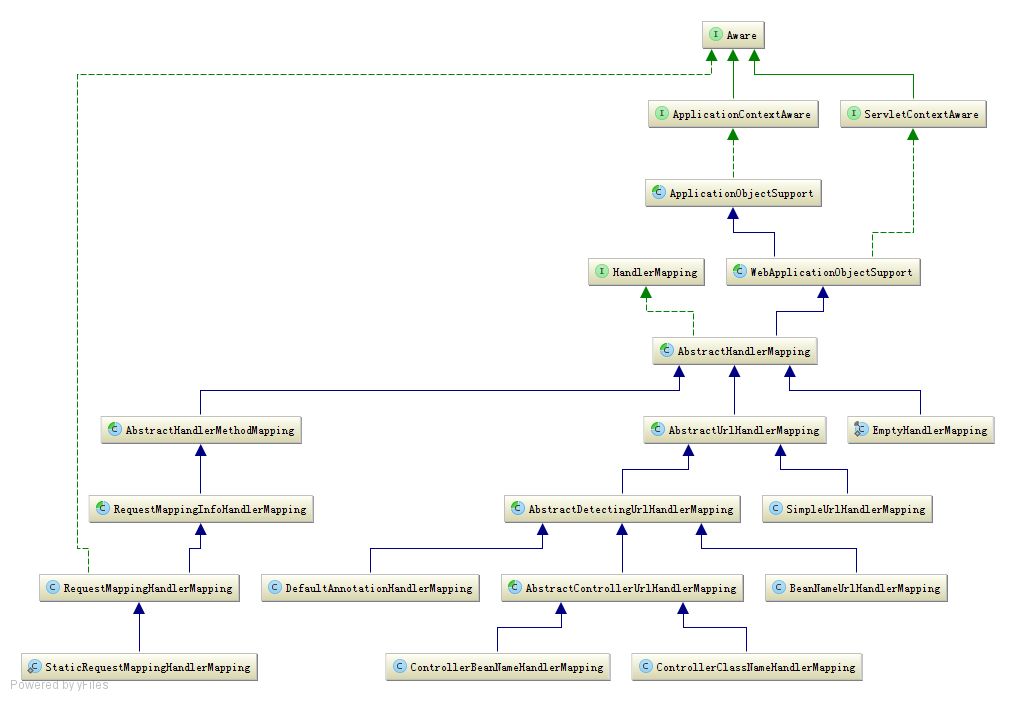
如上图所示,HandlerMapping接口有一个叫做;getHandler()的方法,这个方法是用来回去HandlerMapping对应的处理器的,由此也就可以看出HandlerMapping主要是用来映射请求和处理器的。
AbstractHandlerMapping实现了HandlerMapping接口,还继承了WebApplicationObjectSupport,而WebApplicationObjectSupport最终实现了ApplicationContextAware接口,这个接口使用来扩展
Spring的,ApplicationContextAware可以对应用上下文进行加工,加入自己的逻辑,SpringMVC就是通过它来实现的url和处理器的映射。
接下来我们看到AbstractHandlerMethodMapping和AbstractUrlHandlerMapping都继承了AbstractHandlerMapping,这两个类分别从不同的角度来映射请求和处理器。
2.AbstractHandlerMapping具体的实现
2.1 AbstractUrlHandlerMapping
我们分开来看,首先分析AbstractUrlHandlerMapping,这个类是用来映射url和handler的,它维护了一个handlerMap用来存储url相应的处理器,它的实现类AbstractDetectingUrlHandlerMapping重写了
initApplictionContext()方法:
@Override

    public void initApplicationContext() throws ApplicationContextException {

        super.initApplicationContext();

        detectHandlers();

    }
可以看到他调用了父类的initApplicationContext方法,然后又调用了detectHandlers()方法来处理请求映射,看detectHandler()源码:
protected void detectHandlers() throws BeansException {

        String[] beanNames = (this.detectHandlersInAncestorContexts ?

                BeanFactoryUtils.beanNamesForTypeIncludingAncestors(getApplicationContext(), Object.class) :

                getApplicationContext().getBeanNamesForType(Object.class));

        // Take any bean name that we can determine URLs for.

        for (String beanName : beanNames) {

            String[] urls = determineUrlsForHandler(beanName);

            if (!ObjectUtils.isEmpty(urls)) {

                // URL paths found: Let's consider it a handler.

                registerHandler(urls, beanName);

            }

            else {

                if (logger.isDebugEnabled()) {

                    logger.debug("Rejected bean name '" + beanName + "': no URL paths identified");

                }

            }

        }

    }
第一步,获取所有的beanname,第二步,根据这个beanName查询它是不是一个处理器,并取出他的url,
determineUrlsForHandler有多种实现,我们拿AbstractControllerUrlHandlerMapping举例说明:
@Override

    protected String[] determineUrlsForHandler(String beanName) {

        Class<?> beanClass = getApplicationContext().getType(beanName);

        if (isEligibleForMapping(beanName, beanClass)) {

            return buildUrlsForHandler(beanName, beanClass);

        }

        else {

            return null;

        }

    }
首先从应用上下文中根据beanname获取到bean的class对象,然后判断有没有成为处理器的资格,即判断是否实现了Controller接口。
然后调用buildUrlsForHandler()方法获取处理器的url,然后返回。
接下来执行 registerHandler(urls, beanName) :
protected void registerHandler(String[] urlPaths, String beanName) throws BeansException, IllegalStateException {

        Assert.notNull(urlPaths, "URL path array must not be null");

        for (String urlPath : urlPaths) {

            registerHandler(urlPath, beanName);

        }

    }
registerHandler(url,beanname)
protected void registerHandler(String urlPath, Object handler) throws BeansException, IllegalStateException {

        Object resolvedHandler = handler;

        // Eagerly resolve handler if referencing singleton via name.

        if (!this.lazyInitHandlers && handler instanceof String) {

            String handlerName = (String) handler;

            if (getApplicationContext().isSingleton(handlerName)) {

                resolvedHandler = getApplicationContext().getBean(handlerName);

            }

        }

        Object mappedHandler = this.handlerMap.get(urlPath);

        if (mappedHandler != null) {

            if (mappedHandler != resolvedHandler) {

                throw new IllegalStateException(

                        "Cannot map " + getHandlerDescription(handler) + " to URL path [" + urlPath +

                        "]: There is already " + getHandlerDescription(mappedHandler) + " mapped.");

            }

        }

        else {

            if (urlPath.equals("/")) {

                if (logger.isInfoEnabled()) {

                    logger.info("Root mapping to " + getHandlerDescription(handler));

                }

                setRootHandler(resolvedHandler);

            }

            else if (urlPath.equals("/*")) {

                if (logger.isInfoEnabled()) {

                    logger.info("Default mapping to " + getHandlerDescription(handler));

                }

                setDefaultHandler(resolvedHandler);

            }

            else {

                this.handlerMap.put(urlPath, resolvedHandler);

                if (logger.isInfoEnabled()) {

                    logger.info("Mapped URL path [" + urlPath + "] onto " + getHandlerDescription(handler));

                }

            }

        }

    }
首先从上下文拿到一个处理器实例,然后根据url的不同,将它设置到不同的处理器存储位置,例如,如果url是"/"就将处理器设置为根处理器,
如果url是"/*"就将处理器设置为默认处理器。如果都不是就放进handleMap中。
通过以上步骤,我们就将上下文中所有的bean循环了一遍,只要是符合HandlerMapping的规则的处理器,就会将他的映射关系存储起来。
2.2 AbstractHandlerMethodMapping
AbstractHandlerMethodMapping和AbstractUrlMethodMapping有所不同,他实现了InitializingBean接口,通过实现afterPropertiesSet()方法来扩展相应的业务
public void afterPropertiesSet() {

        initHandlerMethods();

    }
调用了initHandlerMethods()
protected void initHandlerMethods() {

        String[] beanNames = (this.detectHandlerMethodsInAncestorContexts ?

                BeanFactoryUtils.beanNamesForTypeIncludingAncestors(getApplicationContext(), Object.class) :

                getApplicationContext().getBeanNamesForType(Object.class));

        for (String beanName : beanNames) {

            if (!beanName.startsWith(SCOPED_TARGET_NAME_PREFIX) &&

                    isHandler(getApplicationContext().getType(beanName))){

                detectHandlerMethods(beanName);

            }

        }

        handlerMethodsInitialized(getHandlerMethods());

    }
首先获取所有的beanname,然后遍历这些bean,判断他是不是处理器,不同的实现有不同的判断方法,那我们最常用的@Controller为例说明
protected boolean isHandler(Class<?> beanType) {

        return ((AnnotationUtils.findAnnotation(beanType, Controller.class) != null) ||

                (AnnotationUtils.findAnnotation(beanType, RequestMapping.class) != null));

    }
判断这个类有没有@Controller或者@ReuqestMapping注解就可以了.
接下来执行detectHandlerMethods(beanName)
protected void detectHandlerMethods(final Object handler) {

        Class<?> handlerType =

                (handler instanceof String ? getApplicationContext().getType((String) handler) : handler.getClass());

        // Avoid repeated calls to getMappingForMethod which would rebuild RequestMappingInfo instances

        final Map<Method, T> mappings = new IdentityHashMap<Method, T>();

        final Class<?> userType = ClassUtils.getUserClass(handlerType);

        Set<Method> methods = HandlerMethodSelector.selectMethods(userType, new MethodFilter() {

            @Override

            public boolean matches(Method method) {

                T mapping = getMappingForMethod(method, userType);

                if (mapping != null) {

                    mappings.put(method, mapping);

                    return true;

                }

                else {

                    return false;

                }

            }

        });

        for (Method method : methods) {

            registerHandlerMethod(handler, method, mappings.get(method));

        }

    }
可以看到它首先会得到所有的方法,然后对方法进行过滤,调用matches方法,还是拿@Controller举例:
protected RequestMappingInfo getMappingForMethod(Method method, Class<?> handlerType) {

        RequestMappingInfo info = null;

        RequestMapping methodAnnotation = AnnotationUtils.findAnnotation(method, RequestMapping.class);

        if (methodAnnotation != null) {

            RequestCondition<?> methodCondition = getCustomMethodCondition(method);

            info = createRequestMappingInfo(methodAnnotation, methodCondition);

            RequestMapping typeAnnotation = AnnotationUtils.findAnnotation(handlerType, RequestMapping.class);

            if (typeAnnotation != null) {

                RequestCondition<?> typeCondition = getCustomTypeCondition(handlerType);

                info = createRequestMappingInfo(typeAnnotation, typeCondition).combine(info);

            }

        }

        return info;

    }
可以看到他是判断方法有没有RequestMapping注解来过滤方法的,所有过滤出来的方法都会生成一个 RequestMappingInfo,(它包含该方法的所有的注解信息),放进maps里面,
接下来就是将所有的方法进行注册:
protected void registerHandlerMethod(Object handler, Method method, T mapping) {

        HandlerMethod newHandlerMethod = createHandlerMethod(handler, method);

        HandlerMethod oldHandlerMethod = this.handlerMethods.get(mapping);

        if (oldHandlerMethod != null && !oldHandlerMethod.equals(newHandlerMethod)) {

            throw new IllegalStateException("Ambiguous mapping found. Cannot map '" + newHandlerMethod.getBean() +

                    "' bean method \n" + newHandlerMethod + "\nto " + mapping + ": There is already '" +

                    oldHandlerMethod.getBean() + "' bean method\n" + oldHandlerMethod + " mapped.");

        }

        this.handlerMethods.put(mapping, newHandlerMethod);

        if (logger.isInfoEnabled()) {

            logger.info("Mapped \"" + mapping + "\" onto " + newHandlerMethod);

        }

        Set<String> patterns = getMappingPathPatterns(mapping);

        for (String pattern : patterns) {

            if (!getPathMatcher().isPattern(pattern)) {

                this.urlMap.add(pattern, mapping);

            }

        }

        if (this.namingStrategy != null) {

            String name = this.namingStrategy.getName(newHandlerMethod, mapping);

            updateNameMap(name, newHandlerMethod);

        }

    }
首先创建一个HandlerMethod对象,用来包装处理器和对应的方法。然后判断是否有重复的handlermethod,然后将映射类和处理类放进handlerMethods中,
可以看到,他还会将url和映射信息放进一个urlMap来记录,这说明多个请求可能对应同一个映射。
以上就是HandlerMapping的大体作用和流程信息,用来呈放web应用的映射信息,关于如何根据request寻找到对应的映射器,将在下一章介绍。
SpringMVC的流程分析(二)—— HandlerMapping组件的更多相关文章
- 框架-springmvc源码分析(二)
框架-springmvc源码分析(二) 参考: http://www.cnblogs.com/leftthen/p/5207787.html http://www.cnblogs.com/leftth ...
- SpringMVC的流程分析(一)—— 整体流程概括
SpringMVC的整体概括 之前也写过springmvc的流程分析,只是当时理解的还不透彻所以那篇文章就放弃了,现在比之前好了些,想着写下来分享下,也能增强记忆,也希望可以帮助到人,如果文章中有什么 ...
- Android 7.1 WindowManagerService 屏幕旋转流程分析 (二)
一.概述 从上篇[Android 7.1 屏幕旋转流程分析]知道实际的旋转由WindowManagerService来完成,这里接着上面具体详细展开. 调了三个函数完成了三件事,即首先调用update ...
- Gradle之Android Gradle Plugin 主要流程分析(二)
[Android 修炼手册]Gradle 篇 -- Android Gradle Plugin 主要流程分析 预备知识 理解 gradle 的基本开发 了解 gradle task 和 plugin ...
- Android 4.4 音量调节流程分析(二)
之前在Android 4.4 音量调节流程分析(一)里已经有简单的分析音量控制的流程,今天想接着继续分析下音量大小计算的方法.对于任一播放文件而言其本身都有着固定大小的音量Volume_Max,而在A ...
- MSM8909中LK阶段LCM屏适配与显示流程分析(二)
1.前言 在前面的文章MSM8909中LK阶段LCM屏适配与显示流程分析(一),链接如下: https://www.cnblogs.com/Cqlismy/p/12019317.html 介绍了如何使 ...
- Uboot启动流程分析(二)
1.前言 在前面的文章Uboot启动流程分析(一)中,链接如下: https://www.cnblogs.com/Cqlismy/p/12000889.html 已经简单地分析了low_level_i ...
- Netty执行流程分析与重要组件介绍
一.环境搭建 创建工程,引入Netty依赖 二.基于Netty的请求响应Demo 1.TestHttpServerHandle 处理器.读取客户端发送过来的请求,并且向客户端返回hello worl ...
- Nginx-HTTP之静态网页访问流程分析二
11. HTTP 阶段执行 下面会依次执行以下阶段: NGX_HTTP_SERVER_REWRITE_PHASE: 在将请求的 URI 与 location 表达式匹配前,修改请求的 URI (所谓重 ...
随机推荐
- Redis的事务和watch
redis的事务 严格意义来讲,redis的事务和我们理解的传统数据库(如mysql)的事务是不一样的. redis中的事务定义 Redis中的事务(transaction)是一组命令的集合. 事务同 ...
- mysql-proxy实现读写分离
其中Amoeba for MySQL也是实现读写分离 环境描述:操作系统:CentOS6.5 32位主服务器Master:192.168.179.146从服务器Slave:192.168.179.14 ...
- 移动端H5地图矢量SHP网格切分打包方案
文章版权由作者李晓晖和博客园共有,若转载请于明显处标明出处:http://www.cnblogs.com/naaoveGIS/ 1.背景 与离线瓦片方案一样,同样是为了解决移动端网速和流量问题,但是却 ...
- eclipse配置svn方法
一.在Eclipse里下载Subclipse插件 方法一:从Eclipse Marketplace里面下载 具体操作:打开Eclipse --> Help --> Eclipse Mark ...
- JavaScript(第十天)【Function类型】
在ECMAScript中,Function(函数)类型实际上是对象.每个函数都是Function类型的实例,而且都与其他引用类型一样具有属性和方法.由于函数是对象,因此函数名实际上也是一个指向函数对象 ...
- hadoop集群简单搭建
分布式搭建 在ubuntu下创建hadoop用户组和用户 bigdata@master:~$sudo addgroup hadoop bigdata@master:~$sudo adduser --i ...
- 201621123060《JAVA程序设计》第八周学习总结
1. 本周学习总结 以你喜欢的方式(思维导图或其他)归纳总结集合相关内容. 2. 书面作业 1. ArrayList代码分析 1.1 解释ArrayList的contains源代码 源代码: publ ...
- Beta集合
Beta冲刺day1 Beta冲刺day2 Beta冲刺day3 Beta冲刺day4 Beta冲刺day5 Beta冲刺day6 Beta冲刺day7 测试总结 总结合集 Beta预备
- Hibernate之深入持久化对象
Hibernate是一个彻底的O/R Mapping 框架.之所以说彻底,是因为相对于其他的 框架 ,如Spring JDBC,iBatis 需要手动的管理SQL语句,Hibernate采用了完全 面 ...
- jwt验证登录信息
为什么要告别session?有这样一个场景,系统的数据量达到千万级,需要几台服务器部署,当一个用户在其中一台服务器登录后,用session保存其登录信息,其他服务器怎么知道该用户登录了?(单点登录), ...