
2.2RNN
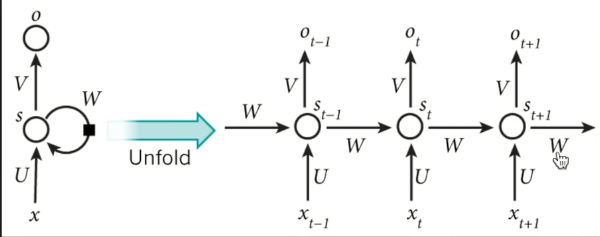
RNN
RNN无法回忆起长久的记忆
LSTM
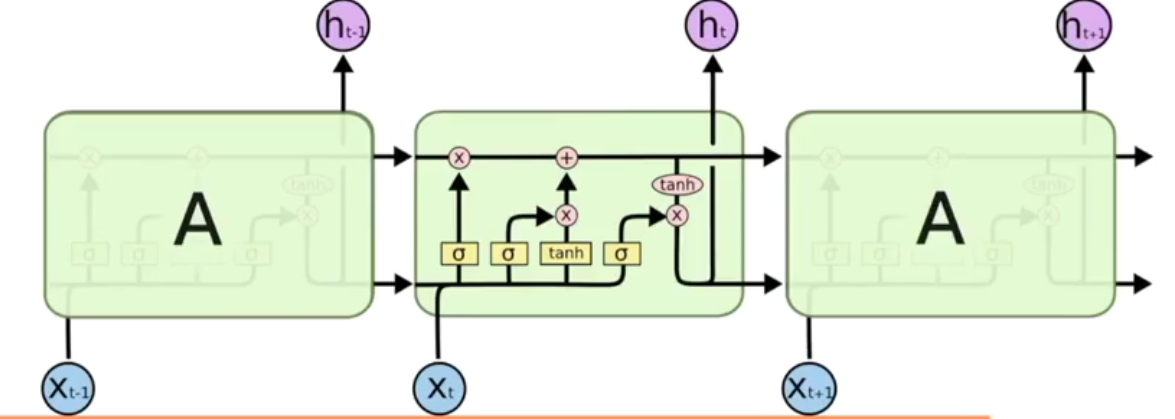
(long short Term memory长短期记忆)解决梯度消失或弥散vanishing 和梯度爆炸explosion 0.9*n-->0 1.1*n--->无穷大
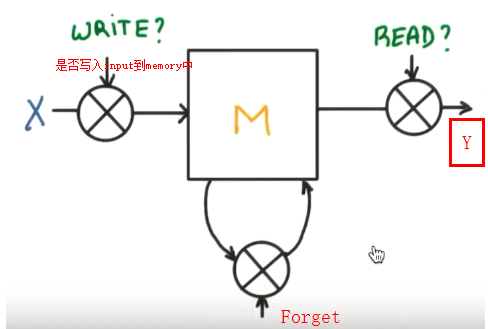
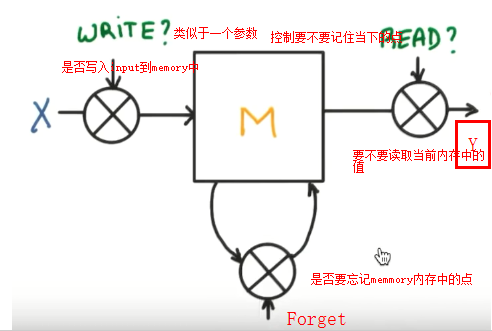
在RNN中增加了Gate
案例
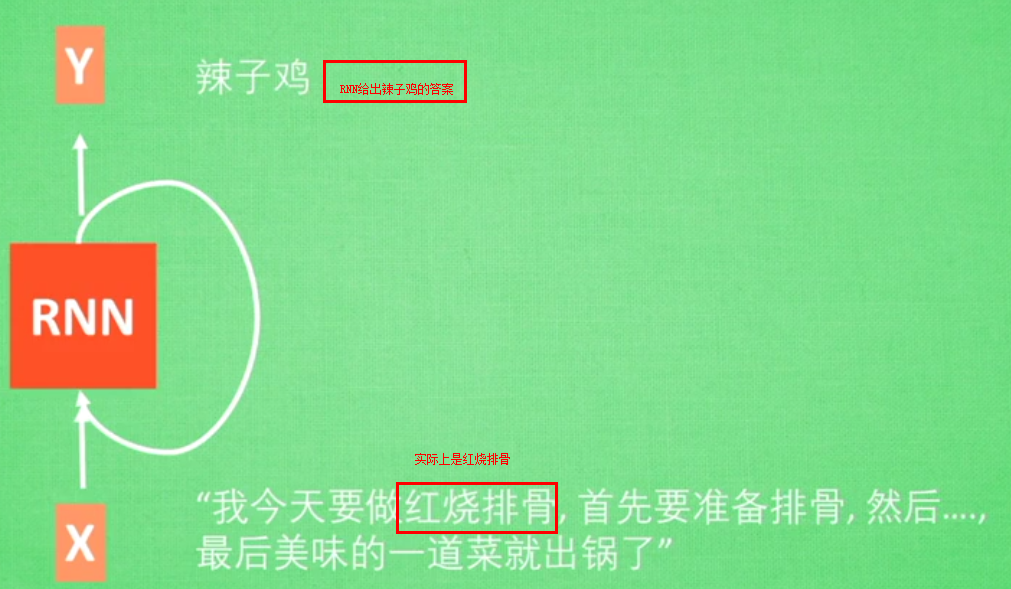
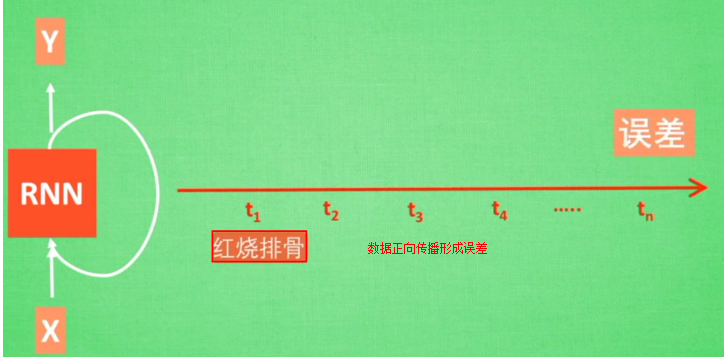
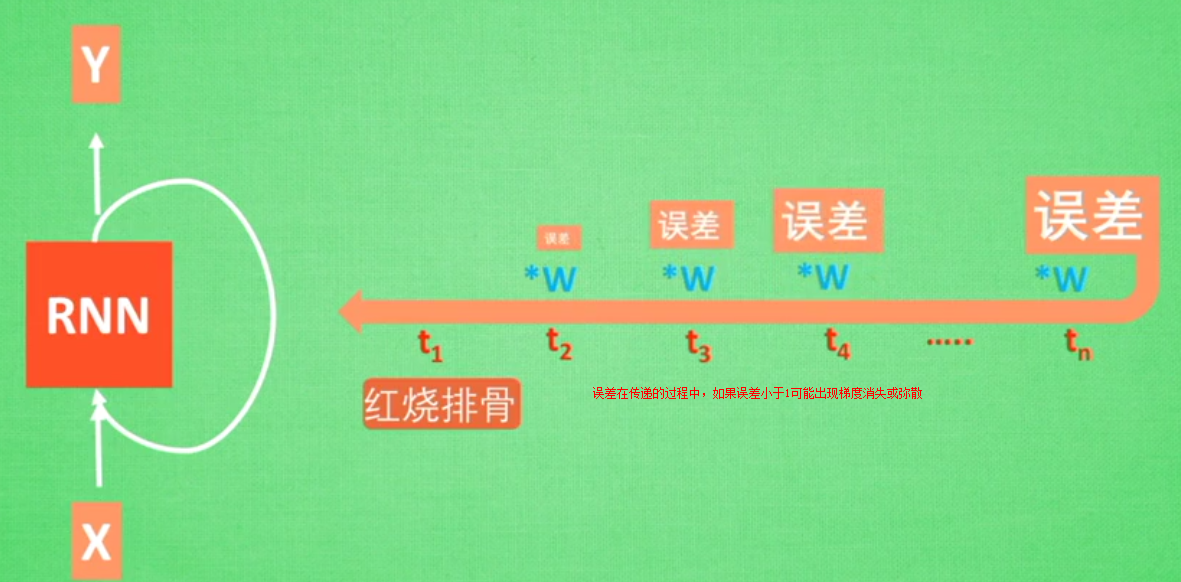
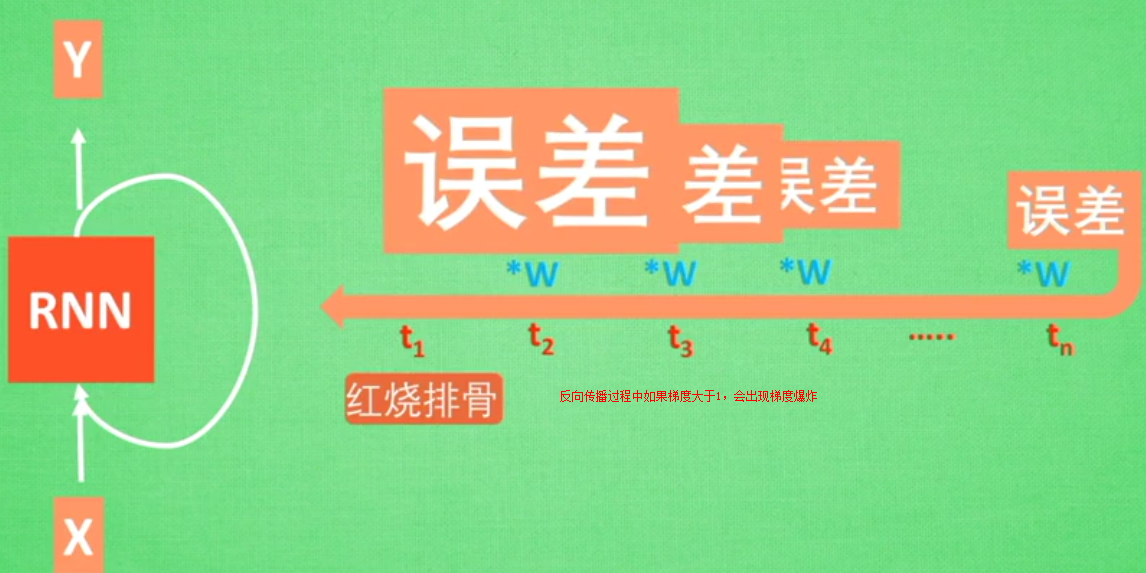
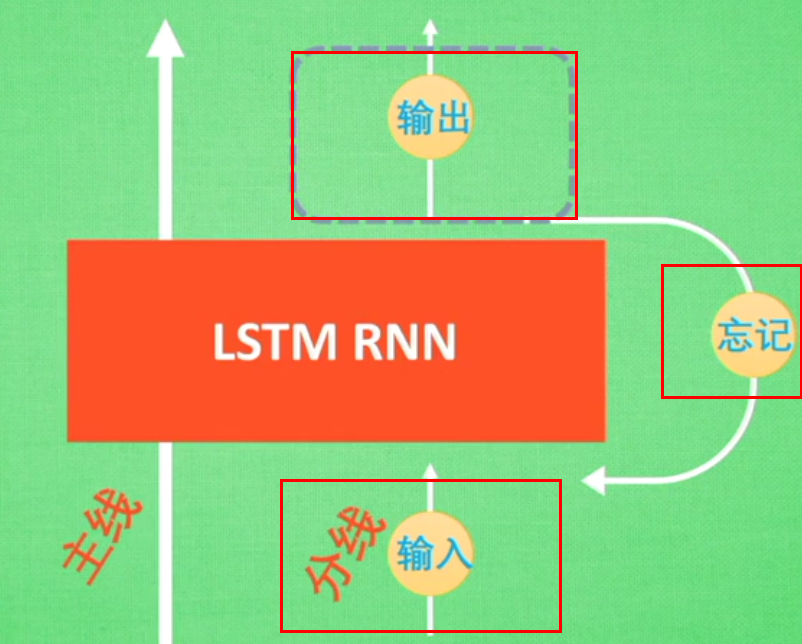
所以RNN无法回忆起长久的记忆。LSTM为了解决该问题多了三个控制器,做到了延缓记忆的功能
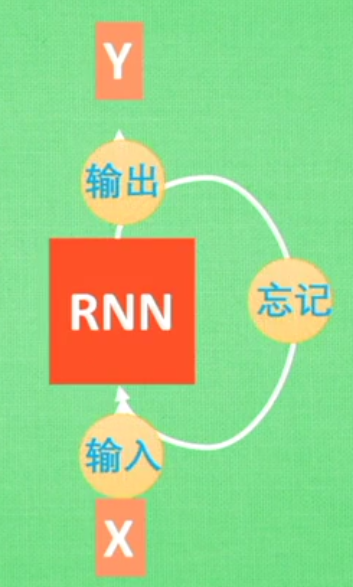
可以从主线和分线两个方面理解。LSTM可以解决延缓记忆问题
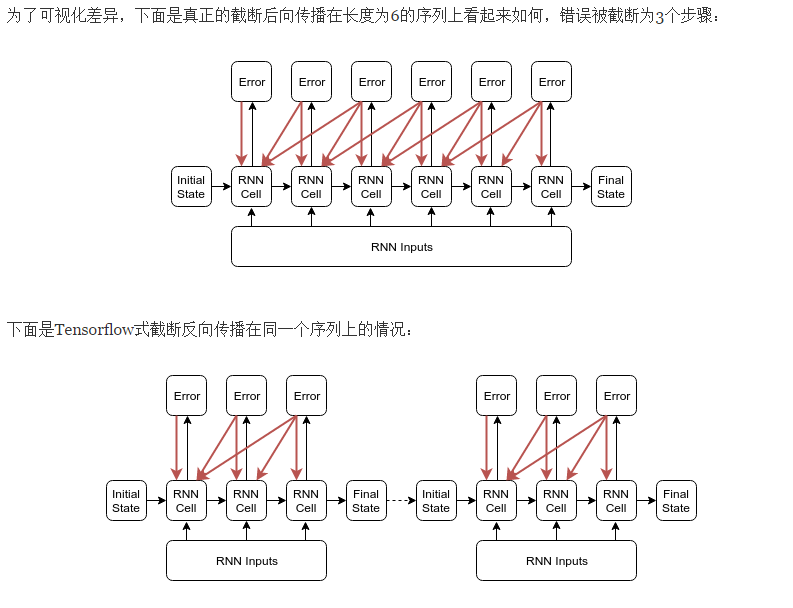
截断的反向传播BBPT
https://r2rt.com/styles-of-truncated-backpropagation.html
Tensorflow的截断反向传播(截断长度为n的子序列)的方法在定性上不同于“反向传播错误最多n步”。
LSTM模拟sin图像解决回归问题代码
"""

Please note, this code is only for python 3+. If you are using python 2+, please modify the code accordingly.

Run this script on tensorflow r0.10. Errors appear when using lower versions.

"""

import tensorflow as tf

import numpy as np

import matplotlib.pyplot as plt

BATCH_START = 0

TIME_STEPS = 20

BATCH_SIZE = 50

INPUT_SIZE = 1

OUTPUT_SIZE = 1

CELL_SIZE = 10

LR = 0.006

def get_batch():

    global BATCH_START, TIME_STEPS

    # xs shape (50batch, 20steps)

    xs = np.arange(BATCH_START, BATCH_START+TIME_STEPS*BATCH_SIZE).reshape((BATCH_SIZE, TIME_STEPS)) / (10*np.pi)

    seq = np.sin(xs)

    res = np.cos(xs)

    BATCH_START += TIME_STEPS

    # plt.plot(xs[0, :], res[0, :], 'r', xs[0, :], seq[0, :], 'b--')

    # plt.show()

    # returned seq, res and xs: shape (batch, step, input)

    return [seq[:, :, np.newaxis], res[:, :, np.newaxis], xs]

class LSTMRNN(object):

    def __init__(self, n_steps, input_size, output_size, cell_size, batch_size):

        self.n_steps = n_steps

        self.input_size = input_size

        self.output_size = output_size

        self.cell_size = cell_size

        self.batch_size = batch_size

        with tf.name_scope('inputs'):

            self.xs = tf.placeholder(tf.float32, [None, n_steps, input_size], name='xs')

            self.ys = tf.placeholder(tf.float32, [None, n_steps, output_size], name='ys')

        with tf.variable_scope('in_hidden'):

            self.add_input_layer()

        with tf.variable_scope('LSTM_cell'):

            self.add_cell()

        with tf.variable_scope('out_hidden'):

            self.add_output_layer()

        with tf.name_scope('cost'):

            self.compute_cost()

        with tf.name_scope('train'):

            self.train_op = tf.train.AdamOptimizer(LR).minimize(self.cost)

    def add_input_layer(self,):

        l_in_x = tf.reshape(self.xs, [-1, self.input_size], name='2_2D')  # (batch*n_step, in_size)

        # Ws (in_size, cell_size)

        Ws_in = self._weight_variable([self.input_size, self.cell_size])

        # bs (cell_size, )

        bs_in = self._bias_variable([self.cell_size,])

        # l_in_y = (batch * n_steps, cell_size)

        with tf.name_scope('Wx_plus_b'):

            l_in_y = tf.matmul(l_in_x, Ws_in) + bs_in

        # reshape l_in_y ==> (batch, n_steps, cell_size)

        self.l_in_y = tf.reshape(l_in_y, [-1, self.n_steps, self.cell_size], name='2_3D')

    def add_cell(self):

        lstm_cell = tf.contrib.rnn.BasicLSTMCell(self.cell_size, forget_bias=1.0, state_is_tuple=True)

        with tf.name_scope('initial_state'):

            self.cell_init_state = lstm_cell.zero_state(self.batch_size, dtype=tf.float32)

        self.cell_outputs, self.cell_final_state = tf.nn.dynamic_rnn(

            lstm_cell, self.l_in_y, initial_state=self.cell_init_state, time_major=False)

    def add_output_layer(self):

        # shape = (batch * steps, cell_size)

        l_out_x = tf.reshape(self.cell_outputs, [-1, self.cell_size], name='2_2D')

        Ws_out = self._weight_variable([self.cell_size, self.output_size])

        bs_out = self._bias_variable([self.output_size, ])

        # shape = (batch * steps, output_size)

        with tf.name_scope('Wx_plus_b'):

            self.pred = tf.matmul(l_out_x, Ws_out) + bs_out

    def compute_cost(self):

        losses = tf.contrib.legacy_seq2seq.sequence_loss_by_example(

            [tf.reshape(self.pred, [-1], name='reshape_pred')],

            [tf.reshape(self.ys, [-1], name='reshape_target')],

            [tf.ones([self.batch_size * self.n_steps], dtype=tf.float32)],

            average_across_timesteps=True,

            softmax_loss_function=self.ms_error,

            name='losses'

        )

        with tf.name_scope('average_cost'):

            self.cost = tf.div(

                tf.reduce_sum(losses, name='losses_sum'),

                self.batch_size,

                name='average_cost')

            tf.summary.scalar('cost', self.cost)

    @staticmethod

    def ms_error(labels, logits):

        return tf.square(tf.subtract(labels, logits))

    def _weight_variable(self, shape, name='weights'):

        initializer = tf.random_normal_initializer(mean=0., stddev=1.,)

        return tf.get_variable(shape=shape, initializer=initializer, name=name)

    def _bias_variable(self, shape, name='biases'):

        initializer = tf.constant_initializer(0.1)

        return tf.get_variable(name=name, shape=shape, initializer=initializer)

if __name__ == '__main__':

    model = LSTMRNN(TIME_STEPS, INPUT_SIZE, OUTPUT_SIZE, CELL_SIZE, BATCH_SIZE)

    sess = tf.Session()

    merged = tf.summary.merge_all()

    writer = tf.summary.FileWriter("logs", sess.graph)

    # tf.initialize_all_variables() no long valid from

    # 2017-03-02 if using tensorflow >= 0.12

    if int((tf.__version__).split('.')[1]) < 12 and int((tf.__version__).split('.')[0]) < 1:

        init = tf.initialize_all_variables()

    else:

        init = tf.global_variables_initializer()

    sess.run(init)

    # relocate to the local dir and run this line to view it on Chrome (http://0.0.0.0:6006/):

    # $ tensorboard --logdir='logs'

    plt.ion()

    plt.show()

    for i in range(200):

        seq, res, xs = get_batch()

        if i == 0:

            feed_dict = {

                    model.xs: seq,

                    model.ys: res,

                    # create initial state

            }

        else:

            feed_dict = {

                model.xs: seq,

                model.ys: res,

                model.cell_init_state: state    # use last state as the initial state for this run

            }

        _, cost, state, pred = sess.run(

            [model.train_op, model.cost, model.cell_final_state, model.pred],

            feed_dict=feed_dict)

        # plotting 绘制训练sin图像的过程

        plt.plot(xs[0, :], res[0].flatten(), 'r', xs[0, :], pred.flatten()[:TIME_STEPS], 'b--')

        plt.ylim((-1.2, 1.2))

        plt.draw()

        plt.pause(0.3) #每隔3秒运行一次

        if i % 20 == 0:

            print('cost: ', round(cost, 4))

            result = sess.run(merged, feed_dict)

            writer.add_summary(result, i)
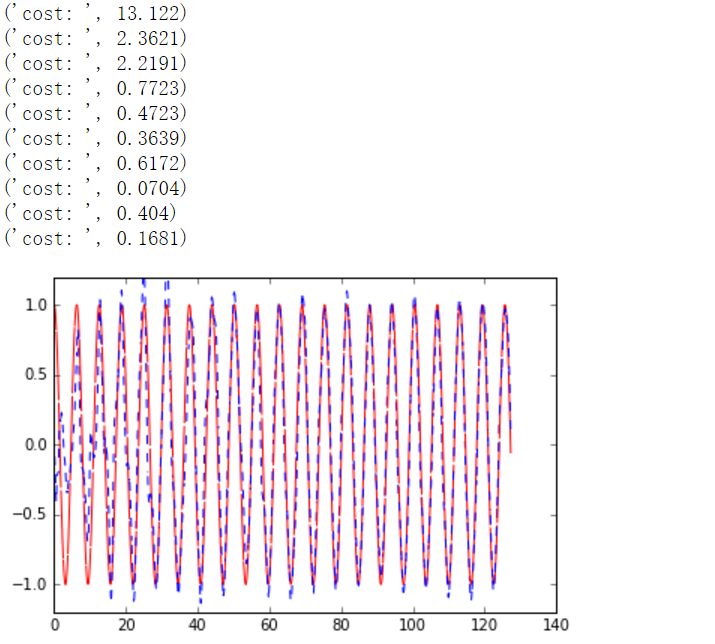
程序运行结果
下面的图像是拟合正弦曲线的过程
2.2RNN的更多相关文章
- PYTHON深度学习6.2RNN循环网络
#简单的循环网络 #-*-coding:utf-8 -*- from keras.datasets import imdbfrom keras.preprocessing import sequenc ...
- Auty自动化测试框架第五篇——框架内部的调用支持、自动化安装库与配置说明
[本文出自天外归云的博客园] 本次对Auty自动化测试框架做些收尾工作,由于在scripts文件夹中的脚本会需要调用其他包结构文件夹中的脚本,所以这里需要添加一下框架对于内部脚本间互相调用的支持,这里 ...
- python就业班-淘宝-目录.txt
卷 TOSHIBA EXT 的文件夹 PATH 列表卷序列号为 AE86-8E8DF:.│ python就业班-淘宝-目录.txt│ ├─01 网络编程│ ├─01-基本概念│ │ 01-网络通信概述 ...
- ssrf小记
SSRF(Server-Side Request Forgery, 服务端请求伪造),攻击者伪造服务端发起的请求并执行,从而获得一些数据或进行攻击 一.危害 1.对内网的端口和服务进行扫描,对主机本地 ...
随机推荐
- php根据地理坐标获取国家、省份、城市,及周边数据类
功能:当App获取到用户的地理坐标时,可以根据坐标知道用户当前在那个国家.省份.城市,及周边有什么数据. 原理:基于百度Geocoding API 实现,需要先注册百度开发者,然后申请百度AK(密钥) ...
- 【笔试面试】神马搜索C++程序猿电话面试
面试时间:2015.07.15 预约时间:2015.07.14.电话面试前一天,会电话咨询你方面电话面试的时间. 面试环节: 无自我介绍(这是我面试这么多家公司碰到的第一次),直接面试内容. 问题1: ...
- 大杂烩 -- Java中Iterator的fast-fail分析
基础大杂烩 -- 目录 Java中的Iterator非常方便地为所有的数据源提供了一个统一的数据读取(删除)的接口,但是新手通常在使用的时候容易报如下错误ConcurrentModificationE ...
- LHC大神问的矩阵转置问题
数学中线性代数中提到的矩阵转置,其实在我们的业务场景中也有需要的地方,比如LHC大神问到的这个问题 那么如何进行行列转换呢? 代码如下: <?php $array=array( '部门1'=&g ...
- Git 学习笔记--Git下的冲突解决
冲突的产生 很多命令都可能出现冲突,但从根本上来讲,都是merge 和 patch(应用补丁)时产生冲突. 而rebase就是重新设置基准,然后应用补丁的过程,所以也会冲突. git pull会自动m ...
- Selenium 基本用法
如下,使用 Selenium 打开淘宝首页并获取页面源代码: from selenium import webdriver browser = webdriver.Chrome() # 声明一个浏览器 ...
- radio的取值
<dd id="pingjia${evaluation.orderItemId }" class="ms-wf clearfix" idx="$ ...
- java上传并压缩图片(等比例压缩或者原尺寸压缩)
本文转载自http://www.voidcn.com/article/p-npjxrbxr-kd.html 先看效果: 原图:1.33M 处理后:27.4kb 关键代码; package codeGe ...
- 【Phalapi2.0】 如何使用 source 通过 header 传参数
做接口服务时候.有些场景会使用header 来传递参数. 查看官网文档说明 数据来源 source指定当前单个参数的数据来源,可以是post.get.cookie.server.request.hea ...
- 【PHP】 毫秒级时间戳和日期格式转换
在并发量搞得情况下.需要开启毫秒级运算 mysql 支持: `create_time` datetime() DEFAULT NULL COMMENT '创建时间', 效果 PHP 代码实现: &l ...