
Spring学习笔记--Spring IOC
沿着我们上一篇的学习笔记,我们继续通过代码学习IOC这一设计思想.
6.Hello类
第一步:首先创建一个类Hello
package cn.sxt.bean;

public class Hello {

    private String name;

    public void setName(String name) {

		this.name = name;

	}

    public void show(){

    	System.out.println("hello,"+name);

    }

}
第二步:创建配置文件beans.xml
<?xml version="1.0" encoding="UTF-8"?>

<beans xmlns="http://www.springframework.org/schema/beans"

    xmlns:xsi="http://www.w3.org/2001/XMLSchema-instance"

    xsi:schemaLocation="http://www.springframework.org/schema/beans

        http://www.springframework.org/schema/beans/spring-beans.xsd">

    <!-- bean就是java对象,由spring容器来创建和管理 -->

    <bean name="hello" class="cn.sxt.bean.Hello">

        <property name="name" value="张三"></property>

    </bean>

</beans>
第三步:编写测试类Test
package cn.sxt.test;

import org.springframework.context.ApplicationContext;

import org.springframework.context.support.ClassPathXmlApplicationContext;

import cn.sxt.bean.Hello;

public class Test {

	public static void main(String[] args) {

		//解析beans.xml文件生成管理相应的bean对象

		ApplicationContext context=new ClassPathXmlApplicationContext("beans.xml");

		Hello hello=(Hello)context.getBean("hello");

		hello.show();

	}

}
我们需要导入相关Jar包(在上一篇笔记Spring主要内容中显示的那些核心jar包)
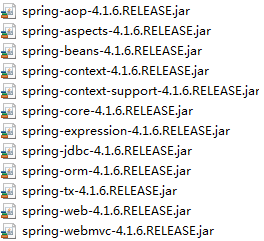
此时运行Test程序,会触发异常:Exception in thread "main" java.lang.NoClassDefFoundError: org/apache/commons/logging/LogFactory
我们需要添加commons-logging.jar文件
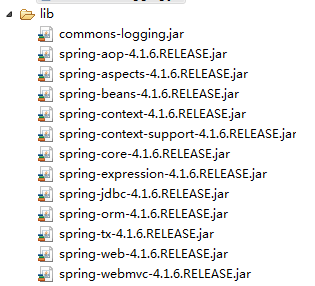
步骤总结:
1)导入相关jar包
2)编写spring配置文件(名称可以自定义)
思考?
Hello对象是谁创建的?
我们在Hello类中添加一个构造函数,可以确定Hello对象确定被创建:
package cn.sxt.bean;

public class Hello {

	public Hello() {

		System.out.println("hello 被创建");

	}

    private String name;

    public void setName(String name) {

		this.name = name;

	}

    public void show(){

    	System.out.println("hello,"+name);

    }

}
运行Test测试类结果显示:
hello 被创建

hello,张三
由此可以得知,Hello对象是由spring容器来创建的:bean工厂,可以包含多个bean,创建不同类的对象
<bean name="hello" class="cn.sxt.bean.Hello">

        <property name="name" value="张三"></property>

    </bean>
Hello对象的属性是怎样设置的?
Hello对象的属性是由spring容器来设置的;
这个过程就叫做控制反转:
控制的内容:指的是谁来控制对象的创建;传统的应用程序,对象的创建是由程序本身来控制,使用Spring以后是由spring来创建对象的。
反转:有反转就有正转,正转指程序来创建对象,反转指程序本身不去创建对象,而变为被动的接收容器给我们创建的对象
总结:以前对象是由程序本身来创建,使用spring后,程序变为了被动接收spring创建好的对象;
控制反转有一个别名--依赖注入(DI-dependency injection)
DI:比如在我们的Hello类中,我们的类Hello就依赖于name属性,以来的这个name属性是由spring容器来设置的,name值的设置过程就叫做依赖注入(通过setName方法进行的依赖注入)
Ioc--是一种编程思想,由主动编程变为别动接收;
Ioc的实现是通过Ioc容器(Bean工厂)来实现的。Ioc容器--BeanFactory
在第一篇学习笔记中的UserDao和UserDaoService的例子,我们在这里就可以使用spring配置文件的方式来管理对象的生命周期以及依赖对象的注入;
beanx.xml修改如下:
<?xml version="1.0" encoding="UTF-8"?>

<beans xmlns="http://www.springframework.org/schema/beans"

    xmlns:xsi="http://www.w3.org/2001/XMLSchema-instance"

    xsi:schemaLocation="http://www.springframework.org/schema/beans

        http://www.springframework.org/schema/beans/spring-beans.xsd">

    <!-- bean就是java对象,由spring容器来创建和管理 -->

    <bean id="mysqlDao" class="cn.sxt.dao.impl.UserDaoMySqlImpl"></bean>

    <bean id="oracleDao" class="cn.sxt.dao.impl.UserDaoOracleImpl"></bean>

    <bean id="service" class="cn.sxt.service.impl.UserServiceImpl">

        <!-- ref引用对象(对象是由spring来创建的) -->

        <property name="userDao" ref="mysqlDao"></property>

    </bean>

    <!-- property如何设置:name="setUserDao(去除set,并将剩余的UserDao首字母小写)" -->

</beans>
当我们需要替换具体的实现时,就可以直接在配置文件中进行修改,例如将ref="mysqlDao"修改为ref="oracleDao";
在测试类中我们就可以这样来组织代码:
package cn.sxt.test;

import org.springframework.context.ApplicationContext;

import org.springframework.context.support.ClassPathXmlApplicationContext;

import cn.sxt.service.UserService;

public class Test {

	public static void main(String[] args) {

		ApplicationContext ac=new ClassPathXmlApplicationContext("beans.xml");

		UserService us=(UserService)ac.getBean("service");

		us.getUser();

	}

}
使用IOC来创建对象的方式:3种方式
1)通过无参的构造方法来创建;
User.java:
package cn.sxt.vo;

public class User {

	public User(){

		System.out.println("user的无参构造方法");

	}

	private String name;

	public void setName(String name) {

		this.name = name;

	}

	public void show(){

		System.out.println("name="+name);

	}

}
beans.xml:
<?xml version="1.0" encoding="UTF-8"?>

<beans xmlns="http://www.springframework.org/schema/beans"

    xmlns:xsi="http://www.w3.org/2001/XMLSchema-instance"

    xsi:schemaLocation="http://www.springframework.org/schema/beans

        http://www.springframework.org/schema/beans/spring-beans.xsd">

   <bean id="user" class="cn.sxt.vo.User">

           <property name="name" value="张三"></property>

   </bean>

</beans>
Test:
package cn.sxt.test;

import org.springframework.context.ApplicationContext;

import org.springframework.context.support.ClassPathXmlApplicationContext;

import cn.sxt.vo.User;

public class Test {

	public static void main(String[] args) {

		ApplicationContext ac=new ClassPathXmlApplicationContext("beans.xml");

		User user=(User)ac.getBean("user");

		user.show();

	}

}
2)通过有参构造方法来创建;
User.java:
package cn.sxt.vo;

public class User {

	private String name;

	public User(String name) {

		super();

		this.name = name;

	}

	public void show(){

		System.out.println("name="+name);

	}

}
beans.xml配置(有三种情况):
第一种:根据参数的下标(index)来设置;
<?xml version="1.0" encoding="UTF-8"?>

<beans xmlns="http://www.springframework.org/schema/beans"

    xmlns:xsi="http://www.w3.org/2001/XMLSchema-instance"

    xsi:schemaLocation="http://www.springframework.org/schema/beans

        http://www.springframework.org/schema/beans/spring-beans.xsd">

   <bean id="user" class="cn.sxt.vo.User">

           <!-- index指的是构造方法参数下标,从0开始 -->

           <constructor-arg index="0" value="李四"></constructor-arg>

   </bean>

</beans>
第二种:根据参数名称(name)来设置;
<bean id="user" class="cn.sxt.vo.User">

           <!-- name指的是属性值 -->

           <constructor-arg name="name" value="王五"></constructor-arg>

   </bean>
第三种:根据参数类型(type)来设置;
 <bean id="user" class="cn.sxt.vo.User">

           <constructor-arg type="java.lang.String" value="徐六"></constructor-arg>

   </bean>
3)通过工厂方法来创建对象(有两种);
第一种:静态工厂来创建;
UserFactory.java:
package cn.sxt.factory;

import cn.sxt.vo.User;

public class UserFactory {

	public static User newInstance(String name){

		return new User(name);

	}

}
beans.xml配置:
<bean id="user" class="cn.sxt.factory.UserFactory" factory-method="newInstance">

           <constructor-arg index="0" value="任七"></constructor-arg>

   </bean>
第二种:动态工厂来创建
UserDynamicFacory.java:
package cn.sxt.factory;

import cn.sxt.vo.User;

public class UserDynamicFactory {

	public  User newInstance(String name){

		return new User(name);

	}

}
beans.xml:
<bean id="userFacotry" class="cn.sxt.factory.UserDynamicFactory"/>

    <bean id="user" factory-bean="userFacotry" factory-method="newInstance">

        <constructor-arg index="0" value="王五"/>

    </bean>
Spring学习笔记--Spring IOC的更多相关文章
- Spring学习笔记--spring+mybatis集成
前言: 技术的发展, 真的是日新月异. 作为javaer, 都不约而同地抛弃裸写jdbc代码, 而用各种持久化框架. 从hibernate, Spring的JDBCTemplate, 到ibatis, ...
- Spring学习笔记--Spring配置文件和依赖注入
Spring配置文件 1.alias:设置别名,为bean设置别名,并且可以设置多个别名; <!-- 设置别名 --> <alias name="user" al ...
- Spring学习笔记—Spring之旅
1.Spring简介 Spring是一个开源框架,最早由Rod Johnson创建,并在<Expert One-on-One:J2EE Design and Development> ...
- Spring学习笔记1——IOC: 尽量使用注解以及java代码(转)
在实战中学习Spring,本系列的最终目的是完成一个实现用户注册登录功能的项目. 预想的基本流程如下: 1.用户网站注册,填写用户名.密码.email.手机号信息,后台存入数据库后返回ok.(学习IO ...
- Spring学习笔记1——IOC: 尽量使用注解以及java代码
在实战中学习Spring,本系列的最终目的是完成一个实现用户注册登录功能的项目. 预想的基本流程如下: 1.用户网站注册,填写用户名.密码.email.手机号信息,后台存入数据库后返回ok.(学习IO ...
- spring学习笔记之---IOC和DI
IOC和DI (一)IOC (1) 概念 IOC (Inverse of Control) 反转控制,就是将原本在程序中手动创建对象的控制权,交给spring框架管理.简单的说,就是创建对象控制权被反 ...
- Spring学习笔记——Spring中的BeanFactory与FactoryBean
BeanFactory BeanFactory是Spring的org.springframework.beans.factory下的一个接口,是Spring IOC所遵守的基本编程规范.他的实现类有D ...
- Spring学习笔记--Spring简介
1.spring:给软件行业带来了春天; 2.spring的理念:spring框架的初衷是使的现有的更加实用,spring不是创造轮子(技术或框架),而是使现有的轮子更好的运转;spring本身是一个 ...
- Spring学习笔记——Spring中lazy-init与abstract具体解释
Spring的懒载入的作用是为了避免无谓的性能开销,就是当真正须要数据的时候才去运行数据的载入操作.不只在Spring中.我们在实际的编码过程中也应该借鉴这种思想,来提高我们程序的效率. 首先我们看一 ...
随机推荐
- [How To] TrueCrypt使用教學 - 重要資訊的加密保險箱(转)
我在2013年八月的時候寫了這篇關於TrueCrypt的使用教學,但從去年(2014)五月下旬開始,TrueCrypt的首頁出現了"Using TrueCrypt is not secure ...
- Facebook在代码里下毒,百度身受重伤。。。
白首相知犹按剑 前两天看到有朋友分享说,WordPress停用了react.今天,在逛知乎时看到了另一个问题别细看这图,我赌你看不懂... 嗯...用人话来说就是百度内部要求他们的程序猿不要再 ...
- What is `^M` and how do I get rid of it?
When I open the file in vim, I am seeing strange ^M characters. Unfortunately, the world's favorite ...
- 在Android上启用Kiosk模式
我们的云帆机器人(上面运行的安卓程序)有一个线下场景是商场,由于商场人多,总会遇到一些用户在我们的app里乱点,然后会跳出程序进入到系统设置的一些界面,这样很不友好. 比如程序中有一些需要输入文字的地 ...
- Adobe Illustrator for Mac(矢量图处理软件)破解版安装
1.软件简介 Adobe Illustrator CC 是 macOS 系统上一款矢量绘图工具,可以说是是业界标准矢量绘图标杆,软件通过形状.色彩.效果及印刷样式,展现您的创意想法.在处理大型复 ...
- Nginx 日志自动分割
Nginx 的日志都是写在一个文件当中的,不会自动地进行切割,如果访问量很大的话,将导致日志文件容量非常大,不便于管理和造成Nginx 日志写入效率低下等问题.所以,往往需要要对access_log. ...
- Atitit 提升开发进度大方法--高频功能与步骤的优化 类似性能优化
Atitit 提升开发进度大方法--高频功能与步骤的优化 类似性能优化 1. 通用功能又可以组合成crud模块1 1.1. 查询(包括步骤,发送查询dsl,通讯返回结果,绑定到表格控件)2 1.2. ...
- 1. RNN神经网络模型原理
1. RNN神经网络模型原理 2. RNN神经网络模型的不同结构 3. RNN神经网络-LSTM模型结构 1. 前言 循环神经网络(recurrent neural network)源自于1982年由 ...
- Storm常见模式——流聚合
转自:http://www.cnblogs.com/panfeng412/archive/2012/06/04/storm-common-patterns-of-stream-join.html 流聚 ...
- Oracle中Select语句完整的执行顺序
oracle Select语句完整的执行顺序: .from 子句组装来自不同数据源的数据: .where 子句基于指定的条件对记录行进行筛选: .group by子句将数据划分为多个分组: .使用聚集 ...