
How to Install Bugzilla on Ubuntu 20.04
In this blog post, we are going to explain in step-by-step detail on how to install Bugzilla on Ubuntu 20.04.
Bugzilla is an open-source web-based bug tracking system written in Perl. This testing tool is developed and maintained by the Mozilla project, and the team of developers is still developing and expanding its features. The main purpose of this detect-tracking software is to track the bugs, issues, and other change requests. The compatibility of the software on multiple operating systems like Windows, macOS, and Linux makes it more popular than any other.
Installing Bugzilla on Ubuntu 20.04 is a very easy process and may take up to 10 minutes. Let’s get started!
Table of Contents
Prerequisites
- A server with Ubuntu 20.04 OS
- A VPS with at least 4 GB of RAM available
- User privileges: root or non-root user with sudo privileges
Step 1. Update the System
Since we have a fresh installation of Ubuntu 20.04, we need to update the packages to the latest versions available:
sudo apt update -y && sudo apt upgrade -y
Step 2. Install Apache2
We are going to use Apache as a web server in this tutorial. To install it execute the command below:
sudo apt install apache2
After successfull installation, start and enable the service
sudo systemctl start apache2 && sudo systemctl enable apache2
To check if everything is OK, execute the following command for the status of the Apache2 service:
sudo systemctl status apache2
You should receive the following output:
root@vps:~# sudo systemctl status apache2

● apache2.service - The Apache HTTP Server

     Loaded: loaded (/lib/systemd/system/apache2.service; enabled; vendor preset: enabled)

     Active: active (running) since Sat 2022-04-02 12:35:15 UTC; 36min ago

       Docs: https://httpd.apache.org/docs/2.4/

   Main PID: 44676 (apache2)

      Tasks: 7 (limit: 4617)

     Memory: 15.5M

     CGroup: /system.slice/apache2.service
Step 3. Install Perl and Dependencies
Since Bugzilla is written in Perl programming language, we need to install it along with the dependencies.
sudo apt install build-essential libappconfig-perl libdate-calc-perl libtemplate-perl libmime-tools-perl build-essential libdatetime-timezone-perl libdatetime-perl libemail-sender-perl libemail-mime-perl libemail-mime-perl libdbi-perl libdbd-mysql-perl libcgi-pm-perl libmath-random-isaac-perl libmath-random-isaac-xs-perl libapache2-mod-perl2 libapache2-mod-perl2-dev libchart-perl libxml-perl libxml-twig-perl perlmagick libgd-graph-perl libtemplate-plugin-gd-perl libsoap-lite-perl libhtml-scrubber-perl libjson-rpc-perl libdaemon-generic-perl libtheschwartz-perl libtest-taint-perl libauthen-radius-perl libfile-slurp-perl libencode-detect-perl libmodule-build-perl libnet-ldap-perl libfile-which-perl libauthen-sasl-perl libfile-mimeinfo-perl libhtml-formattext-withlinks-perl libgd-dev libmysqlclient-dev graphviz sphinx-common rst2pdf libemail-address-perl libemail-reply-perl
Step 4. Install MariaDB database server
To install the MariaDB database server, execute the command below.
sudo apt install mariadb-server
Start and enable the mariadb.service with the following commands:
sudo systemctl start mariadb && sudo systemctl enable mariadb
Check the status of the mariadb.service
sudo systemctl status mariadb
You should receive the following output:
root@vps:~# sudo systemctl status mariadb

● mariadb.service - MariaDB 10.3.34 database server

     Loaded: loaded (/lib/systemd/system/mariadb.service; enabled; vendor preset: enabled)

     Active: active (running) since Sat 2022-04-02 13:30:06 UTC; 7min ago

       Docs: man:mysqld(8)

             https://mariadb.com/kb/en/library/systemd/

   Main PID: 70881 (mysqld)

     Status: "Taking your SQL requests now..."

      Tasks: 30 (limit: 4617)

     Memory: 65.3M

     CGroup: /system.slice/mariadb.service

             └─70881 /usr/sbin/mysqld
Step 5. Create Bugzilla database and user
Next, we need to create a Bugzilla database, the Bugzilla user, and grant the permissions for that user to the database.
 CREATE USER 'bugzilla'@'localhost' IDENTIFIED BY 'YourStrongPasswordHere';

 CREATE DATABASE bugzilla;

 GRANT ALL PRIVILEGES ON bugzilla.* TO 'bugzilla'@'localhost';

 FLUSH PRIVILEGES;

 EXIT;
Step 6. Install Bugzilla
Before we can install Bugzilla we need to download the latest stable version.
 cd /var/www/html

wget https://ftp.mozilla.org/pub/mozilla.org/webtools/bugzilla-5.0.6.tar.gz
Once downloaded, extract the bugzilla file.
tar -xvf bugzilla-5.0.6.tar.gz -C /var/www/html/

 mv bugzilla-5.0.6 bugzilla
Once, this is done go into the “bugzilla” directory and check the setup.
cd /var/www/html/bugzilla/

./checksetup.pl
If the setup, fails due to some missing Perl modules, you should receive the following output:
COMMANDS TO INSTALL REQUIRED MODULES (You *must* run all these commands

and then re-run checksetup.pl):

    /usr/bin/perl install-module.pl DateTime

    /usr/bin/perl install-module.pl DateTime::TimeZone

    /usr/bin/perl install-module.pl Template

    /usr/bin/perl install-module.pl Email::Sender

    /usr/bin/perl install-module.pl Email::MIME

    /usr/bin/perl install-module.pl List::MoreUtils

    /usr/bin/perl install-module.pl Math::Random::ISAAC

    /usr/bin/perl install-module.pl JSON::XS

To attempt an automatic install of every required and optional module

with one command, do:

  /usr/bin/perl install-module.pl --all

*** Installation aborted. Read the messages above. ***
Execute the commands below to install the required modules:
/usr/bin/perl install-module.pl DateTime

/usr/bin/perl install-module.pl DateTime::TimeZone

/usr/bin/perl install-module.pl Template

/usr/bin/perl install-module.pl Email::Sender

/usr/bin/perl install-module.pl Email::MIME

/usr/bin/perl install-module.pl List::MoreUtils

/usr/bin/perl install-module.pl Math::Random::ISAAC

/usr/bin/perl install-module.pl JSON::XS

/usr/bin/perl install-module.pl ExtUtils::PkgConfig module
Once, the required modules are installed you need to check the setup again:
./checksetup.pl
Now, when the modules are installed, the next message that you should receive is that there is an error with the database connection:
There was an error connecting to MySQL:

    Access denied for user 'bugs'@'localhost'

This might have several reasons:

* MySQL is not running.

* MySQL is running, but there is a problem either in the

  server configuration or the database access rights. Read the Bugzilla

  Guide in the doc directory. The section about database configuration

  should help.

* Your password for the 'bugs' user, specified in $db_pass, is

  incorrect, in './localconfig'.

* There is a subtle problem with Perl, DBI, or MySQL. Make

  sure all settings in './localconfig' are correct. If all else fails, set

  '$db_check' to 0.
To solve this, you need to open the “/var/www/html/bugzilla/localconfig” file with your favorite editor and make the following changes:
sudo nano /var/www/html/bugzilla/localconfig
Enter the name of the database, user, and the password you set in step 5.
$webservergroup = 'www-data';

$db_driver = 'mysql';

$db_host = 'localhost';

$db_name = 'bugzilla';

$db_user = 'bugzilla';

$db_pass = 'YourStrongPasswordHere';

$db_port = 0;
After these settings are done run the ./checksetup.pl again.
./checksetup.pl
You should define your administrator’s email, username and password once the database connection is successful.
Checking for            DBD-mysql (v4.001)    ok: found v4.050

Checking for                MySQL (v5.0.15)   ok: found v5.5.5-10.3.34-MariaDB-0ubuntu0.20.04.1

Removing existing compiled templates...

Precompiling templates...done.

Fixing file permissions...

Initializing "Product/Component Changes" email_setting ...

Initializing "Dependency Tree Changes" email_setting ...

Marking closed bug statuses as such...

Creating default classification 'Unclassified'...

Setting up foreign keys...

Setting up the default status workflow...

Creating default groups...

Setting up user preferences...

Looks like we don't have an administrator set up yet. Either this is

your first time using Bugzilla, or your administrator's privileges

might have accidentally been deleted.

Enter the e-mail address of the administrator: admin@yourdomain.com

Enter the real name of the administrator: admin

Enter a password for the administrator account:

Please retype the password to verify:

admin@yourdomain.com is now set up as an administrator.

Creating initial dummy product 'TestProduct'...

Now that you have installed Bugzilla, you should visit the 'Parameters'

page (linked in the footer of the Administrator account) to ensure it

is set up as you wish - this includes setting the 'urlbase' option to

the correct URL.

checksetup.pl complete.
Step 7. Create a Virtual Host configuration file
In order can access the Bugzilla Web interface we need to create a virtual host configuration file where we can define our domain, document root, and some script parameters.
First, create the configuration file with the following command:
touch /etc/apache2/sites-available/bugzilla.conf
Open the file, and paste the following lines of code:
<VirtualHost *:80>

ServerName yourdomain.com

DocumentRoot /var/www/html/bugzilla/

<Directory /var/www/html/bugzilla/>

AddHandler cgi-script .cgi

Options +Indexes +ExecCGI

DirectoryIndex index.cgi

AllowOverride Limit FileInfo Indexes Options AuthConfig

</Directory>

ErrorLog /var/log/apache2/yourdomain.com.error_log

CustomLog /var/log/apache2/yourdomain.com.access_log common

</VirtualHost>
Enable the Apache2 confguration file and other modules:
sudo a2ensite bugzilla.conf

sudo a2enmod headers env rewrite expires cgi
Check the syntax of the Apache2 configuration.
apachectl -t
You should receive the following output:
root@host:~# apachectl -t

Syntax OK
If you receive this output you can safely restart the Apache service.
sudo systemctl restart apache2
Now, you can access the Bugzilla Web interface at http://YourDomain.com
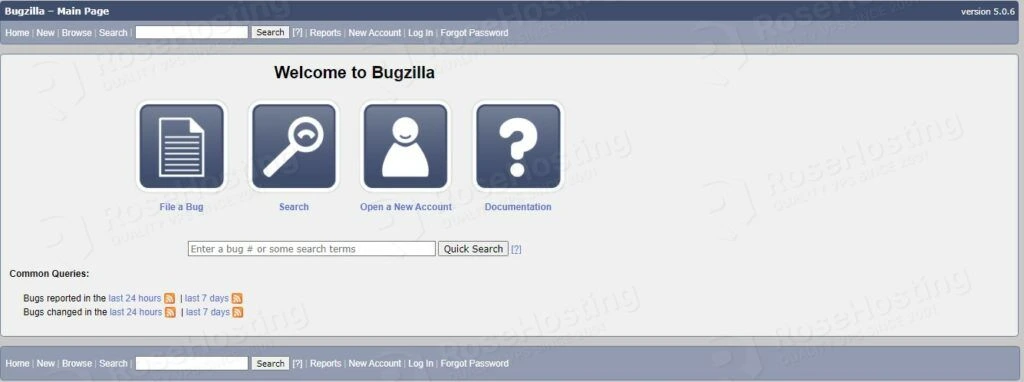
Congratulations! You successfully installed and configured Bugzilla tracking software on Ubuntu 20.04. If you find it difficult to install, you can always contact our technical support and they will do the rest for you. We are available 24/7.
If you liked this post on how to install Bugzilla on Ubuntu 20.04, please share it with your friends on social networks or simply leave a reply below. Thanks.
Leave a Comment
Comment
NameEmail
Save my name, email, and website in this browser for the next time I comment.
To prove you are human please solve the following *7 − = two
How to Install Bugzilla on Ubuntu 20.04的更多相关文章
- 安装MySQL到Ubuntu 20.04
本文的内容主要来自对How To Install MySQL on Ubuntu 20.04的翻译.在根据该文的指导下,我在自己的Ubuntu 20.04.3 LTS版本中安装了MySQL 8. St ...
- How To Install Nginx on Ubuntu 16.04 zz
Introduction Nginx is one of the most popular web servers in the world and is responsible for hostin ...
- Ubuntu 20.04下源码编译安装ROS 2 Foxy Fitzroy
ROS 2 Foxy Fitzroy(以下简称Foxy)于2020年6月5日正式发布了,是LTS版本,支持到2023年5月.本文主要根据官方的编译安装教程[1]完成,并记录编译过程中遇到的问题. 1. ...
- win10 + Ubuntu 20.04 LTS 双系统 引导界面美化
版权声明:本文为CSDN博主「ZChen1996」的原创文章,遵循CC 4.0 BY-SA版权协议,转载请附上原文出处链接及本声明. 原文链接:https://blog.csdn.net/ZChen1 ...
- Ubuntu 20.04.1 安装软件和系统配置脚本
#!/bin/bash # https://launchpad.net/ubuntu # https://www.easyicon.net # https://download-chromium.ap ...
- Ubuntu 20.04上通过Wine 安装微信
没有想过会在一个手机软件上花这么多心思,好在今天总算安装成功,觉得可以记录下这个过程,方便他人方便自己. 首先介绍下我使用过的其他方法,希望可以节省大家一些时间: Rambox Pro:因为原理是网页 ...
- 树莓派安装 Ubuntu 20.04 LTS 碰壁指南
树莓派安装 Ubuntu 20.04 LTS 碰壁指南 设备 Raspberry 4B 4+32G 系统 Ubuntu 20.04 LTS 1.镜像下载与烧录 镜像下载地址:https://cdima ...
- OpenCV4.4.0 安装测试 Installation & Examination (Ubuntu18.04, Ubuntu 20.04)
OpenCV4.4.0 安装测试 Installation & Examination (Ubuntu18.04, Ubuntu 20.04) 单纯简单的 OpenCV 安装配置方法,在这个地 ...
- Pangolin 安装测试 Installation & Examination (Ubuntu 20.04)
Pangolin 安装测试 Installation & Examination (Ubuntu 20.04) 如题所述,这是一个比较轻松的 Pangolin 安装配置方法,同样是基于 WSL ...
- Ubuntu 20.04 Docker 安装并配置
前言 Docker 的使用能极大地方便我们的开发,减少环境搭建,依赖安装等繁琐且容易出错的问题. 安装 Docker Ubuntu 20.04 官方 apt 源中就有 Docker,我们可以直接通过 ...
随机推荐
- Yolov5代码解析(输入端、BackBone、Neck、输出端))
[深度学习]总目录 输入端:数据增强.锚框计算等. backbone:进行特征提取.常用的骨干网络有VGG,ResNet,DenseNet,MobileNet,EfficientNet,CSPDark ...
- pcie reset系列之 内核框架
FLR是pci reset的一种. 关于FLR的寄存器操作比较简单, 相关的寄存器有: 配置空间里device cap里的FLR capability bit, 这个表示设备是否支持FLR. 配置空间 ...
- JavaWeb之Servlet详解(以及浏览器调用 Servlet 流程分析图)
Servlet 1.什么是Servlet Servlet(java 服务器小程序) 他是由服务器端调用和执行的(一句话:是Tomcat解析和执行) 他是用java语言编写的, 本质就是Java类 他是 ...
- Windows11右键菜单修改为Win10模式的方法
Windows11右键菜单修改为Win10模式的方法 自述: 更新win11后看着鼠标右键的菜单有些不太舒服,索性就改回了win10的右键菜单的样式 , 下面开始进行操作 第一步 首先以管理员方式打开 ...
- 【C#/.NET】MAUI上的依赖注入
引言 在移动应用开发中,依赖注入是一项非常重要的技术,它可以帮助我们简化代码结构.提高可维护性并增加测试覆盖率.在最新的.NET跨平台框架MAUI中,我们也可以利用依赖注入来构建高效的应用程序架构 ...
- ASP.Net Core 项目部署
安装环境 部署环境有两种: .Net Core SDK 包含所有运行时和程序开发包,用于程序开发使用,体积相对较大. .Net Core Runtime 仅用于程序运行,不包含开发包,体积小. 注:部 ...
- CentOS 8搭建Docker镜像私有仓库-registry
目录 简介 安装Docker 添加docker yum源 安装docker 确保网络模块开机自动加载 使桥接流量对iptables可见 配置docker 验证docker是否正常 添加用户到docke ...
- 【Redis】基础命令
声明:本篇文章参考于该作者的# Redis从入门到精通:中级篇,大家有兴趣,去关注一下. 1.字符串(String) String(字符串)是Redis中最简单的一种数据结构,和MemCache数据结 ...
- 关于自定义程序打包成jar包,并读取配置
前言 在实际开发过程中,我们有时候有把你编写的一段程序打成jar包的需求,而一些配置是需要去配置文件里面读取关于这项目的一些配置,本人在网络上查询了众多的资料,总的来说可以归为3类 1.从数据库读取配 ...
- 【解惑】介绍三大数据库的with语句的写法及使用场景
WITH 子句通常被称为 "Common Table Expressions"(CTE),俗称内存临时表,当使用 WITH 语句时,应注意具体的数据库版本和支持情况.以下是对 My ...