
list使用详解
List双向链表
再谈链表
List链表的概念再度出现了,作为线性表的一员,C++的STL提供了快速进行构建的方法,为此,在前文的基础上通过STL进行直接使用,这对于程序设计中快速构建原型是相当有必要的,这里的STL链表是单链表的形式。
头文件
头文件:#include<list>
初始化
格式为:explicit list (const allocator_type& alloc = allocator_type());
我们以int类型作为参数为例进行创建,其创建方法与vector无异
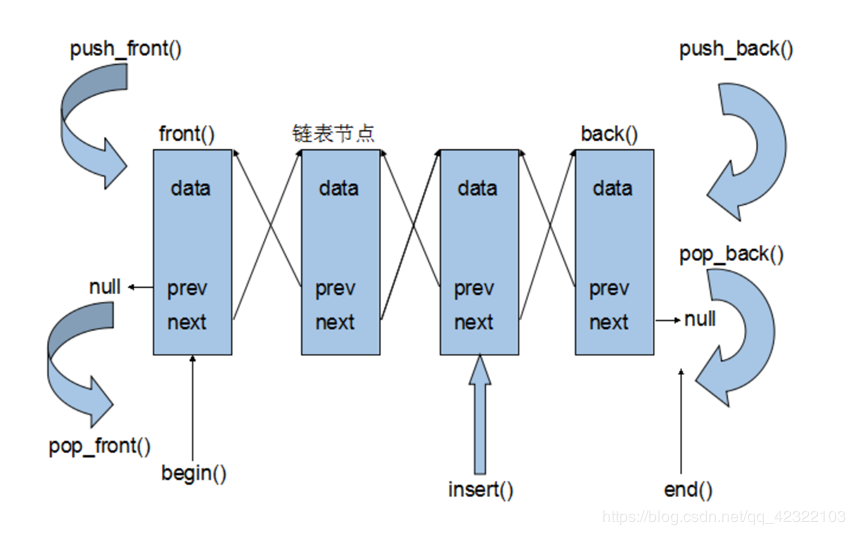
定义的代码如下:
list<int> l1;           //创建一个空链表

list<int> l2(10);       //创建一个链表其有10个空元素

list<int> l3(5,20);     //创建一个链表其有5个元素内容为20

list<int> l4(l3.begin(),l3.end());  //创建一个链表其内容为l3的内容

list<int> l5(l4);               //创建一个链表其内容为l4的内容
除此之外,还可以直接使用数组来初始化向量:
int n[] = { 1, 2, 3, 4, 5 };

list<int> a(n, n + 5); // 将数组n的前5个元素作为列表a的初值
迭代器
遍历代码举例(其方法和vector版本无异只是更加精简):
 list<int> li;

for(list<int>::iterator it=li.begin();it!=li.end();it++){

        cout<<*it<<' ';

    }
基本操作
3.1 容量函数
- 容器大小:
lst.size(); - 容器最大容量:
lst.max_size(); - 更改容器大小:
lst.resize(); - 容器判空:
lst.empty();
#include <iostream>

#include <list>

using namespace std;

int main(int argc, char* argv[])

{

    list<int> lst;

    for (int i = 0; i<6; i++)

    {

        lst.push_back(i);

    }

    cout << lst.size() << endl; // 输出:6

    cout << lst.max_size() << endl; // 输出:357913941

    lst.resize(0); // 更改元素大小

    cout << lst.size() << endl; // 输出:0

    if (lst.empty())

        cout << "元素为空" << endl; // 输出:元素为空

    return 0;

}
3.2 添加函数
- 头部添加元素:
lst.push_front(const T& x); - 末尾添加元素:
lst.push_back(const T& x); - 任意位置插入一个元素:
lst.insert(iterator it, const T& x); - 任意位置插入 n 个相同元素:
lst.insert(iterator it, int n, const T& x); - 插入另一个向量的 [forst,last] 间的数据:
lst.insert(iterator it, iterator first, iterator last);
#include <iostream>

#include <list>

using namespace std;

int main(int argc, char* argv[])

{

    list<int> lst;

    // 头部增加元素

    lst.push_front(4);

    // 末尾添加元素

    lst.push_back(5);

    // 任意位置插入一个元素

    list<int>::iterator it = lst.begin();

    lst.insert(it, 2);

    // 任意位置插入n个相同元素

    lst.insert(lst.begin(), 3, 9);

    // 插入另一个向量的[forst,last]间的数据

    list<int> lst2(5, 8);

    lst.insert(lst.begin(), lst2.begin(), ++lst2.begin());

    // 遍历显示

    for (it = lst.begin(); it != lst.end(); it++)

        cout << *it << " "; // 输出:8 9 9 9 2 4 5

    cout << endl;

    return 0;

}
    li.insert(li.begin(),10);     //在链表最前端插入数据10

    li.insert(li.begin(),5,20);   //在链表最前端插入5个数据内容为20

    list<int> k(2,50);   //创建一个新的链表k,其拥有2个元素内容均为50

    li.insert(li.begin(),li.begin(),li.end());  //在链表v最前端插入链表上K的全部内容
3.3 删除函数
- 头部删除元素:
lst.pop_front(); - 末尾删除元素:
lst.pop_back(); - 任意位置删除一个元素:
lst.erase(iterator it); - 删除 [first,last] 之间的元素:
lst.erase(iterator first, iterator last); - 清空所有元素:
lst.clear();
#include <iostream>

#include <list>

using namespace std;

int main(int argc, char* argv[])

{

    list<int> lst;

    for (int i = 0; i < 8; i++)

        lst.push_back(i);

    // 头部删除元素

    lst.pop_front();

    // 末尾删除元素

    lst.pop_back();

    // 任意位置删除一个元素

    list<int>::iterator it = lst.begin();

    lst.erase(it);

    // 删除[first,last]之间的元素

    lst.erase(lst.begin(), ++lst.begin());

    // 遍历显示

    for (it = lst.begin(); it != lst.end(); it++)

        cout << *it << " "; // 输出:3 4 5 6

    cout << endl;

    // 清空所有元素

    lst.clear();

    // 判断list是否为空

    if (lst.empty())

    cout << "元素为空" << endl; // 输出:元素为空

    return 0;

}
li.erase(li.begin());     //删除第一个元素

li.erase(li.begin(),li.begin()+4); //删除前4个元素
3.4 访问函数
- 访问第一个元素:
lst.front(); - 访问最后一个元素:
lst.back();
#include <iostream>

#include <list>

using namespace std;

int main(int argc, char* argv[])

{

    list<int> lst;

    for (int i = 0; i < 6; i++)

        lst.push_back(i);

    // 访问第一个元素

    cout << lst.front() << endl; // 输出:0

    // 访问最后一个元素

    cout << lst.back() << endl; // 输出:5

    return 0;

}
3.5 其他函数
- 多个元素赋值:
lst.assign(int nSize, const T& x); // 类似于初始化时用数组进行赋值 - 交换两个同类型容器的元素:
swap(list&, list&); 或 lst.swap(list&); - 合并两个列表的元素(默认升序排列):
lst.merge(); - 在任意位置拼接入另一个list:
lst.splice(iterator it, list&); - 删除容器中相邻的重复元素:
lst.unique();
#include <iostream>

#include <list>

using namespace std;

int main(int argc, char* argv[])

{

    // 多个元素赋值s

    list<int> lst1;

    lst1.assign(3, 1);

    list<int> lst2;

    lst2.assign(3, 2);

    // 交换两个容器的元素

    // swap(lst1, lst2); // ok

    lst1.swap(lst2);

    // 遍历显示

    cout << "交换后的lst1: ";

    list<int>::iterator it;

    for (it = lst1.begin(); it!=lst1.end(); it++)

        cout << *it << " "; // 输出:2 2 2

    cout << endl;

    // 遍历显示

    cout << "交换后的lst2: ";

    for (it = lst2.begin(); it != lst2.end(); it++)

        cout << *it << " "; // 输出:1 1 1

    cout << endl;

    list<int> lst3;

    lst3.assign(3, 3);

    list<int> lst4;

    lst4.assign(3, 4);

    // 合并两个列表的元素

    lst4.merge(lst3); // 不是简单的拼接,而是会升序排列

    cout << "合并后的lst4: ";

    for (it = lst4.begin(); it != lst4.end(); it++)

        cout << *it << " "; // 输出:3 3 3 4 4 4

    cout << endl;

    list<int> lst5;

    lst5.assign(3, 5);

    list<int> lst6;

    lst6.assign(3, 6);

    // 在lst6的第2个元素处,拼接入lst5

    lst6.splice(++lst6.begin(), lst5);

    cout << "拼接后的lst6: ";

    for (it = lst6.begin(); it != lst6.end(); it++)

        cout << *it << " "; // 输出:6 5 5 5 6 6

    cout << endl;

    // 删除容器中相邻的重复元素

    list<int> lst7;

    lst7.push_back(1);

    lst7.push_back(1);

    lst7.push_back(2);

    lst7.push_back(2);

    lst7.push_back(3);

    lst7.push_back(2);

    lst7.unique();

    cout << "删除容器中相邻的重复元素后的lst7: ";

    for (it = lst7.begin(); it != lst7.end(); it++)

        cout << *it << " "; // 输出:1 2 3 2

    cout << endl;

    return 0;

}
排序sort()
#include<iostream>

#include<list>

using namespace std;s

int cmp(const int &a,const int &b){

    //简单的自定义降序序列

    return a>b;

}

int main(){

    list<int> li;           //创建一个空链表

    for(int i=10;i>=6;i--){

        li.push_back(i);

    }

    li.push_front(3);

    li.push_back(20);

    list<int> li2(li);

    for(list<int>::iterator it=li.begin();it!=li.end();it++){

        cout<<*it<<' ';

    }

    cout<<endl;

//排序前3 10 9 8 7 6 20//

    li.sort();

    for(list<int>::iterator it=li.begin();it!=li.end();it++){

        cout<<*it<<' ';

    }

    cout<<endl;

//默认排序后 3 6 7 8 9 10 20//

    li2.sort(cmp);

    for(list<int>::iterator it=li2.begin();it!=li2.end();it++){

        cout<<*it<<' ';

    }

    cout<<endl;

//自定义排序后 20 10 9 8 7 6 3//

    return 0;

}
迭代器与算法
1. 迭代器
- 开始迭代器指针:
lst.begin(); - 末尾迭代器指针:
lst.end();// 指向最后一个元素的下一个位置 - 指向常量的开始迭代器指针:
lst.cbegin();// 意思就是不能通过这个指针来修改所指的内容,但还是可以通过其他方式修改的,而且指针也是可以移动的。 - 指向常量的末尾迭代器指针:
lst.cend(); - 反向迭代器指针,指向最后一个元素:
lst.rbegin(); - 反向迭代器指针,指向第一个元素的前一个元素:
lst.rend();
#include <iostream>

#include <list>

using namespace std;

int main(int argc, char* argv[])

{

    list<int> lst;

    lst.push_back(1);

    lst.push_back(2);

    lst.push_back(3);

    cout << *(lst.begin()) << endl; // 输出:1

    cout << *(--lst.end()) << endl; // 输出:3

    cout << *(lst.cbegin()) << endl; // 输出:1

    cout << *(--lst.cend()) << endl; // 输出:3

    cout << *(lst.rbegin()) << endl; // 输出:3

    cout << *(--lst.rend()) << endl; // 输出:1

    cout << endl;

    return 0;

}
2. 算法
- 遍历元素
list<int>::iterator it;

for (it = lst.begin(); it != lst.end(); it++)

    cout << *it << endl;
- 元素翻转
#include <algorithm>

reverse(lst.begin(), lst.end());
- 元素排序
#include <algorithm>

sort(lst.begin(), lst.end()); // 采用的是从小到大的排序

// 如果想从大到小排序,可以采用先排序后反转的方式,也可以采用下面方法:

// 自定义从大到小的比较器,用来改变排序方式

bool Comp(const int& a, const int& b)

{

    return a > b;

}

sort(lst.begin(), lst.end(), Comp);
总结
可以看到,list 与 vector、deque 的用法基本一致,除了以下几处不同:
- list 为双向迭代器,故不支持
it+=i; - list 不支持下标访问和at方法访问。
list使用详解的更多相关文章
- Linq之旅:Linq入门详解(Linq to Objects)
示例代码下载:Linq之旅:Linq入门详解(Linq to Objects) 本博文详细介绍 .NET 3.5 中引入的重要功能:Language Integrated Query(LINQ,语言集 ...
- 架构设计:远程调用服务架构设计及zookeeper技术详解(下篇)
一.下篇开头的废话 终于开写下篇了,这也是我写远程调用框架的第三篇文章,前两篇都被博客园作为[编辑推荐]的文章,很兴奋哦,嘿嘿~~~~,本人是个很臭美的人,一定得要截图为证: 今天是2014年的第一天 ...
- EntityFramework Core 1.1 Add、Attach、Update、Remove方法如何高效使用详解
前言 我比较喜欢安静,大概和我喜欢研究和琢磨技术原因相关吧,刚好到了元旦节,这几天可以好好学习下EF Core,同时在项目当中用到EF Core,借此机会给予比较深入的理解,这里我们只讲解和EF 6. ...
- Java 字符串格式化详解
Java 字符串格式化详解 版权声明:本文为博主原创文章,未经博主允许不得转载. 微博:厉圣杰 文中如有纰漏,欢迎大家留言指出. 在 Java 的 String 类中,可以使用 format() 方法 ...
- Android Notification 详解(一)——基本操作
Android Notification 详解(一)--基本操作 版权声明:本文为博主原创文章,未经博主允许不得转载. 微博:厉圣杰 源码:AndroidDemo/Notification 文中如有纰 ...
- Android Notification 详解——基本操作
Android Notification 详解 版权声明:本文为博主原创文章,未经博主允许不得转载. 前几天项目中有用到 Android 通知相关的内容,索性把 Android Notificatio ...
- Git初探--笔记整理和Git命令详解
几个重要的概念 首先先明确几个概念: WorkPlace : 工作区 Index: 暂存区 Repository: 本地仓库/版本库 Remote: 远程仓库 当在Remote(如Github)上面c ...
- Drawable实战解析:Android XML shape 标签使用详解(apk瘦身,减少内存好帮手)
Android XML shape 标签使用详解 一个android开发者肯定懂得使用 xml 定义一个 Drawable,比如定义一个 rect 或者 circle 作为一个 View 的背景. ...
- Node.js npm 详解
一.npm简介 安装npm请阅读我之前的文章Hello Node中npm安装那一部分,不过只介绍了linux平台,如果是其它平台,有前辈写了更加详细的介绍. npm的全称:Node Package M ...
- .NET应用和AEAI CAS集成详解
1 概述 数通畅联某综合SOA集成项目的统一身份认证工作,需要第三方系统配合进行单点登录的配置改造,在项目中有需要进行单点登录配置的.NET应用系统,本文专门记录.NET应用和AEAI CAS的集成过 ...
随机推荐
- [TensorFow2.0]-MNIST手写数字识别
本人人工智能初学者,现在在学习TensorFlow2.0,对一些学习内容做一下笔记.笔记中,有些内容理解可能较为肤浅.有偏差等,各位在阅读时如有发现问题,请评论或者邮箱(右侧边栏有邮箱地址)提醒. 若 ...
- Kong网关安装之Docker版(1)
前言: Kong 是天生的微服务网关.她的官方简介是:Kong 是一个云原生,高效,可扩展的分布式 API 网关. 自 2015 年在 github 开源后,广泛受到关注,目前已收获 1.9w+ 的 ...
- JVM G1GC的算法与实现
G1GC 是什么? 一些基本概念 实时性 G1GC 有什么特点? G1GC 的堆结构是什么样的? G1GC 的执行过程是什么样的? 并发标记 并发标记是什么 标记位图 执行步骤 步骤 1--初始标记阶 ...
- JavaScript学习03(函数)
函数 函数定义 JavaScript 函数是通过 function 关键词定义的. 声明定义 function functionName(parameters) { 要执行的代码 } 被声明的函数不会 ...
- MySQL-07-information_schema/show
information_schema.tables视图 DESC information_schema.TABLES /** TABLE_SCHEMA ---->库名 TABLE_NAME -- ...
- Java服务突然失败:A fatal error has been detected by the Java Runtime Environment的总结
服务启动以后过段时间自动失败:A fatal error has been detected by the Java Runtime Environment 控制台中的错误信息 A fatal err ...
- Java LinkedList【笔记】
Java LinkedList[笔记] LinkedList LinkedList 适用于要求有顺序,并且会按照顺序进行迭代的场景,依赖于底层的链表结构 LinkedList基本结构 LinkedLi ...
- VLAN-2 配置Trunk接口
一.实验拓扑图 二.实验编址 三.实验步骤 1.给对应的PC设置对应的IP和掩码还有接口,以及根据需要划分不同的vlan区域,再用文本标记出不同部门. 2.启动设备(全选) 3.首先用ping命令检查 ...
- NOIP 模拟 $12\; \text{简单的玄学}$
题解 有些难度 对于 \(30pts\) 直接暴力 对于 \(70pts\) 发现规律 \(2^n-a\) 与 \(a\;\;(a\in [1,2^n))\) 分解质因数后,\(2\) 的次数相同 \ ...
- The requested PHP extension ext-http * is missing from your system. Install or enable PHP's http ex
composer.json 包含 "require": { "ext-http": "*" } 删掉 "ext-http&quo ...